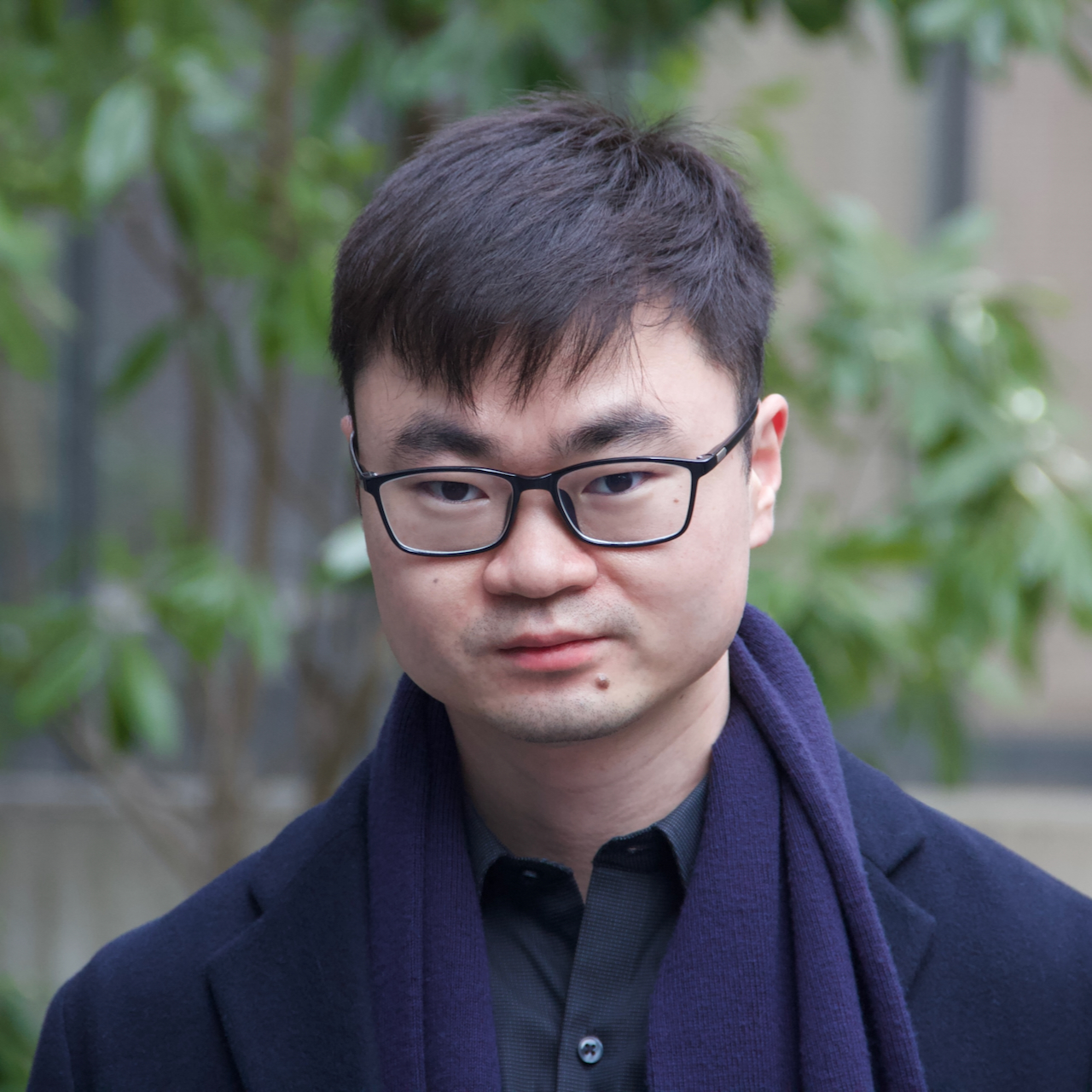
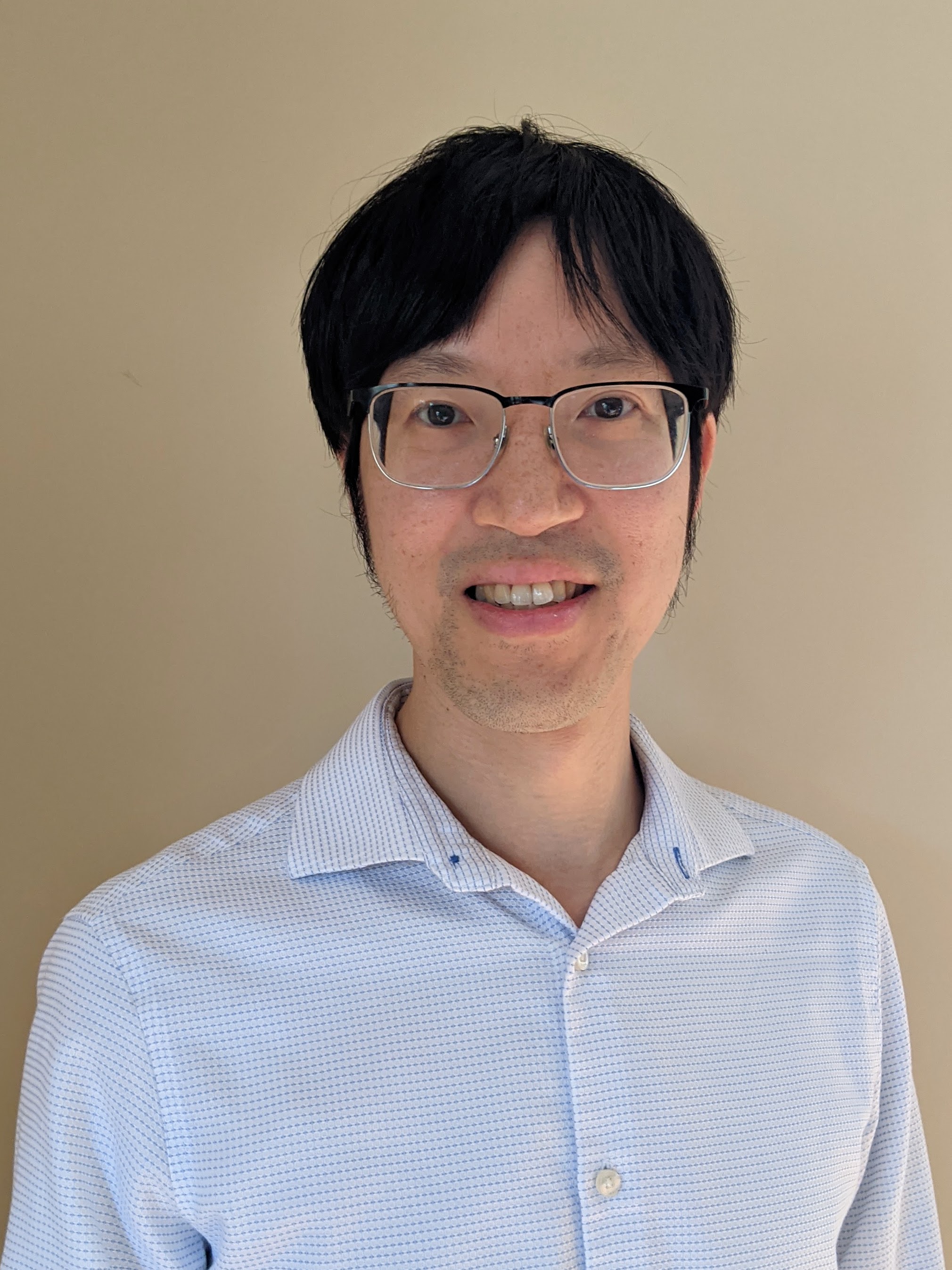
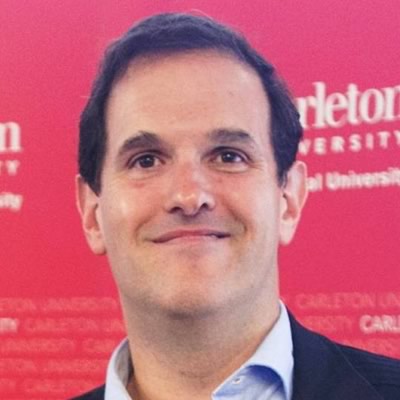
Colin Raffel , currently an Associate Professor at the University of Toronto and Associate Research Director at the Vector Institute , is a leading researcher in machine learning and natural language processing . His career spans roles at Hugging Face (Faculty Researcher), Google Brain (Senior Research Scientist), and UNC Chapel Hill (Assistant Professor). Education: PhD in Electrical Engineering (Columbia), MA in Music/Science (Stanford), BA in Mathematics (Oberlin) Key affiliations: Google Brain (2016-2020), Hugging Face (2021-present), Vector Institute (2023-present) His research focuses on language model development , attention mechanisms , efficient machine learning , and music information retrieval . Recent work explores model merging , parameter-efficient fine-tuning , and data-constrained language models . Teaching : Has instructed courses at University of Toronto and UNC Chapel Hill on Neural Networks , Deep Learning , and Information Theory . Academic service includes organizing ICLR workshops and serving as Senior Area Chair for NeurIPS and EMNLP . Notable awards : NSF CAREER (2022), Caspar Bowden Award (2023), NeurIPS Outstanding Paper (2023) Key contributions : Core developer of WT5 , Git-Theta , and mir_eval software
Alexandre Bouchard-Côté is a Professor of Statistics at the University of British Columbia (UBC), affiliated with the Department of Statistics within the Faculty of Science. His research focuses on computational statistics, Bayesian methods, and Monte Carlo techniques, with applications in evolutionary biology, cancer genomics, and computational linguistics. Education : PhD in Computer Science (with Designated Emphasis in Statistics) from UC Berkeley (2010), BSc in Mathematics and Computer Science from McGill University (2005). Affiliations : Director of the Blang probabilistic programming project and leader of the Bouncy Particle Sampler research group. Research Interests : Bouchard-Côté develops scalable Bayesian computational methods, including non-reversible Monte Carlo algorithms like the Bouncy Particle Sampler, and applies these to problems in cancer phylogenetics, evolutionary dynamics, and historical linguistics. His work emphasizes bridging theoretical foundations with practical tools for data science. Publications Trends : Recent work spans distributed sampling frameworks (e.g., Pigeons.jl), variational phylogenetic inference, and cancer clonal evolution modeling. His articles often address algorithmic scalability and interdisciplinary applications in biology and astronomy. Awards : CRM-SSC Prize in Statistics (2024) PIMS-UBC Mathematical Sciences Young Faculty Award (2018) Tweedie New Researcher Award (2016) Advising & Grants : Supervises graduate students (e.g., Son Luu, Nikola Surjanovic) and leads funded projects on distributed MCMC and cancer genomics. Collaborates with institutions like the Simons Foundation and the Canadian Statistical Sciences Institute (CANSSI). Labs/Teams : Core member of the UBC Statistical Machine Learning group, contributing to open-source tools like Blang and the Bouncy Particle Sampler implementation.
Dr. Lourdes Pena-Castillo is a Professor jointly appointed in the Departments of Computer Science and Biology at Memorial University of Newfoundland's Faculty of Science. Her research focuses on applying machine learning and bioinformatics to study bacterial gene regulation, with emphasis on transcriptomics, gene expression pathways, and microbiology. She leads the Bioinformatics Lab at MUN, developing computational tools like Promotech for promoter prediction and sRNARFTarget for sRNA target identification. Education: BSc in Information Systems Engineering, ITESM-Mexico MSc in Computer Science, University of Alberta PhD in Computer Science (Doktoringenieurin), Otto-von-Guericke Universität Magdeburg Postdoc in Bioinformatics, University of Toronto Research Interests: Bioinformatics, Genomics, Machine Learning, Artificial Intelligence, Transcriptomics, Gene Regulation, Microbiology Her work integrates computational methods with biological data to address challenges in molecular biology, including analyzing bacterial sRNA functions, promoter recognition, and disease diagnostics using machine learning. She has advised numerous graduate students, including PhD candidates Purvikalyan Pallegar and Bonita McCuaig, and MSc students like Ruben Chevez-Guardado and Kratika Naskulwar. Her lab focuses on translational research with applications in both basic science and clinical contexts. Publications span computational methods for bacterial gene regulation, bioinformatics tool development, and interdisciplinary projects in VR and healthcare informatics. Her research has contributed to understanding symbiotic relationships in marine organisms, inflammatory bowel disease diagnostics, and clavulanic acid production in Streptomyces. Grants & Collaborations: Works with interdisciplinary teams across computer science and biology, supported by grants enabling projects in bacterial genomics and computational tool development. Labs & Teams: Leads the Bioinformatics Lab at MUN, fostering collaborations with researchers in microbiology, computer science, and healthcare.
Finlay Maguire is an Assistant Professor jointly appointed in the Faculty of Computer Science and the Department of Community Health & Epidemiology at Dalhousie University. He leads the Maguire Lab, which develops data-driven methods to address health and social crises through genomic epidemiology and interdisciplinary health data science. He is also affiliated with the Shared Hospital Laboratory, Sunnybrook Research Institute, and multiple national and international public health consortia including PHA4GE, CanCOGeN, and IRIDA. PhD: University College London / Natural History Museum (2016) MA: University of Oxford (2011) Donald Hill Family Fellowship, Dalhousie University (2021) Dr. Maguire's research focuses on two main areas: genomic epidemiology of infectious diseases and interdisciplinary health data science collaborations . His work in genomic epidemiology includes developing bioinformatics and machine learning tools to study antimicrobial resistance (AMR) and SARS-CoV-2 dynamics, often in collaboration with public health agencies. His broader health data science work addresses issues such as online radicalization, healthcare access for refugees, and autism-related language use, combining computational methods with social science. His recent publications (2023–2025) reflect a strong trend in pathogen genomics , AMR , zoonotic spillover , and computational social science . He has published on novel coronaviruses in bats, SARS-CoV-2 animal models, invasive Group A Streptococcus, and sociological analyses of incel communities. Much of this work involves tool development (e.g., ArgNorm, Pathoplexus) and data standardization (e.g., PHA4GE metadata standards). Finalist, 2024 Discovery Awards (Emerging Professional) 2023 President’s Research Excellence Award for an Emerging Investigator, Dalhousie Finalist, 2023 Discovery Awards (Emerging Professional) Funding from CIHR, NSERC, Genome Canada, SSHRC, BMGF Dr. Maguire actively mentors graduate students and postdocs, including PhD candidates in Computer Science and MSc students in Community Health & Epidemiology. He has secured major training grants such as the CIHR Health Research Training Platform and the Canadian One Health Training Program for Emerging Zoonoses. He also contributes to capacity-building initiatives like MicroResearch in Ghana and Kenya. The Maguire Lab is embedded in a rich network of collaborations, including the CARD database, Public Health Agency of Canada, Canadian Food Inspection Agency, and Sunnybrook Health Sciences Centre. The lab emphasizes open science, reproducible research, and interdisciplinary training, as seen in the development of open-source tools and participation in international consortia.
Ning Nan is an Associate Professor at the University of British Columbia's Sauder School of Business, specifically within the Department of Accounting and Information Systems. With a BA from Peking University, an MA from the University of Minnesota, and a PhD from the University of Michigan, Dr. Nan focuses on digital business strategy, evolvable IT infrastructure, and complex adaptive systems. His research explores blockchain applications, agent-based modeling, and the intersection of AI with societal challenges like sustainability. Education: PhD in Information Systems, University of Michigan MA in Information Systems, University of Minnesota BA in Computer Science, Peking University Research Interests: Dr. Nan investigates how technology shapes organizational and societal systems, with a focus on AI ethics, sustainability through personalized recommendations, and blockchain's role in decentralized supply chains. He employs agent-based modeling to simulate complex phenomena like innovation diffusion and online community dynamics. Recent work addresses explainable AI in smart cities and carbon-reduction gamification strategies. Teaching: In 2024-2025, he teaches Data Management for Business Analytics , emphasizing practical applications of data-driven decision-making. Key Research Themes: His articles highlight trends in AI sustainability (e.g., carbon footprint impacts of recommendation systems), digital business strategy (blockchain governance, app update strategies), and foundational IS theory (hyperturbulence and IS strategy).
Miao Zhengjie serves as an Assistant Professor in the School of Computing Science at Simon Fraser University (SFU), joining in October 2023 after a research scientist position at Megagon Labs. His work centers on enhancing data science pipelines through innovations in database systems and artificial intelligence. His academic foundation includes: Ph.D. in Computer Science from Duke University (2022) M.S. in Computer Science from Columbia University (2016) B.S. in Computer Science and Technology from Peking University (2015) Dr. Miao's research spans Database Systems , Data Management , Data Curation , and Data Provenance , with emphasis on AI-driven solutions for data pipeline efficiency. His methodology bridges theoretical database concepts with practical data science applications through novel algorithm development. Analysis of his 15 most recent publications reveals persistent focus areas: query explanation systems (35% of works), data augmentation frameworks (27%), and human-AI collaboration tools (20%). These contributions appear consistently in premier venues including SIGMOD, VLDB, and CHI, demonstrating methodological evolution from foundational query debugging (2019) to LLM-integrated annotation systems (2024). He actively participates in the SFU Data Science Research Group , contributing to interdisciplinary initiatives in large-scale data processing. Current information indicates no formal advisees or grant details are publicly documented in his institutional profile.
Qizhen Zhang is a Professor in the Department of Computer Science at the University of Toronto's Faculty of Arts and Science. Specializing in hyperscale data processing systems, Zhang leads research at the intersection of cloud computing, distributed systems, and data center networking. Recent work focuses on network-centric designs for efficient large-scale data processing, including pioneering contributions to disaggregated data center architectures. Research interests center on hyperscale data processing , network-aware system design , and disaggregated infrastructure . Current projects investigate DPU-accelerated systems (dpBento, DPDPU), memory disaggregation (Cowbird, Redy), and blockchain scalability (FlexChain). Zhang's approach systematically integrates network characteristics into distributed system optimization, addressing challenges in trillion-item workloads through novel shuffle layers (TeShu) and compute pushdown mechanisms (TELEPORT). Zhang advises multiple graduate students working on satellite networking (SaTE), federated learning, and DPU-optimized storage (DDS). Professional service includes program committees for SIGMOD, VLDB, NSDI, and EuroSys (2023-2026), plus journal reviews for ACM TODS and IEEE/ACM Transactions on Networking. Industrial collaborations with Microsoft Research have yielded production-oriented systems like Redy and CompuCache. Key contributions include MimicNet for scalable network simulation (SIGCOMM 2021), GraphRex for network-aware graph processing (SIGMOD 2019), and foundational work on disaggregated data centers (CIDR 2020, VLDB 2020). Teaching responsibilities encompass graduate courses CSC2235 (Cloud-native Data Management) and undergraduate CSCC43 (Databases) at the University of Toronto.
Ahmed E. Hassan is a Professor and Canada Research Chair in Software Analytics at the School of Computing, Queen's University. He serves as NSERC RIM Industrial Research Chair and leads the Software Analysis and Intelligence Lab (SAIL). Dr. Hassan pioneered the Mining Software Repositories (MSR) conference and co-edited special issues in the IEEE Transactions on Software Engineering and the Journal of Empirical Software Engineering on MSR topics. Education Ph.D. in Computer Science, University of Waterloo (2005) MMath in Computer Science, University of Waterloo BMath in Computer Science, University of Waterloo His research focuses on software analytics, mining software repositories, and systems engineering. Projects at SAIL include analyzing version control systems, predicting software defects, and improving software quality through empirical methods. The lab's work spans software evolution, architecture analysis, and debugging of distributed systems. Dr. Hassan has taught courses like CISC 322: Software Architecture and CISC 880: Mining Software Engineering Data at Queen's University, University of Victoria, and University of Waterloo. His teaching philosophy emphasizes hands-on learning with tools like WEKA and R, and includes project-based assignments using MSR Challenge datasets. Scientific Awards NSERC RIM Industrial Research Chair in Software Engineering Canada Research Chair in Software Analytics He has industrial experience from RIM (Blackberry platform), IBM Research (Almaden Lab), and Nortel Networks. Dr. Hassan is a named inventor on patents in the US, Europe, Canada, Japan, and India. SAIL lab is funded by NSERC, ORF, CFI, and industry partners.
Mohammad Hamdaqa is an Associate Professor in the Department of Computer Engineering and Software Engineering at Polytechnique Montréal, where he leads the Laboratory of Software and Emerging Technologies. His academic journey includes a Ph.D. in Electrical and Computer Engineering from the University of Waterloo (2016), a Master's in Electrical and Computer Engineering from Concordia University, an MBA from the New York Institute of Technology, and a Bachelor's in Computer Engineering from Jordan University of Science and Technology. His research focuses on the intersection of software engineering and emerging technologies, particularly examining how software engineering approaches can be adapted for complex new platforms like cloud computing and blockchain. His work spans model-driven software engineering, cloud application architecture, smart contract development, and infrastructure as code. He investigates both how traditional software engineering practices can evolve to address the challenges of modern distributed systems and how emerging technologies can transform software development processes themselves. Analysis of his recent publications reveals a strong emphasis on blockchain technologies (particularly smart contracts), cloud-native applications, and the application of AI to software engineering tasks. His work shows a consistent thread of empirical research combined with practical tool development, with increasing focus on sustainability aspects of software systems in recent years. Much of his research bridges theoretical foundations with practical implementation concerns. Professor Hamdaqa serves as a thesis supervisor for multiple graduate students, with recent completed Master's theses focusing on smart contract auditing, prompt engineering for OCL generation, model-driven epidemiology, and security practices in infrastructure as code. He actively recruits students for research projects in his laboratory. He is a member of both the IEEE Computer Society and the Association for Computing Machinery (ACM), has served on program committees for major software engineering conferences, and is on the editorial board of Service Transaction on Internet of Thing. His laboratory, the Laboratory of Software and Emerging Technologies, serves as the hub for his research activities in blockchain, cloud computing, and model-driven engineering.
Samuel W.K. Wong is an Associate Professor in the Department of Statistics and Actuarial Science at the University of Waterloo. He holds a Ph.D. in Statistics from Harvard University (2013) under Prof. Samuel Kou. His research focuses on statistical methodology for complex data science challenges in protein structure modeling, dynamic systems inference, and reliability engineering of wood-based products. He has held academic positions at the University of Florida (2013–2018) and has been at Waterloo since 2018. His research interests include Bayesian computation, statistical inference for dynamic systems, and spatial-temporal data analysis. Notable contributions include the development of manifold-constrained Gaussian processes (MAGI package) and sequential Monte Carlo methods for protein folding studies. He has advised over 15 graduate students and researchers, many of whom are now in academic or industry roles worldwide. Wong has received teaching distinctions at Harvard and holds awards including the Nash Medal (2008) for academic excellence. His work bridges computational statistics with applications in bioinformatics, structural engineering, and environmental science. He has published extensively in top-tier journals like Journal of Computational and Graphical Statistics and Biometrics , and collaborates with wood scientists to improve real-time lumber quality assessment using laser imaging data. His teaching portfolio includes courses on probability theory, statistical inference, and spatial data analysis at both undergraduate and graduate levels. Beyond academia, he maintains an active passion for classical piano performance, having performed recitals combining music with his statistical research interests.
Caitlin Mullarkey is an Associate Professor in the Department of Biochemistry and Biomedical Sciences at McMaster University's Faculty of Health Sciences. She teaches across multiple undergraduate programs including Biochemistry, Biomedicine, and Health Sciences, with courses ranging from Cellular and Molecular Biology to Immunological Principles in Practice and Principles of Virology. Dr. Mullarkey's research focuses on immunology and virology with particular emphasis on influenza virus immunity, antibody-mediated responses, and vaccine development. Her work explores intricate mechanisms of antibody function including Fc-mediated effector functions, neutrophil responses to viral infection, and the role of broadly neutralizing antibodies. She also investigates innovative approaches to biomedical education through virtual laboratory simulations and online course development. Analysis of her publication record reveals a strong focus on influenza immunology, with particular expertise in antibody structure-function relationships, hemagglutinin stalk-specific antibodies, and Fc-mediated immune responses. Her work bridges basic immunological mechanisms with practical vaccine development approaches, demonstrating consistent contributions to understanding host-pathogen interactions and immune protection mechanisms. Scientific Awards: Equality of Opportunity Award from the Government of Ontario (2024) for developing and leading McMaster's Biochemistry and Biomedical Sciences Summer Scholars Program Dr. Mullarkey actively supervises undergraduate research through Senior Research Thesis and Senior Thesis courses, providing mentorship to students across multiple academic years. Her teaching portfolio demonstrates significant commitment to both foundational and advanced topics in biochemistry and immunology. Beyond formal teaching, she leads the Summer Scholars Program which provides full research scholarships to students who identify as Black, Indigenous, and/or 2SLGBTQIA+, addressing barriers to participation in STEM research through comprehensive support for training, mentorship, and living expenses. As Chair of the Biochemistry and Biomedical Sciences Summer Scholars Program, Dr. Mullarkey has graduated 17 diverse scholars in just two years, with many continuing research at McMaster and receiving competitive awards. The program, supported by McMaster's Global Nexus and Michael G. DeGroote Institute for Infectious Disease Research, exemplifies her commitment to creating inclusive research opportunities in biomedical sciences.
Dr. Gabriel Wainer is a Professor in the Department of Systems and Computer Engineering at Carleton University's Faculty of Engineering and Design. He leads the Advanced Real-Time Simulation Lab and specializes in modeling and simulation methodologies, particularly focusing on discrete event systems, real-time modeling, cellular automata, and DEVS formalism. Research Interests: Discrete event systems, DEVS formalism, cellular automata, real-time simulation, IoT applications, and parallel/distributed simulation Affiliation: Carleton University Recent publications highlight his work in advanced simulation frameworks, energy-efficient 5G systems using deep reinforcement learning, and pandemic modeling with cellular automata. His lab develops tools like PROMETHEUS and Devsmap for standardized DEVS model representation, while also exploring applications in wireless communication, building energy systems, and behavioral epidemiology.
Ariel Katz is an Associate Professor at the Faculty of Law, University of Toronto, where he teaches intellectual property, constitutional law, cyberlaw, and the intersection of competition law and intellectual property. He holds an SJD from the University of Toronto and prior degrees from the Hebrew University of Jerusalem. His research focuses on the economic analysis of competition law and intellectual property, with additional interests in digital trade, pharmaceutical regulation, and constitutional issues. LL.B., Hebrew University (1997) LL.M., Hebrew University (2001) S.J.D., University of Toronto (2005) Professor Katz’s research interests lie at the intersection of law, economics, and innovation policy. He explores how intellectual property and competition laws shape markets, innovation, and access to knowledge. His work critically examines doctrines such as fair dealing, copyright exhaustion, and collective administration of rights, often from a comparative and transatlantic perspective. He investigates the economic rationales behind legal rules and their implications for digital platforms, libraries, and global research. His recent publications demonstrate a sustained engagement with copyright and antitrust policy, particularly in digital environments. Themes include text and data mining, fair use evolution, data governance, and the impact of trade agreements on domestic law. His scholarship frequently bridges legal theory and practical policy, influencing academic and public discourse. Notable recognition includes: The Canadian Association of Research Libraries (CARL) Award of Merit (2022) Professor Katz has advised on policy matters, including submissions on copyright term extension under CUSMA. He was Director of the Centre for Innovation Law and Policy (2009–2012) and has collaborated with scholars across North America. He maintains an active blog and has written op-eds in major Canadian newspapers. His work appears in leading journals such as the University of Chicago Law Review , Antitrust Law Journal , and BYU Law Review . He is affiliated with the University of Toronto’s Faculty of Law and contributes to SSRN and public intellectual forums. Professor Katz has been involved in digital scholarship initiatives and has written on the role of libraries in knowledge ecosystems. His work connects legal doctrine with broader societal challenges, including access to medicines, digital rights, and constitutional integrity, particularly in the context of Canada and Israel.
Muhammad Asaduzzaman is an Assistant Professor in the School of Computer Science within the Faculty of Science at the University of Windsor. His research focuses on software engineering, particularly software maintenance, mining software repositories, and recommendation systems for developers. Research interests span empirical studies of software artifacts, API usage analysis, and improving developer productivity through tools like COSTER for API element identification. Recent work examines dependency management in Maven ecosystems and AI-assisted code completion. Publications show consistent focus on analyzing developer activities through platforms like Stack Overflow and GitHub. Current investigations include LLM applications for code synthesis and technical debt impact analysis.
Zhen Ming (Jack) Jiang is an Associate Professor and York Research Chair (Tier II) in Software Engineering for Foundation Model-Powered Systems at York University's Department of Electrical Engineering and Computer Science. His research bridges software engineering, artificial intelligence, and computer systems with significant industrial impact. Dr. Jiang earned his Ph.D. from Queen's University's School of Computing and MMath/BMath degrees from the University of Waterloo's David R. Cheriton School of Computer Science. During his doctoral studies, he collaborated with BlackBerry's Performance Engineering team, developing tools now used daily to monitor commercial software systems. His research focuses on engineering rigor for AI-powered applications , software engineering evolution in the Generative AI era , and performance optimization of large-scale systems . Key areas include software performance engineering, mining software repositories, debugging distributed systems, source code analysis, and software visualization. His work combines empirical studies with practical tool development. Recent publications reveal strong trends in applying AI to software engineering challenges, particularly in machine learning systems reliability, blockchain efficiency, and AIOps solutions. His research consistently emphasizes empirical validation using real-world systems and industrial case studies. Scientific recognition includes: York Research Chair (Tier II) in Software Engineering for Foundation Model-Powered Systems NSERC Discovery Accelerator Supplements (DAS), 2020 Best Paper Award at ICST 2016 IEEE Software Best SEIP Paper at ICSE 2015 Ph.D. Research Achievement Award at Queen's University Multiple best paper awards at WCRE, MSR, and ICSE Dr. Jiang actively supervises graduate students and has secured competitive research funding including NSERC grants. His service includes program committee roles for top conferences (ICSE, ASE, ICSME) and editorial work for leading journals (TSE, TOSEM, EMSE). He leads research initiatives focused on foundation model-powered systems, collaborating with industry partners on performance monitoring and debugging solutions for large-scale distributed environments.