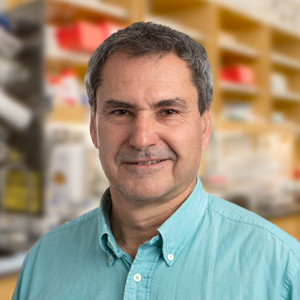
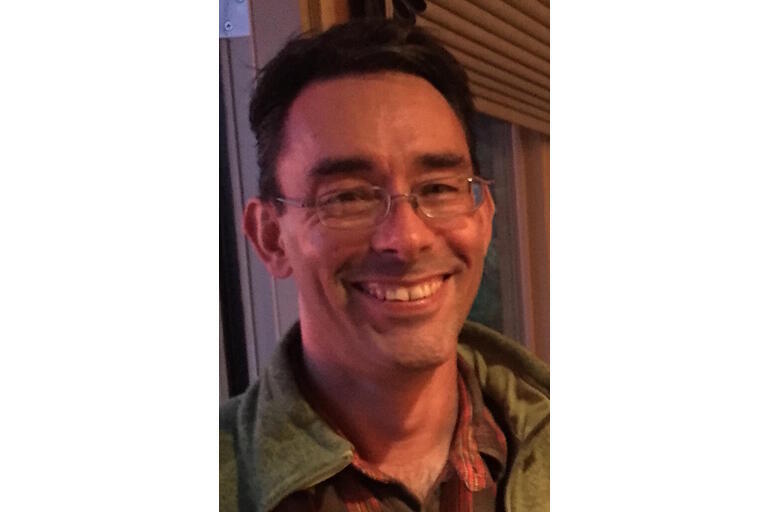
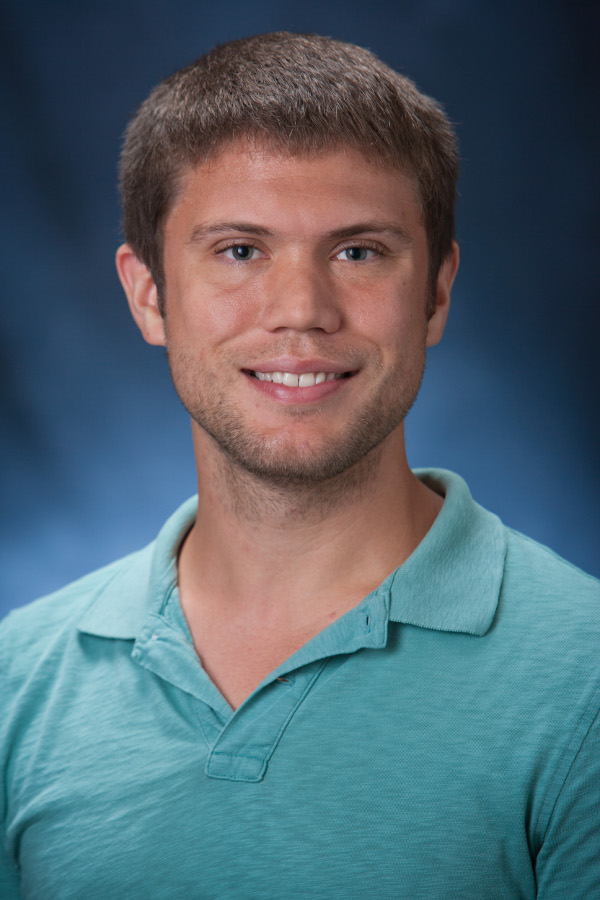
MICHEL SANNER is a Professor of Molecular Biology at the Department of Integrative Structural and Computational Biology at Scripps Research. He holds a PhD in Computer Science from the University of Haute Alsace, France (1992). His research focuses on computational methods for molecular interactions, molecular graphics, and component-based software development. Notable contributions include the AutoDock suite (for molecular docking), PMV (a molecular visualization environment), and Vision (a visual programming tool). His research group develops tools like AutoDock CrankPep for peptide docking and F2Dock for protein-protein interactions. These tools are widely used in drug discovery and structural biology. His work emphasizes software engineering principles to create adaptable computational pipelines for analyzing macromolecular structures and simulating interactions. Publications span topics like peptide-docking methodologies, ligand-binding site prediction, and GPU-accelerated docking algorithms. His articles highlight advancements in computational methods for understanding protein-ligand interactions, with applications in anticoagulant research and HIV/FIV protease inhibition. Collaborations include work with Arthur J. Olson and David S. Goodsell on docking methodologies.
Hande Benson is a Professor in the Department of Decision Sciences and MIS at LeBow College of Business, Drexel University. She serves as the academic director of the Business and Engineering program and teaches in undergraduate and graduate programs in Business Analytics and Operations and Supply Chain Management. Research Interests: Dr. Benson specializes in optimization, particularly addressing modeling and computational challenges in large-scale nonlinear and mixed-integer optimization. Her work includes interior-point methods, regularization techniques, and the development of optimization software such as LOQO and MILANO. Recent Research Trends: Her recent publications span decision aggregation, multi-vehicle motion planning under communication constraints, and advanced interior-point algorithms. These works reflect a strong focus on algorithmic innovation, real-world applications in robotics and supply chains, and theoretical advancements in nonconvex optimization. Scientific Awards: Outstanding STAR Mentor, Drexel University (2017-2018) Distinguished Fellow, Center for Research Excellence, LeBow College of Business (2009-2012) Excellence in Research Award, LeBow College of Business (2005) Advising and Grants: While direct student advising is not explicitly listed, Dr. Benson has led significant research projects, including Multivehicle Path Coordination under Communication Constraints (Drexel Interdisciplinary Research Grant, $15,000) and Efficient Interior-Point Methods for Mixed-Integer Nonlinear and Conic Programming (NSF, $59,960). She has also contributed to executive education and consulting in financial, industrial, and governmental sectors. Editorial and Professional Service: Dr. Benson is actively involved in the academic community as Associate Editor for several leading journals, including Computational Optimization and Applications , Journal of Optimization Theory and Applications , Mathematical Programming Computation , and Optimization and Engineering .
James R. Green is a Professor in the Department of Systems and Computer Engineering at Carleton University , where he has been a faculty member since 2005. He holds a PhD from Queen's University and is a licensed Professional Engineer (P.Eng.) and Senior Member of IEEE. His work integrates machine learning, biomedical informatics, and high-performance computing. His educational background includes: B.A.Sc. in Systems Design Engineering, University of Waterloo (1998) M.Sc.(Eng.), Queen's University (2000) PhD, Queen's University (2005) Dr. Green's research focuses on machine learning challenges in biomedical informatics , particularly class imbalance and rare event prediction. Key areas include protein structure, function, and interaction prediction; microRNA detection in unique species; non-contact neonatal monitoring; and accelerating scientific computing via parallel architectures like the Cell BE processor. His lab has developed several widely used bioinformatics tools such as PIPE, ProtDCal, and PCI-SUMO. His recent publications reflect a strong trend in computational biology and machine learning , with applications in proteomics, genomics, and medical diagnostics. He has published over 100 peer-reviewed papers and secured funding from NSERC, CIHR, CFI, ORF, OCE, MITACS, and IBM. Scientific and teaching recognitions include: Three teaching awards NSERC Best Project Award (twice: 2006-2007 and 2007-2008) Multiple student projects resulting in conference papers (e.g., CMBEC) He has supervised numerous undergraduate capstone projects in areas such as assistive technologies, robotic systems, and bioinformatics. His teaching portfolio includes courses in Pattern Classification, Machine Learning, Computer Architecture, and Biomedical Engineering. He leads an active research group that bridges computer engineering and life sciences, fostering interdisciplinary collaboration. Lab and research team initiatives include: Development of open-access web servers for protein analysis Collaborations with biologists and clinicians Integration of hardware and software for medical applications
Dan Warren is a Senior Research Fellow at the Gulbali Research Institute, Charles Sturt University, where he conducts interdisciplinary research in population biology, ecology, evolution, and conservation. His work centers on developing and refining species distribution models and environmental niche models to understand biodiversity and support conservation under global change. PhD in Population Biology, University of California, Davis Dan Warren's research interests lie in the development and application of quantitative tools for ecology and evolution. He focuses on species distribution models (SDMs), environmental niche models (ENMs), and their use in understanding biodiversity patterns, evolutionary processes, and conservation planning. His methodological innovations, such as those in the ENMTools R package, are widely adopted. His work spans animal behavior, climate change impacts, and conservation management, with strong relevance to UN Sustainable Development Goals on climate action and life on land. His recent publications reflect a consistent focus on improving the accuracy, interpretation, and application of species distribution models. Trends include addressing bias in model outputs, enhancing methodological standards, and developing robust tools for conservation under climate uncertainty. He frequently publishes in top ecological journals such as Ecography and Methods in Ecology and Evolution , and his work integrates software development with theoretical ecology. Dan Warren has served in key scientific roles, including as Associate Editor for Ecography and Systematic Biology , and as a reviewer for the IPBES global assessment. These contributions highlight his leadership in advancing scientific rigor and policy relevance in biodiversity science. He is actively involved in mentoring and collaborative research, contributing to datasets and methodological frameworks used by the broader ecological community. His work supports both academic inquiry and practical conservation, emphasizing robust, data-driven decision-making.
Prof. Dr. Mario Trapp is a Full Professor and Chairholder of Engineering Resilient Cognitive Systems at the Technical University of Munich (TUM), within the TUM School of Computation, Information and Technology. He is also the Executive Director of the Fraunhofer Institute for Cognitive Systems IKS in Munich, leading a major research institute focused on the safe integration of artificial intelligence into critical systems. Education: PhD in Computer Science, TU Kaiserslautern, 2005 (with distinction) Habilitation in Computer Science, TU Kaiserslautern, 2016 Studied Technoinformatics / Computer Science, TU Kaiserslautern His research centers on resilient cognitive systems , where he combines expertise in model-based safety engineering with self-adaptive software systems. He advocates for safe intelligence , emphasizing that AI must be engineered to be both intelligent and safe, particularly in domains like autonomous driving and medical technology. His work addresses the challenge of ensuring dependability in open, adaptive systems where traditional safety methods fall short. The available publications reflect a consistent focus on dynamic safety assurance, adaptive certification, and runtime risk management for complex, open systems. His research trajectory shows a deep commitment to foundational methods that enable systems to maintain safety despite uncertainty and change. Scientific Affiliations and Recognition: Member, Bavarian State Government’s Council on AI (Bayerischer KI-Rat) Member, Bavarian State Ministry’s AI – Data Science Expert Panel Former Adjunct Professor, Department of Computer Science, TU Kaiserslautern Prof. Trapp is actively involved in technology transfer, advising numerous industrial partners on safety-critical software and AI assurance. He is a frequent speaker and author on the topics of AI safety, software engineering, and resilience. He leads a research team at Fraunhofer IKS focused on developing architectures and methods for dependable cognitive systems.
Thomas Hellstrom is a Professor at the Department of Computer Science , Umeå University, Sweden. He leads the Intelligent Robotics group and is affiliated with the Center for Transdisciplinary AI . His research spans human-robot interaction (HRI) , deep learning applications , robot ethics , and field robotics for agricultural and forestry automation. Coordinated EU projects: INTRO (FP7/ITN), SOCRATES (H2020), CROPS, SWEEPER Developed intelligent walker for stroke patients with CMTS/MT-FoU/Umeå Stroke Center Key contributions in robot learning , causal reasoning , and natural language understanding Research Focus : His work emphasizes understandability in robot behavior, including causal modeling , multi-modal communication , and ethical frameworks for autonomous systems. Current project ROCC (Swedish Research Council) explores robot causality, while SOCRATES addressed social robotics in eldercare. Scientific Awards : • Erdös-Bacon-Sabbath number ≤ 13 Grants & Funding : • ROCC (2023, 3.7M SEK, Principal Investigator) • SCAI (2022, 3.7M SEK, Co-Applicant) • VINNOVA (2019, 3.47M SEK, Co-Applicant)
Qiang Zhu is a Professor in the Department of Computer and Information Science at the University of Michigan-Dearborn, holding the William E. Stirton Professorship (2017–2024). He founded the Data Science/Management Research Laboratory and is affiliated with the Michigan Institute for Data Science (MIDAS). His research spans data science, data management, and machine learning. Ph.D., University of Waterloo M.S., McMaster University M.Eng., Southeast University B.S., Southeast University Research focuses on advanced data indexing, query optimization, and AI-driven data management, with applications in genomics, network systems, and education. His work integrates machine learning with database systems for scalable solutions. Recent publications include topics in federated learning fairness, digital twin middleware, project-based CS education, and genome data indexing. Scientific contributions recognized through awards like the Wilkes Award (2008), ACM Distinguished Scientist (2013), and Springer Nature Editor of Distinction (2025). 2013–2018: Department Chair NSF, IBM, and Ford grants Over 250 conference committee roles He directs the Data Science/Management Research Lab, focusing on collaborative projects in genome analytics and smart computing infrastructures.
Jose Costa Requena is a Researcher and Research Manager at Aalto University, serving as a Staff Scientist in the Department of Information and Communications Engineering within the School of Electrical Engineering. His work centers on advanced networking infrastructure for next-generation wireless systems. Education: Doctoral degree in Engineering and Technology, Helsinki University of Technology (2007) Licentiate degree in Engineering and Technology, Helsinki University of Technology (2004) Research Interests: Dr. Costa Requena specializes in 5G/6G mobile communication, network slicing, and IoT systems. His research bridges theoretical networking concepts with industrial applications, focusing on low-latency solutions, deterministic networking for robotics, and scalable data generation frameworks for distributed sensor networks. He actively develops experimental testbeds for validating novel communication architectures. Recent Publication Trends: His 2024-2025 publications reveal a concentrated effort on practical 5G/6G implementation challenges, including QUIC-based name resolution, time-sensitive networking for industrial automation, and Sub-THz backhauling solutions. These works consistently address reliability, latency, and scalability constraints in mission-critical applications. Scientific Awards: No specific awards are documented in the available information. Advising and Grants: He has supervised at least one thesis. As principal investigator, he leads major EU and nationally funded projects including FUWIRI 2+ (2025-2027), 6G-EXP (2023-2024), and ZERO-SWARM (2022-2024), focusing on wireless infrastructure innovation and 6G test network development. Labs and Teams: Costa Requena operates within Aalto's Networked Systems research group and maintains strategic collaboration with VTT Technical Research Centre of Finland, contributing to Finland's national 5G/6G test network initiatives in Otaniemi.
Prof. Yu-Seop Kim is a Professor at the School of Software, Hallym University, Chuncheon-si, Republic of Korea. He holds a B.Eng. in Computer Science from Sogang University (1992), and M.Eng. (1994) and D.Eng. (2000) in Computer Engineering from Seoul National University. His academic work is centered on the integration of artificial intelligence with biomedical applications. B.Eng., Department of Computer Science, Sogang University, 1992 M.Eng., Computer Engineering, Seoul National University, 1994 D.Eng., Computer Engineering, Seoul National University, 2000 His research interests lie at the intersection of bioinformatics, computational intelligence, natural language processing, and deep learning , with a strong emphasis on medical applications. He actively explores how AI can assist in clinical diagnostics and healthcare documentation. The recent trend in his publications demonstrates a focus on AI-driven medical image analysis and automated clinical text generation . His work leverages convolutional neural networks and language models to interpret brain CT scans, detect aortic dissection, and augment medical reports for cerebrovascular diseases. These efforts reflect a consistent effort to bridge machine learning with real-world clinical challenges. While no scientific awards are listed in the provided text, his collaborative research output suggests active engagement in academic and clinical partnerships. Prof. Kim has advised multiple researchers and co-authored numerous publications, particularly in journals like Applied Sciences and Journal of Clinical Medicine . Although specific grant information is not mentioned, his research likely involves funding for AI in healthcare. He collaborates with colleagues such as Byoung-Doo Oh, Chulho Kim, and Bitnarae Kim, indicating a multidisciplinary team approach. His work appears to be conducted within a research group or lab focused on AI for medical imaging and language processing , potentially involving students and clinical collaborators from affiliated institutions like Chuncheon Sacred Heart Hospital. This environment supports translational research from algorithm development to clinical validation.
Lev Michael is a Professor of Linguistics at the University of California, Berkeley, in the Department of Linguistics within the College of Letters and Science. His research focuses on anthropological linguistics, typology, and the documentation and description of Amazonian languages, particularly in Peru. He is actively engaged in fieldwork, language revitalization, and the study of South American historical and contact linguistics. Research Interests: Lev Michael's work spans a wide range of topics in linguistic anthropology and descriptive linguistics. He specializes in the documentation of endangered Amazonian languages such as Iquito and Nanti, examining grammatical phenomena like evidentiality, negation, and subject-verb agreement. His research integrates fieldwork with computational methods, particularly in phylogenetic classification of language families like Tupí-Guaraní and Arawakan. He is deeply committed to language revitalization and community-based lexicography, contributing to school dictionaries and literacy materials. Recent Research Trends: His recent publications (2017–2022) reflect a strong emphasis on lexicography, computational phylogenetics, and the sociocultural dimensions of language use. Articles span from dictionary compilation to Bayesian modeling of language evolution, demonstrating a unique blend of traditional fieldwork and cutting-edge quantitative analysis. There is a consistent focus on Arawakan and Tukanoan languages, evidentiality, poetic structure in oral traditions, and the historical relationships among South American language families. Scientific Contributions: Co-developer of lexicographic resources for Iquito and other endangered languages Pioneer in applying computational phylogenetics to South American language classification Contributor to the understanding of evidentiality and reported speech in Amazonian languages Advocate for language revalorization and community-led documentation Advising and Grants: While specific students and funded grants are not listed in the provided text, Lev Michael frequently collaborates with students and community members on documentation projects. His extensive co-authorship with scholars like Christine Beier and Jaime Pacaya Inuma suggests a collaborative, team-based research model involving students, local speakers, and interdisciplinary partners. His work likely involves external funding given the scale of fieldwork and publication output, though specific grants are not mentioned. Labs and Research Teams: Lev Michael is associated with the Fieldwork and Language Documentation group and the Language and Social Context faculty at UC Berkeley. His collaborative projects involve multidisciplinary teams including linguists, anthropologists, and native speaker consultants, particularly from Peruvian Amazonian communities. He contributes to digital language archiving and lexicography using tools like FLEx (FieldWorks Language Explorer), indicating involvement in computational language documentation initiatives.
Mario Piattini is a Full Professor at the School of Computer Science of the University of Castilla-La Mancha (UCLM) in Spain, where he has served since 2002. He is the founder of the Alarcos research group and has held leadership roles including Director of the Mixed Center for Software Research and Development UCLM-Indra and Director of the Institute of Technologies and Information Systems (ITSI) at UCLM. He has also served as an associate professor at Universidad Complutense and Universidad Carlos III de Madrid. His educational background includes a PhD and degree in Computer Science from Universidad Politécnica de Madrid, a Psychology degree from UNED, and a Doctor Honoris Causa from Universidad de La Plata (Argentina). He holds multiple master's degrees in IT Audit, Human Resources Management, and Project Management, along with professional certifications including CISA, CISM, CRISC, CGEIT, PMP, and data governance certifications from DAMA. Professor Piattini is a leading expert in software quality, information systems, and security, with a recent strong focus on quantum computing and quantum software engineering. His research spans software engineering methodologies, data quality, AI systems, and the emerging field of quantum software development. He has been recognized as one of the top 15 scholars in systems and software engineering (2004-2008) and among the most active software engineering researchers (2010-2017). His recent publications reveal a significant shift toward quantum computing, with numerous articles on quantum software engineering, quantum-classical hybrid systems, quantum testing frameworks, and quantum software architecture. His work bridges theoretical foundations with practical engineering approaches for the emerging quantum computing paradigm. His scientific recognition includes multiple prestigious awards: Premio Nacional a la Trayectoria Profesional del Ingeniero Informático Premio Gabriel Alonso Herrera from JCCM for research trajectory Premio Grace Hooper from COIICLM Premio Aritmel from SCIE Premio FIUM from Universidad de Murcia Premio a la Trayectoria Profesional de ISACA Madrid As an academic leader, Piattini has founded several spinoff companies including Cronos Ibérica (now Alten), Kybele Consulting, Lucentia Lab, DQTeam, AQCLab (the first ENAC-accredited laboratory for software product quality and data evaluation), and I2SC. He serves as secretary of CTN71/SC7 and is a member of various ISO/IEC and UNE standardization committees, contributing significantly to software quality standards development. His research group has established AQCLab, which has been evaluating software quality for 25 years, demonstrating his long-term commitment to practical applications of software engineering research. Through his leadership in both academic and industrial contexts, Piattini has created a robust ecosystem connecting theoretical research with real-world software quality practices.
Dr. George Fitzmaurice is a Research Fellow at Autodesk, leading the Human Computer Interaction and Visualization Research group. With over 120 publications and 95 patents, his work spans 25 years of innovation in interactive systems, focusing on technology-assisted learning , 3D visualization , and novel input techniques . His notable contributions include the Maya 1.0 UI and SketchBook Pro design, as well as pioneering Graspable UIs and Spatially-Aware Displays . Education : MIT (B.Sc. Math/CS), Brown (M.Sc. CS), Toronto (Ph.D. CS) His research explores immersive visualization and generative AI applications in design workflows, with recent work focusing on VR/AR tools like TimeTunnel for motion editing and WhatIF for AI-assisted narrative design. Current projects examine the intersection of large language models , 3D design systems , and collaborative environments . Key article themes include: Generative AI integration (3DALL-E, WorldSmith) Immersive motion analysis (AvatAR, VideoPoseVR) Creative workflow optimization (MoodCubes, Immersive Sampling) Privacy-aware VR systems (Vice VRsa) Scientific Recognition: 2019 - Inducted into ACM CHI Academy 2024 - Awarded ACM Fellow for computing contributions He has developed foundational interaction techniques like ViewCube™ and SteeringWheels™ , and his work continues to shape modern 3D UI paradigms and spatial computing approaches through projects like DreamSketch and Tesseract.
Brent Lagesse is an Associate Professor at the University of Washington - Bothell , affiliated with the Division of Computing & Software Systems under the School of Science, Technology, Engineering & Mathematics . His research focuses on security in emerging environments , particularly secure machine learning and privacy in sensor-rich systems . Ph.D. in Computer Science from the University of Texas at Arlington (2009) Research Interests include: Detecting and locating hidden webcams Scalable AI/ML defense mechanisms Privacy-preserving video sharing AI systems for air quality prediction Automated yeast cell analysis CRISPR/CAS9 guide-donor libraries Article Trends : Recent publications emphasize secure machine learning for smart city applications, privacy-preserving technologies , and resource-constrained security in crowdsensing environments . Collaborative work spans cybersecurity education , environmental monitoring , and context-aware systems . Scientific Awards : Cybersecurity Fulbright Scholar (University of Cambridge, 2018) Johann-von-Spix International Guest Professorship (University of Bamberg, 2019-20) Advising & Grants : Advises current research students Neil Prakasam and Nicholas Handaja NSA grant ($96k) for GenCyber curriculum development (2022) NSF grant ($300k) for AI-enhanced cybersecurity workforce studies (2021) T-Mobile grants for ML security metrics and dataset anonymization (2020-2022) Laboratory : Leads the Security of Emerging Environments (SEE) Lab , developing practical and theoretical frameworks for smart city security and privacy-preserving technologies .
Dave Armstrong is a Professor and Director of Placement at the University of Western Ontario, holding the Canada Research Chair (CRC). He leads the Centre for Computational and Quantitative Social Science (CCQSS) and earned his PhD from the University of Maryland. His work focuses on statistics, data mining, and political conflict analysis. PhD, University of Maryland Director, Centre for Computational and Quantitative Social Science (CCQSS) His research explores: Non-linearity in statistical models and its impact on effect sizes The Costs of Contention project analyzing political conflict consequences Visualization techniques for pairwise statistical comparisons using Shiny and D3.js Recent publications span urban-rural divides, municipal governance, and statistical methodology. Awards include a five-year Norwegian Social Science Research Council grant (2016), editorial board membership at the American Journal of Political Science (2013), and undergraduate research stipends (2010).
James Davis is an Assistant Professor in the Elmore Family School of Electrical and Computer Engineering at Purdue University. His research focuses on engineering robust computing systems through socio-technical approaches, emphasizing software correctness, security, and usability. He applies empirical methodologies to evaluate the practical impact of technical solutions. Research interests include software supply chain security, deep learning reproducibility, regular expression optimization, IoT cybersecurity, and the socio-technical challenges in system design. His work bridges theoretical foundations with real-world applications, addressing issues like regex denial-of-service (ReDoS), model reuse in AI, and developer practices for safety-critical systems. Recent publications span topics such as actor reputation metrics in software supply chains, AI safety for downstream developers, and edge-computing optimizations for vision transformers. His interdisciplinary approach integrates empirical studies, formal verification, and human-centered design principles. No scientific awards are explicitly mentioned in the provided materials. His advising record is currently unspecified, though his research group likely engages in collaborative projects with industry and academia. He contributes to initiatives like the Sigstore ecosystem and open-source security tooling, reflecting his commitment to practical impact.