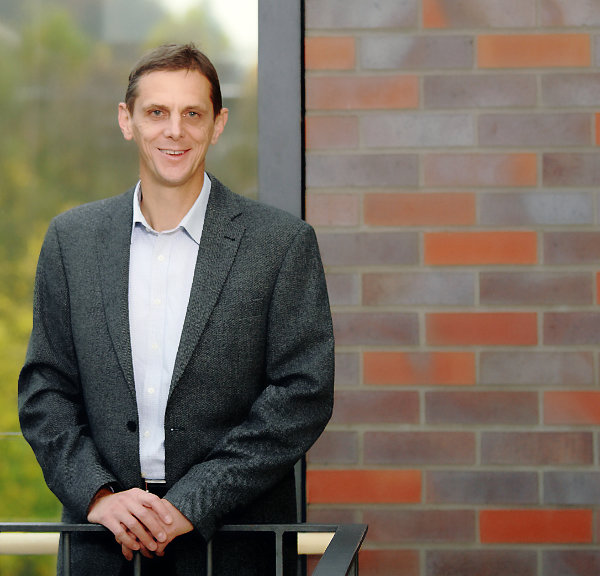
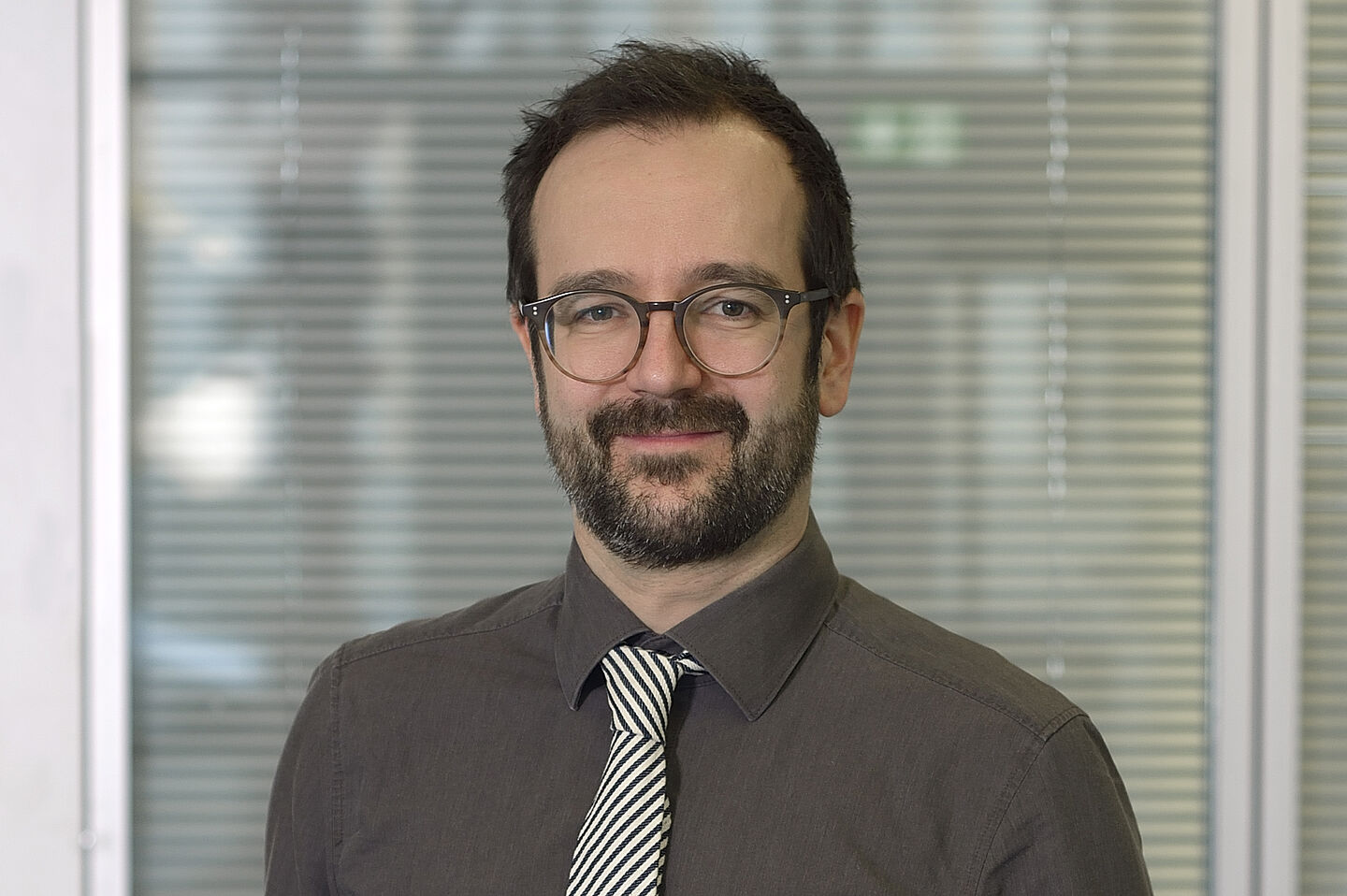
Prof. Dr.-Ing. Carsten Roppel is a Professor in the Faculty of Electrical Engineering at Schmalkalden University of Applied Sciences. He is housed in Building B, Room 0410, with contact numbers +49 3683 688 5110 and +49 3683 688 5499. His primary teaching areas include: Communications Engineering Signal Processing Prof. Roppel teaches the following courses: Signals and Systems Fundamentals of Information Technology Fundamentals of Radio Frequency Technology Optical Communications Digital Signal Processing Communication Networks System Theory and Signal Processing Communication Systems Communications Engineering Laboratory He has authored a book titled "Fundamentals of Communications Engineering". His research interests align with the faculty's research areas including Diagnostic Systems, Ion Channels, Compressed Sensing, and Software Defined Radio (SDR).
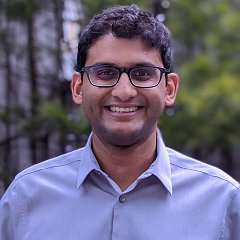
Rohan Padhye is an Assistant Professor in the Software and Societal Systems Department (S3D) within the School of Computer Science at Carnegie Mellon University. He leads the Program Analysis, Software Testing, and Applications (PASTA) research group and serves as affiliate faculty at CyLab. His research spans software engineering, programming languages, systems, and security, with publications at top venues including ICSE, ASE, ISSTA, MSR, OOPSLA, SOSP, SoCC, NSDI, and USENIX Security. Padhye completed his Ph.D. in Computer Science at UC Berkeley under Koushik Sen, where he investigated techniques for specializing program analysis and automated testing tools. He holds a Master's degree from IIT Bombay in static program analysis. Prior to CMU, he worked with Amazon Web Services, Microsoft Research, Samsung Research America, and IBM Research India. His research focuses on automatically discovering software bugs using dynamic program analysis and coverage-guided fuzz testing. Recent projects include Fray (a concurrency testing platform for the JVM), Mu2 (mutation-based fuzz testing), and JQF+Zest (coverage-guided property-based testing). His work has identified numerous bugs in open-source software across Google Closure Compiler, OpenJDK, Apache projects, and others. Padhye's publications demonstrate a consistent focus on improving software testing through innovative fuzzing techniques, with recent work expanding into date/time bug analysis, distributed systems testing, and AI-driven legal reasoning. His research bridges theoretical foundations with practical applications, evidenced by tools like ChocoPy (used for teaching compilers at multiple universities) and JQF+Zest (integrated into Fuzzit cloud service). NSF grant as PI on Practical Controlled Concurrency Testing for Managed Code (2025) NSF grant as PI on Strengthening Correctness of Date and Time Logic in Software Systems (2025) Amazon Research Award for property-based testing (2025) Distinguished Reviewer Award for PLDI'25 ACM SIGSOFT Distinguished Paper Award for date/time bugs study Best Paper Award at SOSP 2019 Padhye advises multiple Ph.D. students in the PASTA Lab, including Ao Li, Vasudev Vikram, and Shrey Tiwari. He has served on program committees for major conferences including ASE, SPLASH, ISSTA, ICSE, and PLDI. His teaching at CMU includes courses on Program Analysis and Fantastic Bugs and How to Find Them, continuing his work from Berkeley where he was an Outstanding Graduate Student Instructor. The PASTA Lab conducts research on Program Analysis, Software Testing, and Applications with a focus on dynamic analysis and grey-box fuzzing. The lab follows an open science ethos, making all research artifacts openly accessible and reproducible under permissive licenses. Their research is funded by NSF, CyLab, and Amazon, with a commitment to responsible disclosure practices in security research.
Steven Latré is a Professor in the Department of Computer Science at the University of Antwerp, specializing in network management, software-defined networking, and network function virtualization. His research spans wireless communications, Internet of Things, machine learning for networking, and quality of experience optimization. With over 246 publications from 2007 to 2025, he has established himself as a leading researcher in network intelligence and management. His research focuses on developing intelligent approaches for network management, with particular emphasis on applying machine learning techniques to solve complex networking challenges. His work covers adaptive video streaming, resource allocation in heterogeneous networks, wireless sensor networks, and vehicular communications. His research often bridges theoretical advances with practical implementations, as evidenced by numerous collaborations with industry partners and participation in European research projects. His recent publications demonstrate a growing interest in applying AI and machine learning to networking problems, with significant contributions in network function virtualization, software-defined radio access networks, and intelligent resource allocation. His work shows a clear trajectory from traditional network management toward more intelligent, self-optimizing network systems that leverage the latest advances in artificial intelligence. His scientific contributions have been recognized through numerous publications in top-tier networking venues including IEEE Communications Magazine, IEEE Transactions on Network and Service Management, and IEEE Internet of Things Journal. His research has consistently addressed real-world networking challenges while pushing theoretical boundaries in network management and orchestration. Professor Latré has actively supervised numerous PhD students and collaborated extensively with researchers worldwide, particularly with colleagues at the University of Antwerp including Jeroen Famaey, Filip De Turck, and Tom De Schepper. His collaborative network spans multiple continents, reflecting the international impact of his research.
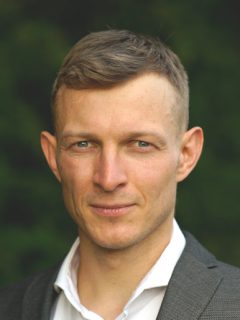
Peter Wägemann is a postdoctoral researcher leading the Embedded Systems Software group at the Chair of Computer Science 4 (System Software) at Friedrich-Alexander-Universität Erlangen-Nürnberg (FAU). His research focuses on real-time systems, energy-constrained systems, worst-case analysis, and fault tolerance in embedded systems. He has received multiple awards, including the Best Paper Award at ECRTS '24 and Outstanding Paper Awards at ECRTS '18 and RTAS '17. His work spans topics like clock reconfiguration, energy-neutral systems, and Byzantine fault tolerance. Wägemann's teaching includes courses such as System-Level Programming, Real-Time Systems, and Dependable Real-Time Systems. He has organized conferences like WCET and RTSS and serves on program committees for top venues. His funded projects include DFG grants for Byzantine Fault Tolerance (BFTeam), whole-system analysis (Watwa), and power-constrained systems (ResPECT). He also collaborates with industry partners like Schaeffler AG on safety-critical AI systems. Key contributions include the Platin WCET analysis tool, TinyBFT for resource-constrained systems, and energy-efficient frameworks like FusionClock. His work bridges theoretical analysis with practical implementations in embedded systems, emphasizing sustainability and real-time guarantees.
Prof. Dr. Ingo Weber is a Full Professor at the Technical University of Munich (TUM) in the Department of Information System Development and Operation within the TUM School of Computation, Information and Technology. He also serves as Director of Digital Transformation and ICT Infrastructure at the Fraunhofer-Gesellschaft. Previously, he held a full professorship at TU Berlin (2019–2022) and spent a decade in Australia researching at CSIRO, NICTA, and UNSW. His research focuses on Business Process Management (BPM), Process Mining, Blockchain technology, Software Architecture, DevOps, and AI Systems Engineering. Weber has authored/co-authored influential books including DevOps: A Software Architect's Perspective (Addison-Wesley, 2015) and Engineering AI Systems: Architecture and DevOps Essentials (2025). Education & Career - PhD in Semantic Methods for Business Process Modeling (University of Karlsruhe, 2009) - SAP Research parallel role during doctoral studies - Tenured Professorships at TU Berlin and TUM Research Interests Weber's work bridges academic theory and industrial applications. Key areas include: - Blockchain-based process execution (Caterpillar framework on Ethereum) - AI-driven DevOps practices - Scalable transaction creation in blockchain systems - Sustainability-oriented process analysis (SOPA framework) - Generative AI for large process models Awards - Two-time BPM Best Blockchain Paper Award (2019/2022) - ISSRE Best Paper (2015) - CSIRO/NICTA Excellence Awards (2015–2018) - EDOC 2023 Best Paper Grants & Labs - Leads Fraunhofer's digital transformation initiatives - Collaborates with industry partners like Commonwealth Bank (Australia) - Active in EU/CSIRO-funded blockchain research projects Key Contributions - Pioneered blockchain-based BPM systems (Caterpillar) - Defined blockchain pattern taxonomies - Developed tools like BLF (Blockchain Logging Framework) - Advocates for responsible AI engineering practices
Prof. Sebastian Müller holds a professorship in Finance at the TUM School of Management, TUM Campus Heilbronn since 2019. Previously, he was a professor at the German Graduate School of Management and Law (GGS) in Heilbronn (2016–2019). He earned his PhD from the University of Mannheim in 2011 and was a visiting scholar at UC Berkeley (2012–2013). His research focuses on capital markets, investor behavior, and the digitalization of finance, employing machine learning and text analysis. He has been recognized with awards such as the SUERF/UniCredit Prize (2019) and the Spängler-IQAM Award (2018/2019). Notable contributions include work on market anomalies, ESG integration, and the impact of media on financial trends. His research infrastructure projects, like SLICES-RI and pos framework, emphasize reproducible experimentation in networked systems. Education : Mannheim University (Business Admin, PhD 2011) University of Swansea (Business Admin) Research interests span quantitative finance, AI-driven analytics, and sustainable investing. His recent work explores global market dynamics and the application of generative AI in financial analysis. He has published in top journals like the Journal of Financial Economics and Review of Financial Studies . Awards : 7th SUERF/UniCredit Foundation Research Prize (2019) Spängler-IQAM Award (Runner-Up, 2018/2019) Acatis Value Prize (2018) and Young Talent Award (2015) Prof. Müller collaborates on interdisciplinary projects like the EnGINE infrastructure for time-sensitive networks and SLICES-RI for reproducible experiments. His work bridges finance theory and technological innovation in digital finance.
Dr. Julian Zobel is a postdoc researcher at the Adaptive Communication Systems research group within the Department of Electrical Engineering and Information Technology at the Technical University of Darmstadt. He completed his computer science studies at TU Darmstadt and worked as a research assistant from 2018-2022 before finishing his PhD in 2023 with a thesis focused on autonomous applications of aerial communication networks in disaster situations. His research interests include: Distributed and infrastructure-independent communication networks Aerial communication support and network monitoring Satellite networks Disaster response communication systems Wireless sensor networks for emergency scenarios Dr. Zobel's recent publications demonstrate a strong focus on improving communication resilience in disaster scenarios through innovative approaches involving UAVs, satellite communication, and network monitoring systems. His work bridges theoretical networking concepts with practical implementations for emergency response situations, with particular emphasis on infrastructure-independent solutions that can operate when traditional communication systems fail. His research spans multiple technical domains including protocol design, network resilience, and field testing of communication systems in realistic environments. He has supervised over 25 Master's and Bachelor's theses on topics related to his research. Notable students include Jakob Karg (KOM Award for Best Master's Thesis 2019) and Lukas Wehrstein (KOM Award for Best Bachelor's Thesis 2022). His advisees have worked on projects ranging from UAV-based network topology monitoring to low-power communication protocols for emergency crisis communication. Dr. Zobel maintains an active research profile with publications spanning conferences like ISCRAM, IEEE LCN, WONS, and journals like Global Change Biology. His collaborative work includes frequent partnerships with researchers such as Ralf Steinmetz, Björn Scheuermann, and Ralf Kundel. He is currently focused on advancing research in distributed communication networks that can operate independently of traditional infrastructure, with particular attention to satellite communication, UAV-based systems, and network monitoring approaches that can be deployed rapidly in emergency situations.
Antje Raab-Düsterhöft is a researcher at Hochschule Wismar with a distinguished academic career spanning over three decades, evidenced by her continuous publication record from 1993 to 2024. Her work demonstrates sustained research activity and significant contributions to multiple areas within computer science. Her primary research interests include: Database Systems and Conceptual Modeling Natural Language Processing for Database Interfaces Digital Forensics and Cybersecurity Information Retrieval and Web Search Technologies Social Media Analysis Human-Computer Interaction Analysis of her publication history reveals a clear evolution in research focus. She began with foundational work in database design and natural language interfaces in the 1990s, progressed to linguistic-based search facilities in the early 2000s, and has more recently focused on digital forensics, social media analysis, and advanced cybersecurity topics. Her 2024 publications on data security and forensic strategies for software-defined networks demonstrate her continued relevance in addressing contemporary technological challenges. Dr. Raab-Düsterhöft has maintained extensive research collaborations throughout her career, most notably with Bernhard Thalheim (15 co-authored publications), Meike Klettke (9 publications), Andreas Heuer (7 publications), and Edith Buchholz (7 publications). These long-term partnerships indicate her integration within established research communities and her collaborative approach to academic work.
Prof. Dr.-Ing. Wolfgang Kellerer is a full professor at the Chair of Communication Networks within the Department of Computer Engineering , TUM School of Computation, Information and Technology . He also serves as an adjunct professor in the Department of Informatics. His research focuses on adaptive, programmable communication networks, particularly Software Defined Networking (SDN) , Network Function Virtualization (NFV) , and 6G technology . He has contributed to quantifying network flexibility and AI-driven network management. Member of the ERC Peer Review Panel (2023-2024) Scientific Director of TUM Venture Lab Robotics/AI/Communication (2020-present) Editorial roles: IEEE Transactions on Network and Service Management , IEEE Communications Surveys & Tutorials His research spans from 5G to 6G , emphasizing ultra-low latency, resilience, and cross-layer optimization. Key projects include 6G-life , 6G Future Lab Bavaria , and ERC FlexNets , with over 300 publications and 40 patents. Scientific Awards include the ERC Consolidator Grant (2015) , IEEE Fellow (2025) , and multiple best paper awards at IEEE/IFIP CNSM, IEEE Future Networks, and ACM SIGCOMM.
Simon Bauer is a Research Scientist at the Chair of Materials Engineering of Additive Manufacturing at the TUM School of Engineering and Design, Technical University of Munich. Research focus: Additive Manufacturing of Metals, Functionally Graded Structures, Multimaterial Transfer Printing, Computational Material Design Contact: Freisinger Landstraße 52, 85748 Garching bei München, Germany; Email: simonpatrick.bauer@tum.de His recent publications span networking and material science. In networking, he investigates TCP throughput monitoring , QUIC protocol , and CDN performance . In material science, his work centers on additive manufacturing and multimaterial structures .
Sai Anirudth Madhavapeddi is a Researcher at the Chair of Communication Networks within the College of Engineering at the Technical University of Munich . The chair, led by Prof. Dr.-Ing. Wolfgang Kellerer, focuses on advanced network management, programmable cellular networks, and AI-driven communication systems. Research Areas: 6G Network Development Software-Defined Networking (SDN) AI-Enabled Network Management Network Programmability Affiliation: Chair of Communication Networks, Technical University of Munich Part of active research projects like 6G Future Lab Bavaria and AI.NET Contact: go29ben@mytum.de
Adam Wolisz is a full Professor of Electrical Engineering and Computer Science at Technische Universität Berlin (TU Berlin), where he founded and led the Telecommunication Networks Group (TKN) from 1993 until 2018. He also served as Executive Director of the Institute for Telecommunication Systems (2001-2018), inaugural Dean of the Faculty of Electrical Engineering and Computer Science (2001-2003), and is currently an Einstein Center Digital Future (ECDF) Fellow. Since 2005 he has held an adjunct appointment at the University of California, Berkeley, and is presently a visiting researcher at the Berkeley Wireless Research Center. Education Dipl.-Ing. in Control Engineering, Silesian Technical University, Gliwice (1972) Dr.-Ing. in Computer Engineering, Silesian Technical University, Gliwice (1976) Habilitation in Computer Engineering, Silesian Technical University, Gliwice (1983) Research Interests Professor Wolisz has spent five decades advancing the architectures, protocols, and performance evaluation of communication networks. His current work centres on mobile multimedia communication , wireless sensor networks , and cognitive/cooperative wireless systems . Methodologically, he combines rigorous analytical modelling with large-scale simulation and real-world experimentation, frequently within the open testbeds run by TKN. A cross-cutting theme is Quality of Service (QoS) —from early work on real-time operating systems and industrial field-buses to recent studies on QoE-driven adaptive video streaming and ultra-reliable low-latency vehicular communications. His group is internationally recognised for contributions to reinforcement-learning-based MAC scheduling , spectrum sharing between LTE-U and WiFi , and energy-efficient protocol design . Publication Impact & Trends Across more than 200 refereed publications, two clear trajectories emerge: (1) a continuous evolution from wired network modelling (WDM optical networks, ATM, early Internet QoS) toward fully wireless and mobile settings, and (2) an increasing reliance on machine-learning techniques to tackle uncertainty and dynamics in dense, heterogeneous wireless environments. Recent papers exploit deep reinforcement learning for scheduling, federated learning for context-aware services, and transfer learning for realistic mobile-app testing. Scientific Awards & Recognition Best Paper Awards: IEEE WoWMoM 2020, IEEE INFOCOM CNERT 2019, ACM MSWiM 2017, IEEE EW 2017, IFIP WD 2017, IEEE EW 2009 Best Demo Award: ACM/IEEE IPSN 2014 (EVARILOS benchmarking platform) Senior Member, IEEE & IEEE ComSoc; Member, ITG (VDE); Steering Board, GI/ITG KuVS Doctoral Advising, Projects & Funding Since establishing TKN in 1993, Professor Wolisz has supervised over 60 completed PhD dissertations . Current and recent funding includes the DFG Collaborative Research Centre 1053 “MAKI”, DFG priority programme “SmartSynch”, EU projects (e.g., Fed4FIRE+, H2020 5G-Infrastructure), and industrial collaborations with Deutsche Telekom, Nokia, and Rohde & Schwarz. The group operates large-scale indoor and outdoor testbeds (FIT/IoT-LAB Berlin, TKN campus testbed, EVARILOS benchmarking framework) that are open to external researchers. Laboratories & Teams At TU Berlin, Professor Wolisz heads the Telecommunication Networks Group (TKN) , comprising more than 25 researchers (post-docs, PhD candidates, MSc students, technical staff). TKN maintains four major labs: the Wireless Communication Lab (software-defined radios, mmWave, IEEE 802.11ax/ay), the Sensor Networking Lab (IoT, 6TiSCH, energy harvesting), the Networking Testbed (optical backhaul, network softwarisation), and the QoE & Multimedia Lab (adaptive streaming, immersive media). Multiple spin-off companies have emerged from TKN research, most recently “Wolisz Technologies” (founded 2020) commercialising AI-driven Wi-Fi optimisation.
Professor Michael Einhaus serves as Professor of Mobile Communications and High Frequency Technology at the Faculty of Digital Transformation, Leipzig University of Applied Sciences (HTWK Leipzig). His academic career spans both industry research and higher education, with a strong focus on wireless communications technologies. His primary research interests encompass: Radio access network planning, operation and optimization Quality of service provision and prediction in radio access networks Data analytics and machine learning for radio access optimization Radio access disaggregation, virtualization and automation System level simulations and mobile radio network measurements Private radio access networks for industrial applications (LTE, 5G and beyond) Professor Einhaus's publication record demonstrates expertise in next-generation wireless technologies, particularly in Software Defined Radio implementations, 5G architecture frameworks, and resource allocation strategies for virtualized radio access networks. His work consistently bridges theoretical research with practical industrial applications, as evidenced by his numerous workshops and presentations for industry partners. He teaches a comprehensive curriculum including Wireless Communications (T117), Fundamentals of Mobile Communications (T175), Information and Communication Technology Laboratory (T605), Transmission Technology (T643), and specialized seminars on next-generation wireless systems. Additionally, he offers professional development courses on 5G campus networks, 5G basics, and mobile communications for industrial applications.
Hui Zhang is a Professor in the School of Computer Science at Carnegie Mellon University, where he has made significant contributions to networking research for over two decades. He received his PhD from the University of California, Berkeley in 1993 and has maintained a prominent research career focusing on internet protocols, video streaming, and network management. His research interests span computer networking, internet video streaming, quality of service, content delivery networks, network protocols, multimedia communication, and network management. Professor Zhang's work has been particularly influential in developing adaptive video streaming technologies and content delivery mechanisms that power much of today's internet video infrastructure. His recent publications demonstrate continued innovation in networked systems, with a focus on improving video quality of experience through machine learning techniques and advanced network control mechanisms. The research trends show an evolution from foundational network protocol design to more application-focused solutions for video delivery and user experience optimization. Professor Zhang has mentored numerous successful researchers who have gone on to make their own significant contributions to the field. His collaborative work spans multiple institutions including Carnegie Mellon University, University of California, and various industry research labs. His research has been supported by substantial grants from NSF, industry partnerships, and has resulted in technologies that have been widely adopted in commercial video streaming services. Professor Zhang maintains an active research laboratory focusing on next-generation networked multimedia systems.
René Glebke is a Researcher at RWTH Aachen University's Communication Systems Group (COMSYS), focusing on Cyber-Physical Systems (CPS). His work emphasizes reliable data communication for industrial control, critical infrastructure, and low-level packet processing. He is affiliated with projects like QuGrids (Quantum-based Energy Grids) and the Cluster of Excellence 2023 Internet of Production. Previously, he contributed to DFG SPP 1914 projects (e.g., REFLEXES, REDeFiNE). Teaching: Organized Practical Internet eXperience (PIX) Lab and seminars on Advanced Internet Technology. Awards: Best Paper (2012), Best Student Paper (2012), and a Best Paper Nomination (2021). Research Trends: Recent articles address energy grids, NILM domain bias, and in-network computing for industrial systems. Advising: Supervised 33 students across Bachelor’s/Master’s theses and 34 seminar topics. Active in lab organization (e.g., Research Focus Class on In-Network Processing). Labs/Teams: Core member of COMSYS, involved in the Internet of Production initiative.