Jörg Weber is a Senior Lecturer in Economics at the University of Exeter Business School and a research fellow at the Centre for Decision Research and Experimental Economics (CeDEx) and the Network for Integrated Behavioural Science (NIBS). His research focuses on household finance, choice, and preferences within behavioral economics. He maintains a blog discussing LaTeX and Stata integration techniques for academic workflows. He holds an affiliation with the University of Exeter Business School located at Streatham Court, Exeter, United Kingdom. His technical contributions include developing tools for automated table generation and improving LaTeX/Stata interoperability. While no specific grants or advising roles are highlighted in the provided text, his work emphasizes methodological advancements in academic publishing and data analysis.
Pierre Le Bras is an Assistant Professor at the Department of Computer Science, School of Mathematical & Computer Sciences, Heriot-Watt University. His research focuses on the intersection of Data Visualization and Machine Learning, emphasizing interactive systems that explain complex processes. He contributes to UN Sustainable Development Goals through his work on information communication and accessibility. Le Bras has collaborated with researchers across disciplines, including robotics and healthcare, and has received recognition for projects like the Visualising Covid-19 Research initiative. He actively supervises PhD students and explores topics such as large language models, remote planning frameworks, and user-centered visualization tools. Key Research Themes: Machine Learning Visualization, Human-Computer Interaction, Exploratory Data Analysis Awards: Visualising Covid-19 Research and Improved by Google Cloud (2020) Advising & Grants: Accepting PhD students since 2016; involved in collaborative projects funded by Google Cloud and other institutions. His work bridges technical rigor with user-centric design, aiming to enhance how audiences interpret and communicate complex information.
Joanne Atlee is a Professor in the Department of Computer Science at the University of Waterloo, Canada. She serves as Director of Women in Computer Science, actively promoting gender equity in the field. Her research focuses on software product line engineering, feature interaction analysis, and visualization of software analysis results. She holds a Ph.D. (1992), M.Sc. (1988), and B.Sc. (1985) from the University of Maryland and College of William and Mary. Education: Ph.D., Computer Science, University of Maryland, 1992 M.Sc., Computer Science, University of Maryland, 1988 B.Sc., College of William and Mary, 1985 Research Interests: Analysis and visualization of large distributed software systems Semantics of software feature composition Feature interaction detection and resolution Formal methods in software engineering Model-driven engineering Her work emphasizes industrial applications, particularly in automotive software and safety-critical systems. Recent research trends in her publications include: Exploring AI-driven code analysis (e.g., distinguishing human vs. GPT-4-generated code) Advancing visualization techniques for software product line analysis (e.g., Neo4j-based tools) Addressing scalability challenges in formal verification for industrial systems As an advocate for diversity, her work on gender representation in software engineering communities bridges technical and sociotechnical aspects of the discipline. She has advised numerous industrial collaborations in automotive and embedded systems domains, though no specific student names are listed in available materials. Labs/Teams: Leads the Women in Computer Science initiative at Waterloo and collaborates with automotive industry partners through formal methods research.
Weiyi (Ian) Shang is an Associate Professor at the University of Waterloo, affiliated with the Department of Electrical and Computer Engineering within the Faculty of Engineering. His research focuses on software engineering, performance testing, and machine learning applications in software systems. He leads the Software Engineering and System Engineering Lab, emphasizing practical solutions for logging, performance optimization, and automated testing. Key research areas include log analysis (privacy leakage detection, log summarization, and logging strategies), performance monitoring (regression detection, workload modeling), API evolution (migration techniques, workaround analysis), and automated code generation (LLMs in bug decomposition, AI code evaluation). His work bridges theoretical advancements with industrial applications, particularly in web systems and mobile app ecosystems. Publications span empirical studies, novel algorithms (e.g., DELA for error detection, CoMSA for configuration testing), and tools like LogAssist and Log4Perf. His research consistently addresses challenges in developer productivity, system reliability, and security across diverse domains like federated learning and DevOps practices. Notable contributions include improving log management through topic models, enhancing performance testing efficiency via microbenchmark optimization, and analyzing privacy risks in mobile app logs. Ongoing work explores AI-driven code evaluation and generalizable code embeddings for software tasks. Shang’s lab collaborates with industry on real-world systems, as seen in case studies involving serverless applications and database-centric systems. His research often involves empirical studies and tool development to bridge gaps between academic research and practical software engineering challenges.
Richard Trefler is an Associate Professor at the David R. Cheriton School of Computer Science, University of Waterloo. He specializes in formal verification, model checking, and the analysis of reactive and distributed systems. His work focuses on compositional reasoning, abstraction techniques, and parameterized systems to address state explosion challenges. Trefler has contributed to the synthesis of protocols, smart contract verification, and temporal logic applications. Research interests include automated reasoning tools, parameterized systems, communication protocols, and visual specifications for system design. His publications span conferences like VMCAI, ECOOP, and TACAS, with notable work on symmetry reduction and compositional verification. He received the Best Paper Award at the 22nd IFIP FORTE Conference for his contributions to modular reasoning in asynchronous systems. Current Student: Ruoxi Zhang Former Students: Zarrin Langari (2011), Shoham Ben-David (2009), Naghmeh Ghafari (2009), Jane D. Thi Tang (2006) His research explores cutting-edge topics such as protocol synthesis using temporal specifications and formal analysis of smart contracts. Trefler’s work bridges theoretical foundations with practical applications in distributed computing and cybersecurity.
Troy Michael John Vasiga is a faculty member at the David R. Cheriton School of Computer Science under the Faculty of Mathematics at the University of Waterloo , where he lectures undergraduate computer science courses and contributes to academic outreach. His research interests span Computer Science Education , Algorithms , Discrete Mathematics , and Theoretical Computer Science , with a focus on programming pedagogy, competitive programming, and combinatorial structures. Education : PhD in Computer Science (2008, University of Waterloo) with a thesis on error detection in number-theoretic algorithms. His publications highlight expertise in algorithm design , educational technology (e.g., CS Circles), and combinatorics (e.g., Thue-Morse sequence analysis). He has participated in events like IBM CASCON and ISSEP, presenting on computing education and algorithmic challenges. Previously serving as an undergraduate advisor, Vasiga now focuses on admissions and outreach, maintaining an active role in curriculum development and programming competition mentorship. Scientific Awards : No specific awards mentioned in the provided text. Labs & Teams : Involved with the Canadian Computing Competition and Waterloo’s computer science outreach initiatives, including organizing contest archives and mentoring students.
Dejan Nickovic is a Professor affiliated with the Department of Cyber-Physical Systems at TU Wien. His research focuses on runtime verification, formal methods for cyber-physical systems (CPS), and software testing. He leads projects such as TAIGER (2023–2027) and ARTIST (2021–2026), advancing CPS safety and AI robustness. His work bridges theoretical formalisms with practical applications in robotics, IoT, and embedded systems. Key research themes include specification mining, fault localization, and automated verification. He has developed tools like DeepRIoT for robotic-IoT integration and FIM for Simulink fault analysis. His professorial dissertation (2020) formalized runtime verification techniques for CPS. Recent publications emphasize adaptive architectures, backdoor detection in AI, and hyperproperties for security. He collaborates extensively with academia and industry, addressing challenges in CPS testing and verification through grants like ZK 35-G (2019–2024). His lab supports platforms like CPS/IoT Ecosystem for research and education. Projects: TAIGER, ARTIST, EdgeAI, ProbInG Supervised students: N. Manjunath (PhD, 2021), Florian Exenberger (2019), Markus Heindl (2017)
Prof. Maria Christakis is a Full Professor in the Faculty of Informatics at TU Wien, leading the Rigorous Software Engineering Group and the Software Engineering Research Unit (E194-01). Her research focuses on developing reliable software tools, emphasizing formal methods, program analysis, and automated testing. She holds leadership roles including Curriculum Coordinator for Software Engineering programs and Faculty Council membership. Her research interests span automatic test generation, program verification, and improving developer productivity through novel techniques. Notable projects include the 'Sherlock' framework for testing program analyzers and 'Olympia' for Solidity fuzzer benchmarking. Awards include Amazon and Google Research Awards, and she actively contributes to conferences like CAV, ASE, and IJCAI. Prof. Christakis advises over 15 students (PhD, Master's, and project students) and has supervised numerous alumni. She teaches core courses like Advanced Software Engineering and oversees Bachelor/Master curricula. Her work bridges formal verification and systematic testing, with tools like 'queryFuzz' and 'LIBRA' addressing neural network fairness and SMT solver reliability. Current projects include the 'Nomos' specification language for machine learning safety and the 'LaZ' framework for lazy testing. She co-leads the Automated Reasoning doctoral school and collaborates with institutions like MPI-SWS and Microsoft Research.
Feng Dai is affiliated with Xidian University's National Laboratory of Radar Signal Processing in China. His research spans approximation theory, machine learning, computer vision, and optimization algorithms. He has collaborated extensively with institutions like the National Laboratory and co-authored over 140 publications since 2002. Key research interests include polynomial approximation on multivariate domains, deep learning for computer vision tasks (e.g., object detection, semantic segmentation), and optimization techniques for engineering systems. His work bridges mathematical theory with practical applications in signal processing and imaging systems. Recent publications focus on advancing polynomial mesh theory, developing algorithms for panoramic imaging, and improving federated learning frameworks for IoT applications. Notable contributions include work on universal discretization methods and boundary handling in oriented object detection. His interdisciplinary approach integrates computational mathematics with modern AI techniques, addressing challenges in both theoretical and applied domains such as autonomous systems and medical imaging.
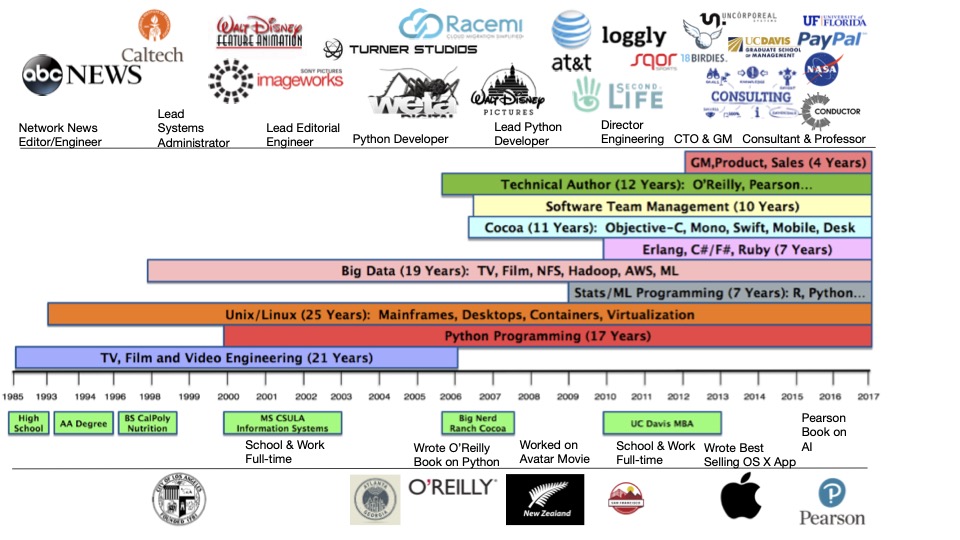
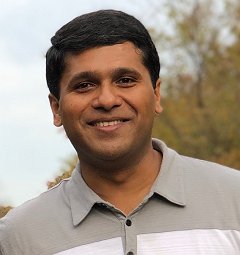
Noah Gift is a Lecturer at UC Davis Graduate School of Management in the MSBA program, with additional affiliations at Duke MIDS, Northwestern MSDS, UC Berkeley MIDS, UNC Charlotte Data Science Initiative, and University of Tennessee. He specializes in graduate-level instruction in Machine Learning, MLOps, Cloud Computing, and Data Science. Executive in Residence, Duke MIDS (Data Science) Lecturer, UC Davis Graduate School of Management Adjunct faculty, Northwestern and UC Berkeley Gift's research and teaching focus on practical applications of machine learning and cloud technologies. His work bridges academic theory with industry practice, emphasizing cloud-native solutions, DevOps automation, and production-first AI systems. Recent publications and courses highlight his expertise in multi-cloud certification, data engineering, and scalable machine learning architectures. His publications trend toward cloud-based AI/ML systems (35%), DevOps automation (30%), and data science pedagogy (25%). Key subfields include MLOps, serverless computing, Python automation, and enterprise cloud adoption strategies. Awards: AWS Machine Learning Hero Certifications: AWS Certified Solutions Architect, AWS Certified Machine Learning Specialist, Google Certified Cloud Architect As founder of Pragmatic AI Labs, Gift consults on machine learning and cloud architecture while leading global workshops and certification programs. He has delivered technical training at NASA, PayPal, and O'Reilly conferences, with extensive industry experience at companies like Disney, Sony, and AWS.
Dr. Biswajit Biswal is an Assistant Professor in the Department of Computer Science & Mathematics at South Carolina State University, focusing on Cybersecurity courses. With over five years at SC State, he actively involves students in research and has secured numerous grants as PI, Co-PI, and Senior Personnel, enhancing the university's research culture. Education includes a Ph.D. in Computer Information and System Engineering from Tennessee State University (2016), M.S. in Electrical Engineering from NYU Tandon School of Engineering (2008), and B.E. in Medical Electronics Engineering from B.M.S. College of Engineering, India (2005). Research interests center on Cybersecurity, AI/ML, Data Science, Blockchain, and Cloud Computing. His work develops AI applications across domains like agriculture, autonomous vehicles, and network security. Publications demonstrate a focus on applied AI solutions to real-world problems including plant disease detection, soil monitoring, drone security, and cloud analytics. Significant contributions include grant acquisition for research development and student involvement. Leads cybersecurity curriculum development and mentors students in research projects.
Xingfu Wu is a Research Professor of Computer Science affiliated with Argonne National Laboratory (ANL). He holds a Ph.D. in Computer Science from Beijing University of Aeronautics and Astronautics and M.S. and B.S. degrees in Mathematics from Beijing Normal University. His research focuses on high-performance computing, performance modeling and analysis, and energy-efficient computing. Education: Ph.D. in Computer Science, Beijing University of Aeronautics and Astronautics, Beijing, China M.S. in Mathematics, Beijing Normal University, Beijing, China B.S. in Mathematics, Beijing Normal University, Beijing, China Research Interests: Xingfu Wu's research is centered around high-performance computing, performance modeling and analysis, and energy and power modeling. His work emphasizes optimizing parallel systems, developing frameworks for performance prediction (e.g., MuMMI), and enhancing energy efficiency in high-performance computing environments. Scientific Awards: Best Paper Award, 14th IEEE International Conference on Computational Science and Engineering (CSE-2011), 2011 Second Place, Beijing Science and Technology Advancement Awards, 1997 Labs/Teams: Wu contributes to research at Argonne National Laboratory, particularly through initiatives like the MuMMI framework for performance modeling and analysis.
Lukas Pirl is a researcher at the Hasso Plattner Institute (HPI), University of Potsdam, working within the Department of Operating Systems and Middleware. His research focuses on dependability, fault tolerance, and experimental assessments of distributed systems with particular applications in railway technology and IoT systems. His research interests span multiple domains including: Dependability and fault tolerance architectures & protocols Experimental assessments using software fault injection Environmentally aware computing and information management Symmetric peer-to-peer systems and storage operating systems Railway digitalization and safety-critical systems Lukas's recent publications demonstrate a strong focus on applying distributed systems research to railway technology. His work spans from digital train control systems (FlexiDug project) to railway crossing safety (Digital St. Andrew's Cross), and from blockchain applications in railway systems (RailChain, ZugChain) to IoT testing methodologies. A significant portion of his research involves using SUMO for railway simulations and developing test automation frameworks for railway components, showing an evolution from general distributed systems research toward specialized applications in critical infrastructure. He has co-supervised numerous Master's theses at HPI, working with students on topics ranging from railway simulation architectures to blockchain implementations for railway systems. His teaching activities include serving as a teaching assistant for courses on distributed systems, embedded operating systems, and trends in operating systems across multiple semesters. Lukas is actively involved in several major research projects: FlexiDug : Investigating reuse of rail infrastructures in former brown coal mining areas, focusing on software architectures for dependable digital train control and signaling systems RailChain : Exploring distributed ledger technologies for the railway sector with focus on timing predictability and resource constraints DiAK : Digitalization of railway crossings for increased safety through bridging V2X and C-V2X technologies Rail2X : Investigating vehicle-to-everything technologies for the railway sector with focus on wireless technology assessments
Vincent Naessens is a Professor at the Department of Computer Science within KU Leuven's Faculty of Engineering Technology, leading the Subdivision Mobility and Security at the Distributed and Secure Software (DistriNet) research group across Ghent and Aalst campuses. His work bridges academic research and industrial applications in critical security domains. Research Focus: Dr. Naessens specializes in secure mobile platforms , advanced authentication systems , privacy-enhancing technologies , and industrial control system security . His research addresses real-world vulnerabilities in IoT ecosystems and develops novel anonymization techniques that balance data utility with privacy protection. Current work emphasizes self-healing embedded systems and secure smart building infrastructures. Publication Trends: Recent publications (2024-2025) reveal three dominant threads: (1) Advanced dataset anonymization methods addressing temporal data and k-anonymity limitations; (2) Deep security analysis of commercial IoT products exposing critical vulnerabilities; (3) Privacy-preserving collaborative data sharing architectures. His work consistently targets practical implementations with measurable privacy-utility tradeoffs. Research Leadership: As principal investigator for major projects including Towards Self-Healing Embedded Systems (2025-2029) and BUGATTI: Embedded Security Testing (2025-2028), he directs teams exploring exploit prevention and adaptive patching. Key funding sources include FWO and EU programs supporting his work on secure SCADA systems and privacy middleware. Research Environment: Leading DistriNet's Mobility and Security subdivision, Naessens oversees a dynamic team publishing at top venues like WOOT and ARES. The group maintains strong industry ties through projects like TRUSTI (IoT security updates) and SolidLab Flanders, with active participation in the Computer Science Department Council and Faculty Advisory Committee.
Santosh Nagarakatte is a Professor and Undergraduate Program Director at the Department of Computer Science, Rutgers University, New Brunswick. He joined Rutgers in January 2013 after obtaining his Ph.D. in Computer Science from the University of Pennsylvania. His research spans hardware-software interfaces including compilers, programming languages, verification, and computer architecture, with a focus on building efficient, robust, and secure software systems. Education: Ph.D. in Computer Science, University of Pennsylvania His research interests include compilers, programming languages, verification, computer architecture, numerical methods, and formal methods. He leads projects on correctly rounded math libraries (RLIBM), verified eBPF ecosystems, lightweight formal methods for LLVM, and tools for parallel programming and debugging. His publications demonstrate a consistent focus on numerical accuracy, verification, and systems building, with recent work emphasizing correctly rounded math functions, eBPF verification in the Linux kernel, and debugging tools for numerical errors. This research bridges theoretical foundations with practical implementations across compilers, architectures, and security domains. Scientific Awards: ACM Distinguished Member (2023) eBPF Foundation Research Gift (2024) Intel Corporation Research Gift (2024) ACM SIGPLAN Dissertation Awards (2018, 2022 as advisor) Distinguished Paper Awards at PLDI, POPL, CGO, ICSE NSF CAREER Award (2015) Google Research Award (2014) IEEE Micro Top Picks (2010, 2013) He leads the Research on Abstractions for Programming and Learning (RAPL) group, advising PhD and Master's students. His research is supported by grants from NSF, Intel, Google, Facebook, and the eBPF Foundation, focusing on verified systems, numerical accuracy, and compiler technologies.