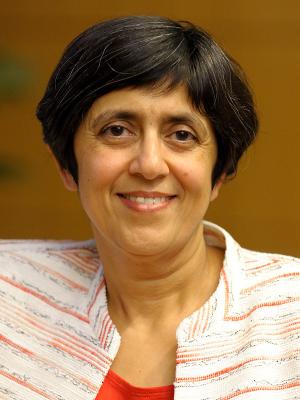
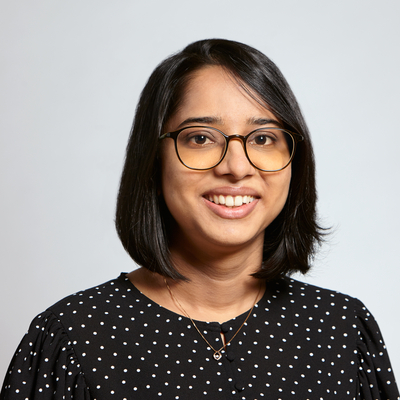
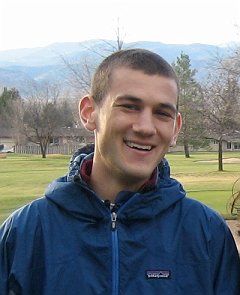
Yingyan (Celine) Lin is an Associate Professor in the School of Computer Science at Georgia Institute of Technology, leading the Efficient and Intelligent Computing (EIC) Lab. Her work focuses on cross-layer innovations in machine learning systems, from algorithms to chip design, aiming to advance green AI and ubiquitous machine learning. She holds a Ph.D. in Electrical and Computer Engineering from the University of Illinois at Urbana-Champaign (2017). Research interests include efficient machine learning, neural rendering (e.g., NeRF), hardware-software co-design for AI acceleration, and graph neural networks. Her lab has pioneered projects like RTML and 3DML, funded by NSF, NIH, DARPA, and industry partners (Qualcomm, Intel, Meta). Awards: NSF CAREER Award (2021), ACM SIGDA Outstanding Young Faculty (2022), Meta Faculty Research Award (2022) Grants: Multi-university projects funded by NSF, NIH, DARPA, SRC, ONR, and industry Recognition: First-place wins at DAC 2022 and TinyML Design Contest 2022, IEEE Micro Top Pick 2023 Her research bridges algorithmic innovation with hardware implementation, emphasizing energy efficiency and real-time performance for applications in AR/VR, computer vision, and neuro-symbolic AI systems.
Shreyas Sen is the Elmore Associate Professor of Electrical and Computer Engineering at Purdue University, jointly affiliated with the School of Biomedical Engineering. He directs the Center for Internet of Bodies (C-IoB) and leads the SPARC Lab, focusing on circuits/systems for secure, energy-efficient body-centric communication and biomedical applications. Education: B.E. (Jadavpur University, 2006), M.S. & Ph.D. (Georgia Tech, 2009-2011). His research spans Human Body Communication (HBC), hardware security, IoT/IoB systems, and low-power sensing. Notable innovations include Electro-Quasistatic HBC (EQS-HBC) technology, which enables covert body-wire communication with 100x lower energy than conventional methods. Research Themes: Secure communication for medical wearables Physical layer security in IoT Ultra-low-power biosensors Side-channel attack mitigation in cryptographic ICs Publications: Over 200 papers in top venues (ISSCC, DAC, CICC, HOST) with focus on HBC systems, electromagnetic security, and biomedical circuits. Recent work explores EQS-HBC privacy properties (Nature Scientific Reports, 2019) and 350x current-domain signature attenuation for AES security (ISSCC 2020). Awards: NSF CAREER Award (2020) AFOSR Young Investigator (2016) MIT TR35 India (2018) 9 Best Paper Awards Intel Outstanding Researcher (2020) He advises over 20 students and leads industry collaborations through Ixana Inc. (founded 2020), commercializing EQS-HBC technology. Current efforts include EQS-based authentication systems and radiation dosimetry wearables.
Daniel W. Bliss is a Professor in the School of Electrical, Computer and Energy Engineering at Arizona State University and Director of ASU's Center for Wireless Information Systems and Computational Architectures (WISCA). With over $50 million in research funding as principal investigator from organizations including DARPA, ONR, Google, and Airbus, his work bridges theoretical foundations with practical implementations across multiple domains of wireless systems. Dr. Bliss received his educational foundation with a B.S.E.E. from Arizona State University (1989), followed by M.S. and Ph.D. degrees in Physics from the University of California-San Diego (1995, 1997). His academic journey includes significant industry experience at General Dynamics (1989-1993) and MIT Lincoln Laboratory (1997-2012) before joining ASU. His research program focuses on advanced wireless systems spanning radar, communications, precision positioning, computational architectures, and medical monitoring applications. Bliss employs information theory, estimation theory, and signal processing to develop novel system concepts with disruptive capabilities. Current research emphasizes RF convergence, integrated sensing and communications, and anticipatory medical analytics using wireless technologies, with particular focus on extracting physiological data from radar signals. Analysis of recent publications reveals a strong trend toward integrated sensing and communications systems, particularly utilizing mmWave and radar technologies for medical monitoring applications. His work increasingly bridges traditional communications and radar domains while expanding into physiological monitoring, demonstrating a clear trajectory toward convergence of wireless technologies for healthcare applications and remote vital sign detection. Dr. Bliss has received significant recognition for his contributions: Fellow of the IEEE (2015) 2021 IEEE Warren D. White Award for Excellence in Radar Engineering 2016-2017 Top 5% Teaching Award at ASU 2017 ASU Fulton Engineering Exemplar Faculty As a dedicated mentor, Dr. Bliss has supervised numerous graduate students through successful dissertation and thesis defenses across both PhD and Master's programs. His research portfolio includes substantial funding from diverse sources with over $50 million secured as principal investigator. Current projects include the $17M DARPA DASH project focused on advanced software-reconfigurable heterogeneous SoCs for next-generation RF systems, and multiple initiatives in contactless vital sign monitoring using radar technologies. Dr. Bliss leads the BLISS Lab and serves as director of WISCA, fostering interdisciplinary research in wireless systems. His team includes researchers working on distributed coherent systems, MIMO radar, RF convergence, and medical monitoring applications, with recent successes including the Making Waves team that tied for first place in the Air Force Spark Tank challenge. He has founded two startup companies: DASH Tech Integrated Circuits Company and the Big Little Sensor Company, focusing on high-performance embedded processing and small-scale radar physiological monitoring, respectively.
Benjamin Carrison-Schafer is an Associate Professor and Assistant Dean for Graduate Student Success at the Department of Electrical and Computer Engineering, Erik Jonsson School of Engineering and Computer Science, University of Texas at Dallas. He leads the Design Automation and Reconfigurable Computing Laboratory (DARClab), focusing on systems, high-level design, and programming methodologies for VLSI computing systems and FPGAs. Education: MBA from McGill University, Canada (2012) PhD in Electrical and Electronic Engineering from University of Birmingham, UK (2003) Research Interests: His work spans modeling, analysis, synthesis, optimization, and implementation of VLSI systems. Current projects include: Approximate Computing, High-Level Synthesis Design Space Exploration, Hardware Security, Behavioral MPSoC Optimization, and Automatic Fault-Tolerant System Generation. His research blends theory and practice, using analytical and experimental techniques to solve real-world problems. Publication Trends: Recent publications demonstrate strong focus on hardware security, FPGA optimization, and automated design methodologies. Key themes include High-Level Synthesis innovations, hardware acceleration techniques, and cross-disciplinary applications of reconfigurable computing. His work frequently addresses challenges in hardware trustworthiness, energy efficiency, and design automation scalability. Professional Activities: Associate Editor: IEEE Transactions on Sustainable Computing (2022-present) Conference Chair: ICCD 2024, DCAS 2024 Program Committee: ASP-DAC, DATE, FCCM, GLSVLSI Advising & Labs: Supervises multiple PhD and Master's students at DARClab. Current research includes domain-specific architecture design, hardware security, sustainable computing, and ML for VLSI design. The lab collaborates with industry partners like Renesas Electronics and develops commercial tools through spin-off company highX Technologies.
Sarita V Adve is the Richard T. Cheng Professor of Computer Science at the University of Illinois at Urbana-Champaign, where she conducts research spanning hardware, programming languages, operating systems, and applications with a focus on domain-specific systems. Her work bridges theoretical foundations and practical implementations, particularly in extended reality and heterogeneous computing. Her educational background includes a Ph.D. and M.S. in Computer Science from the University of Wisconsin-Madison (1993, 1989) and a B.Tech in Electrical Engineering from the Indian Institute of Technology Bombay (1987). Prior to joining Illinois, she served on the faculty at Rice University from 1993 to 1999. Adve's research centers on generalizable and scalable specialization for domain-specific systems, with current emphasis on extended reality (XR) systems including virtual, augmented, and mixed reality. She chairs the ILLIXR consortium to democratize XR research and developed the first fully open-source XR system (ILLIXR). Her foundational contributions include memory consistency models for C++ and Java programming languages, the Spandex coherence framework for heterogeneous systems, and software-driven approaches for hardware reliability. Her work spans hardware reliability (SWAT and RAMP projects), power management (GRACE system), and instruction-level parallelism. Recent publications reveal a strong focus on energy-efficient XR systems, hardware-software co-design for AI workloads, and resilience analysis. Her team explores rendering offload, visual-inertial odometry optimization, and compositional error injection frameworks, often targeting tradeoffs between energy, latency, and accuracy in mobile and edge environments. Fellow of the American Academy of Arts and Sciences Fellow of the ACM and IEEE ACM/IEEE-CS Ken Kennedy Award Anita Borg Institute Woman of Vision in Innovation Award ACM SIGARCH Maurice Wilkes Award Alfred P. Sloan Research Fellowship UIUC University Scholar University of Illinois Campus Award for Excellence in Graduate Student Mentoring Adve actively mentors students and has received multiple teaching awards. She co-founded the CARES movement to address discrimination in CS research events and chairs CS@Illinois CARES. Her service includes leadership roles in ACM SIGARCH (2015-2019), DARPA/ISAT study group, ACM Council, and Computing Research Association. She has secured significant funding including DARPA initiatives and Google Faculty Research Awards. She leads the ILLIXR consortium and has established collaborative research programs such as the $8.3M DARPA Joint University Microelectronics Program. Her lab focuses on open-source XR development, heterogeneous system architectures, and reliability-aware designs, with strong industry and government partnerships.
Dr. Arkaprava Basu is an Associate Professor at the Indian Institute of Science (IISc), Bangalore. He received the ACM India Early Career Researcher (ECR) Award 2024 for his innovative contributions to efficient memory management in GPUs and CPUs through cross-stack software-hardware research. Affiliation: Indian Institute of Science (2018–present) Prior Roles: Full-time Research Staff at AMD Research (Austin, USA, 2014–2018) Education: PhD in Computer Science from University of Wisconsin-Madison (2013) His research focuses on optimizing AI hardware systems by integrating compiler, runtime, and OS design with hardware architecture. Collaborations include long-term consultancy with tech giants, emphasizing practical implementations of his theoretical work. Recognitions: ACM India ECR Award (2024) for "creative and impactful contributions toward efficient memory management for GPUs and CPUs"
Shweta Shinde is an Assistant Professor at ETH Zürich's Department of Computer Science. She leads the Secure & Trustworthy Systems (SECTRS) group and is affiliated with the Institute of Information Security and the ZISC Center. Her research focuses on foundational and practical aspects of trusted computing, system security, and program analysis to protect devices ranging from smartphones to cloud servers. Key areas include AMD SEV-SNP, Arm CCA, Intel SGX, and hardware-software co-design for security. Dr. Shinde has made significant contributions to confidential computing, including frameworks like OpenCCA and tools for analyzing hardware vulnerabilities. Her work has been recognized with Best Paper Awards and Distinguished Paper Awards at top venues. She advises a group of PhD students, including Mark Kuhne, Supraja Sridhara, and Benedict Schlüter. Her service includes program committee roles at IEEE Security & Privacy, USENIX Security, and as Track Co-Chair for AsiaCCS 2026.
Nate Foster is a Professor of Computer Science at Cornell University and currently serves as the Associate Dean for Research in the Ann S. Bowers College of Computing and Information Science. He is also a Visiting Researcher at Jane Street and served as a Visiting Professor at École Polytechnique Fédérale de Lausanne during the 2023-24 academic year. His research uses ideas from programming languages to solve problems in networking, databases, and security. BA in Computer Science, Williams College (2001) MPhil in History and Philosophy of Science, University of Cambridge (2008, all work completed in 2003) PhD in Computer and Information Science, University of Pennsylvania (2009) Foster's research focuses on developing languages and tools that make it easy for programmers to build secure and reliable systems. His current work centers on the design and implementation of languages and tools for programmable networks, particularly using the P4 language. His past work includes bidirectional languages (also known as 'lenses'), database query languages, data provenance, type systems, mechanized proof, and formal semantics. His research group at Cornell has made significant contributions to network verification, software-defined networking, and formal foundations for programmable data planes. Analysis of Foster's recent publications reveals a strong focus on network verification and programming language foundations for networking. His work consistently applies formal methods to practical networking problems, with a particular emphasis on the NetKAT and P4 languages. Over the past five years, his research has evolved toward more complex network verification techniques, including infinite state verification, active learning of network models, and dependently-typed approaches to network programming. His work bridges theoretical computer science with practical networking systems, making formal methods accessible to network engineers. ACM Fellow (2025) ACM SIGPLAN Robin Milner Award (2023) ACM SIGCOMM Rising Star Award (2018) NSF CAREER Award (2013) Alfred P. Sloan Fellowship (2012) Multiple distinguished paper awards across top conferences including POPL, PLDI, and SIGCOMM Foster has advised numerous PhD and Master's students who have gone on to prominent positions in both industry and academia, with many continuing work in programming languages and networking. He has led multiple significant research grants including an NSF CAREER Award and has been involved in the P4 Language Consortium, serving as Chair of the P4 Language Governing Board. His work has been supported by various organizations including NSF, DARPA, and industry partners like Intel and Jane Street. Foster is also active in the programming languages research community, serving on numerous program committees and as Vice Chair of DARPA's Information Science and Technology (ISAT) study group. Foster leads a vibrant research group at Cornell focused on programming languages for networks, with collaborators from academia and industry. His group has developed several influential tools and frameworks including NetKAT, Petr4, and KATch. They maintain strong connections with the P4 community and work closely with industry partners to ensure their research has practical impact on real-world networking systems.
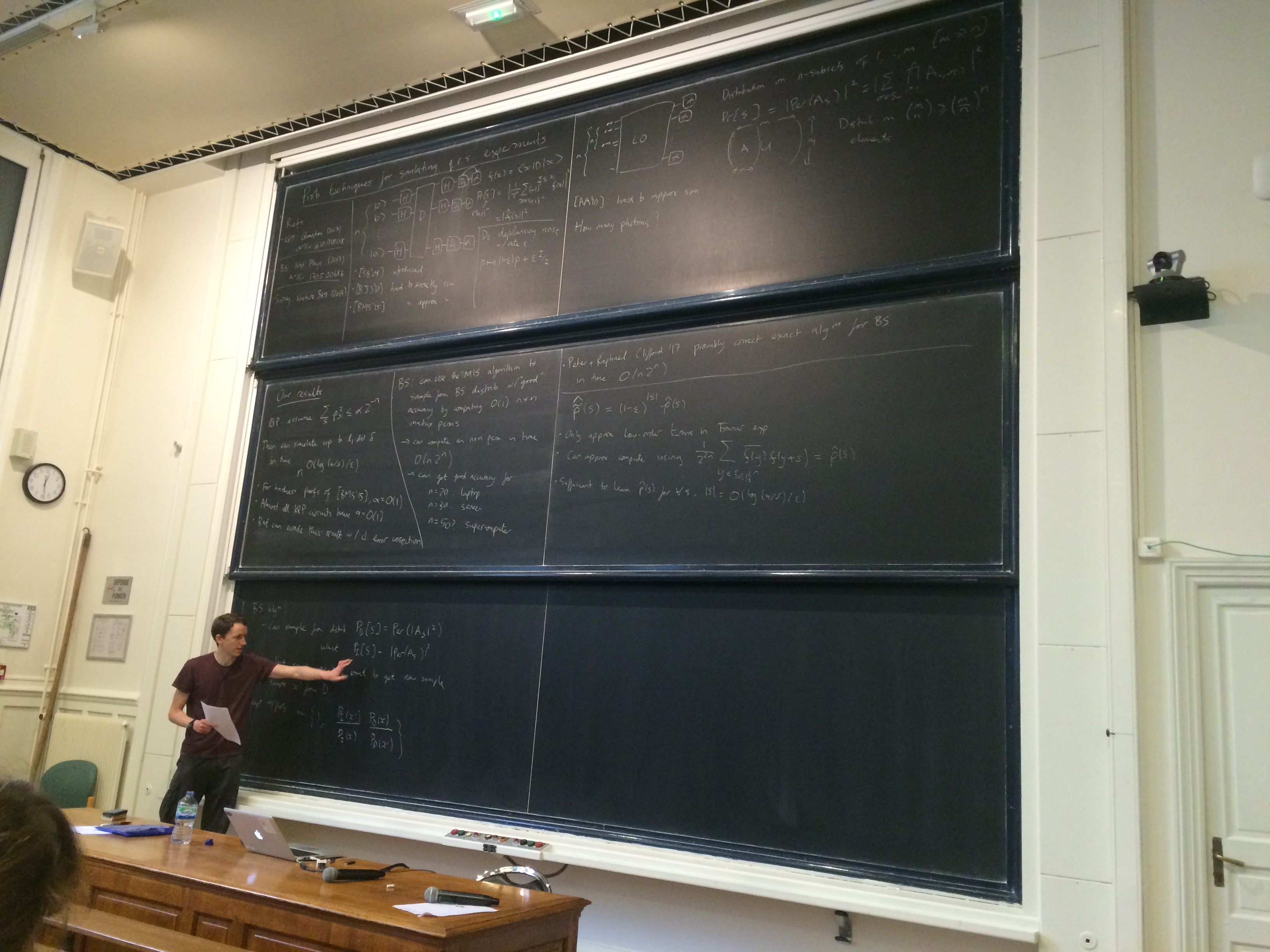
Ashley Montanaro is Professor of Quantum Computation in the School of Mathematics at the University of Bristol, and co-founder of the quantum software startup Phasecraft. He is a member of the Quantum Information Theory research group at Bristol. His research focuses on the theory of quantum computing, with particular interest in quantum algorithms, computational complexity, quantum query and communication complexity, and classical algorithms. His work spans both theoretical foundations and practical applications of quantum computing. Montanaro's research output shows significant trends toward quantum algorithms for optimization problems, quantum computational supremacy, and bridging theoretical advances with practical implementation challenges. His publications span foundational quantum information theory to applied quantum algorithms, demonstrating a versatile research program that connects computer science with quantum physics. Among his professional activities, Montanaro served on the QIP steering committee (2016-2018) and was an editor for the Quantum journal until 2019. He has been active in conference organization, serving on program committees for ITCS 2018, AQIS 2017 and 2015, QIP 2015, and TQC 2014 and 2013, reflecting his standing in the quantum computing research community. He has supervised numerous PhD students including Josh Blake, Jorja Kirk, Sheila Perez Garcia, Sami Boulebnane, Jan Lukas Bosse, Lana Mineh, Joao F. Doriguello, Chris Cade, Sam Pallister, and Stephen Piddock. His teaching includes Quantum Computation (MATHM0023) which he has taught since 2014 and Advanced Quantum Information Theory which he taught in 2015 and 2016. As co-founder of Phasecraft, Montanaro is actively translating theoretical quantum computing advances into practical software solutions, positioning him at the intersection of academic research and quantum technology commercialization.
Gert Cauwenberghs is a Professor of Bioengineering at the University of California San Diego (UCSD), affiliated with the Jacobs School of Engineering. He co-directs the Institute for Neural Computation and holds a visiting professorship at MIT. His research focuses on neuromorphic engineering, energy-efficient neural interfaces, and wearable biosensors. Key contributions include silicon-based adaptive neural circuits, implantable neural recording systems, and in-ear biosensing devices. Education: M.Eng. in Applied Physics (University of Brussels, 1988), M.S. and Ph.D. in Electrical Engineering (Caltech, 1989–1994). Prior roles include Professorships at Johns Hopkins University and Visiting Professor at MIT. Research Interests: Biomedical integrated circuits, neuromorphic computing, brain-machine interfaces, and energy-efficient neural systems. His work bridges neuroengineering and clinical applications, emphasizing adaptive intelligence and low-power designs. Recent Work: Development of femtojoule-efficient neural chips, high-density neural interfaces, and closed-loop wearable systems. Projects include neurobench benchmarking frameworks and RRAM-based neuromorphic hardware. Awards: NSF Career Award (1997), ONR Young Investigator (1999), PECASE (2000), IEEE Distinguished Lecturer (2003–2004). Grants & Labs: Active in NIH and DoD-funded projects, co-directs the UCSD Institute for Neural Computation. Collaborates with industry on neural interface technologies. Labs/Teams: Cauwenberghs Lab at UCSD focuses on integrated neuroengineering systems, including neural recording systems and neuromorphic computing architectures.
Andrew Childs is a Professor at the University of Maryland, affiliated with the Department of Computer Science and the Institute for Advanced Computer Studies (UMIACS). He serves as Director of the NSF Quantum Leap Challenge Institute for Robust Quantum Simulation (RQS) and is a Fellow at the Joint Center for Quantum Information and Computer Science (QuICS). His research focuses on quantum algorithms for simulating physical systems, algebraic problems, and quantum walk protocols, with applications in quantum computing and computational complexity. University of Maryland Institute for Advanced Computer Studies (UMIACS) Joint Center for Quantum Information and Computer Science (QuICS) NSF Quantum Leap Challenge Institute for Robust Quantum Simulation Childs' research spans quantum simulation, quantum Fourier transform, phase estimation, and Hamiltonian dynamics. He has developed techniques to reduce quantum computational resources for simulating quantum systems and explored limitations of quantum computers through hidden subgroup problems and non-unitary dynamics. His publications cover diverse areas including quantum walk optimization, Hamiltonian simulation methods, and applications to cryptography and condensed matter physics. Recent works address spatial search algorithms, product formulas for commutators, and quantum routing protocols. As an educator, Childs has taught courses on quantum algorithms and information processing at both the University of Maryland and University of Waterloo, with lecture notes and materials spanning multiple years. Contact: amchilds@umd.edu | Office: ATL 3359 | Affiliated with University of Maryland's quantum research institutes.
Bernhard J. Berger is a Lecturer in the Department of Computer Engineering at the Institute of Embedded Systems, Hamburg University of Technology (TUHH). His research focuses on software security, static code analysis, machine learning, optimization, and research data management. He has held significant roles such as Program Committee member for ICPC 2025 and MSR 2025, and has received awards including the Best Reviewer Award (ICPC 2023) and Best Engineering Paper Award (SCAM 2019). His work spans interdisciplinary applications including maritime systems security, GPU-accelerated AI, and evolutionary algorithms. Recent studies emphasize AI-driven security tools (e.g., ML-SAST) and domain-specific language approaches to optimization (EvoAl). He has contributed to over 30 peer-reviewed publications, with notable work in IEEE Transactions on Software Engineering and Science of Computer Programming. Berger collaborates closely with industry through DAAD review committees and serves on artifact evaluation boards for ISSTA and ARES conferences. Education: Doctoral Thesis (2022), Diploma in Computer Science (2007) Key Projects: ArchSec tool suite, Threat Modeling Frameworks, Bauhaus static analysis methodology Lab Affiliation: Embedded Systems Design Group His advisory roles include Deputy of TUHH's Election Verification Committee and Session Chair at IEEE Congress on Evolutionary Computation 2023. Current research trends integrate machine learning with static analysis for automated vulnerability detection, while also exploring explainable AI techniques for neural network optimization.
Prof. Alessandro Golkar is a Professor at the Technical University of Munich (TUM), leading the Chair of Picosatellites, Nanosatellites, and Satellite Constellations. He joined TUM in September 2022 and previously served as one of the founding faculty members at Skoltech, a Moscow-based graduate research university. His research focuses on advanced space mission concepts, systems engineering for picosatellites, and federated satellite systems. Prior to academia, he held roles at Airbus CTO, contributing to technology roadmapping and planning. His academic background includes expertise in aerospace engineering, systems design, and agile development methodologies for space hardware. Key research areas include CubeSat constellations, distributed satellite systems, and the integration of AI tools like Large Language Models (LLMs) into spacecraft design processes. He has pioneered projects such as the FSSCat mission, winner of the ESA Sentinel Small Satellite Challenge, and has explored applications of additive manufacturing for lunar missions. Prof. Golkar’s awards include the 2021 Karman Fellowship and IEEE Senior Membership (2018). His recent work emphasizes optimizing satellite networks, digital twin implementation, and orbital maneuvering for collision avoidance. He actively contributes to technology roadmapping, focusing on future human landing systems and lunar infrastructure development. Education: Ph.D. in Aerospace Engineering (details not explicitly stated). Grants & Funding: Extensive grants for CubeSat projects, federated systems research, and space technology innovation. Labs/Teams: Leads the Chair’s research group at TUM and collaborates with industry partners like Airbus on advanced mission concepts. His publications span over two decades, addressing topics like constellation design, machine learning in space, and agile processes for hardware development. He advocates for hybrid agile methodologies to bridge traditional systems engineering and modern product development.
Yang Zhou is an Associate Professor in the Department of Computer Science and Software Engineering at Auburn University, part of the Samuel Ginn College of Engineering. His research focuses on big data algorithms, machine learning, data mining, and distributed computing. He has contributed to advancements in federated learning frameworks, graph mining tools, and spatial machine learning for environmental applications like flood mapping. Education includes a Ph.D. in Computer Science from Georgia Tech (2021), M.E. in Computer Application Technology from Chongqing University (2016), and B.E. in Engineering from Jiangnan University (2014). His work emphasizes scalable algorithms for large-scale systems, with tools like DirDense for dense subgraph mining and FedASMU for federated learning optimization. Recent publications explore adversarial robustness, blockchain strategies in IoT, and curriculum-based learning for large language models. He advises on interdisciplinary projects at the intersection of AI and environmental science.
Prof. Hayden Kwok Hay SO is an Associate Professor at the University of Hong Kong (HKU), affiliated with the Department of Electrical and Electronic Engineering. He currently serves as Acting Director of the School of Innovation and previously co-directed the Computer Engineering Program. His research focuses on reconfigurable computing systems, FPGA-based architectures, and their applications in AIoT, medical imaging, and high-performance computing. He holds a B.S., M.S., and Ph.D. in Electrical Engineering and Computer Sciences from UC Berkeley (1998–2007). Prof. So has been recognized with awards such as the IEEE-HKN Teaching Award (2021), Croucher Innovation Award (2013), and multiple teaching excellence awards. He leads the Computer Architecture & System Research Lab (CASR) and co-founded the Joint Lab on Future Cities (JLFC). His work spans FPGA overlay architectures, graph processing systems, and hardware-software co-design for efficient computing. Key research contributions include advancements in FPGA-based reconfigurable systems, sparse dataflow architectures, and medical imaging accelerators. He has secured grants for projects like 'Advanced machine vision guided aquatic surface vehicles' and 'Efficient and Productive Parallel Data Processing in Hybrid FPGA-CPU Clusters.' Prof. So has advised numerous students and researchers, contributing to over 150 peer-reviewed publications. His current projects explore AI hardware acceleration, neuromorphic computing, and FPGA-driven solutions for big data challenges.