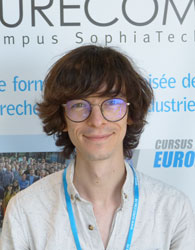
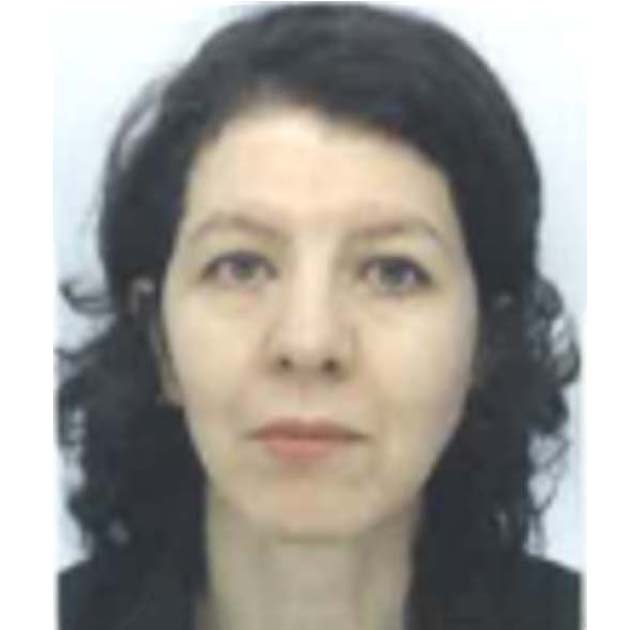
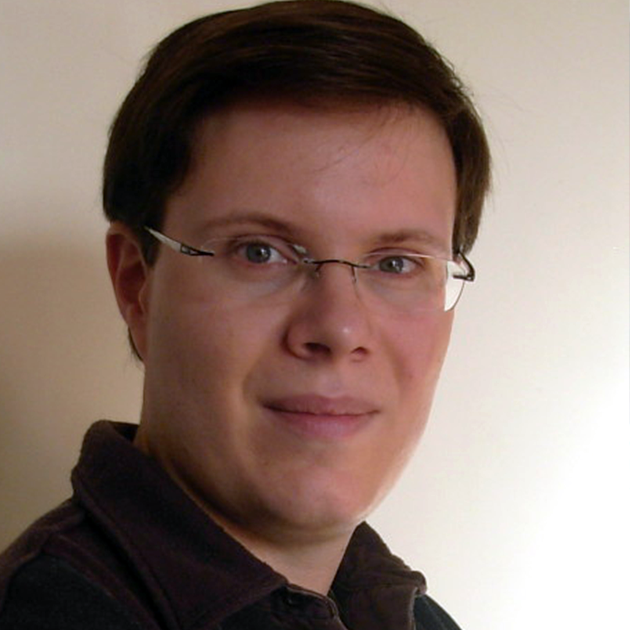
Odile Sauzet is an Adjunct Professor at Universität Bielefeld , affiliated with the Faculty of Health Sciences and the Working Group 3 Epidemiology & International Public Health . She also holds positions in the Faculty of Economics (Chair of Statistics and Data Analysis) and the Faculty of Business Administration and Economics (Department of Empirical Methods).
Hanno Langweg serves as Associate Professor in the Department of Information Security and Communication Technology at the Norwegian University of Science and Technology (NTNU), based at the Gjøvik campus. His academic activities are deeply integrated with the COINS Research School of Computer and Information Security, a national consortium led by NTNU that unites Norway's major universities in cybersecurity research and doctoral training. Langweg's research centers on practical security vulnerabilities and compliance frameworks. His work extensively analyzes difficult-to-detect code patterns for SQL injection and cross-site scripting, develops forensic readiness methodologies, and bridges legal requirements like GDPR with technical security implementations. Recent publications demonstrate consistent focus on automated vulnerability injection, stakeholder-driven security requirements, and forensic evidence collection systems. His publication trends reveal sustained contributions across three interconnected domains: vulnerability pattern analysis (particularly in PHP and browser contexts), forensic readiness tooling (including kernel tracing and event reconstruction), and regulatory compliance engineering (GDPR, Common Criteria). This triad reflects both technical depth in code-level security and strategic understanding of legal-technical intersections. Langweg actively contributes to the academic community through conference organization (Sicherheit series) and teaching courses including Software Security (IIKG2001) and Information Security Summer School (IMT6003). His collaborations span multiple institutions with frequent co-authorship patterns involving Schuckert, Katt, and Liao. Within the COINS Research School framework, Langweg supports Norway's cybersecurity research ecosystem that now exceeds 100 doctoral students. His work directly enables the school's mission of integrating national research groups, enhancing student mobility, and establishing international recognition in information security.
Dr. Wenchao GU is a Postdoctoral Researcher at the Chair of Software Engineering & AI at the Technical University of Munich (TUM) , working under the supervision of Prof. Chunyang Chen. His academic journey includes a PhD in Computer Science and Engineering from The Chinese University of Hong Kong (CUHK) (2024), an MSc in Information Science from Tohoku University (2017), and a B.Eng in Mechanical and Aerospace Engineering from Tohoku University (2015). Research Interests: Dr. GU's work focuses on Artificial Intelligence for Software Engineering (AI4SE) , leveraging Large Language Models (LLMs) to advance source code understanding, analysis, and generation. Key areas include code optimization , vulnerability detection , and UI code generation . His research bridges theoretical innovations with practical tools for automated code efficiency improvement, semantic code retrieval, and natural language generation in software development workflows. Publication Trends : His recent work emphasizes iterative LLM refinement via evolutionary search (2025), segmented deep hashing for scalable code retrieval (2025), and contrastive learning in code search (2023). Earlier studies explored AST-guided transformers for code summarization (2022) and semantic dependency learning in code retrieval (2021). Scientific Awards: Distinguished Paper Award, ICSE 2025 The Aoba Foundation Scholarship (2015) JASSO Scholarship (2012) Tohoku University President Fellowship (2012) Mentorship: Dr. GU supervises 11 current students (including 1 PhD) and has advised 5 graduated Master's students. He actively seeks candidates with web/Android development expertise for UI code generation projects.
Yuetian Mao is a Doctoral Candidate and Research Associate at the Technical University of Munich (TUM), affiliated with the TUM School of Computation, Information and Technology (CIT). He holds a Master's degree in Software Engineering from Shanghai Jiao Tong University (2020-2023) and a Bachelor's degree in the same field from the same institution (2016-2020). His research focuses on Intelligent Software Engineering and Query Refinement , particularly in the application of large language models (LLMs) to code search and optimization tasks. His work addresses challenges in Code Vulnerability Detection , GUI Testing Simulation , and LLM-based Tool Use for software development. Recent publications analyzed include topics in Code Search , Query Reformulation , HiveQL Anti-patterns , and LLM-enhanced Software Engineering . His research also intersects with Human-Centric AI , Accessibility Testing , and Automated GUI Repair . Scientific Awards : Hypergryph Scholarship (2021.11) The First Prize Graduate Study Scholarship (2020.9, 2021.9, 2022.9) Yuetian is part of the Chair of Software Engineering & AI at TUM's Heilbronn campus, contributing to projects in Model Context Protocols , Generative Engine Optimization , and EU AI Act Compliance research.
Sundas Munir is a Lecturer at the School of Information Technology, Halmstad University. Her research focuses on blockchain technology, smart contract security, and renewable energy systems. University: Halmstad University School: School of Information Technology Rank: Lecturer Email: sundas.munir@hh.se Her recent publications highlight expertise in: Static analysis of smart contracts Transaction ordering dependencies in Ethereum Blockchain-based energy marketplaces Security validation frameworks Formal verification techniques Her work bridges theoretical research with practical applications in decentralized systems and cybersecurity. She is active in publishing conference papers and technical surveys related to blockchain integrity and energy innovation.
Andrii Shalaginov is a Professor in Cyber Security at Kristiania University of Applied Sciences, School of Economics, Innovation and Technology. He leads the Smart Security Lab with a research focus on applying artificial intelligence for cybersecurity, detection of computer viruses, network attacks and protection of Internet of Things devices. Dr. Shalaginov holds a PhD in Information Security from the Norwegian University of Science and Technology (NTNU), where he worked with digital forensics at the Center for Cyber and Information Security (CCIS). His research spans multiple critical areas of modern cybersecurity with a particular emphasis on Internet of Things security , machine learning applications for threat detection, and digital forensics . He has developed expertise in intelligent malware detection systems, network security for smart environments, and forensic analysis of IoT devices. His work bridges theoretical computer science with practical security implementations for real-world systems. Analysis of his recent publication trends (2022-2025) reveals a strong focus on AI-enabled security solutions for IoT ecosystems, vulnerability detection frameworks, and resource-efficient security mechanisms for constrained devices. His research increasingly addresses the intersection of machine learning and practical security implementations, with growing attention to energy efficiency in security protocols and international data space security frameworks. Dr. Shalaginov has received professional recognition through: Nomination as Norwegian representative in EU COST Action CA17124 "DigForAsp" Nomination as Norwegian representative in EU COST Action CA22104 "BEiNG-WISE" Membership in the "Impact of Technology" Expert Group at the European Union Intellectual Property Office Observatory As head of the Smart Security Lab, Dr. Shalaginov oversees research projects focused on developing practical security solutions for emerging technologies. His GitHub activity demonstrates active development of open-source tools for malware analysis across multiple platforms (Linux, Windows, IoT) and implementation of machine learning approaches for security applications. His research group appears to focus on bridging the gap between theoretical security models and practical implementations for real-world systems.
Tianxing He is an Assistant Professor at Tsinghua University's Institute for Interdisciplinary Information Sciences (IIIS), also known as the Yao Class, which he joined in September 2024. He also works part-time at Shanghai Qi Zhi Institute where he recruits for research-oriented positions and video game development roles. His academic journey includes a postdoc at the University of Washington under Yulia Tsvetkov, a PhD at MIT supervised by James Glass, and bachelor's and master's degrees at Shanghai Jiao Tong University in the ACM honored class under Prof. Kai Yu. Dr. He's research spans AI safety and AI-driven simulation with particular focus on large language models. His work examines LLM capabilities in cryptography (AICrypto benchmark), security vulnerabilities (jailbreaking techniques), multi-agent system integrity, and socially impactful applications like vaccine hesitancy simulation (VACSIM framework). He has developed visualization tools like MiniAgents-Pro using Unity for generative agent simulation and created watermarking techniques such as SemStamp and k-SemStamp for detecting machine-generated text. His publication record shows consistent contributions to top-tier conferences including ACL, EMNLP, NeurIPS, and ICLR, with recent work focusing on evaluating LLM capabilities across diverse domains. The research demonstrates sophisticated understanding of both the technical aspects of language models and their broader societal implications, particularly in security and ethical considerations. Scientific Awards: The Best Paper Award at the Efficient Natural Language and Speech Processing Workshop (NeurIPS ENLSP 2022) for "PCFG-based Natural Language Interface Improves Generalization for Controlled Text Generation" Dr. He actively mentors students and recruits research interns, PhD candidates, and post-bachelor researchers. He plans to teach an undergraduate NLP course in Fall 2025 and organizes the IIIS AI Safety Lunch, a monthly gathering in Beijing for those working on AI safety. His recruitment efforts target students interested in LLM social simulation, AI+game development, and AI safety research, emphasizing the need for strong self-motivation and research passion. He leads research initiatives including the IIIS AI Safety Lunch series and has developed multiple visualization and simulation frameworks. His work sits at the intersection of AI safety, language modeling, and practical applications, with team collaborations spanning multiple institutions including MIT, University of Washington, and Shanghai Jiao Tong University.
Thorsten Holz is a Professor and Head of the Chair for System Security at Ruhr-University Bochum's Faculty of Computer Science. His research team focuses on critical areas of cybersecurity including binary analysis, automated vulnerability discovery (fuzzing), embedded systems security, and privacy compliance (GDPR). Research Focus: His work spans: Binary analysis & reverse engineering techniques Software security with emphasis on fuzzing and automated vulnerability assessment Security of embedded/IoT systems Privacy mechanisms and GDPR implementation Network and internet security protocols Publication Trends: Recent works (2024-2025) demonstrate strong emphasis on: Advanced fuzzing methodologies for software/hardware systems Security of satellite and aerospace systems Detection of AI-generated media (deepfakes) and LLM vulnerabilities Trusted execution environments (TEEs) and memory corruption defenses Social media/platform security abuses He leads a research group developing cutting-edge tools for vulnerability discovery and security validation, with significant real-world impact in both academic and industry domains.
Dr Amin Karami is an Associate Professor in the School of Computer Science and Digital Technologies (CDT) at the University of East London, within the School of Architecture, Computing and Engineering. He serves as course leader for MSc Big Data Technologies and leads postgraduate programs, having secured £1.23 million in funding from the Office for Students to develop inclusive AI and Data Science courses for non-STEM and far-STEM graduates. His research spans Artificial Intelligence, Big Data Analytics, Blockchain, and Optimization, with focus on Industry 5.0 applications. Current work addresses federated learning heterogeneity, smart contract security, healthcare fraud detection, and ethical AI implementation. He develops cloud-based platforms for large-scale data processing and computational intelligence solutions for real-world industry challenges. Recent publications demonstrate strong trends in federated learning techniques, blockchain vulnerability mitigation, and big data applications across healthcare, finance, and social media. His work consistently bridges academic research with industry needs through partnerships with Multiverse and Cambridge Spark, emphasizing practical solutions for credit risk assessment, satellite telemetry, and personalized marketing. Scientific recognition includes: UEL Vice-Chancellor & President Impact & Innovation Award for Industry 4.0 readiness (2023) Fellow of the Higher Education Academy (FHEA) Dr Karami actively supervises UG/PG/PhD students while leading curriculum innovation through externally funded projects. His Chainlink Bootcamp initiative connects academia with industry practitioners, and he serves as external examiner and conference program chair. Significant grant achievements include developing diversity-focused STEM pathways that enhance graduate employability through industry-aligned training in AI and Data Science.
Dr. Umar Mukhtar Ismail serves as a Senior Lecturer in the Department of Computer Science and Digital Technologies at the University of East London's School of Architecture, Computing and Engineering. He leads the BSc (Hons) Cyber Security Networks and BSc (Hons) Cloud Computing programmes while teaching core modules including Cyber Security, Security Management, and Advanced Topics in Cyber Security. His research spans critical cybersecurity domains including AI-enabled threat intelligence, security requirement engineering, incident response frameworks, and cloud security management. He specializes in developing security solutions for critical infrastructure, healthcare systems, and supply chains using standards like ISO27001 and NIST frameworks, with particular focus on cyber resilience and threat modeling methodologies. Analysis of his 12 recent publications reveals consistent emphasis on creating structured security frameworks for cloud transparency, incident handling, and supply chain protection. His work increasingly integrates machine learning for malware detection and vulnerability prediction, demonstrating evolving expertise in adversarial AI analysis and ontology-based threat representation across healthcare and critical infrastructure contexts. Scientific recognition includes: Fellow of the Higher Education Academy Dr. Ismail actively contributes to European Union-funded research projects enhancing security in cyber-physical systems and healthcare infrastructure. He currently supervises MSc dissertations and PhD candidates while developing novel approaches to security transparency and audit frameworks, maintaining active collaborations through IEEE, BCS, and ISACA memberships.
Alexandros Kapravelos is an Associate Professor in the Department of Computer Science at North Carolina State University. His research focuses on web security, software supply chain security, and AI security, with a particular emphasis on browser security and the evolving threats in modern computing platforms. Education Ph.D. in Computer Science, University of California, Santa Barbara (2015) M.S. in Computer Science, University of Crete (2010) B.S. in Computer Science, University of Crete (2007) Research Interests Kapravelos's work spans several critical areas in cybersecurity: Web Security & Privacy : Investigating threats such as browser fingerprinting, malicious JavaScript, and tracking techniques. Software Supply Chain Security : Analyzing vulnerabilities in CI/CD workflows, open-source dependencies, and reproducible builds. AI Security : Exploring the implications of large language models (LLMs) on security and privacy. Scientific Awards NSF CAREER Award IEEE Symposium on Security and Privacy Best Paper Award (twice) Network and Distributed System Security Symposium (NDSS) Best Paper Award Grants & Funding Kapravelos has secured significant funding from agencies including the National Science Foundation (NSF), DARPA, and the US Navy. Notable grants include: Collaborative: SaTC: Frontiers : $5.7M for software supply chain security (2022–2027) CAREER: Web Evolution and Emerging Threats : $439K for browser security research (2021–2027) Collaborative: SaTC: CORE : $799K for defending against stateless web tracking (2022–2026) Labs & Teams He is a member of the Wolfpack Security and Privacy Research (WSPR) Lab and faculty mentor of HackPack , a student CTF team. He also co-organized the DEF CON CTF (2018–2021) as part of The Order of the Overflow .
Andrei Costin serves as a Senior Lecturer at the Faculty of Information Technology, University of Jyväskylä, where he actively contributes to the Secure Communications Engineering and Signal Processing (SCSP) research group. The SCSP group specializes in signal processing and communication systems, developing innovative methods for network and resource management with security as a foundational principle. His research spans critical cybersecurity frontiers including Brain-Computer Interfaces (BCI) and Extended Reality (XR) ecosystems, where he investigates privacy vulnerabilities, monetization frameworks, and attack vectors for emerging Internet-of-Brains (IoB) systems. Additional focus areas encompass IoT malware evolution, firmware security reproducibility, vulnerability prediction using AI (e.g., ChatGPT for CVE analysis), and cryptographic hardening of critical infrastructure like aviation ADS-B systems and maritime AIS networks. His work bridges neuroscience, communication engineering, and software security to address next-generation threats. Dr. Costin's 2024 publications reveal a cohesive research trajectory toward interdisciplinary security solutions, particularly emphasizing cryptographic implementations (ECDSA) for resource-constrained environments including distress beacons and XR-BCI interfaces. A significant portion of his work addresses practical industrial challenges through SBOM implementation in DevSecOps pipelines and vector database applications for threat intelligence, demonstrating strong industry-research alignment. Scientific Awards: No scientific awards were documented in the provided materials Advising and Grants: While specific student supervision or grant details weren't disclosed, his collaborative publication pattern (10+ co-authored papers in 2024) indicates active research team leadership. His work with COSPAS-SARSAT and aviation/maritime security protocols suggests potential industry partnerships with critical infrastructure stakeholders. Laboratories and Teams: Secure Communications Engineering and Signal Processing (SCSP) Research Group: Focuses on wireless/wired communication security, developing signal processing methodologies for secure network resource management with applications in critical infrastructure protection
Romain Cayre is an Assistant Professor in the Software and System Security (S3) group at EURECOM, a French graduate school and research center located in Sophia Antipolis. Previously, he served as a post-doctoral researcher at the same institution since July 2022. His academic journey began at INSA Toulouse where he completed his education in Computer Science, Networks and Security, culminating in a PhD with a thesis titled "Offensive and defensive approaches for wireless communication protocols in IoT". PhD in Computer Science from Institut National des Sciences Appliquées (INSA) Toulouse Former student of INSA Toulouse and TLS-SEC Post-doctoral researcher at EURECOM (July 2022 - present) Assistant Professor at EURECOM (current position) Romain Cayre's research centers on wireless security with particular emphasis on IoT and embedded systems. His work bridges theoretical security concepts with practical offensive and defensive techniques. He develops frameworks that allow security researchers to analyze wireless protocols more effectively, focusing particularly on Bluetooth Low Energy (BLE) and Zigbee protocols. His approach combines protocol analysis, vulnerability discovery, and the development of practical tools that can be used for both offensive security testing and defensive implementation. Analysis of Cayre's publications reveals a strong focus on Bluetooth Low Energy security, with multiple papers examining vulnerabilities in BLE implementations and cross-protocol attacks. His work demonstrates a progression from theoretical vulnerability discovery to practical tool development, with his Mirage framework evolving into a comprehensive platform for wireless security research. The research spans wireless protocol security, cross-protocol attacks, intrusion detection systems, and embedded security solutions, with consistent emphasis on practical implementations that can be deployed in real-world scenarios. Cayre has made significant contributions to the security research community through his development of multiple security tools that have become reference implementations in wireless security research. His Mirage framework provides a modular platform for wireless protocol analysis, while OASIS offers a novel approach to embedded intrusion detection in BLE controllers. His work on InjectaBLE and WazaBee has revealed fundamental vulnerabilities in wireless protocol implementations that have implications for IoT device security worldwide. As the main maintainer of the Mirage framework, Cayre leads a project that has become influential in the wireless security research community. The framework supports multiple wireless protocols including Bluetooth Low Energy, Zigbee, and Enhanced ShockBurst, providing researchers with tools for security analysis, penetration testing, and vulnerability discovery. Though the project is now officially deprecated in favor of WHAD (Wireless Hacking and Development), Mirage remains widely used in the security research community.
Rabéa Ameur-Boulifa is an Associate Professor at Télécom Paris, affiliated with the Communications and Electronics (Comelec) Department. She is a member of the LabSoc research team within the Information Processing and Communication Laboratory (LTCI). Her work focuses on integrated and embedded systems, emphasizing design, modeling, verification, and security. LabSoc (System on Chip research team) LTCI (Information Processing and Communication Laboratory) Her research spans formal methods for system verification, security guidelines specification, and compositional analysis of distributed systems. Publications highlight applications in automotive software safety, asynchronous component modeling, and detection of vulnerabilities like integer overflow in embedded systems. The majority of her recent work (2022–2025) centers on open automata refinements, formal requirement validation, and compositional verification techniques. Keywords include formal methods, embedded systems, security guidelines, and distributed component modeling.
Guillaume Duc is an Associate Professor (Maître de Conférences) at Télécom Paris , affiliated with the Information Processing and Communication Laboratory (LTCI) and the Department of Computer Science and Networks . His research focuses on embedded systems security, particularly hardware/software interaction, side-channel attacks, and resilient architectures. Education: PhD in Hardware, Software and Cryptographic Support for Secure Process Execution , École Nationale Supérieure des Télécommunications de Bretagne (2007) Master's (DEA) in CryptoPage – an architecture to run secure processes , Université de Rennes 1 (2004) Research Interests: His work spans embedded systems security , with a focus on: Hardware/Software Interaction: Exploring vulnerabilities and defenses at the intersection of hardware and software. Side-Channel Attacks: Investigating power analysis, electromagnetic attacks, and countermeasures, including organizing the DPA Contest . Resilient Architectures: Designing secure memory architectures, FPGA-based protections, and cloud-embedded system trustworthiness. Publications & Patents: He has published extensively in top-tier venues such as Journal of Cryptographic Engineering , ACSAC , and CARDIS , with recent works addressing AI-driven automotive security (2024) and system cost-optimization for security (2019). He holds multiple patents in non-intrusive fault detection and secure electronic component monitoring. Teaching & Leadership: Academic lead for the engineering program at Télécom Paris. Responsible for courses like INF107: From Logic Gates to Operating Systems and SE203: Microprocessor System Tools . Co-instructor for Rust programming modules in executive education. Labs & Teams: He leads research within the Autonomous Critical Embedded Systems (ACES) team at LTCI, collaborating on secure embedded systems for automotive and cloud applications.