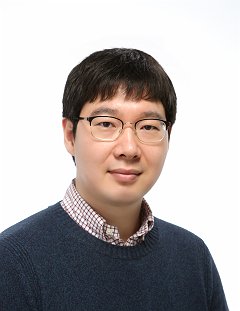
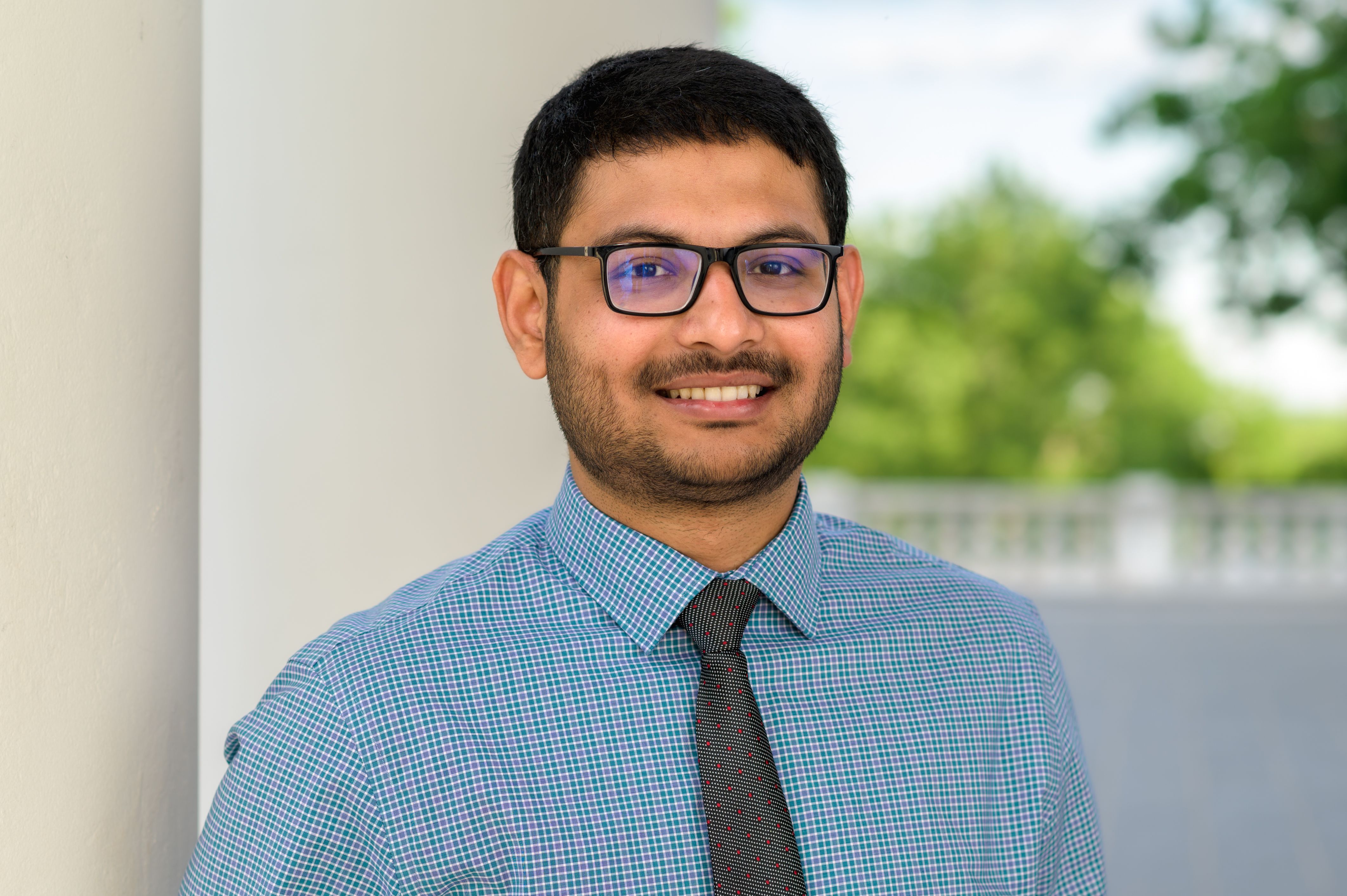
Wei Huo is a researcher at the Institute of Information Engineering, Chinese Academy of Sciences, specializing in software security and engineering. His work focuses on vulnerability detection, program analysis, and cybersecurity across diverse systems including cloud infrastructure, firmware, and web applications. His research interests encompass Software Security , Program Analysis , Binary Analysis , and AI-driven security techniques . He develops practical tools for identifying vulnerabilities in Kubernetes ecosystems, baseband firmware, and binary code, with emphasis on real-world applicability in industrial contexts. Analysis of his publications (2019-2025) reveals a consistent focus on empirical security studies and tool development. Key trends include cloud-native security (Kubernetes), firmware analysis (printers/baseband), and AI-enhanced binary similarity detection, demonstrating progression from component-level to system-level security challenges. While no specific awards are documented in the source material, his contributions to top venues like ASE, ICSE, and ISSTA reflect significant impact in software engineering research. His work bridges academic rigor with practitioner-oriented solutions, particularly in vulnerability management and automated testing. Wei Huo actively contributes to the security research community through publications addressing critical infrastructure vulnerabilities, though details about student supervision or grant funding are not available in the provided text.
Hoa Khanh Dam is Professor and Deputy Head of School (Research) & Head of Postgraduate Studies in the School of Computing and Information Technology at the University of Wollongong, Australia. He serves as Co-Director of the Decision System Lab where he leads research at the intersection of Software Engineering and Artificial Intelligence. His research focuses on developing AI-driven solutions for software quality, cybersecurity, and productivity enhancement. Key interest areas include: AI/IoT autonomous and cyber resilient systems Software Analytics and Mining Software Repositories Large Language Models for software engineering tasks Defect prediction and vulnerability analysis Agile project management optimization Analysis of Dam's 12 publications from 2018-2025 reveals consistent application of machine learning to software engineering challenges. His work shows progressive evolution from traditional ML techniques toward LLM-based frameworks, with major contributions in defect prediction (DeepJIT), vulnerability analysis, microservice recommendation, and agile effort estimation. The research demonstrates strong industry relevance through practical implementations in code review, component prediction, and security systems. Dam co-leads the Decision System Lab at UOW, which develops intelligent decision support systems using AI and data analytics. The lab's work bridges theoretical AI advancements with real-world software engineering applications, particularly in cybersecurity and autonomous systems development.
Yuming Feng is a researcher at Peng Cheng Laboratory, actively contributing to blockchain security research through publications at major software engineering conferences including ASE 2025 and ISSTA. Their work focuses on identifying vulnerabilities in decentralized applications and smart contracts. Research interests include: Blockchain security and vulnerability detection Smart contract analysis techniques Multi-chain system compatibility Program analysis for distributed applications Yuming Feng's recent publications demonstrate expertise in state dependency analysis for DApps and identifying problematic code patterns across blockchain platforms, addressing critical security challenges in decentralized application development. As an active contributor to the blockchain research community, their work combines semantic analysis with multi-source tracing to improve security practices in smart contract development across multiple blockchain environments.
Chung Hwan Kim serves as an Assistant Professor in the Department of Computer Science at the University of Texas at Dallas, where he directs the Software & Systems Security Laboratory (S³ Lab). His research focuses on critical security challenges in cyber-physical systems, embedded devices, and cloud infrastructure, with recognition including the NSF CAREER Award and UT Dallas New Faculty Research Symposium Grant. His expertise spans Computer Systems Security , Cyber-Physical Security , and Software Security and Reliability , emphasizing practical solutions for robotic vehicles, autonomous systems, and trusted execution environments. Current projects address signal injection attacks, resilience testing, and confidential computing through innovative fuzzing frameworks and hardware-assisted protections. Recent publications (2020-2026) reveal three dominant research thrusts: (1) Security for autonomous/robotic systems ( DriveFuzz , IMUFUZZER ), (2) Trusted execution in constrained environments ( Vessels , GEVisor ), and (3) Automated vulnerability discovery ( HFL , TZ-DATASHIELD ), consistently appearing in top venues like IEEE S&P and USENIX Security. Key honors include: NSF CAREER Award (premier early-career recognition) UT Dallas New Faculty Research Symposium Grant Top 10 finalist for CSAW Best Applied Research Paper Award (2018) As principal investigator of the S³ Lab, Kim mentors graduate researchers and secures competitive funding for projects spanning robotic vehicle security, embedded systems hardening, and confidential computing. His teaching portfolio includes Operating Systems, Information Security, and specialized courses on CPS/IoT security. The S³ Lab develops deployable security tools like TZ-DATASHIELD for embedded data protection and IMUFUZZER for resilience testing of aerial vehicles, collaborating with industry partners to translate research into real-world solutions for autonomous systems and critical infrastructure.
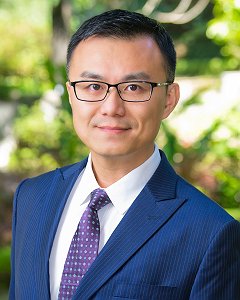
Jacky Wai Keung is an Associate Professor in the Department of Computer Science at City University of Hong Kong with extensive industry connections across the Asia Pacific region. He leads the Artificial Intelligence and Software Engineering Research Group (AiSE) and serves as Chairman of IEEE Computer Society Hong Kong Chapter and Vice-President of Hong Kong STEM Education Alliance. Prof. Keung received his B.Sc.(Hons) in Computer Science from the University of Sydney and Ph.D. in Software Engineering from the University of New South Wales, Australia, before working as a Research Scientist at NICTA (now DATA61, CSIRO) in Sydney. His research spans software engineering, data science, AI, FinTech, machine learning, blockchain systems, and large language models for code generation and analysis. His recent work focuses on applying large language models to software engineering challenges, with publications examining code translation, anomaly detection, and autonomous driving system testing. The research shows a strong trend toward practical applications of AI in software development processes, particularly in FinTech and autonomous systems domains. Among his numerous accolades, Prof. Keung has been named in Stanford's top 2% most highly cited scientists for both 2022 and 2023, received the President's Teaching Excellence Award in 2020, and earned multiple IEEE best paper awards. His editorial service includes roles as Area Editor for Journal of Systems and Software since 2017 and Associate Editor for Information and Software Technology since 2020. Prof. Keung has successfully secured over HK$20 million in research funding through GRF, ITF, and TDG grants, including major projects like 'Smart Intelligent Process Automation for the Mortgage Lending Industry' (HK$2.62 million) and 'Software Data Analytics and Blockchain Technological Advancements' (HK$6 million). His industry collaborations have significantly enhanced student opportunities, with CS student starting salaries increasing by over 15% year-on-year for the past three years. He currently leads multiple research initiatives including RealisticCodeBench for evaluating LLMs in code generation and FedLAD for federated log anomaly detection, with several active projects focused on AI-enhanced InsurTech systems and deep probabilistic reasoning using deep learning.
Professor Yuan Miao is a distinguished academic at Victoria University (VU), serving as Professor in the College of Arts, Business, Law, Education & IT and Head of the Information Technology Program. With a PhD from Tsinghua University's Automation Department, his academic journey spans prestigious institutions including the University of Melbourne and Nanyang Technological University in Singapore before settling at VU where he has been Professor since January 2010, following his Associate Professorship from August 2004 to December 2009. Education: BSc, Shandong University, China MEng, Tsinghua University, China PhD, Tsinghua University, Automation Department, China Professor Miao's research centers on Large Language Models (LLMs) and Generative AI, where he has identified critical barriers in practical applications including limited memory length in systems like ChatGPT and Gemini, contradictory explanations, lack of local knowledge integration, and significant errors in text-data hybrid reasoning (up to 38%). His innovative solutions involve cognitive map graphs and rational intelligence models to create customized AI systems. His work spans diverse application areas including human knowledge modeling, multimodal interaction, healthcare analytics (particularly dementia detection), cybersecurity, and robotics powered by rational intelligence. Analysis of Professor Miao's recent publications reveals a strong focus on integrating LLMs with specialized knowledge domains across healthcare, cybersecurity, and social media analysis. His research consistently addresses practical limitations of current AI systems while developing novel frameworks for more reliable and context-aware applications. The interdisciplinary nature of his work is evident in publications spanning medical informatics, cybersecurity analytics, and educational technology. Scientific Recognition: Two articles in fuzzy cognitive map modeling ranked among top 10 most cited works since 2000 (Google Scholar 2000-2016) Development of adversarial dataset based on SQuAD 2.0 that reduced BERT and ELECTRA accuracy from ~90% to ORCID identifier 0000-0002-6712-3465 with 138 peer-reviewed publications Professor Miao actively supervises PhD and Master's students across diverse research topics including access control systems, healthcare analytics, cybersecurity, and social behavior analysis. His research has secured substantial funding from both industry giants (Microsoft, Amazon, Oracle, Google) and government bodies (Australia Research Council, Data61, Singapore's NRF), with recent projects including Digital Transformation for Construction Industry ($1.258 million), Western Health SharePoint Development ($68,000), and Big Data Analysis for Domestic Violence Research (US$100,000). His current grant portfolio demonstrates strong industry-academia collaboration addressing real-world challenges. Professor Miao leads research teams focused on rational intelligence systems that overcome current LLM limitations, with particular emphasis on creating practical AI solutions for healthcare, cybersecurity, and smart city applications. His work with Maribyrnong City Council on the Smart City at Footscray Park project ($850,000) exemplifies his commitment to applying advanced AI research to community-level challenges.
Dr. Jifeng Xuan is a Professor and Deputy Dean at the School of Computer Science, Wuhan University, China. He founded the CSTAR (Centre of Software Testing, Analysis and Reliability) and holds editorial roles at Empirical Software Engineering and PLOS One . Previously, he was a postdoctoral researcher at INRIA Lille-Nord Europe (France) and earned his PhD from Dalian University of Technology. Research Interests: His work focuses on software testing, debugging, automated program repair, software data analysis, and search-based software engineering. He integrates AI/ML techniques for tasks like log analysis, fuzz testing, and vulnerability detection, with applications in robotics, microservices, and Android development. Publication Trends: Recent articles (2022–2025) emphasize AI-driven software engineering, including LLM-based repair, reinforcement learning for testing, and deep learning surveys. Security (vulnerability logs) and empirical studies on industrial challenges (e.g., C program repair) are recurring themes. Awards & Honors: ACM SIGSOFT Distinguished Paper Award (2025) IEEE TCSE Distinguished Paper Award (2025) CCF NASAC Youth Software Innovation Award (2024) Outstanding Doctoral Dissertation Award, China Computer Federation (2014) Luojia Young Scholar (2015) Student Advising & Labs: Actively recruits PhD and master students for CSTAR Lab. Research areas include automated debugging, testing tools (e.g., Mergebot, FastLog), and AI-generated code assessment. No specific grants listed.
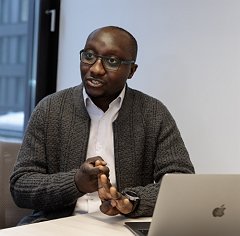
Prof. Tegawendé F. Bissyandé is a Chief Scientist in the Professor category at the Interdisciplinary Centre for Security, Reliability and Trust (SnT) at the University of Luxembourg. He holds the prestigious position of ERC Fellow and serves as Principal Investigator of the NATURAL project focused on Artificial Intelligence for Program Repair. His research spans software engineering, cybersecurity, and artificial intelligence, with particular emphasis on applying machine learning techniques to software development and security challenges. Dr. Bissyandé's research interests include: Software Debugging (especially bug localization and program repair) Software Security (especially malware detection and analysis) Code Search (both free-form and semantic code-to-code) Machine Learning and Natural Language Processing for software engineering Cyber-security applications in mobile and cloud environments His recent work demonstrates a strong focus on leveraging Large Language Models (LLMs) for various software engineering tasks. Analysis of his 15 most recent publications reveals several key trends: extensive application of LLMs to program repair and code generation; innovative approaches to Android security and malware detection; development of novel techniques for code search and understanding; and exploration of the intersection between natural language processing and software engineering. His research increasingly bridges theoretical software engineering with practical applications in mobile security and developer productivity tools, with a significant portion of his work focusing on Android ecosystem security and program repair technologies. Dr. Bissyandé has received numerous prestigious awards throughout his career: APSEC Best ERA Paper Award (2018) for 'LSRepair: Live Search of Fix Ingredients for Automated Program Repair' IPSJ SIG SE Excellent Research Award (2018) for 'FaCOY: a Code-to-Code Search Engine' FOSS Impact Paper Award (2018) for 'Characterizing Deprecated Android APIs' SANER Best ERA Paper Award (2016) for 'Parameter Values of Android APIs: A Preliminary Study on 100,000 Apps' ASE Best Paper Award (2012) for 'Diagnosys: automatic generation of a debugging interface to the Linux kernel' As an active member of the software engineering research community, Dr. Bissyandé serves on program committees for major conferences including ICSE, ASE, and ISSTA, and has been an Area Chair for ICSE 2024. His industry partnerships include significant collaborations with BGL BNP Paribas (since January 2019), Luxembourg Stock Exchange (since January 2018), and Paul Wurth (January 2015 to 2018), demonstrating the practical impact of his research. He leads the SerVAL lab at SnT, which focuses on software validation and analysis, with particular expertise in mobile security and program repair technologies, and actively mentors PhD candidates through FNR research grants.
Jonathan Bell is an Associate Professor in Software Engineering and Software Systems at Northeastern University's Khoury College of Computer Sciences. Previously, he was faculty at George Mason University where he received a university-wide Teacher of Distinction award. Bell directs research that makes it easier for developers to create reliable and secure software by improving software testing and program analysis. His research spans several key areas in software engineering: flaky tests, fuzzing, software supply chain analysis, and continuous integration. Bell's work on accelerating software testing earned an ACM SIGSOFT Distinguished Paper Award (ICSE '14), and his contributions to the object-oriented programming community were recognized with the 2020 Dahl-Nygaard Junior Researcher Prize. His program analysis research has resulted in widely adopted runtime systems including the Phosphor taint tracking system and CROCHET checkpoint/rollback tool. His recent publications reveal a consistent focus on practical software engineering problems with empirical validation. His work increasingly addresses the challenges of modern software supply chains and dependency management, building on his earlier foundational work in testing and program analysis. The trend shows progression from specific testing problems to broader software ecosystem challenges. ACM SIGSOFT Distinguished Paper Award (ICSE '14 - Unit Test Virtualization with VMVM) Dahl-Nygaard Junior Researcher Prize (2020) NSF CAREER award recipient Teacher of Distinction award from George Mason University Bell actively serves the software engineering community through program committee work for major conferences (ICSE, ASE, FSE, ISSTA), co-organizing mentoring workshops, and contributing to open source projects. He co-founded the Clowdr open source project during the pandemic to support virtual academic conferences and subsequently co-founded a startup around it. His research has been funded by the NSA and NSF, and he serves on the Computing Research Association's Education Board.
Haipeng Cai serves as an Associate Professor in the Department of Computer Science and Engineering at the University at Buffalo, SUNY. His academic work spans software engineering, program analysis, and software security with particular emphasis on adaptive analysis techniques for mobile and distributed systems. His research interests center on adaptive/data-driven static and dynamic analysis for security applications targeting mobile apps, distributed systems, and multilingual software. Current work focuses on enhancing vulnerability detection, cross-language bug analysis, and automated security tooling through machine learning approaches. His lab produces tools like VinJ for vulnerability data generation and PolyFax for multilingual software characterization. Recent publications reveal strong trends in multilingual system security and AI-enhanced analysis , with 15+ papers since 2022 addressing cross-language vulnerabilities, Android security, and learning-based vulnerability detection. His work bridges theoretical program analysis with practical security applications in real-world software ecosystems. As an active academic contributor, he serves on program committees for major conferences including ASE, ICSE, and FSE, and will deliver a keynote at PROMISE 2025. His leadership includes journal-first paper chair roles and session chair positions at top software engineering venues. Dr. Cai maintains an active research presence through his personal website , GitHub repository ( github.com/chapering ), and academic social media profiles, with consistent contributions to the software engineering research community since 2018.
Dr. Robert Gilliland is an Assistant Professor in the Department of Computer Science, Information, & Engineering Technology at Youngstown State University. He has held progressive academic roles at YSU since 2000, advancing from Adjunct Faculty (2000–2013) to Instructor (2013–2017) and Lecturer/Assistant Professor (2017–present). His industry experience includes IT leadership positions at SCIENET Web Services and a medical practice. Education: Ph.D., Northcentral University (2021) – Dissertation: 'Examining the Generational Impact on Risk: Internet of Things (IoT)' MBA, Youngstown State University (2016) M.S., Information Systems and Technology Management, Capella University (2015) M.S., Computer Science, Youngstown State University (2008) – Thesis: 'Software Licensing Solution' B.S., Computer Science and Information Systems, Youngstown State University (1998, Magna Cum Laude) Research Interests: Dr. Gilliland specializes in cybersecurity frameworks, IoT vulnerability analysis, risk assessment methodologies, and digital twin applications. His work addresses emerging threats in interconnected systems and scalable security solutions for modern networks. Publication Focus: His sole documented publication explores secure peer-to-peer communication protocols, reflecting his foundational work in network security and cryptographic systems. Awards: International Conference on Strategic Management Recognition (2020) for IoT risk research Golden Key National Honor Society induction (2016) Teaching commendation from Williamson College of Business (1998)
Anne Kohnke is an Associate Professor of Cybersecurity at the University of Detroit Mercy, where she also serves as Director of the Detroit Mercy Center for Cybersecurity & Intelligence Studies and Principal Investigator for the NSA/DHS Center of Academic Excellence in Cyber Defense (CAE-CD) Program. She transitioned from a 25-year IT career as a Vice President/Chief Information Security Officer to academia in 2019, previously holding a tenured position at Lawrence Technological University. Her academic background includes a Ph.D. in Cybersecurity from Benedictine University and an MBA from Lawrence Technological University. Research focuses on cybersecurity education, cyber resilience, supply chain risk management, and the intersection of cybersecurity with law enforcement and critical infrastructure protection. Key roles include: Co-Chair of the national CAE-CD Community of Practice Member of Evidencing Competency Working Groups Peer-reviewer and mentor for CAE-CD programs Board Member of the Metro-Detroit Vehicle Cybersecurity Institute Recent projects include a grant-funded policing reform initiative with Detroit-area jurisdictions and collaborative work on cybersecurity curriculum standards with ACM/IEEE/AIS/IFIP. She has authored six books and numerous articles on cybersecurity education, risk management frameworks, and ethical cybersecurity practices. Her academic contributions emphasize bridging industry-academia gaps through practical curriculum development and promoting cyber resilience as a national imperative. She actively participates in national cybersecurity initiatives, including NIST framework implementation and critical infrastructure protection strategies.
Faysal Shezan is an Assistant Professor in the Computer Science and Engineering department at the University of Texas at Arlington. His research focuses on security and privacy intersections with cyber-physical systems, medical healthcare, software engineering, and machine learning. He received his PhD from the University of Virginia (2023) and a BS from Bangladesh University of Engineering and Technology (2016). His work has been published in top-tier venues like NDSS, WWW, PoPETs, and SOUPS. Research Interests : Security & Privacy, Cyber-Physical Systems, Medical Healthcare, GDPR Compliance, LLM Security Lab : Cyber Guard Research Lab Recent Publications span vulnerability repair automation (USENIX 2025), IoT privacy analysis (NDSS 2023), GDPR compliance (WWW 2020), and VR security (SSPX 2022). His work combines program analysis, machine learning, and NLP for security solutions. Awards : CPS Rising Stars (2022), UT System Rising Stars (2023), Microsoft Azure credits ($20k, 2023) Grants : REU Program Grants (2023-24), Departmental REU Support He advises students with publications at IEEE S&P (2024) on LLM security topics and leads the Cyber Guard Research Lab exploring software security, IoT vulnerabilities, and LLM privacy.
Naghmeh Karimi is an Associate Professor in the Department of Computer Science and Electrical Engineering at the University of Maryland Baltimore County (UMBC), where she has held this position since 2023, after serving as an Assistant Professor from 2017 to 2023. She is a recipient of the NSF CAREER Award (2020) and the Best Paper Award (2019). Her research focuses on hardware security, trustworthiness, and reliability of integrated circuits, with a particular emphasis on cryptographic devices, PUF-based authentication, and aging-related vulnerabilities. She directs the SECure, REliable and Trusted Systems (SECRETS) Lab at UMBC, which explores topics including hardware security countermeasures, fault tolerance, and AI-driven security solutions. Prior to UMBC, she was affiliated with Rutgers University, New York University, Duke University, and Yale University. Her research interests span hardware security, design-for-trust, fault tolerance, AI for security, and VLSI design. Recent work emphasizes aging effects on cryptographic circuits, PUF resilience, and digital sensor-based failure detection. Her publications address challenges in side-channel attacks, fault injection, and secure IoT frameworks. Dr. Karimi’s work is supported by sponsors, and she actively mentors Ph.D. students in hardware security and reliability. Her lab offers openings for self-motivated researchers in these areas.
Laszlo Tibor Erdodi is an Associate Professor at the Norwegian University of Science and Technology (NTNU), affiliated with the Department of Information Security and Communication Technology within the Faculty of Information Technology and Electrical Engineering . His research focuses on cybersecurity in critical infrastructure, reinforcement learning for penetration testing, and vulnerability exploitation in power grid systems. Erdodi collaborates with institutions like CIGRE and IEEE on projects evaluating security of wide-area monitoring systems and industrial control systems. Key research areas include advanced persistent threats (APT) targeting power grid substations, stealthy data integrity attacks on critical infrastructure, and the application of reinforcement learning to simulate cyber-attacks (e.g., SQL injection and CTF challenges). His work often involves hardware-in-the-loop testbeds to assess vulnerability mitigation strategies in real-world scenarios. Publications emphasize cybersecurity for industrial control systems, penetration testing methodologies, and ethical hacking frameworks. Notable contributions include studies on IEC 61850/60870-5-104 protocol vulnerabilities, PTP timing attacks in substations, and lightweight IoT security solutions (e.g., LIST framework). Erdodi’s work bridges theoretical cybersecurity models with practical implementation, addressing challenges in both academic and industrial sectors. He contributes to conferences like IEEE PES ISGT Europe and CIGRE symposiums, focusing on resilient critical infrastructure design and automated threat detection systems.