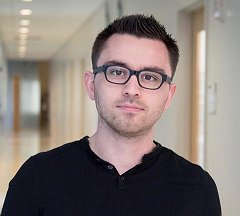
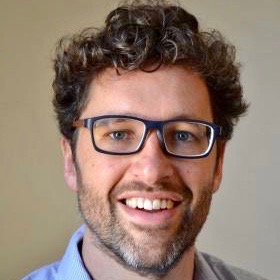
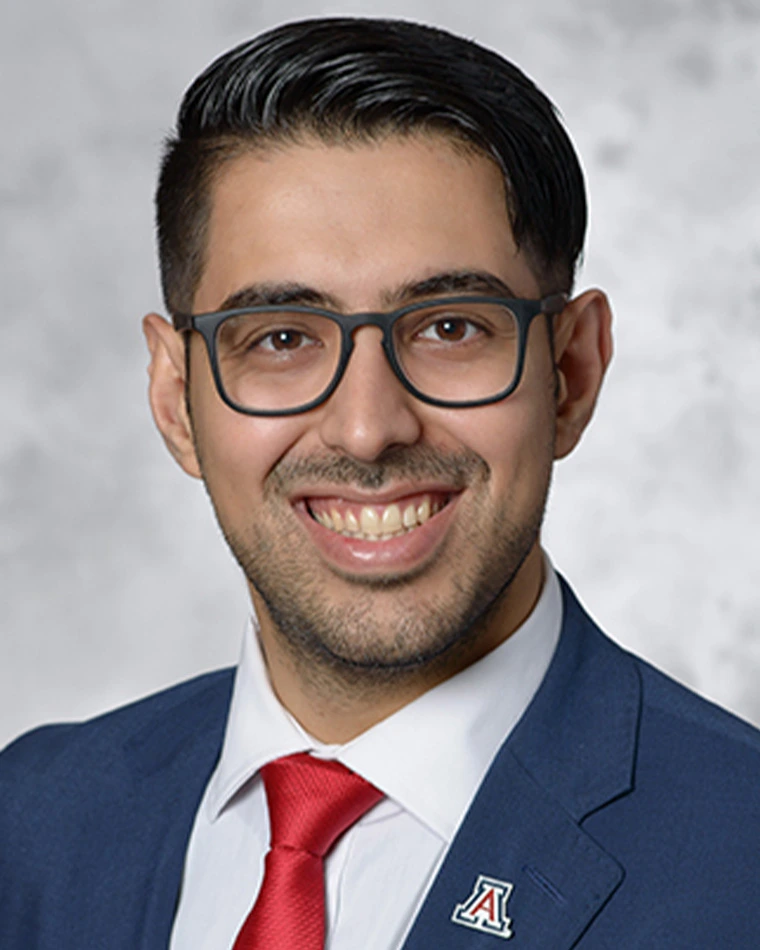
Deian Stefan is an Associate Professor at the University of California San Diego (UCSD) in the Department of Computer Science and Engineering . His research spans security , programming languages , and systems , with a focus on building principled and practical secure systems. He has served as a co-founder and Chief Scientist at Intrinsic (acquired by VMWare) and contributed to standards bodies like the W3C WebAppSec and Node.js Security Working Groups . His research interests include: Secure Systems : Web frameworks, browser designs, sandboxing, runtime systems Language-Based Security : Constant-time programming, memory safety, information flow control Verification : Security verification, static/symbolic analysis tools WebAssembly and JavaScript JITs security Deian Stefan has received multiple scientific awards , including several Distinguished Paper Awards at venues like POPL, ICFP, and USENIX Security, as well as the IEEE Cybersecurity Award for Practice (2022) and CSAW 2020 First Place for Applied Research. He has taught courses on Computer Security (CSE 127, CSE 227) and advanced topics in Building Secure Systems (CSE 291) using Rust, WebAssembly, and blockchain security. His work has been supported by collaborations with industry and academia, including projects like RLBox and COWL .
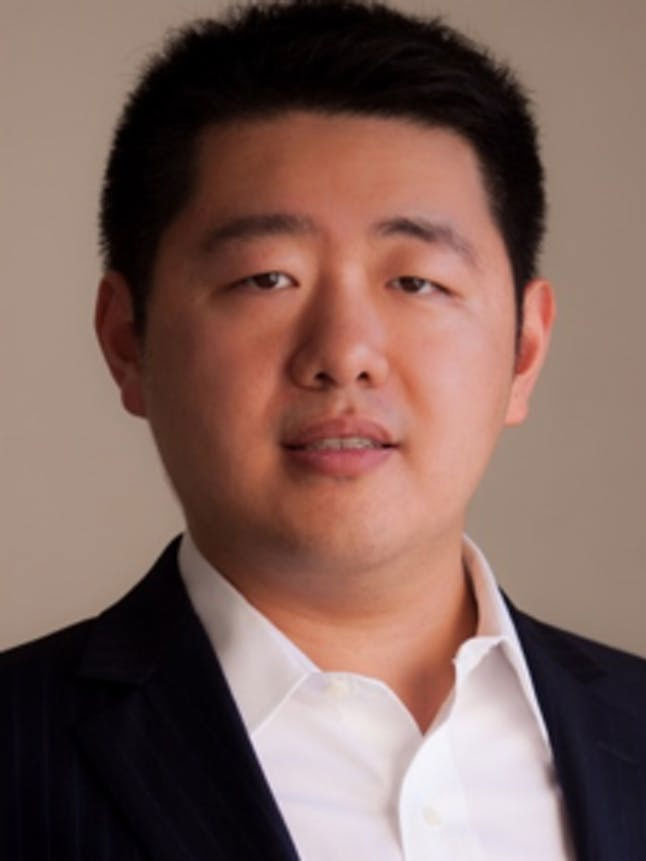
Xing Gao is an Assistant Professor at the University of Delaware, affiliated with the Department of Computer and Information Sciences and jointly with the Department of Electrical and Computer Engineering. His office is located at 316B FinTech Innovation Hub on the STAR Campus. He holds a PhD from the College of William and Mary (2018) and a BS from Beijing Institute of Technology (2011). Research Interests: Cybersecurity in Software Supply Chain, Web 3, High-Performance Computing, Large Language Models, with a focus on Security, Cloud Computing, and Mobile Computing. Education: PhD | 2018 | College of William and Mary BS | 2011 | Beijing Institute of Technology His recent work explores cybersecurity vulnerabilities in cloud gaming services (CCS'22), container registries (USENIX-SEC'22), and software supply chains, with specialized attention to GPU cache attacks (USENIX-SEC'24) and Ethereum smart contracts (WWW'24). His research spans theoretical and applied aspects of system security, including CI/CD pipelines (CCS'24), SDN backdoors (INFOCOM'23), and hardware-level threats (ACSAC'21). Scientific Awards NSF CAREER Award (2024) NSF CRII Award (2020) NDSS Distinguished Poster Award (2016) He serves as Registration Chair for ACM/IEEE Symposium on Edge Computing (2023) and Publicity Co-Chair for IEEE Conference on Communications and Network Security (2022). He is actively involved as TPC Member in multiple top-tier conferences including USENIX Security (2026,2025), CCS (2026,2025,2024), and IEEE DSN (2024). He has also reviewed for journals like IEEE Transactions on Dependable and Secure Computing. Labs & Teams X-Lab at the University of Delaware, a research group focused on cybersecurity in emerging technologies.
Amir AghaKouchak is a Chancellor’s Professor in the Department of Civil and Environmental Engineering at the Samueli School of Engineering, University of California, Irvine (UCI). He directs the Center for Hydrometeorology and Remote Sensing (CHRS) and focuses on interdisciplinary research at the intersection of hydrology, climatology, statistics, and remote sensing. B.Sc. and M.Sc. in Civil Engineering (Water Resources), K.N. Toosi University of Technology, Tehran, Iran (2001, 2005) Ph.D. in Civil and Environmental Engineering, University of Stuttgart, Germany (2010) His research aims to leverage satellite data and ground observations to advance modeling of hydrologic extremes (droughts, floods, landslides) and develop decision-support systems for water resources management. Key areas include climate change impacts , stochastic modeling , and the water-energy nexus . Recent publications highlight his work on multi-hazard analysis, groundwater decline, wildfire resilience, and climate projections. Tools like MhAST and MvCAT demonstrate his methodological contributions to copula-based and multi-hazard modeling.
Yanzhi Wang is a Professor in the Department of Electrical and Computer Engineering at Northeastern University , affiliated with the Institute for Experiential AI and the Institute for the Wireless Internet of Things . He holds a PhD from the University of Southern California (2014). His research focuses on real-time AI systems, deep neural network compression, neuromorphic computing, and non-von Neumann architectures. Notable projects include NSF-funded initiatives on age-inclusive urban design, superconducting computing (DISCoVER), and edge device optimization (PatDNN). He has received prestigious awards such as the Army Research Office Young Investigator Award and the Constantinos Mavroidis Translational Research Award. His work emphasizes algorithm-hardware co-design for energy efficiency, with grants from NSF, ARO, and industry partners like Google. Recent research trends reflect his focus on accelerating vision transformers, diffusion models, and large language models for edge computing. He has pioneered methods like AutoViT and Fastcar, addressing latency and resource constraints in mobile platforms. Collaborations span academia and industry, driving innovations in superconducting circuits and neuromorphic systems.
Andrew Miller is an Associate Professor in the Electrical and Computer Engineering department at the University of Illinois, specializing in Programming Languages, Formal Methods, Software Engineering, Security and Privacy, and Systems and Networking. His research focuses on blockchain technologies, cryptography, and secure systems. Professor Miller's research spans multiple critical areas in modern computer security. His work primarily focuses on blockchain technologies , where he has made significant contributions to understanding and improving the security, privacy, and performance of systems like Bitcoin and Ethereum. He has conducted empirical analyses of privacy in the Lightning Network and developed protocols for confidential smart contracts. His work in cryptography includes research on multiparty computation, zero-knowledge proofs, and formal methods for cryptographic protocol design. Miller also investigates security vulnerabilities in proof-of-stake systems and resource exhaustion attacks, contributing to the robustness of decentralized systems. His applied security research extends to privacy-preserving health applications, as evidenced by his work on the Safer Illinois platform for COVID-19 contact tracing. Miller's publication record demonstrates consistent contributions to top security and systems venues including IEEE Security & Privacy, ACM CCS, Financial Cryptography, and USENIX Security. His research shows a clear trajectory from foundational work in blockchain security to more applied systems addressing real-world privacy and security challenges. Recent work focuses on making multiparty computation services publicly auditable and developing decentralized identity solutions that maintain compatibility with existing systems. Distinguished Reviewer Award, IEEE Security & Privacy 2018 Professor Miller has advised students including Vivek Nair, who joined the prestigious Hertz Fellows program in 2022. He has taught various courses including Introduction to Algorithms & Models of Computation, Advanced Computer Security, Cryptography, Applied Cryptography, and Ideal Functionality in Cryptography. His research has received support through grants including the SaTC: CORE: Medium project on "Automated Support for Writing High-Assurance Smart Contracts" in 2018. Miller is actively involved in research groups focusing on blockchain security, cryptographic protocols, and privacy-preserving systems. His lab appears to collaborate extensively with researchers across multiple institutions, as evidenced by the diverse author lists on his publications. Current work seems to be focused on making decentralized systems more secure, privacy-preserving, and accessible for real-world applications.
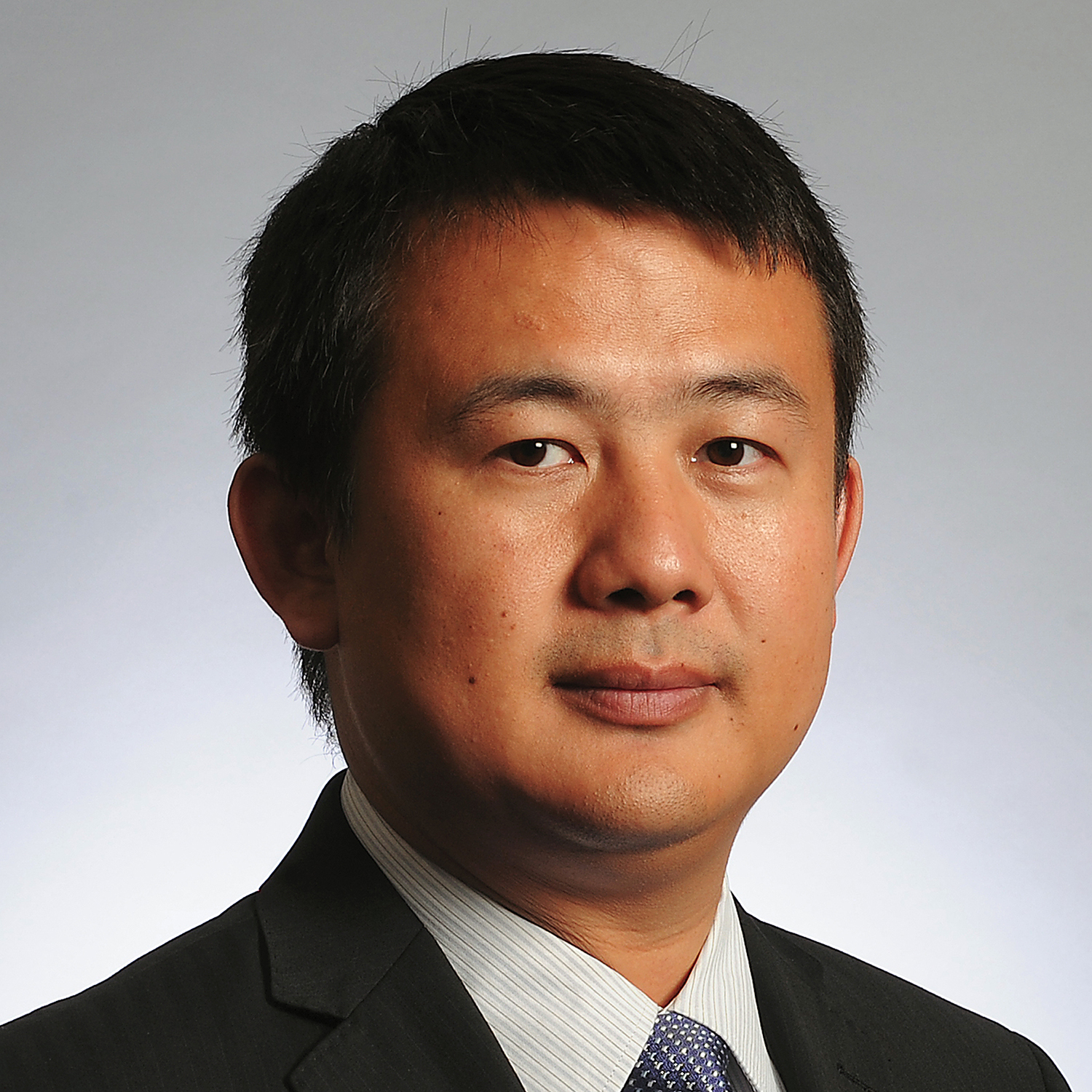
Wei Sun is an Associate Professor in the Department of Electrical and Computer Engineering at the University of Central Florida, where he also serves as the Director of the Siemens Digital Grid Lab. His research focuses on power system restoration, self-healing smart grids, cyber-physical security, and renewable energy integration. Dr. Sun received his Ph.D. from Iowa State University in 2011, and his M.S. and B.S. from Tianjin University in 2007 and 2004, respectively. Prior to joining UCF, he was an Assistant Professor at South Dakota State University (2013-2015), a power system engineer at Alstom Grid (2011-2012), a visiting scholar at the University of Hong Kong (2011), and an intern at California Independent System Operator (2010). His research interests include: Power System Restoration and Self-healing Smart Grid Resilient and Secure Critical Infrastructure Cyber-Physical Systems Renewable Energy and Microgrid Distributed Energy Resources Integration Dr. Sun's recent publications demonstrate strong focus on cyber-physical security in power systems, distributed energy resource integration, and resilient grid operations. His work shows increasing emphasis on AI and machine learning applications for grid security and resilience, particularly in the context of high renewable penetration. His notable scientific awards include: Microsoft Software Engineering Innovation Foundation Award (2014) Best Paper Award, 2019 IEEE PES ISGT Asia Mentor of the Year, UCF Graduate Student Association (2019) Dr. Sun has successfully secured multiple research grants totaling millions of dollars from agencies including the US Department of Energy, National Science Foundation, Florida Center for Cybersecurity, and Microsoft. He currently serves as PI or Co-PI on several major projects including "Secure and Resilient Operations Using Open-Source Distributed Systems Platform (OpenDSP)" funded by the Department of Energy. He leads the Siemens Digital Grid Laboratory at UCF, which is equipped with utility-grade software and hardware including Spectrum Power Microgrid Management System, Power System Simulator for Engineering, and Siemens Distribution Feeder Automation. The lab provides capabilities for both software modeling and hardware-in-the-loop testing of power systems.
Christof Paar is a Professor of Embedded Security at Ruhr University Bochum's Faculty of Computer Science. His work focuses on hardware security, cryptography, and embedded systems security. He leads the Embedded Security Group within the CASE Cluster of Excellence (Cyber Security in the Age of Large-Scale Attacks), addressing cutting-edge challenges in hardware Trojans, side-channel attacks, and cryptographic engineering. His research spans FPGA and IoT security, with contributions to physical-layer security, wireless jamming defenses, and tamper-resistant systems. Research Interests: Paar's expertise lies in hardware-software co-design for security, with a focus on embedded systems. His work includes analyzing vulnerabilities in FPGAs, developing countermeasures against side-channel attacks, and exploring physical-layer security mechanisms. He also investigates the human factors in hardware reverse engineering and the implications of adversarial machine learning on security systems. Notable Work: Recent publications highlight breakthroughs in detecting hardware Trojans across CMOS generations, breaking industry-standard IP protection mechanisms (IEEE 1735), and proposing novel defenses like IRShield against adversarial wireless sensing. His group actively contributes to standards for secure embedded systems and IoT devices, emphasizing practical implementations.
Daniel Genkin is an Associate Professor at the School of Cybersecurity and Privacy and School of Computer Science at Georgia Institute of Technology. His research spans system security, cryptography, side-channel attacks, hardware security, cryptanalysis, secure multiparty computation (MPC), verifiable computation, and SNARKs. He holds a PhD in Computer Science from the Technion - Israel's Institute of Technology and was awarded the 2024 Sloan Research Fellowship. His work focuses on microarchitectural vulnerabilities, including Rowhammer , Cache Timing , and Speculative Execution attacks. Notable contributions include co-discovering Spectre and Meltdown vulnerabilities. He has received multiple awards, including Distinguished Paper Awards , IEEE Micro Top Picks , and Black Hat Pwnie Awards . Publications highlight trends in Side-Channel Analysis , Hardware Exploitation , and Cryptographic Implementations . His email is genkin@gatech.edu , and he actively seeks students for research in security and cryptography.
David Cash is a Professor in the Department of Computer Science at the University of Chicago. His research focuses on applied and theoretical cryptography, computer security, and theoretical computer science. He joined UChicago in 2018 and has held roles such as teaching courses in cryptography, computer security, and discrete mathematics. Cash has advised numerous PhD and master’s students, including Sam Everett, Alexander Hoover, and Jesse Stern. His work includes constructing quantum-secure cryptography systems, analyzing encrypted data navigation, and foundational theoretical results. He has received notable awards like the 2025 Quantrell Award for Teaching and multiple Best Paper awards at Eurocrypt. Cash's research also explores secure computation, oblivious RAM, and cryptographic agility. His affiliations include the Systems Group at UChicago, focusing on interdisciplinary systems research. Education details are not explicitly provided in the text. However, his career trajectory suggests advanced degrees in computer science or related fields. His teaching spans undergraduate and graduate courses, emphasizing both theoretical foundations (e.g., discrete mathematics) and applied topics like cryptocurrencies and secure systems. Cash actively engages in academic service, including organizing conferences and reviewing research. His work bridges theoretical insights with practical applications, addressing modern computational security challenges. His research contributions span cryptographic protocols, secure data structures, and privacy-preserving technologies. Notable projects include work on searchable encryption, leakage-abuse attacks, and cryptographic systems resilient to quantum computing. Cash collaborates with institutions like Rutgers University and has mentored postdoctoral researchers such as Alexander Hoover. His grants include NSF CAREER awards and Simons Institute fellowships, supporting research in secure outsourcing and cryptographic data protection.
Roya Ensafi is the Morris Wellman Associate Professor in the Department of Computer Science & Engineering at the University of Michigan. She is the Founder and Director of the Censored Planet Lab, which focuses on Internet censorship measurement and digital equity. Her research lies at the intersection of networking, security, and privacy, with a strong emphasis on detecting censorship, surveillance, and digital inequity through scalable systems. Positions: Associate Professor (University of Michigan), Lab Director (Censored Planet) Recent Awards: Sloan Research Fellowship, NSF CAREER (2023), IRTF Applied Networking Research Prize (2016, 2022, 2023), USENIX Security Internet Defense Prize (2022) Her work develops systems like Censored Planet for global censorship monitoring, VPNalyzer for evaluating commercial VPN security, and Splintering Net for studying regionalized Internet access. By combining remote measurement techniques with user studies, her research addresses both technical and policy dimensions of digital freedom. Key methodologies include TLS handshake analysis, cross-layer latency metrics, and large-scale network probing. The Censored Planet project operates a global censorship detection network covering 221 countries, while VPNalyzer received the Consumer Reports Digital Lab fellowship. Collaborations include Google Jigsaw for data visualization systems used by over 100 organizations. Her 2024 work on digital discrimination in sanctioned states extends earlier groundbreaking research on Kazakhstan's HTTPS interception (2019) and Russia's Twitter throttling (2021). Scientific Awards: 2024: Distinguished Paper Awards at USENIX Security Symposium 2023: NSF CAREER Award 2022: IRTF Applied Networking Research Prize, USENIX Security Internet Defense Prize, First Prize in Internet Defense Prize, CSAW '22 Applied Research Competition First Place 2021: Recognized as Highest Scoring Short Paper at ACM IMC 2015: IRTF Applied Networking Research Prize 2022: Finalist for ACUM Outstanding Advisor Award Her lab trains both current and alumni PhD/Master's students including Ram Sundara Raman, Diwen Xue, Reethika Ramesh (now at Palo Alto Networks), and Victor Ongkowijaya (PhD at Princeton). She teaches EECS 388 Introduction to Security at the University of Michigan, covering software and network security principles. Her work has been featured in The Economist, New York Times, and BBC for analyzing global censorship trends.
Soheil Salehi is a tenure-track Assistant Professor in the Department of Electrical and Computer Engineering at the University of Arizona, with a joint appointment in Systems and Industrial Engineering. He is the Director of the Privacy-preserving, Intelligent, and Secure Computing (PRISM) Lab, established in August 2022. Prior to this, he was an NSF-Sponsored Computing Innovation Fellow and Postdoctoral Research Fellow at the University of California, Davis. Ph.D., Electrical and Computer Engineering, University of Central Florida, 2020 M.S., Electrical and Computer Engineering, University of Central Florida, 2016 B.S., Isfahan University of Technology, Iran, 2014 Dr. Salehi's research focuses on the intersection of hardware, AI, and security. His work spans hardware and AI-enabled security in IoT , Generative AI for hardware design and security , neuromorphic and biologically-inspired AI hardware , emerging spin-based devices , reconfigurable architectures , low-power VLSI circuits , and digital twins and mixed reality for semiconductor workforce development . He also explores the application of Generative AI in personalized education . His recent publications, spanning 2023–2025, reveal a strong trend toward integrating AI and machine learning into hardware security and design. Key themes include automated secure IC design flows , AI-driven hardware obfuscation , firmware and side-channel attack analysis , security in neuromorphic and spiking neural networks , and educational frameworks using digital twins and generative models . His work appears in top venues like DAC, ICCAD, USENIX Security, IEEE TCAS-I, and ISCAS. Outstanding Reviewer Award, IEEE/ACM Design Automation Conference (DAC), 2023 Best Presentation of the Symposium Award, UC Davis Postdoctoral Research Symposium, 2021 UCF Excellence by a Graduate Teaching Assistant (University-Level), 2016 Nominated for 30-under-30 Award, UCF, 2020 Nominated for Postdoctoral Research Excellence Award, UC Davis, 2022 Dr. Salehi has secured significant research funding as PI and Co-PI, including a $300K NSF SaTC EAGER grant on Generative AI-based Personalized Cybersecurity Tutor, a $174,000 University of Arizona PIF Award, and multiple RII grants totaling over $198K. He has also received industry funding from CHEST. He actively mentors students and leads the PRISM Lab, which focuses on privacy-preserving and intelligent secure computing. His service includes roles as Technical Program Committee (TPC) Member and Session Chair at premier conferences such as DAC, ICCAD, CCS, NDSS, and GLSVLSI. The PRISM Lab, under his direction, conducts cutting-edge research in secure and intelligent hardware systems, with applications in IoT, edge computing, and workforce development. The lab emphasizes interdisciplinary collaboration and innovation in both research and education.
Gordon Plotkin is a Professor at the School of Informatics, University of Edinburgh, where he is affiliated with the Laboratory for Foundations of Computer Science (LFCS). His research lies at the intersection of theoretical computer science and programming language semantics, with a profound influence on the formal understanding of computation. His research interests include Programming Language Theory, Semantics of Programming Languages, Domain Theory, Operational Semantics, Lambda Calculus, Type Theory, Concurrency Theory, and Algebraic Effects. His seminal work on structural operational semantics and domain theory has laid the foundation for modern semantics of programming languages. His publications span over five decades, showing a sustained and evolving research trajectory from foundational work in lambda calculus and domain theory to recent contributions in algebraic effects, probabilistic computation, and biochemical systems modeling. The articles demonstrate a consistent focus on formal methods, mathematical rigor, and the algebraic structure of computational effects. He has collaborated with leading researchers including Martín Abadi, John Power, Glynn Winskel, and John Reynolds. His work continues to influence both theoretical and practical developments in programming languages and systems. Gordon Plotkin has made foundational contributions to computer science, particularly through his development of structural operational semantics and domain-theoretic models of computation. He has advised numerous researchers and supervised many influential PhD theses, though specific student names are not listed in the provided text. His work has been supported by long-standing affiliations with the Laboratory for Foundations of Computer Science and the University of Edinburgh, and he has contributed to major collaborative projects in programming language design and verification. He is associated with several research groups and labs, most notably the Laboratory for Foundations of Computer Science (LFCS), which serves as a hub for theoretical research in programming languages, semantics, and logic at the University of Edinburgh.
Prof. Dr. Sebastian Steinhorst is an Associate Professor (W3-level with tenure) at the Technical University of Munich (TUM) within the Embedded Systems and Internet of Things group at the TUM School of Computation, Information and Technology . His research focuses on advancing the security, predictability, reliability, and interoperability of smart connected and autonomous systems, particularly for applications in Internet of Things (IoT) , Industry 4.0 , and automotive systems . PhD in Computer Science (2011) from Goethe University Frankfurt Postdoctoral roles at TUMCREATE Singapore (2011-2016) and Aarhus University (2016) Joined TUM in 2016 as Rudolf Moessbauer Tenure Track Professor His research areas include decentralized embedded systems, hardware/software co-design, modeling and verification of cyber-physical systems, security protocols for automotive networks, and time-sensitive networking (TSN) for industrial applications. Recent work explores blockchain-based data sovereignty, zero-knowledge proofs for vehicle authentication, and resilient architectures for autonomous systems. Key scientific contributions include the 2019 ACM TODAES Best Paper Award and pioneering work on CyberSecDome , LeapChain , and Simutack frameworks. He serves on editorial boards and conference committees, including co-organizing the Autonomous Systems Design initiative at DATE. His teaching portfolio spans lectures on System Design for IoT , Software Architecture for Distributed Systems , and IoT Security across multiple semesters. He also leads advanced seminars on embedded systems and IoT.
Dr. Xinwen Fu is a Professor in the Miner School of Computer & Information Sciences at the University of Massachusetts Lowell, where he also serves as Director of the iSAFER Center. He received his Ph.D. in Computer Engineering from Texas A&M University (2005), M.S. in Electrical Engineering from University of Science and Technology of China (1998), and B.S. in Electrical Engineering from Xi'an Jiaotong University (1995). Research Interests Dr. Fu specializes in Computer Security and Privacy , with particular focus on IoT Security , Mobile Security , Network Security , and Digital Forensics . His research has been published in all four top computer security conferences: IEEE Symposium on Security and Privacy (S&P/Oakland), ACM Conference on Computer and Communications Security (CCS), USENIX Security Symposium, and Network and Distributed System Security Symposium (NDSS), as well as prestigious journals like ACM/IEEE Transactions on Networking and IEEE Transactions on Dependable and Secure Computing. His work has gained significant media attention from CNN, Wired, Huffington Post, Forbes, Yahoo, MIT Technology Review, and PC Magazine, including multiple appearances on CNN Domestic and International. He has also served as TPC member for numerous prestigious conferences including ACM CCS, IEEE INFOCOM, and IEEE ICDCS. Scientific Awards Best paper award at IEEE International Conference on Industrial Internet (ICII) 2019 Best paper award, International Conference on Wireless Algorithms, Systems, and Applications (WASA), 2017 Teaching Excellence Award of Department of Computer Science, UMass Lowell, 2016 Best paper award, International Performance Computing and Communications Conference (IPCCC) 2016 Award of Excellence, GeekPwn 2016 Ethic Smart Life Hack Competition Erich Spengler Student Cyber Paper Award with students, The Colloquium for Information Security Education (CISSE), 2016 Spotlight Paper of the IEEE Transactions on Mobile Computing (TMC), February 2014 Best paper award, International Conference on Wireless Algorithms, Systems, and Applications (WASA), 2013 Best paper award, IEEE International Conference on Communications (ICC): Communications and Information Security Symposium, 2013 Teaching award, Department of Computer Science, University of Massachusetts Lowell, 2011
Karl Michael Göschka is an Associate Professor at Vienna University of Technology (TU Wien) in the Department of Distributed Systems (E194-02) within the Faculty of Computer Science. His academic title of Privatdozent indicates he has completed habilitation, the highest academic qualification in the German/Austrian system. He maintains an active research and teaching profile with courses scheduled through 2026S, including Bachelor Thesis supervision, Computer Science Projects, and PhD Seminars. His research spans over two decades with consistent publications from 2004 to 2022. Göschka's primary research interests focus on Dependable Distributed Systems, Web Engineering, and the convergence of voice and data technologies. His work demonstrates particular expertise in middleware, service-oriented architecture, wireless sensor networks, and fault tolerance mechanisms. He has supervised numerous master's and diploma theses since 2006, with his most recent doctoral supervision completed in 2022. Göschka's publication record shows a clear evolution from foundational work in distributed systems and replication (2004-2013) to more recent contributions in wireless sensor networks and dependable computing (2020-2022). His research consistently addresses the challenge of balancing dependability, performance, and security in distributed environments, with notable contributions in temporal decoupling techniques and adaptive systems. GIT-Preis des Österreichischen Vereins für Elektrotechnik (1999) Würdigungspreis des Ministeriums für Wissenschaft und Forschung (1998) GIT-Förderpreis des Österreichischen Vereins für Elektrotechnik (1994) Göschka has led and participated in multiple significant research projects including TRADE (2008-2011) on adaptive performance optimization, COMPASS (2005-2007) for automotive software systems, S-Cube (2008-2012), ALL-TIMES (2007-2010), and DeDiSys (2004-2007) on dependable distributed systems. His research has strong practical applications in automotive systems, online auctions, and critical infrastructure monitoring.