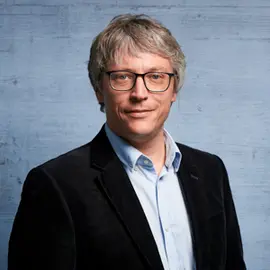
Prof.ssa Caterina Balletti is a faculty member at the Department of Project Cultures , Università IUAV di Venezia , holding the academic rank of Professor in the CEAR-04/A - Geomatics disciplinary sector. She leads multiple research initiatives including the MURATORI and VeLA - Venezia Libro Aperto projects, focusing on multi-scale geomatic approaches for historical center resilience. Her work integrates GIS and satellite surveying SLAM technology for urban mapping BIM-GIS integration for archaeological data climate risk assessment for infrastructure , with recent projects like SAR-CLIMARIS examining advanced MT-InSAR monitoring in climate-vulnerable contexts. She contributes to inclusive urban design through the IDEA | Inclusive Design and Environmental Accessibility aggregation, demonstrated in her H-City | Housing in the city collaborative research. Her teaching includes GIS and Satellite Survey of Coastal Environments (2025 Laurea Magistrale) and Urban and Territorial Planning modules.
Jan von der Assen is a doctoral student at the Communication Systems Group (CSG) within the Department of Informatics at the University of Zurich . His research focuses on Holistic Cybersecurity , spanning Threat and Asset Management , Security Economics , and AI-powered Malware Mitigation . Education : MSc in Software Systems from University of Zurich (2021) Research Affiliations : Involved in 12+ national/EU projects (2021–2025) including CheeseChain , CONCORDIA , and DSI Cybersecurity . His work emphasizes Moving Target Defense (MTD) for IoT security, Decentralized Federated Learning with blockchain-based reputation systems, and Ransomware Detection using hypervisor-level system call monitoring. Recent publications include: GuardFS (JISA 2025) for Linux ransomware mitigation HyperDtct (IEEE CSR 2025) on hypervisor-based detection ThreatFinderAI (CNSM 2024) for LLM threat modeling
Prof. Dr. Erik van Nimwegen is a Professor at the Biozentrum of the University of Basel, where he leads a research group focused on computational and systems biology. His laboratory is housed in Room 08.012 at the Biozentrum, with contact information including phone number +41 61 207 15 76 and email erik.vannimwegen@unibas.ch. His administrative support is provided by Rita Ruppen and Jonila Vladi. Van Nimwegen's research centers on understanding the function and evolution of genome-wide regulatory networks. His group investigates how cells control gene expression using both theoretical and experimental methods, with particular interest in deciphering the genome's regulatory code, analyzing gene expression dynamics from single cells to genome-wide regulatory programs, and uncovering quantitative laws of genome evolution. His interdisciplinary approach combines computational predictions with experimental data to model regulatory networks across organisms from E. coli to humans. His work has significant implications for understanding cellular behavior, developing evolutionary theory based on measurable quantities, and potential applications ranging from taming pathogens to engineering human tissue. Analysis of his recent publications reveals a consistent focus on gene regulatory networks, with increasing emphasis on single-cell analysis, computational modeling of biological systems, and the evolutionary aspects of gene regulation. His work spans bacterial systems (particularly E. coli) to higher eukaryotes, with recent publications showing expansion into visualization techniques for single-cell data, cancer research related to RNA processing, and even virology with work on COVID-19 origins. A notable trend is the integration of multiple data types (multiomics) and the development of sophisticated computational tools for analyzing complex biological systems. Van Nimwegen's group has developed numerous software tools and web services for regulatory and comparative genomics, including ISMARA (Integrated System for Motif Activity Response Analysis), CRUNCH (for ChIP-seq data analysis), SwissRegulon database, Phylogibbs, and others. These resources reflect his commitment to creating practical tools that advance the field of computational biology. His laboratory operates as an interdisciplinary team with researchers from diverse backgrounds including theoretical physics, computer science, and molecular biology. The group actively recruits postdocs and engineers, as evidenced by a 2018 posting seeking researchers for computational analysis of bioimages. His work has established important theoretical frameworks for understanding gene regulatory networks and their evolution, with significant contributions to the field of systems biology.
Mehdi Ali Gadiri is a Researcher and Doctoral Assistant at the École Polytechnique Fédérale de Lausanne (EPFL) , affiliated with the MicroBioRobotic Systems Laboratory within the Institute of Microtechnology (IGM) under the School of Engineering (STI). He also serves as the PhD Student Representative for the Doctoral Program in Microsystems and Microelectronics (EDMI). His research focuses on biomedical robotics, medical device innovation, and microtechnology applications in healthcare. Gadiri holds a doctoral position in Microsystems and Microelectronics, contributing to interdisciplinary projects at the intersection of engineering and medicine. His work includes developing advanced medical instruments, AI-driven clinical tools, and diagnostic technologies such as SARS-CoV-2 antigen testing and NT-proBNP detection systems. Gadiri’s contributions span from microactuator design to clinical decision-making frameworks, reflecting a strong emphasis on translating engineering solutions into practical medical applications. He is based at the MED 3 2815 office in Lausanne, Switzerland.
Yannick Rochat is an Assistant Professor of Software and Hardware Studies of Video Games and their Digital Traces in the Section of Language and Information Sciences at the University of Lausanne (UNIL). He joined UNIL on August 1, 2021, and holds a Master’s in Mathematics (EPFL, 2007) and a PhD in Mathematics applied to Human and Social Sciences (UNIL, 2014). His work emphasizes interdisciplinary approaches, particularly in digital humanities and media archaeology. Rochat co-founded the UNIL-EPFL GameLab in 2016, focusing on video game studies, preservation projects like Pixelvetica, and research-creation initiatives such as Four Apartments and a Confinement . He collaborates with institutions like the Swiss National Museum and the Canton of Vaud, serving on juries for cultural funding and interactive media grants. His research spans video game heritage, platform studies, and the interplay between gaming and cultural history. Rochat has secured SNSF funding for projects integrating video games into post-compulsory education and co-leads initiatives to document Swiss video game history, particularly through analysis of Smaky microcomputing platforms and 1980s gaming archives. His work bridges academic research with public engagement through exhibitions, conferences, and cross-institutional partnerships.
Anastasija Collen is a Lecturer at the Research Institute for Statistics and Information Science at the University of Geneva . She holds a Ph.D. from the same institution and specializes in cybersecurity, IoT security, and automotive systems. Her work focuses on developing secure architectures, cryptographic protocols, and regulatory frameworks for connected and automated vehicles. Her research spans Automotive cybersecurity standards and certifications Trust modeling in distributed networks Blockchain applications for IoT security Human-centric risk visualization Data privacy compliance (GDPR) Recent publications emphasize secure automotive systems , including trusted platform modules (TPM), lightweight cryptographic protocols (LOKI-2), and certification roadmaps. She also explores IoT security through frameworks like anomaly-based intrusion detection and blockchain-enhanced defense mechanisms. Collen’s work has been presented at conferences such as IEEE ICCP , ARES , and IEEE EuroS&PW , with over 40 peer-reviewed articles since 2018. She maintains an active presence on ResearchGate and Google Scholar .
Emmanuel Dupoux is a Professor at École des Hautes Études en Sciences Sociales (EHESS), affiliated with the School of Advanced Studies in Social Sciences and the Laboratory of Cognitive Science and Psycholinguistics (LSCP). His work bridges cognitive science, computational linguistics, and machine learning to study infant language acquisition and social cognition. Co-creator and director of EHESS Cognitive Science Master program Former LSCP laboratory director (1998-2009) Current research focuses on textless speech modeling and ecological audio analysis Research areas include: Modeling early language acquisition mechanisms using Bayesian models and HMM Investigating phonological 'deafness' and critical age plasticity Studying social cognition development through infant-toddler experiments His technical contributions span speech processing toolkits like Shennong, emergent communication frameworks (STOP dataset), and innovative approaches to self-supervised speech modeling. Recent publications demonstrate breakthroughs in: Topography-inspired CNN designs for better memory efficiency Prosody-aware generative spoken language models (pGSLM) Textless emotion conversion systems He actively explores how machine learning can reverse-engineer infant language learning processes from ecological audio data, with applications in neurodegenerative disease diagnostics. Key collaborations include: INRIA's Cognitive Machine Learning (CoML) team Facebook AI Research (FAIR) partnerships VoxPopuli multilingual speech corpus development
Dr. Mario Angst is a Researcher at the University of Zurich's Digital Society Initiative , focusing on governance networks and digitalization's role in sustainability governance. He co-leads the DSI Community Sustainability and the project sustainability.discourses , which analyzes urban sustainability transformations via computational methods and media data. Research Areas: Governance networks, digitalization policy, computational social sciences, urban sustainability discourses, and policy in the Anthropocene. His work combines natural language processing, Bayesian models, and network analysis with interdisciplinary teams. Scientific Awards: Robert Bosch Postdoc Academy for Transformational Leadership fellowship SNSF-funded visiting scholar at Stockholm Resilience Centre Students: Supervises bachelor's, master's, and PhD students at the University of Bern and Zurich, with teaching experience in methodology and sustainability topics. Labs & Tools: Develops computational tools like the R packages motifr , diskurs , and rayab , and contributes to the stance-llm Python library for actor stance classification.
Dr. Fabian Muff is a Senior Researcher at the Department of Informatics, University of Fribourg, within the Interfaculty Informatics unit. He holds a position as Oberassistent (Senior Research Assistant) specializing in Digitalization and Information Systems. His research focuses on the intersection of conceptual modeling with augmented reality (AR) and virtual reality (VR), emphasizing workflow modeling languages, AR application frameworks, and AI integration in modeling tools. He teaches courses on Requirements Engineering, Information Systems Modeling, and Project Development. Dr. Muff's work addresses challenges in hybrid modeling environments, contextual AR applications, and the limitations of large language models in conceptual modeling. His recent projects include developing the M2AR web-based modeling tool and exploring the use of ChatGPT in schema generation. He actively collaborates with academic and industry partners, publishing widely in venues like ER Conference and AAAI workshops. His contributions span technical innovations in AR modeling languages (e.g., ARWFML) and methodological advancements in combining conceptual modeling with emerging technologies. Current research explores AI-augmented visualization, context-aware AR systems, and the ethical implications of digital-physical integration in enterprise systems.
Stephen Wittkopf is a Lecturer and academic leader at the Lucerne School of Engineering and Architecture, part of Lucerne University of Applied Sciences and Arts. He holds roles including Head of Knowledge and Innovation Transfer (KIT), Head of International Relations, and oversees projects focused on solar energy and building envelopes. His academic background includes a Dr.-Ing. in Architecture from TU Darmstadt and extensive professional experience in Singapore and Hong Kong, where he contributed to the National University of Singapore's research and the Solar Energy Research Institute of Singapore (SERIS). His research emphasizes Building Integrated Photovoltaics (BIPV) , solar energy systems , and daylighting technologies . Notable projects include developing colored PV modules, analyzing BIPV visual impact, and advancing daylight redirecting components. He has also led initiatives like the Active Interfaces project, addressing BIPV standards and lifecycle assessments. Wittkopf's work bridges academic research, industry collaboration, and policy influence, aiming to integrate sustainable technologies into architectural design. His contributions span over 100 peer-reviewed articles and include collaborations with institutions globally, reflecting his commitment to interdisciplinary innovation in energy-efficient building systems.
Prof. Dr. Andreas Zogg is a Professor at the FHNW University of Applied Sciences and Arts Northwestern Switzerland, leading the process development team in the School of Life Sciences' Institute for Chemistry and Bioanalytics. His research focuses on process safety, continuous flow chemistry, and thermal process safety, with a strong emphasis on bridging academic innovation with industrial applications. He founded and chairs the Miniplant 4.0 initiative, which advances chemical process development through safety-first approaches. Key projects include Innosuisse-funded collaborations with industry partners like Fluitec and Schärer & Schläpfer AG, focusing on scaling continuous processes safely. Zogg’s team develops models for explosion risk assessment, energy-efficient processes, and reactor design. His lab facilities include a unique explosion reactor for testing hazardous reactions, offering students hands-on experience in process safety and modeling. Roles: Team leader, Lab head, Course manager Research Themes: Process safety, reaction technology, calorimetry, sustainable chemical processes Key Achievements: Awarded for applied chemical thermodynamics (2005), ETH Medal (2004) Education: Not explicitly stated in provided texts Zogg actively supervises MSc and BSc students in industry-linked projects, fostering next-generation engineers skilled in process optimization and safety. His work emphasizes Switzerland's chemical industry competitiveness through safety, sustainability, and quality.
Olivier Ertz is a Professor at the Media Engineering Institute (MEI) of the University of Applied Sciences and Arts Western Switzerland (HES-SO), based in Yverdon-les-Bains. He specializes in geospatial technologies, augmented reality (AR), and educational technology, focusing on applications for biodiversity education and citizen science. His work emphasizes open-source tools and interoperability standards, particularly within the Open Geospatial Consortium (OGC). Key projects include: BiodivAR: A location-based AR platform for biodiversity education, enabling users to explore geolocated media in natural environments. ArODES: Research on symbology encoding standards for cartographic interoperability, contributing to OGC specifications. CrowDPLOS: Developing pedestrian navigation tools for disabled users using crowdsourced geospatial data. Research interests span: Augmented Reality applications in education and cultural heritage. Geospatial data visualization, including 6DoF georeferencing and real-time AR integration. Citizen science platforms for biodiversity monitoring and data validation. Open-source geospatial tools and standards compliance (OGC). His recent work explores: The impact of AR on screen time and environmental engagement. Optimizing geolocation accuracy for AR usability in outdoor settings. Interoperability of citizen science datasets through standardized formats. He has led multiple funded projects (e.g., FNS, Fondation Hasler) with total funding exceeding CHF 1.5 million. Collaborations include institutions like Swisstopo, Camptocamp, and academic partners across Switzerland.
Carlos Andrés Pena is a Professor and Director of the Institute of Information and Communication Technologies (IICT) at HEIG-VD. His research focuses on Machine Learning, Artificial Intelligence, and Bioinformatics, with applications in healthcare, environmental science, and computational biology. He leads projects like ImpTox and EXPLaiN, addressing challenges in nanotoxicology, phage therapy, and ethical AI. His work bridges AI with real-world problems, including antimicrobial resistance and soil health monitoring. Education: Not explicitly listed in the provided text. Research Interests: Pena’s research integrates AI with interdisciplinary domains. Key areas include: Machine learning for healthcare diagnostics (e.g., diabetic retinopathy, perinatal health) Phage genome engineering using deep learning to combat antibiotic resistance Protist bioindicators for soil quality assessment using metabarcoding Fuzzy logic systems for biomarker discovery and disease classification Grants & Projects: He has secured over CHF 1M in funding, including EU Horizon 2020 projects and Swiss National Science Foundation grants. Notable projects include: ImpTox (2021–2025): Investigating nanoplastics’ toxicity on allergies PERPHECT (2019–2021): Engineering phages via LSTM networks HES-XPLAIN (2023–2024): Open platform for explainable AI Labs/Teams: Directs the IICT lab, collaborating with institutions like CNRS and University of Fribourg on bioinformatics and environmental studies.
Hans-Georg Fill is a full professor in business informatics at the University of Fribourg, where he leads the Digitalization and Information Systems Group within the Faculty of Management, Economics and Social Sciences. He plays a central role in the Smart Living Lab, a joint initiative of EPFL, HEIA-FR, and the University of Fribourg, focusing on digital transformation and information systems. Prior to his current role, he held academic positions at the University of Bamberg and the University of Vienna and was a visiting scholar at Stanford University, Karlsruhe Institute of Technology, and École Nationale Supérieure des Mines. Research Interests: His primary research lies in conceptual modeling, particularly meta modeling, semantic information systems, and the application of blockchain and smart contracts in enterprise contexts. He also investigates the integration of virtual and augmented reality into enterprise modeling and explores deviceless interaction with information systems. A growing focus of his recent work is the role of large language models (LLMs) in enhancing modeling processes, knowledge representation, and automated enterprise model generation. Publication Trends: His recent publications (2023–2025) reflect a strong emphasis on the intersection of AI and conceptual modeling. Key themes include the application of LLMs in modeling, blockchain-based modeling languages, augmented reality for enterprise systems, and semantic technologies. He frequently publishes in top-tier venues such as ER, CAiSE, EMISAJ, and HICSS, often in collaboration with PhD students and international researchers. Scientific Awards and Recognition: Nominated for Best Paper Award at HICSS'51 (2018) Nominated for Best Paper Award at Modellierung 2016 and 2018 LexisNexis Top 10 Paper Award nomination (2016) Advising and Grants: He advises numerous PhD and Master’s students, including Charuta Pande, Benedikt Reitemeyer, Fabian Muff, and Simon Curty. His research is supported through institutional affiliations and collaborative projects such as the Smart Living Lab. He has also contributed to editorial leadership as co-department editor of BISE and supporting editor-in-chief of EMISAJ. Labs and Teams: He leads the Digitalization and Information Systems Group at the University of Fribourg and is a key contributor to the Smart Living Lab, a multidisciplinary research environment focused on digital innovation in living spaces and enterprise systems.
Dr. Matteo Spada is a Senior Researcher in Risk and Resilience at the Zurich University of Applied Sciences (ZHAW) School of Engineering, where he focuses on Technology Assessment. His research spans multiple institutions including the Paul Scherrer Institute, Swiss Seismological Service, and Istituto Nazionale di Geofisica e Vulcanologia in Italy. His educational background includes a Ph.D. in Earth Sciences from ETH Zurich (2006-2011) and an MSc in Physics from the University of Bologna (1999-2005). Dr. Spada's research focuses on risk and resilience assessment of critical infrastructure systems, with particular expertise in energy systems, natural hazards, and multi-criteria decision analysis. His work integrates quantitative methods with practical applications to inform policy and decision-making processes related to infrastructure safety and security. He has developed innovative approaches for probabilistic risk assessment, uncertainty quantification, and decision support systems that have been applied across multiple sectors including energy, water resources, and transportation. His recent work has particularly emphasized the energy transition, analyzing comparative accident risks across different energy technologies and developing frameworks for assessing resilience of electricity supply systems. Through his research, he has contributed to understanding the societal implications of energy infrastructure failures and developing methodologies for more robust risk assessment. Dr. Spada is an active member of several professional networks including the European Safety and Reliability Association (ESRA), the Institute for Operations Research and the Management Sciences (INFORMS), and the Special Activity Group - Sustainable Concrete Structures of the International Federation for Structural Concrete. He leads several research projects including 'Innovative Spatio-Temporal multi-criteria decision analysis Interface to support informed decision-Making for real-world applications' and contributes to initiatives focused on urban energy transition, resilient supply chains, and building decarbonization. His work often involves interdisciplinary collaboration with engineers, economists, and policy experts to address complex infrastructure challenges. Dr. Spada maintains an active research laboratory focused on risk and resilience assessment, where his team develops and applies advanced analytical methods to real-world infrastructure challenges. The lab utilizes a combination of statistical modeling, simulation techniques, and decision analysis tools to support evidence-based policy making.