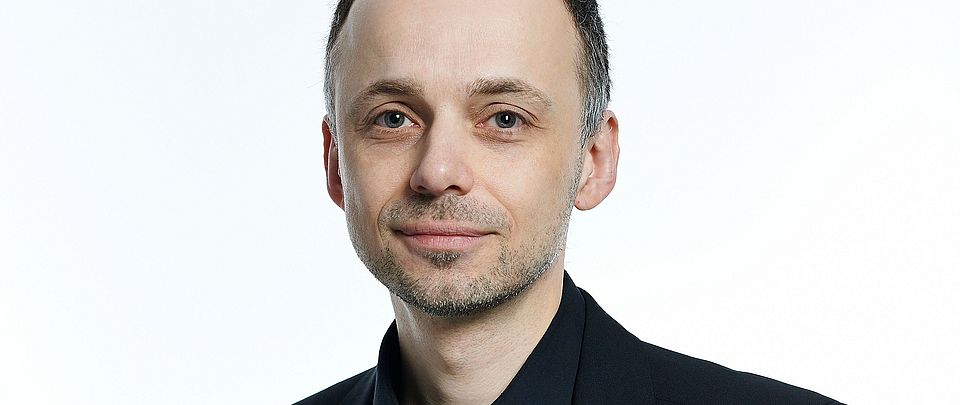
Christian Kleiber is a Professor of Econometrics and Statistics at the University of Basel (Faculty of Business and Economics) since 2006. Trained as a statistician in Germany and the UK, he obtained his PhD from the Technical University of Dortmund. Research Interests: Heavy-tailed phenomena, income distribution, inequality measurement, statistical distributions, stochastic orders, data science foundations, count data regression, time series analysis, econometric computing, and the history of statistics. Methodological Focus: Specializes in statistical modeling of economic data, reproducibility in research, and computational methods. Recent Publications span count data regression, structural change detection, reproducible research frameworks, and statistical distribution theory. Key contributions include software packages like countreg , strucchange , and plm for R programming.
Antoine Sanner is a Researcher affiliated with the Institute of Construction Materials (Institute of Building Materials) at ETH Zurich, part of the College of Architecture, Civil and Environmental Engineering. His work focuses on computational mechanics of building materials, surface topography analysis, and adhesion science. He co-developed the dtool and dserver systems to enhance FAIR data practices in research. Research interests include the structural behavior of cement-based materials, mechanisms of material adhesion under varying surface conditions, and multiscale analysis of surface roughness effects. He has also contributed to engineering tools for characterizing surface topography across scales, emphasizing the creation and use of 'digital surface twins' for material studies. His publications consistently explore topics at the intersection of materials science and mechanical engineering, with recent work advancing understanding of surface adhesion dynamics and cement curing processes. No scientific awards are explicitly mentioned in the provided texts. As part of the Professorship for Computational Mechanics of Building Materials, Antoine contributes to research infrastructure and computational methods development. He has no listed advisees or grants, and his role appears to be full-time with no indication of part-time status. He collaborates on projects involving advanced materials characterization, particularly in polycrystalline diamond coatings and bearing component analysis, leveraging both experimental and computational methodologies.
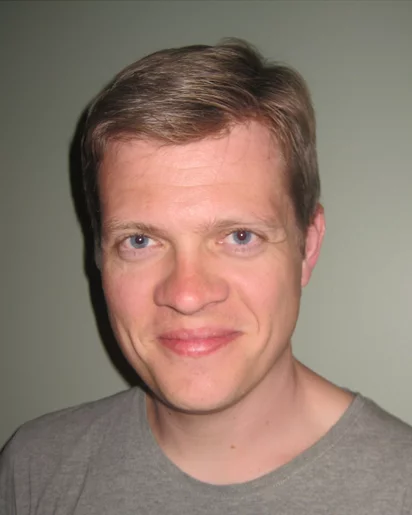
Andrea Mocci is a Lecturer at the Faculty of Informatics of the Università della Svizzera italiana (USI). His work focuses on software engineering methodologies, developer productivity, and IDE interaction analysis. He is affiliated with the Software Institute and actively contributes to academic events such as the IEEE International Workshop on Mining and Analyzing Interaction Histories (MAINT). His research explores empirical software engineering techniques, including developer behavior analysis, code documentation improvement, and the application of natural language processing to software artifacts. Key areas of investigation include: IDE interaction and navigation efficiency Code redundancy and quality metrics Video tutorial analysis for educational content Runtime systems and annotation APIs Defect prediction and software maintenance Publications from 2016-2020 highlight trends in developer-centric tools, holistic recommender systems, and visualization techniques for software evolution. His work often bridges theoretical formal methods with practical developer workflows, aiming to improve both software quality and developer productivity through empirical studies and tool development.
Roberto Minelli is a Scientific Collaborator and Academic Coordinator at the Software Institute, Faculty of Computer Science, Università della Svizzera italiana (USI), where he also completed his Bachelor, Master, and PhD in Informatics. His work bridges research, education, and technology outreach, with a strong focus on software engineering, visualization, and developer interaction analysis. His research centers on leveraging interaction data from development environments to enhance software comprehension and evolution. Key areas include software visualization , mining software repositories , reverse engineering , and program comprehension . He has pioneered work in visual metaphors such as Software Cities and explored immersive environments like virtual reality for code visualization. The recent publications reflect a consistent trend in visual analytics for software engineering, with increasing emphasis on social and collaborative aspects of development (e.g., Discord, GitHub issues), large-scale system comprehension, and the integration of diverse data sources into unified visual models. His work combines empirical studies, tool development, and human-centered evaluation. Best Paper Award, IWESEP 2016 Most Influential Paper Award, ICPC 2015 Distinguished Reviewer Award, ICPC 2020 Minelli actively mentors students, co-supervising numerous Bachelor and Master theses in software visualization and analytics. He has secured multiple research and development mandates, including projects like Self-Driving Cars on Interactive Dynamic Tracks (SNF Agora) and Sphere Two: Swiss Pavilion @ Expo 2025 . He plays a central role in organizing key events such as VISSOFT, SIESTA, and #FormulaUSI, and contributes to curriculum development and outreach programs targeting secondary education. He is involved in several labs and teams, primarily the REVEAL research group (led by Prof. Michele Lanza) and the Software Institute at USI. His leadership in initiatives like CodeLounge and #FormulaUSI underscores his commitment to experiential learning and public engagement in computing.
Simone Lionetti is a Lecturer and Co-Head (acting) of the Applied AI Research Lab at the Lucerne School of Computer Science and Information Technology, Lucerne University of Applied Sciences and Arts. His academic journey includes a Ph.D. in Physics from ETH Zürich (2018), a Master's in Physics from Università degli Studi di Milano (2013), and a Bachelor's in Physics from the same institution (2010). He has held postdoctoral and research roles at institutions such as Durham University and ETH Zürich. His research focuses on AI applications in healthcare, including medical anomaly detection, dermatology, and bioaerosol monitoring. He also explores theoretical particle physics and software engineering for scientific computing. Key competencies include data analysis, algorithm design, and self-supervised learning techniques. Recent work emphasizes robust AI systems for medical imaging, data quality audits, and scalable foundation models. His projects bridge technical innovation with societal needs, such as addressing diversity gaps in dermatological AI and improving real-time environmental monitoring. He has contributed to over 20 peer-reviewed articles and holds two notable awards/honors (specific details not disclosed in text). His work integrates cross-disciplinary approaches, combining theoretical physics insights with practical AI solutions for healthcare and environmental challenges.
Barbara Weber is a Full Professor of Software Systems Programming and Development and Vice President at the University of St. Gallen . She leads research in the Institute of Computer Science (ICS-HSG) , focusing on interdisciplinary applications of process mining, IoT integration, and cognitive aspects of software systems. Her work bridges computer science, business process management, and human-centered design. Education Background: Doctorate in Computer Science (university not specified in text) Research Interests: Process Mining Methodologies & Tool Development IoT-Driven Process Analytics Cognitive Load Analysis in Process Models Human-Computer Interaction in Software Systems Declarative Process Modeling & Modularization Key Contributions: Weber's research emphasizes practical applications of process mining in real-world systems, including IoT integration for smart factories and cognitive workload assessment via eye-tracking. She advocates for user-centric design principles in both software tools and business process frameworks. Labs & Teams: Active in the Institute of Computer Science (ICS-HSG) , where she collaborates on projects such as ProAmbitIon (process conformance checking) and LogView (process mining inquiry validation).
Prof. Yann Alibert is an Affiliated Professor of Astrophysics at the University of Bern's Faculty of Science, based at the Center for Space and Habitability (CSH). His research focuses on exoplanet science, planetary formation mechanisms, and space missions like CHEOPS and PLATO. He leads observational campaigns analyzing exoplanet atmospheres, orbital dynamics, and planetary system architectures using high-precision photometry and spectroscopy. Key areas of expertise include: Characterization of exoplanet atmospheres via CHEOPS and ESPRESSO Studying resonant planetary systems and compact multi-planet configurations Development of mass-radius modeling tools (e.g., mr-plotter) Investigating planet formation pathways through streaming instability and pebble accretion Recent work emphasizes ultra-short-period planets, hot Jupiters, and water-world candidates. He collaborates extensively with international teams on TESS, PLATO, and ground-based radial velocity surveys. His research contributes to understanding planetary system evolution and the search for habitable worlds.
Pierre Mégevand is a Professor and group leader at the Faculty of Medicine, University of Geneva, where he leads the Human Neuron Lab. His research is centered on understanding the neural mechanisms underlying human cognition and epilepsy, using intracranial recordings from awake patients. He is actively involved in both clinical and basic neuroscience research, with a focus on speech, language, and seizure dynamics. His research interests span cognitive neuroscience, clinical neurophysiology, and neuroengineering. He investigates how neurons encode sensory stimuli and behavioral responses, particularly in the context of speech and language. His lab uses stereo-EEG and microelectrode recordings to identify seizure-specific neural patterns and develop patient-tailored biomarkers for seizure detection and prediction. Key areas include multisensory integration, functional brain networks in epilepsy, and neural decoding of imagined speech. His recent publications reflect a strong trend in human intracranial electrophysiology, with studies on audiovisual illusions, electrode localization tools, functional networks in epilepsy, and neural correlates of speech and emotion. His work combines clinical data with advanced computational methods to uncover the dynamics of human brain function. Among his scientific contributions are methodological advancements and clinical insights in epilepsy monitoring and treatment. Though no specific awards are listed, his publications in top journals like Nature Communications and Epilepsia indicate high recognition in the field. Mégevand advises graduate students and postdoctoral researchers, including Lora Fanda and Jonathan Monney. His lab collaborates on grants related to neurotechnology, brain-computer interfaces, and epilepsy research, though specific grant details are not provided. He is part of a multidisciplinary team at the University of Geneva that includes engineers, neurologists, and neurosurgeons. The Human Neuron Lab, based at the Centre Médical Universitaire (CMU), is equipped for advanced human electrophysiology studies. The team includes a master assistant, graduate students, and postdoctoral researchers, reflecting an active and collaborative research environment focused on translational neuroscience.
Dominique Jaccard is a Professor at the Haute école d'Ingénierie et de Gestion du Canton de Vaud (HEIG-VD) , specifically within the Institut d'ingénierie des Médias (MEI) . He leads the Serious Games and Edtech Competency Group , focusing on digital pedagogy, learning analytics, and project management education through game-based approaches. Developed HUMAn real-time patient simulation model for emergency triage training Created the co.LAB collaborative framework for serious game development Secured major grants from Innosuisse and Swiss National Science Foundation Collaborated with institutions like University of Agder, Université de Genève, and Université de Fribourg Research Interests: His work bridges educational sciences and computer science , emphasizing: Digital games for emergency medicine and oncology training Systemic approaches to collaborative design processes Holistic learning analytics systems Overcoming development barriers for non-programmers Scientific Contributions: Through 15+ years of research, he has: Validated serious games as educational tools Developed adaptive simulation frameworks for healthcare Explored NLP integration in educational games Published in International Journal of Serious Games and JMIR Serious Games Implementation: His projects have created: WEGAS authoring system for rapid simulation game development PRITS software prototype for patient rights education co.LAB digital platform for cross-disciplinary collaboration
Mohit Pundir is a Lecturer at ETH Zürich's Department of Civil, Environmental and Geomatic Engineering. He specializes in computational mechanics, focusing on finite element methods, contact mechanics, and fracture simulations. Research Focus: His work emphasizes: Eulerian phase-field approaches for contact problems FFT-based methods in solid mechanics Computational modeling of material behavior High-performance fracture simulation frameworks Recent Publications: Pundir's 2023-2025 articles demonstrate strong themes in numerical methods for materials science, including topology-optimized structures, corrosion prediction in porous media, and physics-consistent ML models for materials.
Jürgen Wassner is a Professor of Edge Computing and Co-Head of the Competence Center for Intelligent Sensors and Networks at the Lucerne School of Engineering and Architecture (HSLU T&A). He holds a master's degree from Technical University of Dresden and a PhD from ETH Zurich. His career spans industry roles in Silicon Valley Group Inc. and telecommunication R&D before joining academia in 2007. His research focuses on embedded systems, AI at the edge, FPGA/VHDL design, real-time systems, and powerline communication . He leads projects such as 'Visual-Servoing Testbed with AI-Hardware in the Loop' and 'Low-Cost High-Performance Intelligent Camera for Space Debris Mitigation,' collaborating with companies like Diehl Aerospace. Recent publications emphasize wire fault detection using powerline communication, AI-based odor classification systems, and hardware acceleration for CNNs. His work bridges theoretical research with practical applications in avionics, rail freight, and space debris mitigation. Wassner advises Master of Science in Engineering students and has been recognized for his media engagement including a feature in the Luzerner Zeitung. He teaches Digital Design (FPGA, VHDL) and Digital Signal Processing , emphasizing hands-on implementation of cutting-edge systems.
Dr. Jonathan White is a Group Leader and Senior Scientist at the Laboratory for Neutron Scattering and Imaging at the Paul Scherrer Institut (PSI), Switzerland. He leads the Solid State Structures group and is responsible for the SANS-I instrument at SINQ. His research focuses on experimental condensed matter physics, particularly using neutron scattering to study magnetic materials, topological phases, and superconductivity. Education: Ph.D. in Condensed Matter Physics from the University of Birmingham (UK), with postdoctoral fellowships at EPFL and PSI. He has held roles including Tenure-Track Scientist and Senior Scientist at PSI since 2011. His expertise includes neutron diffraction, vortex lattice studies, and advanced instrumentation. Research Interests: Topological magnetism, skyrmion dynamics, multiferroic materials, and the interplay between magnetism and superconductivity. His work explores novel magnetic phases in non-centrosymmetric lattices and challenges in neutron experiments with small samples or extreme conditions. Grants: PI/co-PI on projects like the SNSF-funded 'Discovery of new quantum effects in topological materials' (2025) and a Sinergia grant exploring skyrmion-hosting materials (2017–2022). Projects include developing high-field magnets for neutron experiments and exploring magnetoelectric coupling in new materials. Labs/Teams: Active in PSI’s neutron scattering facilities and collaborates with global researchers, including EPFL, University of Tokyo, and University of Notre Dame. His work bridges theoretical predictions with experimental validation, advancing understanding of emergent phenomena in quantum materials.
Marco Brambilla is a Professor at Politecnico di Milano and a Lecturer at Università della Svizzera italiana (USI) . He leads the Data Science Lab at Politecnico di Milano's Department of Electronics, Information and Bioengineering (DEIB) and serves as director of Computer Science and Engineering B.Sc. and M.Sc. curricula . Research focus on data science, AI explainability, web science, crowdsourcing, model-driven development, and social media analytics Co-inventor of the OMG IFML standard and holder of 2 patents on crowdsourcing and multi-domain search Founder of four startups: WebRatio, Fluxedo, Servitly, and Quantia His recent publications explore: Graph-based Retrieval Augmented Generation for energy efficiency Human-AI interaction analysis through live streaming platforms Model-driven approaches for multiexperience AI interfaces Explainable AI with human-in-the-loop validation Scientific contributions include: Best paper awards at international conferences Associate editor role at SIGMOD Records Editorial contributions to the PERISCOPE H2020 project on pandemic impacts He actively participates in European research initiatives such as: TRIGGER project on EU global governance PERISCOPE for pandemic preparedness
Ulrich Ultes-Nitsche is a Professor in the Department of Informatics at the University of Fribourg, where he also serves as Dean of the Faculty of Science and Medicine. His research spans theoretical computer science, formal methods, and cybersecurity, with a strong focus on automata theory, model checking, and secure network systems. Institution: University of Fribourg School: Faculty of Science and Medicine Department: Department of Informatics Role: Professor and Dean His research interests include theoretical computer science, automata theory, formal verification, temporal logic, and cybersecurity. He has made significant contributions to the understanding of Büchi automata, liveness properties, and secure authentication mechanisms using Trusted Platform Modules. His interdisciplinary work extends to secure medical data access and ecological network analysis. The recent publications highlight a clear trend: a deep and sustained focus on automata theory, particularly Büchi automata, with increasing integration of machine learning techniques like graph neural networks for analysis. His earlier work laid foundational contributions in formal verification, model checking under fairness, and secure network protocols, especially in firewall and EAP-TLS authentication. The research consistently bridges theoretical computer science with practical security applications. Carolin Latze InSeon Yoo Dominik Jungo David Buchmann Thierry Nicola Michael Hayoz Christoph Ehret Nayla Sokhn Ulrich Ultes-Nitsche has led and co-organized numerous international workshops (e.g., NCMA, MSVVEIS, VCL) on formal methods and verification, demonstrating a strong commitment to the academic community. His work has been supported by research in formal verification, network security, and trusted computing, often involving collaborations across institutions. He has also contributed to projects involving secure e-commerce, medical data access, and enterprise information systems. He has been a key figure in organizing and editing proceedings for the International Workshop on Modelling, Simulation, Verification and Validation of Enterprise Information Systems (MSVVEIS) and the ACM Sigplan Workshop on Verification and Computational Logic (VCL), fostering research communities in formal methods and verification.
Dr. Michael Dantlgraber is a Research Fellow at Kalaidos University of Applied Sciences, affiliated with the Kalaidos Business School. He specializes in psychological methods, statistics, and diagnostics, with a focus on psychometrics and personnel psychology. University: Kalaidos University of Applied Sciences School: Kalaidos Business School Role: Research Fellow & Developer of psychological methods His research includes psychometric test development, construct validation, and data visualization techniques for psychological concepts. He leads projects on resilience, personnel selection, and digital behavior assessment. Recent articles analyze multiple sclerosis comorbidity, scale development, and online personality testing. He contributes to open-source tools like the Item Pool Visualization R package and collaborates with institutions such as the Swiss Economic Forum and Benoit Consulting (Bern). Contact: michael.dantlgraber@kalaidos-fh.ch