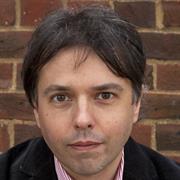
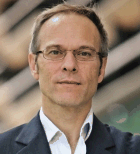
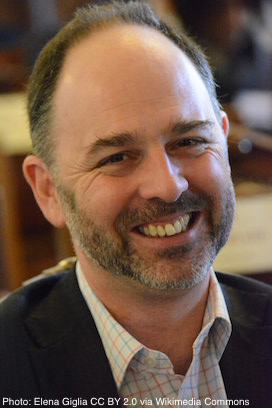
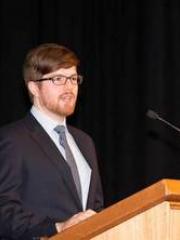
Professor George Buchanan is a leading researcher in human-computer interaction and digital libraries at RMIT University . His work bridges information science, digital humanities, and health informatics, focusing on usability in sensitive contexts like healthcare and misinformation. Deputy Dean, Research at RMIT University Former Director, University of Melbourne iSchool Research Interests: Digital information interaction Health and aging informatics Disinformation analysis Mobile interface design Digital library systems Key Contributions: Developed mobile web usability benchmarks, spatial hypertext tools, and thermal feedback interfaces. Currently seeking PhD students for 2025 projects on digital browsing and view change dynamics. Awards: Over twenty best paper awards and Honorary Life Fellow of the Royal Society of Arts. Advising: Accepting Masters/PhD supervision in information interaction and digital health domains.
Professor Daniel Angus is a faculty member at Queensland University of Technology (QUT), holding the position of Professor of Digital Communication in the School of Communication and serving as Director of QUT's Digital Media Research Centre (DMRC). His research focuses on computational methods applied to communication and media studies, with a particular emphasis on AI, automation, misinformation, and digital societal impacts. He holds a PhD in computer science from Swinburne University of Technology and has extensive experience in interdisciplinary research across computer science, design, communication, linguistics, and journalism. Affiliations: ARC Centre of Excellence for Automated Decision Making & Society, ARC Centre of Excellence for the Dynamics of Language. Research Projects: Leads projects like 'Using Machine Vision to Explore Instagram’s Everyday Promotional Cultures' and 'Evaluating the Challenge of ‘Fake News’ and Other Malinformation'. Research Interests: Daniel’s work bridges technology and society, exploring AI ethics, algorithmic transparency, social media governance, and computational methodologies for analyzing communication patterns. He develops tools like Discursis and PauseCode to study discourse and conversational dynamics in healthcare, aged care, and media contexts. Grants & Awards: Principal Investigator on multiple ARC grants and collaborates with industry stakeholders to address challenges like unhealthy food advertising and platform accountability. His research has informed policy submissions to parliamentary committees on social media regulation and AI adoption. Supervision: Current PhD students focus on topics like algorithmic transparency, computational methods for meme analysis, and AI in publishing. Labs/Teams: Directs the Digital Media Research Centre, fostering interdisciplinary projects on digital culture and platform studies.
Professor Ron Van der Meyden is a faculty member at the School of Computer Science and Engineering at the University of New South Wales, Sydney. His work focuses on the intersection of logic, security, and distributed systems, with particular expertise in blockchain technology and smart contracts. He leads the UNSW Interest Group in Blockchain, Smart Contracts and Cryptocurrency and organizes related seminar series. Professor Van der Meyden's research spans formal methods, computer security, and distributed systems. His work on epistemic logic has been influential in understanding knowledge-based systems and security protocols. He has made significant contributions to the formal verification of blockchain protocols and smart contracts, bringing rigorous mathematical approaches to these emerging technologies. His recent work explores the application of knowledge-based reasoning to consensus protocols and intersection management in autonomous systems. ACM Distinguished Scientist, 2009 As an advisor, Professor Van der Meyden has mentored numerous PhD and Masters students who have gone on to successful careers in academia and industry. His research is supported by grants including Australia's Economic Accelerator Grant for developing a commercial version of a software model checker and an AFOSR/DST Australia grant for verification and synthesis of fault-tolerant autonomous systems. He has received multiple ARC Discovery and Linkage grants over the years. Professor Van der Meyden leads the UNSW Interest Group in Blockchain, Smart Contracts and Cryptocurrency, fostering interdisciplinary research in this area. He has played key roles in major research centers including Smart Internet CRC and National ICT Australia (NICTA), where he established and led the Formal Methods program. His work on the formal verification of the seL4 microkernel and the Goanna static analysis tool has had significant practical impact.
Zhe Hou is a Senior Lecturer at the School of Information and Communication Technology , Griffith University, Australia. His academic journey includes a PhD in automated reasoning for separation logic from the Australian National University (2015) and prior research roles at Nanyang Technological University, Singapore (2015-2017). He joined Griffith University in 2017 and became permanent faculty in late 2019. Research Interests : Formal methods for software verification Automated reasoning with logical frameworks Blockchain technology and security Quantum computing verification Integration of LLMs with rigorous reasoning Sports analytics via model checking Recent Publications demonstrate expertise in neural-symbolic reasoning, blockchain security, quantum SAT solvers, and runtime verification frameworks. His work combines formal logic with machine learning for applications in cybersecurity and AI trustworthiness. Scientific Awards : ACM SIGSOFT Distinguished Paper Award (2025) Supervision Roles : Principal/Associate Supervisor for 6+ doctoral projects in blockchain security, AI verification, and network security. Professional Activities : Editor for Springer-Nature and Formal Aspects of Computing special issues, conference chair for ICFEM, ICECCS, and ISACE symposia.
Dr. Hongsheng Hu is currently a Lecturer in the School of Information and Physical Sciences at the University of Newcastle, Australia, specializing in the Data Science and Statistics focus area. Prior to this position, he served as a Postdoc Research Fellow at CSIRO's Data61 from October 2022 to August 2024. His academic journey includes a Doctor of Philosophy in Computer Systems Engineering from the University of Auckland in New Zealand, establishing his foundation in advanced computing systems. Dr. Hu's research centers on enhancing the trustworthiness of machine learning systems, with particular emphasis on identifying critical privacy vulnerabilities within machine learning models and developing robust defensive strategies. His work spans several key domains including adversarial machine learning (30% focus), statistical data science (30% focus), and data and information privacy (40% focus). He investigates membership inference attacks, machine unlearning techniques, and privacy-preserving mechanisms in federated learning environments. His research addresses fundamental challenges in AI security, exploring how machine learning models can be compromised through sophisticated privacy attacks and developing methods to mitigate these vulnerabilities while maintaining model utility. Analysis of Dr. Hu's publication record reveals a strong research trajectory focused on machine learning security and privacy. His work consistently addresses vulnerabilities in machine learning systems, particularly examining membership inference attacks, machine unlearning mechanisms, and privacy-preserving techniques in federated learning. The research spans top-tier venues including IEEE Security & Privacy, USENIX Security, NDSS, NeurIPS, IJCAI, AAAI, and WWW, demonstrating both technical depth and recognition by the research community. His publications show an evolving focus from foundational privacy attacks to developing more sophisticated unlearning techniques and robust defense mechanisms, with increasing citation counts indicating growing impact in the field. Active Program Committee member for USENIX Security, NDSS, ICLR, IJCAI, WWW, ICDM, ECML, and PKDD Invited reviewer for IEEE Transactions on Information Forensics and Security (TIFS), IEEE Transactions on Dependable and Secure Computing (TDSC), IEEE Transactions on Pattern Analysis and Machine Intelligence (IPAMI), and ACM Computing Surveys (CSUR) Dr. Hu currently serves as Course Coordinator for STAT6020 and STAT2020 Predictive Analytics at the University of Newcastle. As an academic supervisor, he co-supervises one PhD student working on 'Identifying and Mitigating Vulnerability in Recommender Systems' at Macquarie University. His research collaborations span multiple countries, with significant publication counts in Australia (18), China (12), New Zealand (10), and the United States (7), reflecting an active international research network focused on AI security challenges.
Professor David Scott Taubman is a faculty member and Deputy Head of School (Research) at the School of Electrical Engineering and Telecommunications (EE&T) at UNSW Sydney, Australia. He is also co-director of Kakadu Software Pty. Ltd. and its affiliates Kakadu R&D and Kakadu GPU. He earned his academic credentials from the University of Sydney and University of California at Berkeley: B.Sc. in Mathematics and Computer Science, University of Sydney, 1986 B.E. (Medal) in Electrical Engineering, University of Sydney, 1988 M.Sc. in Electrical Engineering, University of California at Berkeley, 1992 Ph.D. in Electrical Engineering, University of California at Berkeley, 1994 Professor Taubman's research interests span multiple domains within electrical engineering and telecommunications, particularly focusing on: Image Compression (EBCOT algorithm, JPEG2000 technologies) Video Compression (scalable video compression, motion compensated temporal lifting) Image and Video Processing (motion and depth estimation, demosaicing of digital color images, medical image analysis) Multimedia Communication (JPIP standard for interactive imaging, scalable communication systems) He has received numerous scientific awards and honors, including best paper awards from IEEE Signal Processing Society, IEEE Circuits and Systems Society, and IEEE Int. Conf. Image Processing. He has also received teaching awards from UNSW and was recognized with the NSi Inventor of the Year Award. Professor Taubman has contributed significantly to industry standards: Author of the EBCOT coding algorithm adopted in the JPEG2000 standard in November 1998 Author of Verification Model and associated documentation for JPEG2000 Central contributor to IS15444-1, IS15444-4, IS15444-9, IS15444-15 and IS15444-17 Developer of the commercially successful Kakadu Software tools for JPEG2000 He has held various leadership positions at UNSW including Head of the Telecommunications Research Group, Head of the Signal Processing Research Group, and Director of Research at School of EE&T.
Dr. Kla Tantithamthavorn is a Senior Lecturer and Director of Engagement & Impact at Monash University's Faculty of Information Technology. He holds a 2020 ARC DECRA Fellowship and specializes in software engineering, explainable AI, and digital health. His research focuses on defect prediction models and their integration into CI/CD pipelines, with notable contributions like the ScottKnott ESD test R package (14,000+ downloads). He leads projects such as RAISE (Responsible AI Software Engineering) and collaborates with organizations like CSIRO and Atlassian. Education: PhD and M.Eng in Software Engineering from Nara Institute of Science and Technology (Japan). Research areas include empirical software engineering, machine learning for quality assurance, and AI-driven cybersecurity. He serves on editorial boards for IEEE Transactions on Software Engineering (TSE) and Empirical Software Engineering (EMSE). Key Projects: Automated Testing of LLMs (CSIRO), RAISE, LLM4SE (Atlassian) Media Contributions: Featured in articles on emergency care analytics and JITBot defect prediction. His work addresses critical domains like e-Health, with deployed systems reducing patient wait times in Australian hospitals. He actively supervises Honours/Master/PhD students and advocates for 'IT for Social Good' initiatives.
Associate Professor Iain MacGill at the University of New South Wales leads interdisciplinary research at the intersection of renewable energy integration , electricity market design , and policy frameworks for low-carbon transitions. As a core member of the Centre for Energy and Environmental Markets , he develops computational models for coordinating distributed energy resources in restructured power systems. PhD in Electrical Engineering (UNSW) B.Eng. & M.Eng.Sci. (University of Melbourne) His work examines technical-economic-commercial challenges of renewable integration, with recent focus on: 24/7 zero-emission energy tracking frameworks Temporal matching in renewable procurement Open-source tools for green hydrogen value chains Residential solar-battery interaction dynamics Current research projects involve smart grid technologies , community microgrid economics , and climate-resilient energy systems . He collaborates with institutions like ARENA , CSIRO , and ARC on grants addressing grid stability, cost allocation, and policy innovation.
Natasha Fernandes is a Senior Lecturer in the School of Computing at Macquarie University. She holds a PhD in Computing from Macquarie University and École Polytechnique (France), and an undergraduate degree in Pure Mathematics and Computer Science from the University of Sydney. Her roles include involvement in the Data Horizons Research Centre and Future Communications Research Centre, alongside professional casual appointments in academic computing. Her research focuses on the mathematical foundations of data privacy, particularly differential privacy and its applications in natural language processing and machine learning. She develops privacy-preserving systems and tools using quantitative information flow techniques rooted in information theory. Key areas include privacy analyses for financial systems (e.g., Open Banking), API privacy, and optimizing utility in privacy pipelines. Fernandes has led or contributed to five research projects, including work on privacy analyses for financial transaction protocols and UAV-based machine learning systems. She received the 2021 John Makpeace Bennett Award for her doctoral research on differential privacy in metric spaces. Her academic journey combines industry experience as a backend software engineer with rigorous academic contributions, spanning over 21 peer-reviewed publications and collaborations across cybersecurity and privacy engineering domains.
Professor Cameron Neylon is a leading academic in the field of Research Communication at Curtin University’s Centre for Culture and Technology . With an international reputation as an Open Access activist and scholarly communication strategist , he combines empirical science expertise with systemic change advocacy. His work spans open data , research policy , and digital scholarship , advising global institutions and governments. 2012–2015 : Advocacy Director, Public Library of Science (PLOS) 2005–2012 : Senior Scientist, ISIS Neutron Scattering Facility, UK 2001–2009 : Lecturer in Combinatorial Chemistry, University of Southampton Neylon’s research focuses on the intersection of systems theory , design methodologies , and open science . He explores how digital networks and open practices can reshape knowledge creation , research metrics , and institutional policy . His recent projects include Curtin’s New Models of Publishing and global open access performance analysis . His publications since 2012 emphasize open science infrastructure , data integrity , and equitable research systems . Articles like Open Access Research Outputs Receive More Diverse Citations (2024) and A User-Friendly Dashboard for Tracking Global Open Access Performance (2023) reflect his commitment to measurable, inclusive scholarly systems. 2012 : Fellow of the Open Forum Academy 2010 : SPARC Innovator Award for Panton Principles 2010 : Blue Obelisk for Open Data Contributions Neylon has held leadership roles in organizations such as Crossref and ImpactStory , and currently serves on the Future of Research Communication and E-scholarship board. His work integrates neutron scattering , bioinformatics , and policy design to address systemic challenges in academic practice.
Xiaoning Du is a Senior Lecturer (equivalent to Associate Professor) in the Department of Software Systems & Cybersecurity at Monash University's Faculty of Information Technology. She holds a PhD from Nanyang Technological University (2020) and a Bachelor's from Fudan University (2014). Her research focuses on software security and quality assurance for traditional and AI-based systems, with notable contributions to DevOps for AI, vulnerability detection, and runtime verification. Education: PhD in Computer Science, Nanyang Technological University (2015–2020) Bachelor of Software Engineering, Fudan University (2010–2014) Research Interests: Security of intelligent software systems, AI-driven software testing, DevOps for AI, and trustworthy AI services . Her work emphasizes practical applications like Devign (vulnerability detection), DeepStellar (deep learning system analysis), and BigCodeBench (code generation benchmarking). Recent Projects: Collaborations include CSIRO cybersecurity initiatives, Algorand Center of Excellence, and IBM-funded research. She leads projects addressing AI ethics, federated learning security, and code completion robustness. Awards: 2024 Google Research Scholar Award, 2024 FIT Dean’s Early Career Award, and multiple distinguished paper awards at top venues like ACM SIGSOFT and ICLR. Labs/Teams: Active in Monash’s cybersecurity and AI research groups, contributing to open-source tools like DeepStellar and BigCodeBench . She advises PhD students and mentors on scholarships.
Warwick Tucker is a Professor in the School of Mathematics at Monash University. He holds a PhD in Mathematics from Uppsala University (1998) and a Docent qualification (2004). His research focuses on dynamical systems, chaos theory, and computer-assisted proofs with applications to complex systems and artificial intelligence. Key contributions include rigorous analysis of the Lorenz attractor, validation of numerical methods for differential equations, and studies on Julia sets and celestial mechanics. He leads a major project on non-hyperbolic dynamics funded until 2026. Notable awards include the EMS Prize (2004) and Moore Prize (2002). Collaborations span global institutions including École Normale Supérieure de Lyon. His work bridges pure mathematics with computational tools, emphasizing algorithmic proof techniques and validated numerical analysis.
Dr. Nicole Lesley Gardner is a Registered Architect (NSW ARB 7921) and Program Director of Computational Design at the School of Built Environment, UNSW Sydney . Her interdisciplinary research examines digital transformation in architecture, urban technology, and the ethics of smart cities. A Chief Investigator for the $9M Australian Research Council (ARC) Industrial Transformation Training Centre , she has led multiple Commonwealth-funded grants and co-authored over 40 peer-reviewed publications. Education: PhD in Architecture (UTS 2018), Bachelor of Architecture (Adelaide 2000), Bachelor of Design Studies (Adelaide 1998) Leadership: Chair of CAADRIA 2024 , co-editor of CAADRIA Post-Carbon proceedings (2022) Research Interests span computational design, smart city paradigms, and digital transformation in the AEC sector. Her work integrates ethical frameworks, gender dynamics, and material innovation in urban technology, with a focus on practice-based design research and industry collaboration. Scientific Awards : ADA Faculty Research Fellowship (2021-2022)
Associate Professor Joe Gattas is affiliated with the University of Queensland's School of Civil Engineering , where he leads the Folded Structures research group. His work bridges origami-inspired engineering , computational building design , and advanced manufacturing , with a focus on lightweight/modular structures and timber engineering . Education: BEng (2009) and PhD (2013) from the University of Queensland and University of Oxford, respectively. Research interests emphasize digital fabrication , hybrid materials , and structural innovation . His recent publications highlight trends in timber-CFRP composites , self-shaping structures , and value chain optimization for sustainable timber use. Scientific awards include the prestigious John Monash Scholarship . He actively supervises PhD and Master’s students in projects related to timber composites , structural optimization , and low-cost housing . Joe contributes to ARC Research Hub initiatives , co-leading Manufacturing Innovation and Value Chain Innovation nodes, and develops open-source tools like TimberTracker to visualize timber supply-demand dynamics.
Rajeev Gore is a Professor in the Department of Data Science & AI at Monash University. His research focuses on formal verification, automated theorem proving, and logic systems. He has contributed significantly to areas including modal logics, voting system verification, and cryptographic protocols. Gore has been actively involved in developing verified decision procedures for modal logics and exploring applications in electronic voting systems. His work bridges theoretical computer science and practical applications, with a particular emphasis on ensuring correctness through formal methods. Key contributions include the N-PAT nested model-checker and verified verifiability frameworks for voting systems like BeleniosVS and ElectionGuard. His research also addresses trust domains and cryptographic applications, reflecting a deep engagement with both foundational and applied aspects of logic and computation. Gore's publications span over two decades, demonstrating sustained contributions in formal systems, automated reasoning, and security-critical applications. His work often combines rigorous mathematical foundations with practical tool development, emphasizing trustworthiness and verifiability in complex systems.