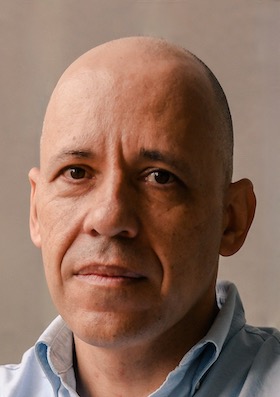
Laurent Hascoët is a permanent INRIA Researcher at Sophia-Antipolis center in France since 1986. He leads the ECUADOR team , previously known as TROPICS team, focusing on Automatic Differentiation (AD) since 1998. Research Interests: Specializing in Program Analysis and Transformation Parallelization Algorithms Compiler Techniques for AD Scientific Computing Applications Memory Optimization in Reverse Mode AD His work includes foundational research on data-flow analyses for adjoint programs, formalization of SPMD parallelization methods for mesh-based computations, and development of the TAPENADE Automatic Differentiation tool. The tool has been applied to complex systems like ocean circulation models (OPA) and CFD simulations. Scientific Work: He has contributed to Formalizing AD data-flow equations Extending TAPENADE to C language Optimizing checkpointing strategies Advancing tangent-on-reverse second derivative computation Reducing memory usage through address reversal techniques
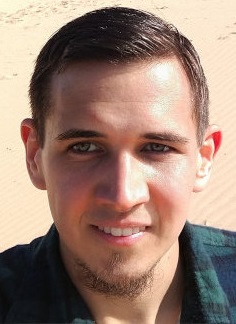
Gil UTARD is a University Professor at Université de Picardie Jules Verne (UPJV), specializing in Networks and Data. His research spans from foundational work in parallel computing and distributed systems to cutting-edge applications in medical IoT security and blockchain technology. Research Focus: Professor Utard's work has evolved significantly over three decades, beginning with fundamental research in parallel computing architectures and matrix operations. His early contributions include developing efficient out-of-core algorithms for large-scale matrix computations and pioneering work in data-parallel program validation. More recently, his research has pivoted toward critical applications in healthcare technology, specifically securing medical Internet of Things (IoT) devices through innovative blockchain implementations and advanced cryptographic protocols. Research Areas: Distributed Systems and Peer-to-Peer Networks Medical IoT Security and Privacy Blockchain Technology for Healthcare Parallel and High-Performance Computing Large-scale Data Storage and Management Cryptographic Protocols for Secure Data Sharing Research Evolution: His publication trajectory demonstrates a clear evolution from theoretical computer science foundations to practical security applications. The 2000-2010 period focused on parallel computing fundamentals, particularly matrix operations and storage systems. The 2011-2020 period saw expansion into peer-to-peer storage systems and distributed architectures. The 2021-present period represents a dramatic shift toward medical applications, with 70% of recent publications addressing healthcare-specific security challenges. Laboratory Affiliation: Professor Utard is associated with the Networks and Data domain within UPJV's research structure, though specific laboratory details are not provided in the source material.
Márk Asztalos is an Associate Professor at the Budapest University of Technology and Economics , affiliated with the Faculty of Electrical Engineering and Informatics and the Department of Automation and Applied Informatics . He leads research in the Visual Modeling Group, focusing on model-driven engineering, graph rewriting systems, and domain-specific languages. Research Interests: Model transformation verification, text-based modeling, graph pattern matching, and cloud/mobile system modeling. Contact: E-mail: Asztalos.Mark@aut.bme.hu , Office: Q.B226, Department of Automation and Applied Informatics, BME. His publications emphasize model transformation verification (2010-2015), graph rewriting techniques for pattern matching (2015-2017), and domain-specific language design (2014). Recent work (2020) analyzes model integration challenges in model-driven methodologies. Contact details: Address: Budapest 1117, Magyar tudósok krt. 2, Hungary Phone: +36 (1) 463-3702
Markus Bohlin serves as Professor (on leave) at Mälardalen University within the School of Innovation, Design and Engineering's Division of Product Realisation. He concurrently holds leadership roles as Dean of the School of Business Society and Engineering, Division Manager for Product Realization, and School Director for the INDTECH Industrial Graduate School. His academic credentials include: Doctoral thesis defended at Mälardalen University (2009) Associate professorship (docent) granted at Mälardalen University (2013) Adjunct professorship in rail traffic systems analysis at KTH Royal Institute of Technology (2014) Full professorship in Computer Science with Applied AI focus at Mälardalen University (2019) Bohlin's research centers on Applied Artificial Intelligence across critical infrastructure domains. His primary focus areas include: Railway systems optimization and freight logistics Cyber-physical systems for construction automation Machine learning applications in manufacturing quality control Simulation-assisted decision support systems His work bridges theoretical AI with industrial implementation in transportation, production, and power systems. Recent publications demonstrate a clear trajectory toward integrating machine learning with simulation modeling for real-world problem solving, particularly in railway punctuality optimization, construction site autonomy, and manufacturing defect detection. This interdisciplinary approach consistently targets high-impact industrial applications. Bohlin has held significant leadership positions including: President of the Swedish Operations Research Association (2012-2016) Member of Trafikverket Board on Capacity in Railways Program chair for ICROMA 2019 and multiple national conferences His academic supervision includes 4 completed PhDs, 9 licentiate degrees, and 5 ongoing doctoral candidates. With 20+ years of experience managing organizations up to 60 employees and 40+ projects (including H2020 initiatives), he brings substantial operational expertise to research commercialization. Current leadership roles encompass the Product Realisation division and INDTECH Industrial Graduate School, driving industry-academia collaboration in innovation and engineering.
Luís Eduardo Teixeira Rodrigues is a Professor Catedrático at the Department of Computer Engineering , Instituto Superior Técnico (IST) , Universidade de Lisboa . He is also affiliated with INESC-ID's Distributed, Parallel and Secure Systems Group . With a career spanning over three decades, he has pioneered research in distributed systems, fault tolerance, edge computing, and microservices consistency. PhD from IST (1996) "Agregação" in Informatics (2003) Co-founder of LASIGE's Navigators group His research focuses on transactional causal consistency , Byzantine fault tolerance , and edge computing systems . He leads the GLOG project for distributed shared logs and the DACOMICO project for microservices consistency. His work bridges theoretical distributed algorithms with practical systems engineering. Recent publications emphasize geo-replicated transactional systems , proof-of-storage mechanisms , and automated microservices decomposition . Notable collaborations include projects with institutions in Italy, Japan, and Luxembourg. Scientific contributions include: Prémio Prof. Luís Vidigal (awarded to student Mário Rui Vazão) Co-author of foundational books on Reliable Distributed Programming and Distributed Systems for System Architects Mentorship highlights: Supervised over 40 PhD and MSc students in distributed systems, including: Diogo Barrinha - Unobservable Covert Streaming Xavier Vilaça - N-Party BAR Transfer João Queirós - Transactional Causal Consistency Current projects include the GLOG distributed shared log system and DACOMICO for microservices consistency. Active in international collaborations with institutions in the USA, Switzerland, and Brazil.
Daniel Gritzner is a researcher at the Institute for Information Processing (Leibniz Universität Hannover) , specializing in computer vision, remote sensing, and scenario-based software engineering. His work bridges academic research with real-world applications in renewable energy, geospatial analysis, and automated code generation. Studied Computer Science (B.Sc. 2010, Diploma 2014) at the University of Mannheim Focus areas: Deep Learning, Semantic Segmentation, Remote Sensing, Formal Specifications His research integrates computer vision with remote sensing , applying techniques like transfer learning and domain adaptation to aerial/satellite imagery. Key projects include SegForestNet for segmentation and WindGISKI for wind turbine site selection. Recent publications highlight advancements in semantic segmentation, hyperspectral band optimization, and scenario-based controller synthesis. Collaborative work with Jörn Ostermann and others demonstrates interdisciplinary approaches across IEEE, Springer, and arXiv platforms. Technical contributions include the open-source SegForestNet framework, implementing binary space partitioning trees for geospatial analysis. This toolchain combines Python/Rust with PyTorch, emphasizing reproducibility and practical deployment in industrial/energy domains.
Dr. Zoltan Kocsis is a mathematical logician and educator based at the University of New South Wales (UNSW), where he currently holds the position of Adjunct Lecturer. His research spans multiple areas including proof theory, nonstandard analysis, category theory, and computational logic, with a focus on logical verification, degree of satisfiability, and structured decompositions. PhD in Mathematics from the University of Manchester (2019) Adjunct Lecturer at UNSW Work with interactive theorem proving software like Agda Dr. Kocsis' work on degree of satisfiability explores the probability of logical formulas holding in algebraic structures, revealing gaps in equations from Heyting algebras to group theory. His research on structured decompositions and spined categories provides categorical frameworks for fixed-parameter tractability and tree-width generalizations. In formal verification, he contributed to the seL4 kernel on RISC-V architecture. Recent publications include Proof-theoretic methods in quantifier-free definability (2025), Apartness relations between propositions (2024), and Degree of satisfiability in Heyting algebras (2024). Earlier works cover pseudo-random sequences, homology, and nonstandard analysis in group theory. He has received the CSIRO SCS Engineering and Technology award (2021) and the IBM Prize (2018) for his contributions to logical satisfiability. His collaborations include work with Ben Bumpus on spined categories and Jade Master on structured decompositions, alongside teams at CSIRO and Tallinn University of Technology.
Wenting Zheng is an Assistant Professor in the Computer Science Department at Carnegie Mellon University (CMU), with a courtesy appointment in the Electrical and Computer Engineering Department. She co-founded Opaque Systems and serves as a core faculty member at CyLab Security and Privacy Institute. Ph.D. in Electrical Engineering and Computer Science (EECS) from UC Berkeley M.Eng. and Bachelor’s degrees from MIT under Barbara Liskov Her research focuses on system security and applied cryptography , particularly systems enabling “sharing without showing.” Key areas include secure cloud computation, collaborative privacy-preserving analytics, and practical cryptographic frameworks for machine learning. Recent work emphasizes encrypted AI (e.g., Cinnamon), secure multi-party computation (e.g., Silph), and private information retrieval (e.g., PIANO). Notable scientific honors include the Berkeley Fellowship (2014-2016) , IBM Research Fellowship (2017-2018) , and the USENIX Security 2021 Distinguished Paper Award . She has advised numerous Ph.D. and Master’s students, including collaborators at CMU and UC Berkeley. Teaching: Distributed Systems, Secure Computer Systems, Cryptosystems: Theory and Practice Research grants from NSF, AWS, Cisco, Google, Samsung, and CMU CyLab Co-founder of DARE, a diversity-focused research mentorship program
Dr. Reid Townson is an Adjunct Professor at the Department of Physics, Carleton University , and a Research Officer in Metrology at the National Research Council Canada . His research focuses on the development and application of the EGSnrc Monte Carlo radiation transport software toolkit , enabling high-precision simulations of electron, positron, and photon transport for medical and metrological applications. Primary Role: Research Officer, Metrology at National Research Council Canada Academic Role: Adjunct Professor at Carleton University Key Affiliation: National Research Council Canada Research Interests span radiation transport modeling, radiation dosimetry, Monte Carlo simulation software development, and the application of computational physics to emerging medical technologies. His work involves simulating ionization chambers, radiotherapy devices, and complex radiation scenarios to advance dose calculation accuracy and detector calibration. Publications emphasize Monte Carlo simulation techniques for radiation therapy (e.g., VMAT, IMRT, RapidArc), gamma-ray spectrometry benchmarks, and EGSnrc toolkit enhancements. His contributions include detector modeling, dose verification algorithms, and GPU-accelerated computation frameworks. Student Opportunities are highlighted through research projects involving EGSnrc, though specific student names are not listed. He utilizes platforms like GitHub for collaborative development.
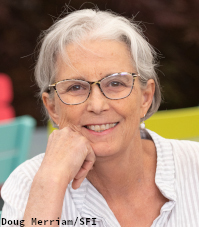
Dr. Stephanie Forrest is a Professor at Arizona State University's School of Computing and Augmented Intelligence (SCAI) and serves as Director of the Biodesign Center for Biocomputation, Security and Society . She is also affiliated with the Santa Fe Institute (SFI) as External Faculty and the ASU-SFI Fellowship . Education: B.A. from St. John's College and M.S./Ph.D. in Computer Science from the University of Michigan. Her research spans the biology of computation and computation in biology , including computational immunology , cybersecurity , automated software repair , evolutionary computation , and complex systems . Recent work focuses on GPU code optimization , malware analysis , and privacy-preserving wastewater epidemiology . Her publications (15 most recent) reveal trends in evolutionary algorithms for software repair, cybersecurity frameworks inspired by biological systems, and high-performance computing applications in epidemiology and genetics. Awards include IEEE S&P Test of Time (2020) , ACM/AAAI Allen Newell (2011) , and ICSE Most Influential Paper (2019) . Cybersecurity: Developed anomaly detection, instruction-set randomization, and CRISPR-inspired DoS mitigation. Software Repair: Pioneered biologically inspired methods for bug fixing, vulnerability closure, and energy optimization. Biological Modeling: Agent-based simulations of SARS-CoV-2 spread, cancer evolution, and immune system dynamics.
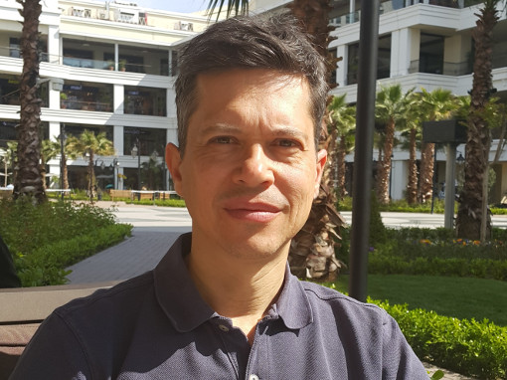
Professor Tolga Ayav is affiliated with the Department of Computer Engineering at Izmir Institute of Technology , where he has served as faculty since 2006. He received his BSc in Electrical and Electronics Engineering (1995) from Dokuz Eylül University, MSc in Computer Engineering (1999) from Izmir Institute of Technology, and PhD in Computer Engineering (2004) from Ege University. He was a researcher at INRIA Rhone-Alpes in 2005. Education BSc: Electrical and Electronics Engineering, Dokuz Eylül University (1995) MSc: Computer Engineering, Izmir Institute of Technology (1999) PhD: Computer Engineering, Ege University (2004) Research Interests include formal methods for software testing, hardware component and on-chip system tests, real-time and fault-tolerant embedded systems, blockchain applications, and machine learning. His work focuses on: Formal verification techniques Real-time system optimization Hardware-software co-design Blockchain-based security solutions Mathematical modeling in testing Recent Publications span topics like: Deep learning for livestock monitoring Blockchain in IoT security Fourier expansion in fault analysis Optimized data replication strategies Finite state machine testing Scientific Awards include: Best Paper Award at IEEE CBDCom 2016 for cloud data replication research Teaching includes courses such as: CENG 312: Computer Networks CENG 523: Advanced Topics in Real-Time Systems CENG 215: Circuits and Electronics Projects he has led include: TÜBİTAK TEYDEB: Spectrally Efficient Small Cell Base Station Design BAP: Dedicated Server for Physical Network Applications Lab Leadership : He leads the DCS Research Group at Izmir Institute of Technology, focusing on distributed computing and real-time systems.
Ştefania-Gabriela Dumbravă is an Associate Professor in Computer Science at the École Nationale Supérieure d'Informatique pour l'Industrie et l'Entreprise (ENSIIE), part of Institut Polytechnique de Paris. She leads the ACMES team at Samovar Laboratory (Télécom SudParis) and participates in international working groups including the Property Graph Schema Working Group and European Research Network on Formal Proofs. Education: PhD in Computer Science, Université Paris-Sud (2016) MSc in Computer Science, Jacobs University Bremen (2012) BSc in Mathematics, Jacobs University Bremen (2010) Research Focus: Her work centers on formal methods for designing and verifying graph database algorithms, with emphasis on: certified database engines, property graph schemas, threshold queries, progressive querying techniques, and knowledge graph evolution. She integrates theorem proving (Coq/Isabelle) with practical database applications. Publication Trends: Her recent works demonstrate strong focus on graph database foundations (schemas, query processing) and practical verification techniques. Publications frequently appear in top-tier venues (VLDB, SIGMOD, ICDE) and emphasize both theoretical rigor and real-world applications in areas like bioinformatics, transportation, and networking. Awards & Honors: EASST Best Software Science Paper (ICGT 2025) ICDE/SIGMOD Distinguished Reviewer Awards (2025) SIGMOD Best Paper & Research Highlight (2023) VLDB Best Paper Runner-Up (2022) Students & Grants: Supervises Master's interns on graph database applications. Leads the ANR JCJC VERDI project (2025-2029) on verified distributed graph systems. Actively recruits PhD candidates for this initiative. Labs & Service: ACMES team at Samovar Lab. Serves on editorial boards (TODS, TGDK) and program committees (VLDB, SIGMOD, ICDE). Coordinates VLDB 2026 Demonstrations Track and co-organizes multiple workshops (GRADES-NDA, TGD).
Alexandre Chapoutot is a Lecturer and researcher at ENSTA Paris within the Computer Science and Systems Engineering Unit (U2IS). He leads the Semantics of Hybrid Systems (SSH) research group and serves as Head of the 2nd year specialization of the engineering cycle in Computer Science. His academic work bridges theoretical computer science with practical engineering applications, focusing on the rigorous analysis and verification of complex systems. Chapoutot's research interests span the verification of cyber-physical systems, with a strong emphasis on interval analysis and mobile robotics. He has made significant contributions to the static analysis of programs through abstract interpretation, particularly for improving the accuracy of floating-point arithmetic calculations. His work bridges theoretical computer science with practical engineering applications, developing methods that ensure the reliability and safety of autonomous systems. The research has direct applications in robotics, control systems, and safety-critical embedded software where numerical precision and system correctness are paramount. His recent publications reveal a strong trend toward the integration of formal methods with practical robotics applications. The work spans theoretical foundations in hybrid systems verification, practical implementations for robotics navigation and control, and innovative approaches to combining different verification techniques. A significant portion of his recent work focuses on Signal Temporal Logic applications, trajectory optimization, and the development of verified algorithms for autonomous systems. The publications demonstrate a consistent progression from theoretical foundations to practical implementations with real-world robotics applications. Chapoutot actively supervises multiple PhD students working on cutting-edge research topics at the intersection of formal methods and robotics. His research group collaborates extensively with other institutions and researchers, as evidenced by the numerous co-authored publications across various domains. He contributes to the development of the DynIbex software library, which provides validated solutions for ordinary differential equations using Runge-Kutta methods. His laboratory work centers around the Semantics of Hybrid Systems (SSH) group, which develops theoretical frameworks and practical tools for the analysis and verification of cyber-physical systems. The group's research spans formal methods, numerical analysis, and robotics, with a strong emphasis on developing mathematically rigorous approaches that can be applied to real-world engineering problems.
Rolf Drechsler is a Full Professor and Head of the Group of Computer Architecture at the University of Bremen since 2001, with additional role as Director of the Cyber-Physical Systems Group at DFKI Bremen since 2011. He holds a Dr. phil. nat. in computer science from Johann Wolfgang Goethe University Frankfurt and has held academic positions at Albert-Ludwigs University Freiburg and Siemens AG. Education: Diploma and Dr. phil. nat. in Computer Science (Johann Wolfgang Goethe University Frankfurt, 1992-1995) Previous Roles: Albert-Ludwigs University Freiburg (1995-2000), Siemens AG Munich (2000-2001) His research focuses on formal verification , circuit/system design , and data structures for hardware validation . He has pioneered work on polynomial verification methods, BDD-based synthesis, and quantum computing verification frameworks. Recent publications analyze memristor-based in-memory computing, RISC-V security, and LLM-assisted hardware validation. Key awards include ACM Fellow IEEE Fellow Berninghausen Teaching Award (2018) Multiple best paper awards at ICCAD, DATE, DAC, and DDECS He serves as Associate Editor in journals like IEEE Transactions on CAD and ACM Journal on Emerging Technologies. He co-founded the Graduate School of Embedded Systems and Data Science Center at University of Bremen.
Professor Mark White serves as Head of the Aerospace Division within the School of Engineering at the University of Liverpool, bringing over 30 years of research experience since completing his PhD in structural crashworthiness at Liverpool in 1989. His leadership spans academic administration, cutting-edge rotorcraft research, and industry collaboration with major defense and aerospace entities including BAE Systems, dstl, Leonardo, and NATO. His research focuses on rotorcraft simulation fidelity , helicopter-ship dynamic interface , and maritime operations aerodynamics , with significant contributions to UK naval projects including the Type 26 frigate design and Queen Elizabeth-class aircraft carrier operations. Key methodologies include CFD modeling, piloted flight simulation, and motion fidelity assessment, addressing critical challenges in ship-helicopter operating limits and airwake hazards. Research Trends: Recent publications (2025) emphasize machine learning for pilot workload prediction, advanced airwake modeling, and certification-by-simulation frameworks, demonstrating evolution from foundational structural crashworthiness toward integrated operational safety systems. Disciplinary Impact: Work bridges aerospace engineering, naval architecture, and human factors, with applications spanning defense, commercial aviation, and emergency services. Scientific Recognition: BAE Systems Executive Committee Innovating for Success Award (2019) NATO AVT Panel Excellence Award (2017) American Helicopter Society Best Paper Award (2018) Society of Automotive Engineering Best Paper (2005) As an educator, Professor White coordinates the Aerospace Engineering with Pilot Studies program and lectures on flight handling qualities using problem-based learning approaches. His professional activities include NATO STO committee leadership, Royal Aeronautical Society specialist group participation, and extensive grant-funded research with European Commission, EPSRC, and DSTL. Current laboratory work centers on real-time simulation tools for harsh environment operations, supported by collaborations with NRC Canada and DSTG Australia.