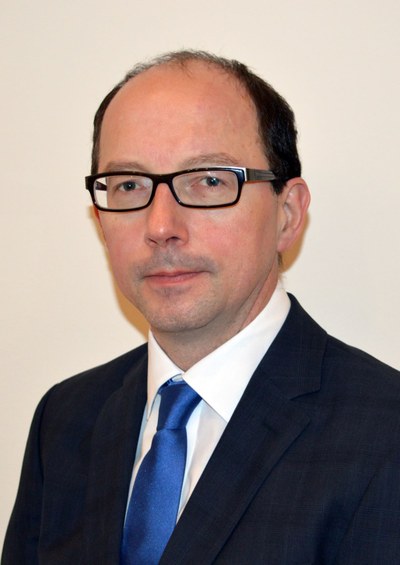
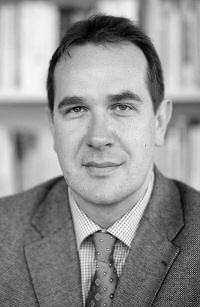
Ralf Lämmel is Professor and Head of the Software Languages group at the University of Koblenz. His research spans software language engineering, model-driven development, and semantic web technologies. He specializes in API analysis, data validation (SHACL constraints), and variability management for software systems. Recent work focuses on AI-assisted workflows for archaeology and trust analysis in large language models. Publications demonstrate growing interest in knowledge graph validation and semantic web applications. He has developed tools like the Virtual Platform for software variability and ProGS for property graph validation. Service includes program committee memberships for software engineering conferences and editorial roles. He leads research groups exploring API evolution and RDF validation techniques.
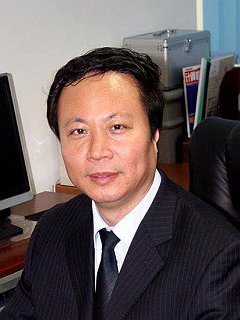
Professor Zhi-liang Zhu is a faculty member at Northeastern University, China, specializing in software engineering and communication systems. His work bridges theoretical research in complex networks with practical software ecosystem analysis. His research focuses on information integration , complex software systems , and chaos-based communications , with recent emphasis on cross-language dependencies, vulnerability propagation, and dependency conflict resolution in modern software ecosystems. Key contributions include novel approaches for binary analysis, ecosystem health monitoring, and software modularization. His publication trends reveal a consistent trajectory from foundational work in network coding and cryptography toward contemporary software engineering challenges, particularly dependency management across programming language ecosystems. Recent papers demonstrate expertise in Python, JavaScript/TypeScript, and C/C++ contexts. 9 academic awards at national, ministerial, and provincial levels Fellow of China Institute of Communications Senior member of Chinese Institute of Electronics Prof. Zhu actively contributes to academic service as Co-Chair of the International Workshop on Chaos-Fractals Theories and Applications and serves on the Ministry of Education's Software Engineering Teaching Guiding Committee. His work includes authoring 5 books and over 230 publications.
Norbert Siegmund is Professor and Chair of Software Systems at Leipzig University's Institute of Computer Science in Germany. His research bridges software engineering and artificial intelligence, focusing on configurable software systems, performance analysis, and energy consumption optimization. He has established himself as a leading researcher in the field of configurable systems through extensive publications in top-tier software engineering venues. His research interests span multiple interconnected domains: Configurable, complex systems that evolve over time Non-functional properties, particularly performance and energy consumption Sampling, learning, and optimization methods from AI applied to software engineering Contemporary empirical methods in software engineering MLOps and DevOps practices Social aspects of AI-production teams His publication record reveals a consistent focus on creating accurate performance models for configurable software systems, with increasing attention to energy consumption aspects in recent years. The research trajectory shows evolution from basic performance modeling to incorporating machine learning techniques, transfer learning across environments, and addressing energy efficiency concerns. His scientific achievements have been recognized through several prestigious awards: ACM SIGSOFT Distinguished Paper Award at ICSE 2015 SPLC Best Paper Award in 2012 Multiple keynote invitations including at QAVS 2021 Open-Source Award from the state of Thuringia (2020) Best PhD award from University of Magdeburg (2013) Prof. Siegmund has secured significant research funding including DFG projects like 'Green Configuration' (€590,000) and 'Pervolution' (€290,000), as well as BMBF projects related to AI and software engineering. He has mentored numerous students through research projects and has served on program committees for major conferences including ICSE, ASE, ESEC/FSE, and SPLC. His teaching portfolio includes courses on Software Engineering for AI-Enabled Systems, Configurable Software Systems, and Automated Software Engineering.
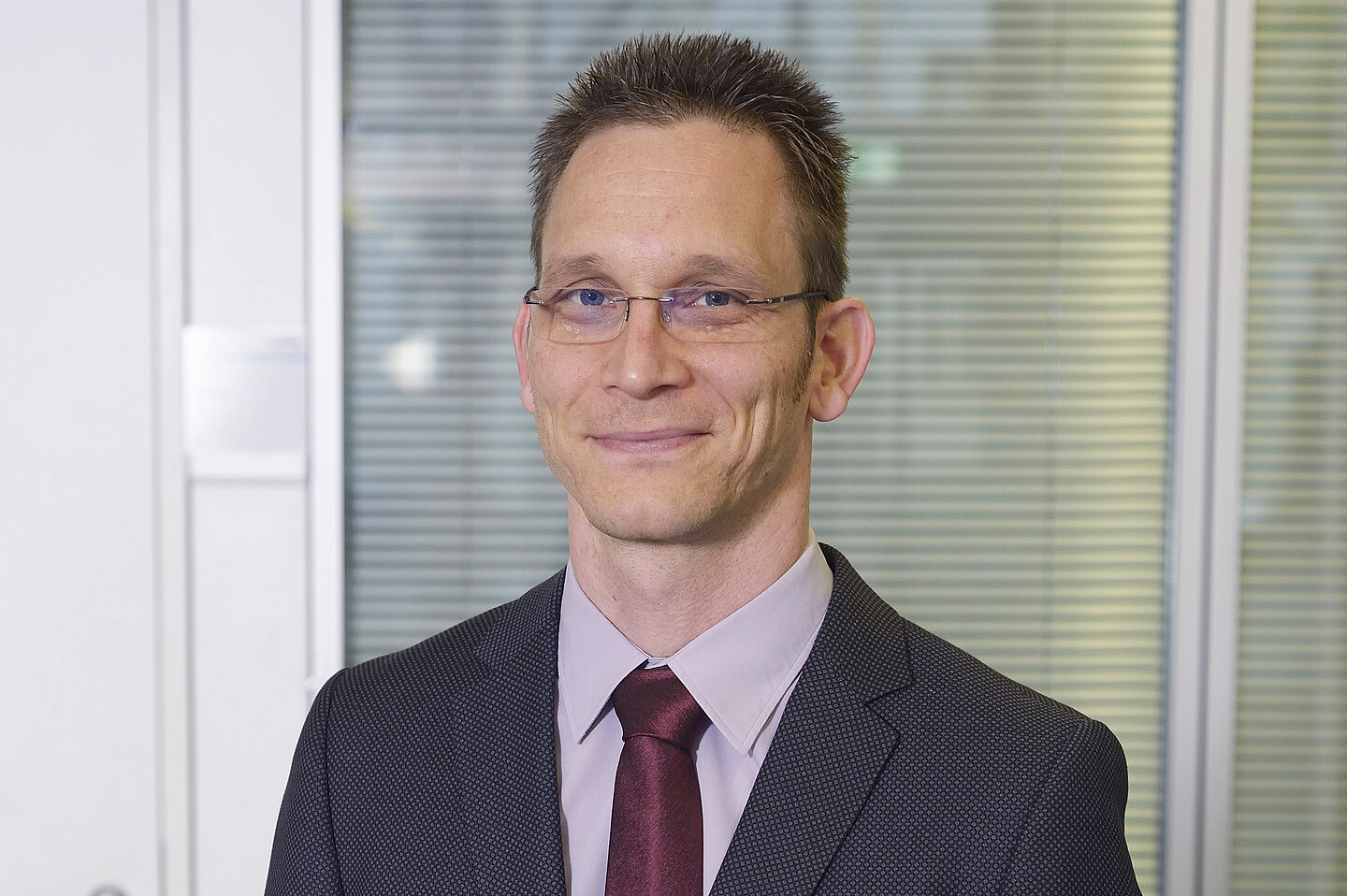
Clément Quinton is a researcher at the University of Lille, France, specializing in software engineering with significant contributions to international conferences including ASE and ICSE. His work bridges theoretical research and practical applications in modern software development paradigms. His research focuses on the critical intersection of sustainability and software engineering, particularly examining environmental impacts of AI-driven development. Key areas include green computing in LLM-based code optimization, variability-aware systems for edge/fog environments, and configuration management for highly configurable software. He investigates fundamental trade-offs between performance gains and ecological costs in emerging technologies. Analysis of his publication trajectory reveals a strategic progression from core software product line research toward urgent sustainability challenges. His recent work demonstrates increasing emphasis on quantifying hidden environmental costs in AI-assisted development while maintaining strong foundations in configuration management for distributed systems. No scientific awards or student advising information is documented in available sources. Similarly, no details regarding research grants, laboratory affiliations, or team structures are present in the current professional footprint.
Dr. Peter Kissmann is a researcher in the Computer Science Department at Universität des Saarlandes, Germany, affiliated with the Foundations of Artificial Intelligence (FAI) Group. His work focuses on automated planning systems, particularly in optimal and net-benefit planning domains. Research Interests: His primary research areas include Artificial Intelligence, Automated Planning, Symbolic Reasoning, Heuristic Search, and Knowledge Representation. He specializes in BDD-based planning, variable ordering, and symbolic search algorithms for optimal planning. The 15 most recent publications reflect his sustained contributions to the International Planning Competitions (IPC) from 2008 to 2014, showcasing evolution in planner design, including support for conditional effects, bidirectional search, improved variable ordering, and integration of modern BDD libraries like CUDD. These works demonstrate deep technical innovation in planner efficiency, robustness, and scalability. Scientific Awards: No awards mentioned in the provided text. Advising and Grants: There is no explicit information about students or grant funding in the provided material. However, his leadership in developing and releasing competitive planning systems suggests involvement in research projects, possibly with student contributors or collaboration within the FAI group. Labs and Teams: He is a member of the Foundations of Artificial Intelligence (FAI) Group at Universität des Saarlandes, which develops advanced planning systems and participates in international competitions like the IPC.
Holger Hermanns is a Full Professor of Computer Science at Saarland University, Germany, where he leads the Dependable Systems and Software group. He is co-spokesperson of the Center for Perspicuous Computing (SFB/TRR 248) and has been a scientific director at Schloss Dagstuhl – Leibniz Center for Informatics since 2025. He is a member of Academia Europaea and holds an ERC Advanced Grant (POWVER) and a Proof-of-Concept Grant (LEOpowver) . His leadership roles include former Dean of the Faculty of Mathematics and Computer Science and active service in major academic organizations such as the ETAPS Association (Vice President) and Friends of Dagstuhl (President, 2013–2023). Education: Researcher and academic positions at Universität Erlangen-Nürnberg (1993–1998), Universiteit Twente (1998–2006), and INRIA Grenoble Rhône-Alpes (2007–2010). His research focuses on modeling and verification of concurrent systems , stochastic behavioral modeling , energy informatics , and proactive algorithmic accountability . He is a leading figure in probabilistic model checking, formal methods for cyber-physical systems, and software dependability. His work bridges theory and practical applications in satellite systems, AI safety, and environmental monitoring. The recent publications reflect a strong trend toward AI accountability , software doping detection , formal verification of machine learning systems , and dependable satellite network design . His team develops tools like RTLola and Momba, integrating formal methods into real-world systems. There is a growing emphasis on interdisciplinary work, particularly in human oversight of AI and ethical algorithmic design. Scientific Awards and Recognition: ERC Advanced Grant POWVER ERC Proof-of-Concept Grant LEOpowver Member, Academia Europaea (2013) Dutch Vernieuwingsimpuls (2001) Preis des Fakultätentages Informatik (2013) ERC Advanced Investigators Grant (2016) Otto Mønsted-Guest Professorship (2013) Hermanns has advised numerous students and researchers, though specific names are not listed. He leads major research grants, including ERC projects and collaborative efforts within SFB/TRR 248. His leadership extends to program committees of top conferences such as CAV, CONCUR, TACAS, and QEST, and he has chaired LICS and ICALP. He is affiliated with the Dependable Systems and Software lab at Saarland Informatics Campus and contributes to the Schloss Dagstuhl ecosystem as scientific director and former president of its support association. His recent work is increasingly centered on the AI Act , algorithmic transparency, and the formal foundations of trustworthy AI.
Prof. Dr. Konrad Schöbel is a Professor of Mathematics in Information and Communication Technology at the Faculty of Digital Transformation of Leipzig University of Applied Sciences (HTWK Leipzig) . His role involves teaching courses in mathematics and simulation, while also serving as a member of the Faculty Council and Deputy Chairman of the Examination Board. He is affiliated with the Mathematical and Natural Sciences Center of HTWK. Research Interests : Simulation of physical systems Image processing Inverse problems Classification of separable and superintegrable systems Differential and algebraic geometry Scientific consulting for SMEs Recent Publications focus on superintegrable systems, conformal geometry, and algebraic methods in mathematical physics, with collaborations spanning institutions like the University of New South Wales and Universität Hamburg. His work also includes patents in computational imaging and photolithography.
Christian Dietrich is a Professor at the Technische Universität Hamburg (TUHH) in the Operating System Group (OSG) . His research focuses on Operating Systems , Real-Time Systems , and Embedded Systems , with specific interests in Software Fault Tolerance , Memory Management , and Software Variability . Projects: ParPerOS (Parallel Persistency OS), ATLAS (Adaptable Thread-Level Address Spaces), CLASSY-FI (Cross-Layer Fault Injection), AHA (Automated Hardware Abstraction), CADOS (Configurability-Aware OS) Supervised Theses: 10+ completed theses on topics like io_uring Integration , Heterogeneous Multi-Core , Virtual Memory Primitives , and Fault Injection His recent publications (2022-2024) address Heterogeneous Computing , Virtual Memory Interfaces , and Crash-Consistent Systems . He received awards including USENIX ATC 2017 Best Paper , RTAS 2015 Best Paper , and ISORC 2022 Outstanding Paper .
Prof. Dr.-Ing. Kurt Sandkuhl serves as Professor and Chair of Business Information Systems at the Institute of Computer Science within the Faculty of Computer Science and Electrical Engineering at the University of Rostock. He concurrently holds the position of Dean of the Faculty and maintains active roles as Academic Advisor for the Business Information Systems Master's program, ERASMUS+ Coordinator, and member of the academic management of the Center for Entrepreneurship. His research centers on enterprise architecture, enterprise modeling, capability management, and digital business models, with significant contributions to knowledge-based systems, smart process management, and mobile/wearable information systems. Recent work demonstrates pioneering integration of artificial intelligence—particularly large language models—into enterprise modeling practices, addressing challenges in cybersecurity, sustainable business transformation, and public sector digitalization. Analysis of his recent publications reveals dominant trends in AI-augmented enterprise modeling, cybersecurity architecture for public administration, and circular economy transitions in manufacturing. His work consistently bridges theoretical modeling frameworks with practical implementations in SMEs, public transport, and energy management contexts, emphasizing usability and real-world impact. Prof. Sandkuhl advises the WIN M.Sc. program and coordinates international academic exchanges through ERASMUS+. His institutional leadership extends to the IT Initiative Mecklenburg-Vorpommern board and co-opted membership in the Interdisciplinary Faculty's Department of Ageing, while maintaining active affiliations with the German Computer Science Society and founding membership in the European Association for Software and Systems Technology. He directs the Business Informatics Enterprise Modeling Lab, which employs multi-touch tables and smart boards for participatory modeling research. The lab focuses on capability-driven enterprise architecture, digital business ecosystem design, and context-aware systems for quantified products, with notable projects in maritime dataspaces and demand-responsive public transport integration.
David Monniaux is a senior researcher (directeur de recherche) at CNRS and an adjunct professor at École polytechnique. He works at VERIMAG, a computer science laboratory jointly operated by CNRS and the University of Grenoble. Dr. Monniaux obtained his PhD in 2001 from Université Paris Dauphine under Professor Patrick Cousot, with a dissertation on the static analysis of probabilistic programs by abstract interpretation. He later earned his habilitation in computer science in 2009 from Université Joseph Fourier, Grenoble, and also holds an agrégation in mathematics. Monniaux's research focuses on program verification, with particular emphasis on proving software correctness. His work spans theoretical foundations in computability theory and practical applications in safety-critical systems. He has made significant contributions to abstract interpretation, static analysis, and the verification of numerical properties in programs. His research bridges computer science theory with practical engineering challenges, particularly in the context of critical embedded systems where software failures can have severe consequences. His work connects to diverse fields including game theory, algebra, and convex optimization. His recent publications demonstrate a strong focus on improving the precision and efficiency of static analysis techniques. Key themes include polyhedral approximation, program analysis with local policy iteration, abstraction of arrays and maps, synthesis of ranking functions, and computing worst-case execution times. These works collectively advance the field of program verification by addressing challenges in handling nonlinear constraints, branching, and complex data structures while maintaining computational feasibility. Monniaux has supervised several students including Julien Henry, Alexis Fouilhé, George (Egor) Karpenkov, and Alexandre Maréchal (now at LIP6), with current students Hang Yu and Valentin Touzeau. He has led significant research projects including VERASCO (2012-2015), which aimed at integrating a static analyzer into the CompCert certified compiler, and STATOR (2012-2017), an ERC starting investigator grant exploring advanced techniques for automatic inference of program invariants. At VERIMAG, Monniaux is part of a vibrant research community focused on critical systems. His work connects with broader efforts in formal methods, with applications in aviation, automotive systems, and other safety-critical domains where software reliability is paramount.
Uwe Manthe is a Professor of Theoretical Chemistry at Bielefeld University, Faculty of Chemistry. He holds multiple administrative positions including Chairman of the Doctoral Committee, Deputy Chairman of the Society of German Chemists - Bielefeld Chapter, and member of various committees including the Faculty Conference and Financial Affairs and Resources Commission. Faculty of Chemistry / Theoretical Chemistry Faculty of Chemistry / Bodies, Commissions and Committees / Faculty Conference Faculty of Chemistry / Committees, Commissions and Boards / Examination Boards / Doctoral Committee (Chairman) Faculty of Chemistry / Associated Organizations / Society of German Chemists - Bielefeld Chapter (Deputy Chairman) Professor Manthe's research focuses on theoretical and computational chemistry, particularly quantum dynamics calculations for chemical reactions. His work centers on the multi-configurational time-dependent Hartree (MCTDH) approach, potential energy surfaces, reaction dynamics, and quantum scattering theory. He has made significant contributions to understanding hydrogen abstraction reactions, particularly those involving methane and its isotopologues. His recent publications demonstrate a strong focus on advancing computational methodologies for quantum dynamics, including tree tensor networks, correlation discrete variable representations, and non-hierarchical multi-layer MCTDH approaches. These methods enable accurate calculations of reaction rates and state-specific dynamics for complex polyatomic systems. His work bridges theoretical developments with practical applications in chemical kinetics and reaction mechanisms. As an educator, Professor Manthe is responsible for numerous courses including Theoretical Chemistry, Advanced Theoretical Chemistry, Quantum Chemistry, and Numerical Methods in Chemistry at both undergraduate and graduate levels. His teaching spans foundational mathematics through advanced specialization in theoretical chemistry.
Prof. Joachim Vogt is an Associate Professor of Physics at the School of Science, Constructor University. His research focuses on near-Earth space environment dynamics, geospace systems, and satellite mission analysis. He leads studies using multi-satellite constellations and ground-based observations to investigate solar-wind interactions and magnetospheric structures. Key research interests include ionospheric dynamics, field-aligned currents, and planetary magnetospheres. He has developed tools like SwarmFACE for analyzing spacecraft data and contributed to models such as EMVIM for Venus' magnetic field. His work bridges observational data with theoretical frameworks to address space weather challenges. Publications span over two decades, emphasizing multi-scale analysis, mission simulations, and planetary space environments. His research impacts understanding of Earth’s upper atmosphere and other planetary systems, with applications to satellite technology and infrastructure protection. No scientific awards are explicitly mentioned in the text. His advising and grants details are not provided here, but his lab affiliations include the Physics of Near-Earth Space research group at Constructor University.
Thorsten Berger is a Professor and Head of the Chair of Software Engineering at Ruhr University Bochum. He previously held positions as an Associate Professor at the University of Gothenburg and Chalmers University of Technology. His research focuses on variability management, software engineering, and model-based systems, with notable contributions to cybersecurity, AI, and robotics. Berger has been awarded prestigious grants including the Wallenberg Academy Fellowship and VR Starting Grant, and his work has been recognized with multiple best paper and influential paper awards. Research Interests : Berger’s work emphasizes software evolution, variability management in systems engineering, and privacy-by-design frameworks for AI systems. His projects include data-driven root-cause analysis, behavior tree verification, and secure mission specification for autonomous systems. He has led initiatives such as the REVaMP2 platform and contributed to collaborative robotics research under the H2020-funded CO4ROBOTS project. Awards : Most Influential Paper Award (SLE 2024, VaMoS 2023) Wallenberg Academy Fellowship (2020) ERC Starting Grant Finalist (2020) He has organized major conferences like SPLC and Dagstuhl seminars, and serves on editorial boards for journals like Science of Computer Programming. His funded projects include collaborations with industry partners like Volkswagen and Phoenix Contact, addressing challenges in configurable systems and safety-critical applications. Thorsten Berger is a member of the Wallenberg AI, Autonomous Systems, and Software Program (WASP) Faculty, the German Hochschulverband, and ACM.
Bernhard Rumpe is a full Professor at RWTH Aachen University, where he leads the Chair of Software Engineering (Department of Computer Science 3). His research focuses on model-based software and systems engineering (MBSE), domain-specific languages, and generative development techniques to improve software quality and development efficiency. His research interests include: Model-Based Software Engineering (MBSE) Domain-Specific Languages (DSLs) and language workbenches like MontiCore Model-driven digitalization and digital twins Agile integration with formal modeling Applications in embedded systems, AI, automotive, IoT, and cloud systems His team has developed MontiCore, a powerful language workbench used in both academia and industry for creating and processing DSLs, supporting code generation and static analysis. Research projects span theoretical foundations and industrial applications, with over 100 successfully completed projects celebrated recently. The recent publications reflect a strong trend in model-driven engineering, emphasizing formal modeling, automation, and scalability. Key themes include DSL design, variability modeling, digital twins, and integration of MBSE with agile practices. The work bridges theoretical rigor with practical implementation, especially in safety-critical and complex systems. Scientific contributions and leadership are evident through: Founding and leading a major research chair in software engineering Supervising PhD students such as Sage Binder and Brooke Burson Securing and managing over 100 research projects with industrial partners Developing widely used tools like MontiCore He also actively promotes academic careers, inviting applications for PhD and postdoctoral positions in software engineering, including opportunities for habilitation. The research is conducted within the Software Engineering group at RWTH Aachen, which fosters collaboration between students, researchers, and industry partners, focusing on innovation in software development processes and tools.
Richard May is a researcher and Ph.D. candidate at the Doctoral Center Engineering and Information Technologies (IWIT) , affiliated with Harz University of Applied Sciences . His work bridges software engineering , data security , and healthcare applications through roles as a scientific assistant and industry professional. Supervised by Prof. Thomas Leich and Prof. Gunter Saake, his research focuses on configurable systems in Industry 4.0 and health informatics . Education : Master of Engineering in Technical Innovation Management Bachelor of Science in Media Informatics (specialized in Computer Science) with a semester abroad in Medical Informatics Research Interests : He explores security vulnerabilities in configurable systems , particularly enterprise resource planning (ERP) software and industrial cloud systems . Key areas include: Integration of security into software product line engineering AI incident analysis in safety-critical systems Human-computer interaction for healthcare conversational agents Variability modeling for industry 4.0 applications Article Trends : His 2022-2025 publications show growing focus on AI safety in manufacturing and healthcare, vulnerability analysis of configurable systems, and practitioner-driven insights on cybersecurity challenges. Key journals include ACM , Springer , and JMIR Publications . Academic Experience : Head of User Experience & Design at eGuest & ePassGo GmbH (4 years 10 months) Scientific Assistant at Harz University of Applied Sciences (since 2020) Research at Fraunhofer Institute for Production Technology (2 years 4 months) Startup development and academic teaching experience Labs & Teams : Collaborates with research teams at IWIT Doctoral Center, Harz University of Applied Sciences, and Otto von Guericke University Magdeburg. Works closely with Prof. Thomas Leich and Prof. Gunter Saake.