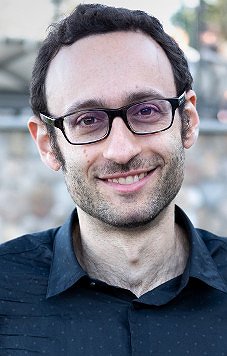
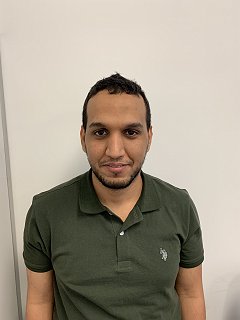
Arvind is the Johnson Professor of Computer Science and Engineering at MIT and a member of CSAIL (Computer Science and Artificial Intelligence Laboratory). He holds a B.Tech. from IIT Kanpur (1969), M.S. and Ph.D. from the University of Minnesota (1972-1973). His research focuses on computer architecture, parallel computing, memory models, and hardware synthesis. He pioneered dataflow architectures and developed the pH programming language. Notable projects include the Monsoon dataflow machine and Sandburst, a semiconductor company for 10G-bit Ethernet routers. Arvind has received prestigious awards like the IEEE Harry H. Goode Memorial Award (2012) and ACM Fellow (2007). He co-founded Bluespec Inc. and managed collaborations like Nokia-CSAIL (2006-2010). His work spans academia and industry, emphasizing scalable systems and secure computing. Research interests include synthesis/verification of digital systems, graph algorithms, and weak memory models. Current projects explore next-gen Graph AI systems and financial security applications.
Jorge Augusto Meira is a Research Scientist at the University of Luxembourg's Interdisciplinary Centre for Security, Reliability and Trust (SnT), specifically within the Services and Data Management research group (SEDAN). He holds a PhD in Computer Science from the University of Luxembourg (2014) and has 15+ years of experience spanning industry and academic research roles including software development, system analysis, data science, project management, and principal investigator positions. His research focuses on machine learning applications in anomaly detection (e.g., anti-money laundering), big data analytics, recommendation systems, and database optimization. Notable areas include cybersecurity for blockchain networks, insurance risk modeling using Hawkes processes, and energy-efficient database architectures. Publications span topics like vehicle routing optimization, natural disaster prediction models, and privacy-preserving data systems. He has contributed to both theoretical advancements and practical implementations in areas like smart grid monitoring and aviation predictive maintenance. His work frequently bridges AI techniques with real-world infrastructure challenges across transportation, finance, and healthcare sectors. Led by Prof. Radu State, the SEDAN group focuses on service-oriented architectures and data management innovations. While no formal awards are listed, his extensive publication record reflects sustained contributions to interdisciplinary tech research.
Dr. Marten van Dijk is a Full Professor in the Computer Security department at Vrije Universiteit Amsterdam (VU) since 2022 and a Group Leader for Computer Security at CWI since 2020. He also holds a Gratis Full Research Professor position at the University of Connecticut's ECE Department since 2020. Previously, he served as Associate and Full Professor at the University of Connecticut and held research roles at MIT CSAIL, RSA Laboratories, and Philips Research. PhD in Mathematics (1997, Eindhoven University of Technology) M.S. in Mathematics (Cum Laude, 1993) M.S. in Computer Science (Cum Laude, 1991) His research focuses on foundational computer security problems using cryptographic principles, including secure processor design, oblivious computation, and privacy-preserving machine learning. Notable contributions span Physical Unclonable Functions (PUFs), Aegis secure processor architecture, and oblivious RAM protocols. 15+ publications in 2023-2025 address topics like PUF cryptanalysis, differential privacy in federated learning, and Byzantine fault tolerance Key journals: IEEE Transactions on Computers, Journal of Cryptology, ACM CCS Conference Award highlights include: IEEE Fellow (2022) for secure processor design and encrypted computation IEEE Technical Achievement Award (2023) Intel Test of Time Award (2022) ACM CCS Best Paper (2013) A. Richard Newton Technical Impact Award (2015) His technical leadership spans hardware security (blu-ray error correction codes), cryptographic protocol design, and machine learning privacy frameworks. Current projects focus on secure processors with hardware-enforced isolation and differential privacy optimization.
Francisco J. Andújar Muñoz is an Associate Professor at the University of Valladolid in the Department of Computer Science since January 2024. His career spans multiple institutions including Universidad de Castilla-La Mancha (2008-2015) and Universitat Politècnica de València (2017-2018), with academic roles ranging from Research Assistant to Juan de la Cierva Formación Researcher. PhD in Advanced Computer Science Technologies (2011-2015) MsC in Advanced Computer Science Technologies (2010-2011) Computer Science Engineering (2008-2010) Computer Science Technical Engineering (2004-2008) His research focuses on high-performance interconnection networks , with significant contributions to quality-of-service mechanisms, energy-efficient network topologies, and heterogeneous programming optimization. He maintains the open-source VEF Traces framework for network workload modeling. Recent publications (2023-2025) demonstrate expertise in FPGA high-level synthesis portability, SYCL-based GPU optimization, and machine learning applications for Twitch streaming analysis. His work combines theoretical network design with practical implementations in the Journal of Supercomputing and IEEE Transactions on Computers .
Professor Graham Morgan is a distinguished faculty member at Newcastle University's School of Computing, where he serves as a Professor in the Department of Computer Science. His research spans multiple domains within computer science with a particular focus on distributed systems, Internet of Things technologies, and the application of gaming technologies to healthcare solutions. He leads several research projects and collaborates extensively with both academic and industry partners across multiple disciplines. Professor Morgan's primary research interests include distributed systems architecture, software transactional memory, IoT simulation frameworks, and the development of serious games for health applications. His work has pioneered approaches that bridge computer science with healthcare, particularly in developing video game-based rehabilitation systems for stroke patients and other therapeutic applications. His recent work has expanded into explainable AI, 6G networking, and advanced simulation techniques for IoT environments. Professor Morgan's publication record demonstrates a clear evolution from foundational work in distributed systems and transactional memory to more applied research in healthcare technology and IoT. His most recent publications (2023-2026) show a strong focus on simulation frameworks for IoT and osmotic computing, explainable AI systems, and the application of AI in clinical decision support. He has developed several notable simulation tools including SimulatorOrchestrator, IoTSimSecure, and SimulatorBridger that address critical challenges in networked systems and healthcare delivery. Principal Investigator for multiple research grants in IoT and healthcare technology Supervisor for numerous PhD and Master's students in computer science Collaborator with healthcare professionals on clinical decision support systems Developer of simulation frameworks for IoT and osmotic computing environments Researcher in AI-enabled clinical decision aids and healthcare applications Professor Morgan leads research teams focused on IoT simulation, serious games for health, and explainable AI. His laboratory develops simulation tools that address real-world challenges in networked systems, energy efficiency, and healthcare delivery. Current projects include the development of 6G-ready simulators, deepfake detection systems, and AI decision aids for clinical settings. He maintains strong collaborations with medical professionals, particularly in stroke rehabilitation and clinical decision support, ensuring his technical research has direct healthcare applications.
João Pedro Faria Mendonça Barreto is an Associate Professor at Instituto Superior Técnico (University of Lisbon) and a researcher in the Distributed Systems Group at INESC-ID. His work focuses on system support for persistent memory, exascale computing, transactional memory, and blockchain consensus protocols, with significant contributions to heterogeneous memory systems and NUMA optimization.
Dr. José Carlos Cabaleiro Domínguez is a Full Professor in the Department of Electronics and Computing at the University of Santiago de Compostela's Faculty of Computing, Spain. He has been a member of CiTIUS (Centro singular de investigación en tecnoloxías da información e comunicación) since 2010 and was promoted to Full Professor in 2022 after serving as an Associate Professor since 1994. His academic journey began with a BS and PhD in Physics from the University of Santiago de Compostela in 1989 and 1994 respectively, with initial teaching experience at the University of A Coruña from 1990-1994. His research focuses on high performance computing, particularly in parallel systems architecture, development of parallel algorithms for irregular problems with sparse matrices, performance prediction and improvement of parallel applications, memory hierarchy optimization, and applications for grid and cloud computing. He has developed significant expertise in 3D point cloud processing from remote sensors like LiDAR, with applications in urban infrastructure analysis, powerline detection, and route planning. Analysis of his recent publications reveals a strong emphasis on optimizing resource allocation for big data frameworks, developing deep learning applications for point cloud classification, and creating efficient algorithms for powerline detection in LiDAR surveys. His work bridges theoretical computer science with practical applications in geospatial analysis and infrastructure monitoring. His research has been published in top-tier journals including IEEE Transactions, ISPRS Journal of Photogrammetry and Remote Sensing, and Future Generation Computer Systems, reflecting his significant contributions to the field of high performance computing and its applications. Dr. Cabaleiro actively collaborates with researchers across multiple institutions, as evidenced by his extensive publication record with co-authors from various universities and research centers. His work demonstrates a consistent trajectory of advancing parallel computing techniques while applying them to increasingly complex real-world problems involving large-scale geospatial data.
Tomás Fernández Pena is a Full Professor at the University of Santiago de Compostela (USC) and Senior Researcher at the Research Center in Intelligent Technologies (CiTIUS) . With a career spanning over three decades, he has held academic positions since 1990 and contributed extensively to High Performance Computing (HPC), Big Data, and emerging quantum computing fields. Ph.D. in Physics from USC (1994) Senior Member of IEEE Associate Editor for IEEE Transactions on Computers and IEEE Access Research Contributions : His work focuses on parallel systems architecture, cloud computing middleware, and quantum simulation optimization. He has pioneered methods for NUMA systems, LiDAR data processing, and Big Data applications in bioinformatics/cheminformatics. His recent articles show increasing emphasis on quantum computing frameworks and distributed quantum processing. Scientific Recognition : Holds four Spanish Ministry of Education six-year research excellence periods (sexenios de investigación) and has served as Principal Investigator in 3 public projects and co-investigator in 31 EU/Xunta de Galicia funded initiatives. Supervised 7 Ph.D. theses and published 43+ international journal papers. International Collaborations : Maintains academic connections through funded research stays at Loughborough University, University of Tennessee, and University of Illinois Urbana-Champaign. Active in IEEE and participates in global conferences like Euro-Par and CHEP.
George Papadimitriou is an Assistant Professor in the Computer Engineering & Informatics Department at the University of Patras , Greece, hosted within the School of Engineering . His primary affiliation lies with the Computer Hardware and Architecture division, where he leads research and teaching activities focused on dependable, energy-efficient computer architectures. Education: PhD in Computer Science, Department of Informatics & Telecommunications, National and Kapodistrian University of Athens (2019) Post-doctoral researcher, Computer Architecture Lab, National and Kapodistrian University of Athens Research Interests: Dr Papadimitriou’s research lies at the intersection of computer architecture , energy efficiency , and microprocessor reliability . His work specifically targets: Robust and energy-efficient CPU/GPU/accelerator architectures Post-silicon validation techniques for catching elusive hardware bugs Silent data corruption detection and mitigation across the compute stack Characterization of voltage margins and power consumption in modern microprocessors Modeling and simulation of domain-specific accelerators for low-power, dependable operation More recently, his team has been extending these methodologies to RISC-V and neuromorphic photonic accelerators within large European consortia. Scientific Awards & Recognition: Eight HiPEAC Paper Awards for top-tier conference publications (MICRO, HPCA, ISCA) between 2017–2024 IEEE Transactions on Computers 2022 Best Paper Award for the article “Anatomy of On-Chip Memory Hardware Fault Effects Across the Layers” TTTC/ITC Gerald W. Gordon Student Award 2023 Research Funding & Projects: Dr Papadimitriou is principal investigator or key technical contributor in multiple Horizon Europe and industry-backed projects that collectively exceed €50 M in funding. Current leadership roles include: DARE (Digital Autonomy for RISC-V in Europe) NEUROPULS (Neuromorphic Energy-Efficient Secure Accelerators) REBECCA (Reconfigurable Heterogeneous Highly Parallel Processing Platform) Vitamin-V (Virtual Environment & Tool-boxing for Trustworthy RISC-V Cloud Services) Intel, IBM, and Thales bilateral research contracts on energy-efficient and resilient microarchitectures Laboratory & Team: He leads the Energy-Efficient and Dependable Architectures (EEDA) research group at University of Patras, operating laboratory facilities for silicon measurement, FPGA emulation, and full-system simulation (gem5, MARSS, custom tools). The team currently comprises 3 PhD candidates, 2 post-docs, and several MSc thesis students collaborating with European and US partners.
Rolf Drechsler is a Full Professor and Head of the Group of Computer Architecture at the University of Bremen's Institute of Computer Science since 2001, and Director of the Cyber-Physical Systems Group at DFKI Bremen since 2011. He holds an adjunct professorship at the Indian Statistical Institute and has been affiliated with Duke University. Education: Diploma (1992) and Dr. phil. nat. (1995) in Computer Science from Goethe University Frankfurt Academic Leadership: Dean of Mathematics and Computer Science Faculty (2018-2025), Vice Rector for Research (2008-2013) His research focuses on formal verification , RISC-V architectures , and quantum/in-memory computing . Recent work explores LLM integration in hardware testing and polynomial-based verification techniques. Publications from 2024-2025 span IEEE Transactions , DATE , and DAC , emphasizing automated verification , quantum circuit mapping , and LLM-driven testbench generation . Scientific Awards IEEE/ACM Best Paper Awards (2013, 2018) Berninghausen-Preis for Innovative Teaching (2018) IEEE Fellow (2015) Founder Award for Solvertec (2013) He has served on program committees for DAC, ICCAD, DATE, and founded graduate schools in Embedded Systems and System Design under Germany's Excellence Initiative.
Rachid Guerraoui is a Moroccan-Swiss computer scientist and Full Professor in the School of Computer and Communication Sciences at EPFL. He is renowned for his significant contributions to distributed and concurrent computing, holding the prestigious Chair in Distributed Computing at the Collège de France (2018-19). As an ACM Fellow (2012) and recipient of the Dahl-Nygaard Senior Prize (2024), his work has shaped both theoretical foundations and practical implementations in distributed systems. Guerraoui earned simultaneous Master's degrees in Computer Engineering from École supérieure d'informatique électronique automatique (ESIEA) and in Computer Science from Pierre and Marie Curie University in 1989. He completed his PhD at Université d'Orsay in 1992 under the supervision of Christian Fluhr, with a dissertation titled "Programmation Répartie par Objets: Études et Propositions." Following postdoctoral research at EPFL, he joined the computer science faculty in 1999 after working at HP Labs and MIT. Guerraoui's research spans distributed computing, concurrent systems, transactional memory, and asynchronous algorithms. His work on establishing theoretical foundations of Transactional Memory, including the concept of opacity, has been highly influential. He has also made significant contributions to scalable information dissemination methods, asynchronous distributed computations, and the mathematical abstraction of indulgence. His research bridges theoretical rigor with practical implementations, as evidenced by systems like SwissTM and STMBench7. His publication record shows a clear evolution from theoretical foundations to practical implementations and broader applications. Early work focused on fundamental problems like consensus and renaming, while more recent publications address machine learning applications and public understanding of AI. The consistent thread throughout his career is a focus on making distributed systems more reliable, efficient, and accessible. Guerraoui has received numerous prestigious awards including: ACM Fellow (2012) ERC Advanced Grant Award (2013) Google Focused Award (2014) Middleware Best Paper Award (2014) Middleware 10-Years Best Paper Award Chair in Distributed Computing, Collège de France (2018-19) Dahl-Nygaard Senior Prize (2024) As an academic advisor, Guerraoui has mentored students including El Mahdi El Mahmdi, with whom he co-created the Wandida project - a collection of educational videos on computer science. His research has been supported by significant grants from the European Research Council and Google. Beyond research, Guerraoui actively participates in public discourse, particularly regarding computer science education and technology policy. Guerraoui leads the Distributed Computing Laboratory (DCL) at EPFL, which focuses on advancing the state of the art in distributed systems. The lab's work spans theoretical foundations, practical implementations, and educational outreach, reflecting Guerraoui's holistic approach to computer science research and education.
Oyekunle Olukotun is a Professor at Stanford University, internationally recognized for transformative contributions to computer architecture and parallel systems. His pioneering work established foundational principles for modern processor design that bridge academic research and industrial implementation. His research centers on parallel computing systems with emphasis on multicore and multithreaded processor architectures. Key innovations include chip multiprocessor (CMP) technology that became the industry standard for modern CPUs, fine-grained multithreading techniques for CPU efficiency optimization, and the Transactional Coherence and Consistency (TCC) framework for simplifying parallel programming. These contributions address critical challenges in performance scaling and energy efficiency for contemporary computing systems. Olukotun's publications reveal a consistent focus on hardware-software co-design for parallel systems, with significant impact across computer architecture and high-performance computing domains. His work demonstrates evolutionary progression from theoretical frameworks to industry adoption, particularly in server processor design. Scientific awards include: ACM-IEEE CS Eckert-Mauchly Award (2023) for contributions to parallel systems development ACM Fellow (2006) for multiprocessor and multithreaded processor design ASPLOS Most Influential Paper Award (2011) for the 1996 landmark paper ISCA Most Influential Paper Award (2019) for the 2004 transactional memory paper While the provided text lacks specific details about student advising or grant funding, Olukotun's entrepreneurial impact is evident through Afara WebSystems, which advanced server technology prior to its acquisition by Sun Microsystems. His research directly enabled Oracle's Niagara chip family used in SPARC-based servers. Industrial collaboration represents a critical dimension of his work, with designs transitioning from academic concepts to commercial implementations that shaped server processor evolution. The TCC framework co-developed with Christos Kozyrakis remains influential in parallel programming research.
Adam Chlipala is a Professor at the Massachusetts Institute of Technology working at the intersection of programming languages, formal methods, and computer systems. His research focuses on building practical verified systems with end-to-end machine-checked proofs, particularly using the Coq proof assistant. His educational background includes a Computer Science undergraduate degree from Carnegie Mellon University (2003) and a PhD in Computer Science from the University of California, Berkeley (2007). Following a postdoctoral position at Harvard University through 2011, he joined MIT as faculty. Chlipala's research spans multiple domains with strong emphasis on dependent types , verified compilation , and hardware-software co-verification . His work consistently bridges theoretical foundations with practical implementation, as evidenced by his development of the Ur/Web programming language and his focus on creating clean-slate hardware-software stacks with formal guarantees. Key research thrusts include cryptographic constant-time verification, side-channel security, and verified tensor compilation. His recent publications (2020-2025) reveal a clear trajectory toward increasingly complex verified systems, with growing emphasis on hardware-software integration, cryptographic implementations, and performance-critical applications. The work consistently leverages Coq for machine-checked proofs while addressing real-world constraints like timing channels and hardware interfaces. Chlipala is the author of the influential textbook Certified Programming with Dependent Types , which serves as a primary educational resource for Coq at numerous institutions worldwide. His professional activities include significant service to the PL community through program committees for major conferences including PLDI, POPL, ICFP, and CPP. He leads research initiatives connecting hardware and software verification, most notably through the DeepSpec project which aims to build fully verified computing stacks. His current work focuses on practical applications of dependent types for business applications through Ur/Web and verified cryptographic implementations.
Sang-Hoon Kim is an Associate Professor in the Department of Software and Computer Engineering and Department of Artificial Intelligence at Ajou University, South Korea. He leads the Systems Software Lab (Paldal Hall 1004-2) and maintains active collaborations with Virginia Tech as a Visiting Scholar since August 2024. His academic journey includes a Ph.D. in Computer Science from KAIST (2016) under advisors Seungryoul Maeng and Jin-Soo Kim, and a B.S. in Computer Science from KAIST (2002). His research spans operating systems, memory management, and storage systems with focus on mobile platforms, heterogeneous architectures, and SSD technologies. Key interests include memory fragmentation control , distributed thread execution , key-value storage optimization , and resource disaggregation . His work bridges theoretical innovation with practical system implementations, particularly for mobile and datacenter environments. Kim's publication portfolio shows consistent output in top-tier venues including USENIX FAST, VLDB, ICDCS, and ASPLOS. His research demonstrates evolution from mobile memory management (2015-2017) toward distributed systems and hardware-aware software (2019-present), with recent emphasis on resource-disaggregated environments and heterogeneous-ISA computing. The 2024 Best Paper Award at USENIX FAST highlights his impact in storage systems research. Best Paper Award at USENIX FAST'24 Multiple patents including US-9588912B2 for memory control He directs significant research projects funded by ETRI, NRF, and US ONR, including current work on memory-centric computing systems (2020-2023) and disaggregated non-volatile memory systems using RDMA (2018-2020). His Systems Software Lab maintains strong industry partnerships with Samsung Electronics and NHN, with prior projects improving Android memory management and developing SSD-based storage systems for large-scale internet services.
Sidi Mohamed Beillahi is a Lecturer in the Department of Computer Science at the University of Toronto's Faculty of Arts and Science. He teaches courses including Principles of Programming Languages (CSC324H1S) and Algorithms and Data Structures (ECE345H1F). Previously, he served as a Teaching Assistant at both University of Paris and Concordia University for courses ranging from Automata Theory to Hardware Functional Verification. Dr. Beillahi's research focuses on developing formal verification and programming languages techniques to ensure the correctness of software systems, particularly distributed systems, concurrent programs, blockchain, and smart contracts. His work bridges theoretical computer science with practical security applications in decentralized finance. His publication record shows a clear progression from quantum circuit verification during his Master's to blockchain and smart contract security in his doctoral and postdoctoral work. Recent publications demonstrate expertise in authenticated data structures for blockchain storage, flash loan attack analysis, and formal verification of decentralized applications. Scientific Awards: ACM SIGSOFT Distinguished Paper Award (ICSE '24) ICBC Distinguished Paper Award (ICBC '22) Dr. Beillahi has advised multiple research projects in blockchain security and verification, often collaborating with Professor Fan Long and Professor Andreas Veneris at the University of Toronto. His research has been supported by prestigious fellowships including an NSERC Postdoctoral Fellowship and a Mitacs Accelerate Fellowship.