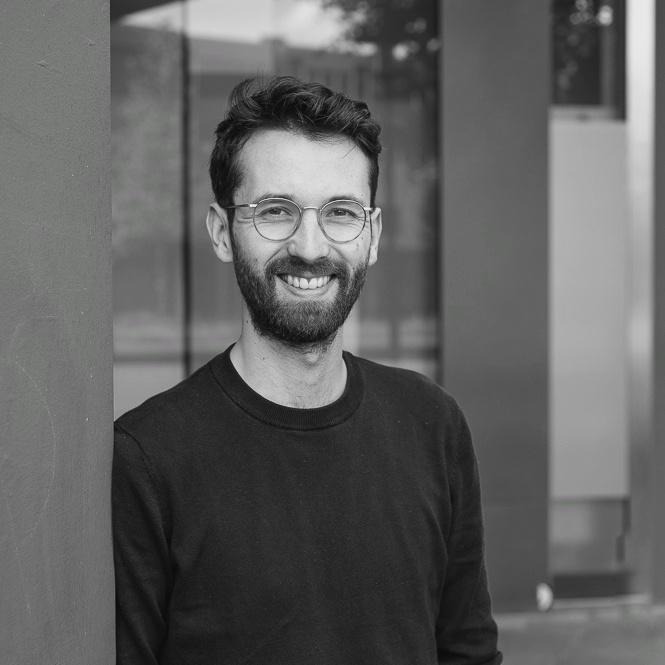
Dr. Erik-Jan van Kesteren is an Assistant Professor in the Methodology and Statistics department at Utrecht University , where he leads the ODISSEI Social Data Science (SoDa) team. His work bridges statistical methodology with computational social science, with a focus on synthetic data, Bayesian inference, and open research infrastructure. Current research initiatives include: Developing privacy-preserving synthetic data frameworks Improving computational approaches to structural equation modeling Addressing geospatial sampling bias in volunteer-collected datasets Exploring text-based personality computing and language association tools He maintains the department's compute server infrastructure and contributes to open-source projects like ArtScraper and osmenrich. Contact via e.vankesteren1@uu.nl or erikjanvankesteren@pm.me
Jeremy Faludi is an Assistant Professor of Design for Sustainability at Delft University of Technology's Faculty of Industrial Design Engineering. With a strong background spanning both physics and design, he brings a unique interdisciplinary perspective to sustainable product development and manufacturing. His work bridges academic research and industry application, focusing on practical solutions for environmental challenges in design and manufacturing. Dr. Faludi's educational background includes a PhD in Mechanical Engineering from the University of California (2017), an ME in Product Design from Stanford University (2003), and a BA in Physics from Reed College (1995). Before returning to academia, he spent fifteen years working as a sustainable designer in industry and taught green product design at prestigious institutions including Stanford, Dartmouth, and Minneapolis College of Art and Design. His research focuses on sustainable design methods and metrics, with particular emphasis on whole system mapping, life cycle assessment, biomimicry, and sustainable additive manufacturing. He has developed numerous tools for health hazard assessment, product reparability evaluation, and LCA software interface improvements. His work in green 3D printing is particularly notable, where he has published the most comprehensive life cycle assessments in the additive manufacturing industry and written policy recommendations for the OECD. Dr. Faludi's publications reveal a strong trend toward practical applications of sustainable design principles across multiple domains. His recent work addresses climate footprint analysis of clinical trials, reparability scoring systems, circular economy applications in medical devices, and sustainable additive manufacturing frameworks. His research consistently bridges theoretical sustainability concepts with practical implementation strategies for industry. Contributed to six books on sustainable design, including the influential Worldchanging: A User's Guide for the 21st Century Designed the Biomimicry Institute's first online database (AskNature.org) Bicycle design featured in Smithsonian Cooper-Hewitt Design Museum's 2007 exhibit "Design for the Other 90%" Created StreetNatureScore.com using 11 billion satellite data points Authored multiple online courses including VentureWell's Tools for Design and Sustainability Dr. Faludi actively collaborates with industry through multiple research projects including DesHealth, DiCE (Digital health in a Circular Economy), PROMPT, and ShaRepair. His work contributes significantly to UN Sustainable Development Goals related to sustainable cities, responsible consumption, climate action, and industry innovation.
Dr. ir. Cynthia C.S. Liem is an Associate Professor in the Multimedia Computing department at Delft University of Technology, specializing in ethical and reliable AI frameworks. Her work bridges machine learning, human-computer interaction, and societal impact. Academic Rank: Associate Professor Department: Multimedia Computing School: Electrical Engineering, Mathematics and Computer Science Liem’s research focuses on Explainable AI , Algorithmic Transparency , and AI Ethics , emphasizing fairness in machine learning and societal implications of autonomous systems. Recent publications explore adversarial testing, energy-constrained counterfactuals, and critiques of unscientific AGI claims. Her most recent articles highlight trends in autonomous vehicle testing , AI explainability , and ethical algorithmic design , leveraging techniques like conformal prediction and differential evolution . Scientific Awards : SBFT 2023 Best Paper Award TU Delft Education Fellow WWW 2018 Challenge Winner 2024 Women in AI Netherlands Diversity Leader Award Liem serves as an advisor for DUO’s research ethics audits and frequently contributes to public discourse on AI’s societal role, appearing in national media outlets like Delta and Trouw . She also leads datasets on music representation learning and algorithmic recourse.
Vasco Ribeiro Ferreira is a researcher at Campus Fryslân, University of Groningen, affiliated with the Sustainable Health department. His work focuses on e-Health, neurology, and public health, particularly on developing digital tools for neurological assessments in epidemiological research. University: University of Groningen School: Campus Fryslân Department: Sustainable Health Academic Rank: Researcher His research spans e-Health tools for neurological function assessment, systematic reviews on hardware/software setups, and interdisciplinary projects combining neurology with public health . Recent publications highlight his contributions to digital neurological examinations and auditory alarm analysis using ERP studies. Notable awards include the Incentive Fund for Interdisciplinary Projects grant. Collaborations with institutions like the Faculty of Science and Engineering at University of Groningen underscore his interdisciplinary approach. Scientific Awards: Grant for the Incentive Fund for Interdisciplinary Projects - Campus Fryslân and Faculty of Science and Engineering
Hanny den Ouden serves as an Assistant Professor in the Language and Communication section of the Department of Languages, Literature and Communication at Utrecht University's Faculty of Humanities. She is actively involved in teaching undergraduate and graduate programs including Communication and Information Sciences (BA), Communication and Organization (MA), Dutch Language and Culture (BA), and Language and Cultural Studies (BA). Her office is located in the Transcomplex building at Utrecht University. Dr. den Ouden's research spans multiple dimensions of language and communication, with particular expertise in prosody analysis, text structure, and the application of linguistic principles to advertising, social media, and health contexts. Her work demonstrates a sophisticated understanding of how language functions in various communicative situations, from traditional advertising to digital customer interactions. She has made significant contributions to understanding conversational human voice in webcare, emotional responses to advertising, and narrative techniques in health communication. Her publication record reveals a clear progression from foundational linguistic research to increasingly applied communication studies. Early work focused on prosodic realization of text structure and discourse analysis, while more recent publications address practical applications in social media management, webcare interactions, and health communication. This trajectory reflects both theoretical depth and practical relevance across multiple communication domains. As a dedicated educator, Dr. den Ouden teaches courses including Communication and organizations: theory and practice, Corpora and tools in Dutch studies, Introduction to language and communication, and Patient communication. Her teaching appears closely aligned with her research interests, creating a cohesive academic profile that bridges theory and practice in language and communication studies.
Stéphanie M. van den Berg is an Associate Professor at the University of Twente , affiliated with the Digital Society Institute and TechMed Centre . Her research spans interdisciplinary domains including Psychology , Genetics , Statistics , and Artificial Intelligence , with a focus on educational achievement, mental health assessment, and data-driven methodologies. Key Themes : Heritability analysis, machine learning applications, educational technology, longitudinal data modeling, and personalized medicine. Recent Work : In 2025, she investigated measurement invariance in child behavior phenotypes, while 2024 saw her contribute to personalized medicine through intensive longitudinal data. Methodologies : Expertise in item response theory, text mining, and statistical model selection, as demonstrated in her 2017 publications. She actively collaborates across disciplines, with recent work involving biomedical informatics and behavioral genetics. Her research outputs (97 total) reflect a sustained focus on integrating data science with psychological and health-related applications.
Z. Mahfouz is a Lecturer in the Radio Systems Group at the University of Twente's Faculty of Electrical Engineering, Mathematics and Computer Science (EEMCS). Their work bridges theoretical and applied aspects of electrical engineering, with a focus on wireless communication systems. Education: Ph.D. in Electrical Engineering (2023), University of Twente, Netherlands M.Sc. in Electrical-Electronics & Telecommunications Engineering (2014), University Technology Malaysia, Malaysia Research Interests: Communication Theory and Signal Processing Physical Layer Design Software-Defined Radio Systems Channel Measurement and Emulation Electronic Circuits and RF Test Automation Embedded Systems and Computer Architecture
Gerwin Hoogsteen is an Assistant Professor at the University of Twente, affiliated with the Computer Architecture for Embedded Systems chair. He focuses on smart grids, cyber-physical systems, and applying theoretical research in field-tests. PhD in Decentralized Energy Management (2017, University of Twente) His research integrates machine learning , distributed coordination , and cybersecurity into smart grid optimization. Recent work emphasizes multi-objective optimization for EV charging hubs, energy community resilience, and congestion management. Key article trends include EV charging algorithms , decentralized control , and hybrid storage systems . He contributes to UN SDGs like Climate Action and Affordable Energy . Founder of DEMKit and ALPG open-source software Collaborator in EU projects (SUSTENANCE, SERENE, LocalRES)
Dr. Gang Mei is an Associate Professor in Scientific Computing within the School of Engineering and Technology at China University of Geosciences (Beijing), where he has held academic positions since 2014. His career progression includes Postdoctoral Researcher (2014-2016), Lecturer (Oct-Dec 2016), and current Associate Professor (since Jan 2017). His research bridges computational science and engineering applications with significant editorial contributions to computer science literature. Education: Ph.D. in Computer Science, University of Freiburg, Germany (2014) Research Interests: Dr. Mei specializes in Numerical Simulation and Computational Modeling, GPU Computing, Machine Learning, and Data Mining, with strong applications in Network Science and Spatial Information Systems. His work integrates Distributed and Parallel Computing techniques for large-scale scientific simulations, particularly in geospatial modeling and network analysis. The research demonstrates consistent focus on computational efficiency through hardware acceleration and algorithmic optimization across diverse domains including satellite imagery processing, financial event detection, and medical image classification. Publication Trends: His editorial portfolio reveals strong interdisciplinary patterns connecting computer science fundamentals with domain-specific applications. Recent works emphasize GPU-accelerated methods for data-intensive problems (2020-2022), spatial-temporal modeling (2019-2020), and network science applications (2021). The publications consistently address computational scalability challenges while maintaining practical relevance across geospatial, financial, medical, and engineering contexts. Professional Recognition: As an IEEE Member, Dr. Mei serves on editorial boards for IEEE Access and PeerJ Computer Science, reflecting peer recognition in computational fields. His editorial contributions span 15+ publications demonstrating expertise in evaluating cutting-edge computer science research. Academic Service: Beyond editorial work, Dr. Mei's service includes advising on computational methodology across multiple disciplines. His role as Academic Editor demonstrates commitment to scholarly communication, particularly in bridging theoretical computer science with practical engineering applications. No grant funding details were specified in available materials.