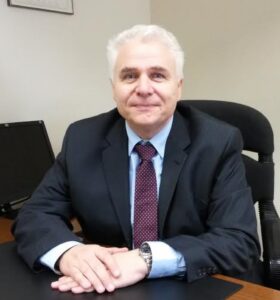
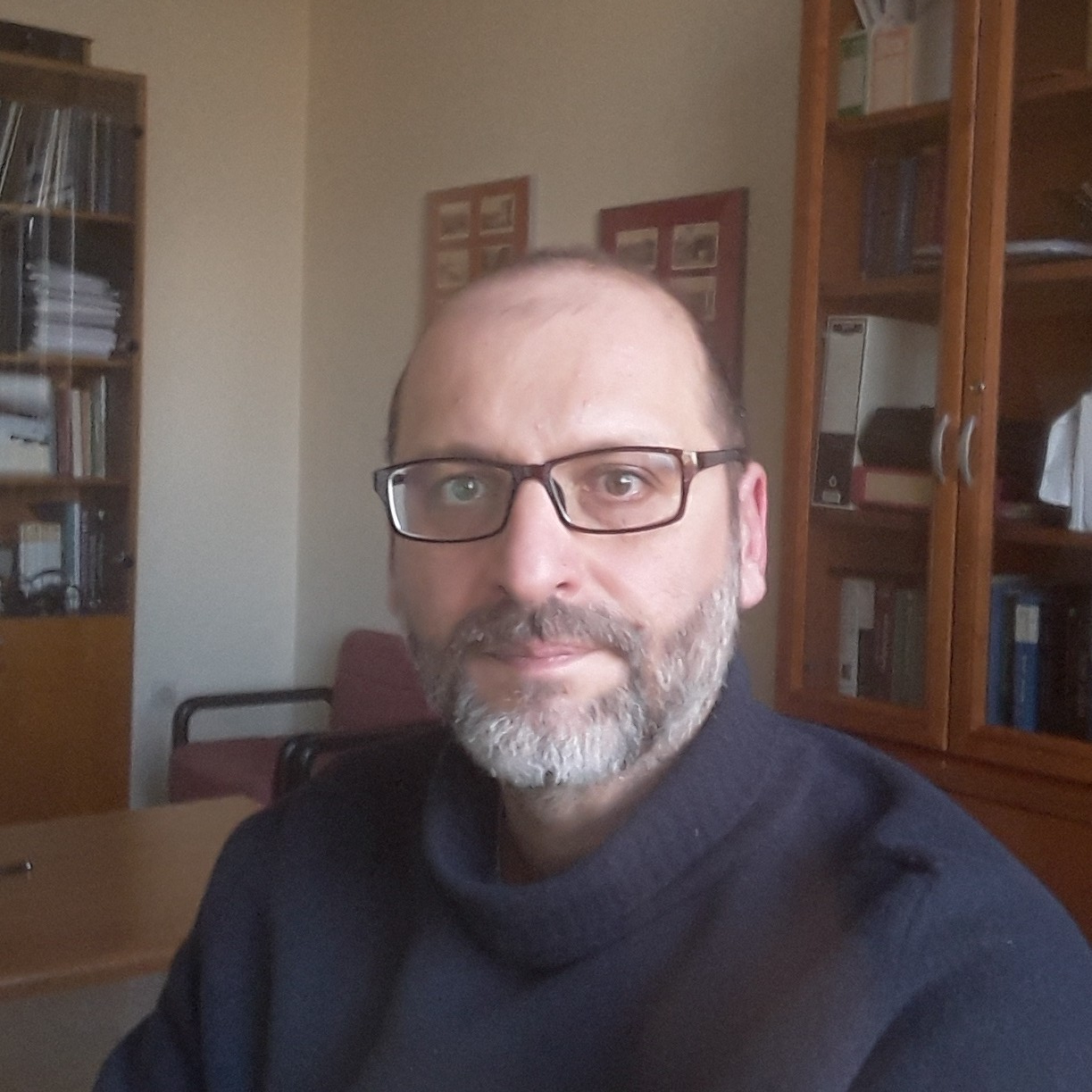
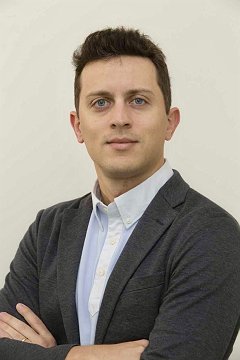
Professor Christos Agiakloglou is a faculty member at the Department of Economics, University of Piraeus. He holds a PhD in Econometrics and Time Series Analysis from the University of Illinois at Urbana–Champaign, two Master's degrees in Finance and Economics from the University of Illinois and Florida Atlantic University, and a Bachelor's in Economics from the University of Macedonia. His research spans time series analysis, econometrics, macroeconomics, and industrial organization. Education: PhD, University of Illinois at Urbana–Champaign (Econometrics & Time Series Analysis) MSc in Finance, University of Illinois at Urbana–Champaign MA in Economics, Florida Atlantic University Bachelor in Economics (with honors), University of Macedonia His publications focus on econometric theory, spurious regression, unit root testing, and time series modeling. Notable works include studies on AR(1) processes, fractional integration, and causality in macroeconomic variables. Professor Agiakloglou has received the Robert E. Demarest Memorial Award for Excellence in Teaching at the University of Illinois. He teaches undergraduate and graduate courses in econometrics, statistical methods, and quantitative analysis.
Eirini Liotou is an Assistant Professor at the Department of Informatics and Telematics, Harokopio University, within the School of Digital Technology. She holds a PhD from the National and Kapodistrian University of Athens (2017), with postdoctoral research funded by the State Scholarship Foundation (ΙΚΥ) from 2019–2021. Her academic career includes adjunct teaching roles at the National and Kapodistrian University of Athens, Hellenic Open University, and Business College of Athens. She has extensive industry experience as a Senior Software Engineer at Siemens and as a Project Manager/Researcher in EU projects like 5G-IANA and XGain. Education: PhD: Quality of Experience in Mobile Networks (NTUA, 2017) MSc: Communications & Signal Processing (Imperial College London, 2012) MSc: Informatics & Telecommunications (NTUA, 2011) Diploma: Electrical & Computer Engineering (National Technical University of Athens, 2006) Research Interests: Focuses on 5G/6G networks, Software-Defined Networking (SDN), Quality of Experience (QoE), and automotive networking. Her work addresses challenges in network virtualization, edge computing, federated learning, and vehicular communications. She has contributed to projects like CASPER and SMART-NRG, emphasizing user-centric service provisioning and network orchestration. Publications: Over 25 peer-reviewed papers spanning SDN applications, QoE management, and vehicular networks. Recent trends include federated learning for cellular networks, edge computing in automotive systems, and QoE-driven network optimization. Awards: Post-doctoral Research Scholarship (ΙΚΥ, 2019–2021) Grants & Projects: Deputy Coordinator: 5G-IANA (EU 5G PPP Phase 3.VI) Deputy Coordinator: XGain (Horizon 2021) Senior Researcher: Marie Curie projects CASPER and CROSSFIRE Labs/Teams: Active in the Communication Networks Laboratory (NTUA) and the I-SENSE group at ICCS. Leads research in intelligent automotive networking and edge-cloud continuum applications.
Ilias Sakellariou is an Assistant Professor in the Department of Applied Informatics at the University of Macedonia. He holds a BSc in Physics from Aristotle University of Thessaloniki, an MSc in Knowledge-Based Systems from the University of Edinburgh, and a PhD in Distributed Constraint Logic Programming from Aristotle University of Thessaloniki. Education: BSc in Physics, Aristotle University of Thessaloniki MSc in Knowledge-Based Systems, University of Edinburgh PhD in Distributed Constraint Logic Programming, Aristotle University of Thessaloniki Research Interests: Constraint Logic Programming, Multi-Agent Systems (BDI, Agent-Based Simulation), AI applications in 5G networks, cloud/network slicing, and distributed systems. His work includes projects like NECOS (cloud slicing) and UNIC (5G network infrastructure). Publications: His research spans agent-based modeling, network slicing, and AI-driven systems. Recent works focus on emotional agents in simulations and 5G infrastructure optimization. Projects & Grants: Participated in EU-funded projects such as NECOS (H2020) and UNIC (FED4FIRE+), contributing to cloud slicing and network architecture design. His work includes software tools like TXStates (NetLogo extensions for state machines) and eX-Machines for evacuation simulations. Labs/Teams: Develops simulation tools for agent-based systems, emphasizing NetLogo extensions for complex agent modeling and validation.
Alexandra Gasparinatou is a Teaching Professor at the Department of Informatics & Telematics, Harokopio University. She holds a PhD in Educational Technology from the National and Kapodistrian University of Athens, focusing on adaptive learning environments for distance education. Her academic background includes a BSc in Physics (University of Patras), MSc degrees in Medical Physics and Computational Mathematics & Informatics, and an MEd in Educational Sciences (Hellenic Open University). Her research interests center on educational technology, particularly adaptive online learning systems, informatics text comprehension, and learning styles in distance education. She has supervised multiple undergraduate and postgraduate theses and contributed to over 30 publications in peer-reviewed journals and conferences. Dr. Gasparinatou has collaborated with the Hellenic Open University since 2013 as teaching staff and has participated in educational training programs as a trainer. Her work emphasizes the integration of media and adaptive technologies to enhance learning outcomes in computer science education.
Dimitris Vrakas is an Assistant Professor at the Department of Informatics, School of Informatics, Aristotle University of Thessaloniki (AUTh). He holds a PhD in Intelligent Planning Systems and has conducted post-doctoral research focusing on Planning for the Semantic Web. His professional experience includes roles as a Lecturer (per Greek law 407/80), Informatics Instructor in multiple educational institutions, and IT consultant for medium-sized enterprises through the Go-online Project. Education: Bachelor of Science (1995–1999): Informatics, Aristotle University of Thessaloniki PhD (2000–2004): Intelligent Planning Systems, Dept. of Informatics, AUTh Postdoctoral Research (2005–2007): Planning for the Semantic Web, AUTh Research Interests: Automated Planning, Heuristic Functions, Intelligent Autonomous Systems, Machine Learning Applications (Energy Management, NILM), Semantic Web Services, and Smart Environment Technologies. His work bridges theoretical AI advancements with practical implementations in energy systems and emergency response. Publications: Over 45 papers (including 15 journal articles) and 5 book chapters, with a focus on energy disaggregation, evacuation algorithms, and semantic web composition. His work demonstrates expertise in applying advanced techniques like GANs for data generation and reinforcement learning for adaptive planning. Awards: 2025 ACM SIGMOD Test-of-Time Award for contributions to time-series clustering Advising & Grants: Active in guiding PhD candidates (as per recent calls) and coordinating projects like the IRIS RISK PARADIGM for industrial safety. His work involves developing smart university platforms for energy monitoring and collaborating on EU-funded initiatives. Labs & Teams: Member of the Intelligent Systems Lab at AUTh, contributing to projects like the BOnSAI ontology for smart buildings and the IRISPortal for risk management. He also coordinates the Hellenic Artificial Intelligence Society and chairs conferences like SETN 2016.
Anastasios Katsileros is a Lecturer and member of the Laboratory and Teaching Staff at the Department of Crop Science, Faculty of Crop Science, Agricultural University of Athens (AUA). He specializes in Plant Breeding and Biometry, combining expertise in statistical methodologies with agricultural applications. His educational background includes a Bachelor’s degree from AUA’s Department of Crop Science, postgraduate studies in Applied Mathematical Sciences from the National Technical University of Athens (NTUA), and a doctoral dissertation completed at AUA. His research focuses on Experimental Designs , Multivariate Analysis , and Applications of Machine Learning in Agricultural Sciences , alongside Bioinformatics and Data Analysis using tools like R, Python, and JMP. He teaches courses such as Agricultural Experimentation II and Plant Breeding I , emphasizing practical laboratory components and theoretical frameworks. His publications span topics like transcriptomic responses in tomato plants under root cooling, drought stress resilience in Greek grapevines, and statistical software development (e.g., the rhoneycomb R package). He contributes to the Plant Breeding and Biometry Team at AUA, advancing interdisciplinary approaches in crop science.
Professor Antoniadis Aristomenis is a faculty member at the Technical University of Crete, affiliated with the School of Production Engineering and Management. His work focuses on advanced manufacturing processes, CAD/CAM simulation, laser engraving, and emerging technologies in materials science and augmented reality applications. He holds a prominent role in the Vice-Chancellor Office, indicating leadership responsibilities within the institution. Key research areas include: Process optimization of machining operations (drilling, hobbing, skiving) Laser-material interaction and surface engineering Development of serious games for manufacturing education Finite element modeling of cutting processes Additive manufacturing of composite materials Recent publications highlight contributions to: Enhanced drilling performance using RSM and ANN Innovative AR interfaces for industrial guidance Laser engraving quality control methodologies Simulation of complex machining processes No specific awards or grants are explicitly mentioned in the provided text, though his extensive publication record indicates sustained research activity. His work integrates theoretical models with practical industrial applications, emphasizing both innovation and educational dissemination through gamified training systems.
Karaliopoulou Margarita is a Lecturer affiliated with the Department of Mathematics at the National and Kapodistrian University of Athens, within the School of Science. She holds the capacity of 'Teachers outside the department,' indicating cross-departmental academic involvement. Her work spans mathematics education, stochastic processes, and educational technology. She has contributed to emergency remote teaching strategies during the pandemic and explored student perceptions of programming environments. Her research interests prominently feature semi-Markov processes in statistical analysis and their applications to word occurrences. She also investigates technology integration in education, particularly in programming pedagogy and dual modality tools. Her earlier work (1999–2009) focused on foundational mathematics education and probabilistic modeling. Notable recent efforts include analyzing asymptotic properties in semi-Markov sequences (2022) and evaluating teaching methodologies under pandemic constraints (2021). Her articles consistently bridge theoretical mathematics with practical educational challenges.
Kranitis Nektarios is a Lecturer at the Department of Informatics and Telecommunications, National and Kapodistrian University of Athens. His research focuses on FPGA-based hardware architectures, space-grade computing, and image compression standards like CCSDS, with applications in satellite systems and reliable data processing. Primary affiliation: National and Kapodistrian University of Athens Department: Informatics and Telecommunications Research interests center on space-grade SRAM FPGAs , LDPC encoding , hyperspectral image compression , and software-based self-test methodologies for embedded systems. His work addresses high-speed data processing and fault tolerance in satellite communications. Key trends in his publications include CCSDS standard implementations , hardware accelerators for image compression, resilience to SEUs , and energy-efficient testing techniques for microprocessors. Topics span space systems , parallel computing , and digital circuit design .
Avraam Hatzopoulos is an Assistant Professor at the Department of Industrial Design and Production Engineering of the University of West Attica. His academic work focuses on Embedded Automation, Mechatronics Systems, and Educational Autonomous Robotic Systems within the broader field of Industrial Production Systems. He leads the Industrial Systems and Mechatronics Applications Research Laboratory. Mechanical Automation Degree Master of Telematics Project Management (Danube University of Krems, Austria) Master of Information and Communication Technologies for Education (National and Kapodistrian University of Athens) PhD in Industrial Systems (University of West Attica) His research spans multiple domains including: Embedded systems with automation emphasis Industrial mechatronics applications Small-scale educational robotics STEM education methodologies Predictive maintenance techniques IoT applications in agriculture and smart homes His recent publications analyze trends in: Open-source drone development for engineering education Big data in pharmaceutical sector optimization Low-cost robotics platforms using Arduino Technology Acceptance Model (TAM) evaluations Predictive maintenance with neural networks IoT agricultural education tools Scientific achievements include: Patent on polymorphic robotics testing base (2005) Founder of University of Piraeus Robotics Academy (2017) Contributor to Mechatron educational platform (since 2000) Teaching portfolio includes: Undergraduate: Microcontroller Design, Mechatronics, Robotics, Automotive Design Postgraduate: UAV Applications, Embedded Systems, Production Automation
George Papadimitriou is an Assistant Professor in the Computer Engineering & Informatics Department at the University of Patras , Greece, hosted within the School of Engineering . His primary affiliation lies with the Computer Hardware and Architecture division, where he leads research and teaching activities focused on dependable, energy-efficient computer architectures. Education: PhD in Computer Science, Department of Informatics & Telecommunications, National and Kapodistrian University of Athens (2019) Post-doctoral researcher, Computer Architecture Lab, National and Kapodistrian University of Athens Research Interests: Dr Papadimitriou’s research lies at the intersection of computer architecture , energy efficiency , and microprocessor reliability . His work specifically targets: Robust and energy-efficient CPU/GPU/accelerator architectures Post-silicon validation techniques for catching elusive hardware bugs Silent data corruption detection and mitigation across the compute stack Characterization of voltage margins and power consumption in modern microprocessors Modeling and simulation of domain-specific accelerators for low-power, dependable operation More recently, his team has been extending these methodologies to RISC-V and neuromorphic photonic accelerators within large European consortia. Scientific Awards & Recognition: Eight HiPEAC Paper Awards for top-tier conference publications (MICRO, HPCA, ISCA) between 2017–2024 IEEE Transactions on Computers 2022 Best Paper Award for the article “Anatomy of On-Chip Memory Hardware Fault Effects Across the Layers” TTTC/ITC Gerald W. Gordon Student Award 2023 Research Funding & Projects: Dr Papadimitriou is principal investigator or key technical contributor in multiple Horizon Europe and industry-backed projects that collectively exceed €50 M in funding. Current leadership roles include: DARE (Digital Autonomy for RISC-V in Europe) NEUROPULS (Neuromorphic Energy-Efficient Secure Accelerators) REBECCA (Reconfigurable Heterogeneous Highly Parallel Processing Platform) Vitamin-V (Virtual Environment & Tool-boxing for Trustworthy RISC-V Cloud Services) Intel, IBM, and Thales bilateral research contracts on energy-efficient and resilient microarchitectures Laboratory & Team: He leads the Energy-Efficient and Dependable Architectures (EEDA) research group at University of Patras, operating laboratory facilities for silicon measurement, FPGA emulation, and full-system simulation (gem5, MARSS, custom tools). The team currently comprises 3 PhD candidates, 2 post-docs, and several MSc thesis students collaborating with European and US partners.
Tzavelas Georgios is an Associate Professor at the Department of Statistics and Actuarial Science, School of Finance and Statistics, University of Piraeus. With a distinguished academic career spanning several decades, he has established himself as a prominent researcher in statistical theory and methodology, with particular expertise in estimation theory, characterization problems, environmental statistics, and biostatistics. His educational background includes a Ph.D. in Mathematical Statistics (1994), Master of Arts (1991), both from the University of Maryland at College Park, and a Bachelor's Degree in Mathematics (1984) from the University of Patras. His academic journey began with exceptional promise, as he ranked in the top 5% of students throughout his undergraduate studies. Professor Tzavelas' research focuses on advanced statistical methodologies with applications across multiple domains. His work in estimation theory has produced significant contributions to understanding parameter estimation in complex models, particularly with biased and size-biased samples. His research in environmental statistics has addressed critical issues related to environmental monitoring and assessment, while his biostatistics work has contributed to medical research methodology. Recent research trends show a strong emphasis on weighted distributions, characterization theorems, and the application of statistical methods to biomedical and environmental data. His scholarly output demonstrates consistent productivity with numerous publications in prestigious journals including Journal of Applied Statistics, Biometrical Journal, Metrika, and Journal of Statistical Computation and Simulation. His work often bridges theoretical developments with practical applications, particularly in healthcare and environmental contexts. Exemplary Teaching Award, University of Maryland at College Park (1993) Ranked in the top 5% of students at University of Patras (1981-1983) Throughout his career, Professor Tzavelas has participated in numerous research programs funded by various institutions, addressing diverse topics from healthcare quality assessment to environmental statistics. His collaborative approach is evident in his extensive co-authorship with researchers across different disciplines. He has also contributed significantly as a reviewer for international journals including Applied Statistics, Journal of Statistical Computation and Simulation, and Communication in Statistics. His teaching portfolio spans both undergraduate and graduate levels, with courses in sampling methods, statistical estimation, clinical trials, and biostatistics. His research program continues to advance statistical methodology while addressing real-world problems in healthcare, environmental science, and social research.
Saba Alimadadi is an Assistant Professor in the School of Computing Science at Simon Fraser University (SFU), Burnaby, BC, Canada. Her office is located in TASC1 9413. She holds active roles across multiple top-tier software engineering conferences including ICSE, ASE, ISSTA, and ECOOP. Her research focuses on software engineering for dynamic languages, specializing in program analysis, debugging, and testing techniques for JavaScript, TypeScript, and Python. She develops semi-automated tools to enhance developer productivity in web engineering contexts, with emphasis on comprehension and performance optimization. Her work bridges theoretical program analysis with practical developer tooling. Alimadadi serves extensively on conference program committees including ICSE (2021-2026), ASE (2019-2025), ISSTA (2018-2025), and ECOOP (2022). She has held organizational roles such as SPLASH/ISSTA 2026 Poster/Demo/SRC Co-Chair, SCAM 2024 Engineering Co-Chair, and ISSTA 2022 Artifact Evaluation Co-Chair. Her service spans journal reviewing for TSE, TOSEM, JSS, IST, and JSME. ICSE: Program Committee (2021-2026), Web Co-Chair (2022) ASE: Program Committee (2019-2025), Proceedings Chair (2022) ISSTA: Program Committee (2018-2025), Artifact Evaluation Co-Chair (2022) SPLASH: Publications Chair (2020-2021) She teaches CMPT 276 (Introduction to Software Engineering) and CMPT 982/479 (Special Topics on Web Engineering) at SFU. Her research group actively recruits graduate students and undergraduate researchers through USRA and work-study programs.
Hamid Bagheri is an Associate Professor in the School of Computing at the University of Nebraska-Lincoln and a faculty associate of the Institute for Software Research (ISR) at the University of California, Irvine. He co-directs the ESQuaReD Lab and serves on the review boards of IEEE Transactions on Software Engineering and ACM Transactions on Software Engineering and Methodology. His research focuses at the intersection of software engineering, security, and formal methods, with particular expertise in Security of Mobile Devices and IoT Systems Scaling Formal Verification with Machine Learning Software Analysis and Testing Dependable Cyber-Physical Systems Automated Program Repair and Fault Localization His publication record spans top-tier venues including ICSE, ASE, ISSTA, ESEC/FSE, and IEEE/ACM Transactions, with recent work focusing on efficient analysis of Alloy specifications, IoT security, and ML-enhanced formal verification. His research has been recognized with multiple Distinguished Paper Awards. Among his notable awards are: EPSCoR FIRST Award NSF CISE Career Research Initiation Initiative Award SoC Student Choice Outstanding Teaching Award (2023-2024) CSE Outstanding Teaching Award (2020-2021) NSF EPSCoR First Award (2017) Prof. Bagheri has successfully advised multiple PhD students including Mohannad Alhanahnah (now tenure-track faculty at Chalmers University) and Clay Stevens (now tenure-track faculty at Iowa State University). He has received substantial research funding including NSF SHF Research Grants and has been actively involved in conference organization as PC member and track chair across numerous major software engineering venues.
Mattia Fazzini is an Assistant Professor in the Department of Computer Science & Engineering at the University of Minnesota's College of Science and Engineering. His primary academic appointment focuses on software engineering research and teaching, with active involvement in major conferences including ASE, ISSTA, ICSE, and MOBILESoft where he has served in leadership roles such as General Co-chair (MOBILESoft 2023) and Program Committee Co-chair. His research centers on software testing, maintenance, and security , with particular emphasis on mobile applications. Key research themes include: Developing techniques for automated Android testing and maintenance Addressing API compatibility issues across Android versions Creating tools for test oracle generation and bug reproduction Investigating security vulnerabilities in mobile ecosystems Optimizing test suites through test double analysis His recent publications (2021-2025) reveal strong focus on Android-specific challenges, with recurring themes in compatibility testing, automated test generation, and security analysis. Over 60% of his work involves tool development for practical testing scenarios, particularly targeting mobile platforms. Notable recognitions include: IEEE TCSE Distinguished Paper Award (2024) for work on test suite optimization ACM Distinguished Paper Award (2022) for COVID-19 app analysis As an educator, he advises multiple PhD and Master's students while teaching undergraduate and graduate courses including CSCI 3081W (Program Design) and CSCI 5802 (Software Engineering II). His service contributions span conference organization (MOBILESoft, ISSTA, ICSE) and extensive program committee work across top software engineering venues. He leads research projects focused on practical testing solutions with real-world applicability in mobile software development.