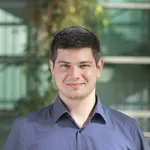
Alexander Lamprecht is a Research Associate at TUMCREATE, Singapore , affiliated with the Electrification Suite & Test Lab . His work aligns with research areas such as Security for IoT, Autonomous Systems, Decentralized Systems for Data Sovereignty, Time-Sensitive Networking (TSN), and Interoperability of Industrial IoT Systems. He has contributed to teaching courses like IoT Security, System Design for the Internet of Things, and Software Architecture for Distributed Embedded Systems across multiple semesters. His research interests include: Security for IoT and Autonomous Systems Security and Privacy in Decentralized Systems Time-Sensitive Networking (TSN) and Wireless-TSN Interoperability of Industrial IoT Systems Lamprecht’s teaching and research activities reflect TUMCREATE’s focus on Industry 4.0 and next-generation connectivity frameworks like 6G. Contact him at alexander.lamprecht@tum-create.edu.sg .
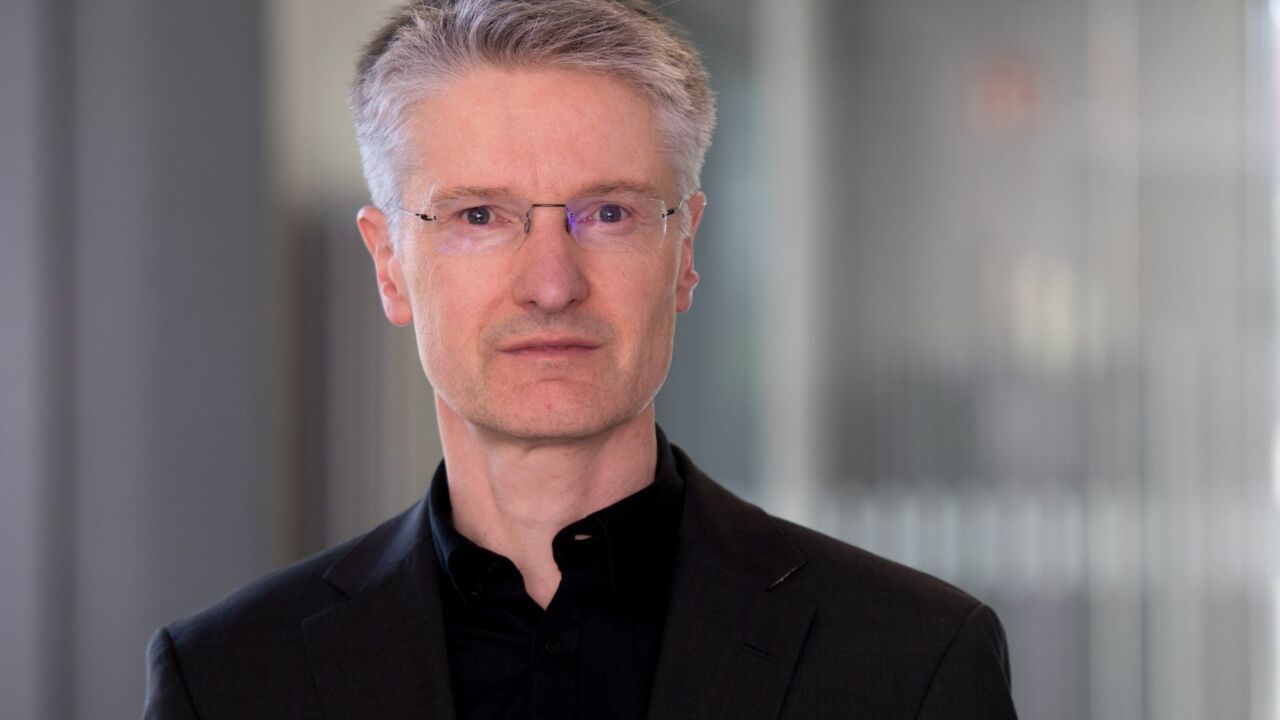
Yash Deshpande is a researcher at the Chair of Communication Networks at Technical University of Munich (TUM), focusing on reliable low-latency communication systems for AI-enabled robotics and industrial applications. He joined the chair in January 2021 after completing his MSCE at TUM. B.Sc./M.Sc. in Electronics, University of Pune (2016-2018) MSCE in Communications Engineering, TUM (2021) His research spans medium access protocols , digital twin latency modeling, and networked control systems . Current projects include 6G Future Lab Bavaria, AI.NET ANTILLAS, and 5G Testbed Bayern extensions. Recent publications address tree algorithms with interference cancellation , deterministic networking integration with 5G , and reproducible wireless channel emulation . Collaborative work includes industrial digital twins (AI.Fabrik) and network-aware timing bounds in precision protocols. He contributes to IEEE conferences (INFOCOM, GLOBECOM, CASE) and journals (IEEE Transactions on Communications, Information Theory), with emphasis on stochastic network models and learning-based MAC protocols .
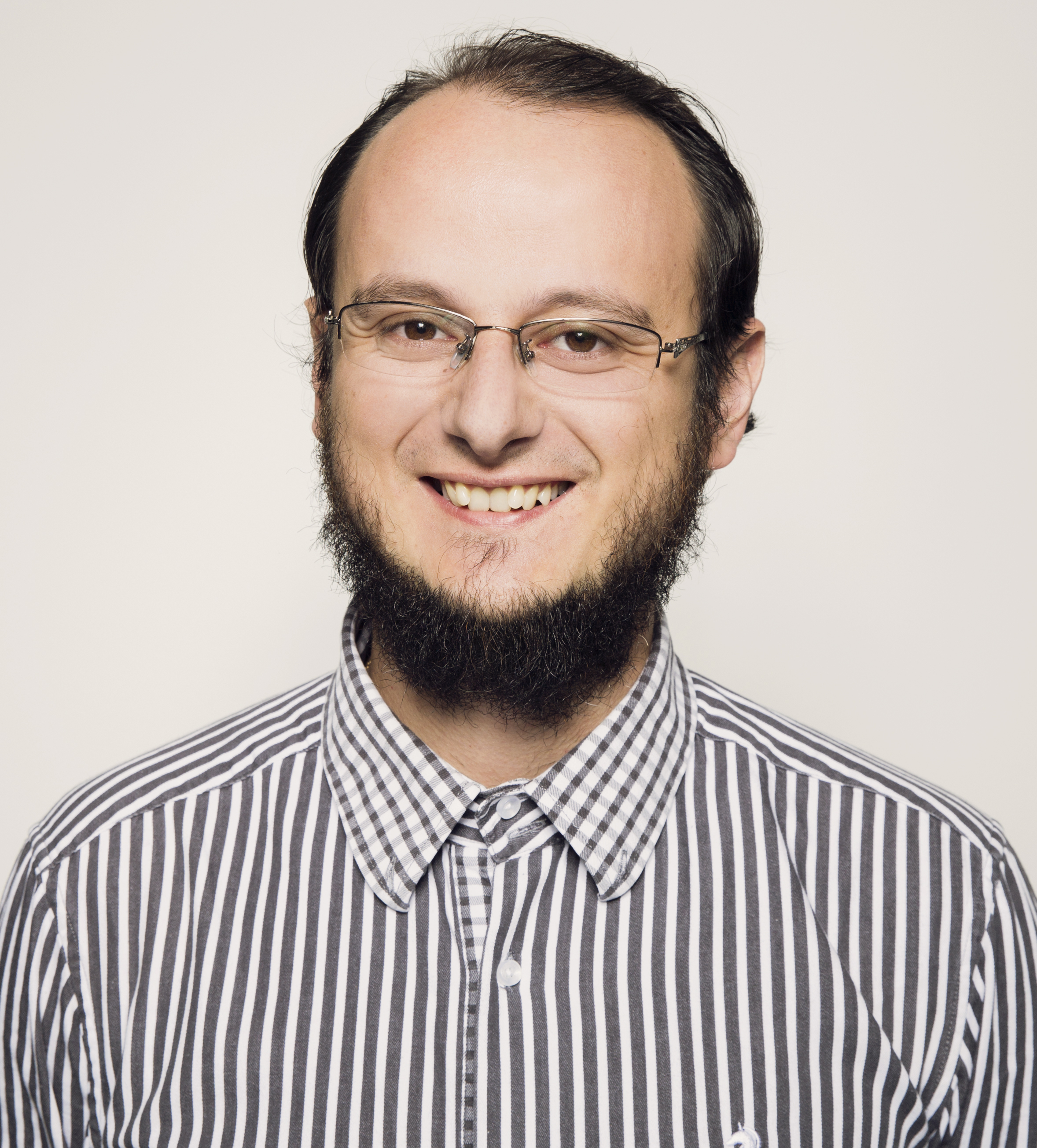
Prof. Dr. Wolfgang Funk is a full-time Professor in the Business Information Systems program at the Faculty of Business, Baden-Württemberg Cooperative State University Villingen-Schwenningen. With a doctorate in Computer Science from Technische Universität Darmstadt and extensive experience in applied research, he specializes in software engineering, digital watermarking, and biometric recognition systems. PhD in Engineering from TU Darmstadt (2008) Diploma in Physics from University of Würzburg (1994) His research focuses on: Digital watermarking techniques for multimedia data Biometric system security and liveness detection Software engineering for business applications Image compression algorithms in recognition systems Publications demonstrate expertise in: 3D CAD model watermarking Multimedia security frameworks MPEG-4 compression impacts Biometric anti-spoofing methods Scientific achievements include: Joseph von Fraunhofer Prize (1998) Three granted European patents in digital watermarking and biometric systems
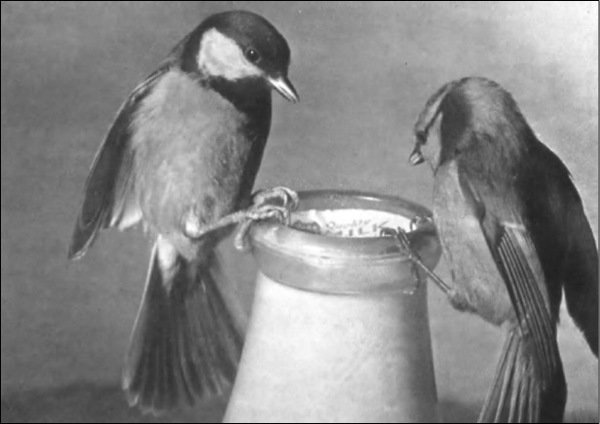
Lucy M. Aplin is Professor of Cognitive and Cultural Ecology at the University of Zurich (Department of Evolutionary Biology & Environmental Studies) and Associate Professor at the Australian National University (Research School of Biology). She heads the Cognitive and Cultural Ecology (CCE) Group, leads the ERC-funded project “CULTURES ADAPT”, and directs the citizen-science initiative “Clever Cockies” on sulphur-crested cockatoos. Combining field experiments and automated tracking, she studies how cognition, social networks and cultural evolution shape animal behaviour—especially in parrots and parids. Education PhD (2014) – University of Oxford & Australian National University BSc (Hons, First Class, 2009) – Australian National University LLB (2003-2008) – Australian National University Research Interests Lucy’s research investigates how new behaviours emerge, spread and persist in wild animal populations. Her work integrates three core themes: Cognitive Urban Ecology : understanding how cognitive flexibility enables parrots to thrive in cities. Social Networks & Culture : mapping the role of social structure in the diffusion and long-term maintenance of cultural traits. Comparative Cultural Evolution : comparing cultural processes across parrot species and parids to uncover general principles. Methodologically, the lab pioneers automated data-collection tools—GPS tags, microphone backpacks, PIT-tagged puzzle-boxes—and large-scale citizen-science platforms. Publication Trends From 2021-2024, Aplin’s 15 most recent papers reveal accelerating interest in urban animal culture , technological innovation in tracking , and the mechanisms of social learning . Study systems span wild sulphur-crested cockatoos (bin-opening culture), monk parakeets (vocal dialects), and great tits (foraging traditions). Interdisciplinary approaches combine behavioural experiments, social-network analyses, citizen science and open-source hardware development. Awards & Fellowships Christopher Barnard Award for Outstanding Contributions by a New Investigator (2022) Max Planck Society Lise Meitner Tenure-Track Fellowship (2022, declined) National Geographic Explorer (2019) Jasper Loftus-Hills Young Investigator Award, American Society of Naturalists (2015) Junior Research Fellowship, St John's College, University of Oxford (2015) Grants & Supervision Lucy has secured >€1.5 M from the European Research Council (2022-2027 “CULTURES ADAPT”), the Cultural Evolution Society, German Science Foundation (DFG), Israeli Science Foundation, UK NERC, and National Geographic. She currently supervises four PhD students (Fontana, Bolcato, Dorepalli, Rose) and two post-docs (Penndorf, Chimento) across Zurich and Canberra, and mentors numerous Honours & Masters students. Labs & Teams She leads the Cognitive and Cultural Ecology (CCE) Lab , an international team embedded in the University of Zurich and ANU, and collaborates closely with the Max Planck Institute of Animal Behaviour (as Alumna Group Leader) and Centre for the Advanced Study of Collective Behaviour (University of Konstanz).
Cristian-Alexandru Staicu is a tenure-track faculty member at CISPA Helmholtz Center for Information Security in Saarbrücken, Germany. He earned his PhD from the Software Lab group at TU Darmstadt under Michael Pradel's supervision, a Master's from EIT Digital (University of Trento and Twente), and a Bachelor's in Computer Engineering from Politehnica University Timișoara. Research Focus : Systems security at the intersection of software/web security, software engineering, and programming languages Contributions : Empirical studies on JavaScript ecosystems, vulnerability detection in npm/Deno, open-source tool development, and security benchmarks His research group Empirical and Behavioral Security investigates real-world threats through case studies on JavaScript bundling, Deno runtime risks, and prototype pollution vulnerabilities. Recent work includes security analysis of source code models and empirical studies of cross-economic web disparities. Key publication trends include: Security risks in Node.js and Deno ecosystems Automated testing techniques for JavaScript sandboxes and constraints Empirical methodologies applied to web inclusivity and global digital disparities Analysis of type systems and gradual typing security implications Dr. Staicu actively supervises PhD candidates and contributes to open-source security , having uncovered multiple critical vulnerabilities in popular JavaScript packages. His group develops tools like SecBench.js while maintaining strong collaborations across USENIX , IEEE , and ACM venues.
Yushen Zhang is a PostDoctoral researcher at the Technical University of Munich (TUM), working within the Chair of Electronic Design Automation under Professor Ulf Schlichtmann. He earned his Dr.-Ing. degree with summa cum laude distinction in Electrical and Computer Engineering from TUM between 2020-2025, following his Master of Science in Computer Science from the same institution (2017-2020). His research focuses on Microfluidics, Electronic Design Automation, and 3D Printing technologies. Dr. Zhang has developed several innovative platforms including Cloud Columba, an online Microfluidic Large-Scale Integration Chip design automation tool, and has made significant contributions to open-source hardware for microfluidic applications. His work bridges the gap between electronic design automation and microfluidic systems, creating accessible and portable solutions for biochip development. Dr. Zhang's publications demonstrate a clear trend toward making microfluidic technology more accessible through 3D printing, open-source design platforms, and automation tools. His research spans from fundamental microfluidic design principles to practical implementation of low-cost, portable systems with applications in medical diagnostics and biological research. Recent work shows increasing sophistication in multi-layer microfluidic design, reliability testing, and integration with electronic control systems. Special prize COSIMA 2024 3rd prize iCANX Davos Summit 2024 3rd place COSIMA 2023 1st prize iCAN'23 3rd place COSIMA 2022 3rd place TUM Student Video Award 2020 1st place IBM Cloud Award 2019 Hackathon finalist StudySmarter Hackathon at Google Munich 2018 Dr. Zhang actively mentors students, having supervised over 19 theses across Bachelor, Master, and research internship levels. His Cloud Columba project has received significant recognition, including multiple awards in student competitions. He has also secured visiting researcher positions at Santa Clara University, demonstrating international collaboration in his field. Dr. Zhang currently serves as course instructor for the master's course VHDL System Design Laboratory at TUM. His laboratory work focuses on developing integrated microfluidic systems with an emphasis on accessibility and portability. The research group has created several open-source hardware platforms including ColoriSens, a portable color sensor board, and PAMICON, an all-in-one automated microfluidic system. Current work centers on multi-layer 3D-printed microfluidics with precise timing and volumetric control, representing the cutting edge of the field.
Sebastian Krieter is a researcher in software engineering and product-line systems, affiliated with Otto-von-Guericke University Magdeburg, Germany. He completed his PhD in 2022 with a dissertation focused on efficient interactive and automated product-line configuration. His research spans software variability, feature modeling, configuration management, and automated software configuration. Research Interests: Software Product Lines and Variability Management Feature Modeling and Analysis Automated Configuration and Sampling Algorithms Combinatorial Testing and Feature Interaction Knowledge Compilation and SAT-based Analysis His recent work includes developing methods for T-wise interaction coverage, improving sampling efficiency in configurable systems, and integrating AI techniques into software variability management. He has contributed to the development of tools like FeatureIDE and UVL (Universal Variability Language). Scientific Contributions: Over 70 peer-reviewed publications in top-tier venues such as ICSE, SPLC, GPCE, and ASE. Key organizer of workshops including the 1st International Workshop on Reverse Variability Engineering (Re: Volution). Active contributor to open-source tools and datasets for benchmarking feature model analyses. Collaborations: He has collaborated extensively with Thomas Thüm, Gunter Saake, Thomas Leich, and a network of international researchers in software engineering and AI.
Philipp Bredol is a Lecturer at the Technical University of Munich within the TUM School of Computation, Information and Technology . He is affiliated with the Chair of Nano and Quantum Sensors , where he contributes to research and teaching in quantum engineering and nanomechanics. Research Interests : His work focuses on nanomechanical systems , including high-quality factor resonators in materials like 4H-SiC and 3C-SiC, nonlinear dynamics of nanomechanical resonators, cavity nano-optomechanics, and dielectric transduction mechanisms. He also investigates microwave-to-optical transduction via magnons/phonons and dissipation in pre-stressed silicon nitride resonators. Recent Publications : He has contributed to advancing silicon carbide-based nanomechanical systems, studying ion implantation effects, stress engineering, and automated characterization tools like har.py for nano-harp sensors. Teaching : Bredol co-teaches courses such as Advanced Topics in Nano and Optomechanical Quantum Technologies (2024/25) and Introduction to Quantum Engineering (2025), supervising seminars and scientific projects at both undergraduate and graduate levels. Contact : Email: philipp.bredol@tum.de | Phone: +49 (89) 289-51283 | Room: 5901.03.073 | Website: Chair of Nano and Quantum Sensors
Prof. Dr. Jörn Eichler is a Professor in the Department of Computer Science at the Department of Mathematics and Computer Science, Freie Universität Berlin, leading the Secure Systems Engineering working group. His research focuses on risk assessments, protection concepts, security tests, and optimization of design processes for attack-resistant software systems throughout their lifecycle. His primary research interests span cybersecurity, risk assessment, automotive security, software security, and security engineering. He develops methodologies for modeling security risk assessments, streamlining ISO 21434 compliance, and implementing agile threat assessment frameworks. His work emphasizes practical applications in automotive systems, critical infrastructure, and business process security, with strong contributions to model-based security engineering and vulnerability prioritization. Analysis of his 15 most recent publications (2015-2023) reveals a dominant focus on automotive security risk assessment, particularly through ISO 21434 standardization. Key trends include modular risk assessment frameworks, threat modeling integration in agile development, and security goal validation techniques. His research consistently bridges theoretical modeling with industrial applications, especially in vehicle systems and critical infrastructure protection. Scientific awards: No scientific awards, fellowships, or medals are mentioned in the provided text. Prof. Eichler actively supervises student theses as evidenced by available, awarded, and completed theses listings in the Secure Systems Engineering group. Specific student names and grant details are not provided in the source material, though his publications indicate involvement in government-funded projects like ITS|KRITIS for critical infrastructure security. He directs the Secure Systems Engineering working group, which conducts applied research on security risk assessments, penetration testing methodologies, and lifecycle security optimization for software-based systems, with specialized focus on automotive and critical infrastructure domains.
Eric Bodden is a leading expert in Secure Software Engineering at Paderborn University and Director for Software Engineering and IT Security at Fraunhofer IEM . He also serves as a Professor at the Heinz Nixdorf Institute and is involved with the Software Innovation Campus Paderborn (SICP) . His work focuses on creating precise automated program analysis tools and securing AI applications through formal methods. Member of Acatech (German National Academy of Science and Engineering) Member of DFG review board for Software Engineering 2024: ERC Advanced Grant for Self-Optimizing Static Program Analysis 2019: ACM Distinguished Member His research spans static analysis , Android security , and Cyber-Physical Systems , with notable tools like FlowDroid and PhASAR . He collaborates with companies to develop attack-proof software and serves on editorial boards including ACM TOSEM and IEEE Security & Privacy .
Tal Malkin is a Professor at Columbia University's Department of Computer Science, School of Engineering and Applied Science. Her work spans cryptography, secure computation, and data privacy, with a focus on non-malleable codes, topology-hiding communication, and privacy-preserving protocols. 2025: Peony Onion Encryption for asynchronous anonymity 2024: Structural lower bounds for pseudorandom functions 2022: XSPIR for Ring-LWE-based private retrieval Research themes include: Cryptographic Foundations: Non-malleability, garbling circuits, and zero-knowledge protocols Privacy-Preserving Systems: Differential privacy, secure multi-party computation, and database anonymity Applied Security: Biometric encryption, model watermarking, and polymer-based unclonable functions Her 15 most recent publications analyze anonymity in dynamic networks, robust watermarks for AI models, and tamper-resilient encryption. Keywords span computer science, cryptography, and machine learning. Sub-fields include secure computation, lattice-based cryptography, and function-private protocols.
Elizabeth Bjarnason is an Associate Professor in the Department of Computer Science at Lund University's Faculty of Engineering, where she has established herself as a leading researcher in requirements engineering and empirical software engineering. With a PhD completed in 2013 from Lund University on 'Integrated Requirements Engineering - Understanding and Bridging Gaps in Software Development,' she has built an extensive research career spanning over two decades with consistent publication output from 1997 through 2024. Her research primarily focuses on the intersection of requirements engineering and practical software development processes. Dr. Bjarnason has developed significant theoretical contributions, most notably the 'Theory of Distances in Software Engineering' which examines communication gaps and alignment issues between different phases of software development. Her work bridges academic research with industrial practice, often involving collaborations with major software companies through case studies and empirical investigations. Recent publication trends reveal a strategic shift toward continuous experimentation methodologies, particularly in contexts like indie game development and early-stage startups where data limitations present unique challenges. Her 2023-2024 publications demonstrate growing interest in health-related software systems, as evidenced by her involvement in the International Workshop on Requirements Engineering for Well-Being, Aging, and Health. This represents an expansion of her research scope beyond traditional software engineering domains into socially impactful applications. Dr. Bjarnason has been instrumental in establishing the Requirements Engineering and Testing (RET) workshop series, now in its ninth iteration, which has become a significant forum for researchers exploring the intersection of requirements specification and testing practices. Her leadership in this community is evident through her multiple workshop organization roles and summary publications. She actively mentors early-career researchers, with several co-authored papers indicating supervisory relationships, particularly in the areas of software prototyping and requirements engineering for health applications. Her collaborative network extends across Europe, with frequent partnerships with researchers at Lund University, as well as international collaborations.
Carolin Eitemüller serves as Academic Councillor at the Institute for Didactics of General Education, University of Münster since March 2025. Previously, she held research positions at the University of Duisburg-Essen including Research Associate (2021-2025) and Research Assistant in the "Educational Equity in Focus" project (2016-2020), with doctoral work under Prof. Maik Walpuski. Her academic qualifications include: Dr. rer. nat. in Chemistry Education (University of Duisburg-Essen, 2015) 2nd State Examination (Schinkel Comprehensive School, Osnabrück, 2016) Bachelor/Master in Chemistry & Biology Education (University of Osnabrück, 2011) Study Abroad at Amersham & Wycombe College, UK (2011-2012) Dr. Eitemüller's research pioneers digital solutions for chemistry education, focusing on adaptive learning systems that address educational inequity through internal differentiation. Her work integrates automated formative feedback with multistep chemistry exercises to support diverse learners, particularly during school-to-university transitions. She examines how molecular representations affect cognitive load in organic chemistry while developing practical classroom tools for equitable instruction. Analysis of her 2018-2024 publications reveals consistent innovation in digital formative assessment, with increasing emphasis on AI-driven feedback systems and empirical validation of learning tools. Her research bridges theoretical educational psychology with classroom implementation, prioritizing practical solutions for chemistry teachers through digital learning units and differentiated task design. Current work continues within the University of Münster's Institute for Didactics of General Education, building on collaborations with Stanford University's Prof. Jonathan Osborne and the "Educational Equity in Focus" project team. No formal advisees or specific grant funding are documented in available sources.
Alina Kadluba, M.Ed. , is a researcher at the Heinz Nixdorf Endowed Chair for Mathematics Education at the Technical University of Munich . Her work focuses on Technological Pedagogical Content Knowledge (TPACK) , digital media integration in mathematics teaching , and teacher professional development . She contributes to projects like ALICE, DigiProMIN, and SHARP, investigating how digital tools can enhance mathematics education and teacher diagnostics. Education: Universität Wien (Lehramtsstudium in Mathematics and German) Current Projects: ALICE, DigiProMIN, SHARP Research Interests center on TPACK measurement methodologies, digital tool efficacy in classrooms, and cognitive aspects of teacher training. Her scientific articles systematically compare self-reports and knowledge tests for TPACK assessment, analyze digital media frameworks, and explore fraction understanding through simulations. She has presented at international conferences including PME, EARLI, and GDM. Scientific Awards include recognition for her doctoral work on teacher knowledge and digital integration. Collaborations span institutions like Stellenbosch University , Loughborough University , and Universidad de Chile .
Dr. Moritz Joseph serves as Professor and Chair of Software for Systems on Silicon at RWTH Aachen University's School of Electrical Engineering and Information Technology. His research group operates within the Institute for Communication Engineering (ICE), focusing on cutting-edge hardware architectures for next-generation computing systems. The chair maintains laboratory facilities in the ICT Cube 1 building at Kopernikusstr. 16 in Aachen, Germany. Professor Joseph's research spans Computing-in-Memory architectures , Resistive RAM technologies , and neuromorphic computing systems . His work addresses critical challenges in hardware acceleration for deep learning, with particular emphasis on reliability, security, and energy efficiency of novel memory-centric computing paradigms. His research bridges computer architecture, hardware security, and machine learning acceleration. Analysis of his recent publications reveals a strong focus on RRAM-based compute-in-memory systems, with increasing attention to security implications of thermal effects and side-channel attacks. His work demonstrates progression from fundamental memory characterization to system-level integration and security analysis, showing consistent innovation in memory-centric computing architectures over the past five years. Professor Joseph actively contributes to the development of simulation frameworks and evaluation methodologies for emerging memory technologies, as evidenced by his work on platforms like CIM-Explorer, Ratatoskr, and gem5 extensions. His research has significant implications for energy-efficient AI hardware and secure computing systems.