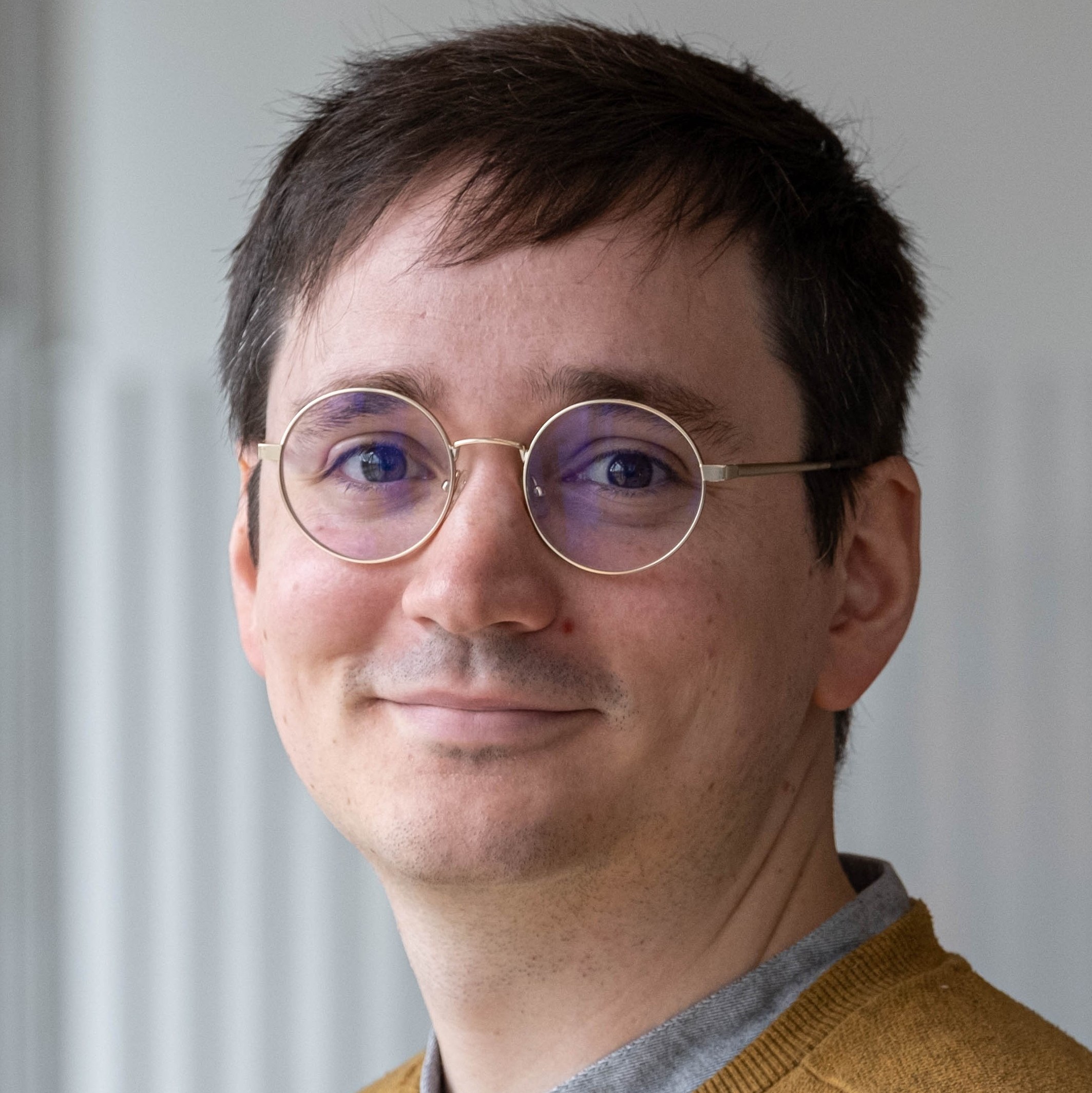
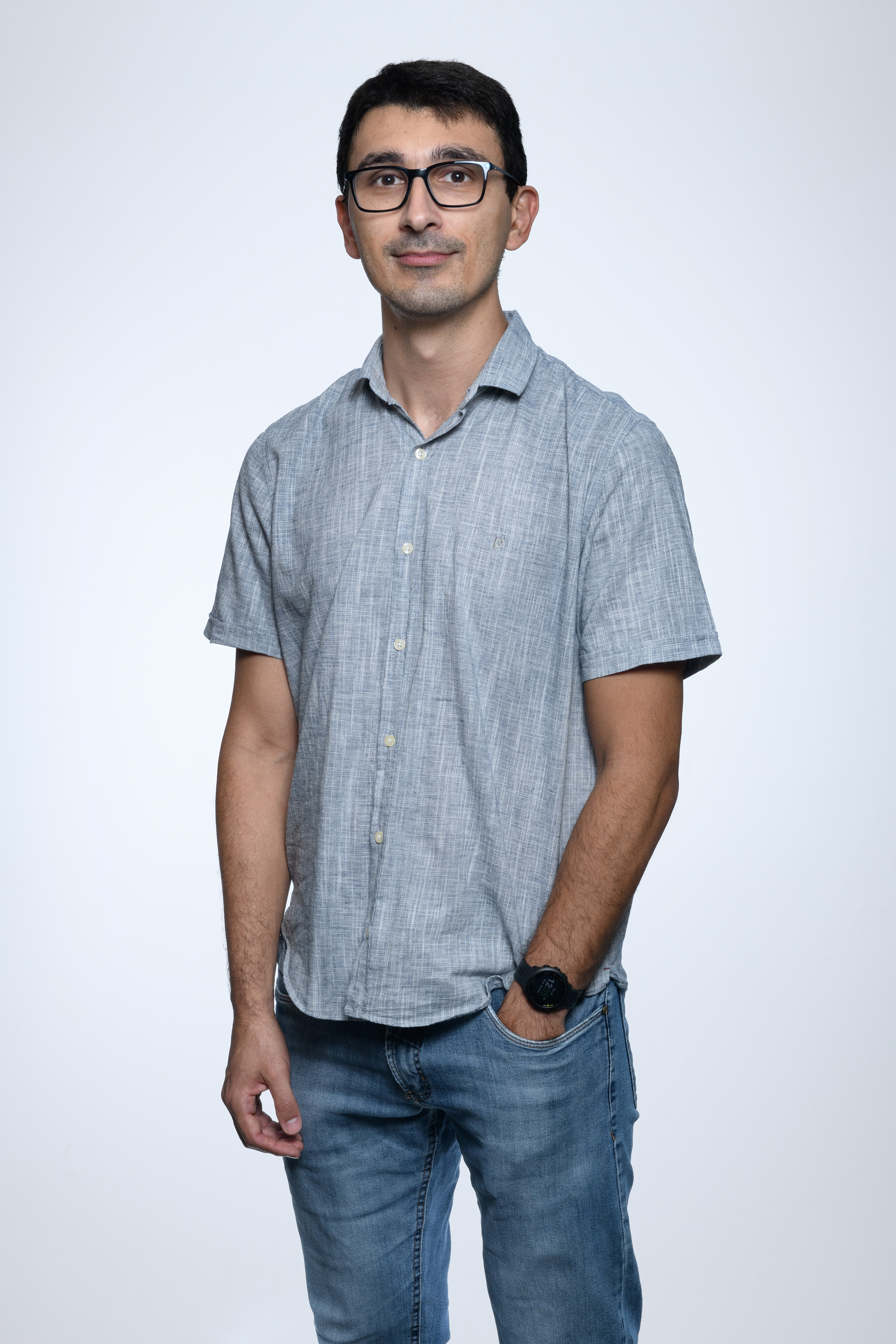
Martijn Huynen is a tenure-track assistant professor and IMEC postdoctoral researcher at Ghent University's Faculty of Engineering and Architecture, Department of Information Technology (EA05). His work focuses on advanced electromagnetic modeling and signal integrity analysis for high-speed interconnect structures. Key projects: Stochastic modeling for electromagnetic interference (2014–2018), supervising Tim Pattyn (2023–2025) and Dries Bosman (2018–2023), and copromoting research on surface admittance operators. Research themes include electromagnetic scattering, interconnect modeling using Fokas-derived operators, and uncertainty quantification in high-speed circuits. Recent publications (2024–2017) span conferences like IEEE EDAPS and journals including IEEE Transactions on Microwave Theory. Topics emphasize mathematical formulations, 3D modeling, and mitigating signal integrity issues in mmWave and PAM-4 systems. He collaborates with researchers such as Dries Vande Ginste, Daniël De Zutter, and Hendrik Rogier, with funding from the Research Foundation - Flanders (FWO) and the Special Research Fund.
Wei Liu is a postdoctoral researcher at the Department of Information Technology (EA05) , Faculty of Engineering and Architecture , Ghent University. His work focuses on advanced wireless networking technologies, particularly through Software-Defined Radio (SDR) and Field Programmable Gate Array (FPGA) implementations. Key contributions include the development of openwifi , a free and open-source IEEE802.11 SDR implementation on System-on-Chip (SoC) platforms Research expertise in Wi-Fi 6 , OFDMA , cross-technology interference , and low-latency SDR architectures Liu's publications demonstrate a strong focus on: Time synchronization (Wi-Fi and UWB integration, multi-hop networks) Spectrum sensing (heterogeneous devices, multi-fidelity data) Network virtualization for dynamic wireless environments Security and experimentation with SDR frameworks He collaborates extensively with researchers like Xianjun Jiao , Ingrid Moerman , and Muhammad Aslam , with projects spanning from 2010 to 2025.
Merlijn Sebrechts is a postdoctoral researcher and policy officer at Ghent University's Faculty of Engineering and Architecture, Department of Information Technology (EA05). His work focuses on cloud-native technologies, edge computing, and secure system design. Research areas include Kubernetes, WebAssembly, and confidential computing He teaches computer science courses in the Information Engineering Technology program Expertise spans trusted execution environments, software supply chain security, and cloud orchestration His recent publications analyze edge computing security, lightweight virtualization, and intent-based resource management. Key contributions include decentralized orchestration frameworks and benchmarks for cloud performance. Merlijn maintains strong ties to open-source ecosystems through involvement with Kubernetes, Docker, and the Ubuntu community.
Brecht Vermeulen is a Postdoctoral Researcher at Ghent University's Faculty of Engineering and Architecture, Department of Information Technology. He works within the Internet Technology and Data Science Lab, focusing on networking, video quality assessment, and energy-efficient systems. Research Areas: Quality of Experience (QoE), Dynamic Spectrum Sharing, Video Coding, Interoperability Testing, Federated Experimentation. Key Collaborations: IMEC, FIRE initiative, EU-US/South Korea partnerships. Research Focus: Vermeulen's work spans scalable video coding, distributed CORBA monitoring, and energy efficiency in telecommunications. He applies genetic programming to video quality metrics and explores AI-driven radio systems for spectrum sharing. Publication Trends: His recent articles address zero vulnerability computing hypotheses, healthcare robotics during pandemics, and federated testbed architectures. Earlier works focus on QoE for video, thin client power efficiency, and tunnel setup mechanisms.
Pierre-Yves Schobbens is a Full Professor at the University of Namur, Faculty of Computer Science, specializing in software verification and formal methods. He serves as the Director of the Research Group on the Foundations of Computer Science (FOCUS) and holds leadership roles including President of the Research Center on Information Systems Engineering (PReCISE), Chair of the International Affairs Commission for the Faculty of Computer Science, and Chair of the Doctoral Commission for Exact Sciences at the university. Education: Bachelor in Philosophy, Université Catholique de Louvain (UCL), 1982 Master in Applied Mathematics and Economics, UCL, 1983 Master in Computer Engineering, UCL, 1984 Doctorate in Computer Science, UCL, 1992 Research Interests: Professor Schobbens specializes in software product lines, software verification, formal methods, agent-oriented software, and model checking. His research focuses on developing rigorous approaches for software development and verification, particularly in the context of variability-intensive systems. He has made significant contributions to the field of featured transition systems, which enable the verification of software product lines. His work bridges theoretical computer science with practical applications, addressing challenges in real-time systems, adaptive software, and database performance. Recent research directions include applying artificial intelligence techniques to software quality assurance, energy-aware computing, and the development of context-aware systems. Research Trends: Professor Schobbens' recent publications demonstrate a strong focus on the intersection of formal methods and emerging technologies. His work increasingly incorporates AI and machine learning techniques to address traditional software engineering challenges, particularly in software verification and testing. There's a notable emphasis on energy efficiency in computing systems, variability modeling for database performance testing, and the application of formal methods to self-adaptive systems. His research maintains a strong theoretical foundation while addressing practical concerns in software development. Scientific Awards: Most Influential Paper Award, VAMOS 2024 (ten-year award) Most Influential Paper Award, Software Product Lines Conference 2020 Most Influential Paper Award, International Requirements Engineering Conference 2016 Best Presentation Award, SAFECOMP 2012 Advising and Grants: Professor Schobbens has supervised 94 students across various levels. He leads multiple significant research projects including SQUAL.AI (Software Quality through Artificial Intelligence, 2025-2026), ERNEST (schEduler foR eNErgy autonomouS ioT, 2024-2025), and CYBEREXCELLENCE (Cyber Security Excellence project within the Walloon Region, 2022-2027). His research has been consistently funded since 1999, demonstrating sustained impact and relevance in his field. Laboratories and Research Teams: Professor Schobbens directs the Research Group on the Foundations of Computer Science (FOCUS) and is a key member of the Research Center on Information Systems Engineering (PReCISE). He also contributes to the Namur Digital Institute (NADI) and Namur Research Institute for Life Sciences (Narilis). His research group focuses on formal methods for software engineering, particularly addressing challenges in software product lines, model checking, and adaptive systems.
Igor dos Santos Montagner is a Teaching Professor at Insper in the School of Computer Science and Engineering . He holds a PhD in Computer Science from the University of São Paulo (2017) and a bachelor's degree from the same institution (2010). His research focuses on computing education , particularly student-centered teaching methodologies and their impact on professional skill acquisition beyond classroom content. He advocates for the use of Free Software in academic environments, exploring its benefits for education and open technology access. His projects include collaborations with Craig Zilles (University of Illinois at Urbana-Champaign) and Rafael Corsi (Insper) on frequent testing and feedback systems in CS1 courses, as well as studies on C programming language pedagogy to improve low-level programming education. Research Interests : Computing education, student-centered learning, Free Software integration in academia, programming language pedagogy, and professional skill development. Key Projects : Frequent Testing in CS1 (2020–2024), C Language Teaching Methodologies (2021–2023), Open Development elective design (2020). Collaborations : University of Illinois at Urbana-Champaign (Craig Zilles, Mariana Silva), Rafael Corsi (Insper), and open-source communities like ElementaryOS, Nim, and Gleam. His publications analyze mastery-oriented grading, active learning in programming courses, and Open Source contribution frameworks. He emphasizes technology accessibility and digital wellbeing , reflecting on smartphone usage habits and minimalist tech practices in his personal blog.
Eduard Baranov is a Visiting Lecturer and Research Assistant at the Université catholique de Louvain, affiliated with the Louvain Polytechnic School (EPL) through the Computer Engineering Center (INGI) under the Institute of Information and Communication Technologies, Electronics and Applied Mathematics (ICTEAM). His work bridges academic research with industrial applications. Research Interests : Software engineering, formal methods, cybersecurity, autonomous systems, and model checking. His focus spans scalable coverage estimation, secure healthcare systems, and statistical validation of privacy protocols. Publications : Recent work includes t-wise coverage algorithms for software testing, formal verification of multi-agent autonomous systems, and privacy-preserving frameworks aligned with GDPR standards. His research often integrates symbolic execution and statistical model checking. Collaborations : Collaborates with researchers like Axel Legay, Kuldeep S. Meel, and Thomas Given-Wilson, contributing to journals such as IEEE Transactions on Software Engineering and ACM Transactions on Software Engineering and Methodology. Contact : Email: eduard.baranov@uclouvain.be | Office: INGI - Réaumur, L5.02.01, Place Sainte Barbe 2, 1348 Louvain-la-Neuve.
Eva Ceulemans is a Full Professor at the Faculty of Psychology and Educational Sciences at KU Leuven, Belgium, where she also serves as Vice Dean for Research. She is affiliated with the Quantitative Psychology and Individual Differences research unit and holds leadership positions including Program Director of the POC Doctoral Program PPW and membership on the Advisory Council for Humanities Research. Her research focuses on advanced statistical methodologies for psychological science, particularly: Experience Sampling Methodology (ESM) and intensive longitudinal data analysis Affective dynamics and emotion measurement in daily life Development of novel statistical approaches for dyadic and triadic interactions Sample size planning for N=1 studies Time series analysis for psychological phenomena Dr. Ceulemans' recent publications demonstrate her dual expertise in methodological innovation and substantive psychological questions. She has made significant contributions to experience sampling methodology, including the development of episode-contingent designs, synchronization measures for triadic interactions (AMPC measure), and tools for measuring continuous affect. Her work bridges sophisticated statistical modeling with real-world applications in emotion research and relationship science. Her scientific leadership includes: Development of the ConNEcT R package for contingency measure-based networks Innovative approaches to detecting affective episodes in daily life Methods for improving measurement of affect in ecological settings Framework for sample size determination in ESM studies As an educator, Dr. Ceulemans teaches statistics courses for psychology and educational science students at KU Leuven, including 'Statistics for Educational Scientists' and 'Inductive Statistics for Psychologists.' Her institutional service spans multiple faculty committees focused on research policy, evaluation, and doctoral education, reflecting her substantial impact on academic governance.