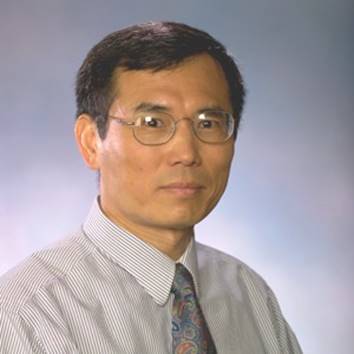
Kai-Hsiung Chang is a Professor in the Department of Computer Science and Software Engineering at Auburn University's College of Engineering. He has been a faculty member since 1986, progressing from Assistant to Associate Professor in 1991, and to full Professor in 1998. He served as Department Chair from 2006 to 2016 and was honored with the Alumni Professorship from 2004 to 2009. Ph.D., Electrical and Computer Engineering, University of Cincinnati, 1986 M.S., Electrical and Computer Engineering, University of Cincinnati, 1982 Diploma, Electrical Engineering, Taipei Institute of Technology, 1977 Dr. Chang's research focuses on software testing, software comprehension and visualization, complexity metrics, information assurance education, computer supported cooperative work (CSCW), and artificial intelligence in software engineering. His work integrates formal methods and usage profiles to enhance software quality and safety. He has led research sponsored by the National Science Foundation (NSF) and the Department of Defense (DoD), particularly in pervasive and mobile computing and information assurance education. His recent publications reflect a strong focus on software testing methodologies, formal specification-based validation, collaborative systems, and intelligent software tools. Themes include object-oriented testing, complexity measurement, CSCW, and AI-driven test generation, indicating a long-standing commitment to improving software reliability and development processes. Alumni Professorship, Auburn University (2004–2009) ACM Certificate of Appreciation for Outstanding Service (1997) IEEE Senior Member INFOSEC Professional Certification (2005) Multiple Outstanding Teaching Awards at Auburn University (1989, 1992, 1997) Summer Faculty Fellowship at NASA Marshall Space Flight Center (1995) Dr. Chang has advised over 50 graduate students, including numerous Ph.D. and Master’s candidates, many of whom now hold academic and industry positions. He has served on NSF and DHS fellowship review panels, contributed to ABET accreditation as a commissioner and program evaluator, and participated in the IEEE-Computer Society/ACM Curriculum Committee for Software Engineering. He also served as Vice President of the International Society of Applied Intelligence. He has led significant research initiatives, including NSF-sponsored REU programs in pervasive computing, and has been deeply involved in curriculum development and professional service. His lab and research group have focused on software quality, intelligent systems, and collaborative environments, fostering interdisciplinary work in software engineering and AI.