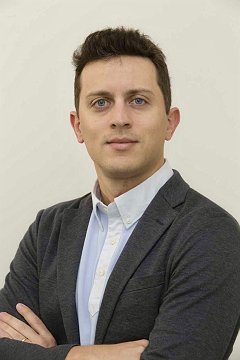
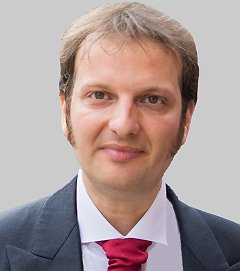
Guangjie Li is a researcher at the National Innovation Institute of Defense Technology, actively contributing to software engineering research through publications in premier conferences including ASE, ESEC/FSE, and SANER. His work bridges theoretical program analysis with practical machine learning applications for software development challenges. His research focuses on: Fault localization techniques enhanced by statement-level error analysis Deep learning-driven detection of code smells like feature envy Automated extraction of program elements across software versions Empirical validation using real-world codebases Integration of version control data in program analysis Recent publications demonstrate a consistent trajectory toward machine learning augmentation of traditional software engineering tasks, particularly in debugging and code quality assessment. His methodologies emphasize practical applicability through real-world example integration, addressing critical gaps in automated software maintenance.
Yanhui Li is an Assistant Professor at the Software Institute of Nanjing University, specializing in AI software testing and empirical software engineering. Holding a PhD from Southeast University, he actively contributes to both research and teaching in software engineering for AI systems. Institution: Nanjing University, Software Institute Academic Rank: Assistant Professor Teaching: Discrete Mathematics (2023-2025), Data Structure and Financial Algorithm (2016-2024), Advanced Algorithm (2024-2025) His research focuses on AI Testing and Debugging , Mutation Testing , and Empirical Software Engineering with applications in deep learning systems. Key areas include developing testing methodologies for machine learning fairness, word sense disambiguation models, and natural language inference systems. His work bridges theoretical formal methods with practical software analysis techniques to improve AI system reliability. Analysis of recent publications (2023-2025) reveals strong emphasis on testing deep learning components (40% of works), mutation testing adaptations (25%), and empirical studies of software engineering practices (20%). His research increasingly integrates causal analysis with traditional testing techniques, particularly for fairness evaluation in ML systems. 2019 Nanjing University 'Most Loved Teacher' Award (top 9 university-wide) 2020 Nanjing University 'Most Loved Teacher' Award (top 7 university-wide) 2022 & 2024 'Best Course' recognition for Data Structure and Financial Algorithm Dr. Li actively advises students and leads multiple research projects including National Natural Science Foundation funding for 'Semantic based testing data efficacy measurement for deep learning models'. His group recruits PhD and master's students specializing in AI software engineering, with emphasis on testing/debugging AI systems and empirical studies of AI development practices. Current projects include model-based code generation with Nanjing University of Aeronautics and Astronautics and Huawei-funded research on mixed-language programming environments.
Xiang Ling is an Associate Professor at the Institute of Software, Chinese Academy of Sciences (ISCAS) in Beijing, specializing in software security, data-driven security, AI security, and network/web security. His research bridges theoretical computer science with practical security applications, focusing on malware analysis, vulnerability detection, and adversarial machine learning. His research interests span multiple security domains with emphasis on applying data-driven approaches to security challenges. He investigates how machine learning techniques can be both applied to security problems and themselves secured against adversarial manipulation. His work particularly focuses on Windows and Android security ecosystems, with significant contributions to malware detection systems and vulnerability analysis tools. His publication record shows consistent contributions to top software engineering and security venues including ICSE, USENIX Security, IEEE S&P, and Black Hat. His research demonstrates strong trends toward integrating deep learning with security analysis while addressing practical challenges in real-world security systems. Recent work increasingly incorporates large language models for security applications. ACM SIGSOFT Distinguished Paper Award at ICSE 2025 for 'FUTURE' paper Multiple papers accepted at premier venues including ESEM 2025, EASE 2025, and ICSME 2025 Research funded through collaborations with major academic institutions Dr. Ling actively mentors students and collaborates with researchers globally. He maintains an active research group at ISCAS focusing on code analysis, system security, deep learning, and fuzz testing. His team regularly publishes in top-tier conferences and journals while developing practical security tools that address real-world vulnerabilities. He is currently recruiting interns and graduate students through platforms like 实习僧 (intern recruitment website).
Dr Qinghua Lu serves as Group Leader of the Software Systems Research Group at CSIRO's Data61 in Australia, where she leads pioneering research at the intersection of artificial intelligence and software engineering. With over 200 publications in premier international venues, she has established herself as a global authority in Responsible AI and Software Engineering for AI. Her research program focuses on two critical areas: Agent Engineering and Evaluation, and AI Safety/Responsible AI. She has developed architectural patterns for foundation model-based agents, reference architectures for trustworthy AI systems, and multi-layered safety frameworks including the influential Swiss Cheese Model for AI Safety. Her work bridges theoretical research with practical applications through tools like Prompt Sapper for AI chain development and SoapOperaTG for knowledge graph-based testing. Dr Lu actively shapes national and international AI policy as a contributor to Australia's AI Safety Standard, Frontier Model Forum, OECD.AI's trustworthy AI metrics, and the EU General-Purpose AI Code of Practice. She has received numerous accolades including the 2023 Asia-Pacific Women in AI Trailblazer Award and an ACM Distinguished Paper Award for her seminal work 'Towards a Roadmap on Software Engineering for Responsible AI'. As a prolific author, her book 'Responsible AI: Best Practices for Creating Trustworthy AI Systems' (2023) became Amazon's No. 3 AI book bestseller, recognized as the world's first responsible AI book for practitioners. Her follow-up work 'Engineering AI Systems: Architecture and DevOps Essentials' (2025) further establishes her leadership in AI system engineering. Dr Lu maintains active leadership in the academic community as Area Chair of Software Engineering for AI at ICSE'26, Program Chair for AIware'25 and CAIN'25, and associate editor for IEEE Transactions on AI. Her editorial service extends to multiple prestigious journals including Engineering Applications of Artificial Intelligence and IEEE Communications Surveys and Tutorials.
Prof. Dr. Jan Mehnert is a Professor specializing in building performance optimization, sustainable construction materials, and data-driven building automation systems. His research bridges the gap between theoretical design and operational performance through innovative quality management frameworks and big data analytics. Current work focuses on algorithmic toolkits for technical monitoring, eco-materials like additive manufactured earth, and carbon-neutral campus initiatives. His primary research domains include building performance verification (addressing the design-operation gap), sustainable material systems (earth-based construction and paper composites), and data-intensive building diagnostics (leveraging big data for energy efficiency). Key methodologies involve functional testing protocols, algorithmic performance monitoring, and lifecycle assessment of novel materials. Recent projects demonstrate practical applications in campus sustainability and neighborhood energy systems. Analysis of his 2017-2023 publications reveals three converging trends: (1) Integration of real-time data analytics into building commissioning processes, (2) Development of eco-material systems with validated thermal and structural properties, and (3) Creation of modular toolkits for scalable performance management. His work consistently targets the operational phase of buildings, emphasizing measurable outcomes in energy conservation, indoor environmental quality, and carbon reduction across both new construction and retrofits.
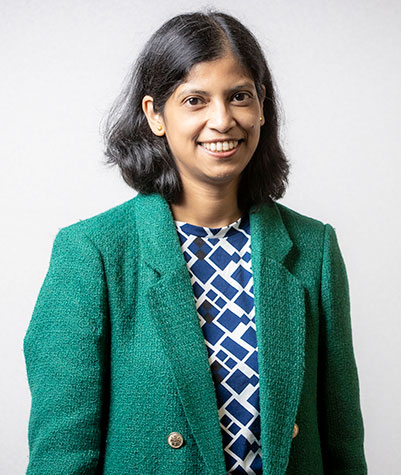
Dr. Lipika Deka is an Associate Professor and Faculty Head of Research Students at De Montfort University's School of Computer Science and Informatics. She is affiliated with multiple research groups including The Institute of Artificial Intelligence, The De Montfort University Interdisciplinary Group in Intelligent Transport Systems (DIGITS), and the Software Technology Research Laboratory. Dr. Deka holds a PhD in Computer Science and Engineering from Indian Institute of Technology (IIT) Guwahati, an MTech in Computer Science and Information Technology, and a BEng in Computer Science and Engineering. Her academic journey began with a passion for operating systems and network programming, which led to her PhD work on transactional file systems and online backup algorithms. Dr. Deka's research spans multiple interdisciplinary domains at the intersection of computer science and real-world applications. Her primary areas of expertise include: Concurrency control techniques for consistent, architecture-preserving online software updates in autonomous vehicles and IoT devices Machine learning applications for Intelligent Transportation Systems Downstream space applications including smart agriculture (particularly for climate change adaptation) and soil/water analysis AI techniques for reducing e-waste by facilitating longer lifespans of digital items Analysis of Dr. Deka's recent publications reveals a strong focus on applying artificial intelligence and machine learning to solve critical transportation, environmental, and healthcare challenges. Her work demonstrates a trend toward interdisciplinary research that bridges computer science with practical applications in autonomous vehicles, environmental monitoring, precision agriculture, and public health infrastructure. Notably, her research shows increasing integration of satellite data with ground-level applications, particularly in agriculture and environmental monitoring. Dr. Deka has received the Faculty Staff Leadership Award in 2019 for her contributions to academia. Her leadership extends to professional organizations as well, where she served as Vice-Chair of the Association of Computing Machinery - UK Women's Chapter (2017-2020) and Lead of the European Volunteers Network, ACM Women's Chapter (2020-2022). As an academic supervisor, Dr. Deka has successfully guided numerous PhD students to completion while currently advising six doctoral candidates. Her research portfolio includes significant projects such as: Co-I on STAGE I (2022-23): EIT Food Seedbed pre-incubation for OPTIcut Advisory board member for a THIS Institute fellowship (2022-2026) Participant in a Spanish Government-funded project on photovoltaic systems (2022-2026) Project Partner on an EPSRC Discipline Hopping Award for smart water treatment (2020-2024) Entrepreneurial Lead on INNOVATE UK's ICURe project for OPTIcut (2020) Academic Supervisor for a Knowledge Transfer Partnership with Geospatial Insight Ltd (2018-2020) De Montfort University PI for the Transport Catapult-sponsored IMPART project (2015-2018) Dr. Deka's research is conducted through multiple collaborative frameworks including The Institute of Artificial Intelligence, the De Montfort University Interdisciplinary Group in Intelligent Transport Systems (DIGITS), and the Software Technology Research Laboratory. These groups facilitate cross-disciplinary collaboration between computer scientists, transportation engineers, environmental scientists, and healthcare professionals to address complex societal challenges through technological innovation.
Anne ETIEN is a Professor of Computer Science at the Faculty of Science and Technology (FST) of the University of Lille, where she conducts research at the CRIStAL laboratory and is a member of the joint CRIStAL/Inria EVREF team. She previously served as a Maître de Conférences at Polytech'Lille from 2007 to 2020 and has maintained continuous academic appointments since completing her PhD in 2006. Her educational background includes a PhD defended on March 13, 2006 at Université Paris 1 Panthéon Sorbonne titled "Ingénierie de l'alignement : Concepts, Modèles et Processus. La méthode ACEM pour la correction et l'évolution d'un système d'information aux processus d'entreprise" and an HDR (Habilitation à Diriger des Recherches) defended in June 2016 titled "Metamodelisation to support Test and Evolution". Dr. ETIEN's research focuses on analysis and reengineering of complex legacy systems with particular expertise in software evolution, maintenance, meta-modeling, and refactoring techniques. Her current research themes include Evolution, Maintenance, Meta-modeling, Reengineering, Refactoring, Architecture Remodularization, and Debugging. Previously, she specialized in Model-driven engineering, Model transformation, Alignment engineering, and Requirements engineering. She has supervised numerous PhD candidates including Gustavo Santos, Vincent Blondeau, and Brice Govin, with recent theses defended as recently as November 2023. Her supervision extends to Master's level students through internships at institutions like Universitad de los Andes and University of Lviv. Dr. ETIEN has secured significant research funding through industrial partnerships including a €200K project with Berger-Levrault (2017-2021), €150K with WorldLine (2014-2017), and €150K with Thales TRT (2015-2018), as well as academic collaborations with universities in Belgium, Ireland, and Norway. She has also participated in ANR and European projects including OpenEmbeDD (€200K, 2006-2009) and ModEasy (€250K, 2006-2008). She is actively involved in the academic community serving on numerous thesis committees as reviewer, president, or member, and has held organizational roles in conferences including program committee co-chair for IWST (2015-2018) and participation in SCAM 2017 and VISSOFT committees.
Lionel Seinturier is a Professor at the University of Lille, Faculty of Science and Technology, Department of Computer Science. He serves as the Leader of the Spirals research group, a joint project-team between Inria (French National Institute for Research in Digital Science and Technology) and the University of Lille. His academic work bridges theoretical research with practical applications in software engineering and distributed systems. His primary research interests include: Distributed Systems and Middleware Self-Adaptive Software Systems Cloud Computing and Energy Efficiency Aspect-Oriented Programming Software Testing and Maintenance Web Application Understanding Seinturier's publication record spans over two decades, with recent work (2023-2025) focusing on energy efficiency in cloud infrastructures, web page matching algorithms, and automated repair of web automation scripts. His research trajectory shows evolution from foundational work in aspect-oriented programming and middleware to contemporary challenges in sustainable computing and intelligent software systems. A notable pattern is his consistent development of practical tools and frameworks that address real-world software engineering problems. He has supervised numerous PhD students whose research aligns with his expertise: Guillaume Fieni (2022): Energy efficiency of virtualized computing infrastructures Sacha Brisset (2022): Understanding web applications through automatic inference Thomas Durieux (2018): Runtime failure analysis and patch generation Maxime Colmant (2016): Energy consumption analysis in multicore architectures Bo Zhang (2016): Resource optimization in cloud computing infrastructure Seinturier maintains active involvement in the international software engineering community, serving on program committees for major conferences including ECSA (2022-2025), ICSOC (2016-2025), and ICWS (2023-2025). His educational contributions include teaching graduate courses on distributed application design and advanced distributed systems at the University of Lille, as well as participation in a MOOC on Java EE and Spring development. His technical contributions include several significant software frameworks: FraSCAti: A reconfigurable service-oriented middleware platform Juliac: A framework for generating component execution kernels AOKell: An aspect-oriented implementation of the Fractal component model JAC: A framework for dynamic aspect-oriented programming
Prof. Dr. Eng. Nikolay Mihaylov serves as a Part-time Lecturer at the University of Architecture, Civil Engineering and Geodesy (UACEG) in Sofia, Bulgaria, within the Faculty of Transport Engineering, Department of Roads and Transport Facilities. With over two decades of academic experience since 2004, he teaches courses in Road Construction, Modern Technologies in Road Construction, and Management of Corporate Communities. His educational journey spans multiple prestigious institutions: 2016: Doctor of Economic Sciences from the Institute for Economic Research at the Bulgarian Academy of Sciences with dissertation on "Corporate governance as a driving force for improving the performance of the enterprise" 1997: Specialization in "Business and Business Process Management" from the Austrian Chamber of Commerce 1993: Specialization in management and business from the University of Economics, Varna 1992: Candidate of Technical Sciences/Doctor of Technical Sciences 1982: Specialization in "Design and Construction of Motorways" from UACEG 1981: Master's Degree in "Transport Construction" from UACEG 1975: Secondary education from the Vocational High School of Civil Engineering, Architecture and Geodesy "Lubor Bayer" in Stara Zagora Prof. Mihaylov's research bridges engineering and economic perspectives, focusing on transport infrastructure, innovative construction technologies, infrastructure economics, and corporate community management. His work demonstrates a clear progression from technical aspects of road construction to broader economic and management considerations. Recent publications emphasize strategic corridor development, laboratory testing of construction materials, and corporate social responsibility in infrastructure projects. His scientific activity includes leadership in developing new technologies like cold recycling of asphalt concrete pavements, polymer-modified bitumens, and execution of embankments from non-traditional materials, which offers environmental benefits including waste disposal reduction and preservation of natural soil. His extensive publication record shows consistent focus on practical applications of transportation infrastructure research, with significant contributions to road construction methodologies and infrastructure economics. The research demonstrates increasing sophistication from basic construction techniques to complex systems thinking about infrastructure development. Among his numerous accolades: "Engineer of the Year" by the Association of Road Engineers and Consultants (2012) Gold Award from KRIB in the "Growth" category (2015) Prestigious Serbian award "Regional Business Partner" (2015) Russian "Prometheus" Order for exceptional contribution to science and education (2015) "Burov" Award for industrial management (2010) Multiple annual awards for luxury construction, architecture and design (2016) Prof. Mihaylov has supervised over 40 graduates from UACEG and initiated student scientific competitions. He has been instrumental in developing internship programs and scholarship opportunities for students, including a 2018 recruitment campaign targeting high school graduates of Bulgarian origin in Serbia and Macedonia. His grant work includes leadership of international developments, programs, and research projects of national significance, including a joint Master's program "Infrastructure Engineering" with the Vienna University of Technology that has continued for over 15 years, with graduates receiving both Bulgarian and Austrian diplomas. He has made significant contributions to laboratory development, co-creating a scientific laboratory with the Civil Engineering Faculty of the Institute of Roads at the Vienna University of Technology. He established a comprehensive Research Center at the Department of Roads and Transport Facilities, which includes a modern laboratory, computer lab equipped with appropriate hardware and software, and a structural workshop, providing conditions for student training, doctoral candidate preparation, and real-world engineering project work. This center has attracted doctoral candidates from Bulgaria and neighboring countries, addressing the problem of habilitated faculty of the new generation and facilitating the Department's international activity.
Yuan Zhang is a Professor in the School of Computer Science at Fudan University, where he co-directs the System Software and Security Laboratory. He is also the co-founder and coach of Fudan University's CTF team, Whitzard, which has participated in numerous international competitions. His academic journey includes earning a Ph.D. from Fudan University (2009-2014) and a B.Eng. from Nanjing University (2005-2009), progressing from Assistant Professor to Associate Professor and finally to Professor at Fudan University. Dr. Zhang's research focuses on system security for widely-deployed critical targets, with current emphasis on open-source software, kernels, Android/Web platforms, firmware, LLM-based agents, and autonomous driving systems. His work spans vulnerability discovery/exploitation/mitigation, malware/attack detection, and privacy protection, utilizing interdisciplinary techniques such as Program Analysis, LLMs, and Machine/Deep Learning. His research demonstrates a consistent trajectory from traditional software security toward emerging AI-driven security challenges. His recent publications (2024-2025) reveal a strong focus on novel security challenges in emerging technologies, particularly LLM-based systems and autonomous driving security, while maintaining expertise in traditional software security domains like Android, web applications, and firmware. His work combines practical vulnerability discovery with innovative detection methodologies, often achieving recognition through distinguished paper awards. Honorable Mention Award at USENIX Security 2025 Distinguished Paper Award at IEEE S&P 2025 ACM SIGSOFT Distinguished Paper Award Dr. Zhang actively contributes to the academic community through teaching courses including Principles of Reverse Engineering, System Security: Attacks & Defenses, and Emerging Attack & Defense Techniques. He serves on editorial boards for ACM Transactions on Security and Privacy and Cybersecurity, and participates in numerous top security conference program committees including USENIX Security, IEEE S&P, and ACM CCS. His laboratory, the System Software and Security Laboratory at Fudan University, focuses on practical security research with real-world impact, particularly in the rapidly evolving landscape of AI security.
Junjie Chen is a Professor at the College of Intelligence and Computing, Tianjin University, where he leads the Software Engineering Team. He has been a Professor since January 2024, after serving as an Associate Professor from July 2019 to January 2024. Prior to his position at Tianjin University, he completed his PhD in Computer Science at Peking University under the supervision of Prof. Bing Xie, Prof. Lu Zhang, Prof. Dan Hao, and Prof. Yingfei Xiong. During his PhD studies, he was also a visiting PhD student at The University of Texas at Dallas under Prof. Lingming Zhang. His educational background includes a Bachelor's degree in Software Engineering from Beihang University (2010-2014). Professor Chen's research focuses on four main areas: Software Fuzzing : Focusing on fundamental software testing for compilers, operating systems, chip design systems, and AI infrastructure. Intelligent Software Engineering : Applying LLMs and deep learning to solve software engineering challenges like code generation, test generation, and code review. Trusted AI : Improving AI security, fairness, robustness, and performance through adversarial attacks, data optimization, and software engineering methodologies. Software Maintenance : Researching bug localization and fixing, as well as AIOps for anomaly detection and diagnosis. His recent publications (2024-2025) demonstrate a strong focus on the intersection of software testing, compiler infrastructure, and large language models. His work spans from practical compiler testing techniques to advanced applications of AI in software engineering. His research shows a clear trajectory toward addressing the challenges of modern software systems, particularly those involving AI and deep learning components. Professor Chen has received numerous prestigious awards including: National Key R&D Program Young Scientist (2024) Huawei Spark Award (2024) National Excellent Young Scientists Fund recipient (2023) China Institute of Electronics Natural Science First Prize (2023) CAST Young Elite Scientists Sponsorship Program (2022) Multiple ACM SIGSOFT Distinguished Paper Awards He is actively involved in academic service, serving on editorial boards for JCST and ASEJ, and as a program committee member for major conferences including ICSE, ASE, FSE, and ISSTA. He has also co-organized workshops and seminars, including the Compiler Technology Seminar under the CCF System Software Committee. Professor Chen leads a research team at Tianjin University that is actively recruiting PhD and Master's students with strong programming skills and interests in Software Engineering, LLMs, Security, and Program Analysis.
Mattia Fazzini is an Assistant Professor in the Department of Computer Science & Engineering at the University of Minnesota's College of Science and Engineering. His research focuses on improving software quality through innovative techniques in software testing, maintenance, and security. His work primarily targets mobile applications, particularly Android platform challenges. Dr. Fazzini received his Ph.D. in Computer Science from the Georgia Institute of Technology before joining the University of Minnesota. His educational background provided the foundation for his research in software engineering with emphasis on practical solutions for real-world software quality problems. His research interests center around software engineering with specific focus on software testing methodologies, maintenance techniques, and security considerations. Dr. Fazzini's work addresses critical challenges in mobile application development, including test oracle generation, API compatibility issues, bug reproduction, and energy efficiency concerns in Android applications. His research has evolved to incorporate AI techniques, as evidenced by recent work leveraging LLMs for DevOps automation. His publication record demonstrates consistent contributions to top-tier software engineering venues, with a clear trajectory toward increasingly sophisticated approaches to software quality assurance. His work shows strong emphasis on practical tool development alongside theoretical contributions, with numerous tool papers and competitions organized around his research themes. IEEE TCSE Distinguished Paper Award for 'Automatically Removing Unnecessary Stubbings from Test Suites' ACM Distinguished Paper Award for 'Characterizing Human Aspects in Reviews of COVID-19 Apps' Dr. Fazzini actively mentors students, with multiple undergraduate and graduate researchers contributing to his publications. He has served in significant organizational roles for major conferences including ASE, ICSE, ISSTA, and MOBILESoft, demonstrating leadership in the software engineering community. His teaching portfolio includes both undergraduate and graduate courses in software engineering and program design.
Rrezarta Krasniqi is an Assistant Professor of Software Engineering in the Department of Software and Information Systems at the University of North Carolina at Charlotte. Her work focuses on improving software quality through innovative approaches to bug detection and system-wide quality issue analysis. Her educational background includes: B.S. in Mathematics and Computer Science from the University of Prishtina M.S. in Computer Science from Midwestern State University M.S. in Computer Science and Engineering from the University of Notre Dame Ph.D. in Computer Science and Engineering from the University of North Texas Dr. Krasniqi's research centers on quality-related bug detection problems, with particular emphasis on security, usability, and reliability issues that emerge from long-term software maintenance. She develops tools and techniques to enhance understanding of complex system-wide quality issues using code analysis, program comprehension, and AI-driven approaches. Her work combines technical depth with empirical research methodologies to identify root causes of software quality problems and develop more reliable software systems. Her recent publications demonstrate a consistent research trajectory focused on software quality concerns, with increasing integration of NLP and machine learning techniques. Her work spans from foundational bug detection methods to more recent applications of large language models in code translation benchmarking. Dr. Krasniqi actively contributes to the software engineering research community through service on numerous program committees including ASE, ICSE, ICSME, and EASE conferences. In 2025, she served as Tool and Demo Track co-chair for SANER and presented her work on code translation with LLMs at ASE. Before joining UNC Charlotte, she taught computer science courses at various institutions and worked for over three years as a senior Java developer in industry, contributing to web-based application development and maintenance.
Kexin Pei is a Neubauer Family Assistant Professor at the Department of Computer Science, University of Chicago. She received her PhD from the Department of Computer Science at Columbia University. Her academic career spans research and teaching in the fields of Security, Software Engineering, and Machine Learning. Her educational background includes: PhD in Computer Science from Columbia University Dr. Pei's research interests focus on developing data-driven program analysis to improve the security and reliability of both traditional and AI-based software systems. She is particularly interested in creating machine learning models that can reason about program structure and behavior to precisely and efficiently analyze, detect, and fix software bugs and vulnerabilities. Her work bridges the gap between theoretical computer science and practical security applications, with significant contributions to binary analysis, program understanding, and AI security. Her research output shows a strong trend toward integrating machine learning with traditional program analysis techniques. Many of her recent publications explore how neural networks and language models can enhance software security and reliability, particularly in binary analysis, vulnerability detection, and code understanding. Her work often involves developing novel frameworks that combine execution traces, code structure, and semantic understanding to create more robust analysis tools. Dr. Pei has received several prestigious awards for her research: Best Paper Award at MASEC@NeurIPS 2023 Best Paper Award Runner-Up in CSAW 2018 Top-10 Finalist of Applied Research Competition ACM SigMobile Research Highlight MLSec @NIPS'17 CACM research highlight Distinguished Artifact Award at FSE 2016 Dr. Pei actively mentors students and has advised several PhD and Master's students. Her group includes PhD students Jie Zhu, Weichen Li, and Jun Yang (with Shan Lu), as well as MS students Sam Huang and Yiming Cheng (with Junchen Jiang). She has also worked with numerous student collaborators and visiting students from institutions including MIT, Georgia Tech, and UChicago. Her research has been supported by grants from various sources, including collaborations with Google DeepMind and Microsoft Research where she completed internships. Dr. Pei is involved in several research labs and teams, including collaborations with the CUMLSec group (as seen in repositories like trex and XDA on GitHub). Her work often involves interdisciplinary teams combining expertise in security, machine learning, and software engineering to tackle complex problems in program analysis.
Cristian Cadar is Professor of Software Reliability in the Department of Computing at Imperial College London's Faculty of Engineering, where he leads the Software Reliability Group. His research focuses on developing automatic techniques to enhance software reliability and security through innovative program analysis and testing methods. His primary research interests span Software Engineering , Testing and Verification , Computer Systems , and Security , with particular expertise in symbolic execution, compiler fuzzing, and memory safety. Cadar's work bridges theoretical foundations with practical implementations that address real-world software defects. Analysis of his recent publications reveals a consistent focus on improving software testing methodologies, particularly in symbolic execution scalability, compiler verification, and network application security. His research demonstrates a progression from foundational program analysis techniques toward increasingly practical implementations that address industry needs in software reliability. Notable scientific awards include: EuroSys Jochen Liedtke Award HVC Award BCS Roger Needham Award ACM SIGOPS Hall of Fame Award ACM CCS Test of Time Award Cadar has secured significant research funding through an ERC Consolidator Grant and an EPSRC Early-Career Fellowship. He actively mentors students and leads research initiatives through the Software Reliability Group. His work on the KLEE symbolic execution system has established an important open-source foundation adopted by both academic and industrial research groups. He leads the Software Reliability Group at Imperial College London, which focuses on developing practical tools and techniques for improving software reliability. The group's work combines theoretical program analysis with practical implementations that address real-world software defects across various domains including security, compiler correctness, and memory safety.