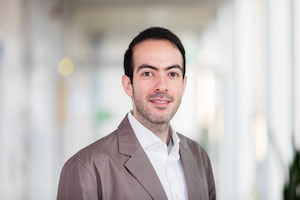
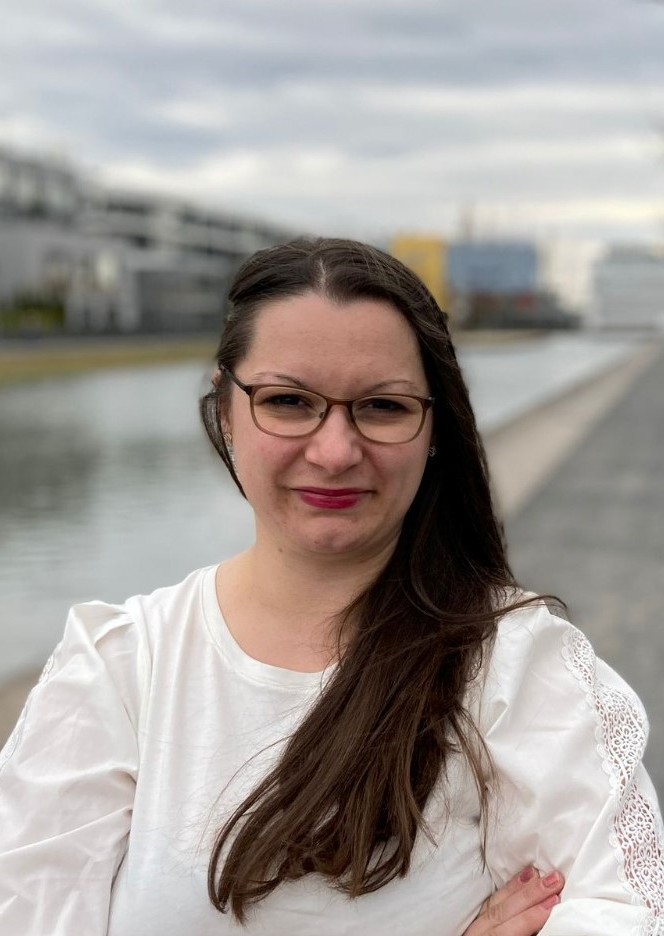
Marius Greitschus is a Researcher at the University of Freiburg's Department of Computer Science. His work focuses on Abstract Interpretation, Static Checking, and Verification Techniques for Hybrid Systems. He earned his Master's degree from the University of Freiburg in 2012 with a thesis on combining Value Analysis and Static Checking for software verification. Greitschus has published extensively in venues like SAS, TACAS, and HSCC, contributing to advancements in formal methods, program analysis, and hybrid systems verification. His research includes developing tools like the Ultimate Framework and has been recognized with a Best Paper Award at HVC 2014. He teaches courses such as Automata Theory, Formal Methods for C, and Software Lab, and has supervised numerous student projects and theses. His advising spans topics from algorithm design to hybrid systems analysis, reflecting his commitment to both research and education.
Stephan Arlt is a researcher at the Chair of Software Engineering, Institute of Computer Science, University of Freiburg. His research focuses on Software Testing and Program Analysis, with contributions to tools like Gazoo and Joogie. He has published extensively on topics including GUI testing, infeasible code detection, and formal verification techniques, appearing at venues like ICST, ISSTA, and CAV. His work emphasizes practical and automated methods for improving software reliability and verification efficiency. He has advised multiple students on projects such as Parameterized GUI Tests and Automated Grey-box Testing. His teaching spans courses like Software Testing, Model-based Testing, and Program Verification, reflecting his expertise in both theoretical and applied software engineering. Key contributions include developing Gazoo for generating GUI test cases and Joogie for analyzing Java programs. His research trends highlight advancements in automated testing strategies, formal verification, and optimizing test suite reduction techniques.
Aidan Slingsby is a Professor in the Department of Computer Science at University College London (UCL), within the Faculty of Engineering Sciences. His research focuses on visualization, geovisualization, and spatial analysis, with applications in environmental science, transportation, epidemiology, and movement ecology. He has contributed to the development of novel visual analytics frameworks and tools for exploring complex spatiotemporal data. His work emphasizes interdisciplinary collaboration, integrating computer science with domains such as geography, ecology, and public health. Key areas of interest include uncertainty visualization, interactive graphics for decision support, and leveraging AI techniques (e.g., large language models) to enhance visualization design. Slingsby's recent projects include developing the VisUnit framework for reproducible visual studies, exploring narrative visualization for qualitative data, and creating glyph-based methods for spatial multicriteria decision analysis. His publications span top venues like IEEE VIS, EuroVis, and Environmental Visualization workshops.
Toni Granollers is a Professor affiliated with the University of Lleida, specializing in Human-Computer Interaction (HCI). His research focuses on usability evaluation, accessibility, and collaborative systems. He holds a PhD (2004) in HCI methodologies from the University of Lleida. His work emphasizes integrating usability principles into software development and improving accessibility for diverse user groups. Key research areas include heuristic evaluation methodologies, user experience design, and accessibility standards for digital platforms. He has published extensively on topics such as usability in e-commerce, collaborative systems, and remote usability testing. His contributions also extend to HCI education, organizing webinars and conferences like Interacción. Recent articles highlight advancements in heuristic evaluation frameworks, accessibility of statistical charts, and remote usability practices. He has collaborated with institutions globally, advancing HCI practices in Latin America and beyond.
Dr.-Ing. Fiete Winter is a Researcher at the Institut für Nachrichtentechnik under the Fakultät für Informatik und Elektrotechnik at Universität Rostock. His work focuses on Spatial Audio , Wave Field Synthesis , and Binaural Synthesis , with contributions to acoustic modeling, array design, and open-source tool development. He is a key contributor to the Two!Ears project, which emphasizes reproducible research and acoustic database creation. His research interests include sound field reconstruction , spatial aliasing analysis , and time-domain rendering techniques . He has developed open-source tools for sound field synthesis and contributed to the Two!Ears Database of binaural room impulse responses. His work often bridges theoretical models (e.g., geometric analysis, modal beamforming) with practical implementations in real-time systems. Recent publications highlight advancements in loudspeaker array design, spatial bandwidth limitation, and psychoacoustic evaluation of synthesized sound fields. His interdisciplinary approach integrates signal processing, psychoacoustics, and acoustic engineering to address challenges in immersive audio systems.
Dr. Majd Latah is a Researcher (Postdoc) at the Department of Informatics, University of Hamburg, working under Prof. Mathias Fischer. His research focuses on cybersecurity for mission-critical systems, software-defined networking (SDN), and blockchain integration in network security. He holds a PhD from Ozyegin University. Key research areas include secure aircraft systems, decentralized security frameworks, and digital twin networks. His work emphasizes blockchain-based authentication protocols (e.g., HostSec, DPSec) and hybrid intrusion detection systems for SDNs. He has collaborated on projects like DTN-Core and CWT-DPA, addressing cross-domain authorization and distributed security challenges. Latah has published extensively on SDN security, blockchain applications, and AI-driven network optimization. His contributions span both theoretical frameworks (e.g., AI-enabled SDN overviews) and practical implementations (e.g., DoS attack detection systems). Affiliations include the Computer Networks research group at UHH, where he contributes to lab activities and team projects. His educational background includes studies at Ozyegin University under Dr. Kübra Kalkan.
Dr. Daniel Moldt is a Research Associate and Head of the Laboratory for Agent- and Organization-Oriented Systems (LAOS) at the University of Hamburg's Department of Computer Science (Faculty of MIN). His work focuses on Petri nets, agent-oriented systems, formal methods, and software engineering. He contributes to the development of the Renew toolset for Petri net modeling and simulation. Research interests include: Petri net applications in workflow and agent systems, distributed systems, emotion in computing, formal verification, and model-driven engineering. He has led projects like Socionics and contributed to DFG-funded research. Publications span over two decades, emphasizing Petri net theory, agent systems integration, and software architectures. He advises students on thesis projects related to distributed systems and formal methods. Active in academic service, he serves on doctoral committees and participates in international workshops/conferences.
Dr. Alireza Hakamian is a Researcher at the Department of Informatics, University of Hamburg, affiliated with the SWK Team within the Research groups. His work focuses on resilience engineering, microservices architecture, and systems simulation. Notable contributions include the development of MiSim, a simulator for resilience assessment of microservice-based systems, and TQPropRefiner, a tool for specifying and refining transient software quality properties. His research explores chaos engineering practices, transient behavior analysis, and container orchestration techniques (e.g., Kubernetes). He emphasizes integrating real-world container environments into simulation frameworks for more authentic resilience testing. Expert interviews and industry insights underpin his work on transient behavior management in distributed systems. Key tools and methodologies developed include the DiSpel Cockpit for resilience scenario verification and the TransVis visualization system. His work bridges theoretical software design principles with practical implementation challenges in cloud-native systems.
Dr. Jasmin Reichert-Schlax is a Researcher at the Department of Business Education, Johannes Gutenberg University Mainz. She is affiliated with the Chair of Business Education under Professor Olga Zlatkin-Troitschanskaia. Her work focuses on educational research, economics education, and higher education studies. She holds an office at Jakob-Welder-Weg 9, Room 01-110, and can be reached via email . Her research interests include study success determinants, digital learning tools, educational assessment methodologies, and cross-cultural comparisons in economics education. She has contributed to projects analyzing academic performance metrics, entrance diagnostics, and competency development in teacher education. Recent studies explore the impact of media use on learning outcomes and the validation of subject-specific tests in higher education admissions. Key themes in her publications (2021–2024) revolve around: Quantitative analysis of academic success patterns in economics and social sciences Development and evaluation of digital learning tools for teacher training Comparative studies on economic literacy across Germany, Japan, and Russia Entrance diagnostics optimization for equitable higher education access Her work emphasizes evidence-based educational policy, equity in assessment, and innovative pedagogical strategies.
Prof. Hartwig Anzt is a Professor at TU Munich, leading the Chair of Computational Mathematics within the TUM School of Computation, Information, and Technology. He also holds a professorship at the University of Tennessee and directs the Innovative Computing Lab (ICL). His research focuses on high-performance computing, particularly in sparse linear algebra, iterative methods, Krylov solvers, and preconditioning. He emphasizes sustainable software development and leads the Ginkgo open-source library for scientific computing. Academically, Anzt earned his PhD in 2012 from the Karlsruhe Institute of Technology (KIT) and led a Helmholtz junior research group there. He has extensive collaborations with institutions like Sandia National Laboratories, Argonne National Laboratory, and the University of Tennessee. His software projects include Ginkgo and MAGMA-sparse, both part of the xSDK ecosystem. Recent talks highlight his work on exascale computing, GPU optimization, and software sustainability. He advocates for platform-portable numerical libraries and has contributed to the Exascale Computing Project (ECP). His research addresses challenges in energy efficiency, fault tolerance, and algorithm design for multi/manycore architectures.
Mohammed Nassim Seghir is affiliated with the Department of Informatics at the University of Freiburg, Germany. He holds a PhD in Computer Science from 2010, focusing on Abstraction Refinement Techniques for Software Model Checking . His research interests include formal methods, software verification using SMT solvers, and program analysis. He contributes to the Software Modeling and Verification (SWT) research group. He has taught numerous courses since 2005, including Program Verification , Software Engineering , and Cyber-Physical Systems . His work includes developing tools like ACSAR (for automated safety verification) and LotoStem (for concurrent system verification). Seghir’s publications emphasize abstraction refinement, loop summarization, and assume-guarantee reasoning in software model checking. He has presented research at venues like ATVA 2011 , AMAST 2010 , and SAS 2009 , focusing on scalable verification techniques and integration with theorem provers like Isabelle. His work bridges theoretical formal methods with practical tool development for industrial applications.
Max Planck Institute for Gravitational PhysicsGermany
Dr. Jan Steinhoff is a Group Leader leading the research group Astrophysical and Cosmological Relativity at the Max Planck Institute for Gravitational Physics (Albert Einstein Institute) in Potsdam. He holds a diploma in Physics (2006) and PhD (2010) from Friedrich-Schiller-Universität Jena, with doctoral research on canonical formulations of spin in general relativity under Prof. Gerhard Schäfer. Following postdoctoral positions at Instituto Superior Técnico (Lisbon) and AEI, he established his independent research group in 2019. His primary research focuses on analytical predictions for compact binary dynamics and gravitational wave emissions. Key areas include: Spin-induced spacetime twisting and orbital precession effects Tidal deformation and oscillation modes in neutron stars Deviations from Einstein's gravity in gravitational wave signatures Effective field theory frameworks for binary systems Waveform modeling (especially effective-one-body approaches) Steinhoff's publications demonstrate consistent focus on analytical relativity methods applied to gravitational wave astrophysics. Recent work emphasizes: Tidal interactions in neutron stars within modified gravity theories High-precision post-Newtonian calculations Waveform development for next-generation detectors Tests of general relativity using LIGO-Virgo observations He leads the AEI's efforts in developing perturbative solutions to gravitational two-body problems, leveraging synergies with high-energy physics techniques including scattering amplitudes and effective field theories.
Jia Yu is a researcher affiliated with Arizona State University , Tempe, AZ, USA. Their work focuses on geospatial data management, database systems, and cluster computing frameworks like Apache Spark. They have collaborated extensively with Mohamed Sarwat and other researchers on projects such as GeoSpark , GeoSparkViz , and GeoSparkSim , contributing to scalable spatial data processing and visualization systems. Key research areas include Learned indexing mechanisms (e.g., GLIN) Microscopic traffic simulation Parallel and distributed data processing Interactive geospatial dashboards Column correlation exploitation for database efficiency Integration of visualization with backend data systems Recent publications (2014-2024) demonstrate expertise in geospatial analytics, database indexing, software testing, and Apache Spark-based systems. Notable projects include Turbocharging Visualization Dashboards , HERMIT Indexing , and Spindra Knowledge Graph Management . Work emphasizes both theoretical innovation and practical implementation for handling massive-scale spatial data.
Toralf Kirsten is a researcher at Leipzig University's Medical Faculty, Institute for Medical Informatics, Statistics and Epidemiology. With over 50 publications spanning from 2003 to 2024, he has established himself as a prominent figure in biomedical informatics, particularly in the areas of data interoperability, ontology management, and privacy-preserving data analysis. His research focuses on developing methods and infrastructure for managing health-related data according to FAIR principles (Findable, Accessible, Interoperable, Reusable). He has been instrumental in the NFDI4Health initiative (National Research Data Infrastructure for Health in Germany), where he contributes to developing Local Data Hubs that enable researchers to access and analyze distributed health data while maintaining privacy and security. Kirsten's work demonstrates a consistent trajectory from early research in ontology management and evolution (2007-2012) toward more applied work in health data infrastructure (2015-present). His recent publications show a strong emphasis on privacy-preserving techniques like the Personal Health Train approach, which allows analysis of distributed medical datasets without centralizing sensitive patient information. His collaborative network is extensive, with frequent co-authorship with researchers like Erhard Rahm (22 publications), Anika Groß (13), and Michael Hartung (12), indicating his integration within the German biomedical informatics research community. Notable projects include the LIFE study (Leipzig Research Center for Civilization Diseases), where he has contributed to data integration solutions, and the NFDI4Health initiative, where he helps develop infrastructure for distributed health data analysis across Germany.
Antonio Orvieto is a Lecturer at the University of Tübingen, Principal Investigator at the ELLIS Institute Tübingen, and independent group leader at the Max Planck Institute for Intelligent Systems. He leads the Deep Models and Optimization research group and serves as faculty for the CLS, ELLIS, and IMPRS-IS PhD Programs. Orvieto holds a PhD from ETH Zürich and has conducted research at DeepMind London, Meta (FAIR) Seattle, MILA, and Inria Paris. Orvieto's research focuses on improving the efficiency and accessibility of deep learning technologies through theoretical advancements in optimization and architecture design. His work spans two main areas: understanding large-scale optimization dynamics and designing innovative neural network architectures capable of reasoning with complex sequential data. His research has significant implications across multiple domains including biology, neuroscience, natural language processing, and music generation. His approach combines rigorous theoretical analysis with practical applications to address fundamental challenges in deep learning. His recent publications reveal a strong emphasis on understanding optimization landscapes, developing efficient recurrent architectures, analyzing transformer behavior, and exploring the theoretical foundations of state-space models. The work shows a consistent pattern of bridging theoretical insights with practical implementations, particularly in handling sequential data and improving training efficiency. Schmidt Sciences AI2050 Early Career Fellow Orvieto actively mentors PhD students and researchers in his Deep Models and Optimization group, which includes PhD candidates working on various aspects of deep learning theory and applications. His research is supported through his positions at the University of Tübingen, ELLIS Institute, and Max Planck Institute for Intelligent Systems. He has collaborated with leading researchers across multiple institutions including ETH Zürich, DeepMind, Meta, MILA, and Inria. His research group focuses on investigating the interplay between optimizers and architectures in deep learning, with particular emphasis on developing new networks for long-range reasoning. The group strongly believes that deep learning will revolutionize science and technology, and they aim to provide theoretical foundations that will enable scientists and engineers with limited resources to leverage powerful deep learning solutions.