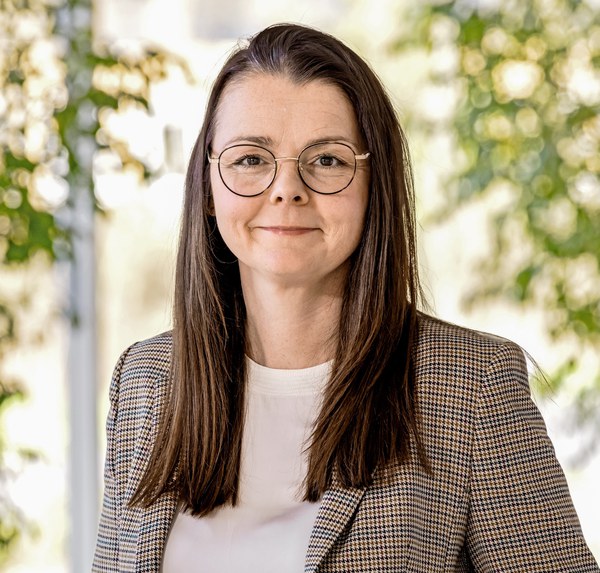
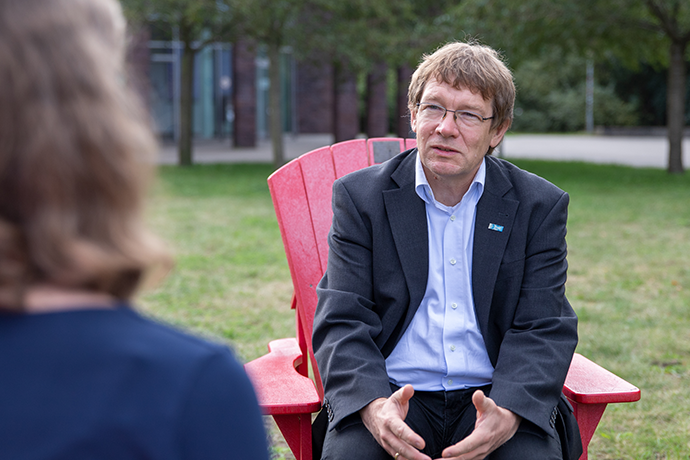
Professor Jörg Hähner holds the Chair of Organic Computing at the University of Augsburg's Faculty of Applied Computer Science within the Institute of Computer Science. He leads a research team focused on evolutionary computation, self-organizing systems, and intelligent computing approaches. His educational background includes computer science studies at TU Darmstadt. His academic career progression shows steady advancement in the field of organic and self-organizing computing systems. Prof. Hähner's research spans multiple interconnected domains in computational intelligence. His primary focus is on Organic Computing, which involves developing systems that can adapt and self-organize in complex environments. Within this framework, he has made significant contributions to Evolutionary Algorithms, particularly Cartesian Genetic Programming and Learning Classifier Systems. His work explores how these techniques can be applied to real-world problems such as predictive maintenance, energy systems optimization, and industrial automation. The research demonstrates a strong emphasis on both theoretical foundations and practical applications of self-adaptive systems. An analysis of his recent publications reveals a strong concentration on evolutionary computation techniques, particularly Cartesian Genetic Programming variants and Learning Classifier Systems. His research group has been actively developing frameworks like CRust_GP and GRAHF to advance modular construction of evolutionary algorithms. There's a clear trend toward applying these techniques to industrial problems including predictive maintenance, resource allocation in networks, and energy management systems. The publications show consistent exploration of fundamental questions about algorithm behavior while maintaining strong connections to practical applications. Prof. Hähner leads an active research group with numerous PhD students and collaborators, including Karen Poloczek, Henning Cui, Victor Gerling, Dr. Michael Heider, Marco Hüller, Neele Kemper, Helena Stegherr, Jonathan Wurth, and Roman Sraj. His team regularly publishes in top-tier conferences and journals in evolutionary computation, intelligent systems, and industrial applications. The Organic Computing research group maintains a strong presence in both theoretical and applied research, with projects spanning from foundational algorithm development to industrial applications in manufacturing, energy systems, and network optimization. The group's work demonstrates a cohesive research vision centered on creating adaptive, self-organizing computational systems that can operate effectively in complex real-world environments.