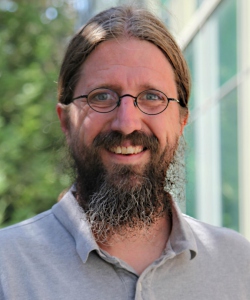
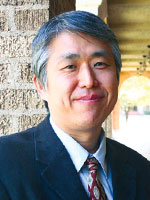
Alaa Alameldeen is an Associate Professor in the School of Computing Science at Simon Fraser University (SFU), part of the Faculty of Applied Sciences. Previously, he worked as a Research Scientist at Intel Labs (2006–2020) and held an Adjunct Faculty position at Portland State University (2008–2018). He earned a PhD in Computer Sciences from the University of Wisconsin-Madison (2006), and earlier degrees from Alexandria University, Egypt. His research focuses on computer architecture, including memory systems (processing-in-memory, cache/memory compression, security), energy-efficient architectures, and hardware-software co-design for machine learning. He advises PhD and MSc students in these areas and teaches advanced computing science courses. Key contributions include innovations in memory hierarchies, cache compression techniques, and mitigating hardware vulnerabilities. His work has been published in top conferences (e.g., ISCA, MICRO, HPCA) and patented in areas like near-memory processing and error correction. Alameldeen currently leads a research group exploring secure and high-performance memory architectures. He has supervised multiple graduate students, with many progressing to roles at leading tech companies and academic institutions.
Professor David Thomas holds the position of Professor in Computer Engineering at the University of Southampton's Electronics and Computer Science Department. His research focuses on the intersection of software and hardware, particularly leveraging FPGAs for novel digital architectures and event-driven computing. He has a notable academic trajectory, having previously served as a Lecturer and Senior Lecturer at Imperial College London before joining Southampton in 2021. Dr. Thomas is actively involved in supervising PhD students and contributes to interdisciplinary research projects funded by the EPSRC, such as the SONNETS initiative exploring scalable event-triggered systems. Education: BSc in Computer Science (Imperial College London), PhD in Digital Architectures (Imperial College London). Postdoctoral roles included Research Associate and Research Fellow at Imperial's Department of Computing. Research Interests: Event-driven computing, FPGA-based systems, high-level synthesis, and high-performance computing. His work emphasizes practical implementations of theoretical models, such as custom processors and application-specific accelerators. Current projects include optimizing random number generation for FPGAs and exploring meta-programming techniques for hardware design. Advising and Grants: Supervises multiple PhD students in areas like neuromorphic computing and algorithm optimization. Active in securing funding for distributed system architectures and FPGA-based solutions. Labs/Teams: Member of the Cyber Physical Systems research group. Collaborates with interdisciplinary teams on projects like POETS (Partially Ordered Event-Triggered Systems) for large-scale parallel computing.
Harald C. Gall is a Professor of Software Engineering and Dean of the Faculty of Business, Economics, and Informatics at the University of Zurich (UZH). He leads the Software Evolution and Architecture Lab, focusing on software evolution analysis, mining software repositories, and cloud-based software engineering. His research emphasizes improving software development productivity through data-driven insights. He has held visiting positions at Microsoft Research and the University of Washington. Education: PhD (Dr. techn.) and Master's (Dipl.-Ing.) in Informatics from TU Vienna Research Interests: Software evolution, mining software archives, cloud-based tools, developer productivity, and empirical software engineering. Notable contributions include the Evolizer , ChangeDistiller , and SOFAS systems. Key Contributions: Established the Mining Software Repositories (MSR) research area, program chair for ICSE 2011 and ESEC/FSE 2005, associate editor of leading journals like Empirical Software Engineering and IEEE Software. Awards: Most Influential Paper Award, Test of Time Award, and multiple Best Paper Awards. Recognized for contributions to SE research methodologies and tool development. Professional Activities: ACM SIGSOFT awards chair, board member of Informatics Europe, and executive committee member of CHOOSE (Swiss SIG for OO Systems). Labs/Teams: Director of the Software Evolution and Architecture Lab at UZH, leading projects like SURF-MobileAppsData (SNSF-funded) and DevCloud (Hasler Foundation).
Gerry Dozier is the Charles D. McCrary Eminent Chair Professor in the Department of Computer Science and Software Engineering at Auburn University's College of Engineering. His research focuses on artificial intelligence, computational intelligence, cybersecurity, identity science, and cyber identity protection. He leads initiatives like the Center for Artificial Intelligence and Cybersecurity Engineering and contributes to Alabama's AI policy through the state commission. Dr. Dozier holds a Ph.D. from North Carolina State University and has pioneered work in adversarial machine learning, biometric security, and low-resource language NLP. Education: Ph.D. Computer Science, North Carolina State University (Raleigh) M.S. Computer Science, North Carolina State University (Raleigh) B.S. Computer Science, Northeastern Illinois University Research Themes: Combines AI with cybersecurity to address modern digital challenges. Specializes in adversarial attacks/defenses, biometric authentication systems, and ethical NLP applications in multilingual contexts. Active in developing tools for sentiment analysis in underrepresented languages and mitigating biases in automated systems. Impact: Spearheaded Auburn's AI@AU initiative with lecture series and forums. Collaborates internationally on facial recognition, malware detection, and medical AI applications like bacterial vaginosis diagnosis. His work bridges theoretical CS advancements with real-world security and ethical considerations. Labs/Teams: Directs Auburn's AI & Cybersecurity Engineering Center and contributes to interdisciplinary groups like the McCrary Institute for Cyber and Critical Infrastructure Security.
Assoc Prof Wu Hongjun is an Associate Professor at the Division of Mathematical Sciences, School of Physical & Mathematical Sciences, Nanyang Technological University (NTU). His research focuses on cryptography and information security, with notable contributions to lightweight authenticated encryption algorithms like TinyJAMBU and ACORN, as well as cryptanalysis of stream ciphers (e.g., ZUC, HC-128) and hash functions (e.g., JH, SHA-3 candidates). His academic career includes over 15 years of contributions to cryptographic standards, IoT security frameworks, and secure cloud data management. Key areas of expertise encompass symmetric-key cryptography, algorithm design for resource-constrained devices, and vulnerability analysis of cryptographic primitives. Prof Wu has authored influential papers on authenticated encryption modes (AEGIS, MORUS), lightweight cipher optimizations (ACORN), and cryptanalysis techniques applied to Feistel networks and stream ciphers. His work bridges theoretical cryptography with practical implementations across telecommunications, IoT, and cloud computing domains.
Jun Li is a Full Professor in the Department of Applied and Computational Mathematics and Statistics at the University of Notre Dame's College of Science. He specializes in developing statistical and computational methods for big data, with a focus on interdisciplinary applications in bioinformatics, machine learning, and data mining. His career includes tenure as an Assistant Professor (2012–2017) and promotion to Associate Professor (2017) before becoming Full Professor (2020). Dr. Li holds a Ph.D. in Statistics from Stanford University (2012), supervised by Robert Tibshirani, and earlier degrees from Tsinghua University: a B.E. in Automation (2004) and an M.S. in Pattern Recognition and Intelligent Systems (2007). Research Interests : Dr. Li’s work centers on advancing computational frameworks for handling large-scale datasets, integrating statistical rigor with algorithmic innovation. Recent themes include AI-driven code improvement, ethical LLM applications in HCI, and GUI automation. His methodologies emphasize human-AI collaboration and transparency in algorithmic systems. Publications : His 2025 work explores LLM vulnerabilities in GUI agents, AI-assisted education tools like GLITTER, and ethical challenges in HCI research. Earlier studies (2024–2023) address topics such as natural language database queries, privacy-preserving app promotion analysis, and multimodal task learning. Lab/Teams : Affiliated with Notre Dame’s computational statistics research groups, focusing on interdisciplinary projects bridging statistics, computer science, and applied mathematics. His work often involves collaborations with industry and academic partners to translate theoretical advancements into practical applications.
Dr. Calum Gabbutt is a Chapman-Schmidt AI in Science Postdoctoral Research Fellow at Imperial College London's Department of Mathematics (Faculty of Natural Sciences) and a Postdoctoral Training Fellow at the Institute of Cancer Research (ICR), London. He holds a PhD in Mathematical Biology from Queen Mary University of London (2017–2021) and an MPhys from the University of Oxford (2013–2017). His research focuses on mathematical and computational methods to understand clonal dynamics and cancer evolution, particularly leveraging genomic and lineage tracing data. He develops Bayesian inference models to analyze evolutionary processes in cancer, aiming to improve clinical outcomes through precision medicine. Key areas include genetic barcoding, methylation-based molecular clocks, and phylogenetic reconstruction of tumor evolution. Recent work spans large-scale genomic analyses of cancer evolution, computational tools like PISCA-box for somatic chromosomal alterations, and studies on phenotypic plasticity in metastasis and therapy resistance. His research integrates AI-driven approaches to decode cancer heterogeneity and temporal dynamics in human tissues. Collaborations span institutions like the ICR and Queen Mary University of London, emphasizing interdisciplinary methods at the intersection of mathematics, computational biology, and oncology.
Charu Gupta Kumar is a Research Professor in the Department of Bioengineering at the University of Illinois Urbana-Champaign, affiliated with the Neuroscience program. Her research focuses on systems and computational biology, integrating computational genomics, bioinformatics, and systems biology approaches to study microbiome/pathogen dynamics, neurological diseases, and evolutionary processes. She leads the Systems and Computational Biology Group, emphasizing interdisciplinary methodologies to address complex biological questions. Her academic roles include a zero-time appointment in the Department of Neuroscience (2013–present) and service as an admission reviewer for the Carle Illinois College of Medicine (2020–2022). She advises a diverse cohort of undergraduate and graduate students engaged in bioengineering and computational biology projects. Her work bridges environmental microbiology with human health, exploring astrocyte roles in neurological disorders like glioblastoma and autism, and investigating evolutionary mechanisms of metabolic networks across species. Publications highlight contributions to bovine genomics, microbial community analysis in subsurface environments, and computational tools for genomic data management. Her research trends emphasize translational applications of computational biology to environmental and clinical challenges, with recent focus on microbiome-disease interactions and astrocyte signaling pathways. Advising spans mentoring over 18 students across bioengineering and computer science disciplines, with notable alumni advancing to institutions like MIT and Johns Hopkins. She collaborates with跨学科 teams in bioengineering and neuroscience, contributing to the broader Grainger College of Engineering research ecosystem.
Rosella Gennari is an Associate Professor in Computer Science at the Faculty of Engineering, Free University of Bozen-Bolzano, where she conducts research and teaches in Human-Computer Interaction (HCI). Her work is centered on designing interactive technologies for children, focusing on physical-digital (phygital) artefacts, Technology-Enhanced Learning (TEL), and inclusive design. She leads the Research Unit Human-Centred Intelligent Systems and is actively involved in institutional leadership, including serving on the Third-Mission Board. Ph.D. : Computer Science, Amsterdam University (2002) Postdoctoral Experience : CWI, Amsterdam (ERCIM Alain Bensoussan Fellow); FBK-irst, Trento Leadership : Scientific & Technological Coordinator of the FP7-EU TERENCE project Her research explores how children interact with and design smart technologies, including IoT and AI, through playful and tangible interfaces. She investigates socio-emotional learning, digital well-being, and responsible design, often employing participatory and action research methods. Her work bridges computer science, education, and social impact, aiming to empower young learners as co-creators of technology. The analysis of her recent publications reveals a strong trend in developing and evaluating toolkits and frameworks for children and pre-teens to engage in designing smart things, IoT systems, and sustainable cities. Her work consistently emphasizes inclusivity, reflection, and responsible design, often in collaboration with teachers and learners. The publications span top HCI venues and journals, demonstrating a focus on practical applications in educational settings and the impact of technology on young users. Scientific Awards and Recognition ERCIM Alain Bensoussan Fellowship for talented young researchers Editorial Board Member, Journal of Child Computer Interaction (Elsevier, Q1) Regular reviewer for top HCI conferences and journals Advising and Grants : While specific advisees are not listed, her leadership role in the FP7-EU TERENCE project and numerous other research initiatives indicates extensive experience in securing and managing competitive grants. She mentors students through her research group and teaching, fostering the next generation of HCI researchers. Her collaborative network is extensive, with frequent co-authorship with researchers such as Alessandra Melonio, Maristella Matera, and Mehdi Rizvi. Labs and Teams : She leads the Human-Centred Intelligent Systems research unit, which serves as her primary lab and team. This group focuses on placing humans at the center of computer science and information engineering research. She is also a core member of the organizing committee for the MIS4TEL international conference series, highlighting her role in building and sustaining a global research community in Technology-Enhanced Learning.
Jeff Offutt is a Professor and Chair of the Department of Computer Science at the University at Albany, College of Nanotechnology, Software, & Engineering. Previously, he was a Full Professor with Tenure in Software Engineering at George Mason University since 2005. He received his PhD in Information & Computer Science from the Georgia Institute of Technology in 1988. His research spans software testing, mutation testing, model-based testing, automatic test data generation, web application testing, and software engineering education. He has led significant projects such as the NSF-funded integration of CS into K-5 classrooms and the Google-funded SPARC project for scalable CS1/CS2 instruction. The 15 most recent articles reflect a continued focus on mutation testing cost reduction, model-based testing oracles, educational innovations, and security aspects of web applications. Trends include empirical validation, industrial applicability, and bridging theory with practice in software testing and engineering education. John Toups Presidential Medal for Excellence in Teaching (2020) George Mason University’s Alumni Association Faculty Member of the Year (2020) Outstanding Faculty Award from the State Council of Higher Education for Virginia (2019) Best Paper Award at ICST 2021 10-Year Most Influential Paper Award at MODELS 2020 George Mason University Teaching Excellence Award (2013) ACM Notable Article Award (2013) Jeff Offutt has mentored numerous graduate students including Upsorn Praphamontripong, Nan Li, and Yu-Seung Ma, and has led major grant-funded projects such as the SPARC educational model and NSF initiatives on K-5 CS integration. His textbook Introduction to Software Testing (with Paul Ammann) is widely adopted globally. He led the MS in Software Engineering program at GMU and developed several new courses in software testing, web engineering, and usability. He pioneered innovative teaching methods using web technologies and asynchronous learning models. He also co-founded the IEEE International Conference on Software Testing, Verification and Validation (ICST) and served as Editor-in-Chief of Software Testing, Verification and Reliability from 2007 to 2019.
Elina Rönnberg is a Professor and Deputy Head of Department at the Department of Mathematics, Linköping University, where she leads research in discrete optimisation and intelligent decision-making. Her work bridges theoretical method development and real-world applications in sectors such as healthcare, aviation, mining, and transportation. She is actively involved in the Wallenberg AI, Autonomous Systems and Software Program (WASP) and has collaborated with industry leaders like Saab and Scania. Her research focuses on advanced optimisation techniques including Dantzig-Wolfe decomposition, Lagrangian relaxation, column generation, branch-and-price, and logic-based Benders decomposition. She also explores hybrid methods combining mathematical programming with constraint programming and machine learning. Applications span nurse rostering, electric vehicle routing, aircraft arrival scheduling, and underground mine planning. Recent publications highlight a strong trend toward integrating AI and machine learning—particularly graph neural networks—with classical optimisation frameworks to accelerate solution methods. Her work emphasizes practical impact, robustness, and scalability in solving complex scheduling and resource allocation problems. Nurse Rostering with Strategic Planning of Skills for Sick-Leave Robustness (2024) Pricing for the EVRPTW with Piecewise Linear Charging (2024) Speeding Up Logic-Based Benders Decomposition with Graph Neural Networks (2024) Elina supervises several PhD students and has co-supervised doctoral research at international institutions including Makarere University (Uganda) and the University of Exeter (UK). She has contributed to applied projects through student theses in collaboration with Scania and Saab, focusing on electric vehicle routing and search-and-rescue optimisation. She previously served as a Specialist in Optimisation at Saab Aeronautics (2014–2020) and co-founded Schemagi, a scheduling tool aimed at improving quality in healthcare. She teaches courses such as Introduction to Optimization (TAOP07) and Project - Applied Mathematics (TATA62). Her research group, 'Mathematics and algorithms for intelligent decision-making,' operates within the Division of Applied Mathematics (TIMA) at the Department of Mathematics. The team develops decision support tools that enhance efficiency and sustainability in complex systems, particularly under the growing demands of electrification and digitalisation in transport and logistics.
Peter Alvaro is an Assistant Professor in the Department of Computer Science and Engineering at the Baskin School of Engineering, University of California, Santa Cruz. He joined the faculty in 2015 after earning his PhD from UC Berkeley under Professor Joe Hellerstein. His research lies at the intersection of databases, distributed systems, and programming languages , with a strong emphasis on data-centric approaches to building robust, scalable, and predictable distributed systems. He is the creator of the Dedalus language and co-creator of the Bloom language, both designed to simplify reasoning about distributed computation. Peter's recent work focuses on non-volatile memory (NVM) , computational storage , and data-centric operating systems , as seen in the Twizzler OS project. His publications span top venues such as USENIX ATC, HotNets, and Communications of the ACM, showing trends toward system resilience, efficient data management, and novel abstractions for modern hardware. Best Presentation award at USENIX ATC 2020 Peter advises graduate students, including Daniel Bittman, and is a key contributor to the Storage Systems Research Center (SSRC), now succeeded by the Center for Research in Storage Systems (CRSS). His work is supported by ongoing collaborations with researchers at UC Santa Cruz and beyond, particularly in the areas of storage, operating systems, and distributed computing.
Dr. Mark G. Reith is an Assistant Professor of Computer Science at the Air Force Institute of Technology (AFIT), part of the U.S. Air Force’s Air University. He is based at Wright-Patterson Air Force Base, Ohio, within the Graduate School of Engineering and Management. Dr. Reith holds a Ph.D. in Computer Science from the University of Texas at San Antonio (2009), an M.S. in Computer Science from AFIT (2003), and a B.S. in Computer Science from the University of Portland (1999). Ph.D., Computer Science, University of Texas at San Antonio, 2009 M.S., Computer Science, Air Force Institute of Technology, 2003 B.S., Computer Science, University of Portland, 1999 Dr. Reith's research focuses on cybersecurity, cyber education, game-based learning, and multi-domain operations. He investigates operational cybersecurity in space systems, software factories, and military training through serious games. His work emphasizes trust management, cyber risk assessment, and defense acquisition innovation. He actively promotes STEM outreach and cyber workforce development within the Department of Defense. His recent publications reflect a strong trend in defense-oriented cybersecurity research, particularly in the domains of space system security, military software acquisition, and gamified cyber training. Articles span journals such as Air & Space Operations Research , Defense Acquisition Research Journal , and International Journal of Serious Games , highlighting interdisciplinary work bridging computer science, military strategy, and education. Dr. Reith has received notable recognition, including: AFA Colonel Charles A. Stone Award (2023) DAF Outstanding STEM Outreach Champion Award (2023) AFIT Team of the Quarter (2017) Bernard A. Schriever Essay Contest Winner (2017) He has advised numerous graduate students, many of whom are co-authors on his publications, particularly in the areas of cyber risk, space cybersecurity, and educational games. Dr. Reith has also contributed to research grants and initiatives focused on improving cyber hygiene, military IoT security, and multi-domain command and control. He is a frequent invited speaker on topics such as game-based learning and industry-academia collaboration in cybersecurity. Dr. Reith is actively involved in research labs and teams at AFIT, particularly those focused on cyber education, serious games (e.g., Battlespace Next), and operational cybersecurity. His work often involves collaboration with students and faculty across engineering, systems, and defense domains.
Martin Müller is a Professor in the Department of Computing Science at the University of Alberta, where he conducts research in artificial intelligence, game theory, and heuristic search. He holds the Canada CIFAR AI Chair at Amii and is an Amii Fellow, underscoring his leadership in AI. His research group focuses on Monte Carlo tree search, reinforcement learning, combinatorial game theory, and automated planning, with applications in games such as Go, Hex, and NoGo. His research interests span Monte Carlo and exact methods in game-tree search , exploration in heuristic search and machine learning , and algorithms in combinatorial game theory . He has developed open-source software like MCGS (Minimax-based Combinatorial Game Solver) and contributes to game-playing systems such as Fuego for Go. His work bridges theoretical foundations with practical implementations in AI-driven game solvers. Recent publications show a strong trend in reinforcement learning , particularly in deep Q-learning, policy gradient methods, and anomaly detection in deep RL. His team also explores combinatorial game solving , sparse reward environments , and imperfect information games . The research integrates machine learning with classical AI techniques, emphasizing empirical validation and algorithmic innovation. Canada CIFAR AI Chair Amii Fellow Best student paper award at IEEE Conference on Games 2024 Best paper award at IEEE COG 2021 Outstanding paper award at AAAI-18 Faculty of Science Dissertation Award (2016) Dissertation Award from the Canadian Artificial Intelligence Association (2013) Müller has supervised numerous PhD and MSc students, including Hongming Zhang, Henry Du, and Timo Bertram, many of whose theses focus on game AI, reinforcement learning, and combinatorial optimization. He is funded by NSERC, Mitacs, and Compute Canada. His group collaborates on projects involving neural networks for game playing, SAT solving, and planning algorithms. He is currently on sabbatical but remains academically active, teaching a graduate course on combinatorial games in 2025 and hosting visiting researchers. His lab is involved in the development of MCGS, a solver for sum games, and contributes to open-source AI software. The team publishes regularly in top venues such as NeurIPS, ICML, AAAI, and IEEE Transactions on Games. Future work includes advancing combinatorial game solvers, improving deep RL robustness, and exploring generalization in game representations.
Donald Lie is a Professor and the Keh-Shew Lu Regents Chair in Electrical and Computer Engineering at Texas Tech University's Whitacre College of Engineering. His research focuses on low-power RF/analog integrated circuits, System-on-a-Chip (SoC) design, and interdisciplinary applications in medical electronics, biosensors, and biosignal processing. PhD, Electrical Engineering, California Institute of Technology (1995) MS, Electrical Engineering, California Institute of Technology (1990) BS, Electrical Engineering, National Taiwan University (1987) Donald Lie's research bridges RF/analog circuit design with biomedical engineering, emphasizing millimeter-wave power amplifiers for 5G systems and non-contact vital signs monitoring using software-defined radio (SDR). His work explores CMOS FD-SOI, GaN HEMTs, and SiGe technologies for high-efficiency, linear RF front-end modules and wearable biosensors. His 15 most recent publications focus on 5G communication systems , millimeter-wave power amplifier design in CMOS FD-SOI and GaN , digital predistortion techniques, and non-contact biosensors . These works highlight advancements in wideband amplifiers for 5G FR2 bands and wireless power transfer for medical devices. Institute of Electrical and Electronics Engineers (2017) Excellent Paper Award Winner (2019) Best Student Poster Paper Award Winner (2019) Donald Lie has secured NSF Student Travel Grants for conferences like RFIC 2022 and 2020. He leads the RF/Analog System-on-a-Chip (SoC) Design Lab , which develops innovative solutions for 5G RF front-ends and biomedical sensing systems.