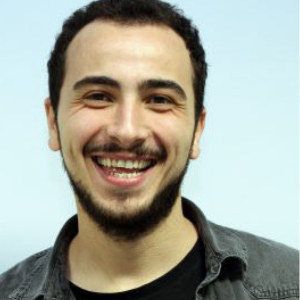
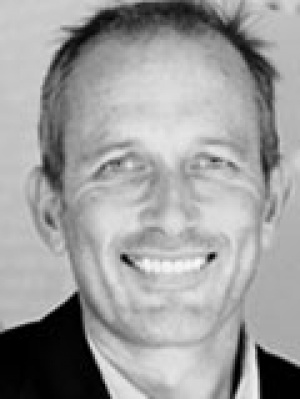
Dr. Pranav Minasandra is a postdoctoral researcher at the Max Planck Institute of Animal Behavior (Konstanz, Germany), affiliated with the Department of Collective Behavior . His work combines quantitative ecology , animal movement modeling , and machine learning to uncover universal patterns in behavioral sequences across species. PhD in Animal Behavior from Max Planck Institute MSc and BS from Indian Institute of Science (Bangalore) Research Focus: Analyzes behavioral predictivity decay and statistical similarities in animal sequences using accelerometry and theoretical frameworks. Recent work explores interspecies infant abduction and social coordination in meerkats/hyenas . Publications span PNAS , Proceedings B , and Current Biology , with 2025 papers revealing truncated power-law patterns in behavior and collective movement dynamics . His Best Paper Award (University of Konstanz) highlights groundbreaking contributions to behavioral sequence analysis. Collaborates with networks including Meg Crofoot , Ari Strandburg-Peshkin , and Vlad Demartsev . Tools developed include VocalPy integrations and predictivity decay metrics for behavioral forecasting.
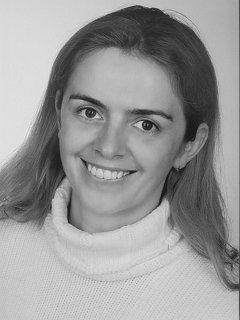
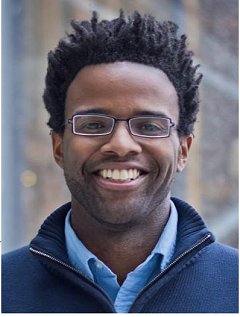
Alessandro Ragano is a Postdoctoral Researcher at the Insight Centre for Data Analytics , where he has been investigating Quality of Experience (QoE) aspects of audio archives and developing data-driven approaches for QoE estimation and audio restoration using deep learning since 2018. Education: MSc in Computer Science and Engineering from Politecnico di Milano (Italy) BSc in Computer Engineering from Università Degli Studi di Salerno (Italy) His research integrates machine learning , audio signal processing , and multimedia quality assessment to improve speech enhancement, audio restoration, and perceptual modeling. Recent trends in his publications focus on self-supervised learning , objective quality metrics , and audio dataset generation with applications in speech separation, music representation, and audio inpainting. He actively contributes to open-source tools like Binamix and AQP for audio research and quality evaluation.
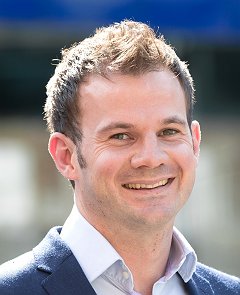
David Ribeiro Lamas is a Professor of Human-Computer Interaction at Tallinn University's School of Digital Technologies, where he heads the Human-Computer Interaction group. He also serves as the chair of the Estonian chapter of ACM's SIGCHI and as an expert member of IFIP's TC13. With an extensive international career spanning the USA, UK, Portugal, Cape Verde, Mozambique, Afghanistan, and Estonia, he has developed deep expertise in designing organizations, communities, and human technologies. His educational background includes a PhD in Human Computer Interaction from Portsmouth University (1998), an MSc in Computer Science from Minho University (1994), and an Honours BSc in Informatics/Applied Mathematics from Portucalense University (1989). He also completed specialized studies in Strategic Management at the Polytechnic University of Catalunya and a postdoc in Augmented and Virtual Environments at Michigan State University. Lamas' research primarily focuses on design theory and methodologies, with recent work emphasizing trust in technology, facial recognition systems, and vibrotactile interfaces. He has pioneered academic programs including the Master in Human-Computer Interaction and the Masters in Interaction Design (run online with Cyprus University of Technology). His approach combines theoretical rigor with practical application, particularly in cross-cultural contexts. His publication record shows a strong trend toward understanding human trust in technology systems, with significant work on facial recognition, vibrotactile feedback systems, and trust frameworks. His research spans both theoretical contributions to HCI methodology and practical applications addressing real-world challenges in digital accessibility and user experience. 2025 HCI Pioneer Award from IFIP TC13 2025 Tallinn Conference Ambassador 2024 IFIP Service Award 2015 Badge of Merit from Tallinn University 2011 Best Paper Award for work on Estonia's M-Government Services 2000 Best Paper Award for research on Web navigation guidance Lamas has successfully supervised forty-eight master students, seven doctoral students, and two post-doc researchers, and currently supervises twelve doctoral students. His leadership extends to numerous research projects including COST Actions on Interactive Narrative Design and Human-Computer Interaction methodologies. He founded and leads STARTS.EE, Tallinn University's initiative promoting encounters between science, technology, and the arts. He has been instrumental in building the Estonian HCI community through seasonal courses on Experimental Interaction Design, Research Methods in HCI, and the Design of Human Technologies since 2010. His World Usability Day events bring together over 600 researchers and practitioners annually from the Baltics, Nordic countries, and beyond. Lamas has chaired major international conferences including INTERACT 2019, NordiCHI 2020, AfriCHI 2021, and ICIDIS 2021.
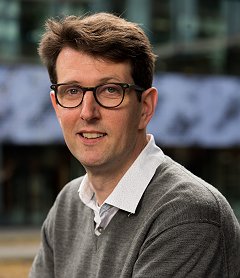
Mohammed A. Al-masni is currently serving as an Assistant Professor in the Department of Artificial Intelligence at Sejong University, Seoul, Republic of Korea, a position he has held since September 2022. Prior to this appointment, he worked as a Research Professor at Yonsei University (November 2020-August 2022) and as a Postdoctoral Researcher at the same institution (September 2019-October 2020). His academic journey includes significant research experience in medical imaging and artificial intelligence applications in healthcare. His educational background includes: Bachelor's Degree from Cairo University, Egypt (June 2011) M.Sc. from Cairo University, Egypt (February 2015) Ph.D. in Biomedical Engineering from Kyung Hee University, Republic of Korea (August 2019) Dr. Al-masni's research focuses at the intersection of artificial intelligence and medical imaging. His primary areas of investigation include medical image analysis, deep learning applications for medical diagnostics, and computer-aided diagnosis systems. He has developed innovative approaches for addressing motion artifacts in MRI, cerebral microbleed detection, and skin lesion segmentation. His work demonstrates a consistent pattern of applying cutting-edge deep learning techniques to solve challenging problems in medical imaging, with particular emphasis on improving diagnostic accuracy and efficiency. Analysis of his recent publications reveals a strong focus on medical image processing challenges, particularly in MRI and dermoscopy applications. His research demonstrates an evolution from basic image segmentation techniques to more sophisticated multi-task learning frameworks that address multiple clinical challenges simultaneously. A significant portion of his work targets neurological imaging applications, including cerebral microbleed detection and motion artifact correction in brain MRI. More recently, his research has expanded to include cross-domain applications of deep learning in software engineering and environmental monitoring. While specific awards are not explicitly listed in the provided information, his research impact is evidenced by an h-index of 17 and 2,313 citations according to Scopus metrics. His work contributes to UN Sustainable Development Goals, particularly in the area of good health and well-being. Dr. Al-masni has been actively involved in research collaborations, primarily with Dong-Hyun Kim's Lab at Yonsei University. His research output shows consistent productivity with 57 research outputs documented, including numerous high-impact journal articles in medical imaging and AI venues. His work demonstrates strong industry and academic collaboration, particularly in the development of practical diagnostic tools for clinical applications. His laboratory work has centered around medical imaging applications, with particular focus on the development of deep learning frameworks for medical image analysis. His research group appears to be focused on creating robust, clinically applicable AI tools that can address real-world challenges in medical diagnostics, with emphasis on neurological disorders and skin cancer detection.
Aleksandr Zagarskikh is an Associate Professor at the Game Development School of ITMO University, specializing in virtual reality, scientific visualization, and high-performance computing. He has led projects in quantum chemistry visualization, flight simulators, and urban simulation technologies. Developed real-time graphics systems for ultra-realistic image synthesis Created high-performance network protocols for distributed visualization Current research focuses on big data decision-making in finance and multiscale urban modeling His work spans predictive modeling, GPU optimization, and cloud-based infrastructure visualization, with publications in Procedia Computer Science. He teaches courses in game technologies, VR, and scientific computer graphics.
Ruzica Piskac is a Professor of Computer Science at Yale University, where she leads the Rigorous Software Engineering (ROSE) group. She has made significant contributions to the fields of software verification, security, automated reasoning, and code synthesis, focusing on improving software reliability and trustworthiness through formal techniques. Dr. Piskac received her PhD from the Swiss Federal Institute of Technology (EPFL) in 2011, where her dissertation won the Patrick Denantes Prize. Prior to joining Yale, she led an independent research group at the Max Planck Institute for Software Systems in Germany (2012-2013). Her research spans several key areas: symbolic execution for Haskell (G2), privacy-preserving formal methods (PPFM), functional reactive synthesis, verification of configuration files, and analysis of software updates. Her work consistently bridges theoretical formal methods with practical applications in real-world systems. Dr. Piskac's recent publications demonstrate a strong trend toward applying formal verification techniques to emerging challenges including large language models, quantum computing security, legal accountability of automated systems, and cyber-physical systems. Her research increasingly intersects with AI, cryptography, and legal domains while maintaining strong foundations in formal methods. Her scientific achievements have been recognized with numerous prestigious awards: Multiple Amazon Research Awards Yale University's Ackerman Award for Teaching and Mentoring Facebook Communications and Networking Award Microsoft Research Award for the Software Engineering Innovation Foundation (SEIF) Patrick Denantes Prize for her PhD dissertation Dr. Piskac has graduated five PhD students, four of whom have gone on to become assistant professors of computer science. She has served as Program Chair of the 37th International Conference on Computer Aided Verification and is on the Steering Committee of the Formal Methods in Computer-Aided Design conference. She leads the Rigorous Software Engineering (ROSE) group at Yale, which focuses on several key projects including: Symbolic Execution Engine for Haskell (G2) Privacy Preserving Formal Methods (PPFM) Functional Reactive Synthesis Verifications for Configuration Files Analysis of Software Updates and Configuration Files
Alastair F. Donaldson is a Professor in the Department of Computing at Imperial College London's Faculty of Engineering, where he leads the Multicore Programming Group. He also works as a Software Engineer at Google in the Android Graphics Team. Previously, he served as Director of GraphicsFuzz, an Imperial College spinout company acquired by Google in 2018. His research spans programming languages, compilers, verification, and testing, with a particular focus on randomized and fuzz testing techniques for compilers and program analyzers. Donaldson has developed several influential testing frameworks including GraphicsFuzz, RustSmith, and GrayC, which have significantly advanced compiler testing methodologies. Analysis of his recent publications reveals a strong trend toward practical applications of compiler testing techniques across diverse domains including GPU programming, verification-aware languages, and memory models. His work increasingly incorporates continuous integration practices and focuses on addressing real-world challenges in compiler development and verification. Donaldson maintains active involvement in the programming languages research community, serving on program committees for major conferences including PLDI, POPL, ASPLOS, and SPLASH. He has contributed significantly to advancing compiler testing methodologies and has mentored numerous researchers through PLMW (Programming Languages Mentoring Workshop). He leads the Multicore Programming Group at Imperial College London, which focuses on challenges in parallel and concurrent programming. His work bridges theoretical computer science with practical software engineering challenges, particularly in the areas of compiler correctness and verification.
Zhenjiang Hu is a Chair Professor and Dean of the School of Computer Science at Peking University. He serves as Director of the Programming Languages Laboratory and has held significant academic positions including Professor at the National Institute of Informatics and University of Tokyo. BS and MS from Shanghai Jiaotong University (1988, 1991) PhD from University of Tokyo (1996) Lecturer/Assistant Professor at University of Tokyo (1997) Associate Professor at University of Tokyo (2000) Full Professor at National Institute of Informatics (2008) Full Professor at University of Tokyo (2018-2019) Professor Hu's research primarily focuses on programming languages and software engineering, with special emphasis on functional programming, bidirectional transformation, and software adaptation. His work explores transformational programming approaches for automatic program optimization, systematic parallelization of sequential programs, efficient manipulation of structured documents, and bidirectional model transformation for software development. His research has significantly advanced the field of bidirectional programming, developing foundational theories and practical applications that enable more reliable and maintainable software systems. His recent publications demonstrate a strong trajectory in bidirectional programming, program synthesis, and graph processing. The research shows increasing sophistication in handling program transformations, with growing emphasis on practical applications in software engineering contexts. His work increasingly integrates formal methods with practical programming language design, creating systems that maintain theoretical soundness while addressing real-world software development challenges. The research spans multiple venues including top conferences like PLDI, POPL, ICFP, and OOPSLA, reflecting its broad impact across programming language research. Fellow of JFES (Japan Federation of Engineering Society, 2016) ACM Distinguished Scientist (2016) Member of Academia Europaea (2019) IEEE Fellow (2020) Member of Engineering Academy of Japan (2020) Professor Hu actively mentors students and has welcomed excellent candidates to join his group through Peking University's International Elite PhD Program and Boya Postdoctoral Fellowship Program. He serves on numerous program committees for major conferences including PLDI, POPL, ICFP, and OOPSLA, and holds editorial positions for prestigious journals such as Journal of Functional Programming and Science of Computer Programming. His leadership extends to conference organization, having served as PC Chair for CNCC 2024 and General Co-Chair for SoICT 2019. As Director of the Programming Languages Laboratory at Peking University, Professor Hu leads a research team focused on advancing programming language theory and practice. His lab has developed influential frameworks like BiGUL for bidirectional programming and Fregel for graph processing. The laboratory maintains strong international collaborations and contributes to both theoretical foundations and practical implementations in programming languages and software engineering.
Andy D. Pimentel is a Full Professor at the University of Amsterdam, where he chairs the Parallel Computing Systems (PCS) group within the Systems and Networking Lab at the Informatics Institute. His work focuses on the design, programming, and run-time management of multi-core and multi-processor computer systems, with particular attention to performance, power/energy consumption, system dependability, and design productivity. His academic background includes: PhD in Computer Science, 1998, University of Amsterdam MSc in Computer Science, 1993, University of Amsterdam Professor Pimentel's research spans multiple critical areas in modern computing systems. His primary interests include multi-core embedded systems, system-level design and simulation, design space exploration, performance and power analysis, system dependability, hardware/software co-design, run-time resource management, and Edge AI. His work addresses the growing challenges of making computer systems faster, more sustainable, energy efficient, reliable, and secure in an era of increasing computational demands and climate concerns. The PCS group he leads performs research on the modeling, analysis and optimization of extra-functional aspects of computing systems, which play a pivotal role in their work. An analysis of Professor Pimentel's recent publications reveals a strong focus on edge computing, distributed AI, and energy-efficient system design. His work bridges theoretical computer architecture with practical implementation challenges, particularly in the context of resource-constrained environments. Key trends include the adaptation of AI models for edge devices, thermal management in advanced architectures, and optimization of multi-core systems for both performance and energy efficiency. His research increasingly addresses sustainability concerns in computing, reflecting broader industry and academic priorities. His notable scientific achievements include: IEEE CEDA Outstanding Service Recognition Award DATE Fellow Award Professor Pimentel has served in numerous leadership roles in the academic community, including as General Chair of Design Automation and Test in Europe (DATE) 2024, Vice General Chair of IEEE/ACM Embedded Systems Week 2025, and General Chair of IEEE/ACM Embedded Systems Week 2026. He has secured significant research funding for projects related to sustainable computing, edge AI, and multi-core system design. His professional service includes board membership with the ICT Research Platform Nederland (IPN) since 2020 and leadership roles in major conferences such as DATE, Embedded Systems Week, and SAMOS. The Parallel Computing Systems group he chairs is a vibrant research team within the Systems and Networking Lab at the Informatics Institute. The PCS group focuses on the challenges of modern computing systems, particularly addressing the extra-functional aspects like performance, power consumption, and system dependability. Their work is highly relevant to current technological challenges in edge computing, sustainable systems design, and the integration of AI into resource-constrained environments.
Eric Atkinson is an Assistant Professor in the School of Computing at Binghamton University, specializing in programming languages for uncertainty and their intersections with artificial intelligence. He holds a PhD from MIT (2024), an MS from MIT (2018), and a BS from UC Berkeley (2015). Prior to Binghamton, he was a visiting researcher at INSAIT in Sofia, Bulgaria, and conducted research internships at Facebook and Mozilla. His research focuses on programming languages, program runtimes, formal methods, and AI integration. Key interests include probabilistic programming, static analysis, and runtime systems for uncertain domains. He teaches programming languages courses and advises PhD and M.Sc. students. His publications span probabilistic programming systems, compiler optimizations, and formal verification. He actively participates in academic service roles, including program committees for PLDI, LAFI, and OOPSLA, and mentors underrepresented groups in graduate school through initiatives like the MIT EECS GAAP program.
Jean-Louis MIGEOT (born November 23, 1961 in Etterbeek) is a Civil Engineer, Doctor of Applied Sciences, and Acoustician who serves as President of the Royal Academy of Belgium and Director of the Technology and Society Class since his election on March 27, 2010. He holds academic positions as Lecturer at both the Free University of Brussels and the Royal Conservatory of Music in Liège. His educational background includes a Bachelor of Management and a Doctor of Applied Sciences. As a scholar deeply engaged at the intersection of science and music, Migeot has authored publications exploring the mathematical foundations of musical structures and acoustic phenomena. Migeot's research spans acoustics, dynamic phenomena modeling, and numerical methods with particular focus on the mathematical principles underlying music theory and noise pollution. His work bridges engineering disciplines with artistic expression, examining how scientific concepts manifest in musical composition, instrument design, and acoustic environments. He has delivered numerous lectures on topics ranging from airport noise pollution to the arithmetic origins of Western musical scales. His scientific recognition includes: Technological Innovation Award (2005) Grand Prix Wallonie Exportation (2006) Jacques Verdeyen Prize (1984) Solvay Award (1997) As co-founder and Managing Director of Free Field Technologies SA (established with Prof. Jean-Pierre Coyette), Migeot has led the development of industry-standard acoustic simulation software adopted globally across multiple sectors. The company maintains subsidiaries in France, Japan, and the United States, reflecting its international impact. Migeot's academic and industrial work demonstrates a unique synthesis of theoretical knowledge and practical application, particularly evident in his exploration of the relationship between mathematical structures and musical expression. His leadership at the Royal Academy of Belgium positions him at the forefront of interdisciplinary dialogue between technology and society.
Andreea Costea is an Assistant Professor in the Programming Languages Group within the Faculty of Electrical Engineering, Mathematics & Computer Science (EEMCS) at Delft University of Technology. She joined TU Delft in October 2024 after completing her PhD at the School of Computing, National University of Singapore (NUS), where she worked in the Programming Languages and Software Engineering lab collaborating with the Automated Program Repair team, Trustworthy and Secure Software group, and VERSE lab. Her primary research focuses on programming languages design and implementation, with particular emphasis on software verification for critical code, program synthesis, and automated program repair. She maintains strong connections with industry while pursuing formal methods research, especially in the context of Rust programming language safety and interoperability. Dr. Costea's publication record demonstrates consistent contributions to software engineering and programming languages research, with recent work focusing on automated program repair techniques, Rust language safety mechanisms, and communication protocol verification. Her research shows a clear trajectory from theoretical foundations in session types and separation logic toward practical applications in memory safety and program repair. She actively serves the research community as Program Committee member for major conferences including ASE, ICSE, ICFP, and APLAS. Her service includes chairing publicity committees for SPLASH and artifact evaluation for ESOP. Regular Journal Reviewer: CACM, TOSEM, TSE Panel discussions: PLMW @ POPL'22, PLDI'21, PLMW @ PLDI'21, POPL'21 Extensive reviewing for top-tier conferences including POPL, OOPSLA, CAV, VMCAI Dr. Costea supervises multiple Master's students working on Rust-related safety projects and is actively recruiting PhD students to work on software interoperability, particularly focusing on how to restore Rust's safety guarantees when integrating with legacy C code and ensuring correct interaction between components written in different languages.
Haipeng Cai serves as an Associate Professor in the Department of Computer Science and Engineering at the University at Buffalo, SUNY. His academic work spans software engineering, program analysis, and software security with particular emphasis on adaptive analysis techniques for mobile and distributed systems. His research interests center on adaptive/data-driven static and dynamic analysis for security applications targeting mobile apps, distributed systems, and multilingual software. Current work focuses on enhancing vulnerability detection, cross-language bug analysis, and automated security tooling through machine learning approaches. His lab produces tools like VinJ for vulnerability data generation and PolyFax for multilingual software characterization. Recent publications reveal strong trends in multilingual system security and AI-enhanced analysis , with 15+ papers since 2022 addressing cross-language vulnerabilities, Android security, and learning-based vulnerability detection. His work bridges theoretical program analysis with practical security applications in real-world software ecosystems. As an active academic contributor, he serves on program committees for major conferences including ASE, ICSE, and FSE, and will deliver a keynote at PROMISE 2025. His leadership includes journal-first paper chair roles and session chair positions at top software engineering venues. Dr. Cai maintains an active research presence through his personal website , GitHub repository ( github.com/chapering ), and academic social media profiles, with consistent contributions to the software engineering research community since 2018.
Michael Carbin is an Associate Professor at MIT in the Department of Electrical Engineering and Computer Science (EECS), where he leads the Programming Systems Group at the Computer Science and Artificial Intelligence Laboratory (CSAIL). His research centers on developing programming systems that handle uncertainty through probabilistic programming, quantum computing, and neural networks. Carbin's work spans programming languages, systems, and machine learning, with themes including uncertainty management, efficiency optimization, and formal verification. His publications demonstrate a strong focus on probabilistic inference methods, neural network optimization, and quantum programming frameworks. Awards and Honors: Sloan Research Fellowship (2020) Multiple Best Paper Awards (OOPSLA 2013, 2014; ICLR 2019) NSF CAREER Award (2018) Google Faculty Research Award (2018) As the head of the Programming Systems Group, he advises 10+ graduate students and postdocs, focusing on cutting-edge systems research. He has secured grants including Facebook Research Awards and NSF funding.
Dr. Brian Ó Raghallaigh is an Assistant Professor in Fiontar & Scoil na Gaeilge at Dublin City University (DCU). He holds a BA (Mod.) in computational linguistics and a PhD in speech technology from Trinity College Dublin. His research focuses on digital terminology, onomastics, folkloristics, phonetics, and language technology. He is Co-Principal Investigator of the AHRC-IRC 'Decoding Hidden Heritages' project (2021–2024) and Principal Investigator of the Department of the Gaeltacht-funded 'Logainm Placenames Database of Ireland' project. Education: BA (Mod.) in Computational Linguistics (Trinity College Dublin), PhD in Speech Technology (Trinity College Dublin) Roles: Technology Manager of the Gaois research group, Module Coordinator for Irish Linguistics (LIG1004), Co-coordinator for Corpus Research (LIG1010) Publications: Authored Fuaimeanna na Gaeilge , creator of fuaimeanna.ie , and co-editor of Decoding the Oral Traditions of Scotland and Ireland . His research interests span terminology, placename studies, digital humanities, and language preservation. He leads projects like Terminologue (a cloud-based terminology platform) and collaborates on initiatives such as the EU-GA terminology project. He is active in professional organizations like SNSBI, SIEF, and CIGILT. Grants & Projects: Funded by AHRC/IRC, Department of the Gaeltacht, RIA. Key projects include Logainm.ie , Gaois surname database , and Historical Dictionary of Modern Irish . Labs/Teams: Gaois research group (focused on language technology), Terminologue (terminology management), and collaborations with the Digital Repository of Ireland (DRI).