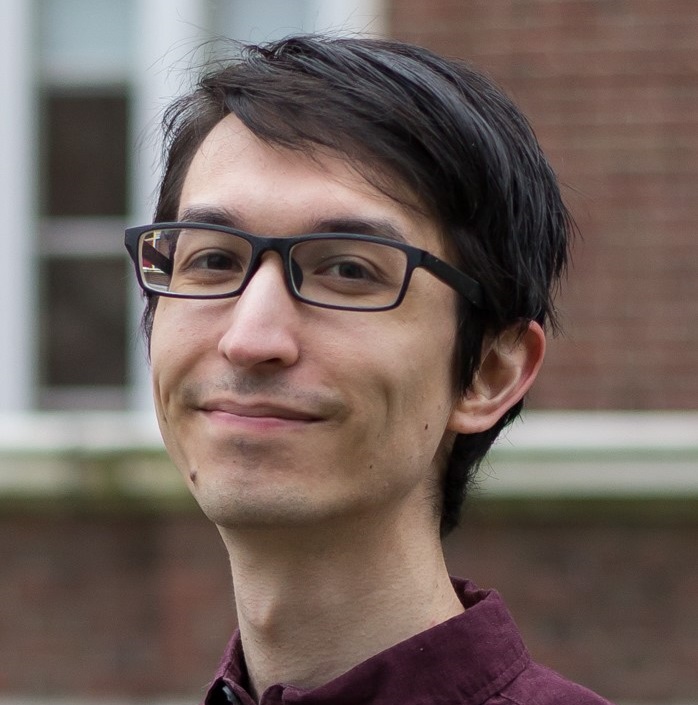
Dr. Quoc Cuong Ngo is a Research Fellow in the School of Engineering at RMIT University, specializing in biomedical engineering and machine learning applications in healthcare. His research focuses on neurological disorders, particularly Parkinson’s disease, using advanced techniques such as facial expression analysis, speech assessment, and EEG signal processing. He also investigates medical imaging for conditions like leg ulcers and sleep apnea, contributing to automated diagnostic tools and healthcare technology innovations. Active in supervision, he mentors students on projects involving AI-based clinical symptom analysis and biometric authentication. His work bridges computer science and medicine, emphasizing interdisciplinary collaboration. Notable projects include developing NeuroDiag software for handwriting-based Parkinson’s diagnosis and pioneering chatbot-driven vocal screening systems. Despite no explicitly listed awards, his extensive publication record highlights contributions to medical diagnostics and biomedical engineering.
Professor Wang Shiren is a faculty member in the Department of Industrial & Systems Engineering at Texas A&M University, holding the Jill & Charles F. Milstead '60 Faculty Fellowship. He is affiliated with Biomedical Engineering and Materials Science & Engineering. His research focuses on additive manufacturing, bio/nano-manufacturing, brain-inspired AI, and decarbonization. He leads the Manufacturing Intelligence and Nanotechnology Innovation (MINI) Lab, emphasizing sustainable manufacturing and commercialization. Education: Ph.D. in Industrial & Manufacturing Engineering from Florida State University (2006) Research interests span advanced materials, energy-efficient manufacturing, and AI integration. Recent work includes low-carbon ceramics, thermoelectric materials, and nanozyme-based therapies. Over 100 peer-reviewed publications demonstrate expertise in additive manufacturing, nanocomposites, and energy harvesting. Awards include NSF CAREER Award (2010-15) and multiple faculty fellowships. Awards: NSF CAREER Award, AFOSR Fellowship, Texas A&M TEES Fellowship, and 3M Non-tenured Award. Grants and collaborations focus on AI-driven manufacturing, eco-friendly processes, and medical device innovation. The MINI Lab develops smart materials and sustainable solutions for industrial and biomedical applications. Labs/Teams: MINI Lab at Texas A&M, specializing in nanotechnology and manufacturing intelligence.
Josefine B. Graebener is a Postdoctoral Scholar Research Associate in the Department of Computing & Mathematical Sciences at the California Institute of Technology (Caltech). Her research focuses on formal methods for test and evaluation of autonomous systems, including cyber-physical systems and reactive systems. She holds an office at the Annenberg IST Center (Mail Code 305-16) and can be reached at jgraeben@caltech.edu . Her work emphasizes assume-guarantee contracts for compositional system analysis, automated test synthesis, and failure-tolerant design for applications like autonomous vehicles and spacecraft computers. Key contributions include the development of the Pacti framework for scalable system analysis and the study of thermal stabilization in space telescopes using phase change materials. Josefine’s publications span topics such as reach-avoid specifications for autonomous systems, trade-off analysis in spacecraft computer design, and directive-response architectures for automated systems. While no formal awards are listed, her research demonstrates significant contributions to system reliability and formal verification methodologies.
Dr. Cécilia Pradic is a Lecturer in Computer Science at Swansea University's School of Mathematics and Computer Science. Her research focuses on theoretical computer science, logic, and automata theory with applications in programming languages and database systems. She is affiliated with the Computational Foundry at Bay Campus and holds an ORCID identifier (https://orcid.org/0000-0002-1600-8846). Her recent work emphasizes nested relational query synthesis, implicit automata in λ-calculi, and Weihrauch reducibility for computational problems. She teaches modules including Declarative Programming (CS-205), Software Concepts and Efficiency (CSCM12), and Problem Solving & Software Efficiency (CSCM712), using Java and Python as primary tools. Pradic's publications span topics like proof theory applications to database systems, formal methods for string transformations, and computational complexity analysis. She has supervised multiple graduate research students, including a current PhD candidate and an MRes graduate (2024). Her research bridges foundational theory with practical algorithm design, contributing to advancements in both academic and applied computing domains.
Martin Uecker is a Professor at the Institute of Biomedical Imaging at TU Graz. His research focuses on advanced MRI reconstruction techniques, real-time imaging, and open-source software tools like the Berkeley Advanced Reconstruction Toolbox (BART). He specializes in developing methods for fast and accurate medical imaging, including applications in cardiac MRI, fetal brain imaging, and disease monitoring. His work emphasizes reproducibility, quantitative imaging, and clinical translation. Key research areas include generative models for MRI reconstruction, model-based inversion of the Bloch equations, and interactive real-time MRI systems. His team collaborates on projects involving hardware-software integration, such as portable MRI scanners and MRI-guided interventions. Notable contributions include advancements in multi-echo radial FLASH techniques, motion-resolved T1 mapping, and Bayesian uncertainty estimation in imaging. Uecker’s publications highlight innovations in accelerating MRI acquisition and reconstruction, with applications in pulmonary function assessment, neonatal imaging, and cardiovascular diagnostics. His work bridges theoretical physics, computational methods, and clinical practice, fostering open-source frameworks to democratize access to cutting-edge imaging tools.
Grégory Batt is a Researcher and Head of the InBio joint research group at the Institut Pasteur and Inria Paris. The lab operates at the intersection of wet and dry biology, focusing on systems and synthetic biology with an emphasis on automation, modeling, and real-time control of cellular processes. The team is affiliated with both institutions and hosts a multidisciplinary group of researchers, engineers, and students. The research interests of Grégory Batt span systems biology, synthetic biology, quantitative modeling, lab automation, bioproduction, and single-cell analysis . His work integrates computational and experimental approaches to develop frameworks for understanding and controlling cellular behavior. Key methodologies include the use of synthetic biology, microfluidics, optogenetics, and robotics. The lab has developed innovative software tools such as ReacSight and MicroMator to enable automated and reactive experimentation. Recent publications highlight trends in real-time control of bioproduction, optimization of protein secretion, parameter inference in stochastic models, and ecological frameworks for antibiotic resistance . These works demonstrate a strong focus on integrating modeling with high-throughput experimentation to solve problems in biotechnology and medicine. Scientific contributions include: Development of ReacSight for bioreactor automation and reactive control Creation of MicroMator for reactive microscopy Application of ecological concepts to bacterial antibiotic responses Modeling stochastic kinetics coupled with auxiliary processes Batt advises several PhD students and postdoctoral researchers, including Henri Galez, Alicia Da Silva, Cecilia Capela, and Viktoriia Gross. His lab has received support from ANR, Inria, and other funding bodies. The InBio team operates a state-of-the-art laboratory equipped with bioreactors, liquid handling robots, flow cytometers, automated microscopes, and high-performance computing resources, enabling advanced research at both population and single-cell levels. The lab, located at the Yersin and Lwoff buildings of the Institut Pasteur in Paris, fosters a collaborative environment integrating molecular biology, microbiology, and computational modeling to advance quantitative understanding of cellular systems.
Woosuk Lee is a researcher at Hanyang University in South Korea, specializing in Program Analysis and Program Synthesis . He has been actively involved in academic activities since 2015, contributing to major conferences like OOPSLA, PLDI, POPL, and ESEC/FSE. Current affiliation: Hanyang University Research interests: Program Analysis, Program Synthesis His research focuses on automating program generation through inductive methods and abstract interpretation. Key contributions include: Advancing iterative forward-backward abstract interpretation for program synthesis (2023) Structurally recursive functional program synthesis (2023) Homomorphic encryption circuit optimization via term rewriting (2020) Data-driven feedback systems for programming education (2021) He has served on program committees for PLDI (2024), POPL (2022), and SPLASH (2025), while also chairing workshops at PLDI 2026. His work bridges theoretical computer science with practical software engineering applications.
Ruhul Amin is an Assistant Professor at Fordham University's Department of Computer and Information Science, where he explores the intersection of Artificial Intelligence , Data Science , and Public Health . His work spans multiple domains including Bioinformatics , Natural Language Processing , and Computational Social Science . PhD in Computer Science (Stony Brook University, 2019) MS in Computer Science (Stony Brook University, 2015) BSc in Computer Science (Shahjalal University, 2007) His research focuses on developing deep learning algorithms for genome annotation, anomaly detection in high-cardinality spaces, and assistive technologies for visually impaired users. Notably, he designed the Mongol Dip bilingual screen reading software and the Pipilika Bengali text search engine. Recent publications (2025-2024) demonstrate his expanding interests in large language model alignment , sentiment analysis across languages, and distributed reinforcement learning for cybersecurity applications. His work frequently appears at IEEE conferences and in journals like PLOS One. Scientific Recognition BASIS National ICT Award (Bangladesh) Best Poster Awards at IEEE R10 HTC and CEWIT conferences Bangladesh Prime Minister’s Award (2012) mBillionth South Asia Award (2010) He maintains active collaborations with research teams at University of Toronto , University of British Columbia , and Stony Brook University . Contact: moamin@cs.stonybrook.edu
Dr Nguyen Tran is a Researcher at the School of Computer and Mathematical Sciences , part of the Faculty of Sciences, Engineering and Technology at the University of Adelaide . His work focuses on developing software systems that are correct, efficient, and secure, particularly through the application of blockchain and related technologies. Nguyen Tran's research spans four key domains: Software Engineering for large-scale systems, Cryptography & Blockchain for security, Internet of Things for physical-digital integration, Machine Intelligence for automation. He is eligible to co-supervise Masters and PhD students and contributes to the Centre for Research on Engineering Software Technology . His publications highlight advancements in blockchain metadata management, IoT search engines, and decentralized provenance systems.
Henrik Engström is a Professor of Informatics at the University of Skövde, affiliated with the School of Informatics and Department of Information Technology. He holds a PhD in Computer Science from the University of Exeter. His research focuses on game development processes, serious games, and interdisciplinary collaboration in game design. Engström has led multiple projects, including the Game Tech Academy and Sweden Game Arena initiative, aiming to leverage game technology for societal challenges in health, education, and industry. He coordinates the Game Development Master's Programme and has published extensively on topics like game analytics, inclusive design, and mobile game publishing strategies. His work often bridges academia and industry, emphasizing practical applications in training simulations and healthcare. Education: PhD in Computer Science (University of Exeter) Key Projects: Sweden Game Arena, Game Hub Scandinavia, Digital Parental Support Tools Research Interests: Game design processes, serious games for health, inclusive game development, and mobile game business models Engström’s research outputs span over two decades, with notable contributions to understanding game development challenges, stress detection in games, and the application of AI in game narratives. His book Game Development Research (2020) synthesizes empirical insights from industry practices. He collaborates internationally, including with Japanese and Scandinavian institutions, to advance educational game models and industry-academia partnerships. His articles highlight trends in data-driven decision-making for indie game publishers, the psychological impact of game design on player experiences, and leveraging game jams for addressing heavy societal topics. Engström also leads grants focused on digital health tools for expecting parents and sustainable urban planning via game-based participation. Labs/Teams: Key contributor to the Sweden Game Conference and collaborator with Game Tech Academy, fostering innovation in game-based solutions for societal challenges.
Christian Fibich is a Researcher and Lecturer at the Department of Electronic Engineering, University of Applied Sciences Technikum Wien, Austria. He leads the Research Group Embedded Systems, focusing on FPGA reliability and high-level synthesis. His roles include project management for R&D initiatives like VECS (2013-2018), INES (2018-2023), and the 2024 Drohnentechnik integration project. Fibich holds an MSc in Embedded Systems from Technikum Wien and has been active in the field since 2010. Research interests include fault-tolerant FPGA design, reliability analysis of SRAM-based FPGAs, and high-level synthesis optimization. His work emphasizes practical applications of open-source tools and automated design exploration. Recent projects explore temperature-dependent fault effects and drone integration in academic programs. Publications span FPGA reliability, fault injection methods, and embedded systems design, with a focus on open-source IP cores and hardware security. His contributions include Fiji (a fault injection tool) and HLShield (a reliability framework for HLS).
Alberto L. Sangiovanni-Vincentelli holds the Edgar L. and Harold H. Buttner Chair of Electrical Engineering and Computer Sciences at the University of California, Berkeley. He is a pioneer in Electronic Design Automation (EDA) and co-founder of Cadence and Synopsys. His research focuses on Cyber-Physical Systems (CPS), embedded systems, hybrid systems, and formal methods for AI. He has authored over 800 papers and 17 books, with major contributions to design automation and methodologies. Education: Dr. Ing., EECS, Politecnico di Milano (1971) Research interests include design methodologies, CPS, and AI integration. He has received numerous awards, including the IEEE James Clerk Maxwell Medal (2008) and ACM/IEEE A. Richard Newton Technical Impact Award (2009). He serves on multiple corporate boards and advisory councils, including the Strategic Committee of the Italian Strategic Fund and the Executive Committee of the Italian Institute of Technology. His work spans academia, industry, and policy, with a focus on innovation ecosystems and CPS design automation. Awards: Over 20 major honors, including Fellowships from IEEE and ACM.
Joshua Speagle is an Assistant Professor jointly appointed in the Department of Statistical Sciences and the David A. Dunlap Department of Astronomy & Astrophysics at the University of Toronto. He is also an Associate Member of the Dunlap Institute for Astronomy & Astrophysics and a Member of the Data Sciences Institute. His research lies at the intersection of statistics, astronomy, and computer science, focusing on astrostatistics and data-intensive astrophysics. His research interests include astrostatistics, data science, machine learning, statistical inference, and Bayesian methods. He develops novel statistical learning techniques to extract insights from large, complex datasets, particularly from astronomical surveys. His work emphasizes interpretability, robust inference, and computational efficiency, with applications to galaxy formation, stellar photometry, and 3D dust mapping. The trends in his recent publications reflect a strong focus on interdisciplinary methodologies, particularly in Bayesian inference, nested sampling, and machine learning applied to astrophysical problems. His work consistently bridges theoretical statistics with practical applications in astronomy, emphasizing open-source software and reproducible research. Banting Postdoctoral Fellowship Dunlap Fellowship Joshua Speagle is deeply committed to mentorship and collaboration. He co-leads the Astrostatistics Research Team (ART) with Gwen Eadie, mentoring students and postdocs across disciplines. He is involved in graduate and undergraduate research programs, including the Astronomy & Astrophysics Summer Undergraduate Research Program (SURP). He teaches courses in statistics and astronomy and serves on committees within the University of Toronto and professional societies such as the AAS, ASA-AIG, and SSC-DSA. He co-leads the interdisciplinary Astrostatistics Research Team (ART), which fosters a collaborative, inclusive environment focused on cutting-edge research at the intersection of statistics and AI. The team emphasizes open and accessible science, releasing open-source tools like dynesty and brutus , and mentoring the next generation of data scientists.
William Alves is an Associate Professor of Music in the Department of Humanities, Social Sciences, and the Arts (HSA) at Harvey Mudd College in Claremont, California. He is a composer, video artist, and scholar with deep expertise in ethnomusicology, particularly Indonesian gamelan, computer music, visual music, and alternate tuning systems. Alves co-directs MicroFest, Southern California’s annual festival of microtonal music, and directs the American Gamelan and Electronic Music ensembles at the Claremont Colleges. Associate Professor of Music, Harvey Mudd College Department of Humanities, Social Sciences, and the Arts (HSA) Director, American Gamelan Ensemble Director, Electronic Music Ensemble Co-Director, MicroFest Festival of Microtonal Music His research and creative work explore the intersections of music, technology, and global cultural traditions. He is particularly known for his work in world music pedagogy, having authored the widely adopted textbook Music of the Peoples of the World , now in its third edition, and for his biography of composer Lou Harrison. His compositions span gamelan, electronic music, and multimedia works, often blending Western and non-Western traditions. Alves’s publications and creative output reflect a strong interdisciplinary focus, with articles in journals such as Perspectives of New Music , Computer Music Journal , and SEAMUS Journal . His recent works explore microtonality, electroacoustic composition, visual music, and cross-cultural musical synthesis. The themes across his articles and compositions include global musical traditions, technological innovation in sound, and the blending of visual and auditory art forms. His scholarly and artistic contributions have been recognized through a Senior Fulbright Scholarship in Indonesia (1993–1994), where he studied and taught traditional music. He has also been active in performance, participating in Javanese and Balinese gamelan ensembles and West African drumming groups. Senior Fulbright Scholar, Indonesia (1993–1994) Co-author, Biography of Lou Harrison Author, Music of the Peoples of the World (3rd ed.) Published recordings: The Terrain of Possibilities , Imbal-Imbalan , Mystic Canyon , Guitars and Gamelan Video works: Celestial Dance (published by Kinetica Video Library) Alves has advised and mentored students through ensemble direction and coursework, though specific names of advisees are not listed. He has taught a wide range of courses including Music of the Peoples of the World , Electronic Music , Film Music , and Music Since 1900 . He has also contributed to academic discourse through publications and festival leadership. There is no mention of formal research grants, but his Fulbright award indicates significant recognition and funding support in the past. He is affiliated with the Society for Ethnomusicology and has led or participated in various musical ensembles and festivals, contributing to a vibrant interdisciplinary arts community at the Claremont Colleges. His work continues to bridge academic scholarship with artistic practice, fostering innovative approaches to music and culture.
Alfredo Benso is a Full Professor in the Department of Control and Computer Science (DAUIN) at the Polytechnic University of Turin, where he is also a member of the Interdepartmental Center PolitoBIOMed Lab - Biomedical Engineering Lab. He has been continuously involved in the Doctoral College for Computer and Systems Engineering since 2008, guiding PhD education across numerous cycles. His academic roles span teaching and research leadership in bioinformatics, systems biology, and computer engineering. Research interests: Bioinformatics and computational biology Systems biology and gene regulatory networks Artificial intelligence and machine learning in biomedicine Molecular modeling and multiscale simulation Biological database systems and data integration Health informatics and public health modeling His recent publications reflect a strong trend in applying AI and machine learning to biological and medical challenges, including protein function prediction, Alzheimer’s and Multiple Sclerosis modeling, food fraud detection, and viral genome analysis. These works span journals and conferences in bioinformatics, computational biology, and biomedical engineering, demonstrating interdisciplinary innovation. Scientific Awards: BIOINFORMATICS 2014 BEST PAPER AWARD (INSTICC, United Kingdom) Advising and Grants: He supervises PhD students, including Sofia Ostellino, and leads major research initiatives such as the BIGMECH (2023–2025) and FISHUB (2016–2018) projects. He has served as Scientific Director for collaborative agreements with public administrations and as Principal Investigator on EU, national (PRIN), and regional research grants focused on bioinformatics, space systems, and reliable digital technologies. Labs and Teams: He is a key member of the SBG - System Biology Group (DAUIN) and contributes to PolitoBIOMed Lab, fostering collaborative research in biomedical engineering and computational biology.