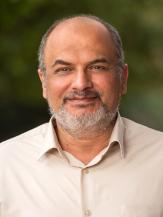
Assoc. Prof. Ivaylo Donchev is affiliated with the University of Veliko Tarnovo , specifically the Faculty of Mathematics and Informatics . His research focuses on Object-Oriented Programming , C++ , C# , .NET , Functional Programming , and Informatics Didactics . Current projects: "Methodology for Modeling and Development of Information Systems with Artificial Intelligence in Education" (2025) "Digital Accessibility for Visually Impaired in Research/Education" (2023) His publications (2015–2025) emphasize Object-Oriented Programming , Modern C++ , Exception Handling , and Programming Education . Recent work includes optimizations in C# memory handling, AI-driven systems for academic resource management, and accessibility improvements for research platforms. He contributes to STEM education , Software Engineering Methodologies , and Digital Inclusion , with a focus on practical implementations in academic settings.
Mark Bailey is the Robert and Pamela (Craig) Delaney Professor of Computer Science at Hamilton College, where he has served as Chair of the Department of Computer Science since 2011. He teaches foundational courses including Introduction to Computer Science, Data Structures, and Computer Organization, and pioneered the innovative course Secrets, Lies, and Digital Threats that pairs Hamilton students with high school classes for cybersecurity education. His educational background includes: Ph.D. in Computer Science from the University of Virginia M.C.S. from the University of Virginia B.S. from the University of Massachusetts Dr. Bailey's research bridges theoretical computer science and practical applications, with primary focus areas in computer security , embedded systems optimization , and compiler design . His work on mobile encryption architectures and fault-tolerant distributed systems demonstrates interdisciplinary innovation, while his educational initiatives like the high school cybersecurity outreach program reflect commitment to real-world impact. Recent publications show increasing emphasis on mobile security and interactive optimization tools for embedded environments. His publication trends reveal consistent exploration of security vulnerabilities across computing layers—from low-power mobile encryption to server protection models—with growing attention to educational applications of security research since 2008. The interdisciplinary nature of his work connects hardware architecture, software engineering, and pedagogical innovation. Key recognitions include: Three competitive National Science Foundation grants Two Microsoft Research grants National Research Council/Air Force Research Laboratory Faculty Fellowship Hamilton College's Richardson Award for Faculty Innovation Dr. Bailey has secured over $1.2M in external funding through NSF and Microsoft Research grants, and provided consultancy for the Air Force Research Laboratory and Assured Information Security. His academic service includes editorial leadership as Editor-in-Chief of ACM Inroads and membership on the Barry Goldwater Scholarship review committee. Campus leadership roles span the Information Security Review Board, High Performance Computing Advisory Committee, and multiple college governance bodies since 1997. He actively shapes academic infrastructure through committee work including the Committee on Information Technology (chaired 2003–2005) and Science Facilities Faculty Committee, while maintaining strong industry connections through conference organization for SIGPLAN and NYCWiC.
Jürgen Ziegler is a Senior Full Professor at the Department of Computer Science and Applied Cognitive Science within the Faculty of Computer Science at the University of Duisburg-Essen. He leads the Interactive Intelligent Systems Group, focusing on human-computer interaction, recommender systems, and explainable AI. His work emphasizes transparency, user control, and interdisciplinary collaboration with industry partners. He earned his doctoral degree from the University of Stuttgart, specializing in formal user interface design methodology. Prior to his current role, he headed the Competence Center for Software Technology and Interactive Systems at the Fraunhofer Institute for Industrial Engineering (IAO) in Stuttgart. He also served as Editor-in-Chief of the journal i-com - Journal of Interactive Media from 2001 to 2021. Ziegler’s research bridges academic and industrial domains, with applications in e-commerce, health, social media, and automotive systems. He investigates how to make intelligent technologies more transparent and user-controllable, particularly in conversational recommender systems, personalized interfaces, and social media analytics. His work integrates visualization techniques and semantic data models to enhance user experience. His recent publications focus on multistakeholder evaluation frameworks, explainable AI, and the integration of conversational agents with traditional interfaces. These studies explore domains like health promotion, smart environments, and education, using methods such as knowledge graphs, generative AI, and interactive sliders for feature dependency visualization. Ziegler founded and co-chairs the German Special Interest Group on User-Centred Artificial Intelligence. He has contributed to funded projects like SPIDER, FairWays, and PAnalytics, which address polarization in social networks, interactive recommendation, and health support systems. His leadership roles include organizing international workshops on explainable user models and user-centered AI. He supervises PhD students and advises on projects related to recommender systems, mental models, and user interaction preferences. His team collaborates on multi-method approaches for transparent decision support and the development of tools for measuring user perception of recommendation transparency. Labs and teams under his direction include the Interactive Intelligent Systems Group, which develops demonstrators like AR-based shopping advisors and hybrid recommendation frameworks. His work emphasizes both theoretical advancements and practical implementations across diverse application scenarios.
Ivan Chorbev, Ph.D. is an Assistant Professor at the Institute for Computer Science and Engineering , Faculty of Electrical Engineering and Information Technologies (FEIT), Ss. Cyril and Methodius University in Skopje, North Macedonia. Since 2009 he has taught courses ranging from Structured Programming to Computer Animation and consulted on numerous EU and national ICT projects. Education B.Sc., Faculty of Electrical Engineering, Skopje, 2004 M.Sc., Faculty of Electrical Engineering, Skopje, 2006 Ph.D., Faculty of Electrical Engineering and Information Technologies, Skopje, 2009 Research Interests His work integrates combinatorial optimization and machine learning to solve complex real-world problems. Core themes include designing heuristic algorithms and constraint programming models for scheduling, resource allocation and telemedicine systems, developing medical expert systems that leverage knowledge extraction and predictive modeling, and creating web-based platforms for e-health, smart living and educational services. Publication Trends Over 70 peer-reviewed works (2005-2014) reveal a clear trajectory from foundational optimization and constraint-solving research toward interdisciplinary applications in telemedicine , social media analytics , and assistive technologies . A notable 2011-2014 surge focuses on cloud-supported e-health systems, 3-D printing for assistive devices, and mining social media for epidemiological insights. Scientific Awards Golden engineering ring – awarded by the Organization of Engineers of Macedonia for best student of his generation. Projects & Funding Risk Assessment for Customs in Western Balkans – FP6 COST IC0602 Algorithmic Decision Theory – management committee member (FP6) COST IC1002 MUMIA – management committee member (FP7) E-HFISN – e-Health applications using folksonomy & social networks (FP7) TEMPUS – Innovation and Knowledge Management toward eStudent Information System Laboratory & Team He conducts research within the Institute for Computer Science and Engineering laboratories, supervising graduate projects in optimization, medical informatics and smart environments.
Dovgun Andriy Yaroslavovych is an Associate Professor at the Department of Computer Science, Yuriy Fedkovych Chernivtsi National University. His academic profile includes a Candidate of Physical and Mathematical Sciences degree (specialty 01.05.01 - Theoretical Foundations of Informatics and Cybernetics) and formal certification in computer science teaching methods. Research Focus : Stochastic dynamic systems, automatic control, biomedical optics, algorithms, and information technologies. Key Publications : Authored educational manuals on data structures (2024), algorithms (2022), and contributed to cross-platform decision support systems analysis (2023). Professional Affiliation : Member of the Chernivtsi IT Cluster since 2019.
Alberto José Gonçalves Carvalho Proença serves as Full Professor in the Department of Informatics at the School of Engineering, University of Minho, and holds the position of Senior Researcher with Dr. habil at Centro ALGORITMI. His academic career spans over 45 years, beginning at the University of Porto in 1976 before transitioning to the University of Minho in 1977 where he has remained ever since. His educational foundation includes: Licentiate in Electrical Engineering from Coimbra, Portugal (1976) MSc in Digital Electronics from UMIST, Manchester, UK (1979) PhD from Manchester, UK (1982) Dr. habil (Habilitation) from the University of Minho (1998) Professor Proença's research spans from digital electronics to cutting-edge high-performance computing, with core expertise in computer architecture, parallel computing, and heterogeneous computing systems. His work bridges theoretical computer science with practical applications across diverse domains including particle physics (LHC data analysis), forensic science (DNA library systems), materials science (crystallographic imaging), and cultural heritage preservation. Current research focuses on optimizing computational efficiency across heterogeneous resources for scientific applications, addressing challenges in big data processing, parallel random number generation, and scheduling algorithms for distributed environments. Throughout his career, Professor Proença has successfully supervised numerous MSc dissertations and PhD theses while contributing significantly to institutional computing infrastructure. He chaired the University Computer Centre for 17 years (1985-2002), establishing Portugal's first national parallel computing service. For 11 years (2006-2017), he led the Advanced Computing theme in the University of Texas at Austin-Portugal cooperation program. Since 2005, he has directed the university's SeARCH heterogeneous computing cluster, supporting research across multiple scientific disciplines. His research group has developed several influential frameworks including JaSkel (Java Skeleton-Based Framework for Cluster and Grid Computing), HEP-Frame (for LHC data analysis), Im2Cr (crystallographic imaging tool), and CROSS-Fire (risk management decision support system). These platforms demonstrate his commitment to translating theoretical advances into practical tools that address real-world scientific and societal challenges.
Raffaele Giancarlo is a Full Professor in the Department of Mathematics and Computer Science at the University of Palermo. His office hours are held on Mondays and Thursdays from 2:30 PM to 5:30 PM in Room 106 of the DMI (Dipartimento di Matematica e Informatica) or via TEAMS. He can be reached at raffaele.giancarlo@unipa.it. Research Focus: Computational Biology, Bioinformatics, Data Compression, and Algorithm Design. Key Contributions: Development of agile platforms for genomic data analysis, optimization of Bloom filters, and innovative text indexing techniques.
Anton Nekrutenko is a Professor at the Huck Institutes of the Life Sciences , Pennsylvania State University, specializing in bioinformatics and computational biology. He leads development of the Galaxy platform , an open-source framework for reproducible genomic data analysis. Research Interests include: Genomic data analysis tools and workflows Evolutionary biology and phylogenetics Energy-efficient bioinformatics computing Open science and collaborative platforms Pathogen surveillance systems His recent work focuses on scalable genome assembly, protein interaction modeling, and pandemic response frameworks using open data. Projects emphasize biodiversity research, computational efficiency, and biomedical applications of next-generation sequencing. Scientific Awards and recognitions include: High citation index (45 h-index) in computational biology NSF funding for Galaxy platform development Leadership in global biodiversity genomics initiatives
Grégoire Sutre is a CNRS Research Fellow at LaBRI, University of Bordeaux, specializing in formal verification and model checking of infinite-state and concurrent systems. His research includes theoretical and practical aspects of verification, with applications ranging from systems code to biological models. Research Interests: Model-checking of safety properties Infinite-state and distributed systems Abstraction refinement techniques Vector addition systems and Petri nets Software verification and concurrent systems Teaching: He currently teaches Software Verification at the Master 2 level, with lab sessions in OCaml focusing on abstract interpretation and static analysis techniques. Students: He supervises several PhD students working on reachability, concurrency, and binary analysis. Projects: He has led or participated in multiple ANR-funded projects such as BraVAS, ReacHard, VACSIM, and SPaCIFY, focusing on formal methods and verification of critical systems.
Roghayeh Hajizadeh is a University Lecturer at Linköping University's Department of Mathematics (MAI) and Applied Mathematics (TIMA) research group. Her work focuses on discrete optimization techniques for real-world problems like urban snow removal and air traffic control, using mathematical modeling and algorithm development. PhD in Optimization of Snow Removal in Cities (2023) Member of Mathematics and Algorithms for Intelligent Decision Making research group Key projects: Optimization of Snow Removal in Cities (2017-present) and OPT@ATM (2023-present) Research keywords include: Discrete Optimization, Operations Research, Sustainable Urban Planning, Air Traffic Control Algorithms . Teaching includes Combinatorial Optimization for Computer Science/Software Engineering programs and Supply Chain Optimization for Industrial Economics/Mechanical Engineering students. Publications (2020-2024) demonstrate expertise in: Lagrangian relaxation techniques , vehicle coordination algorithms , and tree elimination methods for snow removal; Dantzig-Wolfe decomposition for aircraft scheduling.
Wei Yang is an Associate Professor in the Department of Computer Science at the University of Texas at Dallas, actively contributing to software engineering research through program committee roles at ICSE, FSE, ASE, and ISSTA conferences since 2015. His research focuses on software testing innovation , particularly in mobile security, GUI testing, and AI-driven test automation. Key contributions include frameworks for malware analysis (MalScan), UI exploration (Guardian, Vet), and neural network testing (DeepPerform, EREBA), addressing critical challenges in test oracle generation, flaky tests, and resource-constrained environments. Recent work demonstrates a strategic shift toward LLM and foundation model applications for testing, with 2023-2026 publications exploring vision-language models for GUI testing, parameter ownership in collaborative AI development, and instruction alignment in large language models. This evolution reflects the field's broader trajectory toward AI-integrated quality assurance.
Earl T. Barr is a Professor of Software Engineering at University College London (UCL), where he heads the System Software Engineering Group and is a member of the Centre for Research on Evolution, Search and Testing (CREST). His academic journey began with a Ph.D. in Computer Science from the University of California, Davis in 2009, after which he joined UCL as faculty. His research spans multiple domains within software engineering, with particular focus on program analysis, type systems, automated program repair, and the emerging field of dual channel analysis that examines the interplay between natural language and formal programming language in source code. Barr's work on the 'naturalness of software' has been influential in understanding how code differs from natural language while exhibiting statistical regularities. Barr's publication record shows a strong trend toward integrating machine learning with traditional software engineering techniques, particularly in type inference (Typilus), program repair, and code understanding. His recent work increasingly focuses on dual channel analysis, exploring how the natural language elements in code (identifiers, comments) interact with the formal programming language to create a richer communication channel for developers. MSR 2019 Most Influential Paper Award Multiple ACM SIGSOFT Distinguished Paper Awards Best Paper Award at IEEE Conference on E-Commerce Technology (2005) Barr actively supervises numerous Ph.D. students and postdocs, with current projects focusing on dual channel program analysis, AI for code, and software security applications. He has established long-term collaborations with researchers at institutions including Royal Holloway and the University of Luxembourg. His teaching portfolio at UCL includes core courses in Malware, Compilers, and Validation and Verification, reflecting his broad expertise across the software engineering spectrum. Barr leads the System Software Engineering Group at UCL, which focuses on practical applications of software engineering research with strong connections to industry problems. The group's work bridges theoretical foundations with real-world software development challenges, particularly in the areas of program analysis and automated software maintenance.
Professor Toby Murray is a leading academic in the School of Computing and Information Systems at the University of Melbourne, Australia. He serves as Director of the Defence Science Institute and Co-Lead of the Computer Science Research Group. With a D.Phil. in Computer Science from Oxford University (awarded in 2011), Murray has established himself as a prominent researcher in security and program verification. His research focuses on building highly secure computing systems cost-effectively, with expertise spanning security assessment, vulnerability detection, secure system design, and formal verification. Murray's work bridges theoretical foundations with practical applications, particularly in information flow security for concurrent systems and neural network robustness. Murray's publication record shows a strong trajectory in security and formal methods, with recent work on verified neural network robustness (CAV 2025), EDEFuzz for detecting excessive data exposure (ICSE 2024 Distinguished Paper), and security separation logic for concurrent C programs. His research consistently addresses critical challenges in secure system development, with increasing focus on machine learning security in recent years. Scientific Awards: Distinguished Paper Award at ICSE 2024 for EDEFuzz Murray actively supervises numerous PhD students and has advised many successful researchers who have gone on to faculty positions at institutions including Swansea University and LMU Munich. His service to the community includes being an Associate Editor for IEEE Security & Privacy and ACM Transactions on Privacy and Security, as well as Program Chair for CSF 2025. Murray leads several significant research initiatives including Verisimilar (Verified, Secure Machine Learning), EDEFuzz (Detecting excessive data exposure), and COVERN (Proving information flow security of concurrent programs), demonstrating his commitment to translating theoretical security research into practical tools and methodologies.
Sareh Aghaei serves as a Research Fellow at the Institute of Management Sciences within the Faculty of Mechanical Engineering and Industrial Management at Vienna University of Technology (TU Wien), focusing on knowledge-driven solutions for industrial maintenance and healthcare systems. Her academic credentials include: Ph.D. in Computer Science from the University of Innsbruck (2023) M.Sc. in Computer Science from the University of Isfahan Dr. Aghaei's research integrates knowledge graphs with natural language processing and machine learning to develop explainable AI systems. Her work spans industrial maintenance optimization, clinical decision support, and tourism information systems, emphasizing ontology engineering and question-answering frameworks that transform unstructured data into actionable knowledge. Analysis of her 2021-2025 publications reveals a strategic shift toward domain-specific knowledge graph applications, particularly in maintenance management (2022-2025) and health informatics (2023-2024). This evolution demonstrates increasing specialization in medical knowledge representation while maintaining foundational contributions to semantic web technologies established in earlier works like her 2011 Web services architecture research. Her scholarly recognition includes: netidee Grant Call 17: Austria's award for most innovative doctoral theses Dr. Aghaei's doctoral research was funded through the netidee scholarship. Current documentation indicates no active student supervision or major grant leadership beyond her postdoctoral position at TU Wien. Within TU Wien's Institute of Management Sciences, she contributes to research bridging production engineering and artificial intelligence, developing knowledge-based systems for predictive maintenance and industrial process optimization through interdisciplinary collaboration.
Alaa Sheta is a tenured Professor of Computer Science at Southern Connecticut State University , New Haven, CT, USA. With over 180 refereed publications, three authored books, and extensive funded research, he is a globally recognized authority in machine learning, evolutionary computation, image processing, and robotics. Education B.E. Electronics & Communication Engineering, Cairo University, 1988 M.Sc. Electronics & Communication Engineering, Cairo University, 1994 Ph.D. Computer Science, George Mason University, USA, 1997 Research Interests Prof. Sheta’s research integrates machine learning , deep learning , and evolutionary algorithms to solve complex real-world problems. Core themes include image and signal processing for medical and industrial applications, autonomous robotics for navigation and inspection, big-data analytics for environmental and financial forecasting, and software reliability modeling using computational intelligence. His work frequently leverages meta-heuristic optimization techniques such as genetic algorithms, particle swarm optimization, and hybrid neuro-fuzzy systems. Publication Trends From 2015-2021, Prof. Sheta’s publications reveal a clear pivot toward deep learning and healthcare informatics , with multiple studies on obstructive sleep-apnea diagnosis using ECG and depth-sensor data, brain-tumor detection in MR images, and mobile-health applications. Earlier work emphasizes industrial process modeling , power-system optimization , and software effort estimation , reflecting sustained contributions across both theoretical algorithmic advances and high-impact interdisciplinary applications. Scientific Awards & Honors Best Poster Award, SGAI International Conference on Artificial Intelligence, Cambridge, UK, 2011 Senior Member, IEEE Vice-President, Arab Computer Society (2011) Associate Editor, International Journal of Advanced Computer Science and Applications (IJACSA) Associate Editor, International Journal of Computational Complexity and Intelligent Algorithms (IJCCIA) Advising & Grants Prof. Sheta has successfully supervised more than 30 master’s and Ph.D. students in the United States, United Kingdom, Jordan, and Syria. His research has been funded by the U.S. National Science Foundation , as well as agencies in Egypt, Saudi Arabia, and Jordan. He has also consulted for the Egyptian Ministry of Communication & IT (2002-2004) and UNDP Smart Schools project (2003). Labs, Workshops & Leadership He is the founder and chair of the Advanced Computation for Engineering Applications (ACEA) workshop series, held five times across Egypt, Jordan, and Saudi Arabia. He served as Program Chair of the Science and Information Conference 2013 in London and has held academic leadership roles such as Associate Dean (2008-2009) and Assistant Dean for Planning & Development (2006-2008) at Al-Balqa Applied University, Jordan.