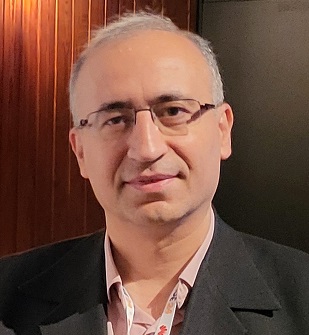
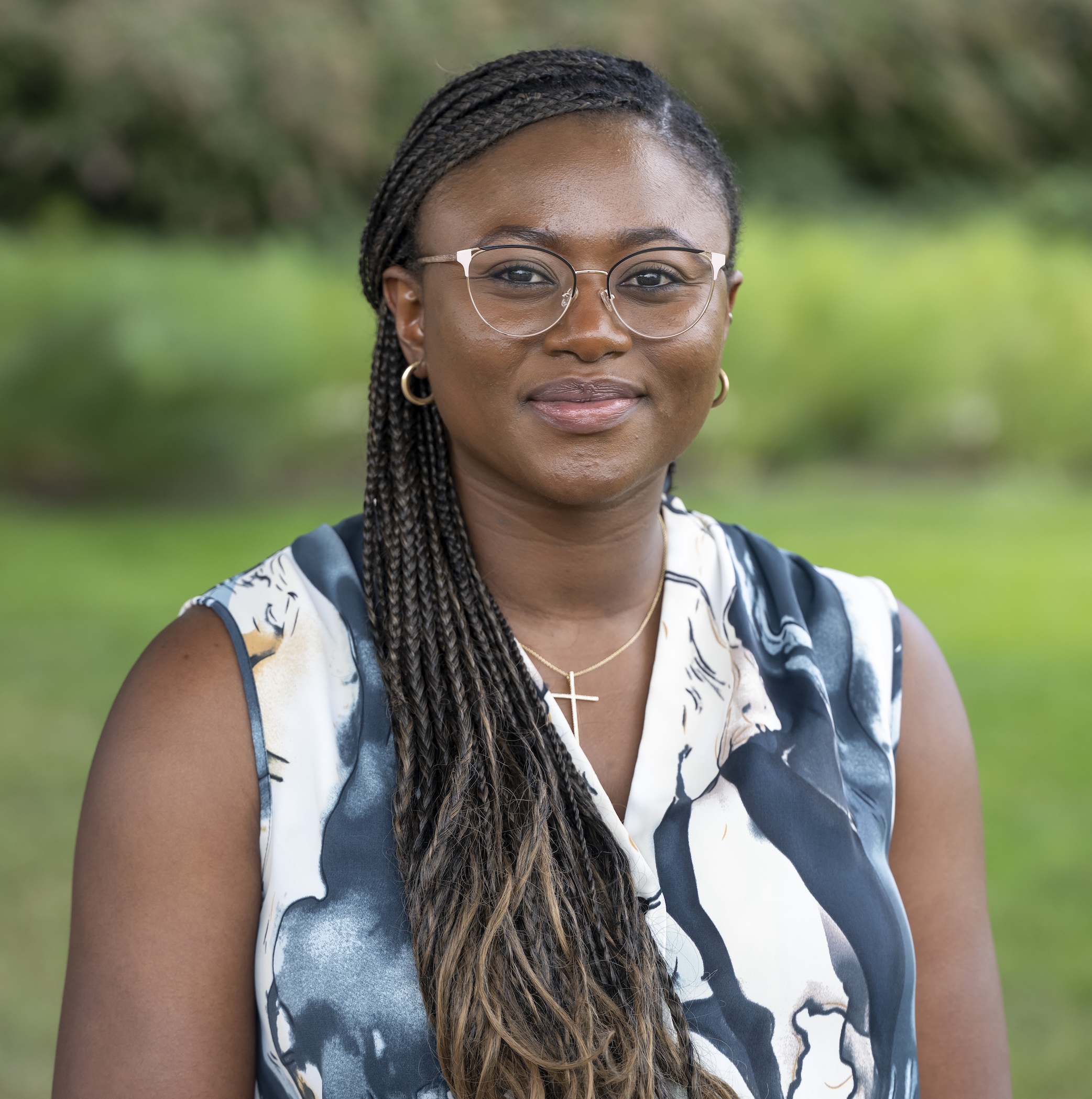
Dr Nour Ali is a Reader in the Department of Computer Science at Brunel University London , where she co-heads the Brunel Software Engineering Lab and serves as Vice-Dean of Education for the College of Engineering, Design and Physical Sciences. She holds a PhD in Software Engineering from Universidad Politecnica de Valencia, Spain, and a Major in Computer Science from Bir-Zeit University, Palestine. Research Interests: Software architecture for distributed and adaptive systems, integrating techniques like Model-Driven Engineering, Reverse Engineering, and Machine Learning. Teaching: Module leader for Software Project Management and supervisor of undergraduate group projects and final-year projects. Scientific Contributions: Over 70 publications in journals, conferences, and books. Key research areas include microservice architecture recovery, autonomic healthcare systems, and mobile self-adaptive architecture. Scientific Awards: Fellow of the Higher Education Academy (HEA). Membership: Deputy Editor-in-Chief for IET Software, member of multiple conference program committees, and reviewer for EPSRC, NWO, and other funding bodies.
Dr Sarah L. Bulloch is a Teaching Professor in the Department of Sociology at the University of Surrey. She holds a PhD in Sociology (Surrey), MSc in Social Research Methods (Surrey), and MA (Hons) in Social Policy & Law (Edinburgh). Her work focuses on social research methodologies, pedagogy of research methods, social trust, volunteering, and gender studies. Since 2014, she has led training courses in CAQDAS software (ATLAS.ti, MAXQDA, NVivo) for the CAQDAS Networking Project (CNP), emphasizing qualitative data analysis. She advises research teams on software applications and contributes to free online resources for students and researchers. Her research explores methodological challenges in qualitative analysis, including construct validity in trust studies and leveraging archival data (e.g., Mass Observation Archive). She has published in journals like Social Research Online and Social Indicators Research , and co-authored chapters in SAGE Handbooks on qualitative and online research methods. Her applied work includes reports on disability policy, legal provisions for cohabiting couples, and community legal services. Bulloch’s contributions bridge academia, third-sector organizations, and consultancies, promoting methodological rigor and accessibility in social research.
Aurélien Tabard is an Associate Professor at LIRIS (Laboratoire d'InfoRmatique en Image et Systèmes d'information), a joint research unit between Université Claude Bernard Lyon 1 and CNRS. His academic career spans over a decade with positions at prestigious institutions including the IT University of Copenhagen, University of Munich, and INRIA. He completed his PhD at Université Paris-Sud in 2009, focusing on supporting lightweight reflection on familiar information. Tabard's research centers on convivial informatics, exploring alternatives to computational platforms that consider digital limits and foster sufficiency, maintenance, autonomy, and durability. His work emphasizes participatory approaches to designing resilient infrastructures and tools for rapid prototyping by non-designers. He investigates software obsolescence, digital sufficiency, and the materiality of data physicalization through projects like Limites Numériques and PC4-Congrats within PEPR eNSEMBLE. His recent publications reveal strong trends toward sustainability in computing, examining how digital systems can be designed with longevity and environmental impact in mind. There's a clear progression from technical HCI research toward broader societal implications of digital technology, particularly focusing on how users experience aging devices and negotiate digital limits collectively. Honorable mention award for 'Obsolescence Paths: living with aging devices' at ICT4S 2023 Student Lea Mosesso received the prize for best MSc thesis from Conseil National du Numérique Tabard actively mentors PhD students including Maëva Calmettes (working on skill and expertise sharing), Edlira Nano (studying software obsolescence), and Lea Mosesso (researching digital sufficiency). He collaborates extensively with researchers across France and internationally, particularly with Inria Lille where he spent a sabbatical in 2023. His current projects involve understanding software obsolescence, digital sufficiency, and the interplay between micro design decisions and systemic forces shaping ICT. He leads the Limites Numériques team, which investigates how to design computational platforms that take digital limits into consideration. The team recently developed an exhibit on water in the digital sector that will travel to Rhône-Alpes in spring 2025. Tabard also contributes to participatory design tools and critical approaches to participatory design, working with colleagues like Nolwenn Maudet, Thomas Thibault, and Romain Rouvoy.
Víctor Adrián Braberman is a Full-time Associate Professor at the Department of Computer Science, Faculty of Exact and Natural Sciences, University of Buenos Aires (UBA), and a CONICET researcher. He serves as Co-director of the LaFHIS (Tools and Foundations for Software Engineering) Research Lab at UBA, where he leads significant research in formal methods and software engineering. His academic career demonstrates sustained excellence in both teaching and research within Argentina's premier academic institution. Braberman's research focuses on Formal Verification , particularly Model Checking of Timed Systems, Controller Synthesis, Formal Specification of event-based properties, Aspect-oriented modeling, and Software Architectures. His work also extends to Software Analysis , including Memory Consumption Prediction and Static and Dynamic Program Analysis. These interests position him at the intersection of theoretical computer science and practical software engineering applications, addressing critical challenges in system reliability and performance. His recent publications (2022-2025) reveal a clear trajectory toward integrating artificial intelligence with formal methods , particularly through the application of reinforcement learning to controller synthesis problems and the exploration of Large Language Models for software verification and falsification. The research shows increasing attention to scalability challenges in formal methods and the integration of probabilistic approaches to handle uncertainty in system environments. Automated Reasoning Amazon Research Award (ARA) (2024) Braberman has successfully supervised numerous PhD and Licentiate students, establishing a strong academic lineage in formal methods research in Argentina. His research has been supported by substantial grants including European Community projects (MEALS), ANPCyT PICT grants, UBACyT projects, and Microsoft Research funding. His leadership extends to directing major research initiatives in formal software engineering. As Co-director of LaFHIS, Braberman oversees a vibrant research ecosystem that bridges theoretical computer science with practical software engineering challenges. The lab maintains strong international collaborations, particularly with European institutions, and has secured competitive funding from both national and international sources, demonstrating the global relevance of their work in formal methods and software engineering.
Vera Pantelic is an Adjunct Assistant Professor in the Department of Computing and Software at McMaster University. Her research focuses on software engineering practices for model-based development in automotive systems, particularly centralized Electrical/Electronic (E/E) architectures, Simulink modeling, and supervisory control of probabilistic discrete event systems. Education: Not explicitly mentioned in the text. Her scholarly activity includes extensive contributions to conferences and journals in automotive software engineering, model transformation, and real-time systems. Her work addresses challenges in modularity, documentation, and compliance within automotive embedded systems. Her recent publications emphasize advancements in centralized E/E architectures, model-driven testing, and assurance cases for automotive safety. She collaborates on topics integrating software engineering principles with automotive domain requirements. Scientific Awards: No specific awards mentioned in the text. She serves as an advisor in software engineering, though specific student names are not listed. Her projects involve simulation-based testing, model refactoring, and compliance frameworks, supported by industry partnerships and academic grants. Her work contributes to labs and teams focused on automotive software reliability and model-driven engineering. No explicit lab or team affiliations are detailed in the provided text.
Liane Colonna is an Assistant Professor in Law and Information Technology at the Department of Law, Stockholm University , where she investigates ethical and legal challenges arising from AI-driven practices in higher education. She also engages in methodologically oriented research at the intersection of AI and Law, contributing to the Wallenberg AI, Autonomous Systems and Software Program – Humanities and Society. Additionally, Liane serves as the director of the Swedish Law and Informatics Research Institute (IRI) and is a member of the New York Bar since 2008. Primary Affiliation: Department of Law, Stockholm University Institute Leadership: Director, Swedish Law and Informatics Research Institute (IRI) Professional Status: Member of the New York Bar Research Interests: Ethical and legal challenges of AI in higher education Methodological approaches in AI and Law Data protection and privacy by design Regulatory frameworks for AI and emerging technologies Privacy implications of lifelogging and health IoT International data governance and surveillance law Publications demonstrate expertise in AI regulation, GDPR compliance, and privacy-preserving technologies, particularly for assisted living and educational contexts. Her work bridges technical implementation with legal accountability, emphasizing human oversight and ethical design.
Professor FOONG Sew Bun is an Adjunct Associate Professor at the Department of Information Systems and Analytics, School of Computing, National University of Singapore. He holds dual roles as Chief Technology Officer (CTO) for IBM Singapore and IBM ASEAN Software Group, and previously served as Managing Director at DBS Bank, Deputy Chief Executive at GovTech, and Global Head of Digital Transformation at Standard Chartered Bank. His career spans over three decades in IT leadership, technical architecture, and national-level advisory roles. Education: BSc and MSc in Computer Science from the University of Texas at Austin. Research interests focus on IT architecture patterns, service-orientation, software reuse, enterprise architecture, and fuzzy logic. He has authored/co-authored multiple IBM Redbooks and peer-reviewed publications in AI and software engineering. Awards include the 2016 IT Professional of the Year (SCS), IBM Distinguished Engineer distinction, and leadership accolades from IBM. He chairs the National Infocomm Competency Framework Steering Committee and has held key roles in Singapore's IT policy-making bodies. Teaching includes courses on digital transformation in finance (FT5002) and AI-driven business innovations (IS4261). His professional activities span technical councils, industry certifications, and academic collaborations.
Manuel Rigger is an Assistant Professor at the National University of Singapore (NUS), leading the TEST Lab (Trustworthy Engineering of Software Technologies) within the PL/SE group at the School of Computing. His research focuses on improving the reliability of data-centric systems through automated testing frameworks and formal methods. Education : PhD from Johannes Kepler University Linz (supervised by Hanspeter Mössenböck), postdoctoral work at ETH Zurich (Advanced Software Technologies Lab under Zhendong Su). Research Interests : Automated testing of database systems Programming language design and verification Incremental build systems Formal methods for software reliability Key Contributions : Developed tools like SQLancer (for finding bugs in databases) and CERT (performance issue detection). His work has uncovered over 800 bugs in real-world systems. Awards : Recipient of the ERC Consolidator Grant (2025) for groundbreaking research in software security and testing. Service Roles : Organizer of ICFP/SPLASH 2025 Outdoor Activities, committee member for OOPSLA Review, PLDI Artifact Evaluation, and ICSE Program Committee. Also actively involved in organizing workshops (e.g., Fuzzing & Software Security Summer School 2025).
Yung-Hsiang Lu is a Professor of Electrical and Computer Engineering at Purdue University's Elmore Family School of Electrical and Computer Engineering. His research focuses on mobile/cloud computing, energy-efficient computing, and image/video processing. He holds a BSEE from National Taiwan University (1992), an MSEE (1996), and a PhD (2002) from Stanford University. Dr. Lu's academic background includes significant contributions to VLSI and circuit design, with primary emphasis on computer engineering. His work spans theoretical and applied domains, including optimizing neural networks for edge devices, securing deep learning models, and leveraging large language models for software development. Recent research trends in his articles emphasize energy efficiency in AI systems, interdisciplinary applications of transformers (e.g., music analysis), and challenges in model interoperability and security. His publications also highlight innovations in global camera networks and real-time visual data analysis. While no specific grants or awards are explicitly mentioned, his extensive list of publications reflects sustained academic engagement. His educational contributions include developing C programming resources and teaching large-scale image processing using global camera networks. Dr. Lu's professional address is at Purdue's Materials and Electrical Engineering Building in West Lafayette, Indiana, where he maintains an active research lab focused on embedded systems and low-power computing innovations.
Philip Wadler is Professor of Theoretical Computer Science at the University of Edinburgh and Senior Research Fellow at IOHK. He is an ACM Fellow, Fellow of the Royal Society, and Fellow of the Royal Society of Edinburgh. His work spans programming language design, type systems, and formal verification, with significant contributions to Haskell, Java, and XQuery. He has held leadership roles in ACM SIGPLAN and served on editorial boards for major journals. Research Interests: Wadler's research focuses on the foundations of programming languages , including Gradual and session typing Language-integrated query Functional and logic programming XML data models Parametricity and free theorems Verification of smart contracts Publication Trends: Recent articles emphasize type safety, formal verification, and blockchain applications. Key themes include gradual typing (blame calculus), session types for concurrency, and logical foundations of programming. His 2015–2025 papers show sustained focus on type theory and language design . Awards & Recognition: POPL Most Influential Paper (2003 for 1993 work) SIGPLAN Distinguished Service Award Best Paper SBMF 2018 Royal Society-Wolfson Fellowship (2004–2009) ACM Fellow (2007) Fellow of Royal Society of Edinburgh (2005) Advising & Grants: He has supervised numerous PhD students in programs like the Centre for Doctoral Training in Pervasive Parallelism. His EPSRC Programme Grant "From Data Types to Session Types" (2013–2020) funded major advances in concurrency theory. Current work with IOHK explores blockchain verification using Haskell-based Plutus.
Prof. Bernd Domer is an Associate Professor at the Geneva School of Landscape, Engineering and Architecture (HES-SO) specializing in Building Information Modeling (BIM) , Geographic Information Systems (GIS) , and digital transformation of civil engineering . He leads multiple ongoing research projects including CU_OFROU_PAB (CHF278,844) focused on BIM-GIS workflows for noise barriers, and SousEtoile (CHF50,000) developing subsurface prediction models for urban planning. His work addresses critical challenges in software interoperability and point cloud processing for infrastructure digital twins. BA HES-SO in Architecture (HEPIA) BSc Civil Engineering (EPFL) BSc HES-SO in Civil Engineering (HEPIA) MSc HES-SO in Engineering (HES-SO Master) His research explores digital workflows for infrastructure projects, with over 15 recent publications examining topics like: Semantic segmentation of point clouds (2024) IFC standard optimization (2023) Underground confidence level modeling (2021) Swiss BIM implementation frameworks (2020) Construction waste management platforms (2018) He serves as Head of the MIC Group and co-directs the CAS in BIM Coordination . Active in international committees like EG-ICE and Bauen digital Schweiz , his work bridges academic research with practical implementation through collaborations with HEPIA , HEIG-VD , and institutions like the Swiss Federal Roads Office (OFROU) .
Prof. Dr. Stefan Eicker is a Professor and Chairholder of Business Information Systems and Software Engineering at the Faculty of Computer Science, University of Duisburg-Essen, Germany. He has held this position since April 2004, following previous academic appointments at the Technical University of Clausthal, the University of Essen, and other German institutions. His research spans multiple domains within information systems and software engineering, with a particular focus on digital transformation and emerging technologies. Prof. Eicker's research interests center around Smart Products , Service Systems , Internet of Things , and Platform Economics . His work explores how digital technologies transform traditional business models and create new value propositions. He has developed taxonomies for smart services and investigated quality factors in self-tracking solutions, demonstrating his interdisciplinary approach that bridges technical and business perspectives. His research particularly emphasizes the integration of physical and digital components in modern products and services. His recent publications (2019-2024) reveal a strong focus on digital platform economies, smart services, and IoT applications. The research shows a clear trajectory toward understanding value creation mechanisms in digital ecosystems, with increasing attention to practical applications in energy systems, self-tracking technologies, and business model innovation. His work often involves collaboration with colleagues like Gero Strobel and Tobias Brogt, indicating an active research group focused on digital transformation. Prof. Eicker has contributed significantly to the academic community through his extensive publication record spanning nearly two decades, with work appearing in journals, conference proceedings, and edited volumes. His research bridges theoretical frameworks with practical applications in business contexts. He maintains an active role in academic administration and education at the University of Duisburg-Essen, where he has contributed to curriculum development and the implementation of systems for managing academic information. His work on the bolognaT3 system demonstrates his commitment to improving academic processes through technology.
Kathryn Stolee is an Associate Professor in the Department of Computer Science at North Carolina State University. She received her Ph.D. in Computer Science from the University of Nebraska-Lincoln under Sebastian Elbaum after graduating from the Jeffrey S. Raikes School of Computer Science and Management. Her research spans multiple perspectives in software engineering: technical (program analysis), human (human aspects of software engineering, software product management), and educational (comparative comprehension of algorithms). Notable contributions include work on regular expression refactoring for improved comprehension, constraint solvers for code reuse identification, and cross-language code-to-code search to aid developers learning new languages. Dr. Stolee has secured over $2,000,000 in federal grants, including an NSF CAREER award. Her research combines analysis techniques (refactoring, semantic code search, code-to-code search) with human factors (comprehension, reuse, learning). Her scholarly contributions have been recognized with a National Science Foundation Faculty Early CAREER Award (2018) and a Best Paper Award at the International Symposium on Empirical Software Engineering and Measurement (ESEM, 2011). Actively engaged in the software engineering research community, Dr. Stolee serves as an author, reviewer, and organizer at top conferences. She is committed to mentoring the next generation of computer scientists and has developed educational interventions focused on software testing and code comprehension.
Abbas Heydarnoori is an Assistant Professor in the Department of Computer Science at Bowling Green State University (USA) since 2022, and previously held a faculty position at Sharif University of Technology (Iran) from 2012 to 2022. He earned his Ph.D. in Computer Science from the University of Waterloo (Canada, 2009), and M.Sc. and B.Sc. in Software Engineering from Sharif University of Technology (2001 and 1999). His research focuses on AI-driven software engineering (AI4SE/SE4AI), leveraging data science and AI to address challenges like fault localization, bug prediction, and code comprehension. He analyzes software repositories (e.g., GitHub, Stack Overflow) to improve developer productivity and software quality. He has contributed to tools like CrowdSummarizer and ExceptionTracer, and his work spans topics such as microservices architecture, API usage analysis, and code summarization. Teaching includes graduate/undergraduate courses on AI for Software Engineering, Database Systems, and Software Engineering. His service roles include editorial board membership at Science of Computer Programming , and PC membership in conferences like MSR, SANER, and FSE. His research group actively publishes on automated code analysis, documentation generation, and developer productivity tools, with a focus on empirical and data-driven approaches.
Hannah K. Bako is an Assistant Professor at the School of Data Science , University of Virginia, leading the ViDAR Lab . Her work bridges data visualization, human-computer interaction (HCI), and design, focusing on enhancing creativity through computational tools and example-aided workflows. Recruiting students for Fall 2026 Program Committee member for IUI'26, VISCOMM, and VIS'25 Research explores: How examples inspire visualization design processes Techniques to improve diversity in automated design generation Code augmentation strategies for D3.js authoring Semantic decomposition of visualization design workflows Teaching : Spring 2026 course DS 2003: Communicating with Data . Recent News : August 2025: Became Assistant Professor at UVA SDS July 2025: Two papers accepted at IEEE VIS'25 May 2025: Completed PhD dissertation defense