Prof. Dr. rer. nat. Rainer Leupers is a faculty member at RWTH Aachen University, chairing the Department of Software for Systems on Silicon. His research focuses on embedded systems, hardware-software co-design, virtual prototyping, and security in computing-in-memory architectures. He has published extensively on RRAM accelerators, logic locking, and neuromorphic security. Chair of Software for Systems on Silicon Research in hardware security and deep learning accelerators Recent publications on cross-tool virtual frameworks and thermal side-channel attacks His work bridges system-level modeling with practical security implementations, emphasizing reliability and performance in heterogeneous computing environments. Key trends in his 2025-2023 articles include compute-in-memory optimization, neural network inference efficiency, and security vulnerabilities in emerging hardware. Awards and formal recognitions are not explicitly detailed in the provided materials. He has not directly mentioned advising students or research grants in the given text fragments. The chair's contact information includes an office at ICT Cube 1, Electrical Engineering, Aachen, with direct email and website links.
Tsung-Yi Ho is a Professor in the Department of Computer Science at National Tsing Hua University, Taiwan. He holds the Hans Fischer Fellowship at the Technical University of Munich's Institute for Advanced Study (TUM-IAS). His primary research focuses on design automation for microfluidic biochips and nanometer integrated circuits, emphasizing reliability, optimization, and interdisciplinary applications in bioengineering. Ho received his Ph.D. in Electrical Engineering from National Taiwan University in 2005. He has held positions at National Cheng Kung University and National Chiao Tung University before joining National Tsing Hua University. His work bridges algorithmic design with practical biochip fabrication, addressing challenges like contamination control, routing optimization, and fault tolerance in microfluidic systems. His research interests span design automation for emerging technologies, including paper-based biochips and 3D microfluidic architectures. He has pioneered methods for integrating hardware-software co-design principles into biochip development, enhancing both functionality and reliability. His contributions include novel routing algorithms, contamination mitigation techniques, and reliability-aware synthesis frameworks. Ho has authored over 100 publications, including influential papers in IEEE Transactions on CAD and ACM journals. He serves on the editorial boards of multiple top-tier journals and chairs professional chapters for ACM and IEEE. His awards include the Humboldt Research Fellowship, Dr. Wu Ta-You Memorial Award, and Best Paper Awards at VLSI Test Symposium and IEEE Transactions on CAD. His current projects involve optimizing control-fluidic co-design for paper-based biochips and developing AI-driven frameworks for microfluidic functionality prediction. He collaborates widely, leading cross-disciplinary initiatives at TUM-IAS and Taiwan's academic institutions.
Volker Markl is a Professor at Technische Universität Berlin in the Institute of Software Engineering and Theoretical Computer Science, with additional affiliations at the Berlin Institute for the Foundations of Learning and Data (BIFOLD) and the German Research Center for Artificial Intelligence (DFKI). His research spans database systems, stream processing, and distributed data management with significant contributions to both theoretical foundations and practical implementations. Markl's research interests focus on next-generation data management systems, particularly for streaming and IoT environments. His work addresses critical challenges in distributed query processing, system integration, and performance optimization. He has pioneered approaches for stream processing in volatile infrastructures and developed innovative techniques for GPU-accelerated database operations. His NebulaStream project represents a major contribution to distributed stream processing systems. His publication record demonstrates consistent impact across top database venues including VLDB, SIGMOD, and ICDE. Recent work shows increasing focus on machine learning integration with database systems, privacy-preserving query processing, and educational approaches for teaching large-scale data management. Markl has mentored numerous researchers who have become prominent in the database community, with frequent collaborators including Steffen Zeuch, Tilmann Rabl, and Philipp Grulich. His leadership extends to major research initiatives and collaborations across European institutions.
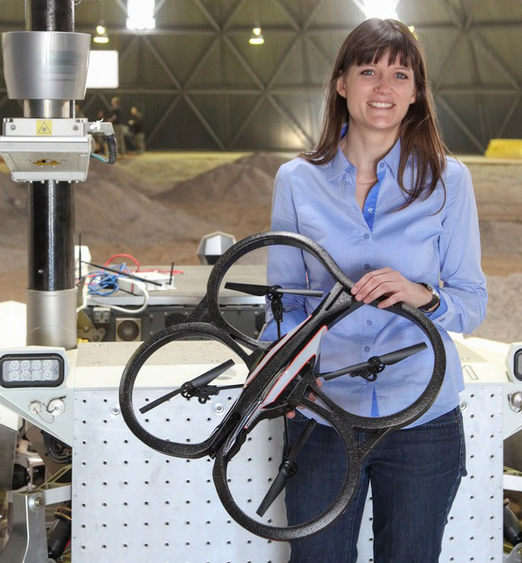
Prof. Angela Schoellig is the Alexander von Humboldt Professor for Robotics and Artificial Intelligence at the Technical University of Munich, where she leads the Learning Systems and Robotics Lab (formerly the Dynamic Systems Lab). She is a member of the Board of Directors at the Munich Institute of Robotics and Machine Intelligence (MIRMI) and serves as Coordinator of the Robotics Institute Germany (RIG). Previously, she was an Associate Professor at the University of Toronto and a Faculty Member of the Vector Institute for AI. Her educational background includes a PhD from ETH Zurich (awarded the ETH Medal and Dimitris N. Chorafas Foundation Award), an M.Sc. in Engineering Cybernetics from the University of Stuttgart, and an M.Sc. in Engineering Science and Mechanics from Georgia Institute of Technology. Prof. Schoellig's research focuses on enhancing robot performance, safety, and autonomy through learning systems that combine a-priori information with operational data. Her work addresses challenges in robots operating in unstructured, uncertain environments over long periods. Key research areas include Safe Robot Learning , Semantic Control for Robotics , Foundations of Robot Learning , Mobile Manipulation , and Mapping and Localization in Changing Environments . Her lab develops novel control and learning algorithms for single and multi-robot systems across aerial and ground applications. Her scientific contributions have been recognized with numerous prestigious awards including the NSERC Arthur B. McDonald Fellowship, RSS Early Career Spotlight Award, Sloan Research Fellowship, and being named to MIT Technology Review's 35 Innovators Under 35. NSERC Arthur B. McDonald Fellowship (2022) Alexander von Humboldt Professor (2020) Four-time winner of North American SAE AutoDrive Challenge (2018-2021) RSS Early Career Spotlight Award (2019) Sloan Research Fellowship (2017) MIT Technology Review's 35 Innovators Under 35 (2017) Prof. Schoellig actively mentors numerous PhD and Master's students, leads the University of Toronto's SAE/GM AutoDrive Challenge team, and serves as Faculty Advisor for the University of Toronto Aerospace Team. Her lab collaborates with various academic, industry, and government partners on real-world robotics applications including mining, self-driving vehicles, and aerial robotics. Current future research directions include Hardware and Software Co-Design, Autonomy through Deployment, and Learning with Contacts.
José Cano Reyes serves as a Reader (Associate Professor) in the School of Computing Science at the University of Glasgow, where he leads the Glasgow Intelligent Computing (GIC) Lab. His academic profile spans multiple premier conferences including ASE, CGO, ICSME, and EASE through 2025, demonstrating active engagement in computer systems research. His research focuses on the critical intersection of hardware and software systems for AI workloads, with core interests in Computer Architecture, Compilers, and Machine Learning. Recent investigations examine deep learning framework conversions, hardware accelerator robustness, and security implications of computational environments. This work addresses fundamental challenges in deploying efficient and reliable AI systems across diverse hardware platforms. Analysis of his 2023-2025 publications reveals a concentrated research trajectory toward optimizing deep learning deployment: 80% of recent work targets framework conversion errors and hardware compatibility issues, with strong emphasis on image recognition systems. Key methodologies include automatic fault localization (40% of publications), performance parameter analysis (30%), and domain-specific compiler techniques (30%). Leads Glasgow Intelligent Computing (GIC) Lab focusing on AI-system co-design Active contributor to ASE, CGO, and ICSME conference committees Maintains research presence through GitHub (jcanore) and Twitter (@jcanore)
Prof. Dr.-Ing. Jochen Steffens is a faculty member at the University of Applied Sciences Düsseldorf , affiliated with the Faculty of Media . His research spans interdisciplinary domains at the intersection of music, soundscapes, and cognitive-affective processes. Research Focus : Music listening behavior, soundscapes, noise perception, music recommendation systems, film music, and the psychological effects of sounds. Teaching : Supervises final theses and offers modules aligned with examination regulations of 2018, including topics in media informatics and mixed reality applications. Technical Contributions : Develops tools for soundscape exploration (e.g., Advanced Soundscape Search) and music information retrieval (MIR) systems for live performance visualization. Methodological Expertise : Utilizes computational music analysis, experience sampling, statistical learning, and multilevel modeling to investigate situational and demographic influences on auditory perception. Applied Research : Explores the impact of room acoustics on customer satisfaction in restaurants, motivational music in sports, and semantic expression in audio branding.
Hans-Joachim Hof is a Professor and Vice President for Teaching and Students at Technische Hochschule Ingolstadt (THI), where he has been employed since 2016. He serves as Head of Bachelor Cybersecurity (since 2022), Project Manager for THIsuccessAI (since 2021), and Head of the Research Group 'Security in Mobility' at the CARISSMA Institute of Electric, Connected and Secure Mobility. Additionally, he chairs the Scientific Board of the Center of Entrepreneurship and serves on the Supervisory Board of AININ. Professor, Head of INSecurity - Ingolstadt Applied IT Security Research Group (since WS 2016) Professor of Secure Software Systems, Head of MuSe - Munich IT Security Research Group at HAW Munich (2011-2016) Research Scientist at University of Karlsruhe (2008-2011) Research Assistant at Institute for Telematics, University of Karlsruhe (TH) (2003-2007) Professor Hof holds a doctorate in engineering and completed studies in computer science with a specialization in telematics and reliability architectures of systems, with a minor in law. His research spans automotive security, network security, and IT security, with recent focus on security in the Internet of Things, development processes for Secure Automotive Software, Automotive Blockchains, and Future Automotive Security Architectures. His work bridges theoretical security frameworks with practical automotive applications, particularly in electric vehicle security and battery management systems. Hof's recent publications reveal a strong trend toward automotive cybersecurity, with particular emphasis on electric vehicle infrastructure security, battery management systems, and vehicle security operations centers. His research increasingly addresses the security challenges of connected and autonomous vehicles, with growing attention to trust management systems and the security implications of AI in automotive contexts. The interdisciplinary nature of his work connects computer security with automotive engineering, energy systems, and digital forensics. Professor Hof has received numerous prestigious awards for his research contributions: Multiple Best Paper Awards at SECURWARE (2015, 2016, 2017) Best Paper Awards at CENTRIC (2010, 2012) Best Speaker Award at ESE Congress 2015 IARIA Fellow recognition Best Paper Award at ICIW 2010 As Editor-in-Chief of the International Journal on Advances in Security and Chairman of the German Chapter of the ACM, Hof plays a significant role in shaping security research discourse. His leadership extends to the German Informatics Society where he serves on the Executive Board. His research group INSicherheit (http://insi.science) actively collaborates with industry partners on real-world security challenges. Professor Hof leads the INSecurity research group at THI, which focuses on applied IT security with particular expertise in automotive contexts. The group maintains strong industry connections and operates within the CARISSMA research institute, which specializes in electric, connected, and secure mobility. Their work includes practical security testing, development of security architectures, and analysis of emerging threats in automotive systems, with notable contributions to EV charging security, battery management systems, and vehicle forensics.
Yu Jiang is an Associate Professor at the School of Software, Tsinghua University, China. His research focuses on software security with emphasis on fuzz testing, embedded systems, and database security. He leads the Software System Security Assurance Group which has discovered over 1,000 bugs in major system software with 300+ CVEs registered. Dr. Jiang's research interests include Software Engineering , Embedded Systems Security , and Cross-Layer Fuzzing . His work addresses vulnerabilities in operating systems, databases, communication protocols, and IoT firmware through innovative fuzzing frameworks. Key contributions include semantic-aware fuzzing for heterogeneous software stacks and learning-based vulnerability detection for embedded systems. His recent publications demonstrate strong trends in database security (Hulk, PUPPY, THANOS), ransomware defense (Fawkes, Preventing Disruption), and web security (JANUS). Research spans both theoretical advances in fuzzing techniques and practical industrial applications, with significant impact evidenced by numerous distinguished paper awards. Career Award, NSFC: 2026 Distinguished Paper Award, ISSTA: 2025 First Prize for Technical Invention, CCF: 2024 Distinguished Paper Award, USENIX Security: 2024 SIGSOFT Distinguished Paper Award, FSE: 2022 Dr. Jiang has advised over 50 graduate students including 20 PhD candidates. His research is supported by major grants including NSFC projects ($600,000 for Software Trustworthiness Construction and $350,000 for Distributed Database Reliability), Huawei ($80,000 for LLM-Powered Fuzzing), and Tencent ($120,000 for LLM-Powered Unit Testing). The Software System Security Assurance Group maintains strong industry partnerships with Huawei, Alibaba, Tencent, and Webank. The group operates cutting-edge infrastructure for fuzz testing across multiple domains including database systems, operating kernels, blockchain platforms, and industrial control systems. Current projects integrate LLM technologies with traditional fuzzing techniques to enhance vulnerability detection in complex software stacks.
Wing Lam is an Assistant Professor at George Mason University specializing in software engineering with a focus on software testing methodologies. His academic service includes program committee membership for major conferences including ASE, ICSE, ISSTA, and ESEC/FSE, as well as session chair roles across multiple tracks. His research interests center on flaky tests , mobile application testing , and continuous development optimization . Lam's work addresses critical challenges in test reliability, particularly order-dependent flaky tests and resource-related flakiness. His research bridges theoretical foundations with practical applications in modern software development pipelines, with recent expansion into AI-assisted testing methodologies. Lam's publication record shows a clear trajectory focusing on flaky test detection and mitigation, with approximately 60% of his recent work dedicated to various aspects of this problem. His research increasingly incorporates machine learning techniques for UI testing and test optimization, reflecting broader trends in the field. The consistent publication venue pattern across top software engineering conferences indicates strong recognition within the academic community. Lam has served in multiple leadership roles including Program Co-Chair for MOBILESoft Research Track and Committee Member for ASE's New Ideas and Emerging Results (NIER) Track. His involvement in workshops focused on flaky testing demonstrates his specialization in this niche area of software testing.
Dongyoon Lee is an Assistant Professor in the Department of Computer Science at Stony Brook University's College of Engineering and Applied Sciences. His research focuses on software engineering challenges in programming languages and security, with emphasis on regular expression analysis and empirical studies. His research interests include: Software reliability through regex generalizability testing Developer decision-making in security-critical contexts Empirical measurement of programming language features across ecosystems Security implications of common coding patterns His publication trends reveal strong focus on practical security vulnerabilities in developer tools, particularly analyzing regular expression implementations across multiple programming languages. The work combines empirical measurement with human factors analysis to identify systemic risks. Lee actively contributes to the software engineering community through leadership roles in major conferences: LCTES 2025: Program Committee & Steering Committee LCTES 2023: Program Chair & Session Chair CGO 2022: Author of HECATE compiler optimization work ASE 2019: Two regex-related research papers His advising and community engagement is demonstrated through consistent program committee service since 2016 across PLDI, LCTES, CC, CGO, and ASE conferences. He has chaired sessions on storage systems, scheduling, and techniques for specific domains, showing breadth in systems software research.
Prof. Dr. Matteo Große-Kampmann is a faculty member at Hochschule Rhein-Waal, serving as Professor of Distributed Systems within the Faculty of Communication and Environment. His research and teaching are centered on building secure, resilient, and reliable digital systems, with a strong emphasis on integrating information security from the earliest stages of system design. He is based at the Kamp-Lintfort Campus and actively leads research in the Cloud Resilience Lab. His research interests span a wide range of cybersecurity domains, including information security awareness, healthcare IT security, mobile and 5G/6G network security, threat modeling, and privacy in smart devices. He advocates for a proactive, design-first approach to security, particularly in increasingly interconnected environments. His work combines technical depth with human factors, examining both system-level vulnerabilities and user behavior in cyber risk contexts. The recent publications reflect a strong focus on applied cybersecurity research, with trends in mobile network penetration testing, privacy in wearables, governmental cybersecurity communication, and security in healthcare and childcare technologies. His work frequently appears in top-tier venues such as DSN, PETS, ESORICS, and ACSAC, often in collaboration with students and international researchers. His scientific contributions have been recognized with awards including an Honorable Mention Award at the International Conference on Mobile and Ubiquitous Multimedia (2024) and a Best Paper Candidate at the ACM Web Conference 2022. He also contributes to the academic community as a reviewer and technical program committee member for major security conferences including NDSS, PETS, ESORICS, and ACSAC. Prof. Große-Kampmann actively supervises bachelor's and master's theses, encouraging students to explore topics such as post-Darknet marketplaces, AI in cybersecurity education, and flood of information challenges. He emphasizes ownership, preparedness, and learning through failure, fostering independent research skills. He collaborates with students and industry partners on practical projects, particularly in the areas of penetration testing and security analysis. He is involved in several research initiatives, most notably the Cloud Resilience Lab , where he and his team investigate real-world security and privacy issues in modern digital systems. His work bridges academic research with practical applications, often receiving media attention, such as coverage in Wired , EFF , and Die Zeit for his study on childcare app security.
Nele Mentens is a full professor at both KU Leuven and Leiden University, where she leads cutting-edge research in applied cryptography, hardware security, and secure embedded systems. At KU Leuven, she is affiliated with the Faculty of Engineering Technology and the Electrical Engineering Department (ESAT), leading the Emerging Technologies, Systems & Security (ES&S) research group at the Diepenbeek campus. Simultaneously, she holds a full professorship at Leiden University’s Leiden Institute of Advanced Computer Science (LIACS), focusing on applied cryptography and security. She has been instrumental in numerous national and international research initiatives, including Horizon Europe and NWO-funded projects. Full Professor, KU Leuven (since 2023) Full Professor, Leiden University (since 2020) Associate Professor, KU Leuven (2014–2023) Post-doctoral Researcher & Lecturer, KHLim / KU Leuven (2007–2014) Ph.D. in Engineering Science, KU Leuven (2007) M.Sc. in Electrical Engineering, KU Leuven (2003) Her research focuses on secure and efficient hardware design, particularly for cryptographic applications on FPGAs, reconfigurable architectures, IoT security, and neuromorphic computing. She explores physical attack resistance, side-channel analysis protection, and trusted computing architectures, with applications in healthcare, industrial monitoring, and endpoint AI. Her work bridges theoretical cryptography with practical hardware implementations, emphasizing energy efficiency and real-time performance. The 15 most recent publications reflect a strong trend toward secure, energy-efficient, and intelligent embedded systems. Topics include neuromorphic AI accelerators, trusted IoT architectures, dynamic reconfiguration for side-channel protection, and secure medical data processing. These works span disciplines such as computer architecture, cybersecurity, digital design, and embedded systems, with a focus on hardware-software co-design and real-world deployment. Nele Mentens has received recognition for her contributions, including: Best Paper Award, DATE'16 Best Paper Nomination, AsianHOST'17 Best Paper Award, CHES'19 She has supervised over 15 Ph.D. students and post-docs, both current and former, and has served as principal investigator in approximately 25 funded research projects. Her work has attracted significant grants from Horizon Europe, NWO, FWO, and national innovation programs. She actively contributes to the academic community through editorial roles in top journals and leadership in major conferences. Nele Mentens leads the ES&S research group at KU Leuven and collaborates closely with LIACS at Leiden University. Her team includes Ph.D. students, post-docs, and research experts working on projects like NimbleAI, NeuroSoC, and TrustedIoT. She has also established secure electronics labs through infrastructure grants and maintains strong international ties with institutions such as EPFL, Ruhr University Bochum, and ETH Zurich.
Prof. Yu-Seop Kim is a Professor at the School of Software, Hallym University, Chuncheon-si, Republic of Korea. He holds a B.Eng. in Computer Science from Sogang University (1992), and M.Eng. (1994) and D.Eng. (2000) in Computer Engineering from Seoul National University. His academic work is centered on the integration of artificial intelligence with biomedical applications. B.Eng., Department of Computer Science, Sogang University, 1992 M.Eng., Computer Engineering, Seoul National University, 1994 D.Eng., Computer Engineering, Seoul National University, 2000 His research interests lie at the intersection of bioinformatics, computational intelligence, natural language processing, and deep learning , with a strong emphasis on medical applications. He actively explores how AI can assist in clinical diagnostics and healthcare documentation. The recent trend in his publications demonstrates a focus on AI-driven medical image analysis and automated clinical text generation . His work leverages convolutional neural networks and language models to interpret brain CT scans, detect aortic dissection, and augment medical reports for cerebrovascular diseases. These efforts reflect a consistent effort to bridge machine learning with real-world clinical challenges. While no scientific awards are listed in the provided text, his collaborative research output suggests active engagement in academic and clinical partnerships. Prof. Kim has advised multiple researchers and co-authored numerous publications, particularly in journals like Applied Sciences and Journal of Clinical Medicine . Although specific grant information is not mentioned, his research likely involves funding for AI in healthcare. He collaborates with colleagues such as Byoung-Doo Oh, Chulho Kim, and Bitnarae Kim, indicating a multidisciplinary team approach. His work appears to be conducted within a research group or lab focused on AI for medical imaging and language processing , potentially involving students and clinical collaborators from affiliated institutions like Chuncheon Sacred Heart Hospital. This environment supports translational research from algorithm development to clinical validation.
Philipp Weiss is a Researcher at the Technical University of Munich (TUM), affiliated with the Department of Electrical and Computer Engineering and the Chair of Embedded Systems and Internet of Things. Holding an M.Sc. degree, he actively contributes to research and teaching in embedded systems and IoT with a strong focus on automotive applications. His research spans Automotive Systems , Internet of Things (IoT) , Fail-Operational Systems , Reliability Analysis , Agent-Based Systems , and Distributed Systems . Weiss specializes in fail-operational automotive software design, dynamic agent-based mapping methods, and run-time reliability analysis, addressing critical challenges in autonomous vehicle safety and resilience through publications in DATE and DSD conferences. Analysis of his 2020-2021 publications reveals consistent focus on fail-operational architectures for automotive systems, with recurring themes in distributed agent-based modeling, timing analysis, and energy optimization within hybrid cloud environments. His work bridges theoretical reliability frameworks with practical automotive implementations. Weiss has supervised multiple Master's theses and final projects from 2019-2021 on topics including dynamic agent-based reliability analysis and fail-over timing for neural networks. As an educator, he serves as tutor for System Design for the Internet of Things and seminar manager for Advanced Seminar Embedded Systems and Internet of Things . Embedded within Prof. Sebastian Steinhorst's research team, Weiss contributes to major initiatives including Security for IoT and Autonomous Systems , Time-Sensitive Networking , and 6G Research Hub "6G-Life" , operating within TUM's IoT Remote Lab infrastructure for hands-on experimentation with industrial IoT systems.
Prof. Dr. Andreas Herkersdorf is a Full Professor and Chair of Integrated Systems at the Technical University of Munich (TUM) School of Computation, Information and Technology. His research focuses on application-specific multicore processors (MPSoC), FPGA-based prototyping, fault-tolerant systems, and energy-efficient architectures, with applications in IP packet processing, automotive systems, and visual computing. He has received multiple IBM innovation awards and serves on editorial boards including the DFG Review Board for computer architecture. Education: Dipl.-Ing. Electrical Engineering (TUM, 1987), Dr. techn. Electrical Engineering (ETH Zurich, 1991) Research: MPSoC architectures, autonomic computing, NoC resilience, FPGA acceleration, and self-optimizing systems. Awards: IBM Master Inventor (1998), IBM Outstanding Technical Achievement Award (2001), multiple IBM Innovation Achievement Awards (1996-2003) His recent publications emphasize hardware/software co-design, machine learning integration for runtime optimization, and network-on-chip innovations. He collaborates on projects involving 6G systems, smartNICs, and automotive communication protocols.