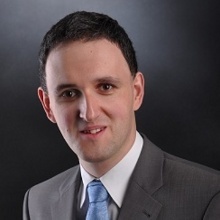
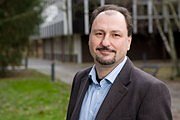
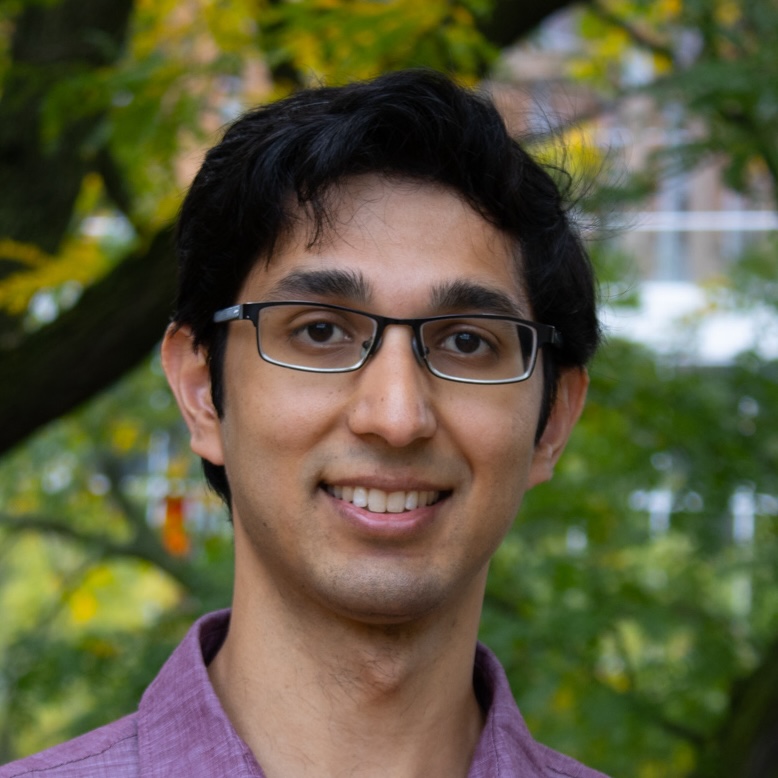
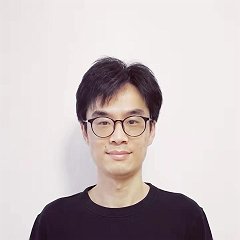
Prof. Dr. Matthias Weidlich is a faculty member at Humboldt University of Berlin within the Institute of Computer Science under the Faculty of Mathematics and Natural Sciences . His research focuses on Process Mining , Complex Event Processing , and Data Privacy with applications in Business Process Management and Scientific Workflows . Research Interests: Business Process Management and Process Mining Complex Event Processing and Stream Data Analysis Data Privacy and Security in Process Systems Scientific Workflow Systems and User Behavior Heterogeneous Network Embeddings Algorithm Design and Optimization Recent Publications (2023-2025) demonstrate expertise in: Efficient stream processing techniques Privacy-preserving process mining frameworks Scientific workflow analysis tools Graph neural network applications Multi-modal data integration Adaptive querying systems Contact: Office: Unter den Linden 6, 10099 Berlin Phone: 030 2093-41277 Email: matthias.weidlich@hu-berlin.de Web: hu.berlin/data
Patrick Henkel is a Professor at the Technical University of Munich (TUM) affiliated with the TUM School of Engineering and Design and the Chair of Communication and Navigation. He holds a professorship in Satellite Geodesy under Prof. Hugentobler. His research focuses on advanced positioning technologies, including Global Navigation Satellite Systems (GNSS), autonomous systems, and sensor fusion. He develops algorithms for precise positioning in challenging environments such as urban areas, alpine regions, and indoor spaces. His work also extends to environmental applications, such as snow hydrology and climate monitoring using GNSS signals. Henkel’s contributions include innovations in real-time kinematic (RTK) positioning, UAV navigation, and multi-sensor integration for robotics and autonomous vehicles. His research is supported by collaborations with industry and academic partners, addressing both theoretical and applied challenges in geodesy and navigation. Henkel leads projects on GNSS signal processing, satellite-based environmental monitoring, and autonomous driving technologies. He has contributed to the Galileo HAS service and developed methodologies for snow water equivalent estimation using multi-frequency GNSS signals. His expertise spans hardware-software co-design for navigation systems and algorithm optimization for high-precision positioning in dynamic environments. He actively publishes in top-tier journals and conferences, with a focus on advancing the reliability and accuracy of navigation systems across various domains. His advising and grants include funding for projects on sensor fusion, UAV-based measurements, and satellite receiver development. He collaborates with teams at TUM’s Navigation Lab and the Professur für Satellitengeodäsie, contributing to both academic and industrial applications. His work on low-bandwidth RTK dissemination and laser-tracker verified UAV positioning highlights his commitment to bridging theoretical advancements with real-world implementation.
Xin Peng is a Professor and Deputy Dean at the School of Computer Science, Fudan University, China. He leads the CodeWisdom research team focusing on intelligent software engineering techniques for development, maintenance, and operation of software systems. His educational background includes a PhD in Computer Science (2001-2006) and Bachelor's degree in Computer Science (1997-2001), both from Fudan University. He progressed through the academic ranks from Assistant Professor (2006-2010) to Associate Professor (2010-2015) and finally to Professor (2015-present). Professor Peng's research interests span Software Analytics, Intelligent Software Development, Microservice systems, and AIOps. His work leverages AI technologies including deep learning and knowledge graphs to develop intelligent software engineering techniques. A significant portion of his recent work focuses on applying Large Language Models to various software engineering tasks, including vulnerability detection, API usage analysis, and test automation. His publication record shows a clear trend toward increasingly sophisticated applications of AI in software engineering, with recent work heavily featuring LLMs for tasks ranging from vulnerability patch porting to resource leak detection. The research spans multiple domains including microservice systems, automotive software, and Web of Things security. Best Paper Award of ICSM 2011 ACM SIGSOFT Distinguished Paper Award of ASE 2018 and 2021 IEEE TCSE Distinguished Paper Award of ICSME 2018, 2019, and 2020 IEEE Transactions on Software Engineering Best Paper award for 2018 Professor Peng serves in numerous leadership roles including Deputy Director of CCF Technical Committee on Software Engineering, Co-Editor-in-Chief of Journal of Software: Evolution and Process, and Associate Editor for ACM Transactions on Software Engineering and Methodology. He has been actively involved in program committees for major software engineering conferences including ICSE, ASE, ESEC/FSE, and ICSME. He leads the CodeWisdom research team at Fudan University, which has developed several benchmark systems including TrainTicket for microservice research. The team's work bridges academic research with industrial applications, particularly in microservice systems analysis and intelligent software development tools.
James C. Davis is an Assistant Professor in the Elmore Family School of Electrical and Computer Engineering at Purdue University. He leads the Duality Lab, which focuses on the engineering of software-intensive computing systems with particular interest in how these systems fail and how those failures can be mitigated. His research takes a socio-technical approach, considering both human and technical perspectives in system engineering. Dr. Davis received his PhD in Computer Science from Virginia Tech, where he was advised by Dongyoon Lee. His research interests span empirical software engineering, security, safety, testing, and web technologies, with a strong emphasis on practical impact and measurement. He applies a socio-technical philosophy to his work, believing high-quality systems must be engineered considering both human and technical perspectives. His recent research focuses on software supply chain security, regular expression vulnerabilities (particularly ReDoS), pre-trained model security, and failure analysis in software systems. His work often involves empirical studies of real-world software systems and security practices, with a strong emphasis on practical impact and measurable results. Dr. Davis has received significant funding from the National Science Foundation, Google, Cisco, and Rolls Royce for his research. His publications appear in top-tier venues including ICSE, FSE, ASE, and USENIX Security. He has served on program committees for many major software engineering and security conferences. Among his notable achievements are being elevated to IEEE Senior Member in 2022, receiving the Ruth and Joel Spira Outstanding Teacher Award from ECE@Purdue in 2022, and multiple Best Paper and Best Poster awards. He has successfully mentored numerous PhD and Master's students, with several completing their theses on topics related to software security and engineering. Dr. Davis actively recruits graduate and undergraduate research assistants for his Duality Lab, which has produced influential work on software failure analysis, regular expression security, and machine learning supply chain security. His lab is supported by multiple federal and industry grants focused on improving the security and reliability of software systems.
Yingfei Xiong is an active Associate Professor at Peking University, China, specializing in software engineering and programming languages. With a consistent research trajectory from 2013 through 2026, Xiong has established themselves as a prominent figure in the software engineering research community, regularly contributing to top-tier conferences including SPLASH, ICSE, ASE, and PLDI. Dr. Xiong's research primarily focuses on program synthesis, automated program repair, and software analysis techniques. Their work bridges theoretical programming language concepts with practical software engineering applications, particularly in developing novel approaches for code generation, bug fixing, and program optimization. The research demonstrates strong interdisciplinary connections between traditional software engineering, programming languages theory, and emerging AI techniques. Analysis of Xiong's publication trends reveals a clear evolution in research focus, beginning with foundational work in API transformations and program adaptation around 2013-2016, shifting toward program repair techniques from 2017-2020, and most recently incorporating machine learning and neural approaches into program synthesis and repair (2021-2026). The work consistently addresses practical challenges in software development while maintaining theoretical rigor, with increasing integration of AI techniques in recent years. Dr. Xiong has served in various leadership roles across the software engineering conference ecosystem, including program committee membership and session chair positions at major conferences. Their extensive service demonstrates recognition by peers as a subject matter expert in software engineering and programming languages research. While specific grant information isn't detailed in the provided text, the sustained publication record suggests successful research funding.
Ori Lahav is a faculty member in the School of Computer Science at Tel Aviv University. His research is generously supported by an ERC Starting Grant and an ISF Grant. He actively supervises PhD and MSc students, and seeks highly motivated candidates for postdoc, PhD, and MSc positions in programming language theory, concurrency, and formal methods. Dr. Lahav completed his PhD at Tel Aviv University under the supervision of Arnon Avron. In 2014, he was a postdoctoral researcher at Tel Aviv University hosted by Mooly Sagiv. From 2014 to September 2017, he was a postdoctoral researcher at MPI-SWS in Germany hosted by Viktor Vafeiadis and Derek Dreyer. His primary research areas focus on programming languages and verification, with specialization in concurrency and relaxed memory models. He also has significant interests in proof-theory, semantics of non-classical logics, and automated reasoning. His work bridges theoretical foundations with practical applications in programming language design and implementation. Dr. Lahav's publication record shows a consistent trajectory of high-impact research in top-tier conferences including PLDI, POPL, OOPSLA, and ESOP. His recent work (2023-2025) demonstrates continued leadership in memory models, concurrency semantics, and verification techniques. His research spans both theoretical contributions in denotational semantics and practical tools for verification. Best Paper Award DISC 2024 Best Student Paper Award DISC 2024 Distinguished Artifact Award ESOP 2022 Distinguished Paper Award OOPSLA 2021 Kleene Award for Best Student Paper LICS 2013 Dr. Lahav actively advises students including Yoav Ben Shimon, Yotam Dvir, Amir Karniel, and Roy Margalit (PhD students), Yuval Katsman Ezra (MSc student), and has alumni including Ori Saporta (MSc) and Abhishek Kr Singh (postdoc, now Assistant Professor at IIIT Hyderabad). He has organized significant events including VMCAI 2024 and Dagstuhl Seminars on persistent programming. His teaching portfolio includes courses on Shared Memory Concurrency Semantics, Programming Language Foundations, and Software Foundations in Coq.
Paul R. Genssler is a Dr.-Ing. researcher at the Chair of AI Processor Design (AI-Pro) within the Technical University of Munich (TUM), actively advancing hardware solutions for artificial intelligence under Prof. Hussam Amrouch. His work bridges computer engineering and emerging technologies, focusing on overcoming fundamental limitations in conventional computing architectures through brain-inspired paradigms. His research spans critical domains in next-generation computing: Hyperdimensional Computing for robust pattern recognition and bioinformatics applications Neuromorphic and In-Memory Computing architectures for energy efficiency Reliability engineering for emerging memory technologies (FeFET, etc.) Quantum computing support systems including cryogenic embedded electronics Machine learning-driven transistor aging prediction and mitigation Analysis of his 15 most recent publications (2023-2024) reveals a dominant trend toward hyperdimensional computing as a unifying framework for addressing reliability challenges in emerging technologies. His work consistently integrates in-memory computing techniques to bypass von Neumann bottlenecks while targeting real-world applications like genome matching and unsupervised learning. A significant portion focuses on error-resilient implementations for unreliable nanoscale devices, demonstrating exceptional cross-stack expertise from transistor physics to algorithm design. As a core member of TUM's AI Processor Design group affiliated with the Munich Institute of Robotics and Machine Intelligence (MIRMI), Genssler collaborates extensively on projects spanning cryogenic quantum control systems, FPGA-based AI resilience, and monolithic 3D integration. The team operates at the intersection of semiconductor physics, computer architecture, and machine learning, with strong industry connections evident through publications at DATE, ASP-DAC, and ICCAD.
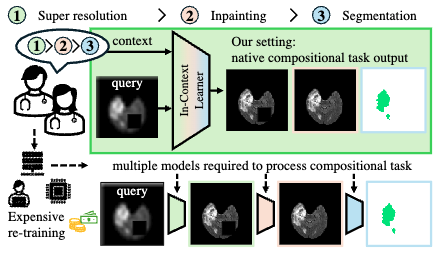
Prof. Dr. Erik Rodner is a faculty member at the University of Applied Sciences Berlin (HTW Berlin), where he serves as a Professor for Machine Learning and Data Science. He also contributes to the School of Engineering Sciences - Technology and Life. His research spans computer vision, machine learning, and biomedical applications, with a focus on learning with limited data, robust visual recognition models, and medical image analysis. He has developed innovative methods for medical diagnostics, industrial classification, and anomaly detection. Recent publications (2025-2016) highlight his expertise in visual in-context learning, semi-weakly segmentation, and active learning frameworks. He has collaborated with institutions such as ZEISS Group, Friedrich Schiller University Jena, and UC Berkeley. Scientific Awards: Award for Excellent Teaching (2023)
Prof. Ilia Polian serves as Head of the Institute of Computer Engineering and Chair of the Hardware-Oriented Computer Science (HOCOS) department at the University of Stuttgart. His leadership spans research, teaching, and institutional coordination across multiple high-impact projects. Prof. Polian's research focuses on developing circuit and system architectures based on both traditional and novel principles, including neuromorphic, stochastic, and approximate architectures. His second major research focus is systematic design methodology and design automation, with particular emphasis on safety and reliability properties of developed systems. Current research directions include quantum computing engineering, secure mixed-signal neural networks, and resource-efficient stochastic circuits for near-sensor computing applications. His recent publications demonstrate strong trends in quantum computing (particularly circuit partitioning and compilation for multi-QPU architectures), hardware security (including memristive cryptographic implementations), and AI-driven approaches to hardware testing and reliability. These works bridge fundamental computer architecture research with practical industrial applications. University of Stuttgart's Publication Prize for Paper on Partitioning of Quantum Circuits Prof. Polian actively supervises doctoral students including Devanshi Upadhyaya, and leads significant research grants such as the DFG Priority Program Nano Security which he coordinates. His department offers numerous thesis and research opportunities for students interested in cutting-edge hardware research. The Hardware-Oriented Computer Science department maintains strong collaborations with industry partners including IBM, Infineon Technologies, and Advantest, as well as academic institutions through the IQST Graduate School and QuantumBW initiatives.
Lionel C. Briand is a Professor of Software Engineering with shared appointments at the University of Luxembourg's SnT Centre for Security, Reliability, and Trust and the School of Electrical Engineering and Computer Science at the University of Ottawa. He holds a Canada Research Chair (Tier 1) in Intelligent Software Dependability and Compliance and serves as Director of Lero, Ireland's national software research center. His academic leadership spans over 25 years of collaborative research with industry partners across automotive, aerospace, energy, financial, and legal domains. Professor Briand's research focuses on software verification and validation, trustworthy AI systems, model-driven engineering, and empirical software engineering methodologies. His work bridges theoretical foundations with industrial applications, particularly in cyber-physical systems where machine learning components interact with safety-critical control systems. He has pioneered techniques for testing AI-enabled systems, GDPR compliance automation, and mutation analysis for space systems. His publication portfolio demonstrates consistent innovation in software testing, with recent emphasis on large language models for test generation, automated compliance checking, and safety analysis of deep neural networks. Key trends include black-box testing methodologies, metamorphic testing for security, and search-based approaches for DNN validation. IEEE Fellow and ACM Fellow IEEE Computer Society Harlan Mills Award (2012) ACM SIGSOFT Outstanding Research Award (2022) IEEE Reliability Society Engineer-of-the-Year Award (2013) ERC Advanced Grant recipient (2016) Fellow of the Academy of Science, Royal Society of Canada (2023) ICSE 2011 Most Influential Paper Award As Director of Lero and holder of a Canada Research Chair, Professor Briand leads major research initiatives including an ERC Advanced Grant on cyber-physical system modeling and testing. His industrial collaborations generate substantial grant funding, particularly in automotive safety validation and regulatory compliance automation. He mentors numerous researchers through his dual appointments and serves on program committees for top software engineering conferences. Professor Briand directs research activities at the SnT Centre's SVV department, focusing on software verification and validation. His team develops practical tools like MASS for space system mutation analysis and COREQQA for compliance requirements understanding, with strong industry adoption in automotive and aerospace sectors.
Tej Chajed is an Assistant Professor in the Department of Computer Science at the University of Wisconsin-Madison, where he conducts research in formal verification of systems software. His work focuses on building and proving the correctness of critical systems, particularly file systems and concurrent software. Dr. Chajed earned his PhD from MIT in the PDOS group, followed by a one-year postdoc at VMware Research before joining UW-Madison. His academic journey reflects a strong commitment to bridging theoretical formal methods with practical systems implementation. Chajed's research centers on formal verification techniques for systems software, with particular emphasis on concurrent and crash-safe systems . His work aims to eliminate bugs in critical software through mathematical proofs of correctness. Key contributions include DaisyNFS (a verified concurrent file system), the Perennial framework for reasoning about crash safety, and Goose for connecting proofs to Go code. His research spans the intersection of programming languages, operating systems, and formal methods, developing practical tools that bring verification to real-world systems. His recent publications demonstrate a consistent trajectory toward more practical and scalable verification techniques for increasingly complex systems. The research shows progression from foundational verification frameworks to applied work on specific systems like file systems, journaling, and distributed protocols. A notable trend is the focus on making verification more accessible and practical for systems developers, bridging the gap between theoretical formal methods and real-world software engineering. Dr. Chajed serves on numerous program committees including OSDI 2025 PC, PLDI 2024 PC, SySDW 2023 PC, ECOOP 2023 ERC, CPP 2023 PC, POPL 2023 PC, PLDI 2022 PC, POPL 2022 AEC, EuroDW 2021 PC, POPL 2021 AEC, PLDI 2020 AEC, POPL 2020 AEC, and SOSP 2019 AEC, reflecting his standing in the systems and programming languages research community. In teaching, Chajed has developed and instructed courses on systems verification, operating systems, and protocol verification. He previously helped create MIT's 6.826 (Principles of Computer Systems) during his PhD. His passion for technical communication was cultivated during his time as a Communication Fellow in the EECS Communication Lab at MIT, where he continues to offer guidance to students on writing and presentation skills. His research group at UW-Madison focuses on advancing the state of the art in systems verification, with current projects centered around practical verification frameworks for concurrent and crash-safe systems.
Bihuan Chen is an Associate Professor at the College of Computer Science and Artificial Intelligence, Fudan University, specializing in software engineering with focus on software supply chain security and trustworthy AI systems. His research spans multiple programming languages including JavaScript, Python, Java, and C/C++ across application and AI domains. Dr. Chen earned his B.Sc. and Ph.D. in Computer Science from Fudan University in 2009 and 2014 respectively, followed by postdoctoral research at Nanyang Technological University (2014-2017). His research interests include software supply chain risk assessment, trustworthy AI systems, and program analysis. His recent publications demonstrate strong focus on malicious package detection in NPM/PyPI ecosystems, vulnerability patch porting using LLMs, and safety verification for autonomous driving systems. The work shows increasing integration of machine learning techniques with traditional program analysis approaches, particularly evident in the 2024-2025 publications that leverage LLMs for vulnerability detection and code refinement. ACM SIGSOFT Distinguished Paper Award (FSE 2016, ASE 2018, ASE 2022, FSE 2025) IEEE TCSE Distinguished Paper Award (ICSME 2020, SANER 2023) CCF Prototype Competition Awards (2nd and 3rd Prizes) Dr. Chen has advised over 50 students including current PhD candidates and notable alumni now at Huawei, ByteDance, and other leading tech firms. His fuxi platform assesses security, legal, and maintenance risks across the software engineering lifecycle. He serves on program committees for major conferences including ICSE, FSE, ASE, and ISSTA, and as Associate Editor for the Journal of Software: Evolution and Process.
Jie M. Zhang is an Assistant Professor in the Department of Informatics at King's College London, specializing in the intersection of software engineering and artificial intelligence. Her research focuses on two main directions: AI for Software Engineering (leveraging AI technologies to automate software tasks) and Software Engineering for AI (applying SE principles to enhance AI system trustworthiness). Her educational background includes a PhD in Computer Science from Peking University, where she was supervised by Professors Lu Zhang and Dan Hao. Prior to joining King's College London, she was a Research Fellow at University College London working with Professor Mark Harman and Professor Federica Sarro. Dr. Zhang's research interests center on software testing, machine learning trustworthiness, fairness testing, bias mitigation in AI systems, and program analysis. Her work particularly examines how large language models can be utilized for code generation, test case creation, and program repair, while also developing techniques to detect and fix issues within AI models. Her recent publications demonstrate strong trends in evaluating and enhancing the trustworthiness of AI-generated code, with specific emphasis on fairness testing across various domains including autonomous driving systems, machine translation, and decision-making software. Her research increasingly focuses on the efficiency of generated code and detecting hallucinations in large language models. 2025 ACM Sigsoft Early Career Researcher Award for pioneering contributions to software engineering for AI IEEE TSE 2024 Best Paper Award for 'Stealthy Backdoor Attack for Code Models' FSE 2025 Distinguished Paper Award Royal Society International Exchange Grant recipient NMES Enterprise & Engagement Partnerships Fund recipient Dr. Zhang has served in numerous leadership roles across major software engineering conferences including as General Chair for AIware 2025, Area Chair for ASE 2025, and Steering Committee Member for ICST. She has advised multiple PhD students and received significant research funding for her work on LLMs and software engineering. Her research group collaborates with industry partners including Huawei and Facebook, and she leads projects such as ITEA GENIUS and ITEA GreenCode. She is actively involved with King's College London research hubs including the Trusted Autonomous Systems Hub, Security Hub, and Software Systems group, where her work contributes to developing trustworthy AI systems across multiple domains.
Juan Zhai is an Assistant Professor in the Manning College of Information & Computer Sciences (CICS) at University of Massachusetts Amherst, where she co-directs the Laboratory for Advanced Software Engineering Research (LASER) and participates in the UMass NLP group. Her academic career spans over 7 years of active service including program committee roles at top-tier conferences like ICSE, FSE, and ASE. Her research focuses on Software-AI Synergy with core areas including: Formal Specification Synthesis for precise software behavior definition Comment Generation and Maintenance using LLMs Trustworthy AI through bias detection and framework testing Deep Learning Infrastructure Reliability Recent work demonstrates strong emphasis on practical tools for AI safety and software dependability. Her publication trends show consistent output in top software engineering venues (ASE, ICSE, FSE) with increasing focus on AI/ML conferences (ACL, CVPR, ICLR). Key themes include metamorphic testing for deep learning frameworks, bias analysis in LLMs, and formal methods for specification synthesis. She actively serves the community through: Program committees for 13 major conferences Reviewing for 5 top journals including TOSEM and TSE 40+ total reviews across SE and AI venues Juan mentors PhD students including Gehao Zhang (research focus: Software Engineering, AI Safety) and teaches graduate courses like CS520 (Theory and Practice of Software Engineering) and CS692P (Hot Topics in SE Research). She leads the LASER lab which develops tools like C2S, CPC, and DevMuT for software reasoning and AI infrastructure testing.
Prof. (ret.) Dr.-Ing. habil. Wolfgang Schröder-Preikschat is a retired Full Professor at the Friedrich-Alexander University (FAU) Erlangen-Nuremberg, affiliated with the Chair of Computer Science 4 (System Software). His expertise focuses on distributed systems, operating systems, and resilient computing architectures. Affiliations: Faculty of Engineering, Department of Computer Science Key Roles: Former Chair of Computer Science 4, Co-lead scientist in Priority Program 2377 (Disruptive Main Memory Technologies) and Priority Program 2378 (Resilient Worlds) Research Contributions: Specializes in power-aware non-volatile memory systems (PAVE project), robust embedded data communication (ResPECT project), and fault-tolerant distributed systems. His work addresses challenges in main memory technologies, system resilience against failures/attacks, and energy-efficient computing. Projects: Leads initiatives like Power Failure-Aware Virtual Non-Volatile Memory (PAVE) and Robust, Power-Efficient Embedded Data Communication Stations (ResPECT), advancing system software reliability and efficiency. Contact: Room 0.054, Martensstr. 1, Erlangen. Email: wosch@cs.fau.de , Website: sys.cs.fau.de/~wosch