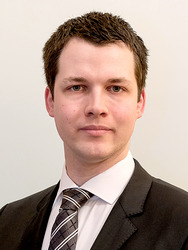
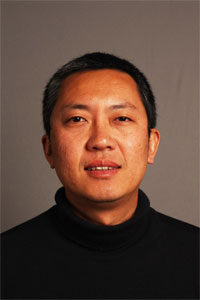
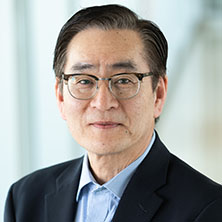
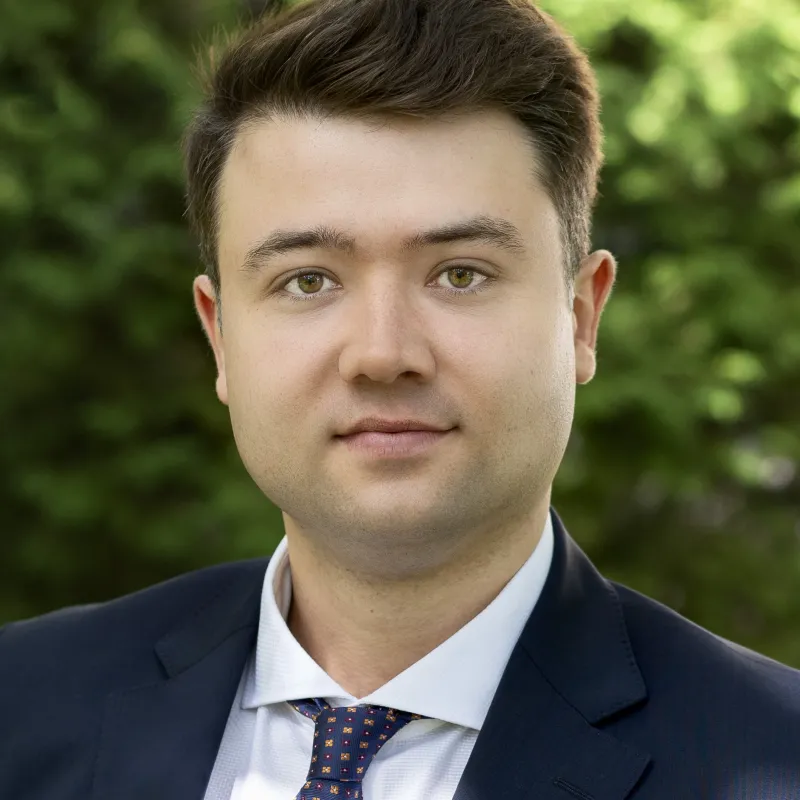
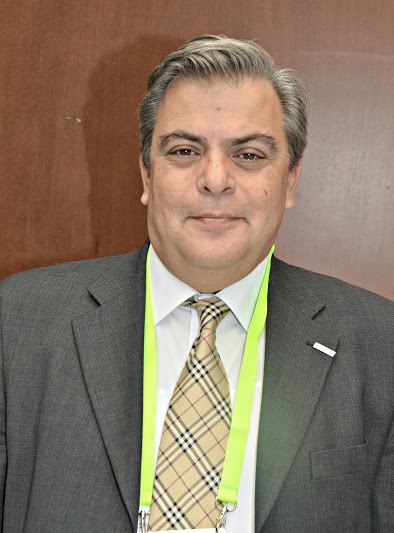
Prof. Dr. Stefan Stoll is a full-time faculty member at the Baden-Württemberg Cooperative State University Villingen-Schwenningen , where he leads the Business Informatics program with a focus on Business Engineering , Digital Technologies & Innovation , and Mental Models for Digital Transformation . He holds a doctorate in political science from the University of Freiburg (1996) and has been actively researching and teaching since 1997. His work bridges scientific concepts with practical applications , particularly in the digital transformation of industrial companies and data-driven economic systems . Research Focus: Digital transformation, technology forecasting, business engineering, and IT management Labs: Founder of the Digital Thinking Lab His publications span from 1997 to 2022, with recent works analyzing digital intelligence , process management , and strategies in network economies . Despite his extensive contributions, no specific scientific awards are documented in the provided texts.
Dr. Michael Grebe is a Consultant Lecturer at the Business School, affiliated with the Department of Information Systems. As a Senior Partner and Managing Director at The Boston Consulting Group GmbH, he bridges academic research with corporate technology strategy. Education University of Mannheim: Diplom Wirtschaftsinformatiker (1994) University of Regensburg: Doktor – Promotion (1997) His research focuses on Next Generation Technology Functions, encompassing Data & Digital Platforms, Agile Transformation at Scale, Strategic Workforce Management, Future Organizational Governance, and Technology as a Strategic Enabler. Additional areas include IT Simplification, Digital Maturity Benchmarking, Large-Scale Program Recovery, Post-Merger IT Integration, and Financial Services Architecture. Recent publications explore Agile Methodology, Generative AI adoption, Digital-Driven Business Resilience, and AI regulation readiness. Themes across his work emphasize technology leadership, digital maturity, and strategic IT-business alignment. Projects include: Rescuing core banking system transformations for 8 regional banks Designing post-merger integrations in Financial Services, Healthcare, and Energy Cost reduction programs in IT for financial institutions Developing frameworks for digital maturity assessment
Dirk Beyer is a Full Professor of Software Engineering and Formal Verification at the Department of Computer Science, Ludwig-Maximilians-Universität München (LMU). He leads the Software and Computational Systems Lab (SOSY-LAB) and focuses on developing models, algorithms, and tools for constructing and analyzing reliable software systems. His research includes software model checking, static analysis, formal verification of real-time systems, and software structure analysis. Key contributions include the development of tools like CPAchecker (a configurable software verification system), CCVisu (for visual software decomposition), and BLAST (a foundational software model checker). He actively participates in international competitions such as SV-COMP (Software Verification Competition) and Test-Comp (Software Testing Competition), advancing the state of the art in automated verification and testing. His work emphasizes tool integration, off-the-shelf component composition, and cooperative verification approaches. Dirk also contributes to the formal methods community through service roles, including organizing conferences like TACAS and VMCAI, and co-chairing international events.
Christoph Seidl is an Associate Professor in the Department of Software Engineering at the IT University of Copenhagen. His research focuses on software visualization, software archaeology, and the application of virtual reality in software engineering tasks. He leads the Immersive Software Archaeology project, exploring collaborative systems and legacy system analysis in virtual environments. Key research areas include software product lines, feature modeling, and model-driven development. Seidl has received awards such as the SoSyM Best Reviewer Award (2018) and SPLC'19 Distinguished Reviewer Award (2019). His work emphasizes innovative tools for software exploration, including immersive 3D visualization and collaborative note-taking systems in VR. He has published extensively on topics like variability management, configuration testing, and domain-specific languages. Research trends in his articles highlight advancements in using VR for software archaeology, collaborative software exploration, and methodologies for managing software evolution. His projects address challenges in legacy system understanding, feature model synthesis, and automated testing for configurable systems. Seidl collaborates internationally, with projects funded by the Independent Research Fund Denmark. His contributions span academic publications, datasets (e.g., VaMoS 2022 artifacts), and tool development for software product line engineering.
Leif Bonorden is a Research Associate and Doctoral Student at the Department of Informatics, Faculty of Mathematics, Computer Science and Natural Sciences, University of Hamburg. He works within the Software Engineering and Construction Methods research group led by Professors Matthias Riebisch and André van Hoorn. His academic background includes a B.Sc. and M.Sc. in Mathematics from Technische Universität Berlin (2010-2018), with thesis work in Probability Theory and Functional Analysis. Since 2019, he has been pursuing doctoral research at the University of Hamburg while also studying for an M.A. in Higher Education. 2010-2018: Student, B.Sc. and M.Sc. Mathematics, Technische Universität Berlin 2012-2015: Student Teaching Assistant, Software Engineering group, TU Berlin 2015-2017: Assistant Researcher, FZI Forschungszentrum Informatik 2019-present: Research Associate & Doctoral Student, University of Hamburg 2020-present: M.A. Higher Education student, University of Hamburg Bonorden's research centers on API evolution and deprecation processes, with particular focus on how deprecated web APIs can be detected through tracing techniques. His work bridges theoretical software engineering with practical applications in API design and documentation. He has developed expertise in systematic mapping studies of API deprecation practices and their impact on software maintenance. His publication record demonstrates consistent focus on API-related research, with multiple systematic studies and empirical analyses. He has also contributed significantly to software reengineering knowledge through the SREBOK initiative and explored innovative educational approaches for teaching software engineering concepts through research-based learning. Active member of Software Engineering and Construction Methods research group Contributor to German Informatics Society's software reengineering special interest group Member of ACM, GI (Gesellschaft für Informatik), and DMV professional organizations Bonorden serves on multiple university committees including the Committee for Teaching and Studies, Building Committee, Faculty Council, and various examination boards for computer science programs. His teaching portfolio includes Software Design, Introduction to Software Engineering, and Bachelor Seminars in Software Engineering at both University of Hamburg and TU Berlin.
Dr. Feng Chen is a Senior Lecturer at the School of Computer Science and Informatics, De Montfort University (UK), affiliated with the Cyber Technology Institute within the Software Technology Research Laboratory. With academic qualifications from Nankai University, Dalian University of Technology, and De Montfort University, he specializes in software engineering, focusing on Model Driven Architecture (MDA), Service Oriented Architecture (SOA), and Cyber-Physical Systems. PhD thesis: Modernizing legacy systems via MDA Research themes: Cloud/Edge Computing, Internet of Things, Ambient Assisted Living Systems His 15 most recent publications span topics in sensor data segmentation, service-oriented architectures, and data leakage prevention. Notable scientific achievements include the Second Class Dalian Information System Application Prize , Golden Snake Prize , and a Best Paper Award at Healthcom . He supervises PhD students in areas like real-time systems and smart environments, and has secured significant research grants including an EU Horizon 2020 project (€3.8M) .
Sung Shim is an Associate Professor and Chair of the Department of Computing and Decision Sciences at Seton Hall University. His research focuses on information systems implementation, business process reengineering, and computer simulation applications in healthcare and education. He teaches courses in Information Technology Management, Enterprise Resource Planning (ERP) Systems, and AI Management. Professor Shim earned his Ph.D. in Management (with a focus on Management Information Systems) from Rensselaer Polytechnic Institute's Lally School of Management. His work emphasizes cross-cultural educational evaluations, ERP system usability testing, and simulation-driven process optimization in healthcare settings. Key research trends include exploring ERP educational tools through simulations (e.g., ERPsim games), analyzing user perceptions of enterprise software, and applying simulation models to improve hospital workflows. Notable studies span topics from cross-cultural student presentations to surgical instrument distribution optimization. No scientific awards were explicitly mentioned. Advising and grant activities remain unspecified in the provided texts. His work contributes to both academic and practical domains through innovative educational technologies and healthcare process improvement methodologies.
Damian Kedziora serves as an Associate Professor at the Software Engineering Department within LUT School of Engineering Sciences in Lahti, Finland. His academic credentials include a Docentship in Business Process Automation Software (2022) and a Doctoral Degree in Industrial Engineering and Management (2018) from LUT University. With over a decade of industry experience in banking, ICT, and technology consulting, his research bridges practical digital transformation and theoretical software engineering, focusing on Low-code/no-code platforms for process automation Commercial aspects of software ecosystems AI integration in enterprise systems His recent work analyzes 2023-2025 trends in ISO 25010:2023 compliance Hybrid workforce dynamics Intelligent automation maturity Post-pandemic digital strategies Scientific recognition includes Docentship in Business Process Automation Software (2022) Available for consultation at Damian.Kedziora@lut.fi or via +358 44 768 4796. His career combines academic rigor with corporate experience in implementing digital solutions.
Dietmar Wikarski is a Professor in the Department of Economics at the Brandenburg University of Technology. His expertise spans Computer-Supported Cooperative Work (CSCW) , Systems Analysis , Business Process Modeling , and Quantitative Methods for System Evaluation . He has been a pivotal figure in advancing cooperative information systems and semantic technologies in both academic and administrative contexts. Education: Studied Mathematics at Donetsk University (1972-1977) Doctorate: Promoted in 1984 at Humboldt University of Berlin Wikarski’s research focuses on Workflow Management , Petri Nets , and E-Government . His work integrates qualitative and quantitative analysis for distributed systems, with applications in healthcare, education, and public administration. He has developed methodologies for BPMN tools, telemedicine communication, and semantic technologies in knowledge management. Recent publications highlight his contributions to sustainable rural development, taxonomy governance, and process modeling in academic and medical sectors. His teaching portfolio includes courses on Systems Analysis, Process Modeling, and Semantic Technology Applications for Business Informatics students. Research Highlights: Dynamic knowledge mapping using semantic web technology Modular process nets for system evaluation Petri net tools for workflow adaptability Exception handling in workflow management Integration of qualitative and quantitative software analysis Cooperative information systems engineering
Professor John-Paris Pantouvakis is affiliated with the School of Civil Engineering at the National Technical University of Athens (NTUA), where he serves in the Department of Structural Engineering. His expertise spans construction management, project scheduling, and productivity optimization. Email: jpp@central.ntua.gr Research interests include: Risk analysis in structural engineering Digitalization and automation in construction Evolutionary algorithm applications Disaster risk reduction frameworks Interdisciplinary education models Cost-benefit analysis under uncertainty Recent publications highlight trends in: 3D printing for emergency shelters Learning curve modeling Corporate responsibility metrics Optimized resource allocation Construction process simulation International project management standards
Isabel Maria Pinto Ramos is an Associate Professor with Habilitation at the Department of Information Systems, School of Engineering, University of Minho , where she leads the ISTTOS R&D Lab and contributes to the Algoritmi Research Centre . She has held leadership roles including Head of Department of Information Systems and President of the Portuguese Association for Information Systems . Her career spans academic, research, and international collaboration roles, including a Visiting International Professor position at the University of Münster, Germany. Academic Leadership : Doctoral Programme Director (2014-2019), IFIP TC8 Chair (2019-2023), Vice President for Membership Services at Association for Information Systems (2022-2025) Research Themes : Innovation management, knowledge systems, digital transformation, crowdsourcing, organizational memory, gender in STEM, and technology's socio-cultural impacts International Engagement : Collaborations with Carnegie-Mellon, University of Agder, Georgia State, and Federal University of Santa Catarina through research projects and mobilities Scientific Recognition : IFIP Outstanding Service Award (2009) IFIP Silver Core Award (2013) IIAKM Lifetime Academic Achievement (2021) Editorial Contributions : Associate Editor for Communications of the AIS (since 2020), editorial board member for Enterprise Information Systems , International Journal of Knowledge Engineering , and Revista de Administração Mackenzie Project Involvement : ERASMUS+, Horizon 2020, FP7 programs with focus on digital workplaces, knowledge management, and organizational resilience Her scientific output demonstrates consistent exploration at the intersection of Information Systems and Organizational Innovation , with recent works focusing on Digital Transformation (2021-2025), Crowdsourcing Platforms (2009-2016), and Organizational Memory (2005-2014). The 2023-2025 publications particularly emphasize Smart City Resilience , Multigenerational Workforce Challenges , and AI Development Democratization .
Jim Lee is a Professor in the Computer and Information Sciences Department at Brigham Young University–Hawaii, where he has served since 2007 (as Associate Professor) and was promoted to Professor in 2013. He previously held leadership positions including Dean of the College of Business, Computing and Government (2014-2018) and Dean of the Faculty of Math & Computing (2018-2022). His academic career spans over three decades with significant contributions to information systems research and education. Dr. Lee earned his educational credentials from prestigious institutions: Doctor of Philosophy in Management Information Systems (with minor in Electrical and Computer Engineering) from the University of Arizona (1995) Master of Accountancy in Information Systems Consulting (with minor in Statistics) from Brigham Young University (1989) Bachelor of Science in Accounting from Brigham Young University (1985) Dr. Lee's research focuses on collaborative information systems, with particular expertise in group elicitation of information systems requirements, database design and implementation, business process reengineering, and collaborative strategic planning. His work bridges the gap between theoretical frameworks and practical applications in collaborative software engineering, activity-based costing/management, and functional activity modeling. He has developed innovative methods and tools to support group data modeling in business process reengineering activities, which formed the basis of his doctoral research. Analysis of Dr. Lee's publication record reveals a consistent trajectory in collaborative technologies and information systems. His research evolved from foundational work in group data modeling and process modeling in the 1990s to more sophisticated applications in distributed collaborative writing, eGovernment settings, and enterprise resource planning systems. A notable thread throughout his career is the emphasis on practical tools and methodologies that enhance group decision-making and collaborative work in organizational contexts. His recent work shows increased focus on SAP systems and enterprise applications. Dr. Lee's scientific recognition includes: University of Arizona Foundation Award for Meritorious Performance in Teaching (1993) Throughout his career, Dr. Lee has mentored numerous doctoral students, serving on dissertation committees for six PhD candidates at the University of Arizona between 1997 and 2005. His grant activities are substantial, having assisted in writing multiple successful proposals funded by various agencies within the US Department of Defense totaling over $45 million. These research contracts involved conducting research, facilitating meetings, consulting with government agencies, and preparing reports. Dr. Lee has also been instrumental in establishing and directing the SAP Academic Program at BYU-Hawaii since 2009. Dr. Lee leads the SAP University Alliances Program at BYU-Hawaii and has served as Faculty Coordinator since January 2009. He directs the SAP Academic Program and has been instrumental in integrating enterprise resource planning systems into the curriculum. His technical expertise spans multiple SAP modules including FI, CO, MM, PP, SD, IM, WM, HCM, EAM, and PS, with certifications in SAP S/4HANA and ERP integration.
Daniel Alencar Da Costa is a Senior Lecturer in the Information Science Department at the University of Otago's School of Computing, Dunedin, New Zealand. Previously, he worked as a Postdoctoral fellow in the Software Reengineering Research Group at Queen's University, Kingston, Canada, under the supervision of Prof. Ying Zou. His educational background includes a BSc (2007) from University Centre of Pará (Belém, Brazil), MSc (2013) and PhD (2017) from the Federal University of Rio Grande do Norte (UFRN) under Prof. Uirá Kulesza, with additional supervision from Prof. Ahmed E. Hassan during his visit to the Software Analysis and Intelligence Lab (SAIL). Dr. Da Costa's research focuses on Empirical Software Engineering, where he employs machine learning, statistical methods, and qualitative techniques to understand software development phenomena. His work aims to build empirical knowledge that helps practitioners make informed decisions about development practices, such as release cycles and CI/CD implementations. He teaches undergraduate courses including INFO 201 (Developing Information Systems 1), INFO 202 (Developing Information Systems 2), INFO 301 (Applied Project), and INFO 310 (Software Project Management). His recent publications (2023-2025) demonstrate a strong focus on continuous integration practices, defect prediction, and empirical validation of software engineering techniques. The research shows increasing sophistication in analyzing real-world development practices and creating predictive models that can be applied in industry settings. His scientific contributions include multiple publications in top software engineering venues such as Empirical Software Engineering journal and the Mining Software Repositories (MSR) conference. His work has addressed important questions about CI practices in ML projects, JIT defect prediction, and the relationship between team dynamics and software quality. Dr. Da Costa currently co-supervises Chathrie Wimalasooriya and has served on program committees for major conferences including ASE, ESEC/FSE, ICSE, and MSR. He has also contributed to the community through reviewing and committee service across multiple years (2020-2026).
Esther Guerra is a Full Professor in the Department of Computer Science at the School of Engineering, Autonomous University of Madrid. She joined the university in 2010 after previously serving as a professor at the Universidad Carlos III de Madrid from 2004 to 2010. Her academic career spans over two decades with consistent contributions to software engineering research and education. Dr. Guerra's research focuses on Model-Driven Engineering (MDE), Domain-Specific Languages, and software testing. She has made significant contributions to language engineering, particularly in language product lines, metamorphic testing, and the development of tools for model-based engineering. Her work bridges theoretical foundations with practical applications, especially in chatbot development, low-code platforms, and augmented reality systems. She leads the MISo research group which actively develops tools like Merlin, MetaDepth, and Wodel-Test. Her publication record shows a consistent trajectory of high-impact research, with recent work focusing on adaptive modeling languages, chatbot engineering, and test amplification frameworks. She has published in top-tier journals including ACM Transactions on Software Engineering and Methodology, Journal of Systems & Software, and Software and Systems Modeling. As an educator, Dr. Guerra has taught numerous courses including Software Analysis and Design Project, Automated Software Development, and Model-Driven Software Development. She has supervised numerous undergraduate and master's theses focused on practical applications of model-driven techniques. Dr. Guerra is actively involved in the academic community, serving on program committees for major conferences including ASE, MODELS, ICSE, and SPLASH. She has contributed to the organization of several workshops and symposia focused on software engineering topics.
Dr. Arun Kumar is a Senior Lecturer in the School of Engineering at RMIT University. His research focuses on Logistics and Supply Chain Management, Healthcare Systems Management, Operations Research, and Reliability Engineering . He actively supervises research students in areas such as autonomous vehicles, supply chain security, and urban logistics. His work integrates system dynamics, simulation, and advanced analytics to address complex operational challenges. Teaching interests include Systems Engineering , Logistics Management , and Operations Research , reflecting his commitment to bridging academic and practical applications. Dr. Kumar has contributed over 100 research outputs, emphasizing supply chain collaboration, sustainability, and healthcare process optimization. Key Research Areas: Supply Chain Maturity Models, RFID in Healthcare, Greenhouse Gas Emissions Forecasting, and Autonomous Vehicle Transition. Collaborations: IEEE, Australian Road Research Board (ARRB), and industry partners in logistics and healthcare. His articles explore topics ranging from ERP system impacts to sustainability indices in road infrastructure, showcasing interdisciplinary expertise.