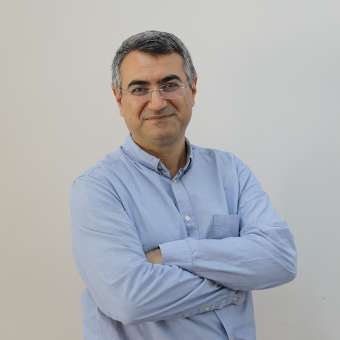
Dr. İsmail Arı is an Assistant Professor in the Computer Science department at Özyeğin University . He holds a PhD from the University of California, Santa Cruz (2004), MS from University of Maryland (2000), and BS in Electrical & Electronics Engineering from Boğaziçi University (1998).
Dr Mahir Arzoky is a Lecturer in the Department of Computer Science at Brunel University London's College of Engineering, Design and Physical Sciences. He holds a PhD from Brunel University London (2015) and has extensive research experience in artificial intelligence and software engineering. His research focuses on: Artificial Intelligence and Intelligent Data Analysis Search Based Software Engineering (SBSE) Clustering algorithms and heuristic search methods Software refactoring and quality assessment Data mining applications in healthcare and education Analysis of his 15 most recent publications (2018-2022) reveals strong interdisciplinary work bridging computer science with healthcare (diabetes patient modeling, medical imaging) and education (chatbot design, algorithm visualization). His technical focus centers on clustering optimization, refactoring impact analysis, and explainable AI, with frequent use of empirical validation methods. Key collaborations include researchers like Stephen Swift, Steve Counsell, and Giuseppe Destefanis. Dr Arzoky has secured significant research funding through EPSRC grants including: AQUATIC project (EP/M024083/1): Assessing Test Suite Quality in Industrial Code FIAR-NET (EP/N011627/1): Fault Analyses in Industry and Academic Research Network His professional network includes active collaborations across computer science, healthcare informatics, and educational technology domains, with recent work extending into transformer models for healthcare SQL conversion and graph partitioning for software modularization.
Jun Li is a Professor at the University of Oregon within the College of Arts and Sciences . He serves as the Director of the Network & Security Research Laboratory and Founding Director of the Center for Cyber Security and Privacy. His academic career spans over 100 peer-reviewed publications and significant contributions to cybersecurity, networking, and distributed systems. PhD (UCLA, 2002) - Outstanding Doctor of Philosophy M.E. (Chinese Academy of Sciences, 1995) - Presidential Scholarship B.S. (Peking University, 1992) His research focuses on Cyber Security & Privacy , Computer Networking , and Distributed Systems , particularly examining: DDoS defense mechanisms Internet routing security DNS security Blockchain applications IoT security protocols Social bot detection Recent work (2023-2024) emphasizes adaptive DDoS filtering, cryptojacking detection, and security frameworks for smart homes. His publications span top-tier venues like IEEE Transactions on Dependable and Secure Computing , ACM Transactions on Internet of Things , and INFOCOM . Scientific honors include: ACM Recognition of Service Award University of Oregon Faculty Excellence Award Ripple Faculty Fellowship Multiple best paper awards He has received funding from the NSF (including CAREER award), DHS , Intel , Narus , Ripple , and the State of Oregon . His work extends to patents in hybrid peer-to-peer security protocols.
Prof. Dr. Kumru Didem Atalay is a distinguished academic at Başkent University, specializing in Industrial Engineering . With a PhD in Statistics from Ankara University (2007), she has made significant contributions to Operations Research , Fuzzy Logic , and Decision Support Systems . Her work bridges statistical analysis with real-world applications in healthcare logistics, pandemic response, and manufacturing optimization. Education: PhD (2007), MS (2000), BS (1998) in Statistics from Ankara University Current Role: Professor in Industrial Engineering at Başkent University Her research focuses on stochastic processes , fuzzy modeling , and healthcare operations , particularly in pandemic-era service quality and microchannel manufacturing. She has developed innovative methods for project scheduling , risk analysis , and multi-criteria decision-making . Recent publications examine Covid-19's impact on education quality and fuzzy linear programming for project scheduling . She applies intuitionistic fuzzy models to optimize manufacturing systems and hesitant fuzzy regression for pandemic death count estimation. Scientific recognition includes a Runner-up Prize at the 15th ICMSEM (2021) and a Bronze Medal at ISIF21 (1970). She supervises advanced research on topics like multi-trip home healthcare routing and fuzzy quality function deployment .
Juho Leinonen is an Academy Research Fellow at Aalto University's Department of Computer Science, Finland, specializing in AI-enhanced computing education. His work focuses on leveraging large language models (LLMs) to transform programming instruction through personalized learning analytics and educational technology. Education Background: PhD in Computer Science, University of Helsinki (2019) Docent (Adjunct Professor) in Computer Science, University of Helsinki Postdoctoral research at The University of Auckland, Aalto University, and University of Helsinki Research Focus: Leinonen's work centers on three interconnected pillars: (1) developing fine-grained learning analytics to decode student programming behavior; (2) applying LLMs to create adaptive educational tools for diverse learners; and (3) implementing learnersourcing strategies for scalable resource generation. His research particularly addresses challenges in multilingual programming education and responsible AI integration, with emphasis on non-native English speakers and novice programmers. Publication Trends: Recent publications (2024-2025) reveal a concentrated exploration of generative AI in computing education, with 85% focused on LLM applications. Key themes include synthetic data generation for educational research, multilingual prompting systems, and ethical frameworks for AI feedback. His work demonstrates both practical implementations (e.g., autocompletion quizzes) and critical analyses of AI limitations in educational contexts. Awards & Recognition: ACE2024 Best Paper Award for LLM-generated worked examples study UKICER 2023 Best Paper Award for achievement goals research ACE 2023 Best Practitioner Paper ICER 2022 Best Paper Award for programming exercise generation SIGCSE TS 2022 Best Paper in Computing Education Research ACE 2021 Best Paper Award for contextualized problem descriptions Research Leadership: As principal investigator of the Academy of Finland-funded project 'Advanced Student Modeling and Tailored LLMs for Personalized Learning', Leinonen supervises PhD students and postdocs while leading international collaborations with institutions including The University of Auckland and University of Helsinki. His grant portfolio focuses on ethical AI deployment in education and cross-cultural computing pedagogy. Collaborative Networks: He maintains active partnerships with leading computing education researchers like Paul Denny (Auckland), Arto Hellas (Aalto), and Andrew Luxton-Reilly (Auckland), evidenced by 90% co-authored publications. His work appears consistently in top venues including ACM SIGCSE, ICER, and ACE conferences.
Dr. Alfonso José López Rivero is a Professor at the School of Computer Science , Pontifical University of Salamanca , specializing in Statistics and Operations Research . He earned his PhD from the Universidad Pontificia de Salamanca in 2004 with a thesis on Software Quality in Information Selection and Classification , supervised by Dr. Luis Joyanes Aguilar. Education: PhD in Computer Science (2004), Universidad Pontificia de Salamanca. His research spans Digital Transformation , Machine Learning , and Sustainable Mobility , with a focus on applications in healthcare, battery recycling, and strategic management. Recent work includes IoT systems for voice-based disease detection and AI-driven sustainability in SMEs. Key trends in his publications include Electric Vehicle (EV) Optimization , IoT in Healthcare , and Ethical AI . He leads the Gestión tecnológica y ética del conocimiento research group, emphasizing technological ethics and data-driven decision-making.
Lei Zhang is an Assistant Professor in the Department of Sociology at the University of Colorado - Colorado Springs, part of the College of Letters, Arts & Sciences. He specializes in quantitative methodology and social network analysis, with expertise in statistical modeling, causal analysis, and data mining. Position: Assistant Professor, Department of Sociology Institution: University of Colorado - Colorado Springs School: College of Letters, Arts & Sciences Contact: (719) 255-4125 | lzhang4@uccs.edu | ACAD 428 Dr. Zhang's research interests span multiple areas including social network analysis, personal and organizational social capital, social inequality and mobility, labor market dynamics in emerging economies, entrepreneurship, mental health, and Chinese and East Asian societies. He is proficient in multiple statistical software packages including Stata, SPSS, SAS, R, Mplus, LISREL, EQS, and UCINET. His recent research focuses on two main areas: the causal effects of guanxi-based corporate social capital on business performance in China, and intergenerational social mobility in the United States. Dr. Zhang's educational background includes a Ph.D. in Sociology from the University of Minnesota (2016), an M.Phil. in Social Science from Hong Kong University of Science & Technology (2007), and both M.A. and dual B.A./B.S. degrees from Peking University in China (2005 and 2002 respectively). His scholarly publications demonstrate expertise across sociology, Chinese studies, social network analysis, and sports sociology. His work spans topics from Chinese social capital and guanxi networks to Olympic sports performance analysis and mental health during the pandemic. Dr. Zhang teaches both graduate and undergraduate courses in statistics and research methods, and shares his methodological expertise through online teaching resources including YouTube videos on SPSS and Stata for social statistics.
Dr. Yves Le Traon is a Full Professor of Computer Science at the University of Luxembourg, where he serves as Vice-Director of the Interdisciplinary Centre for Security, Reliability and Trust (SnT). He leads the 25-member SerVal research group (SEcurity, Reasoning and VALidation), focusing on software testing, security, and data-intensive systems. Previously, he chaired the CSC Research Unit (2013-2016) and pioneered model-driven engineering at INRIA. PhD and engineering degree in Computer Science from Institut National Polytechnique, Grenoble (1997) Former Associate Professor at University of Rennes (1998-2004) His research spans three main areas: innovative software testing and repair , Android security through static analysis and machine learning , and robust machine learning system design . Collaborations include industry leaders like PayPal, CREOS, and Cebi in fintech, smartgrid, and industry 4.0 domains. Awarded IEEE Fellow (2022) and Facebook Testing & Verification Research Award (2019) , he chairs editorial boards for STVR, SoSym, and IEEE Transactions on Reliability. His team has produced 20+ PhD graduates including Li Li (Monash University), Donia El Kateb (European Investment Bank), and Alexandre Bartel (SnT Research Associate). Commercial impact includes co-founding Datathings for runtime AI decision systems.
Lorenzo Strigini is a Professor of Systems Engineering at City St George's, University of London , where he has been affiliated since 1995 and served as Director of the Centre for Software Reliability from 2012–2024. His research focuses on dependability assessment , fault tolerance , and defense in depth for safety, security, and reliability in computer-based and socio-technical systems. He has also explored high-speed networking during his earlier career at the Italian National Research Council (IEI-CNR) and as a visiting scientist at UCLA and Bell Communications Research.
Domingo Savio Rodríguez Baena is a Professor at Pablo de Olavide University, affiliated with the Department of Computer Languages and Systems. His research focuses on data mining, bioinformatics, and computational biology, with a particular emphasis on biclustering algorithms, gene co-expression networks, and high-performance computing applications. PhD in Engineering, Data Science, and Bioinformatics (2012) from Pablo de Olavide University His work spans interdisciplinary domains, including recommender systems , livestock behavior analysis , and biological data interpretation . Recent articles highlight his contributions to multi-GPU optimization , ensemble learning , and historical database construction . Key collaborations include the DATAi Intelligent Data Analysis and DASE Data Analytics Science & Engineering research groups. He has developed tools like the CyEnGNet–App for gene network visualization and BIGO for gene enrichment analysis. Contact: dsrodbae@upo.es
Martha Tsigkari serves as an Associate Professor at The Bartlett School of Architecture, University College London (UCL), where she bridges architectural practice with cutting-edge computational research. Her position situates her at the forefront of digital transformation in the built environment, with institutional affiliations spanning UCL's Faculty of the Built Environment and direct contributions to UN Sustainable Development Goals 4 (Quality Education), 11 (Sustainable Cities), and 13 (Climate Action). Her research program critically examines the integration of artificial intelligence, machine learning, and cognitive psychology into architectural design processes. Key investigations include spatial and visual connectivity analysis, XR-enhanced collaborative design environments, and AI-driven optimization of building performance. She explores how digital tools reshape creativity, professional identity, and sustainability outcomes in architecture, with particular focus on data commoditization, skills evolution, and human-AI collaboration in design workflows. Her interdisciplinary approach connects architectural theory with computational neuroscience and industrial digitalization trends. Tsigkari's publication trajectory reveals a clear evolution from computational structural analysis (2012-2017) toward AI ethics and professional transformation (2022-2024). Early work established foundations in performance-driven facades and material systems, while recent output confronts existential questions about architectural practice in the AI era. Her scholarship consistently addresses the tension between technological capability and human-centered design values, with growing emphasis on sustainable development frameworks and educational implications. Scientific Awards: No major awards are documented in the available records. Advising and Grants: While specific supervisees and funding mechanisms aren't detailed in current sources, her extensive collaborative network across 30+ publications indicates active mentorship and research leadership. Co-authorship patterns suggest involvement in multi-institutional projects addressing AECO industry digitalization, with potential ties to UK research councils and industry partnerships like RIBA. Labs and Teams: Tsigkari operates within The Bartlett's digital research ecosystem through recurring collaborations with Kosicki, Tarabishy, and Psarras. Her work manifests in experimental toolsets including Glaucon (XR design environment), HYDRA (optimization framework), and SandBOX (conceptual design system), indicating leadership in UCL's computational design labs focused on human-AI interaction and sustainable building technologies.
Jessica Young Schmidt is an Associate Teaching Professor in the Department of Computer Science at North Carolina State University, serving as ABET Coordinator since 2017 and Course Coordinator for CSC226: Discrete Mathematics. Her primary focus is undergraduate education, particularly CSC116: Introduction to Computing – Java and CSC226, where she implements flipped classroom models and comprehensive end-of-semester exercises. Her educational background includes: Ph.D. in Computer Science, North Carolina State University, 2012 M.S. in Computer Science, North Carolina State University, 2009 B.S. in Computer Science and Mathematics, Roanoke College, 2007 Dr. Schmidt's research centers on computer science education, emphasizing active learning, instructional design, and software engineering pedagogy. She has pioneered methods like collaborative software engineering exercises for CS1 materials and frameworks for assessing critical thinking, with her work on end-of-semester integration earning a SIGCSE 2020 award. Her publications reveal an evolution from privacy policy analysis (2009-2012) toward educational innovation in recent years. Her scholarly contributions demonstrate consistent focus on curriculum development and assessment, particularly in integrating software testing throughout computer science education and enhancing student comprehension through structured reflection. She has received the following recognition: Third Best Paper, SIGCSE 2020 Technical Symposium (Experience Reports and Tools Track) As ABET Coordinator, Dr. Schmidt drives curriculum assessment and continuous improvement, while her CSC226 coordination ensures pedagogical consistency across sections. Her teaching innovations directly support student success in foundational computer science concepts.
Aleksandr Zinoviev is a Senior Research Associate at the School of Engineering and Information Technology (SEIT) at UNSW Canberra, where he has been working since 2022. His research spans multiple institutions across the globe, including previous positions at Siemens Digital Industries Software in Belgium, University of Bremen and AMSIS GmbH in Germany, and Institute of Strength Physics and Materials Science of the Russian Academy of Sciences and Tomsk Polytechnic University in Russia. He has also conducted research stays at the University of Bremen (Germany) and São Paulo State University (Brazil). Dr. Zinoviev's research interests are highly interdisciplinary, focusing on metal additive manufacturing, thermodynamics of materials, computational materials science, solid mechanics, software engineering, and machine learning. He specializes in developing and applying novel knowledge-based approaches to address engineering challenges, particularly in improving materials and parts produced by advanced manufacturing, optimizing production processes, and enhancing data processing. His work bridges the gap between fundamental materials science and practical engineering applications, with a strong emphasis on computational modeling and simulation. Analysis of his recent publications (2021-2025) reveals a consistent focus on additive manufacturing process modeling, microstructure-property relationships in additively manufactured metals, and computational approaches to materials science. His research particularly emphasizes cellular automata modeling, multiscale simulation techniques, and the application of machine learning to materials processing. The publications demonstrate expertise in both experimental characterization and advanced computational methods for predicting mechanical behavior of additively manufactured components. Dr. Zinoviev actively mentors prospective PhD and Research Master's candidates, offering guidance on topics related to thermal modeling of additive manufacturing and process optimization. He has indicated that scholarships of up to $35,000 (AUD) are available for qualified candidates who achieved High Distinction in their undergraduate program and/or have completed a Masters by Research.
Jorge Camba is an Associate Professor at the School of Engineering Technology and holds a courtesy appointment in the Department of Computer Graphics Technology at Purdue University . He also serves as a Senior Research Scientist (by courtesy) in the Department of Industrial Engineering at the University of Naples Federico II , Italy. PhD in Systems and Engineering Management (Universidad Politécnica de Valencia, Spain) MSc in Digital Media (East Tennessee State University) MSc in Computer Science (Universidad de Vigo, Spain) His research explores intelligent CAD systems , digital manufacturing , and mixed reality environments , focusing on model quality assurance , design intent communication , and collaborative design tools . Recent work investigates spatial cognition in CAD education , geometric variability analysis , and annotation-driven knowledge management . Key trends in his publications include parametric modeling strategies , 3D annotation systems , and XR applications in design evaluation. Awards include the Purdue Faculty Scholar (2021) and I3B Fellow (2021). He has presented at conferences on topics like Industry 4.0 , space habitat design , and digital product quality .
Gian Pietro Picco is a Full Professor at the Department of Information Engineering and Computer Science (DISI) at the University of Trento, Italy. His research focuses on wireless networks, particularly ultra-wideband (UWB) technology, wireless sensor networks, and cyber-physical systems. He teaches courses including Distributed Systems, Low-power wireless networking for the Internet of Things, and Programming 2. Professor Picco's research interests span several interconnected domains in pervasive computing and networking: Ultra-wideband (UWB) technology for precise localization and communication Wireless sensor networks and Internet of Things (IoT) systems Cyber-physical systems and networked control Energy-efficient networking protocols Distributed systems and middleware Software engineering approaches for networked embedded systems His recent publications demonstrate a strong focus on ultra-wideband technology applications, particularly in localization, ranging, and concurrent transmissions. His work bridges theoretical foundations with practical implementations, often addressing real-world challenges in human-robot interaction, contact tracing, and infrastructure monitoring. A notable trend is the increasing application of UWB technology for precise positioning in complex environments, with significant contributions to understanding and mitigating human occlusion effects on ranging accuracy. Professor Picco has received numerous prestigious awards for his research contributions: Best Paper Award at IPSN'23 for "Network On or Off? Instant Global Binary Decisions over UWB with Flick" Best Paper Award at IPIN 2019 for "TALLA: Large-scale TDoA Localization with Ultra-wideband Radios" Best Paper Award at EWSN 2018 for "Concurrent Ranging in Ultra-wideband Radios" Best Paper Award at IPSN 2015 for "Geo-referenced Proximity Detection of Wildlife" Best Paper Award at IPSN 2011 for "Wireless Sensor Networks for Adaptive Lighting in Road Tunnels" Best Paper Award at IPSN 2009 for "Monitoring Heritage Buildings with Wireless Sensor Networks" Mark Weiser Best Paper Award at PerCom 2012 Professor Picco actively advises numerous PhD and Master's students, with several of his advisees becoming prominent researchers in wireless networking. His laboratory has secured significant funding for research projects in wireless sensor networks, IoT systems, and cyber-physical systems. His work has practical applications in heritage building monitoring, wildlife tracking, road tunnel lighting systems, and pandemic contact tracing. His research group maintains the Cloves large-scale ultra-wideband testbed and has developed several middleware systems for wireless sensor networks, including Lime and TeenyLIME. The group collaborates extensively with international research institutions and has made significant contributions to standardization efforts in IoT networking protocols.