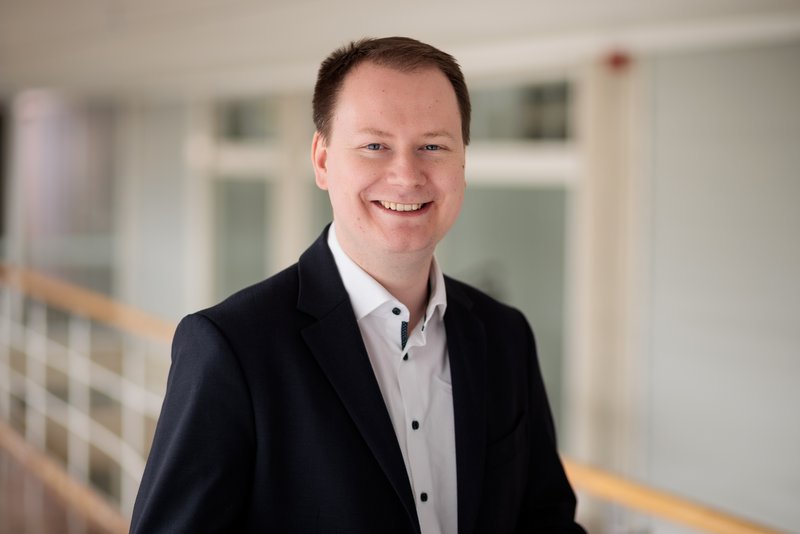
Prof. Dr.-Ing. Michael Möhring is a Professor of Data Science at Reutlingen University's Faculty of Informatics. He serves as Prodekan for the Herman Hollerith Zentrum (HHZ) and leads research in data analytics, Industry 4.0, and process mining. Previously, he held roles as an IT consultant, project manager at Bosch Group/BSH, and academic researcher. Education: Dr.-Ing. (PhD) in Business Informatics M.Sc. in Business Informatics B.Sc. in Business Informatics Research Interests: Focuses on leveraging structured/unstructured data for industrial applications, enterprise architecture management, digital twins integration, and AI-driven decision support. Specializes in bridging technical systems with organizational processes in manufacturing and service industries. Lab Affiliations: AI-Real Lab AIDA Future Mobility Lab Internet of Things Lab Virtual Reality Lab Articles Trends: Recent work emphasizes practical implementations of AI in production failure analysis (language models), energy optimization systems (HollerithEnergyML), and technical debt management in SMEs. Consistently explores data integration challenges across manufacturing, service ecosystems, and digital twin frameworks. Grants & Collaborations: Active in EU-funded projects like 5G-PreCiSe and bwHealthApp. Collaborates with industry partners on digital transformation initiatives through HHZ's applied research programs.
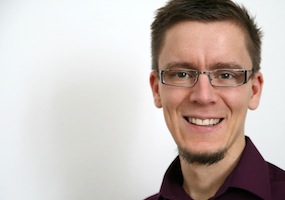
Prof. Dr.-Ing. Marc Reichenbach serves as the Chair of Integrated Systems at the Institute for Applied Microelectronics and Data Technology at the University of Rostock. His office is located at Albert-Einstein-Straße 26, 18059 Rostock, Room 102 (1st floor), with contact information including telephone (0381) 498 7270 and email marc.reichenbach@uni-rostock.de. Professor Reichenbach's research focuses on the intersection of hardware design and artificial intelligence, with particular expertise in memory technologies and computing architectures. His work spans several key areas: Development of specialized computer architectures for deep learning applications Advanced VLSI design and CPU architecture Emerging memory technologies, particularly RRAM (Resistive Random-Access Memory) FPGA-based acceleration systems Hardware implementations for neural networks and AI applications Analysis of Professor Reichenbach's recent publications (2023-2025) reveals a strong focus on memory computing technologies, particularly RRAM-based systems. His work demonstrates expertise across multiple dimensions of computer architecture including ASIC design, FPGA acceleration, and novel memory systems. The publications show a clear trajectory toward implementing AI and machine learning capabilities directly in hardware, with applications ranging from edge computing to satellite systems. A significant portion of his recent work addresses the challenges of implementing neural networks using emerging memory technologies, focusing on efficiency, reliability, and performance optimization. Professor Reichenbach teaches several advanced courses including: Computer architectures for deep learning applications Project seminar Embedded Systems Advanced VLSI Design (Advanced CPU Design) His research group appears to be actively engaged in several cutting-edge projects related to hardware acceleration for AI applications, memory computing, and embedded systems design. The group collaborates on projects involving digital twins for hardware systems, real-time operating systems for heterogeneous architectures, and specialized computing systems for various applications from medical devices to drone technology.
Dr.-Ing. Ullrich Mönich is a Senior Researcher and Lecturer at the Technical University of Munich (TUM) , affiliated with the Chair of Theoretical Information Technology and leading research activities at the Advanced Communication Systems and Embedded Security Lab (ACES Lab) . Since 2019, he has been instrumental in shaping experimental and theoretical research in 6G communications, physical layer security, and signal processing. Education: Dr.-Ing. in Electrical Engineering, Technische Universität München (2011) – supervised by Prof. Holger Boche Previous affiliations include MIT (2012–2015) and TU Berlin Research Focus: His research spans signal processing, wireless communications, machine learning, and sampling theory , with a strong emphasis on physical layer security , computability in signal processing , and 6G communications . He explores theoretical foundations and practical implementations, including neuromorphic computing, digital twinning, and secure modular coding schemes. Publications & Trends: His recent publications (2023–2025) are heavily concentrated in 6G communications , integrated sensing and communications (ISAC) , semantic physical layer security , and digital twinning . These works often combine theoretical analysis with experimental validation using 5G/6G testbeds and neuromorphic hardware. Teaching & Supervision: Regularly teaches "Foundations of Analog, Digital, and Quantum Computers" (tutorials since 2018) Previously taught "Applied Functional Analysis" and "Advanced Signal Theory" Involved in practical courses like "Software Defined Radio Laboratory" Labs & Teams: He leads the ACES Lab at TUM, which focuses on experimental validation of advanced communication systems, including physical layer security, neuromorphic computing, and 6G testbeds. The lab collaborates with national and international partners, including MIT, and is supported by major funding bodies such as the German Federal Ministry of Education and Research (BMBF) and the German Research Foundation (DFG).
Prof. Dr. rer. nat. Rainer Leupers is a faculty member at RWTH Aachen University, chairing the Department of Software for Systems on Silicon. His research focuses on embedded systems, hardware-software co-design, virtual prototyping, and security in computing-in-memory architectures. He has published extensively on RRAM accelerators, logic locking, and neuromorphic security. Chair of Software for Systems on Silicon Research in hardware security and deep learning accelerators Recent publications on cross-tool virtual frameworks and thermal side-channel attacks His work bridges system-level modeling with practical security implementations, emphasizing reliability and performance in heterogeneous computing environments. Key trends in his 2025-2023 articles include compute-in-memory optimization, neural network inference efficiency, and security vulnerabilities in emerging hardware. Awards and formal recognitions are not explicitly detailed in the provided materials. He has not directly mentioned advising students or research grants in the given text fragments. The chair's contact information includes an office at ICT Cube 1, Electrical Engineering, Aachen, with direct email and website links.
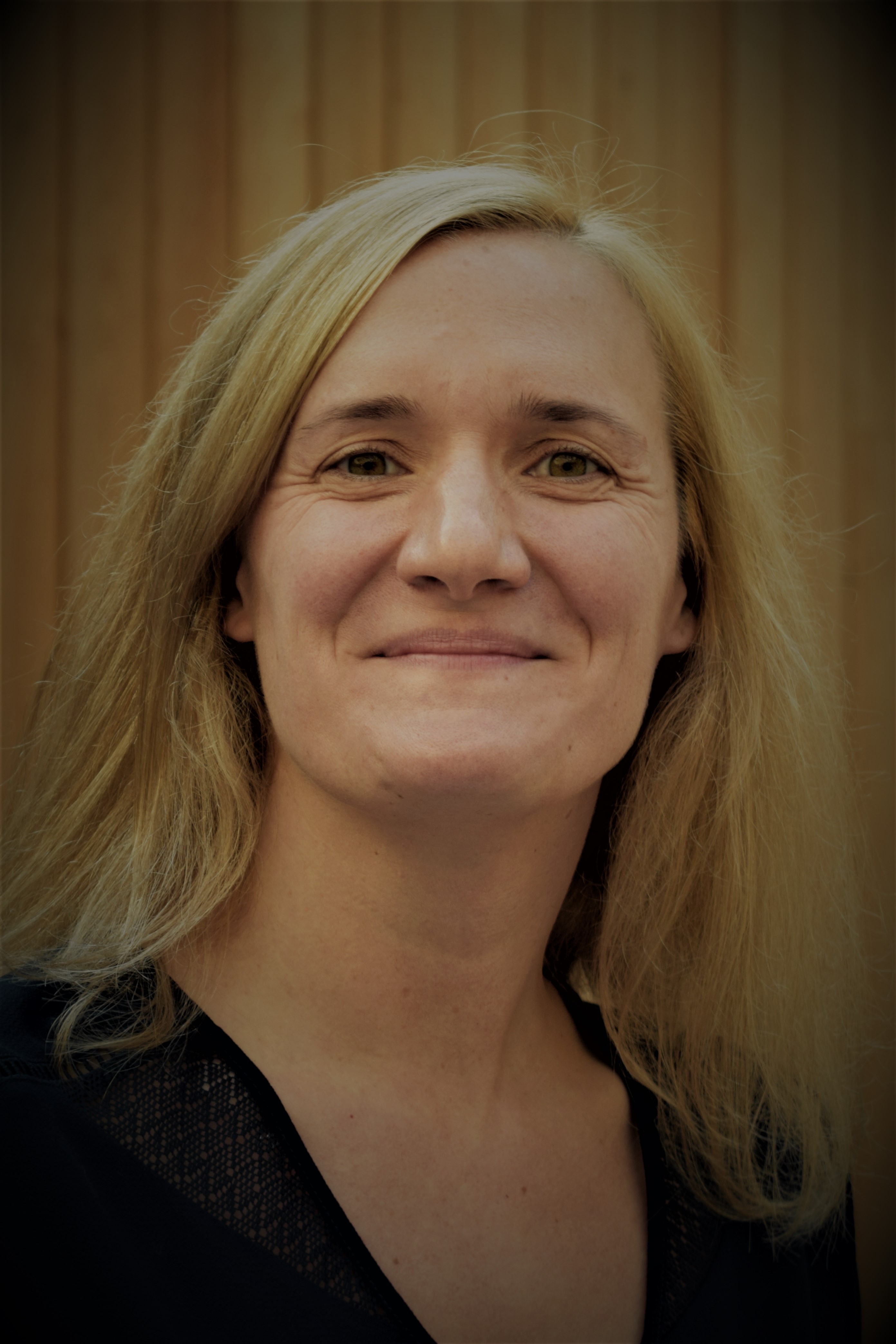
Dr. Wanja Hofer is a former research staff member at the Department of Computer Science 4 (Distributed Systems and Operating Systems) at Friedrich-Alexander-Universität Erlangen-Nürnberg (FAU). She specialized in embedded systems, real-time operating systems, and aspect-oriented programming. Her research focused on optimizing hardware-centric systems like Sloth and CiAO, addressing challenges in interrupt handling, scheduling, and software product line variability. Her academic journey includes a PhD in 2014 titled Sloth: The Virtue and Vice of Latency Hiding in Hardware-Centric Operating Systems . She contributed to key projects such as Sloth (time-triggered RTOS) and CiAO (aspect-oriented OS family), emphasizing scalability and configurability for automotive and embedded domains. Hofer also held roles like Web chair for EuroSys 2009 and co-maintained the EuroSys Research Directory. Her teaching involved Basics of Systems Programming in C and OS-related seminars. She advised over 15 graduate students on topics ranging from MPU-based task isolation to filesystem-level variability management. Notable contributions include hardware-accelerated interrupt handling, aspect-oriented OS design, and embedded system energy optimization. Hofer currently works at Brose Fahrzeugteile, applying her expertise in embedded systems and real-time computing to automotive technologies. Her work bridges academic innovation with industrial applications, particularly in safety-critical and resource-constrained environments.
Nele Mentens is a full professor at both KU Leuven and Leiden University, where she leads cutting-edge research in applied cryptography, hardware security, and secure embedded systems. At KU Leuven, she is affiliated with the Faculty of Engineering Technology and the Electrical Engineering Department (ESAT), leading the Emerging Technologies, Systems & Security (ES&S) research group at the Diepenbeek campus. Simultaneously, she holds a full professorship at Leiden University’s Leiden Institute of Advanced Computer Science (LIACS), focusing on applied cryptography and security. She has been instrumental in numerous national and international research initiatives, including Horizon Europe and NWO-funded projects. Full Professor, KU Leuven (since 2023) Full Professor, Leiden University (since 2020) Associate Professor, KU Leuven (2014–2023) Post-doctoral Researcher & Lecturer, KHLim / KU Leuven (2007–2014) Ph.D. in Engineering Science, KU Leuven (2007) M.Sc. in Electrical Engineering, KU Leuven (2003) Her research focuses on secure and efficient hardware design, particularly for cryptographic applications on FPGAs, reconfigurable architectures, IoT security, and neuromorphic computing. She explores physical attack resistance, side-channel analysis protection, and trusted computing architectures, with applications in healthcare, industrial monitoring, and endpoint AI. Her work bridges theoretical cryptography with practical hardware implementations, emphasizing energy efficiency and real-time performance. The 15 most recent publications reflect a strong trend toward secure, energy-efficient, and intelligent embedded systems. Topics include neuromorphic AI accelerators, trusted IoT architectures, dynamic reconfiguration for side-channel protection, and secure medical data processing. These works span disciplines such as computer architecture, cybersecurity, digital design, and embedded systems, with a focus on hardware-software co-design and real-world deployment. Nele Mentens has received recognition for her contributions, including: Best Paper Award, DATE'16 Best Paper Nomination, AsianHOST'17 Best Paper Award, CHES'19 She has supervised over 15 Ph.D. students and post-docs, both current and former, and has served as principal investigator in approximately 25 funded research projects. Her work has attracted significant grants from Horizon Europe, NWO, FWO, and national innovation programs. She actively contributes to the academic community through editorial roles in top journals and leadership in major conferences. Nele Mentens leads the ES&S research group at KU Leuven and collaborates closely with LIACS at Leiden University. Her team includes Ph.D. students, post-docs, and research experts working on projects like NimbleAI, NeuroSoC, and TrustedIoT. She has also established secure electronics labs through infrastructure grants and maintains strong international ties with institutions such as EPFL, Ruhr University Bochum, and ETH Zurich.
Philipp Weiss is a Researcher at the Technical University of Munich (TUM), affiliated with the Department of Electrical and Computer Engineering and the Chair of Embedded Systems and Internet of Things. Holding an M.Sc. degree, he actively contributes to research and teaching in embedded systems and IoT with a strong focus on automotive applications. His research spans Automotive Systems , Internet of Things (IoT) , Fail-Operational Systems , Reliability Analysis , Agent-Based Systems , and Distributed Systems . Weiss specializes in fail-operational automotive software design, dynamic agent-based mapping methods, and run-time reliability analysis, addressing critical challenges in autonomous vehicle safety and resilience through publications in DATE and DSD conferences. Analysis of his 2020-2021 publications reveals consistent focus on fail-operational architectures for automotive systems, with recurring themes in distributed agent-based modeling, timing analysis, and energy optimization within hybrid cloud environments. His work bridges theoretical reliability frameworks with practical automotive implementations. Weiss has supervised multiple Master's theses and final projects from 2019-2021 on topics including dynamic agent-based reliability analysis and fail-over timing for neural networks. As an educator, he serves as tutor for System Design for the Internet of Things and seminar manager for Advanced Seminar Embedded Systems and Internet of Things . Embedded within Prof. Sebastian Steinhorst's research team, Weiss contributes to major initiatives including Security for IoT and Autonomous Systems , Time-Sensitive Networking , and 6G Research Hub "6G-Life" , operating within TUM's IoT Remote Lab infrastructure for hands-on experimentation with industrial IoT systems.
Prof. Dr. Andreas Herkersdorf is a Full Professor and Chair of Integrated Systems at the Technical University of Munich (TUM) School of Computation, Information and Technology. His research focuses on application-specific multicore processors (MPSoC), FPGA-based prototyping, fault-tolerant systems, and energy-efficient architectures, with applications in IP packet processing, automotive systems, and visual computing. He has received multiple IBM innovation awards and serves on editorial boards including the DFG Review Board for computer architecture. Education: Dipl.-Ing. Electrical Engineering (TUM, 1987), Dr. techn. Electrical Engineering (ETH Zurich, 1991) Research: MPSoC architectures, autonomic computing, NoC resilience, FPGA acceleration, and self-optimizing systems. Awards: IBM Master Inventor (1998), IBM Outstanding Technical Achievement Award (2001), multiple IBM Innovation Achievement Awards (1996-2003) His recent publications emphasize hardware/software co-design, machine learning integration for runtime optimization, and network-on-chip innovations. He collaborates on projects involving 6G systems, smartNICs, and automotive communication protocols.
Dr. Theresa Züger is an interdisciplinary researcher leading the AI & Society Lab at the Alexander von Humboldt Institute for Internet and Society (HIIG). She investigates how AI systems can be designed to serve the common good, focusing on initiatives that promote sustainability, strengthen social inclusion, and enable technology reuse through open systems. Her work addresses societal challenges associated with artificial intelligence at political, social, and cultural levels, contributing to accurate assessment of AI's societal implications. Züger received her Ph.D. in Media Studies from Humboldt University in Berlin in 2017 with her dissertation 'Reload Disobedience,' focusing on digital forms of civil disobedience. Previously, she earned an M.A. in Theatre, Film and Television Studies as well as German and Philosophy from the University of Cologne. She also headed the office responsible for the German government's Third Engagement Report on behalf of the Federal Ministry for Family Affairs, Senior Citizens, Women and Youth (BMFSFJ). Her research centers on Public Interest AI, examining how AI development and deployment can benefit society rather than primarily maximizing profit. Current projects include 'Impact AI' (funded by Volkswagen Foundation), which develops auditing methods to assess AI projects' impact on public interest and sustainability, and 'Human in the Loop,' investigating how automated decision-making processes should be designed for successful human-machine interaction. She previously led the 'Public Interest AI' project, developing a theoretically grounded understanding of public interest AI and creating prototypes like a web accessibility tool and fact-checking application. Analysis of her recent publications reveals a consistent focus on bridging AI technology with societal values. Her work spans technical aspects of AI implementation, ethical considerations, and practical applications that serve public interests. Key trends include human-AI collaboration frameworks, accessibility enhancements, critical examination of AI hype, and theoretical foundations for public interest-oriented AI development. Züger serves as Vice-Chair of the UNESCO Commission on Communication and Information and participates in several juries including the Deep Tech Award, Digital Places – Land of Ideas, and the Civic Innovation Fund. She is also a regular event moderator for organizations like the Berlin-Brandenburg Media Authority, re:publica, and transmediale. As project leader of Impact AI and head of the AI & Society Lab, Züger directs significant research initiatives with funding from organizations like the Volkswagen Foundation. Her work involves extensive collaboration with academic and practical partners across Europe and globally, particularly through projects addressing women in tech and international AI governance. The AI & Society Lab functions as an interdisciplinary interface for new research approaches and knowledge transfer in AI, promoting inclusive, human rights-friendly, and sustainable AI strategies in Europe.
Stefan Winter is a postdoctoral researcher and software engineer at LMU Munich, Germany, with a Ph.D. (Dr.-Ing.) in computer science from TU Darmstadt. He focuses on software dependability, particularly addressing non-deterministic behavior in software systems, such as flaky tests and reproducibility challenges in experimental research. Education: Ph.D. (Dr.-Ing.) in Computer Science from TU Darmstadt under Prof. Neeraj Suri. Current Role: Researcher at LMU Munich in Dirk Beyer’s group. His research spans test automation, robustness testing, fault injection, and operating systems, with a recent emphasis on mitigating flaky tests and ensuring deterministic software behavior. His work has been published in venues like ASE, ESEC/FSE, and ICSE. Stefan actively contributes to the academic community as a committee member, artifact evaluation co-chair, and session chair across conferences such as ECOOP, ISSTA, and SPLASH. He maintains expertise in reproducibility, experimental validity, and software testing frameworks.
Prof. Dr. Alexander Pretschner is a leading academic in software and systems engineering at the Technical University of Munich, with additional roles as Chair of the bidt Board of Directors, Member of the Executive Committee, and Chair of the Scientific Directorate at fortiss (Bavarian Research Institute for Software-Intensive Systems). His expertise spans software engineering, information security, and ethical deliberation in agile processes. Professor for Software & Systems Engineering, TUM Founding Director and Chairman of bidt Chair of Scientific Directorate at fortiss Research interests focus on software engineering with emphasis on testing and information security , alongside pioneering work in AI ethics , digital sustainability , and data privacy . Key projects include EDAP (Ethical Deliberation for Agile Processes), DetDat (Determinants of Data Disclosure), and AIffectiveness in Education. Publications and lectures address critical issues like "What makes Munich attractive for Open AI?" , "How generative AI transforms creative work" , and "Balancing benefits and risks of AI assistants in workplaces" . Collaborations include prominent researchers like Julian Nida-Rümelin and Niina Zuber.
Prof. Dr.-Ing. Holger Blume serves as Vice President for Research and Transfer at Leibniz University Hannover while maintaining his academic position as Professor in the Architectures and Systems Section within the Faculty of Electrical Engineering and Computer Science. He holds multiple leadership positions including Chairperson of the Research Commission and Central Ethics Committee, Executive Board member of eNIFE (Leibniz Research Initiative for Neurosciences), and membership in both the Laboratory of Nano and Quantum Engineering and L3S Research Centre. His research interests span computer architecture, hardware design, signal processing, AI accelerators, hearing aid technology, and biomedical engineering. His work bridges theoretical computer science with practical applications in automotive systems, medical devices, and quantum engineering. Professor Blume's research demonstrates strong interdisciplinary connections between electrical engineering, computer science, and biomedical applications, with particular emphasis on hardware-oriented solutions for real-world problems. Analysis of his recent publications (2023-2025) reveals a strong focus on hardware acceleration for AI and signal processing applications, particularly in automotive radar/LiDAR systems and hearing aid technology. His work shows consistent innovation in RISC-V processor design, specialized hardware for mathematical functions, and biomedical applications of engineering principles. The research demonstrates a clear trajectory toward energy-efficient, specialized computing architectures for specific application domains. As Vice President for Research and Transfer, Professor Blume oversees significant research initiatives at Leibniz University Hannover, which hosts multiple Clusters of Excellence including PhoenixD (Photonics, Optics, and Engineering), QuantumFrontiers, and Hearing4all. The university participates in numerous collaborative research centers and junior research groups funded by DFG, BMBF, and EU programs. Professor Blume is actively involved in multiple research facilities including the Laboratory of Nano and Quantum Engineering and the L3S Research Centre. His work connects with Leibniz University's research focuses on optical technologies, quantum optics and gravitational physics, and biomedical research and technology. His leadership positions indicate strong involvement in shaping the research strategy and ethical framework of the university's scientific endeavors.
Prof. Eva-Maria Schön is a Professor of Business Informatics at the University of Applied Sciences Emden/Leer, where she has held this position since 2022. Previously, she was a Professor at the Hamburg University of Applied Sciences (HAW Hamburg). She earned her PhD in Computer Science from the University of Seville, Spain, in 2017. Her research focuses on Agile methodologies, including their application in public administration (eGovernment), requirements engineering, and digital transformation. She emphasizes integrating human-centered design principles into agile processes and has extensive practical experience in developing digital products and training organizations. Her research interests span agile product development, UX design, and the challenges of fostering agile cultures in both private and public sectors. Notable areas include agile transformation in governmental institutions, agile pedagogical approaches in higher education, and leveraging AI in educational contexts. She has also contributed to frameworks like the NICO initiative, which addresses software quality assurance. Prof. Schön’s work bridges academia and industry, with publications addressing topics such as lean user research, cultural barriers to agile adoption, and the role of trust in organizational agility. Her contributions include developing methodologies for requirement engineering patterns and evaluating project work in e-government initiatives. Advising and Grants: While no formal advisees are listed, her research projects likely involve student and professional collaborations. She has been involved in initiatives like the NICO project (PID2019-105455GB-C31). Her academic network includes ResearchGate and Google Scholar profiles, highlighting her active engagement in collaborative research. Labs/Teams: Affiliated with the University’s research groups focusing on digital transformation and agile practices, though specific lab names are not detailed in the provided texts.
Kris Luyten is a Researcher at Hasselt University 's Expertise Centre for Digital Media in Belgium. He specializes in Human-Computer Interaction , Wearable Technology , and Interactive Systems through extensive collaborations with institutions like ACM, Springer, and interdisciplinary teams. Focus on haptic interfaces , telerobotics , and delay-invariant interaction Contributions to multimodal interface design and predictive usability models His recent work explores AI-Spectra dashboards for model transparency and ViRgilites for VR haptics. Publications span journals like Proc. ACM Hum. Comput. Interact. and conferences such as CHI , EICS , and VRST . While no student advising or awards are explicitly listed, his editorial roles (e.g., PACMHCI editorials) demonstrate leadership in interactive systems research.
Sebastian Gottschalk is a researcher at Paderborn University, Germany, specializing in business model development within software ecosystems, virtual reality applications, and model-driven software engineering. His research focuses on creating situation-specific approaches to business model development, with particular emphasis on tool support, method composition, and knowledge provision. His research interests span business model innovation, virtual reality applications for education and collaboration, model-driven development, and end-user programming. He has made significant contributions to understanding how business models can be developed in context-aware ways within software ecosystems, with practical applications in tool development and method engineering. His publication record shows a clear progression from foundational work on business model development to innovative applications in virtual reality and gamification. Recent work demonstrates increasing focus on practical implementations, particularly in educational contexts using VR technology to teach UML and software modeling concepts. Gottschalk has collaborated extensively with Gregor Engels (27 publications together), Enes Yigitbas (20 publications), and Alexander Nowosad (7 publications), indicating strong research partnerships that have driven much of his recent work in business model development and virtual reality applications.