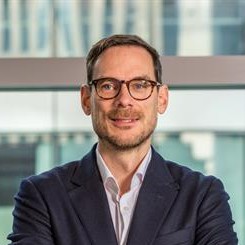
Dr. Indratmo is an Associate Professor and Chair of the Department of Computer Science at MacEwan University. He holds a PhD from the University of Saskatchewan, an M.Sc. from the University of Manitoba, and a B.Eng. from Petra Christian University. His research focuses on information visualization, human-computer interaction, and social computing, with a particular emphasis on developing tools for analyzing social media data. He has contributed to projects like a visual analytical tool for sentiment analysis in Edmonton's traffic-related social media data and studies on multimedia content effectiveness in communication strategies. Indratmo teaches a range of computer science courses, emphasizing student engagement through transparent pedagogical practices. His work bridges technical innovation with social impact, aiming to enhance communication strategies for organizations through data-driven insights. He has published extensively in journals like Big Data Research and Visual Informatics , and his research spans topics from educational visualization tools to smart mirror applications and geospatial heritage systems. Outside academia, he enjoys outdoor activities in the Canadian Rockies. Notable collaborations include work on stacked bar chart efficacy, web-based course registration models, and exploratory browsing frameworks. His research portfolio demonstrates a commitment to both theoretical advancement and practical applications in computing.
Professor Daniel Angus is a faculty member at Queensland University of Technology (QUT), holding the position of Professor of Digital Communication in the School of Communication and serving as Director of QUT's Digital Media Research Centre (DMRC). His research focuses on computational methods applied to communication and media studies, with a particular emphasis on AI, automation, misinformation, and digital societal impacts. He holds a PhD in computer science from Swinburne University of Technology and has extensive experience in interdisciplinary research across computer science, design, communication, linguistics, and journalism. Affiliations: ARC Centre of Excellence for Automated Decision Making & Society, ARC Centre of Excellence for the Dynamics of Language. Research Projects: Leads projects like 'Using Machine Vision to Explore Instagram’s Everyday Promotional Cultures' and 'Evaluating the Challenge of ‘Fake News’ and Other Malinformation'. Research Interests: Daniel’s work bridges technology and society, exploring AI ethics, algorithmic transparency, social media governance, and computational methodologies for analyzing communication patterns. He develops tools like Discursis and PauseCode to study discourse and conversational dynamics in healthcare, aged care, and media contexts. Grants & Awards: Principal Investigator on multiple ARC grants and collaborates with industry stakeholders to address challenges like unhealthy food advertising and platform accountability. His research has informed policy submissions to parliamentary committees on social media regulation and AI adoption. Supervision: Current PhD students focus on topics like algorithmic transparency, computational methods for meme analysis, and AI in publishing. Labs/Teams: Directs the Digital Media Research Centre, fostering interdisciplinary projects on digital culture and platform studies.
Professor Raja Jurdak is a leading academic in distributed systems and applied data sciences at Queensland University of Technology (QUT), where he directs the Trusted Networks Lab. He holds dual roles as Professor of Distributed Systems and Chair in Applied Data Sciences, alongside leadership in the Centre for Data Science. His research focuses on dynamic network modeling, blockchain-based trust frameworks, and IoT applications, with particular emphasis on cybersecurity, energy efficiency, and mobility-driven diffusion processes. Jurdak formerly led CSIRO's Distributed Sensing Systems Group and maintains a visiting scientist role there. Education: PhD in Information and Computer Science, University of California, Irvine MS in Computer Networks and Distributed Computing, University of California, Irvine BE in Computer and Communications Engineering, American University of Beirut Research Interests: Network science, blockchain technology, IoT security, sustainable energy systems, and data-driven decision-making. His work bridges theoretical advancements with practical applications in smart grids, health surveillance, and urban mobility. Awards: Finalist for the 2019 Eureka Prize, multiple CSIRO accolades, and IEEE Senior Member status. His research has received industry recognition for interdisciplinary innovation, including the DiNeMo project's real-time disease surveillance system. Advisory & Grants: Leads high-impact projects funded by government and industry partnerships. Supervises PhD candidates in areas like decentralized data processing and privacy-preserving AI. Holds editorial roles at journals such as Ad Hoc Networks and PLoS ONE . Labs & Teams: Directs the Trusted Networks Lab at QUT, fostering collaborations with institutions like Oxford University and MIT. His work emphasizes cross-disciplinary teams to address global challenges in cybersecurity and sustainable systems.
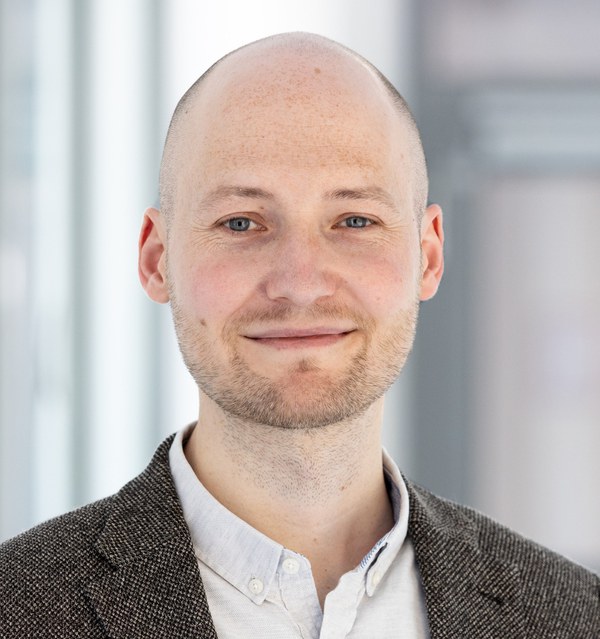
Professor Linda Newnes is a faculty member in the Department of Mechanical Engineering at the University of Bath, leading the Made Smarter Innovation: Centre for People-Led Digitalisation (£5M) and the TRansdisciplinary ENgineering Design (TREND) research group (£1.8M). Her work focuses on transdisciplinary engineering, whole life value analysis, and sustainable manufacturing. She directs The Foundry: Centre for Digital, Manufacturing & Design, emphasizing people-centric digitalization and cross-sector collaboration. Her research integrates natural/social sciences and industry stakeholders to address challenges in aerospace, defense, and energy sectors. Notable projects include models for whole life value (cradle-to-cradle) and tools for transdisciplinary working. She actively promotes Equality, Diversity & Inclusion (ED&I), leading the University’s Aurora programme and Athena SWAN submissions. Recent publications explore digital skill premiums, transdisciplinary frameworks, and AR deployment challenges. She advocates Industry 5.0 principles, emphasizing human-centric innovation and resilience in socio-technical systems. Current grants focus on net-zero transitions and cellular agriculture manufacturing. Her advising spans doctoral students in transdisciplinary engineering, Industry 5.0, and future manufacturing. She collaborates with industry partners like Airbus and Innovate UK to advance cost estimation, decision support tools, and lifecycle analysis.
Stefan Haefliger is Professor of Strategic Management & Innovation at Bayes Business School, City, University of London. His research focuses on business model innovation, open strategy, and organization theory in technology-driven environments. Key research streams: Business model portfolios and corporate strategy diversification Organization theory and technology-mediated regulation Open strategy and innovation ecosystems His work examines how technology transforms organizational practices, with empirical studies on compliance systems in investment banks and digital infrastructure governance. Recent projects explore modularity in R&D teams, digital resilience, and human-AI interaction in organizations.
Dr. Jean-Philippe Couderc is a Research Assistant Professor of Medicine in the Cardiology Department at the University of Rochester Medical Center and Chief Technology Officer of iCardiac Technology Inc. He holds a PhD in Biomedical Engineering from the French National Institute of Applied Sciences (1997), an MBA in Healthcare Management from the Simon School of Business (2003), and an MS in Medical Specialties from a French institution (1994). His research focuses on quantitative electrocardiography, ventricular repolarization, and cardiac safety, with contributions to clinical study design and medical software development. He leads the Heart Research Follow-up Program Laboratory and serves on the editorial board of Annals of Non-Invasive Electrocardiology . Notable awards include the Frost & Sullivan Technology Innovation Award (2006) and the Mirowski-Moss Career Development Award (2003). His work spans federal grants, industry collaborations, and over 100 peer-reviewed articles. Research Interests: Dr. Couderc’s work integrates computational science, electrophysiology, and clinical cardiology to address challenges in cardiac safety, drug evaluation, and wearable health technologies. His lab develops novel ECG analysis tools and evaluates their application in arrhythmia monitoring, drug-induced QT prolongation, and non-invasive diagnostics. Publications: His recent work includes advancements in video-based cardiac monitoring, demographic factors in ECG patch usage, and biomarker identification for epilepsy and heart conditions. He co-authored key consensus statements on mHealth in arrhythmia management, emphasizing digital tools for heart rhythm professionals. Awards & Grants: Dr. Couderc has secured NIH and industry grants, leading projects on repolarization dynamics and cardiac resynchronization therapy. He advises on FDA drug evaluation and contributes to international clinical guidelines.
Giovanna Tinetti is a Professor of Astrophysics and Vice Dean (Research) at King's College London's Faculty of Natural, Mathematical & Engineering Sciences. She leads the European Space Agency's Ariel mission, a space telescope surveying exoplanet atmospheres, set to launch in 2029. As co-founder of the London Centre for Space Exochemistry Data and Blue Skies Space Ltd, she pioneers satellite technology for scientific data collection. She holds a PhD in Theoretical Physics from the University of Turin, with prior affiliations at Caltech/JPL, the Institute of Astrophysics in Paris, and University College London (UCL), where she was a Royal Society University Research Fellow. Her research focuses on exoplanetary atmospheres, molecular spectroscopy, and advanced data science techniques. With over 300 publications, her 2019 paper on water vapor in K2-18b's atmosphere achieved the highest altmetric score in Physical Sciences that year. She has delivered over 350 international talks and lectures. Education: PhD in Theoretical Physics (University of Turin) Affiliations: King's College London, UCL (past), ESA's Ariel Mission, Blue Skies Space Ltd Research Interests: Exoplanet atmospheres, molecular spectroscopy, space science, data-driven analysis methodologies, and atmospheric modeling. Her work bridges observational astronomy with computational chemistry to interpret exoplanet compositions and climates. Awards: Royal Society University Research Fellow Highest Altmetric Score (2019 Physical Sciences) Grants & Projects: Principal Investigator for ESA's Ariel mission Co-leader of the Ariel Data Challenge 2025 Labs/Teams: London Centre for Space Exochemistry Data, Blue Skies Space Ltd technical team, and the international Ariel collaboration network.
Dr. Jann Michael Weinand is the head of the Integrated Scenarios department at the Institute of Climate and Energy Systems (ICE-2) within Forschungszentrum Jülich GmbH. He leads a team of 30 scientists, PhD students, and master students focusing on energy system analysis, complexity management, and AI integration. His work addresses regional and international energy systems, emphasizing renewable energy resource assessment and techno-economic feasibility. Dr. Weinand holds a Dr.-Ing. from the Karlsruhe Institute of Technology (2020) and a Mechanical Engineering and Business Administration degree from RWTH Aachen University (2016). His research spans energy autonomy, renewable resource optimization, and the socio-technical challenges of energy transitions. Key research areas include energy system modeling, geothermal and wind energy potential, and data-driven methodologies. He coordinates interdisciplinary projects with academic and industrial partners, contributing to high-impact journals like Nature Energy and Joule. His team develops open-source tools (e.g., ETHOS workflows) for reproducible energy assessments and advocates for spatially disaggregated energy planning. Publications highlight trade-offs in energy system design, AI risks, and land-use conflicts for renewables. He emphasizes integrating social, technical, and environmental factors into energy policy frameworks.
Bruce Stephen is a Senior Lecturer and Strathclyde Chancellor's Fellow in the Department of Electronic and Electrical Engineering at the University of Strathclyde, where he has been since 1999. His work lies at the intersection of data science and power systems engineering, with a strong focus on real-world industrial applications. His educational background includes a BSc in Aeronautical Engineering from the University of Glasgow (1997), an MSc from the University of Strathclyde (1998), and a PhD in Electronic and Electrical Engineering (2005) from the University of Strathclyde. Dr. Stephen's research centers on data-driven methodologies for solving complex engineering challenges in power systems, particularly under conditions of limited data or domain knowledge. His applications span the entire energy value chain—from generation (nuclear, wind, solar) to transmission, distribution, and end-use. He develops software solutions for condition assessment, anomaly detection, and predictive modeling to support asset management and future grid planning. Notably, he co-founded Silent Herdsman Ltd, a spin-out company applying intelligent systems to precision livestock farming. His recent publications highlight a strong trend toward advanced machine learning techniques such as transfer learning, surrogate modeling, and synthetic data generation (e.g., using CTGANs) to improve reliability and decision-making in power systems. These works emphasize explainability, uncertainty quantification, and scalability, particularly in renewable-rich and data-scarce environments. Dr. Stephen is currently the Principal Investigator on the EPSRC-funded Analytical Middleware for Informed Distribution Networks (AMIDiNe) project, aiming to identify barriers to Net Zero through improved data modeling of unmonitored networks. He has also contributed to major projects including EU FP7 ORIGIN, EPSRC APAtSCHE, AGILE, and Transactive Energy Supply Arrangements. He actively advises students and collaborates on interdisciplinary research. His professional activities include organizing the QFF Quarterly Forecasting Forum (2018) and delivering invited talks at industry workshops. He has supervised datasets and research involving structural health monitoring and industrial diagnostics. His work supports UN Sustainable Development Goals related to affordable and clean energy, industry innovation, and climate action.
Daniel Müller-Gritschneder is an Adjunct Teaching Professor (Privatdozent) at the Technical University of Munich (TUM), affiliated with the Chair of Electronic Design Automation. He leads the 'Electronic System Level' research group, focusing on embedded systems, TinyML, virtual prototyping, and hardware resilience. He temporarily served as head of the Chair of Real-Time Systems (2019–2020) and holds a senior membership in IEEE. His research spans: TinyML : Optimizing neural network inference for microcontrollers. Virtual Prototyping : Fast simulation for embedded software development (e.g., ETISS simulator). Runtime Verification : Hardware monitoring for safety-critical systems. Fault Tolerance : Cross-layer resilience against soft errors. Design Automation : NoC synthesis and RISC-V toolchain optimization. His publications emphasize RISC-V-based systems, TinyML deployment, fault injection, and embedded AI. Recent works show trends toward compiler-assisted security, thermal management, and automated design-space exploration for edge devices. Awards: Best Paper Award (SiPS 2019) Habilitation Award (Bund der Freunde der TUM, 2019) 2nd Best Paper (SMACD'15) Best Paper nominations at DAC'07, DATE'10, Analog'10, NOCS'13 He advises researchers in the Electronic System Level group and contributes to EU projects (e.g., Scale4Edge). His lab develops tools like ETISS, MLonMCU, and Seal5 for RISC-V and TinyML ecosystems.
Prof. Dr.-Ing. Annette Eicker is a Professor of Geodesy and Adjustment Calculations at the HafenCity University Hamburg (HCU), where she has been serving since 2016. Prior to her current position, she was an Academic Councillor at the Institute of Geodesy and Geoinformation at the University of Bonn (2014-2016), and has held visiting research positions at NASA's Jet Propulsion Laboratory in Pasadena, USA (2015) and the University of Rennes 1 in France (2014). Her research focuses on satellite gravimetry, particularly utilizing GRACE (Gravity Recovery and Climate Experiment) and GRACE-FO (Follow-On) mission data to monitor terrestrial water storage, study climate-related mass changes, and develop advanced methods for gravity field recovery. Her work bridges geodesy, hydrology, and climate science, with significant contributions to understanding global water cycle dynamics and developing next-generation gravity missions like MAGIC (Mass-change And Geosciences International Constellation). Analysis of her recent publications reveals a strong emphasis on improving the accuracy and applications of satellite gravity data for hydrological monitoring, with increasing focus on next-generation missions and daily gravity field solutions. Her research spans from fundamental method development (e.g., GROOPS software toolkit) to practical applications for water resource management and climate change monitoring. Prof. Eicker's work demonstrates leadership in the field of satellite gravimetry, with numerous publications in high-impact journals addressing critical challenges in Earth observation and climate monitoring. Though specific awards aren't mentioned in the provided materials, her extensive publication record and leadership in major projects like MAGIC indicate significant recognition within the geodetic and hydrological communities. Her research has strong implications for understanding climate change impacts on water resources, with applications in drought monitoring, flood risk assessment, and sustainable water management. She maintains active collaborations with international institutions including NASA's Jet Propulsion Laboratory and has contributed to major initiatives like the GlobalCDA Project, which integrates geodetic and remote sensing data with hydrological models.
Andreas Holzinger is a Professor at Graz University of Technology, with additional affiliations at Medical University Graz and University of Natural Resources and Life Sciences Vienna in Austria. He is recognized as an IFIP Fellow (2021) for his significant contributions to information processing and computer science. His work spans multiple institutions across Europe, with notable collaborations extending to the University of Alberta in Canada. Professor Holzinger's research focuses on Human-Centered AI, Explainable AI (XAI), and their practical applications across diverse domains. His work bridges theoretical AI advancements with real-world implementations in healthcare, forestry, and human-robot interaction. He has pioneered approaches in counterfactual explanations, graph neural networks, and human-in-the-loop systems that emphasize transparency and trustworthiness in AI decision-making processes. His recent publications demonstrate a strong trend toward integrating large language models with traditional AI systems while maintaining explainability. Holzinger's work consistently emphasizes the human element in AI systems, ensuring that technological advancements serve human needs rather than obscuring decision processes. His research in medical AI, smart forestry, and agricultural applications shows a commitment to solving practical problems with human-centered technological solutions. Scientific Awards: IFIP Fellow (2021) Professor Holzinger has been instrumental in establishing design guidelines for explainable AI systems, particularly through his work on post-hoc versus ante-hoc explanations. His research on Kandinsky Patterns has provided valuable experimental frameworks for pattern analysis and machine intelligence. He has secured significant research funding for projects bridging AI with practical applications in healthcare and environmental monitoring. His leadership extends to the organization of major conferences and workshops, including the CD-MAKE conference series, where he has fostered interdisciplinary collaboration between AI researchers and domain experts. His work on the CLARUS platform demonstrates practical implementations of interactive explainable AI for medical applications.
Jason Hein is an Associate Professor in the Department of Chemistry at the University of British Columbia's Faculty of Science. His research focuses on the development of automated reaction analysis technology and self-driving laboratories that integrate robotics with synthetic organic chemistry. Dr. Hein leads the Hein Lab, which pioneers innovative solutions for mechanistic organic chemistry, catalytic reaction mechanisms, and chemical manufacturing processes. His research interests center on creating modular robotic tools and integrated analytical hardware for automated reaction profiling, with applications in pharmaceutical manufacturing, battery materials processing, and sustainable chemistry. The lab's work combines advanced robotics, artificial intelligence, and process analytical technology to develop self-optimizing chemical systems that accelerate discovery and improve manufacturing efficiency. Analysis of Hein's recent publications reveals a strong focus on AI-driven laboratory automation, with particular emphasis on crystallization optimization for battery materials, computer vision for process monitoring, and interoperable software systems for self-driving laboratories. His work bridges fundamental mechanistic understanding with practical industrial applications, particularly in lithium extraction from waste brines and pharmaceutical process development. NSERC Postdoctoral Fellowship Dr. Hein's research program includes significant grant funding supporting the development of self-driving laboratory technologies and their application to challenging chemical problems. His lab actively collaborates with industry partners in pharmaceuticals and clean energy sectors to translate fundamental insights into deployable technologies. Current projects focus on battery-grade lithium carbonate production, continuous manufacturing processes, and AI-optimized chemical synthesis. The Hein Lab operates as a multidisciplinary research environment combining expertise in organic chemistry, robotics engineering, computer science, and data analytics to create the next generation of autonomous chemical discovery systems.
Baris Kasikci is an Associate Professor in the Paul G. Allen School of Computer Science & Engineering at the University of Washington. Previously (2017-2023), he was a Morris Wellman Assistant Professor in the Electrical Engineering and Computer Science Department at the University of Michigan. His research focuses on building efficient and trustworthy computer systems through innovative combinations of approaches from systems, computer architecture, and programming languages. Dr. Kasikci received his PhD in Computer Science at EPFL and has held research positions at Microsoft Research Cambridge, Google, Intel, and VMware. His work addresses critical challenges in system reliability, security, and performance in increasingly complex software ecosystems. His research interests center on improving the efficiency of datacenter applications and machine learning systems, analyzing and fixing failures, and enhancing hardware security. His lab develops techniques for automated bug detection, formal verification of distributed systems, and building systems support for heterogeneous hardware architectures. Recent projects include Whisper (profile-guided branch misprediction elimination), Huron (taming false sharing), and Agamotto (automatic detection and repair of bugs in persistent memory applications). Analysis of his recent publications shows a strong trend toward optimizing large language model serving, hardware security, and performance optimization for modern heterogeneous architectures. His work bridges traditional systems research with emerging AI infrastructure needs, particularly in efficient LLM serving, security vulnerabilities in modern hardware, and performance optimization for heterogeneous computing environments. NSF CAREER award Microsoft Research Faculty Fellowship Intel Rising Star Award VMware Early Career Faculty Grant Google Faculty Award Roger Needham PhD Award (best PhD thesis in computer systems in Europe) Patrick Denantes Memorial Prize (best PhD thesis at EPFL) Best Paper Award at OSDI'18 Best Paper Award at MICRO'22 Dr. Kasikci has advised numerous PhD students who have gone on to prestigious positions in academia and industry, including Tanvir Ahmed Khan (Assistant Professor at Columbia University), Akshitha Sriraman (Assistant Professor at CMU), and Jiacheng Ma (AMD). His research has been supported by significant grants from NSF, DARPA, Intel, Google, Microsoft, VMware, and Amazon. His lab, the EfesLab, focuses on building tools and techniques that make computer systems more reliable, secure, and efficient. The EfesLab, led by Dr. Kasikci, brings together postdocs, PhD students, and undergraduate researchers to tackle fundamental challenges in systems reliability and performance. The lab has developed numerous influential tools including Whisper, Huron, and Agamotto that address critical performance and reliability issues in modern computing systems. Current research directions include efficient LLM serving, security of emerging hardware technologies, and automated debugging techniques.
Ina Fichtner is a Professor at the Faculty of Digital Transformation of University of Applied Sciences HTWK Leipzig since 2022. Previously, she led the MINT department at the Institute for Applied Training Science (IAT) in Leipzig for 13 years (2009–2022), focusing on integrating mathematics, informatics, and natural sciences into sports research. Her work bridges computer science , biomechanics , and sports informatics , with extensive projects on athlete movement analysis, data systems (IDA), and digital tools for elite sports. PhD in Computer Science (2007) from TU Dresden and Leipzig University Diplom in Mathematics and Computer Science (2002) from Jena, Dresden, and Sheffield Her research spans data science , sports technology , and applied informatics , particularly in ski jumping , dive analysis , and athlete biomechanics . She has co-authored numerous publications in theoretical computer science and applied sports informatics , including studies on 3D body scanning , inertial sensors , and force-velocity profiling . She served as Alumni Representative and Treasurer of the Friends' Association at HTWK Leipzig, with memberships in German Mathematical Society and German Sports Science Association .