Christopher Bronk Ramsey is Professor in Archaeological Science and Head of the School of Archaeology at the University of Oxford, affiliated with Merton College. As chair of the INTCAL committee, he oversees global radiocarbon calibration. His expertise spans archaeological science, Quaternary environmental research, and nuclear instrumentation development. Research focuses on radiocarbon dating, Bayesian chronological modeling, and AMS techniques. Key areas include Quaternary chronology, human evolution, climate change impacts, and archaeological applications in the eastern Mediterranean, Amazonia, and Anglo-Saxon England. He develops the OxCal software for statistical chronology analysis. Recent publications emphasize radiocarbon calibration advancements, pre-Columbian land-use in Amazonia, European Neolithic chronologies, and high-precision dating methods. His work integrates archaeology, environmental science, and data science to address chronological challenges across diverse temporal and spatial scales. No specific scientific awards were detailed in the source material. He supervises numerous doctoral students on topics ranging from dendrochronology to digital archaeology and Middle Stone Age chronology. Major projects include FeedSax (Anglo-Saxon agriculture) and HERCA (Amazonian human-environment interactions), securing research grants for interdisciplinary teams. Professor Ramsey directs the OxCal project and co-leads IntCal, IntChron, FeedSax, and HERCA initiatives. These teams develop calibration standards, integrate chronological data, and investigate past human adaptations to environmental change, particularly in Amazonia and Europe.
Maria Leonilde Rocha Varela is an Associate Professor with Habilitation at the School of Engineering, University of Minho, Portugal, where she also serves as a Senior Researcher at the Algoritmi Research Centre. She has been an integrated member of the Algoritmi Research Centre since 2012 and works in the Department of Production and Systems. Dr. Varela earned her degree in Production Engineering from the University of Minho in 1994, completed a Master's in Computer Integrated Production at DPS-UMinho in 1999, and received her Ph.D. in Production and Systems from the University of Minho in 2007. Her primary research focuses on Manufacturing Management, particularly Production Planning, Control and Optimization, and Collaborative Paradigms, Networks and Decision Making Models. She maintains extensive international collaborations with institutions worldwide including the National Institute of Industrial Engineering, VSB-Technick Univerzita Ostrava, University of Belgrade, and others. Her research spans Web Applications and Services for supporting Engineering and Production Management, with increasing emphasis on Artificial Intelligence, Robotic Process Automation, and Industry 4.0/5.0 applications. She has made significant contributions to scheduling algorithms, optimization techniques, and decision support systems for manufacturing environments. Analysis of her recent publications reveals a strong trend toward integrating Artificial Intelligence with traditional manufacturing processes, particularly in Robotic Process Automation applications. Her research increasingly focuses on sustainable manufacturing practices, with numerous publications addressing energy efficiency, environmental sustainability, and resource optimization. There is a clear emphasis on multi-objective optimization approaches to solve complex manufacturing problems, particularly in distributed job shop scheduling. Her work demonstrates an evolution from traditional production planning methods to more advanced AI-driven approaches for Industry 4.0 and 5.0 environments. Dr. Varela has held significant academic leadership roles, currently serving as the director of the master's course in Engineering and Quality Management at DPS-UMinho. She previously coordinated the industrial management and systems subgroup from 2012 to 2021 and was part of the steering committee for the master's course in systems engineering between 2016 and 2019. She has successfully supervised more than 70 MSc projects, with over 15 currently ongoing, focusing on Production and Systems Engineering. Her supervision encompasses collaborative management models, traditional decision approaches, and web-based platforms incorporating AI techniques. She coordinates research projects including 2 concluded Ph.D. projects and 6 ongoing ones. She collaborates as a research member in several R&D projects with national and international industrial enterprises and institutions, and in international Erasmus projects. Dr. Varela is an active participant in the academic community, serving on editorial boards of several international journals and as a member of organizing and scientific committees for numerous international conferences. She is a member of several prestigious research networks including the Euro Working Group of Decision Support Systems (EWG-DSS), Institute of Electrical and Electronics Engineers (IEEE), Industrial Engineering Network, and the Institute of Industrial and Systems Engineers (IISE).
Jeffrey Weiss is a Research Professor at the Department of Medicine (Endocrinology, Metabolism and Molecular Medicine) within Northwestern University Feinberg School of Medicine. His work bridges genetic research and core facilities management , focusing on reproductive biology and organizational efficiency in academic settings. Education: BS from The Pennsylvania State University (1982), PhD from University of Virginia (1987), and postdoctoral training at Harvard Medical School (1990) and Massachusetts General Hospital (1991). Dr. Weiss's research spans gonadal development , pituitary function , and reproductive genetics , with a focus on hormones like activin, LH, and FSH. He also contributes to core facilities infrastructure , including software solutions for research management. His recent publications highlight trends in bioinformatics systems for core facilities and genetic models for studying reproductive disorders. Key subfields include mouse mutagenesis , gene expression , and research portfolio sustainability . Scientific Awards: Member, Association of Biomolecular Research Facilities (2013 - Present) Dr. Weiss is affiliated with the Center for Genetic Medicine and Center for Reproductive Science at Feinberg. While no current grants are listed, his work emphasizes interdisciplinary collaboration and efficient research infrastructure.
Marisa Exter serves as Associate Professor of Learning Design and Technology within Purdue University's Department of Curriculum and Instruction since 2020, following promotion from Assistant Professor (2013-2020). With 15+ years of software design and development experience, she holds dual expertise in Computer Science (BS/MS) and Instructional Systems Technology (PhD). Her educational foundation includes: PhD in Instructional Systems Technology, Indiana University (2011) MS in Computer Science, Illinois Institute of Technology (2003) BS in Computer Science, Elmhurst College (1999) Dr. Exter's research pioneers transdisciplinary educational innovation , focusing on how design processes transform technology-creation fields like Instructional Design, Computing, and Engineering. She investigates formal and non-formal learning experiences to enhance undergraduate education through interdisciplinary programs, while simultaneously examining online graduate program structures that support adult learners' connection to faculty and peers. Her work integrates heutagogical principles for lifelong learning and rigorously documents design successes/failures through scholarly design cases. Analysis of her 15 most recent publications reveals accelerating focus on dispositional development in computing professions , competency-based curriculum models, and transdisciplinary experience design. Her methodological evolution includes increased use of Q methodology and collaborative autoethnography to capture diverse perspectives in educational innovation. As Purdue PI for a $3M multi-institutional computing competencies grant and co-coordinator of AECT's Summer Research Symposium, she drives national curriculum reform. Her mentorship approach cultivates the Exploring Disruptive Education research family group, which investigates interdisciplinary design processes across technology-rich learning environments. Professional service spans Computing Curriculum 2020 Task Force leadership and ACM/AERA membership. The Exploring Disruptive Education research collective she co-leads operates as an interdisciplinary incubator for educational innovation. This team examines how design thinking transforms learning experiences through technology integration, with particular emphasis on creating connections between formal education and industry practices in computing and engineering fields.
Torgeir Dingsøyr is an Adjunct Chief Research Scientist and Research Professor in the Department of IT Management at Simula Metropolitan, a leading Norwegian research institute specializing in software engineering and digital technologies. His role encompasses both strategic research leadership and active empirical investigation into large-scale agile software development and software process improvement. Research Interests Large-scale agile software development methods and governance. Coordination and communication challenges in very large development programmes. Software process improvement (SPI) with emphasis on practical, evidence-based approaches. Teamwork effectiveness and autonomous teams in continuous deployment environments. Digital transformation project organization, particularly within Scandinavian contexts. Across more than two decades, Dingsøyr has produced influential handbooks and empirical studies that bridge the gap between SPI theory and industrial practice. His work increasingly addresses second-generation agile methods, emphasizing safety nets for high-risk development and autonomy at scale. Scientific Awards No specific awards listed in the provided text. Advising & Grants Dingsøyr collaborates extensively with industry and academic partners to secure funding for longitudinal case studies and improvement initiatives. While individual student names are not provided, his publications demonstrate active supervision and mentoring within multi-partner projects. Laboratory & Teams He operates within Simula Metropolitan’s research environment, contributing to interdisciplinary teams that unite software engineering researchers, data scientists, and industrial practitioners to advance empirical software engineering and agile transformation.
NAKAJIMA, Tatsuo serves as a Professor at Waseda University's School of Fundamental Science and Engineering, Department of Computer Network Engineering. Holding a Doctor of Engineering from Keio University, he has been affiliated with Waseda since 1999 after positions at Japan Advanced Institute of Science and Technology (1993-1999), Cambridge University, and Carnegie Mellon University. His academic profile shows substantial research output with 433 papers and 3,338 citations on Scopus, and 7,604 citations with an h-index of 42 on Google Scholar. Dr. Nakajima's research focuses on Distributed Systems, Embedded Systems, and Ubiquitous Computing, with particular emphasis on virtualization architectures for embedded environments. His work bridges theoretical computer science with practical applications in information appliances, operating systems, and persuasive computing technologies. He has developed innovative systems including SPUMONE (a composition kernel for multi-OS environments), SIGMA System, and SPLiT (a performance optimization library for multicore processors). Analysis of his 15 most recent publications reveals a consistent research trajectory centered on enhancing reliability, security, and performance of embedded and pervasive computing systems. His work shows increasing integration of human factors, particularly in sustainable behavior applications through persuasive technology. The research spans from low-level system architecture to user-centered applications, demonstrating both technical depth and practical relevance. Nokia Research Center, Visiting Research Fellow (2005.04) Dr. Nakajima's research has produced numerous practical frameworks including SPUMONE for multi-OS environments, SPLiT for performance optimization, and persuasive applications like EcoIsland for sustainable behavior. His work on kernel monitoring, anomaly detection, and self-healing systems demonstrates strong focus on system dependability. Current research appears directed toward integrating human factors with embedded systems, particularly in environmental sustainability applications. His laboratory work centers around the SPUMONE project, a virtualization layer for multi-core embedded systems that enables multiple operating systems to coexist with minimal engineering cost. This research environment supports exploration of resource management, security monitoring, and performance optimization in embedded contexts. The work has practical applications in information appliances, smart homes, and pervasive computing environments.
Todd Millstein is a Professor in the Computer Science Department at the University of California, Los Angeles (UCLA). He served as the Computer Science Department Chair from 2022-2025 and is also an Amazon Scholar. His research focuses on making software systems more reliable through programming languages techniques, with significant contributions to network verification and probabilistic programming. Millstein received his Ph.D. from the University of Washington Department of Computer Science, where he was a member of the Cecil group led by Craig Chambers. Prior to that, he completed his undergraduate studies at Brown University under the guidance of Paris Kanellakis and Pascal Van Hentenryck. Millstein's research spans several areas of programming languages and systems with a focus on reliability. He has made significant contributions to network verification, developing the Batfish network configuration analyzer which is now managed by Amazon Web Services and forms the basis of Oracle Cloud's Network Path Analyzer. His work has been recognized with the ACM SIGCOMM Networking Systems Award in 2025. He also works on interactive program verification through lemma synthesis and scalable reasoning methods for probabilistic programming languages. His research bridges programming languages theory with practical systems challenges, as highlighted in his SPLASH/OOPSLA 2024 keynote "Everything is a Program (even if it's not)". Millstein's recent publications demonstrate a consistent focus on verification and reliability across multiple domains. His work shows a progression from foundational programming language techniques to practical applications in networking and probabilistic systems. Key themes include data-driven approaches to program analysis, synthesis of verification artifacts, and applying programming languages techniques to non-traditional domains like network configuration. Millstein's scientific achievements have been recognized with numerous prestigious awards including an NSF CAREER Award, an ACM SIGPLAN Most Influential PLDI Paper Award, an ACM SIGCOMM Networking Systems Award, IEEE Micro Top Picks selection, best-paper awards from PLDI, OOPSLA, and SIGCOMM, a Microsoft Research Outstanding Collaborator Award, an Okawa Foundation Research Grant, an IBM Faculty Award, and a Facebook Research Award. He has also received both the Northrop Grumman Excellence in Teaching Award (for junior faculty) and the Eon Instrumentation Inc. Excellence in Teaching Award (for senior faculty) from UCLA Engineering. Millstein advises several Ph.D. students including Ana Brendel, Poorva Garg (co-advised with Guy Van den Broeck), Rajdeep Mondal (co-advised with George Varghese), and Rathin Singha (co-advised with George Varghese). His research has been supported by various grants including an NSF CAREER Award, Okawa Foundation Research Grant, IBM Faculty Award, and Facebook Research Award. He has also been a Co-Founder and Chief Scientist of Intentionet, which was later acquired by Amazon Web Services. Millstein is actively involved in the Batfish project, an open-source network configuration analyzer that has had significant practical impact. Batfish is now managed by AWS, powers Oracle Cloud's Network Path Analyzer, and is used by dozens of companies. His research group continues to work on network reliability, developing techniques for scalable BGP policy verification and behavioral testing of protocol implementations.
Silverio Juan Martinez Fernandez is a Professor at the Universitat Politècnica de Catalunya (UPC) , affiliated with the Barcelona School of Informatics (FIB) and the Department of Service and Information Systems Engineering . He is a core member of the inSSIDE and GESSI research groups. His expertise spans Empirical Software Engineering , Green AI , MLOps , and Software Analytics . Education: Bachelor's in Computer Engineering PhD from UPC in Software Engineering Master's in Computing Research Interests: Focuses on sustainable AI practices, energy-efficient ML systems, and MLOps education. He investigates architectural design for green AI, energy labeling tools for ML models, and agile software development methodologies. His work bridges theoretical research and industrial applications, emphasizing data-driven decision-making. Grants & Collaborations: Leads projects like Green AI-Based Systems Architecture and Q-Rapids , funded by national and EU programs. Collaborates with institutions like Softeam and industry partners to apply software analytics in real-world scenarios. Labs & Teams: Coordinates the inSSIDE group, focusing on integrated software and data engineering. Active in organizing conferences like GREENS and ESEM , and co-develops tools like Skuld for technical debt management.
Tej Chajed is an Assistant Professor in the Department of Computer Science at the University of Wisconsin-Madison, where he conducts research in formal verification of systems software. His work focuses on building and proving the correctness of critical systems, particularly file systems and concurrent software. Dr. Chajed earned his PhD from MIT in the PDOS group, followed by a one-year postdoc at VMware Research before joining UW-Madison. His academic journey reflects a strong commitment to bridging theoretical formal methods with practical systems implementation. Chajed's research centers on formal verification techniques for systems software, with particular emphasis on concurrent and crash-safe systems . His work aims to eliminate bugs in critical software through mathematical proofs of correctness. Key contributions include DaisyNFS (a verified concurrent file system), the Perennial framework for reasoning about crash safety, and Goose for connecting proofs to Go code. His research spans the intersection of programming languages, operating systems, and formal methods, developing practical tools that bring verification to real-world systems. His recent publications demonstrate a consistent trajectory toward more practical and scalable verification techniques for increasingly complex systems. The research shows progression from foundational verification frameworks to applied work on specific systems like file systems, journaling, and distributed protocols. A notable trend is the focus on making verification more accessible and practical for systems developers, bridging the gap between theoretical formal methods and real-world software engineering. Dr. Chajed serves on numerous program committees including OSDI 2025 PC, PLDI 2024 PC, SySDW 2023 PC, ECOOP 2023 ERC, CPP 2023 PC, POPL 2023 PC, PLDI 2022 PC, POPL 2022 AEC, EuroDW 2021 PC, POPL 2021 AEC, PLDI 2020 AEC, POPL 2020 AEC, and SOSP 2019 AEC, reflecting his standing in the systems and programming languages research community. In teaching, Chajed has developed and instructed courses on systems verification, operating systems, and protocol verification. He previously helped create MIT's 6.826 (Principles of Computer Systems) during his PhD. His passion for technical communication was cultivated during his time as a Communication Fellow in the EECS Communication Lab at MIT, where he continues to offer guidance to students on writing and presentation skills. His research group at UW-Madison focuses on advancing the state of the art in systems verification, with current projects centered around practical verification frameworks for concurrent and crash-safe systems.
Bryan S. Kim is an Assistant Professor in the Department of Electrical Engineering and Computer Science at Syracuse University. His research focuses on computer systems, particularly data storage systems, emphasizing performance, reliability, and scalability in the context of heterogeneous hardware. He holds a Ph.D. and M.S. in Computer Science and Engineering from Seoul National University and a B.S. in Electrical Engineering and Computer Science from UC Berkeley. Prior to academia, he worked as a postdoctoral researcher at Seoul National University and as a manager at SK Telecom. Key research interests include SSD reliability, storage system design, and overcoming hardware limitations through innovative architectures. Notable recent work includes projects on capacity-variant storage systems, CXL-enabled SSDs, and RAID adaptations for heterogeneous SSDs. He has been awarded two NSF grants: the DESC proposal (CHIPLETS360) in 2025 and a CAREER award for bridging memory/storage gaps in 2025. Education: Ph.D. in Computer Science and Engineering, Seoul National University M.S. in Computer Science and Engineering, Seoul National University B.S. in Electrical Engineering and Computer Science, UC Berkeley Recent Awards: NSF DESC Proposal Award (2025) NSF CAREER Proposal Award (2025) Teaching: CSE486: Design of Operating Systems CIS341: Computer Organization & Programming Systems CIS700: Storage Systems for Big Data His students include Shao-Peng Yang, Xiangqun Zhang, and Omkar Desai. He advises on projects related to storage systems, and his work has been published in top-tier conferences like FAST, ATC, EuroSys, and OSDI.
Gabriella Casalino is an Assistant Professor at the University of Bari Aldo Moro, Department of Computer Science, and a key researcher at CILAB - Computational Intelligence Lab. Her work focuses on Computational Intelligence methods for interpretable data analysis, particularly in eHealth, Data Stream Mining, and eXplainable Artificial Intelligence (XAI) within medical and educational domains. She has contributed to innovative approaches in smartphone-based health monitoring, fuzzy logic applications, and remote vital sign detection via photoplethysmography. Education : Ph.D. in Computer Science, with advanced training at institutions like Universitat de Girona and Université de Mons. Research Trends : Recent publications highlight applications of evolving granular computing, neuro-fuzzy systems, and explainable AI in hypertension prediction, bipolar disorder monitoring, and educational data analysis. Key subfields include remote health monitoring, medical data streams, and hybrid AI models. Grants : Research funded by AIRC (Italian Cancer Research Foundation), focusing on computational methods for healthcare challenges. Labs & Collaborations : Active in CILAB, collaborating on projects involving mHealth solutions, cardiovascular risk assessment, and intelligent educational systems.
Hans Tompits is an Associate Professor in the Department of Knowledge-Based Systems at Technische Universität Wien (Vienna University of Technology). His research focuses on computational logic, declarative logic programming, and formal methods, with a particular emphasis on Answer-Set Programming (ASP). He coordinates the Master's program in Logic and Computation and leads projects in areas such as formal methods for optimization, fault-tolerant autonomous systems, and algorithmic composition. His work bridges theoretical advancements with practical applications, including tools like SeaLion (an ASP IDE with debugging support) and dlvhex (an ASP-based semantic web reasoner). He has contributed to foundational topics like program equivalence, debugging techniques, and integration of ASP with external systems. His recent projects address challenges in autonomous vehicle architectures, music composition algorithms, and safety-critical system design. Tompits has published extensively on topics ranging from nonmonotonic reasoning and modal logics to the development of declarative programming tools. His interdisciplinary approach spans computer science, mathematics, and AI, with applications in both academic and industrial contexts.
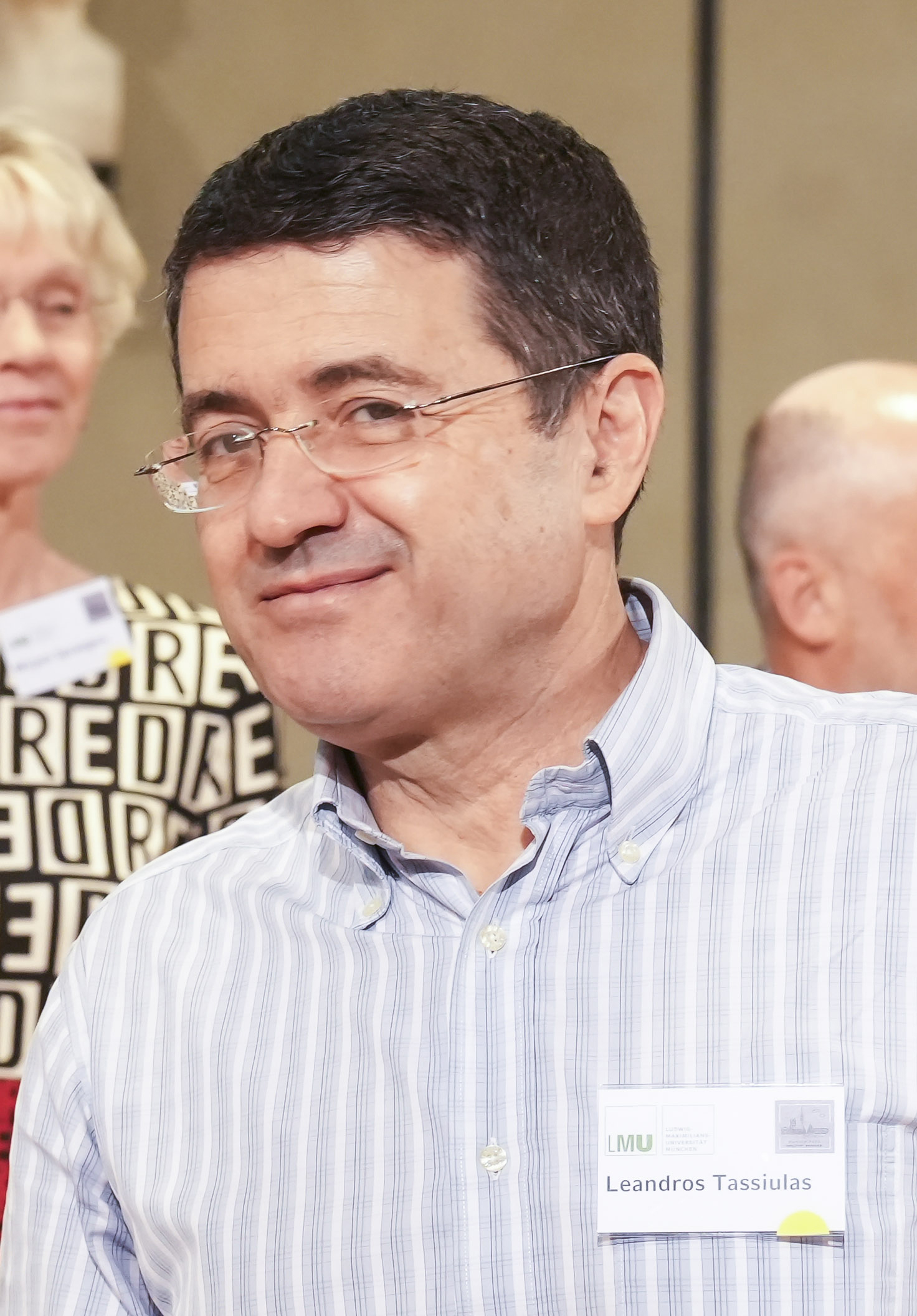
Leandros Tassiulas is the John C. Malone Professor of Electrical Engineering at Yale University, with additional appointments in Computer Science. His career spans faculty positions at the University of Thessaly, University of Maryland, University of Ioannina, and Polytechnic University. A Fellow of both IEEE (2007) and ACM (2020), he is renowned for contributions to network control theory, including the max-weight scheduling algorithm and back-pressure network policy. PhD in Electrical Engineering (1991) from the University of Maryland, College Park His research focuses on computer and communication networks , emphasizing mathematical models for complex networks , wireless system architectures , stochastic systems , and energy-efficient network design . Recent work explores quantum networking (Pant et al., 2019) and federated learning in edge environments (Jiang et al., 2022). Key publication trends include stability analysis (earlier works), mobile edge computing (2019), software-defined networking (2021), and smart grid optimization (2012-2013). The list includes monographs on network theory and patents for distributed bandwidth allocation (2011) and directional antenna protocols (2002). Scientific Awards ACM Fellow (2020) for network control contributions IEEE Koji Kobayashi Award (2016) for scheduling/stability analysis IEEE INFOCOM Achievement Award (2007) for resource allocation Bodossaki Foundation Prize (1999) for distributed systems NSF CAREER, ONR Young Investigator, and multiple best paper awards His work has been funded by the NSF, ONR, and IBM. Current projects bridge AI , quantum communication , and next-generation network architectures .
Univ.-Prof. Martin Pinzger is a Professor at the Department of Informatics Systems, Alpen-Adria-Universität Klagenfurt. He serves as Head of Department and Member of the Senate, actively contributing to academic governance. Research Focus: Automating Software Engineering Tasks, Mining Software Repositories, Program Analysis, Software Evolution and Visualization Recent Work: Developing tools for API evolution analysis, cybersecurity AI (CAI), robotics benchmarking (RobotPerf), and dependency validation His research combines empirical studies with tool development for software maintenance and security. Current projects address challenges in REST API breaking changes, cloud security certifications, and robotic system performance evaluation. Publications since 2023 demonstrate continued engagement with topics spanning AI-driven code segmentation, microservice API evolution, and cybersecurity tool development. Key trends include cross-disciplinary applications of NLP to software engineering and security-focused tool creation. Contact: martin.pinzger@aau.at
Matthias Stürmer is a Professor at Bern University of Applied Sciences (BFH) and Head of the Institute for Public Sector Transformation (90%) while also serving as Head of the Digital Sustainability Research Center at the University of Bern's Institute of Computer Science (10%). His roles include teaching, research, and consulting on digitalization topics such as digital sustainability, open source software, AI, NLP, open data, and public procurement. He earned a Dr. sc. ETH Zurich in 2009 and habilitation in 2020. His career includes senior roles at EY and Liip AG, and he holds leadership positions in organizations like CH Open and the Parliamentary Group for Digital Sustainability. **Education**: PhD (ETH Zurich, 2009), Licentiate in Business Administration (University of Bern, 2005). Studies included computer science and business administration, with an Erasmus semester at the University of Oviedo (Spain). **Research Interests**: Focus on digital sustainability, digital sovereignty, AI ethics, open source governance, smart cities, and public procurement strategies. His work bridges technical innovation with public sector challenges, emphasizing long-term societal benefits over short-term vendor dependencies. **Publications**: Over 38 peer-reviewed articles and book chapters, including foundational work on digital sustainability frameworks, open government data impact analysis, and collaborative innovation models. Recent focus areas include data colonialism risks and sustainable environmental data management. **Awards**: While no explicit awards listed, his leadership roles and prolific publications highlight recognition in academic and policy circles. **Advising & Grants**: Advises on public sector digitalization policies, contributes to Swiss federal IT strategies, and leads research projects funded by organizations like the University of Bern. Active in shaping Open Source adoption policies for public institutions. **Labs/Teams**: Directs the Research Center for Digital Sustainability at the University of Bern, collaborating with industry and government partners on projects like the Open Data Impact Framework and Open Finance initiatives.