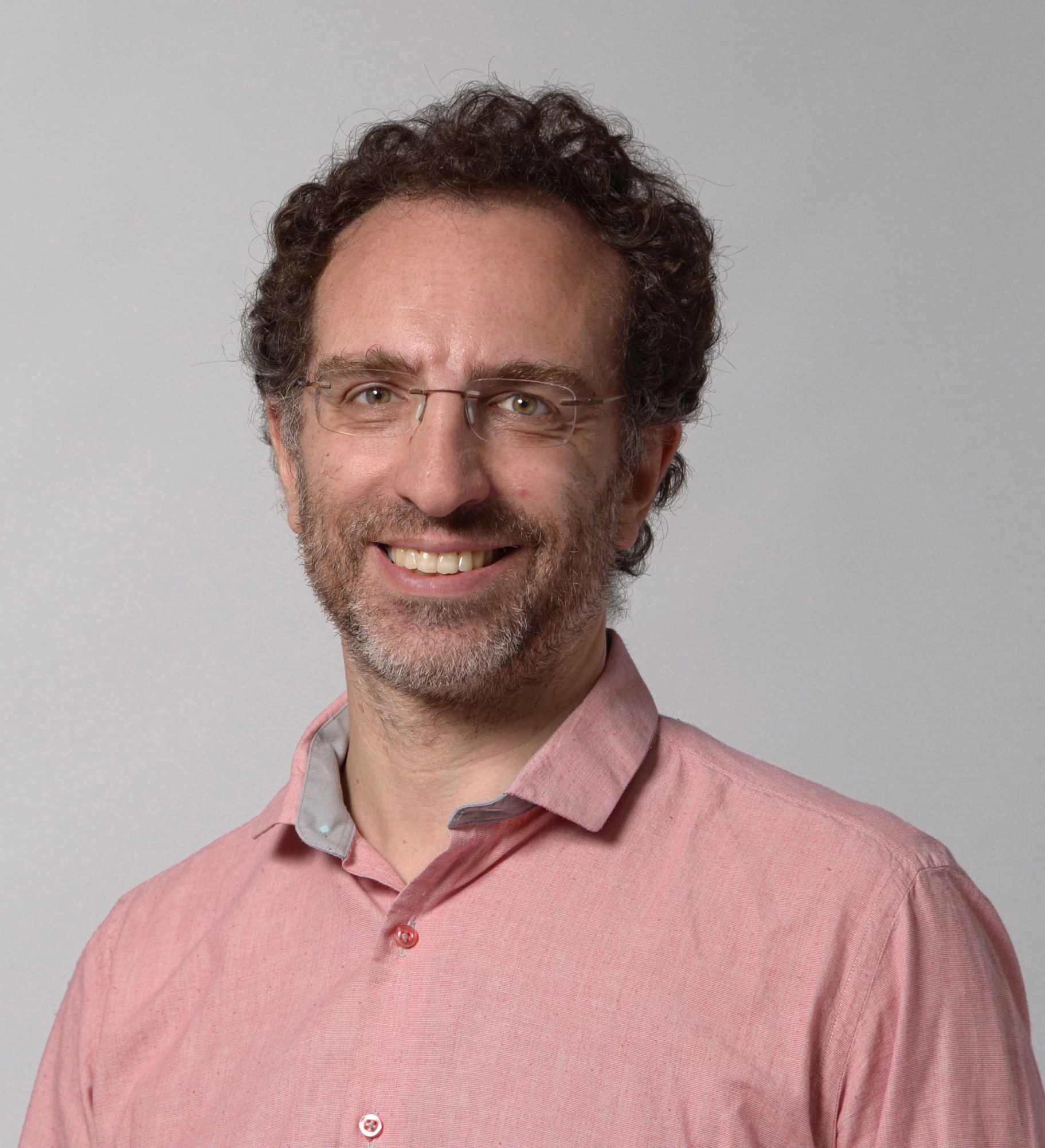
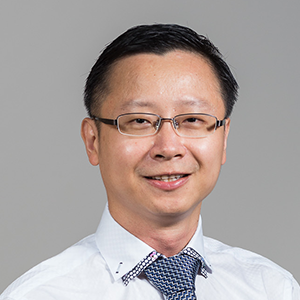
Santiago Torres-Arias is an Assistant Professor at Purdue University, affiliated with the Elmore Family School of Electrical and Computer Engineering . His research spans computer systems security , software supply chain security , and applied cryptography . Campus: West Lafayette, Indianapolis Office: BHEE 324B Contact: santiagotorres@purdue.edu , +1 765-496-6610 Research Interests: Computer systems security Software supply chain security Distributed systems security Applied cryptography Password storage mechanisms Publication Trends: His recent work focuses on software supply chain security , including code signing , provenance mechanisms , and IoT vulnerabilities . Key projects address Sigstore , DevSecOps , and zero-trust dependencies . Scientific Awards: Advising & Grants: No student details provided No grant information listed
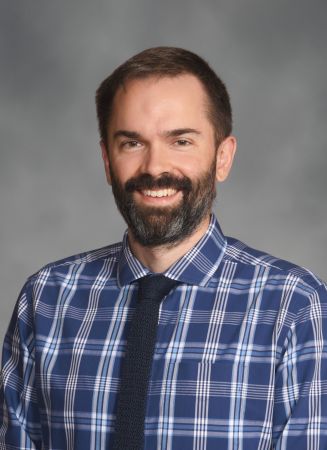
Travis J. Fuerst is an Assistant Professor of Practice at the School of Engineering Technology within the Purdue Polytechnic Institute at Purdue University, West Lafayette. He has held this position since 2022, previously serving in the Department of Computer Graphics Technology from 2016 to 2022. Before returning to academia, he accumulated over 13 years of industry experience at The Boeing Company as an Engineering Workplace Coach, IT Project Manager, and Continuous Improvement Leader, complemented by 21 years of military service in the U.S. Army Reserves where he retired as a Major from USTRANSCOM in 2017. His academic credentials include: Master of Science in Technology (Product Lifecycle Management) from Purdue University (2002) Bachelor of Science in Computer Graphics Technology from Purdue University (2000) with a minor in Organizational Leadership and Supervision Professor Fuerst specializes in Product Lifecycle Management (PLM), Project Management, Continuous Improvement, and Configuration Management, integrating Lean Manufacturing and Six Sigma methodologies into both industrial applications and educational frameworks. His instruction emphasizes practical skill development for industry readiness, leveraging extensive real-world experience to bridge theoretical concepts with professional practice in engineering technology fields. His publication portfolio demonstrates a clear trajectory toward integrating Product Data Management systems into engineering education, with emphasis on digital enterprise solutions and pedagogical innovation. Key themes include parametric solid modeling applications, collaborative project-based learning frameworks, and curriculum development for PLM implementation across undergraduate programs, reflecting his dual focus on technological advancement and educational transformation. His recognition includes: Purdue Polytechnic 2013 Early Career Award Professor Fuerst actively mentors undergraduate and graduate students through project-based design learning that cultivates higher-order thinking skills, directly applying his industry expertise in risk analysis, resource allocation, and cross-functional team leadership. His curriculum development work demonstrates sustained commitment to advancing engineering education practices through practical, industry-aligned methodologies. His leadership experience spans Boeing's continuous improvement initiatives and U.S. Army cyber operations, providing a robust foundation for developing team-based project management approaches that emphasize operational efficiency and strategic problem-solving in academic settings.
Víctor Adrián Braberman is a Full-time Associate Professor at the Department of Computer Science, Faculty of Exact and Natural Sciences, University of Buenos Aires (UBA), and a CONICET researcher. He serves as Co-director of the LaFHIS (Tools and Foundations for Software Engineering) Research Lab at UBA, where he leads significant research in formal methods and software engineering. His academic career demonstrates sustained excellence in both teaching and research within Argentina's premier academic institution. Braberman's research focuses on Formal Verification , particularly Model Checking of Timed Systems, Controller Synthesis, Formal Specification of event-based properties, Aspect-oriented modeling, and Software Architectures. His work also extends to Software Analysis , including Memory Consumption Prediction and Static and Dynamic Program Analysis. These interests position him at the intersection of theoretical computer science and practical software engineering applications, addressing critical challenges in system reliability and performance. His recent publications (2022-2025) reveal a clear trajectory toward integrating artificial intelligence with formal methods , particularly through the application of reinforcement learning to controller synthesis problems and the exploration of Large Language Models for software verification and falsification. The research shows increasing attention to scalability challenges in formal methods and the integration of probabilistic approaches to handle uncertainty in system environments. Automated Reasoning Amazon Research Award (ARA) (2024) Braberman has successfully supervised numerous PhD and Licentiate students, establishing a strong academic lineage in formal methods research in Argentina. His research has been supported by substantial grants including European Community projects (MEALS), ANPCyT PICT grants, UBACyT projects, and Microsoft Research funding. His leadership extends to directing major research initiatives in formal software engineering. As Co-director of LaFHIS, Braberman oversees a vibrant research ecosystem that bridges theoretical computer science with practical software engineering challenges. The lab maintains strong international collaborations, particularly with European institutions, and has secured competitive funding from both national and international sources, demonstrating the global relevance of their work in formal methods and software engineering.
Dr. Cong Pu is an Assistant Professor in the Department of Computer Science at Oklahoma State University (OSU), Stillwater, Oklahoma. He holds a Ph.D. and M.S. in Computer Science from Texas Tech University and a B.S. in Computer Science and Technology from Zhengzhou University, China. His primary research focuses on network security, data privacy, applied cryptography, wireless networking, and mobile computing. He leads the Security & Networking Lab at OSU and has secured grants from NSF, NSA, and other agencies. His work emphasizes secure IoT and drone networks, privacy-preserving protocols, and AI-driven cybersecurity solutions. Education Ph.D. and M.S. in Computer Science, Texas Tech University, USA B.S. in Computer Science and Technology, Zhengzhou University, China Research Interests Dr. Pu's research spans network security , data privacy , applied cryptography , wireless networking , and mobile computing . He specializes in designing lightweight authentication protocols for IoT and drone networks, enhancing privacy in distributed systems, and developing AI-driven cybersecurity frameworks. Recent efforts include blockchain-assisted authentication, fault-tolerant data aggregation, and resource-efficient cryptographic protocols. Grants & Awards NSF SaTC Award ($288,398) for securing Internet of Drones systems (2024) NSA Cybersecurity Training Program Grant ($127,128) (2023) Best Paper Award at IEEE CCNC 2024 Listed in Stanford/Elsevier Top 2% Scientists (2025) Advising & Training He mentors Ph.D., M.S., and undergraduate students in areas like network security and applied cryptography. Offers research assistantships, independent studies, and visiting scholar collaborations. Has developed training programs for K-12 educators in cybersecurity via NSF/OSRHE grants. Labs & Infrastructure Leads the Security & Networking Lab , focusing on secure IoT/drones, privacy-preserving systems, and AI-driven security tools. Collaborates on projects involving blockchain, reinforcement learning, and hardware-software co-design for defense mechanisms.
Professor Kenneth M. Anderson is Chair of the Department of Computer Science and holds the Palmer Endowed Chair at the University of Colorado Boulder's College of Engineering & Applied Science. He co-directs Project EPIC, a $4M NSF-funded initiative on social media use during mass emergencies, and serves as Co-Director of the Center for Software and Society. Ph.D. in Computer Science, University of California, Irvine (1997) Joined CU Boulder in 1998; tenured in 2005 Former Associate Dean for Education (2016-2019) Former Associate Chair (2010-2013) His research bridges software engineering, crisis informatics, and human-computer interaction. Current projects focus on large-scale social media analytics, crisis response systems, and software architecture for data-intensive environments. Recent publications explore multilingual social media analysis (ML-EPIC), bug fix patterns in software development (FIXR), and collaborative big data platforms. Themes include disaster risk communication, data modeling challenges, and asynchronous analysis tools. ATLAS Fellow (2010) As department chair, he spearheaded initiatives for inclusivity, including creating a Bachelor of Arts in Computer Science and establishing the NSF Broadening Participation in Computing plan. He oversees major academic reforms and departmental operations.
Dr. Siyuan Ji is a Reader in Model-based Systems Engineering (MBSE) at Loughborough University, serving as Deputy Head of the Manufacturing, Systems & Management Academic Community and Deputy Director of the Doctoral Training Centre in MBSE. He previously held a Senior Lecturer position in Systems Engineering at the University of York, where he led the MSc Programme in Safety-Critical Systems Engineering. His academic journey includes a PhD and MSc in Physics from the University of Nottingham, followed by research roles in model-based systems engineering at Loughborough University. His research focuses on advancing model-based techniques for systems engineering, particularly in safety-critical systems, formal methods, and complex system design. He has contributed to areas such as hazard management (e.g., BSafeML framework), response time analysis in real-time systems, and model synchronization for requirements engineering. His work bridges theoretical foundations with practical applications in automotive systems, embedded software, and educational technology. Dr. Ji holds the title of Fellow of the Higher Education Academy and has published extensively on topics ranging from quantum technology reporting to conversational tutoring systems. His research emphasizes interdisciplinary collaboration, evident in projects like the EPSRC-funded analysis of vehicles as complex systems. He actively contributes to both academic and industrial advancements in systems engineering methodologies and education innovation. His professional roles include managing doctoral training programs, overseeing academic communities, and advancing systems engineering education. Collaborations span industry partnerships and international academic networks, reflecting his commitment to impactful research and training the next generation of systems engineers.
Dr. Andres Guadamuz is a Reader in Intellectual Property Law at the University of Sussex, affiliated with the School of Law, Politics and Sociology. He serves as Editor in Chief of the Journal of World Intellectual Property . His research focuses on intersections of law and technology, including artificial intelligence and copyright, open licensing, cryptocurrencies, smart contracts, and blockchain. He has authored over 40 articles, book chapters, and two books, alongside regular blog posts on technology regulation. Research Interests: Artificial Intelligence and Copyright Blockchain Technology and IP Cryptocurrency Regulation Open Source Licensing Internet Governance Data Mining Legal Frameworks Publication Trends: His recent work addresses AI's impact on copyright law, NFTs, and legal challenges in smart contracts. He critically explores EU AI legislation, liability frameworks for AI inputs/outputs, and NFT authenticity issues. Teaching: Teaches courses on Digital Intellectual Property Law, Internet Law, and Information Technology IP Law, including developing the specialized LLM in IT and Intellectual Property Law. Grants/Advising: Supervises PhD/postgraduate students in his research areas. His work is widely cited in legal, academic, and policy circles, with over 100 Mendeley readers for key papers.
Carlos R. Rivero is an Associate Professor in the Department of Computer Science at the Rochester Institute of Technology (RIT), located within the Golisano College of Computing and Information Sciences. His primary research focuses on graph theory applications in knowledge graphs, graph databases, and computer-aided program comprehension. He holds a PhD from the University of Seville (Spain), completed in 2012, with postdoctoral work at the University of Idaho (USA). His teaching responsibilities include courses such as Principles of Data Management, Data Mining, and Big Data exploration. Rivero has advised numerous PhD and Master’s students, contributing to research projects in link prediction, knowledge graph completion, and educational technology. He actively serves on program committees for conferences like The Web Conference and SIGKDD, and has reviewed for journals including the VLDB Journal and Communications of the ACM. His research emphasizes evaluating knowledge graph embeddings, improving link prediction methodologies, and developing tools for educational feedback in programming. He has contributed to projects like AYNEXT, which streamlines link prediction evaluation, and CAFE, a neighborhood-aware knowledge graph completion tool. Rivero’s work bridges theoretical advancements with practical applications in education and industry. Notable contributions include frameworks for automated feedback in programming courses and methodologies for assessing inference patterns in knowledge graphs. His grants and service roles reflect a commitment to advancing computational methods and fostering academic collaboration in data science and education.
Darko Marinov is a Professor at the Siebel School of Computing and Data Science and a member of the Information Trust Institute at the University of Illinois at Urbana-Champaign. His research focuses on software testing methodologies, particularly regression testing, flaky tests, and software reliability engineering. He has contributed to frameworks like Ekstazi for regression test selection and DeFlaker for identifying flaky tests. Marinov holds an NSF CAREER Award (2008) for his work in this domain. His research interests span testing techniques for modern software systems, including configuration testing, test prioritization, and fault localization. He has pioneered studies on the characteristics of flaky tests in large-scale projects and developed tools to improve software quality assurance processes. Marinov collaborates across academic and industrial settings, addressing challenges in continuous integration, reproducibility of computational experiments, and hardware-software co-design for resilience. His work bridges theory and practice, with applications in cloud computing, AI workloads, and cybersecurity. Awards: NSF CAREER Award (2008) Key Contributions: Ekstazi, DeFlaker, FastFlip, and Ctest4J frameworks Labs/Teams: Active member of the Information Trust Institute and leads software testing research groups at UIUC
Robert J. Brunner is a Professor at the University of Illinois with primary appointments in the Gies College of Business (Department of Accountancy) and the School of Information Sciences. He holds affiliate roles across multiple departments including Astronomy, Computer Science, and Statistics, as well as research centers like the Beckman Institute and NCSA. His research focuses on applying statistical/machine learning to solve complex problems in astronomy, finance, and large-scale data science. Education: Ph.D. in Astrophysics from Johns Hopkins University (advisor: Alex Szalay). Postdoctoral work at Caltech on the Digital Sky project. Research Interests: Machine learning applications, computational techniques, data management/visualization, and observational cosmology. His work bridges astrophysical data analysis with modern data science methodologies. Recent work includes developing spatio-temporal neural networks for forecasting, evaluating AI-driven financial analysis tools, and planning for the Vera C. Rubin Observatory. He collaborates internationally on large-scale surveys like the Dark Energy Survey and SDSS. Labs/Teams: Leads data science initiatives at the University of Illinois Research Park. Active in interdisciplinary teams at NCSA and Beckman Institute focusing on algorithm optimization and data-intensive research.
Sharad Mehrotra is a Distinguished Professor at the University of California, Irvine (UCI), leading the Center for Emergency Response Technologies (CERT) and directing the NSF-funded RESCUE project. He previously served at the University of Illinois, Urbana-Champaign, and holds a Ph.D. from the University of Texas at Austin (1993). His research focuses on data management, IoT systems, privacy-preserving technologies, and smart spaces, with contributions to frameworks like TIPPERS and MARS. Education: Ph.D., Computer Science, University of Texas at Austin, 1993 Research Interests: His work bridges database systems, security, and IoT, emphasizing privacy in smart environments. Notable projects include sentient space technologies for disaster response, cryptographic methods for encrypted data queries, and semantic IoT integration. Recent efforts address privacy in multi-owner data systems and resilient community water infrastructure. Awards & Recognition: ACM Fellow (2024) SIGMOD Best Paper (2001), DASFAA Best Paper (2004) NAVWAR Innovation Award (2021) Outstanding Graduate Mentor (2005) Grants & Leadership: As RESCUE PI, he managed $12.5M NSF funding, developing crisis-response software deployed by emergency agencies. Collaborations include the Cal-IT2 institute (UCSD/UCI) and the US Navy’s TIPPERS platform. He co-leads initiatives like the NSF Civic Innovation Challenge for disaster resilience in aging communities. Labs & Teams: Directs UCI’s Information Systems Group and CERT, fostering interdisciplinary research with 60+ members. His teams produce open-source tools (e.g., SEMIoTIC, PrivacySphere) and engage in global partnerships via Fulbright Visiting Scholar programs.
Sandy Irani is a Full Professor at the University of California, Irvine (UCI) in the Department of Computer Science within the Donald Bren School of Information and Computer Sciences. She received her Ph.D. from UC Berkeley in 1991 and has been at UCI since 1992. Her research focuses on algorithm design, computational complexity theory, and quantum computing, with notable contributions to online algorithms and quantum complexity theory. She currently serves as Associate Director of the Simons Institute for the Theory of Computing at UC Berkeley, a role she has held since 2022. This position allows her to collaborate with researchers across theoretical computer science and related disciplines. Irani’s teaching excellence is recognized through the UCI Distinguished Faculty Award for Teaching (2021), and she has contributed to education through her zyBook on Discrete Mathematics, used by over 94,000 students globally. Her work bridges foundational computer science with practical applications, including power management strategies and distributed computing algorithms. Notably, she has collaborated with industry leaders like Mike Luby on optimizing distributed systems. Her research in quantum computing explores computational problems inspired by condensed matter physics, aiming to understand quantum advantage over classical systems. She has also authored influential papers on topics like cache hierarchy design, scheduling algorithms, and the theoretical limits of electronic structure calculations. Awards: ACM Fellow (2022), UCI Distinguished Faculty Award for Teaching (2021). Key Roles: Associate Director, Simons Institute; Vice Chair, Computing Division at UCI. Recent Projects: Quantum algorithms for condensed matter systems, maximal independent set algorithms in distributed networks.
Wajih Ul Hassan is an Assistant Professor of Computer Science at the University of Virginia (UVA), affiliated with the School of Data Science. He leads the DART Lab, focusing on system intrusion detection, forensic investigation, and cybersecurity through machine learning and data provenance techniques. His research has earned prestigious awards including the NSF CAREER Award (2024) and Symantec Research Labs Graduate Fellowship. Dr. Hassan holds a Ph.D. in Computer Science from the University of Illinois Urbana-Champaign (2021). He has collaborated with NEC Labs and Symantec Research Labs to integrate defensive strategies into commercial security products. His work emphasizes practical solutions for networked systems and scalable security mechanisms. He teaches courses such as CS 6501: Machine Learning in Systems Security, CS 4630: Defense Against the Dark Arts, and DS 6559: Machine Learning in Systems and Network Security. His research interests span intrusion detection, provenance analytics, and automated threat response, with over 20 peer-reviewed publications since 2017. Award Highlights: NSF CAREER Award (2024) ACM SIGSOFT Distinguished Paper Award Young Researcher at Heidelberg Laureate Forum Service Activities: He has served on program committees for top-tier conferences (e.g., IEEE S&P, ACM CCS) since 2018 and reviewed grants for the NSF and Commonwealth Cyber Initiative. Labs & Teams: The DART Lab at UVA focuses on advancing enterprise security through data-driven approaches. Dr. Hassan actively recruits students for research projects in cybersecurity and systems security.
Dr. TAN Wee Kek is an Associate Professor (Educator Track) in the Department of Information Systems and Analytics at the National University of Singapore's School of Computing. He served as Assistant Dean in the School's Office of Student Life from 2019 to 2024 and has been a Fellow of the NUS Teaching Academy since 2017. He holds a Doctor of Philosophy in Information Systems and Bachelor of Computing in Information Systems (First Class Honours) from NUS, and previously earned a Diploma in Computer Information Systems from Singapore Polytechnic. His research focuses on Technology-Enhanced Learning (TEL), particularly artificial intelligence applications in education, and consumer-based information technology including online decision aids, social computing, virtual worlds, and consumer cloud services. His methodological approach primarily employs design science paradigms. Publication analysis reveals his scholarly work spans educational technology, e-commerce systems, human-computer interaction, and information systems pedagogy, with recent emphasis on learning analytics and AI-enhanced educational frameworks. Major Honors: Commendation Medal from Singapore's President (2017) Multiple Annual Teaching Excellence Awards (2009-2024) Crystal Service Award, WorldSkills Singapore Council (2018) Lee Kuan Yew Award for Mathematics and Science (2001)
Frank E. Curtis is a Professor in the Department of Industrial and Systems Engineering at Lehigh University, where he has been since 2009. He holds a B.S. in Mathematics and Computer Science from the College of William and Mary (2003), an M.S. and Ph.D. in Industrial Engineering from Northwestern University (2004 and 2007), and completed a postdoctoral fellowship at New York University’s Courant Institute (2007–2009). His research focuses on developing numerical methods for large-scale nonlinear optimization, with applications in machine learning, operations research, and energy systems. Key achievements include the 2021 SIAM/MOS Lagrange Prize for Continuous Optimization (with Bottou and Nocedal) and the 2018 INFORMS Computing Society Prize (with Burke, Lewis, and Overton). He has secured significant funding from the NSF, DoE, and ONR, including a TRIPODS grant and ARPA-E awards. His work on the ARPA-E Grid Optimization Competition earned second place in 2020. Curtis’s research interests span mathematical optimization, numerical analysis, and algorithm design. His recent articles emphasize stochastic optimization, fairness in machine learning, and robust algorithm development for constrained systems. He serves as an Area Editor for Mathematics of Operations Research and Associate Editor for multiple top journals, including Mathematical Programming and SIAM Journal on Optimization . Notable grants include DoE ASCR Early Career Awards and NSF TRIPODS funding for collaborative projects with Northwestern, Boston University, and Cornell. His OptML @ Lehigh team develops cutting-edge optimization tools and frameworks for real-world applications.