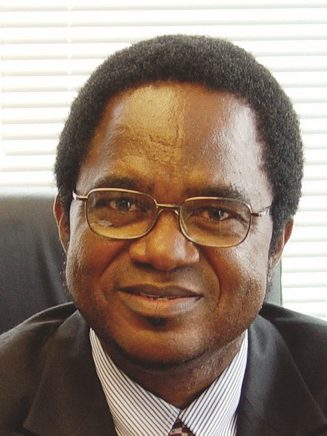
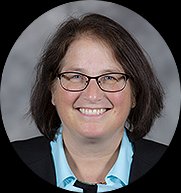
Dr. Anthony Okafor is a Professor of Mechanical and Aerospace Engineering at Missouri University of Science and Technology (Missouri S&T). He holds a Ph.D. in Mechanical Engineering from Michigan Technological University (1986), an M.S. in Production Management and Manufacturing Technology from the University of Strathclyde (1982), and an M.S. in Mechanical Engineering from the Technical University of Sofia, Bulgaria (1980). His research focuses on advanced manufacturing technologies, including intelligent machining, high-speed machining, machine tool dynamics, and non-destructive evaluation (NDE). Key areas include corrosion damage detection in aircraft components, smart structures for structural health monitoring (SHM), and sustainable bio-based lubricants for minimum quantity lubrication (MQL) in machining. He also investigates the tribological properties of nanofluids and the weldability of ultra-high-strength automotive steels. Dr. Okafor’s recent work emphasizes corrosion mitigation in aging aircraft systems, high-speed machining of aerospace alloys like Inconel 718, and the development of eco-friendly lubricants. His articles span 40 years, reflecting expertise in sensors, signal processing, finite element modeling, and acoustic emission monitoring for material analysis. Notable grants include the GOALI-funded study on high-speed milling of difficult-to-cut materials using soybean oil-based nanofluids. He has advised no formally listed students but contributes extensively to manufacturing education through virtual CNC simulation tools and curriculum development. His labs focus on machining dynamics, NDE, and smart materials, though specific lab names are not explicitly mentioned in the texts.
Jeremy Bellah is an Assistant Professor of Management Information Systems at the University of Oklahoma’s Price College of Business. He has held academic roles since 2009, specializing in teaching courses such as Operations Management, Quality Management, Project Management, Web Application Development, and Database Management. He holds a Ph.D. in Operations Management from Texas Tech University (2009) and a Project Management Professional (PMP) certification from PMI (2013). Dr. Bellah actively contributes to professional communities, including serving on the board of directors for the PMI chapter in Amarillo, Texas (2017–2018). His research focuses on RFID technology applications, environmental sustainability, project management software development, and offshore information systems challenges. Research Interests: RFID integration in supply chain and sustainability Project management software design and evaluation Offshore software development challenges Technology-driven cost management solutions His recent publications emphasize RFID technology’s role in environmental sustainability, project management tool development, and cross-disciplinary community engagement initiatives. His work bridges academic theory with practical software development and project management practices. Professional Contributions: Board member, PMI Amarillo Chapter (2017–2018)
Clemens Dubslaff is an Assistant Professor in the Formal System Analysis group at TU Eindhoven (The Netherlands). His research focuses on improving the reliability and explainability of computing systems through formal methods, particularly probabilistic model checking and symbolic techniques. He holds a Ph.D. from TU Dresden (Germany) and has affiliations with TU Dresden's Cluster of Excellence CeTI and Collaborative Research Center CPEC. His work addresses challenges in analyzing complex configurable systems and enhancing system transparency through explainable AI approaches. Education: B.Sc. in Mathematics and Computer Science (TU Dresden) M.Sc. in Computational Logic (NOVA University Lisbon) Ph.D. in Formal Methods (TU Dresden) Research Interests: Formal methods and model checking Symbolic analysis techniques Configurable and reconfigurable systems Explainability in AI and verification Probabilistic systems analysis Recent Achievements: NWO VENI Grant (2023) Launched OxiDD decision diagram framework (2024) Key contributions to feature-based software analysis Labs/Teams: Formal System Analysis group at TU/e, collaborating with Dresden's CeTI and CPEC initiatives.
Aidin Azamnouri is affiliated with the Chair of Software Engineering at the Technical University of Munich (TUM), located at Bildungscampus 2 in Heilbronn. His research focuses on ML-Enabled Systems, collaboration challenges in ML engineering teams, human factors in software engineering and AI, and AI education. Current research includes automated documentation generation for ML systems using large language models. A thesis in progress explores this topic under his advisement. Research Interests: He investigates how interdisciplinary teams collaborate on machine learning projects, student perceptions of self-study with open-source AI resources, and testing methodologies for software systems. His work bridges software engineering practices with modern AI development challenges. Publications highlight trends in collaborative engineering challenges, educational practices in AI/ML contexts, and testing innovations like parameterization for automated test suites. His 2025 works emphasize team dynamics and student learning in AI environments, while earlier research addressed test suite reliability and mobile game robustness. Advising: Currently mentoring a thesis on automated documentation generation for ML systems. No grants are explicitly listed, though his involvement in projects like InnoVET PLUS MEKI (from the project menu) suggests collaborative team engagements. He is part of the Software Engineering research group led by Prof. Stefan Wagner.
Bo Bergbäck is a senior researcher in the Department of Biology and Environmental Science at Linnaeus University (Faculty of Health and Life Sciences). His career spans over three decades with a focus on environmental science, urban metal flows, and industrial ecology. Specializes in metal pollution , environmental risk assessment , and material flow analysis Key projects include urban copper flows , bismuth/silver in cosmetics , and climate change impacts on contaminated land Extensive publications on trace metal dispersion from transport systems and historical pollution in Sweden
Dr. Rada Andrei is an Assistant Professor at the Faculty of Mechanical and Electrical Engineering , UPET.RO , affiliated with the Department of Automation, Computers, Electrical and Power Engineering. His research focuses on energy security, power systems optimization, electrostatic filtration technologies, and industrial automation. He has contributed extensively to studies on energy sector dynamics, centrifugal pump performance modeling, and energy efficiency in mining operations. His academic work spans experimental measurements of industrial equipment (e.g., pumps, transformers), simulation of thermal systems, and critical analysis of national/international energy policies. Notable collaborations include projects with the Institute of „Ioan Ursu” and energy companies of national strategic importance. Key research directions include: Power crisis mitigation strategies Electrostatic particle charging mechanisms Virtual instrumentation in engineering design Energy balance calculations for industrial systems Industry 4.0 implementation in production processes Dr. Andrei has developed a laboratory guide for electric machines and pioneered real-time electricity balance analysis at lignite coal mines. His work emphasizes bridging theoretical models with practical industrial applications.
Mohammad Masudur Rahman is an Associate Professor in the Faculty of Computer Science at Dalhousie University. His research focuses on intelligent automation of software maintenance and evolution , combining Artificial Intelligence (AI) and Software Engineering (SE) to address challenges in bug detection, diagnosis, and reproducibility. He leads the RAISE Lab , which aligns with Dalhousie’s strategic goals in Advanced AI & Digital Innovation , particularly Sustainable Software Innovation and Sustainable AI . Dr. Rahman earned his PhD in Computer Science/Software Engineering from the University of Saskatchewan (2019), advised by Prof. Dr. Chanchal Roy, and completed a postdoc at Polytechnique Montreal under Prof. Dr. Foutse Khomh. He has published 50+ papers in top venues like ICSE , ESEC/FSE , ASE , and TOSEM , with research funded by NSERC Discovery Grant, Mitacs Accelerate International, and Dalhousie Startup Fund. His work investigates the challenges of software bugs, crashes, vulnerabilities, and technical debt , particularly in AI-driven systems like Large Language Models and Deep Learning frameworks. He develops tools to automate bug diagnosis, leveraging code structures and neural machine translation. Recent articles analyze deep learning bug reproducibility , fault diagnosis in attention models , and code smell impacts . Scientific Awards : Governor General's Gold Medal, U of S Doctoral Thesis Award, Dalhousie Belong Research Fellowship, President Gold Medal (Bangladesh). Grants : $475K+ (PI) and $4.3M+ (Co-PI) from NSERC, Mitacs, Climate Action Fund, and Dalhousie.
André Leal Santos is an Assistant Professor at ISCTE - Instituto Universitário de Lisboa, affiliated with the Department of Information Science and Technology (ISTA) and the ISTAR-Iscte research center. He holds a PhD in Computing from the University of Lisbon (2009), co-supervised with Tampere University of Technology, and a Bachelor's degree in Computing from the same institution. His research focuses on the human aspects of software development, particularly in programming education and API usability. Key areas include pedagogical tools, automatic assessment systems, projectional editors, domain-specific languages, and software maintenance. He has developed tools like PandionJ, a pedagogical debugger for Java, and authored a digital book on Kotlin programming. His recent publications reflect a consistent focus on improving developer and learner experiences through innovative software tools and educational methodologies. Themes include API learning support, automated component integration, programming pedagogy, and empirical studies on software development practices. Scientific engagement highlights: Visiting researcher at Carnegie Mellon University (2014) under CMU-Portugal program with Brad Myers Visiting researcher at Aalto University (2020) with Lauri Malmi in LeTech Organizer of ICPEC’24 Program Committee member for ITiCSE, Koli Calling (2017–2023), SPLASH-E’24 Member of the International Committee of the SIGSCE Technical Symposium Participant in the Dagstuhl Seminar on Notional Machines He advises PhD students Afonso Caniço and Ricardo Miranda, and has supervised MSc students. His work bridges academic research and practical applications in both educational and professional software development contexts. He is actively involved in open-source development, with projects hosted on GitHub, and maintains a strong presence in the computing education research community.
Pierre-Yves Schobbens is a Full Professor at the University of Namur, Faculty of Computer Science, specializing in software verification and formal methods. He serves as the Director of the Research Group on the Foundations of Computer Science (FOCUS) and holds leadership roles including President of the Research Center on Information Systems Engineering (PReCISE), Chair of the International Affairs Commission for the Faculty of Computer Science, and Chair of the Doctoral Commission for Exact Sciences at the university. Education: Bachelor in Philosophy, Université Catholique de Louvain (UCL), 1982 Master in Applied Mathematics and Economics, UCL, 1983 Master in Computer Engineering, UCL, 1984 Doctorate in Computer Science, UCL, 1992 Research Interests: Professor Schobbens specializes in software product lines, software verification, formal methods, agent-oriented software, and model checking. His research focuses on developing rigorous approaches for software development and verification, particularly in the context of variability-intensive systems. He has made significant contributions to the field of featured transition systems, which enable the verification of software product lines. His work bridges theoretical computer science with practical applications, addressing challenges in real-time systems, adaptive software, and database performance. Recent research directions include applying artificial intelligence techniques to software quality assurance, energy-aware computing, and the development of context-aware systems. Research Trends: Professor Schobbens' recent publications demonstrate a strong focus on the intersection of formal methods and emerging technologies. His work increasingly incorporates AI and machine learning techniques to address traditional software engineering challenges, particularly in software verification and testing. There's a notable emphasis on energy efficiency in computing systems, variability modeling for database performance testing, and the application of formal methods to self-adaptive systems. His research maintains a strong theoretical foundation while addressing practical concerns in software development. Scientific Awards: Most Influential Paper Award, VAMOS 2024 (ten-year award) Most Influential Paper Award, Software Product Lines Conference 2020 Most Influential Paper Award, International Requirements Engineering Conference 2016 Best Presentation Award, SAFECOMP 2012 Advising and Grants: Professor Schobbens has supervised 94 students across various levels. He leads multiple significant research projects including SQUAL.AI (Software Quality through Artificial Intelligence, 2025-2026), ERNEST (schEduler foR eNErgy autonomouS ioT, 2024-2025), and CYBEREXCELLENCE (Cyber Security Excellence project within the Walloon Region, 2022-2027). His research has been consistently funded since 1999, demonstrating sustained impact and relevance in his field. Laboratories and Research Teams: Professor Schobbens directs the Research Group on the Foundations of Computer Science (FOCUS) and is a key member of the Research Center on Information Systems Engineering (PReCISE). He also contributes to the Namur Digital Institute (NADI) and Namur Research Institute for Life Sciences (Narilis). His research group focuses on formal methods for software engineering, particularly addressing challenges in software product lines, model checking, and adaptive systems.
Gordana Radosavljević is an Associate Professor at the Faculty of Medical Sciences, University of Kragujevac. She is affiliated with the Centre for Molecular Medicine and Stem Cell Research , focusing on Mikrobiologija i imunologija (Microbiology and Immunology). Her academic journey includes a PhD in 2011 and selection to her current rank in 2012. Research Interests: Microbiology, Immunology, Molecular Medicine, Stem Cell Research, Public Health, and Pharmacology. Key Trends: Her work bridges fundamental microbiology with clinical applications, including pharmacological potential of natural compounds, inflammatory pathways in chronic diseases, and biomarker development for cancer prognosis. She also explores societal impacts on health, such as socioeconomic disparities in dental care and drivers' knowledge of medication risks. Technical Expertise: Utilizes advanced equipment for molecular biology, cell culture, and pharmacological testing, as listed in the University's research capacities .
Dr. José Luis Morales Benavente serves as an Adjunct Professor in the Department of Economic Analysis at the University of Alicante's School of Economics. With three engineering degrees from the same institution, he has maintained continuous affiliation since completing his studies in 1998-1999. His academic career spans over 25 years with consistent teaching contributions. Education: Computer Engineering, EPSA - University of Alicante (1999) Technical Engineering in Business Information Systems, EPSA - University of Alicante (1999) Technical Engineering in Computer Systems, EPSA - University of Alicante (1998) His research trajectory evolved from industrial computer vision applications (2000-2003) toward educational software documentation (2008-2010). Early work focused on textile quality control systems using image processing algorithms and DSP implementations for defect detection, with publications in journals like Revista Española de Electrónica and Técnica Textil Internacional. Later contributions centered on open-source office software documentation. Current activities emphasize mathematics instruction for economics students across multiple degree programs. Teaching remains his primary focus with documented instruction in mathematics courses for economics and business programs through 2025. His research projects included publicly funded work on textile manufacturing automation (1999-2001) and technology transfer initiatives (2001-2004), though no recent research output appears in official records. Research Management: Coordinator: 'Transferencia y valoración tecnología' (University of Alicante, 2003-2004) Collaborator: 'Sistema automático de corte...' (Ministerio de Educacion, 1999-2001) Collaborator: Private sector project with GESTION TRIBUTARIA TERRITORIAL SAU (2001-2002) His career demonstrates a transition from technical research toward teaching specialization within the economics faculty, maintaining institutional continuity at the University of Alicante for over two decades.
Leopoldo Teixeira is an Assistant Professor at the Informatics Center (CIn) of the Federal University of Pernambuco (UFPE) in Brazil. Since May 2023, he has served as Head of Graduate Studies at his department. He leads the Software Testing and Analysis Research group and is affiliated with the Software Productivity Group and CIn-Trust. Dr. Teixeira was a CAPES-Alexander von Humboldt Experienced Research Fellow at the Chair of Software Engineering of Universität des Saarlandes in 2022, where he collaborated with Sven Apel on variability analysis over time and space. His educational background includes: PhD in Computer Science from Federal University of Pernambuco (CIn-UFPE, 2014), supervised by Paulo Borba and Rohit Gheyi MSc in Computer Science from CIn-UFPE (2010) Bachelor's degree in Computer Engineering from the Polytechnic School of Pernambuco (2007) Dr. Teixeira's research focuses on providing strong foundations for improving software quality and productivity. His work spans software product lines, configurable systems, refactoring, formal methods, software testing, and mobile development. He has made significant contributions to understanding challenges in highly configurable systems and software evolution, with particular emphasis on theoretical rigor combined with practical applicability. His publication record demonstrates expertise across software testing methodologies, analysis of configurable systems, and formal verification techniques. Recent work addresses pressing challenges in containerization practices (Dockerfile repair), test reliability (flaky test detection), and formal specification of API properties, showing his ability to tackle both theoretical and practical aspects of software engineering. Dr. Teixeira has received recognition through the CAPES-Alexander von Humboldt Experienced Research Fellowship. CAPES-Alexander von Humboldt Experienced Research Fellow (2022) Dr. Teixeira actively contributes to the software engineering community through extensive service on program committees of major conferences including ICSE, FSE, ASE, and SPLASH across multiple years. In 2024, he served as Conference and Local Organization Chair for FSE. He mentors students through his leadership of the Software Testing and Analysis Research group at CIn-UFPE. His laboratory work focuses on software testing and analysis, particularly in the context of configurable systems and software product lines. The research group investigates practical approaches to improve software quality through better testing methodologies, analysis techniques, and formal verification approaches for complex software systems.
Myra Cohen is a Professor and the Lanh and Oanh Nguyen Chair in Software Engineering in the Department of Computer Science at Iowa State University. Previously, she held the position of Susan J. Rosowski Professor at the University of Nebraska-Lincoln where she was a member of the ESQuaReD software engineering research group. She serves on the ASE Steering Committee and has held leadership roles including general chair of ASE 2015 and program co-chair for ICST 2019 and ESEC/FSE 2020. Dr. Cohen earned her Ph.D. from the University of Auckland, New Zealand, her M.S. from the University of Vermont, and her B.S. from the School of Agriculture and Life Sciences at Cornell University. Her academic journey includes lecturing positions at both the University of Auckland and University of Vermont during her graduate studies. Her research spans several interconnected domains focused on software quality and assurance. A significant portion of her work addresses software testing challenges in highly-configurable systems, where she applies search-based techniques and combinatorial designs to create efficient test suites. More recently, her research has expanded into innovative areas including software testing for biological systems, quantum computing applications, and security testing through genetic improvement techniques. Her work demonstrates a consistent theme of addressing complex verification challenges through creative application of formal methods and automated techniques. Analysis of her recent publications reveals a growing focus on emerging domains including quantum software testing, molecular/biological computing systems, and assurance cases for safety-critical systems. She has increasingly incorporated AI techniques, particularly large language models, into traditional software engineering problems while maintaining her foundational work in configurable systems and metamorphic testing. NSF CAREER award recipient AFOSR Young Investigator Award recipient ACM Distinguished Scientist Recipient of 4 ACM Distinguished Paper awards Dr. Cohen has served as chair and committee member for numerous conferences including ASE, ICSE, ISSTA, ESEC/FSE, and ICST. She has mentored numerous students through the doctoral symposiums and student research competitions at major software engineering conferences. Her research has been supported by significant grants including those from NSF and AFOSR. She leads the LaVA-OPs (Laboratory for Variability-Aware Assurance and Testing of Organic Programs) research group at Iowa State University, which focuses on testing challenges in biological and organic computing systems.
Thorsten Berger is a Professor and Head of the Chair of Software Engineering at Ruhr University Bochum, Germany. His office is located at MC 4.101 on the RUB campus, with contact details including phone (+49 (0) 234 32 25975) and email (thorsten.berger@rub.de). He's an active researcher with extensive service in the software engineering community, serving on program committees for major conferences including ICSE, FSE, ASE, and SPLC. Professor Berger's research primarily focuses on software engineering with specialization in variability management, software product lines, and robotics software engineering. His work bridges theoretical foundations with practical applications, particularly in behavior trees for robotic systems, configuration management, and domain-specific language engineering. His interdisciplinary approach connects software engineering with control theory and machine learning applications. Analysis of his recent publications reveals a strong trend toward robotics software engineering, with increasing focus on behavior trees, test-case specification, and runtime verification for robotic systems. His work also shows growing interest in machine learning integration with traditional software engineering practices, particularly in model integration and asset management for ML-enabled systems. The research demonstrates consistent evolution from foundational work in variability management toward more applied domains. His scientific achievements have been recognized with numerous awards: Multiple Most Influential Paper Awards (SLE 2024, VaMoS 2023, VaMoS 2020) Wallenberg Academy Fellowship VR Starting Grant from Swedish Research Council (2016) Best Paper Awards at Modularity (2015) and CSMR (2013) Distinguished Reviewer Awards from ASE, ICSE, and SPLC conferences ERC Starting Grant finalist (2019, 2020) Professor Berger has secured substantial research funding as Principal Investigator for multiple projects including Novel Techniques for Data-Driven Root-Cause Analysis and Variability Management (Volkswagen Infotainment), Properties and Verification Techniques for Behavior Trees (Phoenix Contact Foundation), and PrivacyE2E framework for AI-enabled systems (Federal Ministry of Education and Research). His Wallenberg Academy Fellowship and VR Starting Grant demonstrate his capacity to attract competitive early-career funding. He leads the Virtual Platform project funded by the Swedish Research Council and participates in EU-funded initiatives like CO4ROBOTS. As Head of the Chair of Software Engineering at Ruhr University Bochum, he leads a research group focused on advanced software engineering techniques with particular emphasis on variability-intensive systems. His team actively participates in international research collaborations including the Wallenberg Autonomous Systems Program (WASP) and has organized significant events like the Dagstuhl seminar 19191 on 'Software Evolution in Time and Space: Unifying Version and Variability Management.'
Gül Calikli is an Associate Professor (Senior Lecturer) in Software Engineering at the School of Computing Science, University of Glasgow, United Kingdom. She has held academic positions at several prestigious institutions including the University of Zurich as a senior researcher, Chalmers | University of Gothenburg as a lecturer, and postdoctoral fellowships at The Open University (UK) and Ryerson University (Canada). Dr. Calikli earned her Ph.D. in Computer Engineering from Boğaziçi University in Istanbul. Her academic journey reflects a strong commitment to advancing empirical software engineering with a focus on human aspects. Dr. Calikli's research centers on the intersection of software engineering and cognitive psychology, with a particular emphasis on understanding and mitigating cognitive biases in software development practices. Her work explores how human cognitive limitations impact program comprehension, code review, and vulnerability detection. She investigates how to present information effectively to software practitioners considering human cognitive constraints, and develops tools and techniques based on cognitive psychology to enhance decision-making in software development. Her research also incorporates machine learning systems with "human in the loop" approaches, creating joint cognitive systems that extend human intelligence. Analysis of Dr. Calikli's recent publications reveals a consistent focus on human aspects in software engineering, particularly examining cognitive biases like confirmation bias and their impact on software quality. Her work spans multiple domains including code review practices, vulnerability detection, program comprehension, and privacy-aware software development. A notable trend is her methodological approach combining controlled experiments, field studies, and quantitative analysis of system logs to investigate human factors in software engineering. Best Paper Award at ESEM2013 (Industry Track) Chalmers Area of Advance SEED Funding in 2018 ACM SIGSOFT Distinguished Artifact Award at ICSE 2020 ACM Distinguished Paper Award at ICSE 2021 ACM SIGSOFT Distinguished Paper Award at ESEC/FSE'22 Distinguished Reviewer Award at ICSME'23 Distinguished Reviewer Award at ICPC'22 Dr. Calikli actively supervises PhD students working on diverse topics including team dynamics in agile development, eye-tracking for human-AI pair programming, leveraging LLMs for software development/testing, and sustainability in software engineering teams. She has served on numerous program committees for major software engineering conferences including ASE, ICSE, FSE, and ESEC/FSE. Her research has been supported by various funding mechanisms, including the Chalmers Area of Advance SEED Funding. As an active member of the software engineering community, Dr. Calikli contributes to the advancement of the field through her service on editorial boards (including ACM Transactions on Software Engineering and Methodology), participation in the EPSRC Peer Review College, and organization of conference tracks such as the ICPC 2024 ERA Track which she co-chaired.