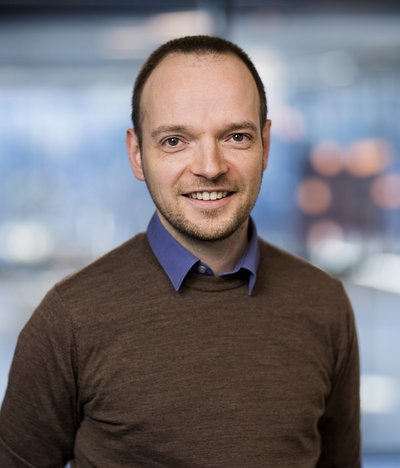
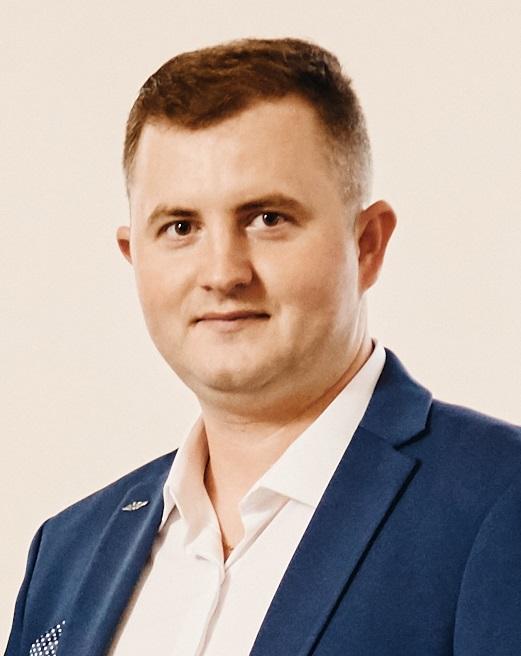
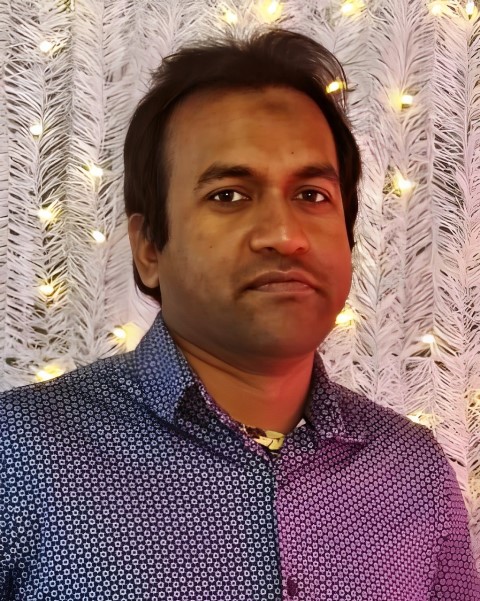
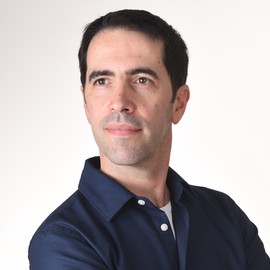
Loek Cleophas is an Assistant Professor in the Engineering of Software-Intensive Systems group at Eindhoven University of Technology (TU/e). He holds a joint appointment with the Mathematics and Computer Science department and is affiliated with EAISI (Eindhoven Artificial Intelligence Systems Institute). His work bridges model-driven software engineering (MDSE) and algorithm engineering, focusing on metamodel analysis, parallel pattern matching, and high-tech system simulations. Cleophas earned his MSc and PhD in Computer Science from TU/e, with industry experience at ASML and academic collaborations at institutions like University of Pretoria and Umeå University. Since 2017, he has led the Dutch research school IPA as Managing Director. He also serves as a research fellow at Stellenbosch University, supervising postgraduate students and co-developing joint research initiatives. His research emphasizes correctness, efficiency, and elegance in software systems. Notable contributions include the SAMOS framework for metamodel clone detection, VPDSL for material flow simulations, and foundational work on sublinear pattern matching algorithms.
Clemens Dubslaff is an Assistant Professor in the Formal System Analysis group at TU Eindhoven (The Netherlands). His research focuses on improving the reliability and explainability of computing systems through formal methods, particularly probabilistic model checking and symbolic techniques. He holds a Ph.D. from TU Dresden (Germany) and has affiliations with TU Dresden's Cluster of Excellence CeTI and Collaborative Research Center CPEC. His work addresses challenges in analyzing complex configurable systems and enhancing system transparency through explainable AI approaches. Education: B.Sc. in Mathematics and Computer Science (TU Dresden) M.Sc. in Computational Logic (NOVA University Lisbon) Ph.D. in Formal Methods (TU Dresden) Research Interests: Formal methods and model checking Symbolic analysis techniques Configurable and reconfigurable systems Explainability in AI and verification Probabilistic systems analysis Recent Achievements: NWO VENI Grant (2023) Launched OxiDD decision diagram framework (2024) Key contributions to feature-based software analysis Labs/Teams: Formal System Analysis group at TU/e, collaborating with Dresden's CeTI and CPEC initiatives.
Prof. Olgierd Unold is a faculty member at the Faculty of Information and Communication Technology at Wrocław University of Science and Technology, where he is affiliated with the Department of Computer Engineering. He holds the academic rank of Professor and conducts research in machine learning, computational intelligence, and bioinformatics. Research Interests: Machine Learning, particularly Grammatical Inference Computational Intelligence: Evolutionary Algorithms, Learning Classifier Systems, Fuzzy Rule Systems Bioinformatics and DNA Computing Natural Language Processing and Pattern Recognition His recent publications demonstrate a strong focus on applying AI techniques to bioinformatics, log analysis, formal language inference, and optimization problems. The work spans from theoretical algorithm development to practical applications in software reliability and biological data classification. Scientific Awards: No awards listed in the provided text. Advising and Grants: Prof. Unold has supervised or collaborated with numerous researchers and students, including Wojciech Wieczorek, Norbert Kozłowski, and Łukasz Śmierzchała, on projects involving classifier systems, grammatical inference, and bioinformatics. While specific grants are not mentioned, his consistent publication output suggests active research funding. Labs and Research Teams: He is part of the research ecosystem within the Department of Computer Engineering, contributing to projects in AI, machine learning, and computational intelligence, likely involving student-led and collaborative research initiatives.
Noelia Pico Gayo is an Associate Professor at the University of the Balearic Islands (UIB) within the School of Mathematical Sciences and Computer Science , Department of Computer Science and Artificial Intelligence. She teaches Software Engineering and Project Management in undergraduate programs including Grado en Ingeniería Informática (2014 Plan) and Grado en Ingeniería Telemática (2010 Plan). Education Executive MBA (2023), EAE Business School Higher Computer Engineering (2013), Universitat Oberta de Catalunya Technical Engineering in Management Informatics (2007), University of the Balearic Islands Higher Degree Training Cycle in Computer Application Development (2003), IES Teis PMP Certification (2021) SCRUM Master Certification (2017) Work Experience Project Manager at SM2 by Plexus (since 2018): Strategic project direction for public and private sectors, software product management, and team leadership. Business Line Manager at Logitravel (2015–2023): Oversight of ferry booking systems, reservation engine programming, and digital marketing campaigns. Project Manager at Iberostar Hotels (2011–2013): Administration-focused project coordination and subcontractor management. Project Manager/Programming Analyst at Dome Consulting (2006–2011): ICT project implementation for travel industry clients, including systems integration and maintenance. Research Member of the MiProSoft (Improvement and Innovation in Software Projects) R&D group.
Martin MAHAUX is a Researcher at the Faculty of Computer Science of the University of Namur . His work focuses on Requirements Engineering , Sustainable Software Engineering , and Collaborative Creativity , particularly through the integration of Improvisational Theater in software development methodologies. He completed his Doctorate in Sciences in 2017, with a thesis titled "Co-Creating Sustainable Systems" under the supervision of Patrick Heymans. Doctorate in Sciences (2017), University of Namur Research Highlights: MAHAUX's research explores the intersection of Software Engineering and Sustainability , contributing to the UN Sustainable Development Goals (SDGs) in Engineering and Sustainability . His projects include: GreenNess: Software Engineering for Sustainable Development (2008-2013) REFILL: Re-engineering to Software Product Lines (2008-2013) Thesis-M-Mahaux: Improvisational Theater for Software Requirements Engineering (2009-2013) Research RW/FEDER-IQS: Expertise Centre for Engineering & Quality Systems (2008-2013) His publications emphasize participatory design , open innovation , and collaborative creativity , often validated through empirical studies and international workshops.
Aidin Azamnouri is affiliated with the Chair of Software Engineering at the Technical University of Munich (TUM), located at Bildungscampus 2 in Heilbronn. His research focuses on ML-Enabled Systems, collaboration challenges in ML engineering teams, human factors in software engineering and AI, and AI education. Current research includes automated documentation generation for ML systems using large language models. A thesis in progress explores this topic under his advisement. Research Interests: He investigates how interdisciplinary teams collaborate on machine learning projects, student perceptions of self-study with open-source AI resources, and testing methodologies for software systems. His work bridges software engineering practices with modern AI development challenges. Publications highlight trends in collaborative engineering challenges, educational practices in AI/ML contexts, and testing innovations like parameterization for automated test suites. His 2025 works emphasize team dynamics and student learning in AI environments, while earlier research addressed test suite reliability and mobile game robustness. Advising: Currently mentoring a thesis on automated documentation generation for ML systems. No grants are explicitly listed, though his involvement in projects like InnoVET PLUS MEKI (from the project menu) suggests collaborative team engagements. He is part of the Software Engineering research group led by Prof. Stefan Wagner.
Bo Bergbäck is a senior researcher in the Department of Biology and Environmental Science at Linnaeus University (Faculty of Health and Life Sciences). His career spans over three decades with a focus on environmental science, urban metal flows, and industrial ecology. Specializes in metal pollution , environmental risk assessment , and material flow analysis Key projects include urban copper flows , bismuth/silver in cosmetics , and climate change impacts on contaminated land Extensive publications on trace metal dispersion from transport systems and historical pollution in Sweden
Marsha Chechik is a Professor in the Department of Computer Science at the University of Toronto's Faculty of Arts and Science. She previously served as Chair of the Department from 2019-2022 and as Acting Dean in the Faculty of Information from July to December 2022. Her academic career spans over two decades with significant contributions to software engineering and formal methods. Professor Chechik's research focuses on the application of formal methods to enhance software quality. Her work encompasses several key areas including scalable automated verification techniques (model-checking and theorem-proving), formal specification languages, verification of protocols, non-classical logics, and reasoning under inconsistency. She has made substantial contributions to Model Management, particularly in supporting the development and analysis of heterogeneous related models and transformations between them, as well as in Product Line engineering for high-quality model development. Her research demonstrates a progression from foundational work in multi-valued model checking to more applied research in product lines and uncertainty management. Her publication record shows consistent productivity with over 100 publications spanning from the late 1990s to 2017. Recent work (2015-2017) demonstrates increasing focus on variability-based model transformations, product line engineering, and practical applications of formal methods in safety-critical systems, particularly in automotive software as evidenced by her SAFECOMP 2017 publication. Among her notable achievements: Best paper award at the IEEE International Requirements Engineering Conference (RE'12) for 'Managing Requirements Uncertainty with Partial Models' SIGSOFT Distinguished Paper award at the International Conference on Software Engineering (ICSE'12) for 'Partial Models: Towards Modeling and Reasoning with Uncertainty' Professor Chechik has supervised numerous graduate students to completion, including Michalis Famelis (PhD 2016), Aws Albarghouthi (PhD 2015), and Sahar Kokaly. Her research has been supported by various Canadian funding agencies. She has organized and contributed to several workshops including the Workshop on Modelling in Software Engineering (MiSE). Her work has practical applications in safety-critical systems, particularly in automotive software systems. She appears to lead a research group focused on formal methods and software engineering at the University of Toronto, with numerous collaborations both within and outside the institution. She has also contributed to tools development, including the Yasm software model-checker and the TReMer tool for relationship-driven model merging.
Dr. Rada Andrei is an Assistant Professor at the Faculty of Mechanical and Electrical Engineering , UPET.RO , affiliated with the Department of Automation, Computers, Electrical and Power Engineering. His research focuses on energy security, power systems optimization, electrostatic filtration technologies, and industrial automation. He has contributed extensively to studies on energy sector dynamics, centrifugal pump performance modeling, and energy efficiency in mining operations. His academic work spans experimental measurements of industrial equipment (e.g., pumps, transformers), simulation of thermal systems, and critical analysis of national/international energy policies. Notable collaborations include projects with the Institute of „Ioan Ursu” and energy companies of national strategic importance. Key research directions include: Power crisis mitigation strategies Electrostatic particle charging mechanisms Virtual instrumentation in engineering design Energy balance calculations for industrial systems Industry 4.0 implementation in production processes Dr. Andrei has developed a laboratory guide for electric machines and pioneered real-time electricity balance analysis at lignite coal mines. His work emphasizes bridging theoretical models with practical industrial applications.
Mohammad Masudur Rahman is an Associate Professor in the Faculty of Computer Science at Dalhousie University. His research focuses on intelligent automation of software maintenance and evolution , combining Artificial Intelligence (AI) and Software Engineering (SE) to address challenges in bug detection, diagnosis, and reproducibility. He leads the RAISE Lab , which aligns with Dalhousie’s strategic goals in Advanced AI & Digital Innovation , particularly Sustainable Software Innovation and Sustainable AI . Dr. Rahman earned his PhD in Computer Science/Software Engineering from the University of Saskatchewan (2019), advised by Prof. Dr. Chanchal Roy, and completed a postdoc at Polytechnique Montreal under Prof. Dr. Foutse Khomh. He has published 50+ papers in top venues like ICSE , ESEC/FSE , ASE , and TOSEM , with research funded by NSERC Discovery Grant, Mitacs Accelerate International, and Dalhousie Startup Fund. His work investigates the challenges of software bugs, crashes, vulnerabilities, and technical debt , particularly in AI-driven systems like Large Language Models and Deep Learning frameworks. He develops tools to automate bug diagnosis, leveraging code structures and neural machine translation. Recent articles analyze deep learning bug reproducibility , fault diagnosis in attention models , and code smell impacts . Scientific Awards : Governor General's Gold Medal, U of S Doctoral Thesis Award, Dalhousie Belong Research Fellowship, President Gold Medal (Bangladesh). Grants : $475K+ (PI) and $4.3M+ (Co-PI) from NSERC, Mitacs, Climate Action Fund, and Dalhousie.
Bernhard Rumpe is a full Professor at RWTH Aachen University, where he leads the Chair of Software Engineering (Department of Computer Science 3). His research focuses on model-based software and systems engineering (MBSE), domain-specific languages, and generative development techniques to improve software quality and development efficiency. His research interests include: Model-Based Software Engineering (MBSE) Domain-Specific Languages (DSLs) and language workbenches like MontiCore Model-driven digitalization and digital twins Agile integration with formal modeling Applications in embedded systems, AI, automotive, IoT, and cloud systems His team has developed MontiCore, a powerful language workbench used in both academia and industry for creating and processing DSLs, supporting code generation and static analysis. Research projects span theoretical foundations and industrial applications, with over 100 successfully completed projects celebrated recently. The recent publications reflect a strong trend in model-driven engineering, emphasizing formal modeling, automation, and scalability. Key themes include DSL design, variability modeling, digital twins, and integration of MBSE with agile practices. The work bridges theoretical rigor with practical implementation, especially in safety-critical and complex systems. Scientific contributions and leadership are evident through: Founding and leading a major research chair in software engineering Supervising PhD students such as Sage Binder and Brooke Burson Securing and managing over 100 research projects with industrial partners Developing widely used tools like MontiCore He also actively promotes academic careers, inviting applications for PhD and postdoctoral positions in software engineering, including opportunities for habilitation. The research is conducted within the Software Engineering group at RWTH Aachen, which fosters collaboration between students, researchers, and industry partners, focusing on innovation in software development processes and tools.
André Leal Santos is an Assistant Professor at ISCTE - Instituto Universitário de Lisboa, affiliated with the Department of Information Science and Technology (ISTA) and the ISTAR-Iscte research center. He holds a PhD in Computing from the University of Lisbon (2009), co-supervised with Tampere University of Technology, and a Bachelor's degree in Computing from the same institution. His research focuses on the human aspects of software development, particularly in programming education and API usability. Key areas include pedagogical tools, automatic assessment systems, projectional editors, domain-specific languages, and software maintenance. He has developed tools like PandionJ, a pedagogical debugger for Java, and authored a digital book on Kotlin programming. His recent publications reflect a consistent focus on improving developer and learner experiences through innovative software tools and educational methodologies. Themes include API learning support, automated component integration, programming pedagogy, and empirical studies on software development practices. Scientific engagement highlights: Visiting researcher at Carnegie Mellon University (2014) under CMU-Portugal program with Brad Myers Visiting researcher at Aalto University (2020) with Lauri Malmi in LeTech Organizer of ICPEC’24 Program Committee member for ITiCSE, Koli Calling (2017–2023), SPLASH-E’24 Member of the International Committee of the SIGSCE Technical Symposium Participant in the Dagstuhl Seminar on Notional Machines He advises PhD students Afonso Caniço and Ricardo Miranda, and has supervised MSc students. His work bridges academic research and practical applications in both educational and professional software development contexts. He is actively involved in open-source development, with projects hosted on GitHub, and maintains a strong presence in the computing education research community.
José Proença is an Assistant Professor at the Faculty of Sciences of the University of Porto (FCUP) and a Researcher at CISTER Research Centre, collaborating with INESC TEC. He specializes in formal methods for component-based systems, concurrency, and cyber-physical systems. His research focuses on coordination models, embedded systems, and software product lines, with contributions to frameworks like Reo and LooCI. Education: PhD in Concurrent & Distributed Computing (Leiden University, 2011), BSc+MSc in Mathematics & Computer Science (University of Minho, 2005) Research interests include formal verification, runtime verification for real-time systems, and hybrid systems programming. He coordinates projects like Ibex (FCT-funded) and has been involved in ECSEL projects like VALU3S. Supervised numerous MSc and PhD students, including work on CPS monitors, hybrid simulations, and variability analysis. Teaching includes Concurrent Programming, Algorithms, and Software Verification at the MSc level. Active in program committees for conferences like COORDINATION and SAFECOMP, and steering committee roles. Tools developed include Lince and RebeCaos for system simulation and formal analysis.
Pierre-Yves Schobbens is a Full Professor at the University of Namur, Faculty of Computer Science, specializing in software verification and formal methods. He serves as the Director of the Research Group on the Foundations of Computer Science (FOCUS) and holds leadership roles including President of the Research Center on Information Systems Engineering (PReCISE), Chair of the International Affairs Commission for the Faculty of Computer Science, and Chair of the Doctoral Commission for Exact Sciences at the university. Education: Bachelor in Philosophy, Université Catholique de Louvain (UCL), 1982 Master in Applied Mathematics and Economics, UCL, 1983 Master in Computer Engineering, UCL, 1984 Doctorate in Computer Science, UCL, 1992 Research Interests: Professor Schobbens specializes in software product lines, software verification, formal methods, agent-oriented software, and model checking. His research focuses on developing rigorous approaches for software development and verification, particularly in the context of variability-intensive systems. He has made significant contributions to the field of featured transition systems, which enable the verification of software product lines. His work bridges theoretical computer science with practical applications, addressing challenges in real-time systems, adaptive software, and database performance. Recent research directions include applying artificial intelligence techniques to software quality assurance, energy-aware computing, and the development of context-aware systems. Research Trends: Professor Schobbens' recent publications demonstrate a strong focus on the intersection of formal methods and emerging technologies. His work increasingly incorporates AI and machine learning techniques to address traditional software engineering challenges, particularly in software verification and testing. There's a notable emphasis on energy efficiency in computing systems, variability modeling for database performance testing, and the application of formal methods to self-adaptive systems. His research maintains a strong theoretical foundation while addressing practical concerns in software development. Scientific Awards: Most Influential Paper Award, VAMOS 2024 (ten-year award) Most Influential Paper Award, Software Product Lines Conference 2020 Most Influential Paper Award, International Requirements Engineering Conference 2016 Best Presentation Award, SAFECOMP 2012 Advising and Grants: Professor Schobbens has supervised 94 students across various levels. He leads multiple significant research projects including SQUAL.AI (Software Quality through Artificial Intelligence, 2025-2026), ERNEST (schEduler foR eNErgy autonomouS ioT, 2024-2025), and CYBEREXCELLENCE (Cyber Security Excellence project within the Walloon Region, 2022-2027). His research has been consistently funded since 1999, demonstrating sustained impact and relevance in his field. Laboratories and Research Teams: Professor Schobbens directs the Research Group on the Foundations of Computer Science (FOCUS) and is a key member of the Research Center on Information Systems Engineering (PReCISE). He also contributes to the Namur Digital Institute (NADI) and Namur Research Institute for Life Sciences (Narilis). His research group focuses on formal methods for software engineering, particularly addressing challenges in software product lines, model checking, and adaptive systems.
Jocelyn Simmonds is a faculty member in the Department of Computer Science at the University of Chile, Faculty of Physical and Mathematical Sciences. Her research spans software engineering, computing education, and gender diversity in STEM. She has published extensively in top-tier venues and collaborates with leading researchers in the field. PhD in Computer Science, University of Toronto, 2011 Extensive publication record from 2003 to 2025 Key collaborator: María Cecilia Bastarrica, Nancy Hitschfeld-Kahler, Francisco J. Gutierrez Her primary research interests include software engineering education , computational thinking for K-12 and vocational schools, and gender diversity and inclusion in computer science and software engineering. She has led initiatives to integrate computational thinking into teacher training and has studied the impact of affirmative action on female enrollment in CS/SE programs. Her recent publications reflect a strong trend toward computing education and social aspects of software engineering, particularly focusing on diversity, inclusion, and pedagogical methods. Earlier work was more technical, covering model-driven engineering, software process lines, and runtime monitoring of web services. Scientific Awards: No awards explicitly mentioned in the provided text. Jocelyn Simmonds has advised and collaborated with several students and researchers, including Constanza Diaz, Carlos Estay, Maíra Marques, and others, particularly in projects related to computational thinking and educational interventions. She has been involved in national training programs and initiatives to promote women in computing. Her work often involves empirical studies and systematic literature reviews, contributing both to technical software engineering knowledge and to the understanding of social dynamics in computing education. Laboratories and Research Teams: Collaborates with the research group at the Department of Computer Science, University of Chile. Active participant in international research collaborations, particularly in software engineering and computing education communities.