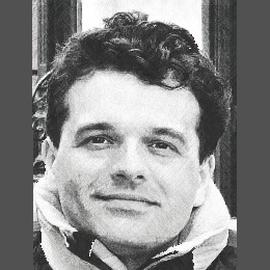
Wojciech Thomas is a Lecturer at the Department of Applied Informatics, Faculty of Information and Communication Technology, Wrocław University of Science and Technology. He teaches courses including Technologies Supporting Software Development (DevOps) , Cloud Computing , and Script Languages . Since 2016, he has directed the postgraduate program Computer Network Administration , designed for professionals seeking advanced knowledge in network/server management. His research focuses on DevOps, cloud technologies (AWS/Azure), automation of complex IT environments, web applications, and software engineering. He has published on topics ranging from task scheduling algorithms to trends in software engineering education. His publications (2000–2021) reflect interdisciplinary work in computer science, operations research, and educational methodology. Common themes include optimization algorithms, cloud infrastructure, and academic curriculum development.
Dr. Eng. Kamal Matouk is a researcher in the Department of Process Management at Wrocław University of Economics . His work focuses on Business Intelligence systems, ERP modernization, cognitive technologies, and data-driven decision-making. He has extensively published on topics such as Industry 4.0 integration, cognitive agents in management systems, and knowledge management frameworks. Research Interests : Business Intelligence and Decision Support Systems ERP 4.0 and Industry 4.0 technologies Cognitive agents for enterprise systems Data warehousing and analytics E-Banking and financial technology Integrated management information systems Key Research Trends : Matouk's recent work emphasizes the application of machine learning in environmental costing, cognitive technologies for external environment scanning, and the evolution of ERP systems toward Industry 4.0 standards. His research bridges theoretical frameworks with practical implementations in enterprise resource planning and intelligent system integration. Awards & Grants : No specific awards or grants listed in the provided texts. Labs/Teams : No dedicated lab or team structure explicitly mentioned, though his work suggests involvement in cross-departmental research initiatives focused on enterprise systems and cognitive technologies.
Katarzyna Rycerz is a Lecturer at the Institute of Computer Science within the Faculty of Computer Science at AGH University of Science and Technology in Kraków, Poland. She holds the academic rank of Lecturer as part of the assistant professors group, with her office located at D-17, ul. Kawiory 21, room II, 3.54. Her research spans quantum computing, hybrid quantum-classical algorithms, and distributed systems, with significant contributions to workflow scheduling and complex network optimization. Dr. Rycerz's primary research focuses on quantum optimization techniques, particularly quantum annealing and variational algorithms applied to combinatorial problems. Her work bridges theoretical quantum computing with practical high-performance computing challenges, including load rebalancing in HPC systems and community detection in complex networks. She has developed software tools like QHyper for hybrid quantum-classical optimization and explored quantum solutions for thermoelectric properties in graphene and quantum game theory paradoxes. Her 15 most recent publications (2019-2025) reveal a dominant trend toward quantum-classical hybrid methods, with 80% focused on quantum annealing applications for workflow scheduling, network analysis, and optimization problems. Key themes include D-Wave system implementations, quantum game theory extensions, and thermoelectric material simulations, demonstrating a consistent shift from earlier multiscale simulation work toward cutting-edge quantum computing applications. No scientific awards are documented in the available information. Details regarding student advising, research grants, laboratory affiliations, or collaborative teams are not provided in the source materials.
Tomasz Lerch serves as a Lecturer in the Department of Power Electronics and Automation of Energy Conversion Systems at AGH University of Science and Technology's Faculty of Electrical Engineering, Automatics, Computer Science and Biomedical Engineering in Kraków. He actively participates in the Discipline Council for Automation, Electronics, Electrical Engineering and Space Technologies. His research spans power electronics, renewable energy integration, and electrical machine design with emphasis on grid stability and power quality. Key interests include grid-tied converter systems, islanding detection methods for distributed generation, permanent magnet motor optimization (particularly transverse flux and cogging machines), and power quality analysis in modern LED lighting and photovoltaic installations. His methodological approach frequently combines electromagnetic modeling with experimental validation. Analysis of his 2021-2025 publications reveals consistent focus on renewable energy grid integration challenges. Dominant themes include rapid voltage fluctuation compensation using hardware-in-the-loop techniques, hybrid islanding detection combining phasor measurement units with artificial intelligence, and thermal/power density optimization in novel motor designs. His work demonstrates strong industry relevance through experimental validation of control algorithms for grid-connected systems.
Dr. Eng. Joanna Strug is a lecturer at the Department of Automation and Computer Science within the Faculty of Electrical and Computer Engineering at Cracow University of Technology. Her research focuses on software testing methodologies, machine learning applications in test automation, and database technologies. Specialization in mutation testing and fault injection Expertise in UML/OC validation and business process testing Active researcher in relational and non-relational database modeling Recent research trends indicate a focus on database technology performance analysis, including: Comparative benchmarking of relational vs. NoSQL databases Cost optimization in mutation testing using machine learning Structural similarity applications for test classification Validation frameworks for service-oriented architectures Model-based testing of business processes Bytecode-level mutant classification Her work appears in prominent venues including: Information Systems Architecture and Technology Artificial Intelligence and Soft Computing Journal of Engineering International Conference on Software Engineering (ENASE)
Prof. Robert Burduk is a full-time professor at the Faculty of Information and Communication Technology , Wrocław University of Science and Technology , specializing in artificial intelligence and machine learning. His research focuses on supervised classification, ensemble learning, and decision support systems with applications in photovoltaic energy forecasting, insect rearing monitoring, and software bug assignment. Key research areas: Artificial Intelligence, Machine Learning, Business Intelligence Department: Systems and Computer Networks Recent Publications (2024-2023): Burduk's work addresses classifier fusion, photovoltaic power optimization, and agricultural monitoring using advanced AI techniques like convolutional neural networks and domain shift detection. Notable themes include ensemble learning strategies, energy system modeling, and interdisciplinary applications.
Dr. Eng. Marcin Markowski is a researcher at the Department of Computer Systems and Networks, Faculty of Computer Science and Telecommunications, Wrocław University of Science and Technology. His work focuses on computer network design, optimization, and security, with an emphasis on cloud computing, elastic optical networks, and distributed systems. Faculty: Computer Science and Telecommunications Department: Computer Systems and Networks Email: marcin.markowski@pwr.edu.pl His research spans network optimization algorithms (ant colony, tabu search), industrial IoT applications, and security protocols. Articles demonstrate expertise in WAN-based resource allocation, SDN laboratory development, and sustainable logistics through WiFi-based monitoring systems. Key trends in his publications include heuristic methods for elastic optical networks, multi-criteria replica placement in wide area networks, and cloud computing efficiency analysis. He integrates algorithmic innovation with practical applications in industrial and telemedicine contexts. The Software Defined Networking Research Laboratory at WUST features prominently in his experimental work on network topologies and scenarios. No explicit information is available on teaching roles, awards, or grants.
Dariusz Adam Żelasko is an Assistant Professor in the Department of Computer Science at Cracow University of Technology. His research focuses on Quality of Service (QoS) management in computer networks, particularly through the development of the Pay&Require multi-agent system. His work integrates machine learning with network management, developing ensemble classifiers and genetic algorithm-neural network hybrids for transmission quality prediction. Research validates concepts through NS3 network simulations and addresses routing optimization in dynamically configured networks. Recent publications demonstrate innovations in decentralized routing protocols, variable cost algorithms, and QoS assurance mechanisms using electronic auction systems. Applications extend to IoT parking systems and motor fault detection using computational intelligence methods. Teaching interests include network programming with GPS data and policy-based routing implementations.
Dr. Zbigniew Duliński is an Assistant Professor at the Faculty of Physics, Astronomy and Applied Computer Science of Jagiellonian University in Kraków. His research focuses on telecommunications, networking, and software-defined networks (SDN), with a strong emphasis on multipath transmission, traffic management, and network optimization. He has contributed over 48 publications across theoretical physics and computer science, including 25 papers in networking fields and 4 IETF drafts. His work spans both experimental and theoretical domains, bridging his earlier physics background with modern telecommunications challenges. Recent research highlights include dynamic traffic management in SD-WAN inter-cloud communication and techniques to reduce flow table entries in SDN switches. Education: PhD in Physical Sciences (1995) and MSc in Physics (1987), both from Jagiellonian University. His academic career includes supervision of dozens of master’s theses and participation in projects like 'Funkcje struktury leptonów' (1999–2002) in particle physics. His publications frequently address SDN architectures, network security, and multipath transmission mechanisms, often involving collaboration with colleagues like Grzegorz Rzym and Piotr Chołda. Publications reflect expertise in optimizing network performance through innovative routing protocols and traffic control strategies. His work emphasizes practical applications, such as reducing network latency and improving scalability in distributed systems. Despite no listed awards, his prolific output and cross-disciplinary contributions highlight significant academic engagement.
Prof. Konrad Świrski is a faculty member at the Department of Power Machines and Equipment within the Faculty of Power and Aeronautical Engineering at Warsaw University of Technology. He serves as the Supervisor of the Power Engineering Program , President of Transition Technologies S.A. , and holds key roles in national nuclear safety and industry collaboration.
Prof. Marek Miłosz is a Professor at Lublin University of Technology, leading the Department of Software Engineering and Database Systems and the Laboratory of Motion Analysis and Interface Ergonomics. His work focuses on 3D Information Technology for cultural heritage preservation, software engineering, human-computer interaction, and mobile application development. He has spearheaded projects like the 3D Digital Silk Road initiative and the T1DCoach diabetes management app, emphasizing interdisciplinary collaboration between computer science and cultural/humanitarian fields. Research interests include: 3D digitization of historical architecture AI-driven sign language resources Competency-based curriculum design Usability testing of medical applications Ontological approaches in education Recent publications (2023-2025) highlight advancements in gesture recognition systems, low-resource language datasets, and computational methods for cultural heritage preservation. His work bridges technological innovation with societal impact through UNESCO-related heritage projects and health tech solutions. Key projects include: Development of DiagNurse clinical support app 3D digitization of Silk Road monuments Competency-based curriculum ontologies AI-powered linguistic resources for disabled communities He coordinates international education initiatives like the MADEM and PROMIS programs, integrating industry needs into computer science curricula. His laboratory develops innovative solutions for interface ergonomics and motion analysis in rehabilitation contexts.
Małgorzata Plechawska-Wójcik is an Assistant Professor at the Lublin University of Technology, affiliated with the Faculty of Electrical Engineering and Computer Science and the Department of Computer Science. Her research focuses on bioinformatics, software engineering, GUI usability, and interdisciplinary applications of machine learning in healthcare and neurology. She leads or contributes to projects such as the T1DCoach diabetes management application and the Integrated Development Programme of the university. Her work spans comparative analyses of programming frameworks, database systems, and game engines, emphasizing performance optimization and usability. Education details are not explicitly listed, but her academic role indicates advanced qualifications in engineering and computer science. Current projects include collaborations with ANMC, Moodle, and Eduroam initiatives, alongside research into schizophrenia detection via retinal measures and EEG analysis. Research interests include: Bioinformatics : Leveraging machine learning for medical diagnosis (e.g., schizophrenia detection via optical coherence tomography and neural networks). Software Engineering : Comparative studies of frameworks (React.js, Solid.js), scripting languages (JavaScript, Kotlin), and database mapping tools (NuGet). Human-Computer Interaction : Evaluating GUI usability in e-commerce, streaming services, and serious games for education and healthcare. Publications highlight trends in: Machine learning applications in neuroscience and healthcare. Performance benchmarking of web, mobile, and game development tools. Comparative analyses of frameworks and architectures (e.g., Spring vs Laravel, Godot scripting languages). Notably, she has been honored with the Merit Medal for the City of Lublin alongside colleagues from the Computer Science Department. Her advising and grant involvement include project management tools, serious games for first aid training, and environmental monitoring systems using Arduino platforms. Key labs and initiatives include collaborations with the Katedra Informatyki (Computer Science Department) on projects like LubGame Conference and the Moodle integration for educational tools. Her work bridges theoretical computer science with practical applications in healthcare, education, and industry.
Edip Senyurek is a Lecturer at the Department of Computer Science within the Faculty of Computer Science, Graphics and Architecture at Vistula Academy of Finance and Business. He serves as Director of the Computer Science Education Program and Director of the Student Activities Department. Senyurek holds a Bachelor of Science in Computer Engineering from Ege University (1997), a Master of Science in Engineering Management from Rand Afrikaans University (2001), and a second Master of Science in Computer Engineering from Anadolu University (2013). His research focuses on recommender systems, group filtering, cryptology, and software development. His recent work emphasizes serendipity-oriented clustering methods in collaborative filtering, with studies applying binary similarity metrics to improve recommendation accuracy. He has also investigated electronic voting systems and the impact of similarity measures on prediction quality. Senyurek actively engages in EU-funded projects at Vistula Academy, contributing to interdisciplinary academic initiatives.
Marek Piasecki is a researcher at the Department of Computer Engineering, Faculty of Information and Communication Technology, Wrocław University of Science and Technology. His work focuses on software development for autonomous systems, user modeling, personalization, and mobile computing. His research in autonomous systems includes classical and reactive navigation, localization, and path planning for mobile robots, particularly in the RoboCup competition. He has extensively explored automatic recommendation systems and software development for mobile devices, blending both Android and iOS platforms. The articles he has published demonstrate strong engagement with robotics, autonomous systems, and mobile computing. Key areas include evolutionary algorithms, differential mapping, IoT applications, and educational robotics (LEGO Mindstorms). These works span theoretical development, software implementation, and pedagogical approaches. In teaching, he specializes in C++, C, and Java programming languages, object-oriented programming, and software engineering principles. He also leads seminars on constructing mobile robots and supervises diploma projects involving mobile robotics and software development.
Renata Słota is a Professor at the Institute of Computer Science within the Faculty of Computer Science at AGH University of Science and Technology in Kraków, where she serves as Vice-Dean of the Faculty of Development. Her office is located at D-17, ul. Kawiory 21, room II, 3.34, with contact details including phone +48 12 328 33 35 and email rena@agh.edu.pl. She also contributes to academic governance as a member of the Disciplinary Council for Technical Information Technology and Telecommunications. Her research centers on distributed data management and cloud computing , with pioneering work in digital cultural heritage systems , blockchain-based decentralized authority , and scientific workflow automation . Notable contributions include integrated frameworks for 3D Cultural Heritage objects management, consensus mechanisms for collaborative data sharing, and multi-cloud data access solutions. Her work bridges theoretical advances with practical applications in cultural preservation and scientific computing. Analysis of her 2020-2026 publications reveals dominant trends in decentralized data governance , cultural heritage digitization , and hybrid cloud workflow management . Key themes include blockchain applications for organizational structures, semantic interoperability for quality-oriented data access, and reproducibility frameworks for computational experiments. Her research consistently addresses real-world challenges in global data accessibility and fault tolerance. Professor Słota actively participates in major research initiatives including the Onedata project for global data federation and the Scalarm platform for distributed parameter studies, demonstrating leadership in data-intensive computing environments and collaborative infrastructure development.