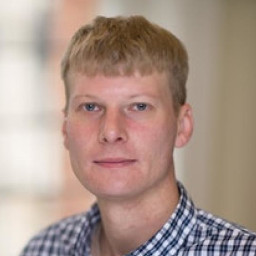
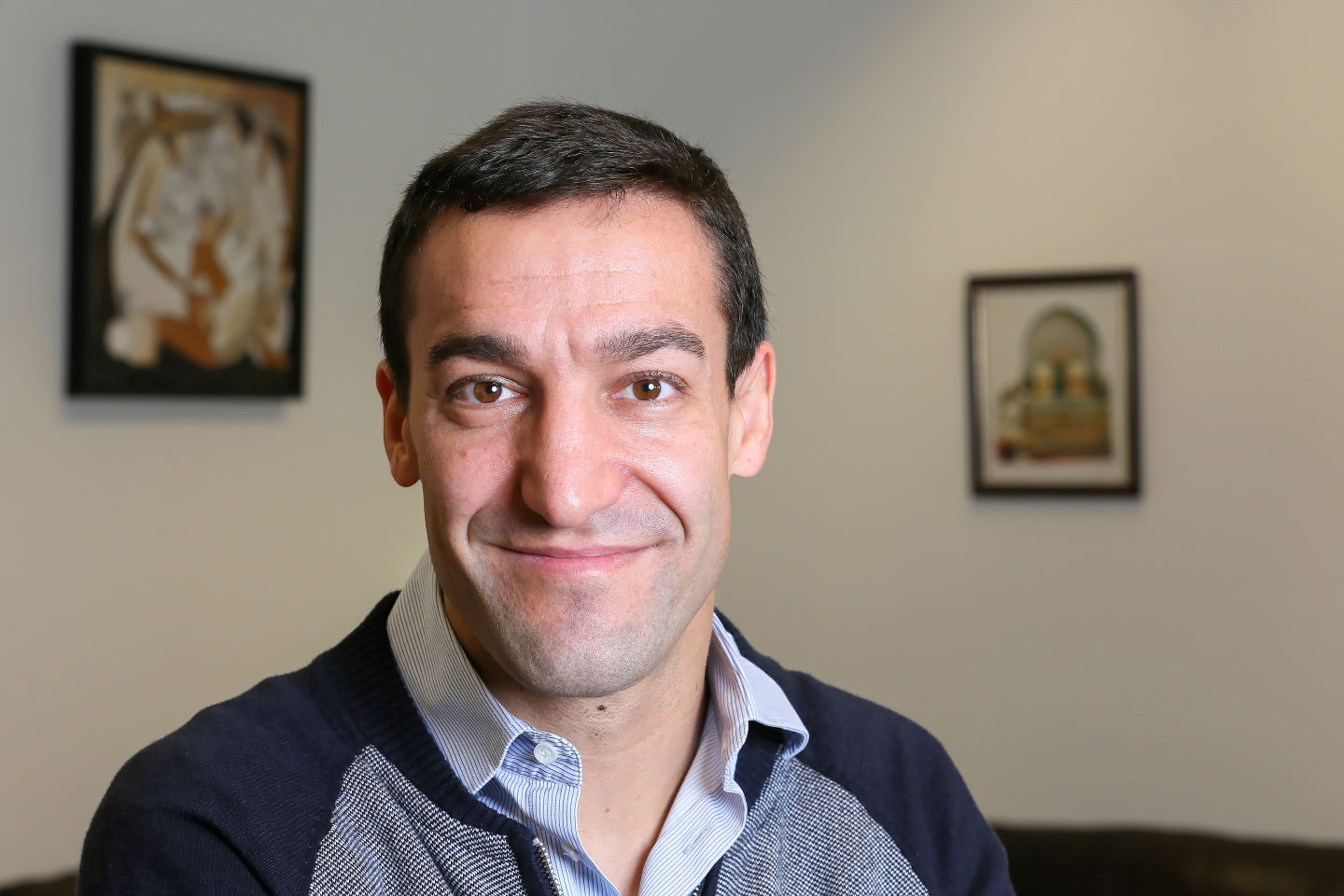
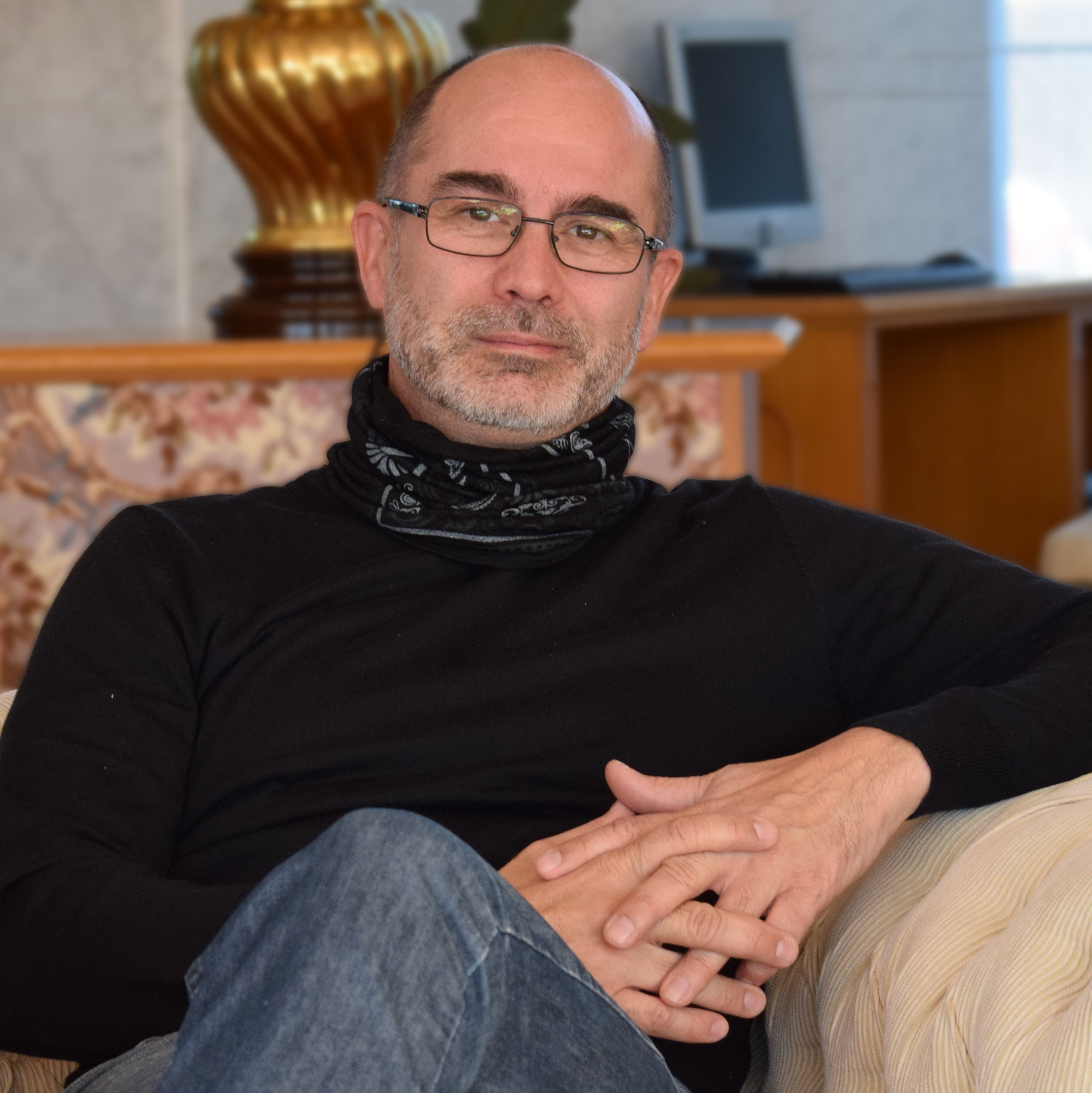
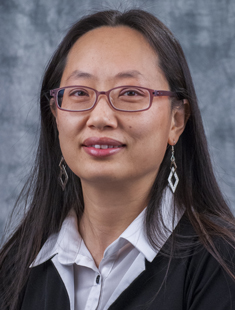
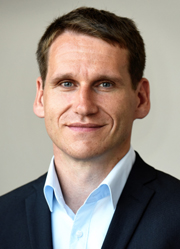
Peter Long is a Senior Lecturer in Ecology and Conservation at the University of Oxford Brookes, School of Biological and Medical Sciences . His research integrates satellite remote sensing, environmental modeling, and biodiversity assessment to address ecological and conservation challenges at landscape and global scales. Key research themes include: Developing algorithms for satellite data analysis Quantifying biodiversity and ecosystem services Building web-based ecological assessment tools Studying climate-agriculture interactions Assessing deforestation drivers in Madagascar Recent publications (2023–2025) focus on regenerative agriculture carbon impacts , Madagascar deforestation policy , and climate-induced habitat changes . He specializes in GIS, high-performance computing, and stakeholder engagement for environmental monitoring. Collaborations span Guatemala , Madagascar , and Europe , with tools like LEFT (web-based ecological value estimator) and BioTIME 2.0 (biodiversity time series database).
Dr. Jaswinder Lota is a Reader in Engineering at the University of East London , School of Architecture, Computing and Engineering, Department of Engineering & Construction. He is also a Visiting Academic at University College London’s Department of Electronic and Electrical Engineering, and a Chartered Engineer with extensive industry and academic experience. Education: BSc BEng MEng PGCert HE PhD Research Interests: Dr. Lota specializes in signal processing, circuits and systems, wireless communication, and their applications in radar systems (weather/military), low-power sustainable networks beyond 5G/6G (robotics, automation, healthcare), and electronic technologies for hydrogen propulsion. His work integrates AI-driven channel modeling and impulsive noise analysis. Scientific Awards: IEEE CAS Society Certificate of Appreciation (2019) Grants and Collaborations: He has secured significant funding, including a £2.5K International Research Collaboration Award (2016), £2.5K Research Internship Award (2015), £76K Impact Grant (2014), and a £7M MoD-funded project (1999-2004). Collaborators include UCL and NYU. Leadership: Dr. Lota leads the Smart Cities Research group at UEL and contributed to the REF 2021 submission. He has served as Associate Editor for IEEE TCAS I and Guest Editor for multiple IEEE journals.
Associate Professor Feng Chen is a faculty member at the School of Mathematics & Statistics, University of New South Wales, specializing in statistical methodology development and applications. His research bridges theoretical statistics and practical implementations across financial modeling, spatiotemporal processes, and public health analysis. PhD in Statistics from University of Hong Kong (2008) MSc in Applied Probability & Statistics from Lanzhou University (2004) BSc in Mathematics from Lanzhou University (2001) Research focuses include: Nonparametric and semiparametric statistical methods Point process modeling with emphasis on Hawkes processes Statistical computing and algorithm development Applications to financial data, earthquake analysis, and public health Recent publications demonstrate methodological advances in: Hawkes process estimation with complex data structures Renewal process applications in seismology GARCH modeling with missing data Spatiotemporal clustering analysis Scientific recognition includes: UNSW Science Staff Impact Award (2023) Professional roles: Director of Research Postgraduate Studies (2023--) Associate Editor for multiple journals Statistics Honours Coordinator (2013-2018) Active participant in statistical societies
Christopher D. Abraham, MD is an Associate Professor of Radiation Oncology and Associate Professor of Medicine at Washington University School of Medicine in St. Louis. He is affiliated with the Siteman Cancer Center, Brain Tumor Center, and Institute of Clinical and Translational Sciences (ICTS). Dr. Abraham practices at multiple locations including the Center for Advanced Medicine Radiation Oncology Center, Barnes-Jewish West County Hospital, and Siteman Cancer Center – North County. His clinical work focuses on radiation oncology with expertise in treating brain tumors and other cancers. Dr. Abraham completed his Medical Degree at Saint Louis University School of Medicine in 2011 and his Residency in Radiation Oncology at Barnes-Jewish Hospital and Washington University School of Medicine in 2016. He earned his BS in Radiologic Science from the Medical College of Georgia in 2004. Dr. Abraham's research focuses on advancing radiation therapy techniques, particularly in stereotactic radiosurgery for brain metastases, hippocampal-avoidance whole brain radiation therapy, and innovative approaches for glioblastoma treatment. His work demonstrates a strong emphasis on optimizing radiation delivery while minimizing neurocognitive side effects. He has pioneered simulation-free radiation therapy techniques that expedite treatment planning, particularly for palliative care patients. His research also explores the integration of AI and large language models in radiation oncology workflows and insurance appeals processes. Analysis of Dr. Abraham's recent publications reveals a clear research trajectory focused on improving precision in radiation therapy for brain tumors, with particular attention to hippocampal protection, adaptive planning techniques, and combined modality approaches. His work spans clinical trials, technical innovations in treatment planning, and translational research connecting imaging with treatment outcomes. The increasing citation counts of his work, particularly his 2023 paper on simulation-free radiation therapy which has 34 citations, demonstrates growing impact in the field. While specific awards are not listed in the provided information, Dr. Abraham's work has accumulated 536 citations according to Scopus metrics, indicating significant scholarly impact. His research has been referenced in clinical guidelines and policy sources, demonstrating translational relevance to clinical practice. Dr. Abraham actively collaborates with multidisciplinary teams including neurosurgeons, medical oncologists, and physicists. His work on the NRG Oncology/RTOG 0631 trial demonstrates involvement in large cooperative group studies. He has contributed to efforts examining insurance policy adherence to radiation oncology guidelines, showing engagement with healthcare systems issues. As a key member of the Brain Tumor Center at Siteman Cancer Center, Dr. Abraham participates in comprehensive brain tumor care teams that integrate surgical, medical, and radiation oncology approaches. His work with the Institute of Clinical and Translational Sciences highlights his commitment to translating research findings into clinical practice. Current research directions include exploring simulation-free radiation therapy techniques, optimizing hippocampal-sparing approaches, and investigating novel combinations of radiation with immunotherapies.
Professor Cathryn Birch is a leading academic in Meteorology and Climate at the University of Leeds' School of Earth and Environment. She holds a Professorship specializing in high-impact weather systems and climate modeling, with extensive collaborations across international meteorological services including the Indonesian Met Service (BMKG) and the UK Met Office. Her research focuses on tropical meteorology , particularly thunderstorm formation and extreme rainfall mechanisms in Southeast Asia. She employs convection-permitting models , satellite observations, and machine learning techniques to develop nowcasting systems that predict severe weather 2-3 hours in advance. Key research areas include: Weather and climate extremes in tropical regions Flood forecasting and early warning system development Climate impacts on health (particularly humid heat extremes) Machine learning applications for weather prediction Her recent publications demonstrate strong trends in applied meteorology with emphasis on real-world implementation - 60% of her 2023-2025 work involves operational forecasting systems, while 40% focuses on climate-health linkages. Notable methodological innovations include satellite-based humid heat early warning systems and deep learning frameworks for convection initiation. Major scientific recognition includes: 2024 Emerging Environmental Impact Award for flood early warning systems 2021 Queen's Anniversary Prize for tropical community resilience 2014 European Meteorological Society Young Scientist Award Professor Birch actively supervises 6 PhD students and 3 postdocs while leading multi-million pound projects including the £6M National Hub on Net Zero, Health and Extreme Heat (HEARTH). Her team develops practical forecasting tools currently being tested with African meteorological services and the Indonesian Met Service. She also serves on the European Meteorological Society Awards Committee and the Met Office K-scale project steering group.
Professor Mohammed Salamah is a distinguished faculty member in the Computer Engineering Department at Eastern Mediterranean University's Faculty of Engineering. He maintains an office in room 114 and can be contacted at +90 392 630 1149/1334 or via email at muhammed.salamah@emu.edu.tr. His academic website provides additional resources for students and colleagues. Dr. Salamah earned his BS, MS, and PhD degrees in Electrical and Electronics Engineering from Middle East Technical University in 1988, 1990, and 1996 respectively, establishing a strong foundation for his career in network communications and wireless systems. His research interests span multiple critical areas in modern networking, with particular expertise in Wireless Sensor Networks, Internet of Things (IoT) security, Mobile Communications, and Energy Efficiency in network protocols. Professor Salamah has made significant contributions to the understanding of network security mechanisms, trust management systems, and optimization of wireless communication protocols. An analysis of his recent scholarly output reveals a strong focus on security challenges in IoT communication systems, controller placement optimization in software-defined wireless sensor networks, and trust-based malicious node detection schemes. His work demonstrates consistent attention to practical network performance issues while addressing emerging challenges in next-generation communication technologies. Throughout his academic career, Professor Salamah has demonstrated exceptional commitment to student mentorship, supervising numerous graduate students through their research journey. His administrative contributions include service as an associate editor, reviewer, and session chair for academic conferences. His laboratory work focuses on practical implementations of wireless communication protocols, with emphasis on energy efficiency, security mechanisms, and performance optimization for various network architectures including cellular networks, cognitive radio systems, and wireless sensor networks.
David Atienza is a Professor in the Department of Electrical Engineering at the School of Engineering, Swiss Federal Institute of Technology in Lausanne (EPFL), renowned for pioneering embedded systems education and research in ultra-low power computing. His innovative teaching methods, including using Nintendo DS consoles and smartphones to teach embedded systems, earned him the 2015 EPFL Teaching Award in Electrical Engineering. His research focuses on Embedded Systems , Edge AI , and Wearable Healthcare , with breakthroughs in energy-efficient hardware-software co-design for biomedical applications. Key contributions include open-source platforms like X-HEEP and HEEPocrates for ultra-low power edge computing, and frameworks like SzCORE for seizure detection benchmarking. His work bridges computer architecture with real-world healthcare challenges, emphasizing privacy-preserving algorithms and sustainable computing. Recent publications (2023-2025) reveal a dominant trend toward biomedical edge AI and sustainable computing , with 70% of articles targeting healthcare wearables (seizure detection, cough monitoring) and 30% addressing energy efficiency in data centers and edge devices. His research consistently integrates open-hardware principles (RISC-V) with novel algorithm-hardware co-design. Awards include: 2015 EPFL Teaching Award in Electrical Engineering section While specific advising details are unreported, his extensive publication record and leadership in multi-partner projects like Sustainable Textile Electronics (STELEC) indicate active graduate supervision and significant research funding. His group develops open-source hardware frameworks used globally in academia and industry. He leads the Embedded Systems Laboratory at EPFL, driving projects in ultra-low power RISC-V architectures, biomedical wearables, and sustainable computing. Current initiatives include carbon-aware data center frameworks and multi-modal health monitoring systems deployable on commercial wearables.
Gerardo Schneider is a Full Professor in Computer Science at the University of Gothenburg, Sweden, and holds a joint appointment at Chalmers University of Technology. He serves as Head of the Data Science and Artificial Intelligence (DSAI) Division and has previously led the Formal Methods Division and acted as Director of Graduate Studies. University of Gothenburg: 2009–present Chalmers University of Technology: 2009–present Uppsala University: 2002–2003 University of Oslo: 2005–2009 His research focuses on formal methods for software engineering, including contract specification and analysis , privacy policy formalization , model checking , and runtime verification . He works on verification of real-time systems, embedded systems (e.g., smart Java cards), and blockchain-based smart contracts. Key projects include: X-LEGAL (2020–2023): Smart Legal Contracts (Swedish Research Council) PolUser (2016–2019): User-Controlled Privacy Policies (Swedish Research Council) ARVI (2014–2018): Runtime Verification Beyond Monitoring (ICT COST Action) ReMU (2013–2017): Reliable Multilingual Digital Communication (Swedish Research Council) He has supervised numerous PhD and Master’s students in formal methods, blockchain security, and privacy compliance. His tools include SPeeDI (Polygonal Hybrid Systems Verification), CLAN (Contract Normative Conflict Detection), and AnaCon (Controlled Natural Language Analysis).
Dr. Erma Perenda serves as Professor and Chair of Distributed Signal Processing at RWTH Aachen University, Germany, leading research within the Department of Distributed Signal Processing. Her contact details include email perenda@dsp.rwth-aachen.de and phone +49 241 80-27879, with office location at Kopernikusstraße 16, 52074 Aachen in the ICT Cubes facility. Her research spans: Distributed Signal Processing Wireless Communications Machine Learning (Deep Reinforcement Learning, Federated Learning) Modulation Classification AI-driven Network Optimization She focuses on solving real-world challenges in wireless systems including hardware impairments, channel variations, and energy efficiency through advanced AI techniques. Analysis of her 2018-2024 publications reveals consistent innovation in applying multi-agent deep reinforcement learning to wireless power allocation, developing robust modulation classification methods resilient to channel impairments, and implementing federated learning for industrial edge computing. Her work bridges theoretical machine learning with practical wireless communication constraints. Scientific Awards: No awards documented in available sources Advising and Grants: No student advisees or grant information provided Labs and Teams: Leads Distributed Signal Processing research group at RWTH Aachen University Based in ICT Cubes building focusing on wireless AI systems
Prof. Dr. rer. nat. Rainer Leupers is a faculty member at RWTH Aachen University, chairing the Department of Software for Systems on Silicon. His research focuses on embedded systems, hardware-software co-design, virtual prototyping, and security in computing-in-memory architectures. He has published extensively on RRAM accelerators, logic locking, and neuromorphic security. Chair of Software for Systems on Silicon Research in hardware security and deep learning accelerators Recent publications on cross-tool virtual frameworks and thermal side-channel attacks His work bridges system-level modeling with practical security implementations, emphasizing reliability and performance in heterogeneous computing environments. Key trends in his 2025-2023 articles include compute-in-memory optimization, neural network inference efficiency, and security vulnerabilities in emerging hardware. Awards and formal recognitions are not explicitly detailed in the provided materials. He has not directly mentioned advising students or research grants in the given text fragments. The chair's contact information includes an office at ICT Cube 1, Electrical Engineering, Aachen, with direct email and website links.
Prof. Dr. med. Christian Brandt is a Professor of Epileptology with a focus on disability medicine at the Medical Faculty OWL of Bielefeld University, affiliated with the OWL University Hospital / Mara Hospital gGmbH / University Clinic for Epileptology . He specializes in Epileptology and Disability medicine , with a career spanning clinical practice, research, and leadership roles in epilepsy care.
Hye-Chung Kum is a Professor in the Department of Health Policy & Management at Texas A&M University, where she pioneers Population Informatics to transform digital data into evidence-based health policy solutions. Her work bridges computer science, public health, and social work to address critical data challenges in healthcare systems. Education: PhD, University of North Carolina at Chapel Hill (UNC-CH), 2004 MSW (Master of Social Work), UNC-CH, School of Social Work, 1998 MS, UNC-CH, Department of Computer Science, 1997 BS, Yonsei University, Seoul, Korea, Department of Computer Science, 1995 Research Vision: Dr. Kum develops privacy-preserving human-computer hybrid systems for cleaning and integrating chaotic real-world data (e.g., EHRs, administrative records). Her Population Informatics framework enables ethical large-scale analysis while addressing data genocide in marginalized communities through innovations like the Secure Decoupled Linkage (SDLink) system. Publication Trends: Recent work (2024-2025) reveals three dominant threads: (1) Mental health service utilization dynamics during/post-pandemic, (2) Racial/ethnic disparities in emergency department use and cancer outcomes, and (3) Ethical data sharing frameworks for vulnerable populations. Her Texas-focused studies on Medicaid payment models and AI-driven record linkage demonstrate practical policy applications. Research Infrastructure: As director of the Population Informatics Lab, she leads cross-disciplinary teams developing Privacy-by-Design tools that balance public health needs with data sovereignty—particularly for American Indian and Alaska Native communities. Her grant-funded work consistently addresses Medicaid transformation and healthcare cost drivers through secondary data analytics.
Lars Grunske is a Professor at the Department of Computer Science, Faculty of Mathematics and Natural Sciences, Humboldt University of Berlin. His research focuses on software and systems engineering, safety-critical systems, and software evolution. Department: Computer Science University: Humboldt University of Berlin Academic Rank: Professor His work spans automated software analysis, probabilistic model checking, and formal methods for complex systems. Key collaborations include researchers from Swinburne University, University of Hull, and University of Queensland. Recent publications address research software engineering, program repair, and explainability in cyberphysical systems. Professional roles include leadership in examination boards and program committees for conferences like ICSE and ASE. Contact info: Email: grunskel@hu-berlin.de Phone: +49 30 2093-41142 Address: Unter den Linden 6, Berlin
Professor Allan Rennie serves as Professor in Manufacturing Engineering at Lancaster University's School of Engineering and holds the administrative position of Associate Dean for Engagement within the Faculty of Science and Technology. With a career spanning over 30 years since initiating work in additive manufacturing during the mid-1990s, he has established himself as a leading figure in industrial applications of advanced manufacturing technologies across diverse sectors. His research expertise centers on Additive Manufacturing , Engineering Design , and Manufacturing Process Optimization , with current specializations including design for additive manufacturing (as co-leader of the UK's EPSRC DfAM Network), industrial digitalisation of manufacturing processes, and innovative tooling development using metallic and hybrid approaches. Rennie has significantly contributed to Engineering Education , particularly examining the integration of business and management principles into engineering curricula and analyzing the impacts of online/hybrid delivery modes on student engagement and graduate employability following the COVID-19 pandemic. Recent publication trends reveal Rennie's dual focus on practical manufacturing applications and scholarly analysis of technological evolution. His 2025 bibliometric study maps a decade of Design for Additive Manufacturing research, while his structural analysis of musical instruments demonstrates cross-disciplinary applications of manufacturing techniques. These works reflect his commitment to both advancing manufacturing technology and documenting its academic trajectory through rigorous analysis. Professor Rennie actively supervises PhD candidates including Jenny Roberts, Eunike Sembiring, and Joe Taylor while leading substantial research projects such as the EPSRC DfAM Network (2020-2023), Automating Design for Additive Manufacture with AI (2023-2024), and multiple Engineers in Business Competitions. His extensive grant portfolio spans industrial digitalization, sustainable manufacturing, and educational innovation, with notable projects including RENDER (powder recycling), TecHnology and EntrepreneUrship Education, and Production Capable Additive Manufacturing of Polymers. Rennie contributes to Lancaster's research ecosystem through affiliations with the Centre for Global Eco-innovation, Energy Lancaster initiative, and the Lancaster Product Development Unit. These platforms enable him to bridge academic research with industrial applications across multiple sectors, particularly supporting his work on sustainable manufacturing practices, technology commercialization, and industry engagement strategies that translate research into real-world impact.
Prof. Mike Barth is a Professor for Networked Secure Automation Technology at the Karlsruhe Institute of Technology (KIT), affiliated with the Department of Electrical Engineering and Information Technology (ETIT) and the Institute for Control Systems (IRS). His academic background includes a doctorate from Helmut Schmidt University (2011) and a master's degree from Pforzheim University (2008). He previously held roles as a researcher at ABB and as a professor at Pforzheim University, focusing on blended learning and Industry 4.0 integration. Education: PhD in Automation Technology, Helmut Schmidt University (2011) M.Sc. in Product Development, Pforzheim University (2008) Diploma in Mechanical Engineering, Pforzheim University (2006) Research Interests: Automation technology, control systems, Industry 4.0, cyber-physical systems, digital twin engineering, cybersecurity, and IoT protocols. Teaching: Courses include System Modeling, Cyber Physical Production Systems, and Digital Twin Engineering. His research emphasizes secure automation architectures, decentralized systems, and model-based engineering. He chairs multiple committees including IFAC TC3.1 and the VDI/VDE Society for Measurement and Automation. Over 50+ publications span topics like simulation models, industrial security, and robotic integration. Labs/Teams: Leads the IRS Automation Technology team, focusing on innovation in control systems and digital twin applications.