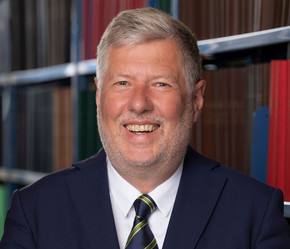
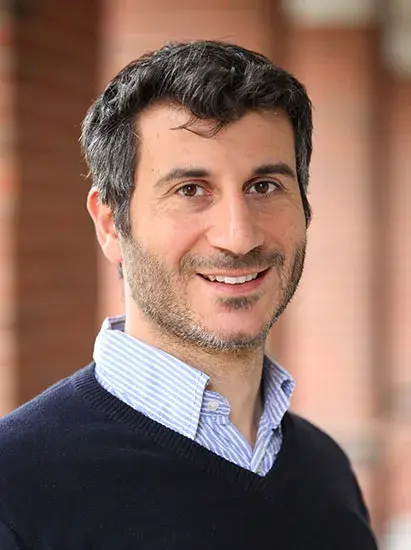
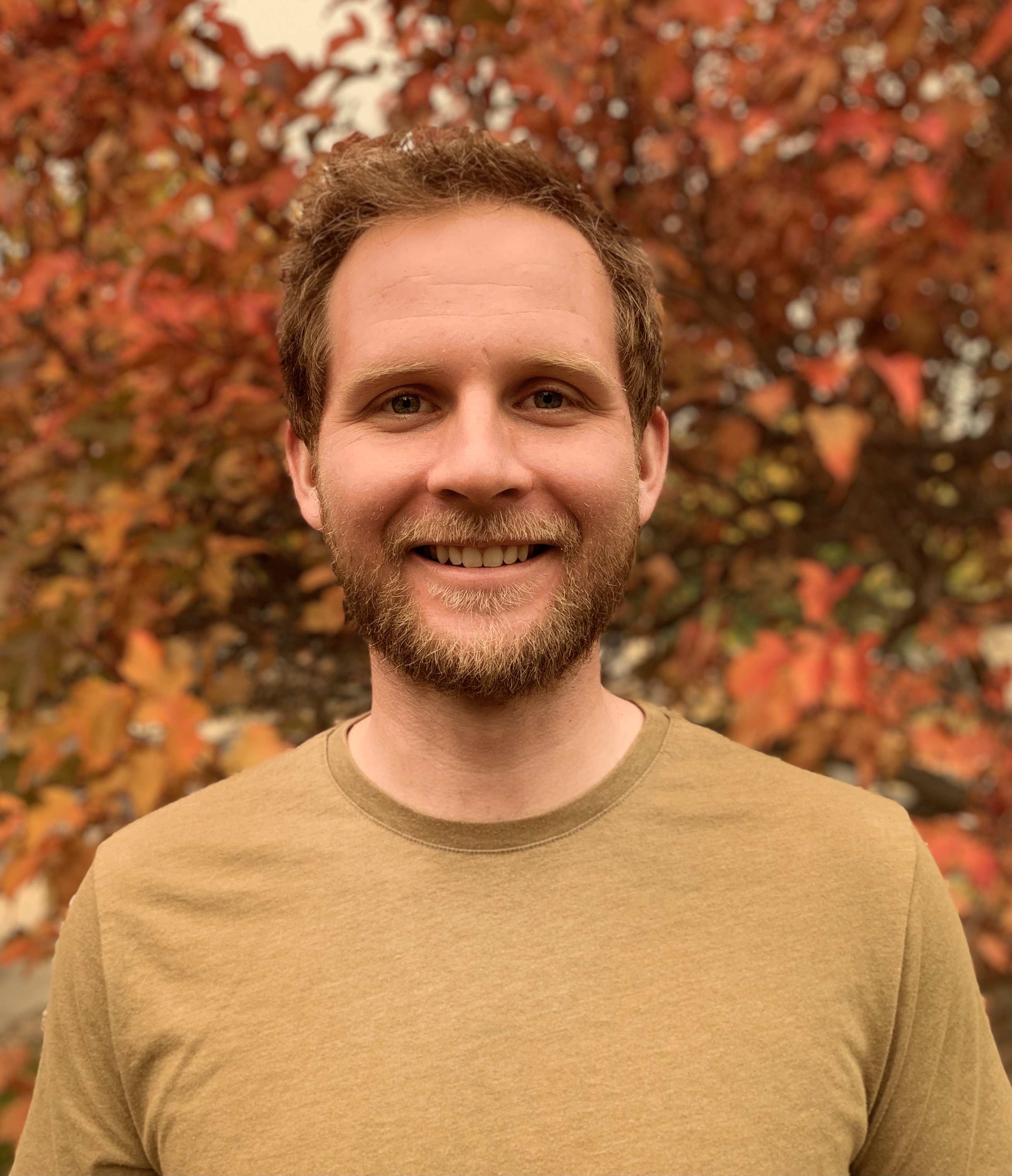
Philip Brunner is a Professor of Hydrogeology at the University of Neuchâtel's Faculty of Science since 2012. He is based at the Center for Hydrogeology and Geothermics (CHYN), leading the Laboratory of Hydrogeological Processes. His work centers on sustainable water resource management through quantitative tools. He earned his PhD from ETH Zurich, focusing on sustainable salt and water management in Western China's agricultural basins. Post-PhD, he conducted three years of postdoctoral research in Australia, developing new approaches for simulating river-aquifer interactions. Brunner's research spans surface water-groundwater interactions, numerical modeling, and remote sensing. He integrates methods from numerical modeling, remote sensing, scientific computing, and isotopic chemistry. His interdisciplinary collaborations with mathematicians, biologists, and physicists address challenges in agriculture, ecohydrology, engineering, and sustainable resource management. Recent publications highlight innovative tracer techniques (noble gases, microbes), low-cost monitoring systems, and advanced numerical models. His work tackles climate change impacts on ecosystems, groundwater in conflict zones, and sustainable practices in diverse environments including mountains and agricultural regions. He teaches courses such as Introduction to Hydrological Processes (Master), Numerical Modeling (Master), Remote Sensing (Master), and Introduction to Soil Physics (Bachelor, in French). His laboratory serves as a center for experimental and computational hydrogeological research.
Daniel Hardt serves as Associate Professor in the Department of Management, Society and Communication at Copenhagen Business School. His interdisciplinary research bridges computational linguistics, artificial intelligence, and social analysis, with particular focus on natural language processing applications and theoretical linguistic phenomena. His primary research domains include Computational Linguistics (specializing in ellipsis resolution and sluicing phenomena), Natural Language Processing (developing methods for psychographic classification and sentiment analysis), and Artificial Intelligence (examining large language model capabilities and limitations). Recent work analyzes travel behavior during crises, gender effects in evaluations, and GDPR policy comprehension through NLP techniques. His publications span top venues including Linguistic Inquiry , Tourism Management , and ACL proceedings. Hardt actively engages with practical business applications through 27 media contributions discussing AI implementation, ChatGPT transparency, and data-driven leadership strategies. His academic service includes organizing events like the 2019 "Fake News" conference at CBS and presenting at international venues including JSAI 2024. With 28 supervised academic works documented, he maintains substantial mentoring activity while contributing to public discourse on digital transformation challenges.
Prof. Dr. Robert Risse is an esteemed academic and practitioner in tax law, currently serving at the Institute for Austrian and International Tax Law at Vienna University of Economics and Business since 2020. Previously, he held the position of Corporate Vice President Tax & Trade at Henkel AG & Co KGaA from 2000 to 2020, where he was globally responsible for taxation and customs. He also holds the title of Honorary Professor for Tax Compliance and Applied Tax Planning at the Institute for Business Taxation, University of Leipzig. His extensive career bridges academic excellence with practical corporate tax leadership. Education 2017: Chairman of the Board of Directors for the Transfer Pricing Center of the Institute for International and Austrian Tax Law, Vienna University of Economics and Business 2014: Doctoral Thesis "Tax Compliance und Tax Risk Management: Eine rechtsvergleichende Analyse und Umsetzung in einem internationalen Konzern" at University of Freiburg 1986-1989: Second State Examination in Law, University of Bonn 1983-1986: First State Examination in Law, University of Bonn 1979-1982: Diplom Finanzwirt FH in Financial Sciences, University of Applied Sciences for Finances North Rhine-Westphalia Research Interests Prof. Risse's research focuses on the intersection of tax compliance, digitalization, and international tax systems. His work explores how digital technologies can transform tax compliance processes, particularly in multinational corporations. He has pioneered research on Tax Compliance Systems, Transfer Pricing in the digital age, and the integration of tax risk management with corporate governance frameworks. His expertise spans international tax law, corporate taxation, and the practical implementation of tax strategies in global business environments. His recent work emphasizes the practical implementation of digital tax systems, with particular attention to blockchain applications, AI in tax compliance, and the integration of tax processes with broader business systems. He has developed frameworks for assessing tax risk in multinational corporations and has contributed significantly to the understanding of transfer pricing in the context of digital business models. Publication Trends Prof. Risse's recent publications reveal a strong focus on digital transformation in tax systems, with increasing attention to practical implementation challenges. His work consistently bridges theoretical tax principles with real-world corporate applications, particularly in multinational contexts. The emergence of topics like AI in tax administration, blockchain applications, and digital compliance systems reflects his forward-looking approach. His research shows a clear trajectory from traditional tax compliance toward integrated digital tax ecosystems that address both regulatory requirements and business efficiency needs. Professional Engagement President of Gesprächskreis Rhein-Ruhr, Internationales Steuerecht e.V./International Fiscal Association (IFA) West Member of DIHK Finanz- und Steuerausschuss, Berlin Member of Düsseldorfer Vereinigung für Steuerrecht e.V Member of Fachinstitut der Steuerberater e.V., Düsseldorf Member of Institut Finanzen und Steuern, Berlin Teaching and Advisory Roles Prof. Risse has extensive teaching experience across multiple institutions including University of Leipzig, Vienna University of Economics and Business, University of Freiburg, University of Cologne, and WHU – Otto Beisheim School of Management. He has supervised doctoral students through the "Doktorandenseminar zur Betriebswirtschaftlichen Steuerlehre" at University of Leipzig. His teaching focuses on international taxation, corporate tax law, and the practical application of tax planning in multinational corporations.
Michał Paweł Michalak is an Assistant Professor at AGH University of Science and Technology in Kraków, affiliated with the Faculty of Geology, Geophysics and Environmental Protection and Department of Geoinformatics and Applied Informatics. His research spans computational geometry in geological modeling, machine learning applications in Earth sciences, statistical epidemiology, and ecclesiological dynamics. Doctoral degree from University of Silesia in Katowice Developed GeoAnomalia software suite combining C++, R, and ParaView Created unbiased risk metrics (WCSIR) for infectious disease surveillance Research focuses on: Subsurface geological modeling using combinatorial algorithms and machine learning; Spatial epidemiology emphasizing testing heterogeneity bias; Ecclesiological dynamics analyzing factional theological interactions. His 2020/37/N/ST10/02504 grant project received 'very good' evaluation for developing angular distance metrics in geological contacts. Scientific contributions include: 2025 Solid Earth paper on fault-related structure detection 2025 Frontiers in Public Health work on global pandemic risk evaluation 2023 AGH Rector award recipient Developer of open-source geological analysis tools Collaboration network includes Harvard University, Technische Universität Freiberg, and University of Texas at Austin. Currently teaching GIS modeling, optimization methods, and geoinformatics systems. Maintains a personal website with open data access.
Simone Silvestri is a Professor and Director of Graduate Studies in the Department of Computer Science at the University of Kentucky, within the Stanley and Karen Pigman College of Engineering. He has held this position since 2025, having previously served as Associate Professor from 2021-2025 and Assistant Professor from 2017-2021. Prior to his appointment at UK, he was an Assistant Professor at Missouri University of Science and Technology (2014-2017) and held postdoctoral positions at Pennsylvania State University (2012-2014) and Sapienza University of Rome (2010-2012). Dr. Silvestri earned his Ph.D. in Computer Science from Sapienza University of Rome, Italy in 2010, following a Laurea cum Laude in Computer Science from the same institution in 2006. His research focuses on Cyber-Physical-Human Systems, Internet of Things, Smart Grid Security, Terrestrial and Aerial Mobile Networks, and Network Management. His work bridges computer science with practical applications in agriculture, energy management, and disaster response scenarios. His research program has been supported by over $5 million in federal funding, including an NSF CAREER award in 2020. He has published more than 100 papers in top-tier journals and conferences including IEEE Transactions on Mobile Computing, IEEE Transactions on Smart Grids, and ACM Transactions on Sensor Networks. His recent work shows a strong trend toward applying cyber-physical systems to agricultural technology, energy management, and precision livestock farming, with increasing integration of machine learning techniques. NSF CAREER Award (2020) Best Demo Runner-Up Paper - IEEE PerCom (2025) Excellent Editor Award - IEEE Transactions on Network Science and Engineering (2024) Best Editor Award - Elsevier Pervasive and Mobile Computing (2024) Best paper award - IEEE International Conference on Network Protocols (2009) Dr. Silvestri has advised numerous graduate students to completion, including Ph.D. candidates Xu Tao and Ashtuoth Timilsina, and Master's students Josh Guess and Seifalla Moustafa. His research group has secured significant funding from NSF, NIFA, NATO, and other agencies for projects totaling over $6 million. He also created the CSMentor resource, providing guidance for computer science graduate students on academic writing, PhD success, and career development. Dr. Silvestri actively collaborates with researchers across multiple disciplines, particularly in agricultural technology and precision farming applications.
Matt Koslovsky is an Assistant Professor of Statistics at Colorado State University. He completed his PhD in Biostatistics at The University of Texas Health Science Center School of Public Health (UTHealth) in 2016 and served as a Post-Doctoral Research Associate at Rice University's Marina Vannucci lab from 2018-2020. Prior to joining CSU in 2020, he worked as a statistical consultant at Johnson Space Center's Biostatistics Lab. PhD, Biostatistics (2016), UTHealth School of Public Health Post-Doctoral Research Associate (2018-2020), Rice University Assistant Professor (2020-Present), Colorado State University His research spans Bayesian methodology and its applications across diverse domains: Theory: Bayesian modeling, variable selection, graphical models, nonparametric Bayes Applications: Cancer prevention, mental health, microbiome analysis, space health, ecological momentary assessment Recent publications demonstrate methodological advancements in: Bayesian variable selection for rare variants Integrated population modeling Compositional data analysis Continuous-time hidden Markov models mHealth data processing Microbiome mediation effects Current advisees include: Hyungjoon Kim (PhD candidate) Brody Erlandson (PhD candidate) Suppapat Korsurat (PhD candidate)
Dr. Stefan Ritt is a prominent researcher and Group Leader of the Muon Physics group at the Paul Scherrer Institute (PSI) in Switzerland. With over 30 years of experience in particle physics, he has made significant contributions to muon decay experiments and detector development. His research focuses on precision measurements of muon properties and searches for physics beyond the Standard Model. Ritt's primary research interests encompass particle physics, muon physics, detector development, and data acquisition systems. His work has been instrumental in advancing high-precision measurements of muon decay processes, particularly in the search for lepton flavor violation. He has pioneered developments in waveform digitizing technology, most notably through the Domino Ring Sampler (DRS) series of chips, which have revolutionized data acquisition in particle physics experiments. Analysis of his recent publications reveals a strong focus on the MEG and MEG II experiments, which search for the rare decay μ+→e+γ. His work spans detector design, data acquisition systems, trigger implementation, and precision analysis techniques. The publications demonstrate expertise in liquid xenon detectors, silicon photomultipliers, timing resolution, and high-speed waveform digitization. 1984 Jugend Forscht Landessieger 2011 IEEE Senior Member 2016 IEEE Fellow for the development of the Domino Ring Sampler series of chips 2020 IEEE Emilio Gatti Radiation Instrumentation Technical Achievement Award for contributions to the development and democratization of ultra high-speed digitizers Ritt has served as a thesis examiner for institutions including INFN Pisa and ETH Zurich, demonstrating his role in academic mentoring. His leadership extends to coordinating beam time for PSI's secondary particle beam lines and organizing major international workshops. He has been instrumental in developing the Mu3e experiment and advancing muon beam technology at PSI. As head of the Muon Physics group (comprising 12 members), Ritt oversees fundamental particle physics experiments at PSI's secondary beam lines. His group is responsible for the design and implementation of data acquisition hardware and software for the MEG II experiment and serves as co-spokesperson for the Mu3e experiment.
Igor Wojnicki is a Professor at AGH University of Science and Technology's Faculty of Electrical Engineering, Automatics, Computer Science and Biomedical Engineering, where he serves as Vice-Dean of the Faculty of Cooperation and Education. His primary affiliation is with the Department of Applied Informatics, where he maintains an active research laboratory focused on knowledge engineering and smart systems. His research spans multiple domains with evolving focus: Early career: Deductive databases and rule-based inference engines (PhD thesis on "A Rule-based Inference Engine Extending Knowledge Processing Capabilities of Relational Database Management Systems") Mid-career: Graph-based knowledge representation and Tabular Trees (XTT predecessor) Current focus: Smart city applications, particularly energy-efficient lighting control systems and graph-based urban data integration His recent publications demonstrate a clear trajectory toward applied urban computing, with over 15 significant papers in the last five years addressing smart city infrastructure optimization. Key themes include dynamic street lighting control, graph-based computational methods for urban environments, and energy conservation in public infrastructure. Wojnicki actively contributes to academic-practical collaboration through initiatives like the Green AGH Campus Project and IBM academic partnerships. His technical leadership includes development of the ReDaReS system for relational database knowledge processing and the Jelly View technology for advanced database queries. His laboratory maintains strong industry connections, particularly with IBM through student internship programs and technology transfer initiatives. The team produces both theoretical frameworks and practical implementations, with notable outputs including the Osiris GUI system and Magellan GPS software for Poland.
Lars Dittmann is a Professor at the Department of Electrical and Photonics Engineering at the Technical University of Denmark (DTU), leading the Networks Technology and Service Platforms section. His work bridges advanced networking technologies with real-world applications in healthcare and transportation. Academic Role: Professor, Head of Section University: Technical University of Denmark (DTU) Department: Networks Technology and Service Platforms Research Interests: Professor Dittmann specializes in Software-Defined Networking (SDN) , 5G and IoT technologies , and energy-efficient network design , with a focus on applications in telemedicine and transportation systems . His work integrates machine learning for privacy-preserving traffic analysis and explores optical networks for high-bandwidth scenarios. Scientific Contributions: His recent publications emphasize green cellular networks using SDN/NFV/C-RAN, IoT benchmarking for coverage and mobility, and secure edge architectures for railways. Collaborative projects like the Future Patient telerehabilitation program highlight his interdisciplinary impact. Supervision: He supervises PhD candidates such as Radheshyam Singh, focusing on SDN-based IoT security and 5G network optimization. Labs & Projects: Leads initiatives like EXplorative network PLAnnINg and Broadband Trial Integration , addressing challenges in network reliability , emergency communication , and optical data center scaling .
Giles Reger is a Senior Lecturer in the Formal Methods Group of the School of Computer Science at the University of Manchester. He completed his BA in Computer Science at the University of Cambridge in 2009, followed by an MSc in Advanced Computer Science at the University of Manchester in 2010 (awarded Highest Achiever of the Year), and earned his PhD from the University of Manchester in 2014 with a thesis titled "Automata based monitoring and mining of execution traces". His research spans several key areas within computer science: Automated Theorem Proving (first-order) Saturation-based techniques Reasoning with theories and quantifiers Finite Model finding Collaborative and Concurrent proof attempts Runtime Monitoring/Verification Temporal specification languages Specification Mining/Inference Dr. Reger leads multiple EPSRC-funded research projects including SCorCH (Secure Code for Capability Hardware), CAPS (Collaborative Architectures for Proof Search), and QuTie (reasoning with Quantifiers and Theories). His work on the Vampire theorem prover and MarQ monitoring tool demonstrates his bridge between theoretical computer science and practical applications. Recent publications show strong focus on runtime verification, theorem proving, and program analysis with applications to security and performance monitoring. Notable awards: Highest Achiever of the Year Award for MSc studies Dr. Reger collaborates extensively with institutions including the University of Oxford, Arm, Amazon Web Services, and CERN (CMS Experiment). As Manchester lead on the SCorCH project, he develops formal analysis tools for security-aware hardware chips. His work on the VyPR framework enables developers to analyze Python program performance through temporal specification languages and monitoring algorithms.
Anastasios Zafeiropoulos serves as Assistant Professor at Harokopio University of Athens, specializing in Spatial Data Management and Analysis within the Postgraduate Studies Program for “Applied Geography and Spatial Management” (Direction C: Geoinformatics). His academic role encompasses teaching “Spatial Databases” and advancing research at the intersection of geospatial technologies and distributed computing systems. His research program focuses on Spatial Databases, Internet of Things (IoT), Cloud/Edge Computing, and 6G Network Orchestration, with significant extensions into Knowledge Graph applications for Sustainable Development Goals (SDGs) and socio-emotional learning in education. Key innovations include the EduCardia methodology for student competency assessment and frameworks for climate vulnerability analysis using knowledge graphs. Analysis of his 2024-2025 publications reveals three dominant thrusts: (1) AI-driven orchestration of 6G services across the computing continuum using reinforcement learning; (2) Knowledge Graph applications for SDG interlinkage analysis and materials science; (3) EU-funded IoT/Edge Computing project ecosystems. His work consistently bridges theoretical networking concepts with practical sustainability and educational applications. Dr. Zafeiropoulos actively contributes to EU-funded initiatives in IoT and Edge Computing standardization, particularly through AIOTI WG Standardisation. His project portfolio includes NEPHELE multi-cloud ecosystem development and O-RAN slice admission control research, demonstrating strong industry-academia collaboration in next-generation networking. He leads the development of innovative tools including Palindrome.js for distributed system visualization and the EmoSocio open-access emotional intelligence model, reflecting his commitment to translating research into practical educational and environmental solutions.
Charles Gillan is a Senior Lecturer at Queen's University Belfast's School of Electronics, Electrical Engineering and Computer Science, affiliated with the High Performance and Distributed Computing department and the Institute of Electronics, Communications & Information Technology. His research bridges HPC systems, AI applications in healthcare, and computational physics. Key projects include managing ICU patient care via neural networks, exascale-ready mathematical packages, and edge computing architectures. Research interests focus on high-performance computing (HPC), quantum computing, real-time data analytics, and electron-molecule scattering simulations. Notable contributions include developing microserver architectures for edge analytics and advancing AI-driven clinical decision support systems. Gillan has collaborated on interdisciplinary projects like food authenticity testing using spectroscopy and improving ventilator management in intensive care units. Publications span AI in healthcare, HPC system design, and computational methods for physics problems. He has secured funding for initiatives such as the KTP partnership with Foods Connected Ltd and the HANDHELD olfactory detection project. Gillan's work emphasizes practical applications of advanced computing across healthcare, engineering, and cybersecurity domains.
Li Li is a Professor in the Department of Civil and Environmental Engineering at Pennsylvania State University. She leads the Li Reactive Water research group, focusing on the Critical Zone and its response to climate change and human activities. Her work examines interactions between water, soils, rocks, roots, and microbes, with implications for water quality and sustainability. Research interests include reactive transport modeling, stream chemistry dynamics, and the impacts of climate extremes on hydrological systems. She has contributed to high-profile studies such as the discovery of ancient carbon release via rivers and the effects of extreme rainfall on nutrient loss in American soils. Recent recognitions include dual awards from the Earth and Space Association (2024) and being named an Institute of Energy and the Environment Fellow. Her lab actively collaborates on projects like the BioRT-HBV model and applications of deep learning in hydrological data analysis. Key projects: Facilitating environmental investigations with single-column models, maximizing CO₂ trapping in geological formations Leadership roles: IEE Fellow, Principal Investigator of NSF-funded research
Prof. Dr. Thomas Ludwig is the Director of the German Climate Computing Center (DKRZ) and a Professor at the Universität Hamburg. He holds a doctoral degree and habilitation from the Technische Universität München, with expertise in High-Performance Computing (HPC), energy efficiency, and data storage systems. His research focuses on optimizing parallel systems, storage technologies, and computational efficiency for climate science applications. He leads projects like AIMES and PeCoH, advancing HPC storage and energy-aware computing. Education: Doctoral degree and habilitation from TU München (1988–2001). Chair in Parallel Computing at Universität Heidelberg (2001–2009). Research Interests: HPC, data reduction techniques, energy-efficient systems, parallel I/O optimization, and climate modeling infrastructure. Recent Research Trends: His work emphasizes storage system efficiency, machine learning in HPC, and convergence between HPC and Big Data. Key contributions include frameworks for portability (Vecpar), automated performance tools, and energy-aware storage solutions. Awards: Some publications received recognition, e.g., a Best Paper award in 2014 for work on energy efficiency. However, no personal awards are explicitly listed. Advising & Grants: Supervised numerous theses in HPC, I/O optimization, and energy efficiency. Leads major projects funded by national and international initiatives. Labs/Teams: Heads the DKRZ team providing supercomputing and data management for climate research, collaborating with global institutions like the University of Hamburg and European research networks.
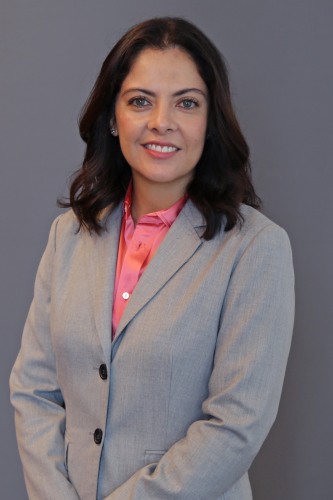
Dr. Monica Martinez Wilhelmus is the Thomas J. and Alice M. Tisch Assistant Professor of Engineering at Brown University's School of Engineering. She holds affiliations with NASA Jet Propulsion Laboratory (JPL) and is an adjunct professor at the University of California Riverside. Her research integrates experimental and numerical methods to study transport phenomena at the intersection of biology, oceanography, and fluid mechanics. Key interests include sea ice dynamics, remote sensing, and fluid transport by plankton aggregations. Education: B.Sc. in Mechanical Engineering from Universidad Nacional Autonoma de Mexico (2010), M.S. and Ph.D. in Mechanical Engineering from Caltech (2012, 2016). Her postdoctoral work at JPL/Caltech focused on collaborative ocean science projects. Research in the Wilhelmus Lab explores fluid mechanics in environmental and biological systems, with projects like Arctic sea ice tracking, robotic platforms, and plankton hydrodynamics. The lab's work bridges engineering and environmental science to address climate observation challenges and ocean turbulence. Her interdisciplinary approach combines satellite data analysis with field experiments, contributing to understanding Arctic Ocean eddies and submesoscale currents. Collaborative efforts include developing algorithms for ice floe tracking and advancing sediment diagenesis models.