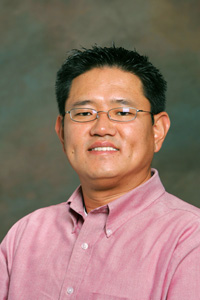
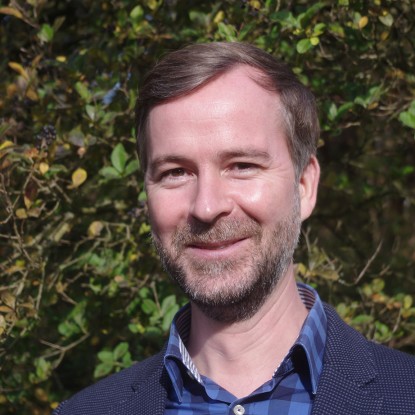
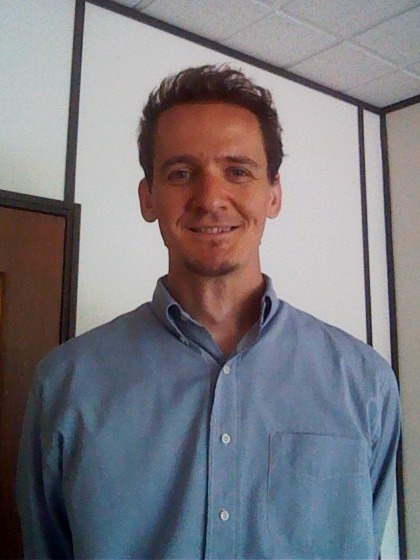
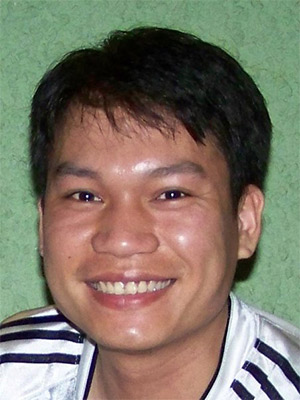
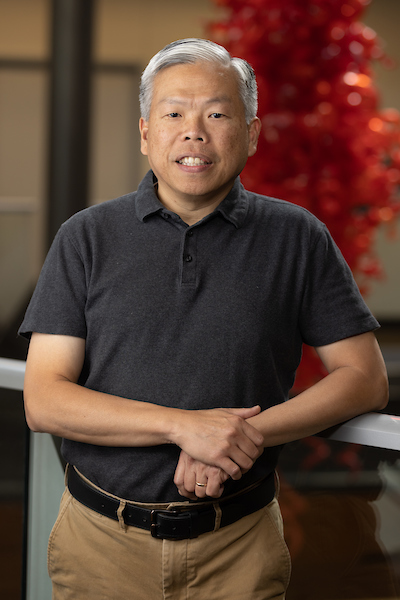
Abram Hindle is a Professor in the Department of Computing Science within the Faculty of Science at the University of Alberta. He holds a Ph.D. from the University of Waterloo (2010), an M.Sc. from the University of Victoria (2005), and a B.Sc. (Honours with distinction) from the University of Victoria (2003). His research focuses on evidence-based software development, leveraging techniques from data mining, machine learning, and empirical analysis. Hindle's research spans multiple domains including software repository mining, energy efficiency in software systems, and interdisciplinary applications like computer music and ECG analysis. His work integrates statistical analysis, NLP, and visualization to study software processes, maintenance, and metrics. His recent publications demonstrate a strong focus on healthcare applications of machine learning (particularly ECG-based diagnostics), software defect prediction, container orchestration, and energy-aware development practices. These reflect an ongoing commitment to empirical validation and real-world impact.
Piero Fraternali is Full Professor of Web Technologies at Politecnico di Milano, where he leads research on software engineering methodologies for web applications and environmental intelligence systems. His work spans model-driven development, human computation, and AI-powered computer vision. He co-founded WebRatio (commercializing model-driven web development tools) and Servitly (focused on social business process management). His PeakLens app has over 2 million users. Current research explores environmental crime detection through geospatial AI and waste monitoring via satellite imagery. Earlier contributions include the OMG-standardized Interaction Flow Modeling Language (IFML) for application design. He has led several EU projects including PERIVALLON (combating environmental crime) and enCOMPASS (behavioral energy saving). His group develops deep learning methods for gravitational lens analysis and industrial predictive maintenance.
Oh Joon-Yeoul serves as Associate Professor in the Department of Mechanical and Industrial Engineering at Texas A&M University-Kingsville's College of Engineering, specializing in optimization methodologies for telecommunications and public infrastructure systems. His academic credentials include: Ph.D. in Industrial Engineering (Operations Research), New Mexico State University (2003) M.S. in Industrial Engineering (Engineering Management), New Mexico State University (2000) M.S. in Industrial Engineering (Operations Research), Chong-Ju University (1998) B.S. in Industrial Engineering, Chong-Ju University (1995) Dr. Oh's research integrates mathematical programming and algorithmic development to solve complex industrial problems, with core expertise in Network Optimization , Wireless Telecommunication Systems , and Queueing Theory . His work bridges theoretical operations research with practical applications in municipal services, robotics, and emergency management, emphasizing non-linear and heuristic integer programming approaches for large-scale systems. Analysis of his 15 publications (2015-2020) reveals consistent focus on vehicle routing optimization (including multi-vehicle scenarios), facility location for public safety infrastructure, and multi-criteria decision frameworks . His research demonstrates strong methodological continuity in applying combinatorial optimization to real-world challenges like garbage collection routing, fire station allocation, and telecommunication network expansion, primarily through conference presentations at INFORMS and industrial engineering forums. Dr. Oh actively mentors graduate researchers as evidenced by student co-authorship on projects involving blockchain applications, humanoid robotics, and municipal service optimization. While specific grant details aren't documented, his collaborative work with colleagues like Amir Hessami indicates engagement in funded research initiatives addressing regional infrastructure challenges in South Texas. His research team focuses on practical implementation of optimization models for Kingsville municipal operations, particularly in waste management and emergency response systems, though dedicated laboratory facilities aren't specified in available materials.
Dr. Debora Correa is a Senior Lecturer at the University of Western Australia's School of Physics, Maths and Computing, specializing in Computer Science and Software Engineering. She holds a PhD in Applied Physics (Computational Physics) from the University of São Paulo (2012), an MSc in Computer Science from Universidade Federal de São Carlos (2008), and a BSc (Honours) in Computer Science from COC University (2005). Her research focuses on developing data-driven methodologies for analyzing large-scale temporal datasets across domains like bioengineering, biomedical signals, music, and engineering systems. Notable contributions include work on reservoir computing for concept drift detection and network inference algorithms. She leads the ARC Training Centre for Transforming Maintenance through Data Science and collaborates on projects like TSuNAMi: Time Series Network Animal Modelling. Dr. Correa has received awards including the 2020 Dr Vincent Harry Cooper Memorial Prize for supervising Jet Chong's honors thesis. Her work addresses UN Sustainable Development Goals through interdisciplinary applications. She actively engages in community initiatives like the Girls' Programming Network mentorship program.
Pietro D'Agostino is a Ph.D. candidate in Computer and Control Engineering at the Polytechnic University of Turin, Department of Control and Computer Engineering (DAUIN), currently in his 38th cycle (2022-2025), while serving as an external lecturer and teaching assistant for Model-based software design courses in the Mechatronic Engineering program. His educational background includes a Bachelor's degree in Electronic Engineering (2020) and a Master's degree in Mechatronic Engineering (2022), both from the Polytechnic University of Turin. Research focuses on fog computing and artificial intelligence integration for industrial IoT, developing real-time edge-processing architectures with sandboxing mechanisms for third-party extensibility and AI-driven predictive maintenance systems that anticipate equipment failures to reduce downtime. This work bridges control systems engineering with embedded IoT technologies to enhance industrial reliability. His 2023-2025 publications demonstrate consistent innovation in industrial predictive maintenance, featuring vibration-based anomaly detection, scalable fog computing solutions, and optimized AI algorithms for resource-constrained embedded deployment, emphasizing low-latency processing and customizable industrial applications. No scientific awards were mentioned in the source material. As a Ph.D. candidate, he does not currently advise students, and research grant details were not provided. He actively contributes to the CAD - Electronic CAD & Reliability Group (DAUIN), focusing on electronic design automation and system reliability in industrial contexts.
Prof. Torsten Waldminghaus is a Professor in the Department of Biology at Technische Universität Darmstadt, Germany. His research focuses on molecular microbiology and synthetic biology, particularly bacterial chromosome biology and DNA replication mechanisms. He leads a lab developing synthetic secondary chromosomes in Escherichia coli to study chromosome organization and function. Key projects include analyzing Vibrio cholerae's natural secondary chromosome and engineering synthetic systems to understand DNA motif distribution effects on replication. Research interests span bacterial chromosome maintenance, synthetic biology applications, and environmental stress responses. His lab employs techniques like motif-based machine learning (e.g., γBOriS software) to identify origins of replication and develop tools like the MARSeG sequence generator. Collaborative efforts include studying ultrafast-growing marine bacteria as synthetic biology chassis. Publications highlight work on bacterial inactivation in water disinfection, fitness costs of molecular interactions, and the interplay between metabolic pathways and DNA replication. His research bridges fundamental microbiology with applied synthetic biology, aiming to engineer novel biological systems while uncovering foundational biology principles.
Mikael Axin is an Associate Professor at Linköping University's Department of Management and Engineering, specializing in Fluid and Mechatronic Systems. He teaches courses in machine elements, product development, and hydraulics, and supervises bachelor and master's theses. His research focuses on hydraulic systems for mobile machinery, energy efficiency, and system dynamics, with a particular emphasis on fluid power and mechanical design. Education: PhD in Fluid and Mechatronic Systems, Linköping University (2015) Licentiate of Engineering in Fluid and Mechatronic Systems, Linköping University (2013) Master of Science in Mechanical Engineering, Linköping University (2009) Research Interests: Dr. Axin explores hydraulic system optimization in mobile applications, including energy efficiency, pump control strategies, and damping design. His work bridges theoretical modeling with practical implementation, addressing challenges in industrial machinery and sustainable engineering solutions. Awards: Recipient of the Gyllene Skiftnyckeln award for Best Teacher (2013) Ingeströmska Stiftelsen Scholarship for overseas studies (2010) Teaching and Development: He actively contributes to pedagogical innovation, including digitalizing exams to enhance student accessibility and reduce environmental impact. His courses emphasize hands-on learning and real-world problem-solving in mechanical engineering. Lab/Team: His work is conducted within the Product Realisation (PROD) unit, collaborating with industry partners to advance fluid power systems and product development methodologies.
Edwin Brady is a Reader in the School of Computer Science at the University of St Andrews. His research focuses on dependent types, programming languages, and their application to verification, DSLs, and compiler design. He is a key contributor to the Idris programming language, emphasizing type-driven development and formal methods. Brady supervises PhD students including Thomas Hansen, Ellis Kesterton, Bhakti Shah, and Constantine Theocharis. His work spans foundational research in type systems, practical compiler implementation, and tool development for dependently typed languages. Notable contributions include frameworks for resource-dependent DSLs and type-level property-based testing. Brady has led projects such as the EPSRC-funded 'Type-Driven Verification of Communicating Systems' and contributed to the EU-funded ADVANCE initiative on concurrency engineering. Research Interests: Dependent types, functional programming, program verification, DSLs, compilers. Tools Developed: Idris programming language, type-level testing frameworks. Professional Activities: Organized Doors Open @ Computer Science events (2023–2025), presented at Lambda World and Idris workshops. His publications emphasize practical applications of type theory to ensure correctness in concurrent systems, session protocols, and refactoring tools. Brady’s work bridges theoretical foundations with real-world software development challenges.
Andrea Capiluppi is an Associate Professor at the University of Groningen's Faculty of Science and Engineering, Department of Software Engineering — Bernoulli Institute. His research focuses on open source software, software development processes, natural language processing, and machine learning applications in software engineering. He holds roles including Member of the Board of Examiners and Member of the Governing Board of the Thematic Digital Competence Centre (TDCC) for NES. Research interests span open source technologies, software component analysis, software maintenance, and applying NLP to software traceability. His work bridges empirical studies with practical software engineering challenges, such as developer sentiment analysis and legacy code refactoring. He has published over 110 papers, contributing to areas like technical debt detection, code obfuscation impact, and academia-industry collaboration models. No awards are explicitly mentioned, but his leadership roles reflect academic and institutional contributions. He advises on software ecosystems and innovation dynamics, with ongoing projects involving automated software classification and traceability in DevOps environments.
Benoit Baudry is a Professor in Software Technology at KTH Royal Institute of Technology (KTH) within the Digital Futures Faculty and Division of Theoretical Computer Science. He also holds a professorship at Université de Montréal. His research focuses on software diversity, testing, and reliable web-based applications, emphasizing experimental approaches using large-scale open-source systems. He leads the CHAINS project (supported by SSF) and holds a Wallenberg AI, Autonomous Systems and Software Program (WASP) research chair. Previously, he directed the CASTOR software research center (2018–2022) and led the DiverSE group at INRIA Rennes, France. Research Interests Baudry's work spans software supply chain security, blockchain node reliability, and production monitoring for test suite improvement. He explores techniques like N-version design for blockchain nodes, binary diversification for WebAssembly, and coverage-based debloating of Java dependencies. His methods emphasize collaboration with industry and empirical validation of software systems. Grants & Projects - CHAINS project (SSF-funded) - WASP research chair - Former leadership of CASTOR and DiverSE groups. Labs & Collaborations Affiliated with Digital Futures, a cross-disciplinary center at KTH collaborating with Stockholm University and RISE. His work addresses societal challenges via digital technology innovation.
Dr. Kirill Bogdanov is a Lecturer in the Department of Computer Science at the University of Sheffield, UK. He completed his PhD in 2000 on specification-based software testing using X-machines and Statecharts. Before his current role, he worked as a Research Associate on the MOTIVE project, focusing on testing object-oriented systems. Education: PhD in Computer Science, University of Sheffield (2000) Research focused on applying X-machine testing methods to Statecharts specifications Research Interests: Specification-based testing methodologies X-machine formalisms and their applications Automated model inference from software code Passive inference of software models from logs Formal methods for safety-critical systems Grants & Projects: PI on EPSRC grants: REGI (2009-2012), StaMInA (2009-2012), and Automated Abstraction (2005-2008) Developed tools like the Statechum project for model inference Labs/Teams: Member of the Verification and Testing Research Group and Foundations of Computation research group. Awards: No specific awards listed, but contributions include pioneering work in formal testing methods.
Nguyen Tung is an Instructional Associate Professor in the Department of Computer Science & Engineering at Texas A&M University. His research focuses on software engineering, mobile application development, and computational tools for improving code quality and developer productivity. He has developed frameworks like ALPACA for linguistic analysis of software corpora and ExAssist for exception handling recommendations. His work spans topics including API misuse correction, automated response systems for app reviews, and deep learning approaches to UI design patterns. Key research areas include: Code analysis and optimization Statistical methods for software migration Machine learning in IDEs Human-computer interaction in educational technologies He has published extensively on topics such as defect prediction, code recommendation systems, and mining visual logs of software behavior. His contributions include tools like DRC for detecting dangling references in web applications and GraPacc for graph-based code completion.
Eric Duviella is a Professor at IMT Nord Europe, specifically within the Department of Automatic Control and Computer Sciences. He has been a permanent faculty member since 2007 and was promoted to full Professor in 2015. His academic affiliations include strong ties with the University of Lille, Universitat Politècnica de Catalunya, and the University of Seville through collaborative research and joint Ph.D. supervision. Education: Diplôme d'Ingénieur, Ecole Nationale d'Ingénieurs de Tarbes (ENIT), 2001 M.S., Institut National Polytechnique de Toulouse (INPT), 2001 Ph.D. in Industrial Systems, Institut National Polytechnique de Toulouse, 2005 HDR (Habilitation à Diriger des Recherches), University of Lille 1, 2014 His research interests center on Reactive Control Strategies , Supervision and Prognosis , and the Modeling of Large-Scale and Environmental Systems , particularly Hydrographical and Water Systems . His work aims at predictive maintenance, adaptive management under climate change, and improving navigation and water quality through advanced control techniques. The 15 most recent publications reflect a strong trend toward Model Predictive Control (MPC) , distributed and decentralized control architectures , leak detection in water networks , and resilience of inland waterways under climate stress . Keywords across these works include control engineering, water systems, fault diagnosis, and data-driven modeling, indicating a multidisciplinary approach combining automation, environmental science, and computational intelligence. Scientific Awards: Best paper award at CODIT 2017 Eric Duviella has actively supervised numerous Ph.D. and Master’s students from institutions including IMT Lille Douai, Universitat Politècnica de Catalunya, and the University of Seville. He has led significant research grants such as GEPET-Eau, CHEEF2, and CASTR-Eau, focusing on sustainable water management, hydropower optimization, and robotic monitoring. His work often involves partnerships with agencies like VNF, EDF, and local water authorities. He is involved in key research labs and teams including the Laboratoire d'Automatique, Génie Informatique et Signal (LAGIS), and collaborates internationally through mobility programs with UPC and the University of Seville. His leadership in organizing special sessions at major conferences (e.g., IFAC, HIC) underscores his role in shaping discourse in water system control and supervision.
Dr Marie Cahillane is a Reader in Applied Cognitive Psychology at Cranfield Defence and Security, Cranfield University, where she has held progressive academic roles since 2008, including Research Fellow, Lecturer, Senior Lecturer, and Reader. She leads the Applied Psychology Group and serves as Deputy Head of the Integrated Cyber, Cognition and Digital Systems Group. She is also Deputy Academic Lead for the CDS Doctoral Community and a member of the Cranfield University Research Ethics and Integrity Committee (CUREIC). Her research focuses on human cognition in defence contexts, particularly skill acquisition and retention, cognitive vulnerabilities, disinformation, and team performance. Funded by Dstl, MOD, US DoD, and DASA, her work addresses real-world challenges in military and security operations. The recent publication trends highlight her expertise in cognitive psychology applied to autonomous systems, disinformation, e-learning, and military training. Her work bridges cognitive science with defence technology, focusing on human factors in AI, skill decay models, and metacognitive support in complex decision-making. She frequently collaborates with researchers like Victoria Smy and Piers MacLean. Dr Cahillane supervises PhD and MSc research, including topics on complex cognitive skills retention and disinformation in CBRN contexts. She has led 17 research projects as Principal Investigator and contributed to 15 as Co-Investigator, with funding from major defence stakeholders. She contributes to research-led teaching in quantitative methods, heuristics and bias, and psychological aspects of sensing. She also works closely with defence clients such as Dstl, BAE Systems, and the British Army to apply cognitive psychology to operational challenges.
Harvey Siy, Ph.D., is a Professor in the Department of Computer Science at the University of Nebraska at Omaha (UNO) since Fall 2020, after serving as Assistant Professor (2005-2011) and Associate Professor (2011-2020). He chairs the Computer Science Undergraduate Program Committee and contributes to graduate program leadership. His teaching focuses on software engineering, software evolution and maintenance, user interface design, and computational thinking. Education: Ph.D. in Computer Science from University of Maryland - College Park (1996) His research centers on empirical software engineering, mining software repositories, software product lines, knowledge management in software engineering, and software assurance. He led the externally funded NSF project SPARCS (2015-2019) aiming to enhance computer science education through strategic problem-based learning. He is affiliated with the lab in room PKI 355 at UNO.