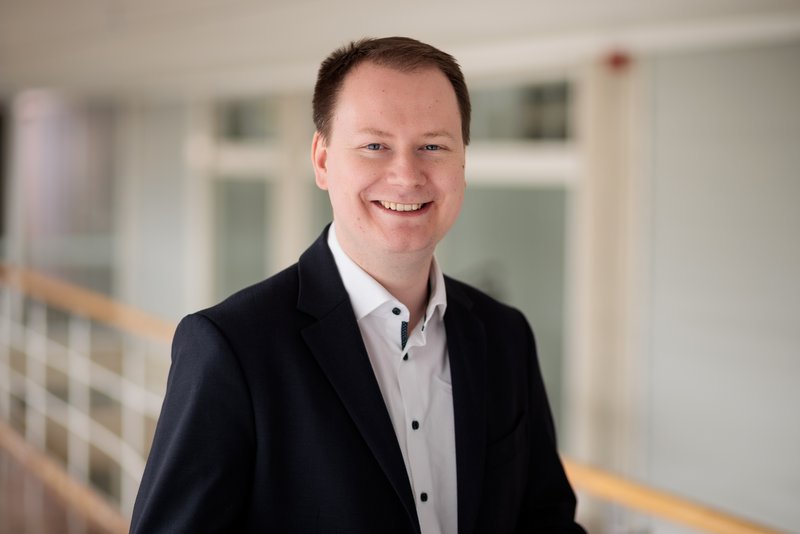
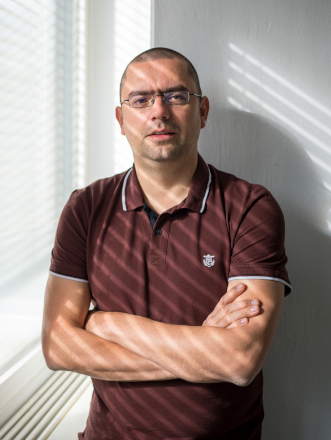
Prof. Dr.-Ing. Michael Möhring is a Professor of Data Science at Reutlingen University's Faculty of Informatics. He serves as Prodekan for the Herman Hollerith Zentrum (HHZ) and leads research in data analytics, Industry 4.0, and process mining. Previously, he held roles as an IT consultant, project manager at Bosch Group/BSH, and academic researcher. Education: Dr.-Ing. (PhD) in Business Informatics M.Sc. in Business Informatics B.Sc. in Business Informatics Research Interests: Focuses on leveraging structured/unstructured data for industrial applications, enterprise architecture management, digital twins integration, and AI-driven decision support. Specializes in bridging technical systems with organizational processes in manufacturing and service industries. Lab Affiliations: AI-Real Lab AIDA Future Mobility Lab Internet of Things Lab Virtual Reality Lab Articles Trends: Recent work emphasizes practical implementations of AI in production failure analysis (language models), energy optimization systems (HollerithEnergyML), and technical debt management in SMEs. Consistently explores data integration challenges across manufacturing, service ecosystems, and digital twin frameworks. Grants & Collaborations: Active in EU-funded projects like 5G-PreCiSe and bwHealthApp. Collaborates with industry partners on digital transformation initiatives through HHZ's applied research programs.
Lars Grunske is a Professor at the Department of Computer Science, Faculty of Mathematics and Natural Sciences, Humboldt University of Berlin. His research focuses on software and systems engineering, safety-critical systems, and software evolution. Department: Computer Science University: Humboldt University of Berlin Academic Rank: Professor His work spans automated software analysis, probabilistic model checking, and formal methods for complex systems. Key collaborations include researchers from Swinburne University, University of Hull, and University of Queensland. Recent publications address research software engineering, program repair, and explainability in cyberphysical systems. Professional roles include leadership in examination boards and program committees for conferences like ICSE and ASE. Contact info: Email: grunskel@hu-berlin.de Phone: +49 30 2093-41142 Address: Unter den Linden 6, Berlin
Dr. Pascal Reuss is a Researcher at the Intelligent Information Systems (IIS) Division within the Institute of Computer Science , University of Hildesheim . His work focuses on Case-Based Reasoning (CBR) systems, Multi-Agent Systems , and Knowledge Management applications. Active in CBR framework development and game-based AI research Teaching Computer Science III (Databases) for winter 2025/26 Participating in university sustainability initiatives like Stadtradeln 2024/25 Reuss contributes to AI education through practical implementations in gaming environments and has developed visualization tools for CBR agent behavior. His research spans multi-agent collaboration , dynamic case bases , and domain-specific language implementations for knowledge maintenance. Notable contributions include: Co-developing the FEATURE-TAK framework for knowledge extraction Designing case factories for distributed CBR systems Implementing finite state machines for tactical game agents Creating CBR-based fitness planning systems His work appears in various CBR and Game Development publications from 2011-2024. The research demonstrates practical applications of CBR in aircraft maintenance diagnostics , training plan generation , and educational technology contexts.
Raffi Khatchadourian is an Associate Professor in the Department of Computer Science at Hunter College and the Graduate Center of the City University of New York (CUNY). His research focuses on techniques for automated software evolution, particularly automated refactoring and source code recommendation systems, with the goal of easing the burden associated with evolving large and complex software through automated tools. He also conducts research on the automated analysis of Object-Oriented programs. Ph.D., Computer Science & Engineering, Ohio State University (2011) MS, Computer Science & Engineering, Ohio State University (2010) BS, Computer Science, Monmouth University (2004) Khatchadourian's research spans multiple areas of software engineering and programming languages, with particular emphasis on automated software evolution techniques. His work addresses critical challenges in refactoring legacy systems to modern language constructs, optimizing parallel processing in Java 8 streams, and addressing technical debt in machine learning systems. His recent research has expanded into deep learning program transformation, where he develops techniques to convert imperative deep learning code to more efficient graph execution models while ensuring safety. His approach combines static analysis, program transformation, and empirical validation to create practical tools that developers can integrate into their workflows. Analysis of Khatchadourian's recent publications reveals a strong focus on bridging the gap between theoretical program analysis and practical software engineering challenges. His work increasingly intersects with machine learning systems, examining both how to improve ML code through refactoring and how to ensure safety in deep learning frameworks. The research demonstrates consistent evolution from foundational work on Java language features toward more complex systems involving concurrency, deep learning, and automated program transformation. Distinguished Paper Award at SCAM '18 for work on Java 8 stream optimization EAPLS Best Paper Award at FASE '20 for study on Java 8 stream usage EAPLS Distinguished Paper Award at FASE '25 for Deep Learning refactoring work Best Paper Award nominee at IJCAI '24 for AI safety framework Khatchadourian actively mentors graduate and undergraduate students, with several advisees going on to successful academic and industry positions. His former Ph.D. student Tatiana Castro Vélez accepted a tenure-track Assistant Professor position at the University of Puerto Rico. He has supervised numerous master's theses and undergraduate research projects, often resulting in co-authored publications at top software engineering venues. His research has been supported by various grants, though specific funding details are not prominently featured in the available information. Through his work on tools like Fraglight for aspect-oriented programming and Hybridize Functions for deep learning refactoring, Khatchadourian has established a research group focused on practical program analysis and transformation. His lab develops Eclipse plugins and other IDE-integrated tools that help developers with automated refactoring, bug detection, and code optimization. The group maintains active collaborations with researchers at other institutions and contributes to open-source projects on GitHub.
Alexandre Bartel is a Professor in the Department of Computing Science at Umeå University, Sweden, specializing in software security and software engineering. His research focuses on system security and analysis of permission-based software stacks, particularly Android. With numerous publications in top-tier security and software engineering conferences and journals, Bartel has established himself as a leading researcher in vulnerability analysis and software security. Bartel's research interests primarily center around software security, with a particular emphasis on Java and Android ecosystems. His work delves into vulnerability analysis, deserialization attacks, control flow integrity, and security mechanisms for complex software systems. He investigates how to verify security properties through efficient algorithms and examines existing software layers from a security perspective. His research bridges theoretical security concepts with practical implementation challenges in real-world systems. Analysis of Bartel's recent publications reveals a strong focus on Java deserialization vulnerabilities, control flow integrity mechanisms, and Android security. His work demonstrates a consistent trajectory from fundamental vulnerability analysis to developing practical security solutions and benchmarks. The research spans both theoretical frameworks and empirical evaluations, with significant contributions to understanding long-term security adoption patterns and developing tools for vulnerability detection. Scientific Awards: Most influential Paper ICSE N-10 Award for IccTA: Detecting Inter-Component Privacy Leaks in Android Apps Bartel actively contributes to the academic community through service roles, having served on program committees for major conferences including ASE, ESEC/FSE, ICSE, and FSE. His research has practical implications for software developers and security practitioners, particularly in the areas of vulnerability detection and security mechanism implementation. While specific grant information isn't detailed in the provided materials, his extensive publication record suggests successful funding for his research initiatives. Though not explicitly detailed in the provided information, Bartel's research likely involves collaboration with students and researchers on projects related to software security analysis. His work on benchmarks like Gleipner and CONFUZZION suggests involvement in developing tools and resources for the security research community.
Prof. Dr. Klaus Schmid is a Professor in the Department of Software Systems Engineering at the University of Hildesheim, part of the Faculty of Mathematics, Natural Sciences, Economics, and Computer Science. His research focuses on Machine Learning Operations (MLOps), software product lines, adaptive systems, and variability modeling. He leads projects such as EXPLAIN and ReGaP, emphasizing explainable AI and industrial MLOps integration. His work addresses challenges in Cyber-Physical Production Systems (CPPS), including data management, model calibration, and domain knowledge integration. Key research interests include MLOps architecture design, variability modeling transformations (e.g., UVL to IVML), and incremental verification techniques for software product lines. He has published extensively in venues like IEEE ETFA, IEEE Software, and SPLC conferences. Notable achievements include a Best Paper Award for work on control patterns in self-adaptive systems. Collaborations with industry partners highlight his focus on bridging academic research and practical industrial applications. Prof. Schmid’s contributions extend to tool development, such as EASy-Producer for variability-aware software ecosystems, and frameworks for environment modeling in adaptive systems. His research addresses both foundational challenges (e.g., syntax-preserving slicing) and applied topics like MLOps platform comparisons and industrial case studies in Industry 4.0.
Alfonso Emilio Gerevini is a prominent researcher in artificial intelligence with over 30 years of continuous academic contributions. His work spans theoretical foundations of automated planning to practical healthcare applications, with recent publications demonstrating significant impact in both traditional AI domains and emerging interdisciplinary areas. His research interests focus on automated planning systems , temporal reasoning , and multi-agent coordination , with recent expansion into healthcare applications using machine learning techniques. Gerevini has made fundamental contributions to planning algorithms, particularly in width-based search, case-based planning, and privacy-preserving multi-agent planning. His work on PDDL (Planning Domain Definition Language) has been influential in standardizing planning representations. Analysis of his 15 most recent publications reveals a strategic evolution from core planning research toward impactful healthcare applications, particularly during the COVID-19 pandemic. While maintaining his expertise in planning algorithms, he has successfully integrated machine learning techniques to address real-world medical challenges including radiology report analysis, prognosis prediction, and lab test interpretation. His work demonstrates exceptional versatility across both theoretical and applied domains of artificial intelligence. Gerevini maintains a robust collaborative network, primarily with Italian researchers including Ivan Serina, Alessandro Saetti, and Luca Putelli. His publications appear consistently in top-tier AI venues including Artificial Intelligence journal, Journal of Artificial Intelligence Research, and AAAI/ICAPS conferences. The collaborative patterns suggest he leads a significant research group focused on advancing planning systems while applying them to critical real-world problems.
Zhongxin Liu is an Assistant Professor at the College of Computer Science and Technology , Zhejiang University , China. He earned his Ph.D. from the same institution in 2021. His research focuses on Intelligent Software Engineering (AI4SE) , leveraging software "big data" to improve code understanding, generation, and security through machine learning techniques. Published in top-tier venues: TSE, TOSEM, ICSE, FSE, ASE, ISSTA Active in academic service: Reviewer for TSE, TOSEM, ASEJ, etc. Visiting Professor at University of Stuttgart (2024-2025) His recent work explores Large Language Models (LLMs) for code intelligence, security hardening, and vulnerability detection. Papers emphasize cross-domain applications, zero-shot learning, and API/code dependency analysis. Scientific awards include: ACM SIGSOFT Distinguished Paper Awards (ASE 2018, 2019, 2020; ISSTA 2025) Zhejiang University Qizhen Scholar (2021) CCF TCSE Doctoral Dissertation Award (2023) Recruiting undergraduate interns, graduate students (MS/Ph.D.), and postdocs for code intelligence research. Contact: liu_zx@zju.edu.cn .
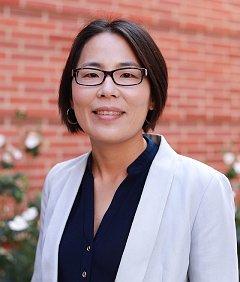
Miryung Kim is a Professor and Vice Chair of Graduate Studies in UCLA's Computer Science Department, where she directs the Software Engineering and Analysis Laboratory. She is renowned for her pioneering work in software evolution, code clone management, and establishing the emerging field of Software Engineering for Data Intensive Computing (SE4DA and SE4ML). Her research focuses on automated testing and debugging for Apache Spark, developer tools for heterogeneous computing, and conducting systematic studies of refactoring practices in industry. She led the first large-scale study of data scientists in industry and developed JDebloat, a Java bytecode debloating tool that made significant tech transfer impact to the Navy. Her recent publications demonstrate strong trends in fuzz testing for big data analytics and heterogeneous computing, with a focus on natural input generation, co-dependence awareness, and leveraging hardware probes for acceleration. Her work bridges software engineering with data-intensive and heterogeneous computing paradigms. ACM SIGSOFT Influential Educator Award (2022) ICSME Most Influential Paper Award (2023 and 2020) NSF CAREER award Google Faculty Research Award Okawa Foundation Research Award Humboldt Fellow ACM Distinguished Member As an academic advisor, she has produced eight tenure-track faculty members at institutions including Columbia, Purdue, and Virginia Tech. Her research has been supported by National Science Foundation, Air Force Research Laboratory, Google, IBM, Intel, Okawa Foundation, Samsung, and Office of Naval Research. She previously served as Program Co-Chair of ESEC/FSE 2022 and has delivered keynotes at ASE 2019 and ISSTA 2022. She maintains active industry collaborations, serving as an Amazon Scholar at Amazon Web Services and having spent time as a visiting researcher at Microsoft Research.
Claire Le Goues is a Professor of Computer Science at Carnegie Mellon University, primarily affiliated with the Software and Societal Systems Department (S3D) within the School of Computer Science (SCS). She serves as the Associate Department Head for Faculty within S3D and leads the squaresLab research group. Le Goues also co-directs the REUSE@CMU summer program and teaches software engineering and program analysis at undergraduate, master's, and PhD levels. Her research spans software engineering and programming languages, with a particular focus on how to construct, maintain, evolve, improve/debug, and assure high-quality software systems. Le Goues has made significant contributions to automated program repair, program analysis, and defect detection. Her work often bridges theoretical foundations with practical applications, addressing real-world challenges in software development and maintenance. Le Goues' recent publications demonstrate a clear trend toward integrating large language models and generative AI with traditional software engineering techniques. Her research examines how these technologies can enhance program repair (BatFix, AdverIntent-Agent), vulnerability detection (Interpretable Vulnerability Detection Reports), and testing (LWDIFF for WebAssembly). This represents an evolution from her earlier foundational work in program repair (GenProg) toward leveraging contemporary AI advancements. She has mentored numerous students through her squaresLab research group and has been instrumental in developing educational programs that prepare the next generation of software engineers. Le Goues is also known for her advocacy for double-blind review processes in academic conferences, having implemented this approach when co-chairing the Symposium for Search-Based Software Engineering in 2014.
Jinqiu Yang is an Associate Professor in the Department of Computer Science and Software Engineering at Concordia University in Montreal, Canada. Her research focuses on improving software reliability and quality assurance, particularly in the context of machine learning systems and autonomous vehicles. She leads active research projects in software testing, automated program repair, and mining software repositories, with strong connections to both academic and industrial applications. Her research interests span software reliability, quality assurance of machine learning systems including autonomous vehicles, software testing, automated program repair, text analytics of software artifacts, and mining software repositories. She has developed novel approaches for testing deep learning libraries, evaluating robustness in autonomous driving systems, and tracking the evolution of static code warnings. Her work bridges traditional software engineering with emerging challenges in AI systems, addressing critical issues of reliability and safety in complex software environments. Yang's recent publications (2021-2025) demonstrate a clear trajectory toward AI/ML system reliability, with increasing focus on autonomous vehicles, concept drift detection, and security aspects of large language models. Her work spans both theoretical foundations and practical applications, often involving empirical studies of real-world systems and development of practical tools to address identified challenges. ACM SIGSOFT Distinguished Paper Award Dr. Yang actively mentors graduate students and is currently recruiting Master's and PhD candidates. She has secured significant research funding including NSERC Discovery Grants (2019-2025), Gina Cody Research and Innovation Fellowship (2024-2026), and participation in the NSERC CREATE Program SE4AI (2021-2026). Her research is supported by multiple grants including NOVA – FRQNT-NSERC PROGRAM (2024-2027) and Volt-Age Seed Grant (2024-2026). She leads research in the O-RISA Lab at Concordia University, focusing on reliability and security aspects of intelligent software systems. Her team collaborates with industry partners including IBM, where she previously worked at IBM Watson Research Lab and IBM CAS, bringing practical experience to her academic research.
Daye Nam is an Assistant Professor in the Department of Informatics at the University of California, Irvine, where they design, build, and evaluate AI tools for developers using natural language processing techniques. Their work sits at the intersection of software engineering, artificial intelligence, and human-computer interaction, with a strong focus on creating useful and usable tools that make software development more accessible, efficient, and enjoyable. Education PhD in Software Engineering, Carnegie Mellon University (2018-2024) MS in Computer Science, University of Southern California (2016-2018) BS in Computer Science, Yonsei University (2012-2016) Research Interests Dr. Nam's research focuses on designing, building, and evaluating AI tools for programmers at all levels, with an emphasis on making these tools both useful and usable. Their work spans several key areas including machine learning for software engineering (ML4SE), developer experience, and human-AI interaction. They employ a user-centered approach that involves conducting empirical studies to understand programmers' needs, building and training machine learning models based on those insights, creating tools for programmers, and evaluating them using human-computer interaction methods. Their research has particular relevance to AI-powered developer tools, API documentation and discovery, and educational applications of AI for programming students. Publications and Research Trends Dr. Nam's recent publications demonstrate a clear trajectory toward understanding and improving how developers interact with AI systems. Their work increasingly focuses on empirical studies of developer-AI interaction, particularly with large language models for code generation and understanding. There's a strong emphasis on understanding trust in AI systems among developers, measuring the actual impact of AI on development speed, and designing tools that balance automation with user control. Their research methodology often combines log analysis, user studies, and the development of novel AI-powered tools that address specific developer pain points. Scientific Awards and Honors Best Tool Paper Award at ASE ACM Student Research Competition 2nd Place SIGSOFT CAPS Student Travel Award for FSE ACM SIGSOFT NSF Travel Award NSF Travel Award for ICSE SIGSOFT Best Research Award from University of Southern California Teaching and Service Dr. Nam teaches SWE 233: Intelligent User Interfaces at UC Irvine, guiding students through the design and evaluation of AI-powered interfaces for software development. They have previously served as a Teaching Assistant and Co-Instructor for Foundations of Software Engineering at Carnegie Mellon University. In terms of service, they've been on program committees for major software engineering conferences including ICSE, ASE, and FSE, and have reviewed papers for journals like TOSEM and Empirical Software Engineering. They've also been active in student support programs, organizing and mentoring for graduate applicant support initiatives.
Sven Apel is Professor of Computer Science at Saarland University, where he holds the Chair of Software Engineering and directs the Saarbrücken Graduate School of Computer Science within the Saarland Informatics Campus. His research aims to advance software engineering into an era of intensive automation by developing methods, tools, and theories for building efficient, reliable, and maintainable software systems, with a strong emphasis on the human factor and interdisciplinary inquiry. His primary research interests include software variability and configuration, AI-based program generation and optimization, socio-technical software analysis, and the application of empirical and neurophysiological methods to study program comprehension. He actively collaborates with industry partners such as Siemens AG, Bosch Engineering, and Airbus Helicopters to apply his research in real-world contexts. His recent publications demonstrate a strong trend towards integrating artificial intelligence and neurocognitive methods into software engineering, focusing on configurable systems, performance modeling, debugging processes, and the scientific validity of empirical studies. His work spans top venues like ICSE, FSE, ASE, and IEEE TSE. ERC Advanced Grant “Brains On Code” ASE Fellow ACM Distinguished Member Hugo Junkers Award for Research and Innovation Heisenberg Professorship (DFG) Emmy-Noether Fellowship (DFG) Best Doctoral Dissertation Awards (University of Magdeburg, Ernst-Denert Foundation, 2007) Most Influential Paper Awards (SPLC'19, ICPC'22, GPCE'23) ACM SIGSOFT Distinguished Paper Awards (ICSE'15, ICSE'21) Best Paper Awards (SPLC'11, Modularity'15, Academy of Management'18) Distinguished Reviewer Awards (ASE'18, ICSE'24, FSE'24) Sven Apel has secured significant research funding, including an ERC Advanced Grant (€2.5M) and multiple DFG grants as Principal Investigator and Project Leader. He has advised numerous PhD and Master’s students and is actively involved in the academic community through program committees for major conferences like ICSE, FSE, and ASE. His work is conducted within a collaborative environment that includes close partnerships with researchers at the Max Planck Institute for Informatics and other institutions within the Saarland Informatics Campus.
Ruben Taelman is a postdoctoral researcher at IDLab , Ghent University – imec, specializing in decentralization, Linked Data publishing, and querying. He develops open-source JavaScript libraries like the Comunica engine for decentralized data access and focuses on intelligent infrastructure for data publication and retrieval. His research bridges academic and industrial perspectives, addressing challenges in decentralized knowledge graphs, policy negotiation, and data governance. Key projects include Triple Storage for versioned RDF querying and contributions to the Solid ecosystem for user-centric data control.
Professor Jonathan I. Maletic is affiliated with the University of Kent, UK, and is a leading researcher in software engineering with a particular focus on program comprehension and eye tracking in software development. He has published extensively in top venues such as Empirical Software Engineering, IEEE Transactions on Software Engineering, and the International Conference on Program Comprehension.