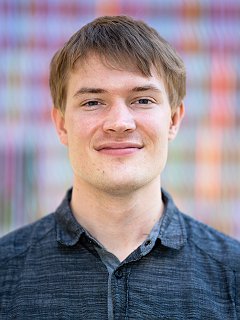
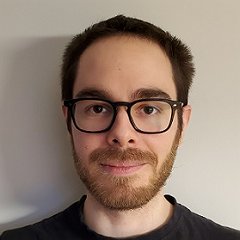
Marian Lingsch-Rosenfeld is a researcher at the Department of Computer Science, Ludwig-Maximilians-Universität München (LMU Munich), affiliated with the Software and Computational Systems Lab. Based in Office Room F 012 at Oettingenstraße 67, Munich, they actively contribute to software verification research and mentor graduate students through thesis projects. Research interests focus on software verification , program analysis , and model checking , with specific expertise in predicate abstraction, constrained horn clauses, and deductive verification techniques. Their work bridges theoretical foundations with practical verification tools, particularly CPAchecker. Recent publications demonstrate significant contributions to verification witnesses, program transformations, and loop abstraction techniques. Conference participation includes active roles in ASE, ECOOP, and VMCAI as both author and committee member for artifact evaluation. As a thesis supervisor, they guide students through advanced topics including: Constrained-Horn-Clause export for CPAchecker BMC algorithm performance improvements Software Verification Witnesses extensions Deductive verifier development Compiler optimizations impact analysis Available for consultation via office hours by appointment through meet.lrz.de, with communication primarily via university email channels.
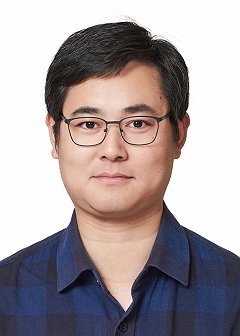
Jie Liu is a Researcher at the Institute of Software, Chinese Academy of Sciences and a Professor and Doctoral Supervisor at University of Chinese Academy of Sciences. He is also a Member of the Youth Innovation Promotion Association of the Chinese Academy of Sciences and an Executive Committee Member of the System Software Committee of the CCF Computer Society. His research is conducted within the Software Engineering Technology R&D Center. Dr. Liu received his Ph.D. from the University of Science and Technology of China in 2011 and his B.A. from the same institution in 2004. He has progressed through the ranks at the Institute of Software, CAS, starting as an Assistant Research Fellow (2011-2014), then Associate Research Fellow (2014-2024), and currently as a Researcher (since 2024). His research spans Big Data Intelligent Analysis Models and Systems at the intersection of AI, Software Engineering, and System Software. Specifically, his work covers three main areas: Big Data and Machine Learning Systems (statistics and AI algorithm model libraries, data quantitative analysis tools, LLM reasoning optimization, Earth Big Data); Intelligent Software Engineering (code model constraint decoding, data science agents, system log analysis agents); and Knowledge-Enhanced Intelligent Model Construction (knowledge extraction, knowledge graphs, domain AI model design). His research has resulted in innovative approaches to handling complex data analysis challenges across multiple domains. Dr. Liu's research has produced significant outcomes including EarthDataMiner, which supports SDG indicator calculations and won the 2024 Beijing Municipal Science and Technology Progress First Prize. His work on RISC-V software migration technology has been integrated into the Ruiqian tool (https://rvpt.top/), demonstrating practical applications of his research in emerging computing architectures. Beijing Science and Technology Progress Award, First Prize, 2024 2023 Surveying and Mapping Science and Technology Award, Special Prize, 2023 DASFAA Best Paper Runner-up, Second Prize, 2013 Dr. Liu has successfully guided numerous graduate students who have secured positions at major technology companies including Alibaba, ByteDance, Southern Power Grid, and Agricultural Bank of China. He has secured funding through multiple National Natural Science Foundation projects, National Key R&D Program projects, and over ten other research initiatives. His research collaborations span industry leaders like Huawei, JD.com, and TravelSky, as well as academic institutions within the Chinese Academy of Sciences. He teaches graduate courses such as 'Machine Learning Systems' and 'Cloud Computing and Big Data Technology' at University of Chinese Academy of Sciences, and has established a research group focused on developing innovative solutions at the intersection of AI and software engineering with real-world applications in earth sciences, healthcare, and intelligent systems.
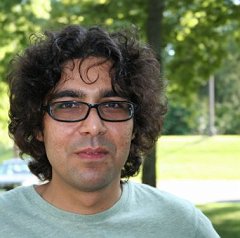
Mehdi Bagherzadeh is an Assistant Professor in the Department of Computer Science and Engineering at Oakland University. His professional profile shows consistent involvement in major software engineering conferences including ASE, SPLASH, and ICSE, where he has served in various leadership roles such as Workshops Co-Chair for SPLASH (2021-2023) and Late Breaking Results Co-Chair for ASE (2022). Dr. Bagherzadeh's research focuses on the correct construction of concurrent and big data software, situated at the intersection of Software Engineering and Programming Languages. His work particularly addresses challenges in deep learning program optimization, actor concurrency models, and automated refactoring techniques. His research trajectory shows a clear evolution from foundational work on concurrent programming models (Panini, Capsule) to current applications in deep learning systems. Analysis of his publication history reveals a strong focus on practical software engineering challenges in concurrent systems, with recent work concentrating on the migration and optimization of deep learning programs. His research combines empirical studies with formal methods, addressing both theoretical foundations and practical implementation concerns in modern software systems. Through his committee service across multiple top-tier conferences including ASE, SPLASH, ICSE, and ESEC/FSE, Dr. Bagherzadeh has established himself as an active contributor to the software engineering research community. His service roles have ranged from program committee membership to organizational leadership positions.
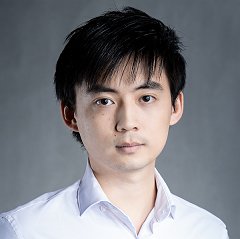
Pinjia He is an Assistant Professor and Presidential Young Fellow at The Chinese University of Hong Kong, Shenzhen's School of Data Science. He is also recognized as a national-level young talent in China. His academic journey includes a postdoctoral position at ETH Zurich's Department of Computer Science under Prof. Zhendong Su, a Ph.D. in Computer Science and Engineering from The Chinese University of Hong Kong supervised by Prof. Michael R. Lyu, and a B.E. in Computer Science and Technology from South China University of Technology. Ph.D. in Computer Science and Engineering, The Chinese University of Hong Kong Postdoctoral Scholar, ETH Zurich B.E. in Computer Science and Technology, South China University of Technology Dr. He's research spans software engineering, natural language processing, and systems, with particular focus on (1) AI for SE (e.g., LLM for code, AIOps), (2) SE for AI (e.g., LLM safety), and (3) software testing. He is renowned for his work on robust NLP systems and software log analysis. His research has been published at top venues including ICSE, FSE, ASE, ISSTA, ICLR, and OSDI. His publication trends show a consistent focus on log analysis systems, with recent work shifting toward LLM applications in software engineering and safety evaluation of conversational AI systems. His research demonstrates strong industry impact with tools downloaded over 60,000 times by more than 450 organizations. Most Influential Paper Award (ISSRE) IEEE Open Software Services Award Dr. He actively contributes to the academic community as Social Media Co-Chair for FSE 2025, Associate Editor of TOSEM, and serves on program committees for major conferences including FSE 2025, ICSE 2025, ISSTA 2025, and ASE 2024. His GitHub repositories (logparser, loglizer, loghub) have garnered over 5,000 stars and significant industry recognition including from IBM. While specific grant information isn't detailed in the provided text, his extensive publication record and tool development suggest substantial research funding. His work has been cited over 5,000 times according to Google Scholar, and his open-source tools have been widely adopted in both academia and industry. His current research focuses on advancing the intersection of software engineering and artificial intelligence, particularly in leveraging LLMs for software development tasks while ensuring their safety and reliability.
Zhiyuan Wan is an Associate Professor in the College of Computer Science and Technology at Zhejiang University, China. His academic career spans multiple prestigious institutions across North America and Asia, with a focus on advancing software engineering practices through empirical research and tool development. Dr. Wan's educational background includes: Ph.D. in Computer Science from Zhejiang University (2014) His postdoctoral journey featured positions at: University of British Columbia, Canada (2019-2020) Singapore Management University (2018) Zhejiang University (2016-2020) Lehigh University, United States (2014-2015) Dr. Wan's research program centers on empirical software engineering with particular expertise in blockchain technologies and software security. His work bridges theoretical insights with practical tool development, focusing on: Smart contract security and vulnerabilities in cryptocurrency ecosystems Code search and recommendation systems for developer productivity Empirical studies of developer practices and challenges Impact of machine learning on software development workflows His approach combines rigorous empirical methods with practical tool building to address real-world challenges faced by software practitioners. Analysis of Dr. Wan's recent publications reveals a strategic evolution toward blockchain security research, beginning around 2020 with studies on smart contract security and expanding to cover NFT ecosystems, Solana blockchain transactions, and cross-chain vulnerabilities. His work consistently applies empirical methods to uncover practical insights while developing tools that directly address identified challenges in software development. Dr. Wan actively contributes to the software engineering community through service on program committees for major conferences including ASE, ICSE, ESEC/FSE, and ISSTA. His academic leadership extends to mentoring relationships with students and collaborators across international institutions, though specific advisees are not documented in the provided materials.
Professor Sven Apel holds the Chair of Software Engineering at Saarland University's Saarland Informatics Campus in Germany. He is also the Director of the Saarbrücken Graduate School of Computer Science. His work focuses on software engineering with an emphasis on automation, human factors, and interdisciplinary approaches. Prof. Apel received his Ph.D. in Computer Science in 2007 from the University of Magdeburg. His academic journey includes: Ph.D. in Computer Science, University of Magdeburg (2007) Emmy-Noether Fellowship of the German Research Foundation Heisenberg Professorship of the German Research Foundation Prof. Apel's research centers on empowering software engineering practice to enter an era of intensive automation. His key research areas include software variability and configuration, AI-based program generation and optimization, socio-technical software analysis, and empirical and neurophysiological methods. He pays special attention to the human factor and interdisciplinary research questions, applying his findings to real-world software systems from both open-source projects and industry collaborations with partners like Siemens AG, Bosch Engineering, and Airbus Helicopters. Analysis of Prof. Apel's recent publications reveals a strong focus on configurable software systems, neurophysiological approaches to understanding programming, and the application of AI techniques to software engineering problems. His work often bridges the gap between theoretical foundations and practical applications, with many studies involving industrial collaborations. There's a noticeable trend toward interdisciplinary research combining software engineering with neuroscience, organizational studies, and machine learning. Prof. Apel has received numerous prestigious awards and honors: ERC Advanced Grant "Brains On Code" (2022) ACM Distinguished Member for "Outstanding Scientific Contributions to Computing" (2018) Multiple Most Influential Paper Awards (SPLC'18, ICPC'22, GPCE'23) Multiple Best Paper Awards (SPLC'11, Modularity'15, AOM'18) Heisenberg Professorship and Emmy-Noether Fellowship from the German Research Foundation Prof. Apel has advised numerous Ph.D., Master's, and Bachelor's students throughout his career. His research has been generously funded by multiple grants including an ERC Advanced Grant (2,500,000 Euro, 2022-2027), several DFG projects (CPEC, Congruence, Pervolution), and previous grants like SafeSPL, FeatureFoundation, and Pythia. His work has practical impact through collaborations with industry partners including Siemens AG, Bosch Engineering, and Airbus Helicopters. Prof. Apel leads research in the Chair of Software Engineering at Saarland University, where his team explores the intersection of software engineering, neuroscience, and artificial intelligence. His "Brains On Code" ERC project specifically investigates how programmers' brains process code using neuroimaging techniques. The research group maintains strong connections with both academic and industry partners, facilitating the transfer of research findings into practical applications.
Lars Grunske is a Professor in the Department of Computer Science at Humboldt University of Berlin, Germany. His academic career spans multiple institutions across Germany, Australia, and internationally, with a strong focus on research and conference participation in software engineering. His educational background includes a PhD in computer science from the University of Potsdam (Hasso-Plattner-Institute for Software Systems Engineering) in 2004. Professor Grunske's research interests center on modeling and verification of systems and software, with particular emphasis on automated analysis techniques. His work primarily focuses on probabilistic and timed model checking and model-based dependability evaluation of complex software intensive systems. He has made significant contributions to software testing, program repair, formal methods, and the application of machine learning techniques to software engineering problems. His publication record shows consistent contributions to top software engineering conferences over the past decade, with recent work exploring the intersection of AI/ML with traditional software engineering challenges. His research demonstrates an evolution from foundational model checking techniques toward more practical applications in software testing and repair. Boeing Postdoctoral Research Fellow Professor Grunske actively mentors through conference activities including chairing mentoring circles at ICSE 2021. He serves on numerous program committees for major software engineering conferences including ASE, ICSE, ESEC/FSE, and others, demonstrating his standing in the academic community. His involvement spans multiple roles from committee member to track chair and award committee positions. He maintains an active research laboratory focused on software verification and testing, as indicated by his departmental affiliation and research website.
Andreas Zeller serves as Professor for Software Engineering at Saarland University and faculty at the CISPA Helmholtz Center for Information Security in Saarbrücken, Germany. His dual appointments position him at the intersection of academic research and practical cybersecurity applications, contributing significantly to both institutions' research profiles. Professor Zeller's research spans multiple dimensions of software quality assurance, with particular expertise in automated debugging techniques, mining software repositories for insights, specification mining, and security testing methodologies. His work consistently bridges theoretical foundations with practical implementation, resulting in tools and frameworks adopted widely in both research and industry contexts. Analysis of his recent publications reveals an evolutionary trajectory from foundational debugging work toward increasingly sophisticated grammar-based testing approaches, with notable integration of machine learning techniques in recent years. His research demonstrates consistent focus on improving software reliability through automated analysis, with growing emphasis on security applications including XML injection testing, GNSS module security, and binary file format vulnerabilities. Recipient of two ERC Advanced Grants (including the S3 project) ACM Fellow ACM SIGSOFT Outstanding Research Award Professor Zeller has successfully secured substantial research funding through competitive mechanisms including ERC grants, enabling his team to pursue ambitious research agendas. His leadership extends to mentoring through his roles as doctoral symposium co-chair and active participation in new faculty development initiatives. He maintains strong engagement with the research community through numerous program committee memberships and conference organization roles. At CISPA Helmholtz Center for Information Security, Zeller contributes to the center's mission through research focused on software security testing and analysis. His work on grammar-based testing and fuzzing directly addresses critical security challenges in modern software systems, with practical applications for improving software resilience against attacks.
Raffi Khatchadourian is an Associate Professor in the Department of Computer Science at Hunter College and a member of the Doctoral Faculty of The Graduate School and University Center's Ph.D. Program in Computer Science at the City University of New York (CUNY). He leads the PONDER Lab @ CUNY and is a member of the CUNY Institute of Computer Simulation, Stochastic Modeling, and Optimization (CoSSMO). His research lies at the intersection of software engineering, programming languages, and reliable machine learning systems. He investigates how program analysis, automated refactoring, and type theory can ease the burden of correctly, efficiently, and securely evolving large and complex software. His work spans several key areas including automated refactoring of Java programs, empirical studies of software development practices, migration of imperative Deep Learning programs to graph execution, and the application of software engineering methodology to improve statistical programs and artificial intelligence. His research has been externally supported by the National Science Foundation (NSF), the Japan Society for the Promotion of Science (JSPS), Amazon Web Services (AWS), and the Verizon Foundation. Dr. Khatchadourian's recent publications demonstrate a strong focus on improving Deep Learning systems through automated refactoring techniques, analyzing technical debt in machine learning systems, and addressing concurrency challenges in modern programming languages. His work frequently appears in top-tier conferences including ICSE, ASE, ESEC/FSE, and FASE. His scientific achievements have been recognized with numerous awards including the EAPLS Distinguished Paper Award at FASE '25, EAPLS Best Paper Award at FASE '20, and a Distinguished Paper Award at IEEE SCAM '18. He has also received fellowships from JSPS and NSF EAPSI, along with the Eleanor Quinlan Memorial Award for Excellence in Teaching. As an advisor, Dr. Khatchadourian has mentored numerous PhD, Master's, and undergraduate students, including Tatiana Castro Vélez who recently accepted a tenure-track Assistant Professor position at University of Puerto Rico. He has served on multiple program committees for major conferences including ICSE, ASE, ECOOP, and GPCE, and has organized events such as the New York Seminar on Programming Languages and Software Engineering (NYPLSE). He also mentors students through NYU GSTEM and ACM SIGPLAN-M programs. Dr. Khatchadourian maintains active research collaborations across institutions and leads the PONDER Lab @ CUNY, which focuses on programming, optimization, and novel development environments for reliable software. The lab provides opportunities for undergraduate, master's, and doctoral students interested in programming languages and software engineering research.
Jooyong Yi is an Associate Professor in the Department of Computer Science and Engineering at UNIST (Ulsan National Institute of Science and Technology). He leads the LOFT (Lab of Software), focusing on autonomous techniques for software reliability in AI-generated code environments. Research Interests: His work spans program analysis, automated repair, testing/debugging, and verification. Core themes include developing scalable methods for bug detection (via static/dynamic analysis), AI-compatible repair systems, and verification frameworks for safety-critical systems. Recent emphasis integrates fuzzing techniques with repair validation. Publication Trends: His 15 most recent works (2015-2025) show progression from foundational program repair techniques (e.g., Angelix, DirectFix) toward AI-era innovations: greybox fuzzing for efficiency, memory-leak repair for web frameworks, and deep-learning library testing. Over 50% of publications focus on optimizing repair validation and scalability. Awards: ACM Distinguished Paper Award at ASE 2023 Students & Grants: Currently advises 5 PhD, 1 MS/PhD, and 2 MSc students. Secured ₩20B+ in funding for projects including: MSIT Binary Micro-Security Patch Technology (2024-2026) Patch Validation for Automated Repair (2023-2026) AI-Powered Low-Code Platform (2023-2025) Memory-Safe Language Integration (2024-2027) Lab: LOFT lab develops verified repair tools (e.g., LeakPair, Verifix) and benchmarks (BUGSC++), prioritizing human oversight in AI-generated software.
Shane McIntosh is an Associate Professor at the David R. Cheriton School of Computer Science, University of Waterloo, where he leads the Software Repository Excavation and Build Engineering Labs (Software REBELs). His academic career focuses on empirical studies of software development processes with particular emphasis on release engineering and software quality. Dr. McIntosh's research centers on mining historical data generated during software development to derive practical insights for building more reliable systems. His work spans release engineering (assembling, verifying, and delivering software releases) and software quality (developing guidelines for reliable software). This research manifests in studies of continuous integration systems, build outcome prediction, defect prediction models, and code review practices. His publication record reveals a consistent focus on empirical software engineering with recent papers examining build system reliability, continuous integration practices, and defect prediction. The research demonstrates strong methodological rigor through replication studies, longitudinal analyses, and large-scale data mining of software repositories. His work bridges theoretical insights with practical applications for software development teams. Dr. McIntosh actively contributes to the software engineering community through substantial service roles including Proceedings Co-chair for ICSE 2022, General Chair for PROMISE 2021-2022, and committee positions across major conferences like ASE, ESEC/FSE, and MSR. His teaching portfolio includes foundational courses such as Introduction to Software Engineering, Software Analytics, and Software Delivery. He directs the Software REBELs lab, which provides a collaborative environment for investigating software development data. The lab's work focuses on extracting meaningful patterns from version control systems, issue trackers, and continuous integration pipelines to improve software engineering practices.
Lu Xiao is an Assistant Professor in the School of Systems and Enterprises at Stevens Institute of Technology, where she conducts research in software engineering with a focus on software architecture, software economics, cost estimation, and software ecosystems. Dr. Xiao completed her PhD in Computer Science at Drexel University in 2016 under the supervision of Dr. Yuanfang Cai. Her doctoral research focused on the relationship between software architecture and quality attributes. Her research spans several key areas in software engineering with emphasis on empirical methods. She investigates how software architecture influences quality attributes, studies software economics and cost estimation techniques, and examines the dynamics of software ecosystems. Her work frequently analyzes real-world software projects, particularly those in the Apache Software Foundation, providing insights into software maintenance patterns, testing practices, and performance issues. Dr. Xiao has developed practical tools like SAIN for software architecture infrastructure and eFish'nSea for performance education. Analysis of Dr. Xiao's publication record reveals consistent contributions to empirical software engineering, particularly in software architecture analysis, testing methodologies, and performance issues. Her research often centers on Apache projects, demonstrating methodological rigor in studying real-world development practices. She has made significant advances in understanding test refactoring, mocking frameworks, and the identification of performance bottlenecks through linguistic analysis of issue reports. Dr. Xiao has actively contributed to the software engineering research community through service on program committees for major conferences including ASE, ICSE, ESEC/FSE, and ICSA. Her work on program committees spans multiple tracks including Research Papers, Student Research Competition, and specialized workshops. As an academic advisor, Dr. Xiao guides graduate students in research on software architecture analysis, testing practices, and performance optimization. Her research methodology combines empirical analysis of large software repositories with tool development and validation, ensuring practical relevance of her findings. Dr. Xiao leads research efforts focused on understanding the relationship between software architecture and quality attributes. Her current work on bots in pull requests represents cutting-edge research into automation in open source development processes, continuing her tradition of investigating real-world software engineering phenomena.
Masud Rahman is an Associate Professor in the Faculty of Computer Science at Dalhousie University, Canada, where he leads the RAISE Lab. Previously a tenure-track Assistant Professor, he completed his Ph.D. in Computer Science/Software Engineering from the University of Saskatchewan and a postdoctoral fellowship at Polytechnique Montreal. His academic career demonstrates strong progression with significant research impact in software engineering. Faculty of Computer Science, Dalhousie University (Current) University of Saskatchewan (Ph.D. studies) Polytechnique Montreal (Postdoctoral research) Dr. Rahman's research focuses on the intelligent automation of software maintenance and evolution, particularly targeting software debugging, code search, and code reviews. His work strategically combines Software Engineering with Artificial Intelligence techniques including Machine/Deep Learning, Information Retrieval, Mining Software Repositories, and Natural Language Processing. His industry experience as a professional developer for three years significantly shaped his research direction toward solving practical software maintenance challenges that cost the global economy billions annually. His research program addresses critical problems in software bug detection, diagnosis, explanation, and reproduction, with increasing focus on AI-powered and simulation modeling software. His publications demonstrate consistent output in top-tier venues including 7 papers at ICSE (A*), 3 at FSE (A*), 3 at ASE (A*), 8 at EMSE (A), 6 at ICSME (A), and 9 at MSR (A). The research trends show increasing focus on deep learning applications for software engineering problems, with particular attention to code search, bug localization, and debugging automation. His work has evolved from traditional information retrieval approaches to incorporate advanced neural network techniques and generative AI. Governor General's Gold Medal 2019 U of S Doctoral Thesis Award 2019 CS Best PhD Thesis Award 2019 TCSE Distinguished Paper Award Most Influential Paper Award Dr Keith Geddes Award Dalhousie Belong Research Fellowship President's Gold Medal (Bangladesh) Dr. Rahman has secured $500K+ in competitive research funding as Principal Investigator, including an NSERC Discovery Grant, Mitacs Accelerate International, and Climate Action and Awareness Fund. He actively collaborates with industry partners including Metabob Inc., Mozilla Firefox, and Vendasta Technologies. His service to the community includes extensive program committee work for major conferences and journal reviewing. He leads the RAISE Lab, which focuses on developing AI-powered solutions for software maintenance challenges, with current projects emphasizing sustainable software innovation and sustainable AI as part of Dalhousie's strategic goals.
Maxime Lamothe is an assistant professor at Polytechnique Montreal specializing in empirical software engineering and mining software repositories. His research focuses on software APIs, build systems, and the intersection of AI and software engineering. Previously, he was a postdoctoral researcher at the University of Waterloo's Software REBELs Lab under Prof. Shane McIntosh. Dr. Lamothe's educational background includes: Ph.D. in Software Engineering from Concordia University (2020) M.Eng from Concordia University (2017) B.Eng from McGill University (2013) His research interests center around empirical studies of software engineering practices, with particular focus on API design and evolution, software build systems, and performance analysis. Dr. Lamothe investigates how developers interact with APIs, how build systems operate in practice, and how AI techniques can enhance software engineering processes while maintaining human oversight of critical decisions. Dr. Lamothe's publication record shows a consistent focus on empirical approaches to understanding software engineering practices. His work frequently examines API usage patterns, code review processes, and continuous integration systems. A notable trend is his growing interest in applying AI techniques to software engineering challenges while maintaining empirical validation of proposed solutions through rigorous case studies and longitudinal analyses. Dr. Lamothe actively serves the academic community as a reviewer for top journals including Transactions on Software Engineering (TSE), Empirical Software Engineering (EMSE), and Journal of Systems and Software (JSS). He has served on program committees for major conferences including ASE, ICSE, ESEC/FSE, MSR, and SANER across multiple years, with particular involvement in the NIER Track, Research Papers track, and Tool Demonstration tracks. Currently seeking Masters and Ph.D. students, Dr. Lamothe leads research at the intersection of traditional software engineering practices and emerging AI techniques. His work combines rigorous empirical methods with practical applications to solve real challenges in software development, with implications for improving API design, enhancing code review processes, optimizing build systems, and developing trustworthy AI-assisted software engineering tools.
Mohammad Adnan Hamdaqa is an Associate Professor at the Department of Computer Engineering and Software Engineering at Polytechnique Montréal (Canada), where he leads the Software and Emerging Technologies Lab. He holds a Ph.D. in Software Engineering from the University of Waterloo (2016), along with a Master's in Electrical and Computer Engineering from Concordia University, an MBA from New York Institute of Technology, and a Bachelor's in Computer Engineering from Jordan University of Science and Technology. His research focuses on the intersection of emerging technologies and software engineering, particularly how software engineering approaches can be adapted for new platforms like Cloud Computing and Blockchain. His work spans model-driven software engineering, cloud applications, and blockchain technologies. Analysis of his recent publications reveals a strong emphasis on blockchain technology, especially smart contracts and Ethereum, with significant work on security, evolution, and visualization of these systems. His research also demonstrates growing integration of large language models in software engineering tasks, particularly for model specification and code generation. There's also a notable thread of work on sustainability in infrastructure as code and security practices across cloud platforms. Hamdaqa actively contributes to the academic community as a member of IEEE Computer Society and ACM, and has served on program committees for numerous conferences in software engineering and services communities. He has successfully supervised multiple Master's students, with recent theses focusing on smart contract auditing, epidemiological modeling using model-driven approaches, and security practices in infrastructure as code. His lab maintains active research in both theoretical and applied aspects of software engineering for emerging technologies.