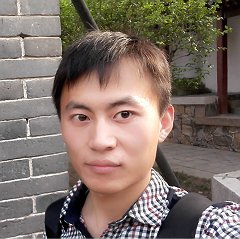
Ettore Merlo is a Full Professor in the Department of Computer Engineering and Software Engineering at Polytechnique Montréal, where he leads research in cybersecurity, artificial intelligence, and software systems. He holds an M.Sc. from the University of Turin and a Ph.D. from McGill University. His affiliations include membership in the Institute for Data Valorization (IVADO), focusing on data science and AI innovation. His research integrates software engineering with AI, emphasizing: Software artifact analysis (static/dynamic/symbolic) AI-driven security solutions for clone detection, malware analysis, and access control Fairness and robustness in machine learning systems Evolutionary analysis of software vulnerabilities Recent publications (2022-2025) demonstrate a strong focus on ethical AI, including bias mitigation in neural networks, automated anomaly detection, and certification of safety-critical ML systems. His work frequently applies graph neural networks, unsupervised learning, and formal verification methods to industrial and cybersecurity challenges. Professor Merlo has supervised 25 graduate students (10 PhD, 15 Master's), with projects ranging from avionics software to phishing kit analysis. While no scientific awards are listed, his extensive publication record includes 136 works spanning journals, conferences, and technical reports. Collaborations include partnerships with industrial telecommunication firms and international academia. No dedicated lab is specified, but his research aligns with Polytechnique Montréal's 'New Frontiers in Information and Communications Technologies' center.
Mattia Fazzini is an Assistant Professor in the Department of Computer Science & Engineering at the University of Minnesota's College of Science and Engineering. His primary academic appointment focuses on software engineering research and teaching, with active involvement in major conferences including ASE, ISSTA, ICSE, and MOBILESoft where he has served in leadership roles such as General Co-chair (MOBILESoft 2023) and Program Committee Co-chair. His research centers on software testing, maintenance, and security , with particular emphasis on mobile applications. Key research themes include: Developing techniques for automated Android testing and maintenance Addressing API compatibility issues across Android versions Creating tools for test oracle generation and bug reproduction Investigating security vulnerabilities in mobile ecosystems Optimizing test suites through test double analysis His recent publications (2021-2025) reveal strong focus on Android-specific challenges, with recurring themes in compatibility testing, automated test generation, and security analysis. Over 60% of his work involves tool development for practical testing scenarios, particularly targeting mobile platforms. Notable recognitions include: IEEE TCSE Distinguished Paper Award (2024) for work on test suite optimization ACM Distinguished Paper Award (2022) for COVID-19 app analysis As an educator, he advises multiple PhD and Master's students while teaching undergraduate and graduate courses including CSCI 3081W (Program Design) and CSCI 5802 (Software Engineering II). His service contributions span conference organization (MOBILESoft, ISSTA, ICSE) and extensive program committee work across top software engineering venues. He leads research projects focused on practical testing solutions with real-world applicability in mobile software development.
Işıl Dillig is an Associate Professor of Computer Science at the University of Texas at Austin, where she leads the UToPiA research group. Her academic career spans over a decade of significant contributions to programming languages research, particularly in program analysis, verification, and synthesis. Dr. Dillig received all her academic degrees (BS, MS, and PhD) from Stanford University before joining the faculty at UT Austin. Her educational background established the foundation for her innovative research approach that bridges theoretical computer science with practical applications. Her research focuses on developing techniques to make software systems more reliable, secure, and easier to build through advanced program analysis, verification, and synthesis methods. She has pioneered approaches that combine symbolic reasoning with machine learning to tackle complex software engineering challenges across multiple domains including security, databases, and programming language theory. Her work demonstrates exceptional depth in creating practical tools that address real-world software development problems while maintaining strong theoretical foundations. Analysis of Dr. Dillig's publication record reveals a consistent trajectory of innovation in program synthesis, with recent work expanding into neurosymbolic approaches that bridge neural networks with formal methods. Her research shows strong connections between theoretical foundations and practical applications, particularly in security-critical systems, database technologies, and blockchain applications. The evolution of her work demonstrates increasing sophistication in handling complex program structures while maintaining practical usability. Dr. Dillig has received prestigious recognition for her research contributions: Sloan Fellowship NSF CAREER award As a dedicated educator and research leader, Dr. Dillig has served in significant roles including Program Chair for PLDI 2022 and Steering Committee member for PLDI. She has mentored numerous students through her UToPiA research group, guiding research in program synthesis, verification, and analysis. Her work has been supported by substantial research grants that have enabled innovative projects at the intersection of programming languages and security. Dr. Dillig leads the UToPiA (UT Austin Programming, Languages, and Analysis) research group, which focuses on developing novel techniques for program analysis, verification, and synthesis. The group maintains strong collaborations with industry partners and academic institutions worldwide, translating theoretical advances into practical tools that address real software engineering challenges.
Ilya Sergey is an Associate Professor at the National University of Singapore (NUS) School of Computing, with previous faculty appointments at University College London (2015-2018). His academic career spans multiple prestigious institutions including IMDEA Software Institute (postdoctoral position) and KU Leuven (PhD). His educational background includes a PhD in Computer Science from KU Leuven (2012), an MSc in Mathematics and Computer Science from Saint Petersburg State University (2008), and professional experience as a software engineer at JetBrains prior to academia. Sergey's research focuses on the intersection of programming language theory and practical software verification, with particular emphasis on concurrent systems , smart contracts , and program synthesis . His work bridges theoretical foundations in type theory and separation logic with practical applications in blockchain technology and Rust programming. He has developed novel techniques for verifying heap-manipulating programs, analyzing commutativity in distributed transactions, and synthesizing correct-by-construction code. Analysis of his recent publications reveals a clear trajectory toward practical verification of blockchain systems and concurrent data structures, with increasing focus on Rust programming language applications. His work demonstrates consistent innovation in mechanized reasoning techniques while maintaining relevance to real-world software challenges, particularly in the domains of smart contracts and distributed systems. Sergey maintains an active research group at NUS, as evidenced by his social media references to lab traditions and student collaborations. He frequently participates in major programming languages conferences as both author and committee member, serving in leadership roles including General Chair for ICFP 2025. His research lab follows distinctive traditions, including location-based Mattermost status updates when traveling. Sergey is deeply engaged with the programming languages community through conference organization, mentoring activities, and outreach initiatives such as nature walks for conference attendees.
Mustafa ULAŞ is an Assistant Professor in the Software Engineering Department at Fırat University, Turkey. He also serves as a University Advisor and Coordinator of the Digital Transformation and Software Office at Fırat University since October 2020. With academic roots entirely at Fırat University, he has established himself as a prominent researcher in data science and software engineering. Born in November 1981 in Elazığ, Turkey PhD in Electrical-Electronics Engineering (2011) Master's in Computer Engineering (2006) Bachelor's in Electrical-Electronics Engineering (2003) Dr. ULAŞ's research spans multiple domains of computer science and engineering with particular emphasis on practical applications. His work bridges theoretical computer science with real-world problems in healthcare, finance, and industrial systems. Recent publications reveal a strong focus on machine learning applications, especially in medical diagnostics and explainable AI, while maintaining his longstanding interest in VLF signal analysis for earthquake prediction. His publication record shows a clear evolution from foundational work in database systems and medical imaging to cutting-edge research in deep learning and explainable AI. The most recent articles (2024-2025) predominantly focus on healthcare applications of machine learning, particularly diabetes and cancer diagnosis, while maintaining parallel research streams in industrial applications, financial analytics, and drone network optimization. This multidisciplinary approach demonstrates his ability to adapt core computational techniques to diverse problem domains. Dr. ULAŞ has been actively involved in numerous research projects, including TÜBİTAK-funded initiatives such as the 'Enriched Virtual Laboratory' and 'A New Approach in Teacher Education: Effective Blended Learning.' His project portfolio spans infrastructure development, educational technology, and advanced research applications. As an educator, he teaches courses including C Programming and Algorithms, Internet-Based Programming, Server Operating Systems, and Web Project Management. His administrative roles include serving as University Advisor and Coordinator of the Digital Transformation and Software Office at Fırat University since 2020.
Yasutaka Kamei is a Full Professor at Kyushu University's Graduate School and Faculty of Information Science and Electrical Engineering, where he leads the POSL Lab (Process-Oriented Software Laboratory). He was promoted from Associate Professor to Full Professor in January 2024 after serving as Associate Professor from March 2015 to December 2023. He is also an InaRIS Fellow (2023-2033), receiving 10 million yen annually for his research on 'New paradigm for software development styles based on machine-human interaction.' Dr. Kamei's research focuses on Empirical Software Engineering (ESE) and Open Source Software Engineering (OSSE), with particular expertise in software reliability, testing, defect prediction, code review analysis, and mining software repositories. His work bridges empirical methods with practical software engineering challenges, emphasizing how data-driven approaches can improve software quality assurance processes. His recent publications demonstrate a strong trend toward understanding human factors in software development processes, analyzing modern code review practices, investigating technical debt, and exploring the application of large language models in software engineering tasks. His research spans both traditional software engineering challenges and emerging AI-driven approaches to software development. IPSJ/ACM Award for Early Career Contribution to Global Research (2019) Best industry paper award at ESEM 2018 Distinguished Paper Award at MSR 2014 InaRIS Fellow (2023-2033) Dr. Kamei actively serves the software engineering community as Tutorials Chair for ASE 2025 and has been a program committee member for numerous top-tier conferences including ICSE, FSE, ASE, ESEC/FSE, SANER, and MSR. He has secured multiple competitive grants from MEXT (Ministry of Education, Culture, Sports, Science and Technology) to support his research on test case generation, automated software testing for deep learning systems, technical debt engineering, and mining software repositories. His POSL Lab at Kyushu University serves as a hub for empirical software engineering research, focusing on data-driven approaches to improve software development processes and outcomes through rigorous analysis of software repositories and developer activities.
Dr. Sridhar Chimalakonda serves as Associate Professor and Head of the Department of Computer Science & Engineering at the Indian Institute of Technology Tirupati, with an adjunct appointment as Associate Professor at the University of Waterloo. His academic leadership spans software engineering research and educational innovation. His educational qualifications include: Ph.D. from International Institute of Information Technology Hyderabad, India MS by Research from International Institute of Information Technology Hyderabad, India Research expertise encompasses: Software Engineering : Empirical studies, quality assurance, reuse methodologies, product lines, architecture, ontologies, and gamification Educational Technologies : Instructional design optimization, personalized learning systems, and VR/AR applications for educational storytelling and laboratories Human Computer Interaction : User-centered design in educational and software development contexts Publication analysis (2021-2024) reveals a strategic evolution from foundational software engineering research toward integrated educational applications, particularly in gamified machine learning education for K-12 audiences and sustainable software practices. His work demonstrates consistent methodological rigor in empirical studies while expanding into cross-disciplinary educational technology innovation.
Eunjong Choi is an Associate Professor at the Faculty of Information and Human Sciences, Kyoto Institute of Technology in Japan. She joined Kyoto Institute of Technology as a tenure-track assistant professor in 2019 and was promoted to associate professor in March 2024. Prior to this position, she served as an assistant professor at Nara Institute of Science and Technology (April 2016-March 2019) and at Osaka School of International Public Policy, Osaka University (April 2015-March 2016). Kyoto Institute of Technology (2019-Present) Nara Institute of Science and Technology (2016-2019) Osaka University (2015-2016) Dr. Choi's research focuses on software engineering with particular emphasis on software maintenance and evolution, program comprehension, software analytics, reused code management and detection, refactoring support, and test code generation. Her work bridges theoretical software engineering concepts with practical applications in industrial settings. She has investigated topics such as token-level SZZ algorithms, deep learning-based clone detectors, and modernization of large-scale industrial systems. Dr. Choi has held significant leadership roles in major software engineering conferences including serving as General Chair for ICPC 2020 and IWESEP 2017, Publicity Co-Chair for ICSE 2020, and Local Arrangement Co-Chair for SANER 2016. She has been actively involved in the IEEE Kansai Section Woman in Engineering Affinity Group, serving as Secretary (2016-2017) and Vice-Chair (2018-2021). Her teaching portfolio includes Software Mining and Analysis, Software Metrics, and Software Engineering courses at Kyoto Institute of Technology; Software Design and related courses at Nara Institute of Science and Technology; and Basic Information Literacy at Osaka University. Dr. Choi earned her Ph.D. in Information Science and Technology from Osaka University in 2015 and maintains an active research profile in the software engineering community.
Myra Cohen is a Professor and the Lanh and Oanh Nguyen Chair in Software Engineering in the Department of Computer Science at Iowa State University. Previously, she held the position of Susan J. Rosowski Professor at the University of Nebraska-Lincoln where she was a member of the ESQuaReD software engineering research group. She serves on the ASE Steering Committee and has held leadership roles including general chair of ASE 2015 and program co-chair for ICST 2019 and ESEC/FSE 2020. Dr. Cohen earned her Ph.D. from the University of Auckland, New Zealand, her M.S. from the University of Vermont, and her B.S. from the School of Agriculture and Life Sciences at Cornell University. Her academic journey includes lecturing positions at both the University of Auckland and University of Vermont during her graduate studies. Her research spans several interconnected domains focused on software quality and assurance. A significant portion of her work addresses software testing challenges in highly-configurable systems, where she applies search-based techniques and combinatorial designs to create efficient test suites. More recently, her research has expanded into innovative areas including software testing for biological systems, quantum computing applications, and security testing through genetic improvement techniques. Her work demonstrates a consistent theme of addressing complex verification challenges through creative application of formal methods and automated techniques. Analysis of her recent publications reveals a growing focus on emerging domains including quantum software testing, molecular/biological computing systems, and assurance cases for safety-critical systems. She has increasingly incorporated AI techniques, particularly large language models, into traditional software engineering problems while maintaining her foundational work in configurable systems and metamorphic testing. NSF CAREER award recipient AFOSR Young Investigator Award recipient ACM Distinguished Scientist Recipient of 4 ACM Distinguished Paper awards Dr. Cohen has served as chair and committee member for numerous conferences including ASE, ICSE, ISSTA, ESEC/FSE, and ICST. She has mentored numerous students through the doctoral symposiums and student research competitions at major software engineering conferences. Her research has been supported by significant grants including those from NSF and AFOSR. She leads the LaVA-OPs (Laboratory for Variability-Aware Assurance and Testing of Organic Programs) research group at Iowa State University, which focuses on testing challenges in biological and organic computing systems.
Thorsten Berger is a Professor and Head of the Chair of Software Engineering at Ruhr University Bochum, Germany. His office is located at MC 4.101 on the RUB campus, with contact details including phone (+49 (0) 234 32 25975) and email (thorsten.berger@rub.de). He's an active researcher with extensive service in the software engineering community, serving on program committees for major conferences including ICSE, FSE, ASE, and SPLC. Professor Berger's research primarily focuses on software engineering with specialization in variability management, software product lines, and robotics software engineering. His work bridges theoretical foundations with practical applications, particularly in behavior trees for robotic systems, configuration management, and domain-specific language engineering. His interdisciplinary approach connects software engineering with control theory and machine learning applications. Analysis of his recent publications reveals a strong trend toward robotics software engineering, with increasing focus on behavior trees, test-case specification, and runtime verification for robotic systems. His work also shows growing interest in machine learning integration with traditional software engineering practices, particularly in model integration and asset management for ML-enabled systems. The research demonstrates consistent evolution from foundational work in variability management toward more applied domains. His scientific achievements have been recognized with numerous awards: Multiple Most Influential Paper Awards (SLE 2024, VaMoS 2023, VaMoS 2020) Wallenberg Academy Fellowship VR Starting Grant from Swedish Research Council (2016) Best Paper Awards at Modularity (2015) and CSMR (2013) Distinguished Reviewer Awards from ASE, ICSE, and SPLC conferences ERC Starting Grant finalist (2019, 2020) Professor Berger has secured substantial research funding as Principal Investigator for multiple projects including Novel Techniques for Data-Driven Root-Cause Analysis and Variability Management (Volkswagen Infotainment), Properties and Verification Techniques for Behavior Trees (Phoenix Contact Foundation), and PrivacyE2E framework for AI-enabled systems (Federal Ministry of Education and Research). His Wallenberg Academy Fellowship and VR Starting Grant demonstrate his capacity to attract competitive early-career funding. He leads the Virtual Platform project funded by the Swedish Research Council and participates in EU-funded initiatives like CO4ROBOTS. As Head of the Chair of Software Engineering at Ruhr University Bochum, he leads a research group focused on advanced software engineering techniques with particular emphasis on variability-intensive systems. His team actively participates in international research collaborations including the Wallenberg Autonomous Systems Program (WASP) and has organized significant events like the Dagstuhl seminar 19191 on 'Software Evolution in Time and Space: Unifying Version and Variability Management.'
Yuriy Brun is a Professor at the Manning College of Information & Computer Sciences at the University of Massachusetts Amherst. He leads research in software engineering with a focus on improving the construction of intelligent, self-adapting systems while ensuring fairness and correctness. His research spans several key areas: software fairness, self-adaptive systems, automated program repair, and formal verification. Brun's work has pioneered the field of software fairness, establishing it as a fundamental software engineering concern. His lab, LASER, conducts high-risk, high-impact research aimed at fundamentally improving how engineers build systems. Brun's publications demonstrate a strong focus on automating formal verification and ensuring fairness in machine learning systems. His recent work leverages large language models for proof synthesis and develops techniques for guaranteeing fairness constraints in software systems. His research has shown significant evolution from distributed systems and collaborative development toward formal verification and AI safety. NSF CAREER Award recipient IEEE Fellow Multiple ACM SIGSOFT Distinguished Paper Awards Google Inclusion Research Award recipient Amazon Research Award recipient Microsoft Research Software Engineering Innovation Foundation Award Brun actively mentors students, with current PhD advisees including Zhanna Kaufman, Hadeel Eladawy, and Abhishek Varghese. His former students have gone on to positions at institutions including Oregon State University, University of California San Diego, and Microsoft. He teaches courses including Introduction to Software Engineering and Software Engineering Project Management.
Gül Calikli is an Associate Professor (Senior Lecturer) in Software Engineering at the School of Computing Science, University of Glasgow, United Kingdom. She has held academic positions at several prestigious institutions including the University of Zurich as a senior researcher, Chalmers | University of Gothenburg as a lecturer, and postdoctoral fellowships at The Open University (UK) and Ryerson University (Canada). Dr. Calikli earned her Ph.D. in Computer Engineering from Boğaziçi University in Istanbul. Her academic journey reflects a strong commitment to advancing empirical software engineering with a focus on human aspects. Dr. Calikli's research centers on the intersection of software engineering and cognitive psychology, with a particular emphasis on understanding and mitigating cognitive biases in software development practices. Her work explores how human cognitive limitations impact program comprehension, code review, and vulnerability detection. She investigates how to present information effectively to software practitioners considering human cognitive constraints, and develops tools and techniques based on cognitive psychology to enhance decision-making in software development. Her research also incorporates machine learning systems with "human in the loop" approaches, creating joint cognitive systems that extend human intelligence. Analysis of Dr. Calikli's recent publications reveals a consistent focus on human aspects in software engineering, particularly examining cognitive biases like confirmation bias and their impact on software quality. Her work spans multiple domains including code review practices, vulnerability detection, program comprehension, and privacy-aware software development. A notable trend is her methodological approach combining controlled experiments, field studies, and quantitative analysis of system logs to investigate human factors in software engineering. Best Paper Award at ESEM2013 (Industry Track) Chalmers Area of Advance SEED Funding in 2018 ACM SIGSOFT Distinguished Artifact Award at ICSE 2020 ACM Distinguished Paper Award at ICSE 2021 ACM SIGSOFT Distinguished Paper Award at ESEC/FSE'22 Distinguished Reviewer Award at ICSME'23 Distinguished Reviewer Award at ICPC'22 Dr. Calikli actively supervises PhD students working on diverse topics including team dynamics in agile development, eye-tracking for human-AI pair programming, leveraging LLMs for software development/testing, and sustainability in software engineering teams. She has served on numerous program committees for major software engineering conferences including ASE, ICSE, FSE, and ESEC/FSE. Her research has been supported by various funding mechanisms, including the Chalmers Area of Advance SEED Funding. As an active member of the software engineering community, Dr. Calikli contributes to the advancement of the field through her service on editorial boards (including ACM Transactions on Software Engineering and Methodology), participation in the EPSRC Peer Review College, and organization of conference tracks such as the ICPC 2024 ERA Track which she co-chaired.
Istvan David is an Assistant Professor of Software Engineering at McMaster University's Faculty of Engineering, Department of Computing and Software, where he leads the Sustainable Systems and Methods Lab (SSM) and works as a researcher in the McMaster Centre for Software Certification (McSCert). His work bridges the gap between model-driven engineering, digital twins, and sustainability in systems engineering. Dr. David's research interests focus on digital twins , model-driven engineering , sustainability in computing, cyber-physical systems , and collaborative modeling . His lab develops novel reinforcement learning techniques , digital twin architectures , and modeling and simulation methods with a strong emphasis on sustainability as both a system characteristic and an engineering principle. His recent publications reveal a strong trend toward integrating digital twin technology with sustainability concerns, particularly in automotive systems, smart farming, and resource-efficient software engineering. The research spans from foundational modeling techniques to applied solutions addressing the four essential sustainability dimensions of technical systems: technical (long-term usage), economic (financial viability), environmental (reduced impact), and social (elevated utility). Scientific Awards: Best Practice Paper Award at MODELS Best Paper 2024 Runner-up in the Journal of Computer Languages Dr. David actively mentors students including PhD candidate Xiaoran (Sharon) Liu, and has supervised undergraduate researchers like Adwita Kashyap and Kyanna Dagenais. He has secured multiple research grants supporting work on sustainable systems and digital twin technologies, with applications in automotive engineering, smart farming, and resource-efficient computing. His lab collaborates with industry partners and academic institutions worldwide, including VU Amsterdam and University of Montréal. The Sustainable Systems and Methods Lab focuses on the vision of 'sustainable systems by sustainable methods,' addressing the growing problem of unsustainable systems engineering practices. The lab's work on bipartite sustainability aims to both build sustainable systems and develop systems using sustainable methods.
Coen De Roover is a Professor at the Vrije Universiteit Brussel (VUB) since October 2015, affiliated with the Software Languages Lab (SOFT) where he leads the Code Analysis and ManiPulation (CAMP) subgroup. He serves as programme director for the bachelor's program in Computer Science since the 2019-2020 academic year. His research focuses on the design of program analyses and their application to software quality problems , with particular expertise in static and dynamic analysis techniques. Key research areas include: Soft verification of contracts and incremental abstract interpretation Fine-grained change analysis of individual commits Mining for change patterns across multiple commits Vulnerability detection in infrastructure code (particularly Ansible) Concolic testing and resilience analysis Recent publication trends show increasing focus on infrastructure as code security, WebAssembly analysis, and modular abstract interpretation frameworks. His work bridges theoretical program analysis with practical software engineering applications, often validated through empirical studies on open-source projects. As an active contributor to the software engineering community, he has served on program committees for major conferences including ASE, ECOOP, ICSE, and SPLASH. His leadership roles include steering committee positions for GPCE and SANER, and program co-chair roles for International Conference on Program Comprehension. De Roover directs the CAMP research subgroup which has published over 120 peer-reviewed articles. The group develops practical analysis tools while advancing theoretical foundations of program analysis, with recent work focusing on infrastructure code security and WebAssembly analysis.
Xiang Gao is a Pre-tenure Associate Professor in the School of Software at Beihang University, China. His research focuses on applying program analysis, test generation, and formal methods to improve software quality through automated bug fixing and program synthesis. He has established significant collaborations with Fujitsu Laboratories of America, Microsoft Research, and other leading institutions in the software engineering field, demonstrating strong industry-academia connections. Dr. Gao received his Bachelor's degree in Computer Science (Elite Class) from Shandong University in 2016, followed by a Ph.D. from the School of Computing at the National University of Singapore, where he also served as a Postdoctoral Fellow until December 2021. His educational background spans both Chinese and Singaporean academic institutions, providing him with a global perspective on software engineering research. His primary research interests span multiple cutting-edge areas of software engineering: Program Analysis techniques for detecting and fixing software bugs with formal methods Software Security vulnerabilities with focus on automated repair methods Automated Program Repair systems that generate high-quality patches without overfitting Program Synthesis for creating transformation rules from examples Software Engineering for Artificial Intelligence (SE4AI) to improve AI model reliability and security Mobile Software Engineering with particular attention to UI testing and automation Deep Learning Security including model protection and obfuscation techniques Dr. Gao's recent publication trajectory shows a strategic evolution toward integrating large language models with traditional software engineering approaches, particularly in test generation and program repair. His work on DNN modularization (NeMo, CNNSpliter, SeaM) represents an innovative approach to enhancing model reusability and security in resource-constrained mobile environments, addressing critical challenges in deploying AI on edge devices. His scientific contributions have been recognized with multiple prestigious awards: ACM SIGSOFT Distinguished Paper Award for "ProveNFix: Temporal Property guided Program Repair" at FSE'24 IEEE TCSE Distinguished Paper Award for "Investigating and Detecting Silent Bugs in PyTorch Programs" at SANER'24 ACM SIGSOFT Distinguished Paper Award for "Modularizing while Training: A New Paradigm for Modularizing DNN Models" at ICSE'24 Distinguished Artifact Award for "Automated Patch Backporting in Linux (Experience Paper)" at ISSTA'21 Dr. Gao actively mentors students at various levels, seeking "self-motivated Ph.D, master, undergraduate students and interns with strong programming skills" for his research projects. He serves on numerous program committees for top software engineering conferences including ICSE, ASE, ISSTA, and FSE, demonstrating his growing influence in the academic community. His research has been supported through collaborations with industry partners including Microsoft Research and Fujitsu Laboratories of America, translating theoretical advances into practical applications. His laboratory focuses on several key research projects including Automated Software Vulnerability Repair (with techniques like Fix2Fit, VulnFix, and ExtractFix that address the overfitting problem in program repair), Program Synthesis for Program Transformation (including Semi-supervised synthesis and FixMorph for automated patch backporting in Linux), and Software Engineering for Artificial Intelligence (with projects like CNNSpliter, SeaM, and Sensei that apply software engineering principles to improve AI model usability and robustness). These projects represent cutting-edge work at the intersection of traditional software engineering and modern AI techniques, addressing critical challenges in software reliability and security.