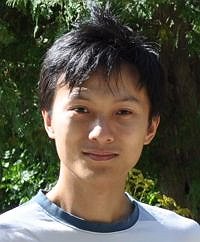
Cristiano Politowski is an Assistant Professor in the Department of Computer Science at Ontario Tech University’s Faculty of Science. His research focuses on applying software engineering principles to video game development, with particular emphasis on software testing, artificial intelligence for software engineering (AI4SE), deep reinforcement learning, and empirical software engineering. Education includes a PhD in Computer Science and Software Engineering from Concordia University (2022), supervised by Professors Yann-Gaël Guéhéneuc and Fabio Petrillo. Prior to his current role, he held postdoctoral positions at Université de Montréal and École de Technologie Supérieure in Montréal, Canada. Research interests span game engine architecture analysis, automated testing methodologies for games, and bridging gaps between academic theory and industry practices in software engineering. His work often involves empirical studies on software quality, framework impacts, and event-driven systems. Publications reflect a focus on game development challenges, including studies on API compatibility, subsystem coupling visualization, and AI-driven game balance assessment. He actively contributes to the understanding of software processes in the video game industry through surveys and dataset curation initiatives like PlayMyData.
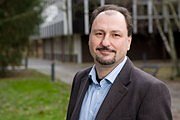
Paris Avgeriou is a Professor of Software Engineering at the University of Groningen, affiliated with the Faculty of Science and Engineering and the Bernoulli Institute. He leads the Software Engineering and Architecture research group and serves as Editor-in-Chief of the Journal of Systems and Software . His expertise spans technical debt management, software architecture, self-adaptive systems, and embedded systems design. Avgeriou holds an office at Nijenborgh 9, Groningen, and actively advises academic institutions and funding bodies globally. Research Interests: Avgeriou's work focuses on advancing software architecture principles, technical debt lifecycle management, and the integration of AI in software engineering. His research emphasizes practical solutions for improving software quality, maintainability, and system dependability, particularly in embedded and self-adaptive contexts. Recent Contributions: Recent studies include frameworks for benefit-cost-risk decision-making in self-adaptive systems, automated technical debt management using ML, and tools for tracing architecture-related debt. He collaborates internationally, contributing to standards like the Copenhagen Manifesto for human-centered AI in software engineering. Grants & Awards: While no specific awards are listed, his editorial role and frequent conference contributions reflect recognition in the field. He chairs conference tracks and oversees workshops, fostering early-career researchers and artifact evaluation. Labs & Teams: His group is part of the Bernoulli Institute, working on platforms like SDK4ED for embedded systems and tools such as DebtViz for technical debt monitoring. The team explores intersections between systems engineering and software architecture in complex systems-of-systems.
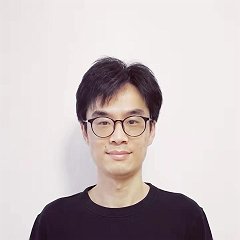
Yingfei Xiong is an active Associate Professor at Peking University, China, specializing in software engineering and programming languages. With a consistent research trajectory from 2013 through 2026, Xiong has established themselves as a prominent figure in the software engineering research community, regularly contributing to top-tier conferences including SPLASH, ICSE, ASE, and PLDI. Dr. Xiong's research primarily focuses on program synthesis, automated program repair, and software analysis techniques. Their work bridges theoretical programming language concepts with practical software engineering applications, particularly in developing novel approaches for code generation, bug fixing, and program optimization. The research demonstrates strong interdisciplinary connections between traditional software engineering, programming languages theory, and emerging AI techniques. Analysis of Xiong's publication trends reveals a clear evolution in research focus, beginning with foundational work in API transformations and program adaptation around 2013-2016, shifting toward program repair techniques from 2017-2020, and most recently incorporating machine learning and neural approaches into program synthesis and repair (2021-2026). The work consistently addresses practical challenges in software development while maintaining theoretical rigor, with increasing integration of AI techniques in recent years. Dr. Xiong has served in various leadership roles across the software engineering conference ecosystem, including program committee membership and session chair positions at major conferences. Their extensive service demonstrates recognition by peers as a subject matter expert in software engineering and programming languages research. While specific grant information isn't detailed in the provided text, the sustained publication record suggests successful research funding.
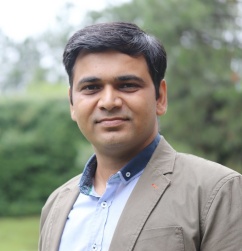
Riccardo Tommasini is an Associate Professor at INSA Lyon , a leading engineering institution in France. He leads the Stream Processing and Knowledge Graphs research within the DB Team at LIRIS laboratory under Professor Angela Bonifati. His academic journey began with a PhD in Computer Science from Politecnico di Milano under Emanuele Della Valle, with a dissertation titled Velocity on the Web to be published as a Springer book. Research Interests : Advancing stream processing for real-time data systems Extending knowledge graphs with dynamic data Designing graph databases for big data applications Creating query languages for heterogeneous data environments Building data engineering pipelines with Apache Airflow Enabling big graph processing in distributed settings Key Contributions : Developed Zodiac framework for Datalog reasoning under rule amendments (ICDE 2025) Co-authored foundational Streaming Linked Data book with Springer (2023) Created RSP4J API for RDF stream processing (ESWC 2021) Designed challenge-based learning curriculum for Data Engineering courses Scientific Recognition : Received ANR JCJC grant for POLYFLOW project (2024) Awarded Best Resource at ESWC 2021 Managed industrial collaborations with Neo4j, InfluxData, and Confluent Advising & Teaching : Supervises Mohamed Ragab (PhD candidate at University of Tartu) Course Leadership : Foundational Data Engineering course at INSA Lyon and University of Tartu Structured around Apache Airflow , Docker, and graph databases
Vera Pantelic is an Adjunct Assistant Professor in the Department of Computing and Software at McMaster University. Her research focuses on software engineering practices for model-based development in automotive systems, particularly centralized Electrical/Electronic (E/E) architectures, Simulink modeling, and supervisory control of probabilistic discrete event systems. Education: Not explicitly mentioned in the text. Her scholarly activity includes extensive contributions to conferences and journals in automotive software engineering, model transformation, and real-time systems. Her work addresses challenges in modularity, documentation, and compliance within automotive embedded systems. Her recent publications emphasize advancements in centralized E/E architectures, model-driven testing, and assurance cases for automotive safety. She collaborates on topics integrating software engineering principles with automotive domain requirements. Scientific Awards: No specific awards mentioned in the text. She serves as an advisor in software engineering, though specific student names are not listed. Her projects involve simulation-based testing, model refactoring, and compliance frameworks, supported by industry partnerships and academic grants. Her work contributes to labs and teams focused on automotive software reliability and model-driven engineering. No explicit lab or team affiliations are detailed in the provided text.
Dr. Chenhao Ma is an Assistant Professor at the School of Data Science , The Chinese University of Hong Kong, Shenzhen , where he works on large-scale data management and data mining. Previously, he was a Postdoctoral Fellow at the University of Hong Kong (2021–2022) and earned his PhD in Computer Science from the University of Hong Kong (2021) and B.Eng. from Shandong University (2017). Current research focuses on graph computing (dense subgraph discovery, motif analysis, graph learning), AI+DB (Text-to-SQL, vector search), and traffic data mining (trajectory analysis, outlier detection). He has published over 40 papers in top venues including SIGMOD, PVLDB, KDD and received the ACM SIGMOD Research Highlight Award 2021 and Best of SIGMOD 2020 (4/458). Scientific Awards : ACM SIGMOD Research Highlight Award 2021 Best of SIGMOD 2020 (4/458) Presidential Young Fellow at CUHK-Shenzhen (2023) Hong Kong and China Gas Scholarship (2019-2020) Reaching Out Award (2019) HKU Postgraduate Scholarship (2017-2021) ACM-ICPC Gold Medal (2015) National Scholarship (2014, 2015) Advising and Research Team : He leads a team including Postdoc Dr. Yuanyuan Zeng, PhD students Lujie Ban, Yuwei Xu, and MPhil students Yi Yang, Yuyang Liang. Former mentees like Yichen Xu (PhD at Berkeley) and Jiayang Pang (Master at UC San Diego) have achieved academic placements. Professional Service : He has served as PC member/reviewer for VLDB, KDD, ICDE, WWW, NeurIPS, TKDE , and guest editor for Applied Sciences and Frontiers in Big Data . He chairs sessions at ICDE and VLDB.
Claire Dambrin is a Professor of Management Control at ESCP Business School, specializing in qualitative and critical research rooted in the social studies of accounting and control. She investigates performance measurement tools, including accounting systems and incentive frameworks, with a focus on gendered aspects and feminist perspectives. Her work explores how these tools can both empower and constrain individuals. She earned her PhD from Paris Dauphine University in 2005 and previously served as a professor of accounting at HEC Paris (2004–2012). Her research contributions span leading journals in accounting and management. She holds editorial roles at Accounting, Organizations and Society , Management Accounting Research , and Critical Perspectives on Accounting , and co-edits Comptabilité Contrôle Audit / Accounting Auditing Control . Her research interests include performance measurement systems, organizational sociology, and gender studies in business contexts. She critically examines how metrics shape organizational behavior and societal structures, particularly in the pharmaceutical industry and professional service sectors. Her recent work interrogates sustainability, ethical dimensions of control, and technological mediation in management practices. Key projects address topics such as ERP system lifecycle dynamics, CRM software adoption barriers, and the sociopolitical implications of quantification. Her contributions bridge theoretical frameworks (e.g., Latour’s actor-network theory) with empirical insights to challenge conventional managerial practices.
Gias Uddin is an Associate Professor at York University's Lassonde School of Engineering and an Adjunct Professor at the University of Calgary . His research bridges Software Engineering (SE) and Artificial Intelligence (AI) , focusing on AI Trustworthiness Assessment (SE4AI) and AI-Driven Productivity Tools (AI4SE) . PhD in Software Engineering & AI, McGill University (2018) MSc in Software Engineering, Queen’s University (2008) BSc in Computer Science & Engineering, Bangladesh University of Engineering and Technology (2004) His research explores: Metamorphic Relations for LLM Hallucination Detection AI-Enhanced Software Documentation Foundational Models for Runtime System Modernization Developer-Centric AI Tooling Recent article trends show expertise in LLM Trustworthiness , Low-Code Platforms , and IoT Developer Communities . Awards include Distinguished Paper at FSE 2025 , multiple IBM Champion recognitions, and York Research Award . He leads the Data Intensive Software Analytics (DISA) Lab and mentors PhD students in SE-AI Intersections .
Maria Leonilde Rocha Varela is an Associate Professor with Habilitation at the School of Engineering, University of Minho, Portugal, where she also serves as a Senior Researcher at the Algoritmi Research Centre. She has been an integrated member of the Algoritmi Research Centre since 2012 and works in the Department of Production and Systems. Dr. Varela earned her degree in Production Engineering from the University of Minho in 1994, completed a Master's in Computer Integrated Production at DPS-UMinho in 1999, and received her Ph.D. in Production and Systems from the University of Minho in 2007. Her primary research focuses on Manufacturing Management, particularly Production Planning, Control and Optimization, and Collaborative Paradigms, Networks and Decision Making Models. She maintains extensive international collaborations with institutions worldwide including the National Institute of Industrial Engineering, VSB-Technick Univerzita Ostrava, University of Belgrade, and others. Her research spans Web Applications and Services for supporting Engineering and Production Management, with increasing emphasis on Artificial Intelligence, Robotic Process Automation, and Industry 4.0/5.0 applications. She has made significant contributions to scheduling algorithms, optimization techniques, and decision support systems for manufacturing environments. Analysis of her recent publications reveals a strong trend toward integrating Artificial Intelligence with traditional manufacturing processes, particularly in Robotic Process Automation applications. Her research increasingly focuses on sustainable manufacturing practices, with numerous publications addressing energy efficiency, environmental sustainability, and resource optimization. There is a clear emphasis on multi-objective optimization approaches to solve complex manufacturing problems, particularly in distributed job shop scheduling. Her work demonstrates an evolution from traditional production planning methods to more advanced AI-driven approaches for Industry 4.0 and 5.0 environments. Dr. Varela has held significant academic leadership roles, currently serving as the director of the master's course in Engineering and Quality Management at DPS-UMinho. She previously coordinated the industrial management and systems subgroup from 2012 to 2021 and was part of the steering committee for the master's course in systems engineering between 2016 and 2019. She has successfully supervised more than 70 MSc projects, with over 15 currently ongoing, focusing on Production and Systems Engineering. Her supervision encompasses collaborative management models, traditional decision approaches, and web-based platforms incorporating AI techniques. She coordinates research projects including 2 concluded Ph.D. projects and 6 ongoing ones. She collaborates as a research member in several R&D projects with national and international industrial enterprises and institutions, and in international Erasmus projects. Dr. Varela is an active participant in the academic community, serving on editorial boards of several international journals and as a member of organizing and scientific committees for numerous international conferences. She is a member of several prestigious research networks including the Euro Working Group of Decision Support Systems (EWG-DSS), Institute of Electrical and Electronics Engineers (IEEE), Industrial Engineering Network, and the Institute of Industrial and Systems Engineers (IISE).
Lionel C. Briand is a Professor of Software Engineering with shared appointments at the University of Luxembourg's SnT Centre for Security, Reliability, and Trust and the School of Electrical Engineering and Computer Science at the University of Ottawa. He holds a Canada Research Chair (Tier 1) in Intelligent Software Dependability and Compliance and serves as Director of Lero, Ireland's national software research center. His academic leadership spans over 25 years of collaborative research with industry partners across automotive, aerospace, energy, financial, and legal domains. Professor Briand's research focuses on software verification and validation, trustworthy AI systems, model-driven engineering, and empirical software engineering methodologies. His work bridges theoretical foundations with industrial applications, particularly in cyber-physical systems where machine learning components interact with safety-critical control systems. He has pioneered techniques for testing AI-enabled systems, GDPR compliance automation, and mutation analysis for space systems. His publication portfolio demonstrates consistent innovation in software testing, with recent emphasis on large language models for test generation, automated compliance checking, and safety analysis of deep neural networks. Key trends include black-box testing methodologies, metamorphic testing for security, and search-based approaches for DNN validation. IEEE Fellow and ACM Fellow IEEE Computer Society Harlan Mills Award (2012) ACM SIGSOFT Outstanding Research Award (2022) IEEE Reliability Society Engineer-of-the-Year Award (2013) ERC Advanced Grant recipient (2016) Fellow of the Academy of Science, Royal Society of Canada (2023) ICSE 2011 Most Influential Paper Award As Director of Lero and holder of a Canada Research Chair, Professor Briand leads major research initiatives including an ERC Advanced Grant on cyber-physical system modeling and testing. His industrial collaborations generate substantial grant funding, particularly in automotive safety validation and regulatory compliance automation. He mentors numerous researchers through his dual appointments and serves on program committees for top software engineering conferences. Professor Briand directs research activities at the SnT Centre's SVV department, focusing on software verification and validation. His team develops practical tools like MASS for space system mutation analysis and COREQQA for compliance requirements understanding, with strong industry adoption in automotive and aerospace sectors.
Bihuan Chen is an Associate Professor at the College of Computer Science and Artificial Intelligence, Fudan University, specializing in software engineering with focus on software supply chain security and trustworthy AI systems. His research spans multiple programming languages including JavaScript, Python, Java, and C/C++ across application and AI domains. Dr. Chen earned his B.Sc. and Ph.D. in Computer Science from Fudan University in 2009 and 2014 respectively, followed by postdoctoral research at Nanyang Technological University (2014-2017). His research interests include software supply chain risk assessment, trustworthy AI systems, and program analysis. His recent publications demonstrate strong focus on malicious package detection in NPM/PyPI ecosystems, vulnerability patch porting using LLMs, and safety verification for autonomous driving systems. The work shows increasing integration of machine learning techniques with traditional program analysis approaches, particularly evident in the 2024-2025 publications that leverage LLMs for vulnerability detection and code refinement. ACM SIGSOFT Distinguished Paper Award (FSE 2016, ASE 2018, ASE 2022, FSE 2025) IEEE TCSE Distinguished Paper Award (ICSME 2020, SANER 2023) CCF Prototype Competition Awards (2nd and 3rd Prizes) Dr. Chen has advised over 50 students including current PhD candidates and notable alumni now at Huawei, ByteDance, and other leading tech firms. His fuxi platform assesses security, legal, and maintenance risks across the software engineering lifecycle. He serves on program committees for major conferences including ICSE, FSE, ASE, and ISSTA, and as Associate Editor for the Journal of Software: Evolution and Process.
Univ.-Prof. Martin Pinzger is a Professor at the Department of Informatics Systems, Alpen-Adria-Universität Klagenfurt. He serves as Head of Department and Member of the Senate, actively contributing to academic governance. Research Focus: Automating Software Engineering Tasks, Mining Software Repositories, Program Analysis, Software Evolution and Visualization Recent Work: Developing tools for API evolution analysis, cybersecurity AI (CAI), robotics benchmarking (RobotPerf), and dependency validation His research combines empirical studies with tool development for software maintenance and security. Current projects address challenges in REST API breaking changes, cloud security certifications, and robotic system performance evaluation. Publications since 2023 demonstrate continued engagement with topics spanning AI-driven code segmentation, microservice API evolution, and cybersecurity tool development. Key trends include cross-disciplinary applications of NLP to software engineering and security-focused tool creation. Contact: martin.pinzger@aau.at
Thomas Ploetz is an Adjunct Professor in the School of Electrical and Computer Engineering at Georgia Institute of Technology. His work focuses on sensor-based human activity recognition, wearable computing, and computational behavior analysis with applications in healthcare, smart homes, and education. He leads interdisciplinary research integrating machine learning, IoT systems, and human-centered design. His research interests include improving activity recognition robustness through synthetic data generation, developing explainable AI for time-series analysis, and advancing healthcare technologies like diabetic foot ulcer monitoring systems. He explores ethical implications of wearable sensing in diverse populations, including underrepresented groups. Key contributions include IMUTube (virtual sensor data generation), ProxiCycle (cyclist safety monitoring), and DISCOVER (smart home activity recognition framework). His work addresses challenges in data scarcity, domain adaptation, and long-term system maintenance in pervasive computing environments. He has been awarded grants such as the GVU/IPaT Research and Engagement Grant (2020), and his research appears in top venues like UbiComp and ISWC. He actively contributes to the wearable computing community through conference organization and editorial work.
Tushar Sharma is an Assistant Professor in the Faculty of Computer Science at Dalhousie University, Canada. His research focuses on software engineering, particularly software quality, refactoring, technical debt, and the application of machine learning in software engineering (ML4SE). He leads the SMART Lab and is actively involved in projects related to Green AI and sustainable software development. PhD : Software Engineering, Athens University of Economics and Business, Greece (2019) MS : Computer Science, Indian Institute of Technology-Madras, India His research interests span software design and architecture, code and design quality, refactoring, technical debt, mining software repositories, and applied machine learning for software engineering. He is particularly interested in sustainable AI, green software engineering, and the use of large language models for code. His work bridges empirical studies with practical tool development to improve software maintainability and quality. His recent publications highlight a strong trend in code smell detection, refactoring automation, energy-aware AI, and the reliability of large language models in software engineering. He has developed tools like Designite and DPy and contributed datasets such as MaRV and DACOS, emphasizing empirical validation and reproducibility in software engineering research. Dean's Research Excellence Award Best Artifact Award, SCAM 2023 IEEE Senior Member Tushar Sharma has secured significant research funding, including an NSERC Discovery Grant for DevQOps, Mitacs Accelerate grants with industry partners, and contributions to the $154M Canada First Research Excellence Fund project. He actively mentors students and collaborates with industry. He leads the SMART Lab at Dalhousie and has organized workshops such as SATToSE 2018. He is also a founding developer of Designite, a widely used software design quality assessment tool.
Dr. Andy Nguyen is a Senior Lecturer in Structural Engineering at the University of Southern Queensland, within the School of Engineering. He is an active researcher and educator, specializing in the Structural Health Monitoring (SHM) of critical civil infrastructure such as bridges, buildings, and transport tunnels. Bachelor of Engineering (BEng), NUCE, 1999 Master of Engineering (MEng), NUCE, 2003 Doctor of Philosophy (PhD), Queensland University of Technology (QUT), 2014 Dr. Nguyen's research is at the forefront of integrating advanced technologies into civil engineering. His primary focus is on developing and deploying sophisticated SHM systems that utilize sensors, data analytics, and machine learning to provide real-time insights into the structural integrity of ageing infrastructure. His work aims to enable proactive maintenance, extend the lifespan of structures, and enhance public safety. He has successfully implemented monitoring systems on major bridges and high-rise buildings in Queensland and New South Wales, with systems capable of even detecting distant earthquake events. His research interests span Structural Health Monitoring, Machine Learning for Engineering, Damage Detection, Finite Element Model Updating, Sustainable Building Materials like bamboo, and the application of AI for automated condition assessment of transport infrastructure. The analysis of his recent publications reveals a strong and consistent research trajectory centered on the application of data-driven and AI methods to solve practical problems in civil infrastructure. His work frequently combines signal processing techniques (like Stockwell Transform) with deep learning models for tasks such as crack detection in concrete and pavement. He also conducts significant research on model updating for complex structures like cable-stayed and arch bridges, using vibration data and optimization algorithms. The integration of machine learning for overload classification and the development of cost-effective, automated monitoring systems are key trends in his recent output. Advanced Queensland Fellow (2024-2027) Dr. Nguyen is actively involved in research supervision and collaboration. He is currently supervising several postgraduate students on projects related to AI-powered condition assessment, bamboo as a sustainable building material, and railway track design. He receives research funding from the Queensland Government through his Advanced Queensland Fellowship. His research has direct practical applications, as evidenced by his public engagement, such as writing for The Conversation on safeguarding ageing bridges, and his work with the Australian Network of Structural Health Monitoring. Dr. Nguyen's work embodies the development of a next-generation 'Living' Laboratory for engineering education, where research, teaching, and real-world infrastructure monitoring are integrated. His current projects involve creating smart, automated fault detection systems and advancing 'digital twin'-based monitoring platforms for infrastructure.