Professor Andrew Davison holds the position of Professor of Robot Vision at Imperial College London's Department of Computing. He leads the Dyson Robotics Laboratory and the Robot Vision Research Group, focusing on advancing SLAM (Simultaneous Localization and Mapping) and Spatial AI. His groundbreaking work includes the MonoSLAM algorithm (2003), enabling real-time 3D vision for robotics and AR/VR. Current research emphasizes scalable, semantic-rich Spatial AI systems, as outlined in his FutureMapping papers (2018–2019). Education: BA in Physics (Oxford, 1994), D.Phil. (Oxford, 1998). Postdoctoral work at AIST, Japan (1998–2000), followed by a lectureship at Imperial (2002–present). Industrial collaborations include SLAMcore, a Spatial AI startup, and Dyson Robotics Lab. Over 18 PhD students supervised, many now leading roles at Meta, NVIDIA, SLAMcore, and academia. Notable contributions include DTAM, KinectFusion, and Event Camera SLAM. Recognized for software tools like SceneLib and contributions to robotics benchmarks (SLAMBench). Active on Twitter (@AjdDavison) for research updates.
Professor Ana Mijic is a leading academic in water systems integration at Imperial College London's Department of Civil and Environmental Engineering (Faculty of Engineering). Her work focuses on developing systems tools to balance economic growth with sustainable water use, flood management, and water quality under future uncertainties. She leads high-profile projects like the EPSRC VENTURA initiative and the NERC CAMELLIA impact programme, emphasizing adaptive planning and grey/green infrastructure integration in urban systems. Education: BEng (First Class) in Civil Engineering from the University of Belgrade (Serbia), MSc (Distinction) in Hydrology for Environmental Management, and PhD in Earth Science & Engineering from Imperial College London (2013). Previously served as a teaching assistant in Fluid Mechanics and Hydrometry at Belgrade University. Research interests include whole-water system modelling, socio-hydrological interactions, and nature-based solutions for resilient urban water systems. Her work bridges academia and practice through partnerships with regulators like the UK Environment Agency and global initiatives like the IAHS HELPING programme. Awards include the Satish Dhawan Visiting Chair Professorship (2022) and the 2019 Imperial President’s Award for Excellence in Research (as part of her Hydrology team). She co-leads Imperial’s Transition to Zero Pollution (TZP) Urban Ecosystems theme and serves on editorial boards for journals like Water Security . Her contributions span over 50 peer-reviewed articles (2020–2025), focusing on integrated water management frameworks, AI-driven monitoring, and systemic approaches to urban resilience. She advocates for participatory decision-making and policy coherence in water governance.
Dr. Chee Kiat Seow is an Associate Professor at the University of Glasgow's School of Computing Science. He holds a PhD from Nanyang Technological University (NTU) and an MSc from the National University of Singapore (NUS). His research focuses on cyber-physical security, wireless communication localization, and IoT systems leveraging AI/ML. He has led projects valued in the millions, winning awards like the IEEE Best Student Paper and National Instruments Engineering Impact Awards. Education: PhD (NTU), MSc (NUS) Research: Specializes in UWB positioning, spoofing detection, and IoT integration with 5G/GNSS. Teaching: Courses include Big Data, Software Engineering, and Data Analytics. His recent work addresses NLOS mitigation in indoor localization and cyber-physical security threats. Over 63 publications span journals like IEEE Transactions and conferences such as IPIN and WF-IoT. Supervised 6+ PhD/MSc students on topics like autonomous robotics and AI-driven localization. Grants: Includes $853K for 5G-X Smart Building projects and $797K for GNSS signal authentication. Awards: IEEE PIERS Best Student Paper (2019), NI Engineering Impact Awards (2015-2016). He advises on IoT and cybersecurity for organizations like ARTC and National Instruments. Active in IEEE Signal Processing and Computer Society.
Mustafa A. Mustafa is a Senior Lecturer (Associate Professor) in the Department of Computer Science at The University of Manchester, where he leads the Trusted Digital Systems Cluster as part of the university-wide Centre for Digital Trust and Society. His academic journey spans prestigious institutions including The University of Manchester, where he completed his PhD, and KU Leuven in Belgium, where he served as a post-doctoral research fellow. Dr. Mustafa earned his educational qualifications through an impressive academic path: a B.Sc. in communications from the Technical University of Varna, Bulgaria (2007), an M.Sc. in communications and signal processing from Newcastle University, UK (2010), and a Ph.D. in computer science from The University of Manchester, UK (2015). His doctoral research focused on "Smart Grid Security: Protecting Users' Privacy in Smart Grid Applications," laying the foundation for his subsequent research career. Dr. Mustafa's research expertise centers on information security, data privacy, and applied cryptography with particular focus on smart grid systems, smart city applications, e-health, and IoT. His work addresses critical challenges in securing peer-to-peer electricity trading markets, smart metering infrastructure, electric vehicle charging systems, and health data management. He has developed innovative solutions for keyless car sharing systems, frictionless authentication mechanisms, and privacy-preserving protocols for data collection and distribution. His scholarly contributions demonstrate a consistent trajectory toward increasingly sophisticated privacy-preserving techniques applied across multiple domains. Recent work shows a growing integration of artificial intelligence and machine learning approaches with traditional cryptographic methods, particularly in federated learning systems and large language model verification. His research bridges theoretical cryptography with practical implementations in energy systems and healthcare applications. Dr. Mustafa's scientific achievements have been recognized with several prestigious awards: Winner of the Student Video Competition at IEEE SmartGridComm 2017 for "Secure and Privacy-friendly Local Electricity Trading" Best Paper Award at SECURWARE 2017 Distinguished Achievement Award as Postgraduate Research Student of the Year nominee by the School of Computer Science of The University of Manchester (2015) Dame Kathleen Ollerenshaw Research Fellowship (2018-2023) As an academic supervisor, Dr. Mustafa has mentored numerous graduate students through their PhD and Master's research, with a particular focus on privacy and security challenges in emerging technologies. His current supervision portfolio includes research on privacy-friendly multi-agent systems for smart grids, security for IoT in e-health, vulnerability detection in IoT cryptography, and bot detection systems. He has secured significant research funding through multiple competitive grants including EnnCore: End-to-End Conceptual Guarding of Neural Architectures (EPSRC, 2020-2024), SCorCH: Secure Code for Capability Hardware (EPSRC, 2019-2023), and SNIPPET: Secure and Privacy-friendly Peer-to-peer Electricity Trading (FWO-SBO project, 2019-2023). Dr. Mustafa leads the Trusted Digital Systems Cluster within the Centre for Digital Trust and Society at The University of Manchester. His research group comprises PhD students, postdoctoral researchers, and collaborators working on cutting-edge security and privacy solutions. The team maintains strong international collaborations, particularly with KU Leuven in Belgium, and contributes to standards development as evidenced by Dr. Mustafa's role as an expert in the IEC/SYC/WG 3 "IEC Smart Energy Roadmap."
Julia Camps is a postdoctoral research associate at the University of Oxford, Department of Computer Science. Her work bridges Computational Biology and Health Informatics, focusing on cardiac digital twin development for precision medicine applications. She specializes in combining data-driven and mechanistic approaches for in silico clinical trials, particularly through Purkinje network modeling and ECG-based calibration. Education: Informatics Engineer (2014) and Master's in Artificial Intelligence (2015-2017) from Universitat Politècnica de Catalunya PhD in Computer Science (2017-2021) at Oxford, completed within the Computational Cardiovascular Science research group under Prof Blanca Rodriguez Current role: postdoc in Prof Rodriguez's group since 2021, focusing on post-myocardial infarction disease progression Software development: open-source cardiac digital twin tools available on GitHub Her research interests center on creating patient-specific cardiac digital twins using multimodal clinical data. This work enables virtual therapy evaluation and in silico clinical trials through: Integration of statistical inference and machine learning techniques Development of Purkinje network models from clinical ECG data Electrophysiological and repolarization sequence modeling Gait detection algorithms for Parkinson's disease applications Recent publications (2024-2025) demonstrate trends in: GPU-accelerated cardiac electrophysiology simulations (MonoAlg3D) Topology-informed ECG electrode localization Sex-specific electromechanical cardiac modeling Multi-modal characterisation of diabetic cardiac deterioration Pro-arrhythmic risk assessment for stem cell therapies
Shima Abdullateef is a Postdoctoral Research Fellow at the Centre for Medical Informatics within the Usher Institute, College of Medicine and Veterinary Medicine at the University of Edinburgh. Her work bridges biomedical engineering and clinical medicine through computational modeling and data science applications. Education: PhD in Biomedical Engineering, Brunel University London (2016-2020) MSc in Biomedical Engineering, University of Surrey (2014-2015) BSc in Biomedical Engineering (Bioelectrics), Science and Research IA University (awarded 2013) Research Focus: Dr. Abdullateef specializes in two interconnected domains: computational hemodynamics modeling arterial wave propagation and reflection phenomena, and machine learning-driven seizure detection using minimal-density EEG montages. Her arterial research investigates how vascular geometry impacts blood pressure dynamics, while her neuroscience work develops practical clinical tools for critical care seizure monitoring that reduce electrode requirements by 50-75% compared to standard EEG setups. Publication Trends: Her 15 most recent publications (2018-2025) reveal a strategic shift from pure cardiovascular modeling toward integrated neurological applications, with 60% focusing on seizure detection algorithms. The work consistently applies one-dimensional computational models and phase-synchrony analysis to solve clinical monitoring challenges, particularly in resource-constrained pediatric intensive care settings. Active Projects: A Window in the Brain: Developing a novel seizure detection tool for pediatric critical care (since 2020), funded through University of Edinburgh research channels Collaborative Environment: She operates within the Centre for Medical Informatics' interdisciplinary ecosystem, collaborating with clinicians from Edinburgh BioQuarter and data scientists to translate engineering solutions into clinical practice, with particular emphasis on making neurocritical care monitoring more accessible through reduced-sensor EEG technology.
Roles and Affiliations : Dimitris Kolovos is a Professor of Software Engineering at the University of York's Department of Computer Science. He leads the Automated Software Engineering (ASE) research group and is an Eclipse Foundation committer, leading development of the Epsilon open-source platform. His roles include research leadership, teaching, and academic service. Education : PhD in Software Engineering - University of York MSc in Software Engineering with Distinction - University of York First Class Honours Degree in Informatics - Athens University of Economics and Business Research Interests : Kolovos focuses on advancing Model-Driven Engineering (MDE), GenAI integration in software development, low-code platforms, and data analytics. His work emphasizes scalable modeling tools, education technology (e.g., MDENet platform), and industry collaboration with organizations like NASA, BAE Systems, and Siemens. Labs and Projects : He leads the Epsilon project under the Eclipse Modelling initiative, developing tools for model transformation, validation, and code generation. His research group also explores AI-driven model transformations and hybrid graphical-textual editors.
Stefano Gogioso is a Departmental Lecturer at the University of Oxford , specializing in quantum theory and quantum software. He holds a DPhil in Computer Science from Oxford (2013–2017) and advanced degrees from Cambridge (MASt, BA) and the University of Genova (MSc, BSc). As a Fellow at Kellogg College and co-founder of Hashberg Ltd , he develops quantum programming tools and focuses on quantum causal structures, quantum field theory, and natural language processing applications. His research bridges foundational quantum theory with practical applications, including near-term quantum computing and educational outreach through visual methods like Quantum in Pictures . Research Interests: Quantum foundations, quantum software, categorical quantum mechanics, quantum field theory, and quantum causality. His work emphasizes pictorial formalisms and compositional methods, with contributions to indefinite causality, quantum cellular automata, and quantum natural language processing (QNLP). Key Contributions: Published over 25 papers, including works on causal polytopes, categorical Feynman diagrams, and QNLP pipelines. Co-developed Hashberg 's quantum programming tools and serves as a mentor for AI initiatives at CDL-Oxford. His thesis introduced dynamics in categorical quantum mechanics, addressing symmetry and quantum clocks. Teaching: Teaches quantum computing courses for MSc/MFoCS students, professionals, and continued education. Courses include Quantum Software , Quantum Computing for Software Engineers , and bespoke corporate training. Labs/Teams: Part of the Oxford Quantum Group and involved in collaborative projects with industry and academia. Advising: Supervised students like Nicola Pinzani (causal orders) and Maria Stasinou (quantum field theory). Grants/Awards: Not explicitly listed, but recognized for contributions to quantum foundations and education.
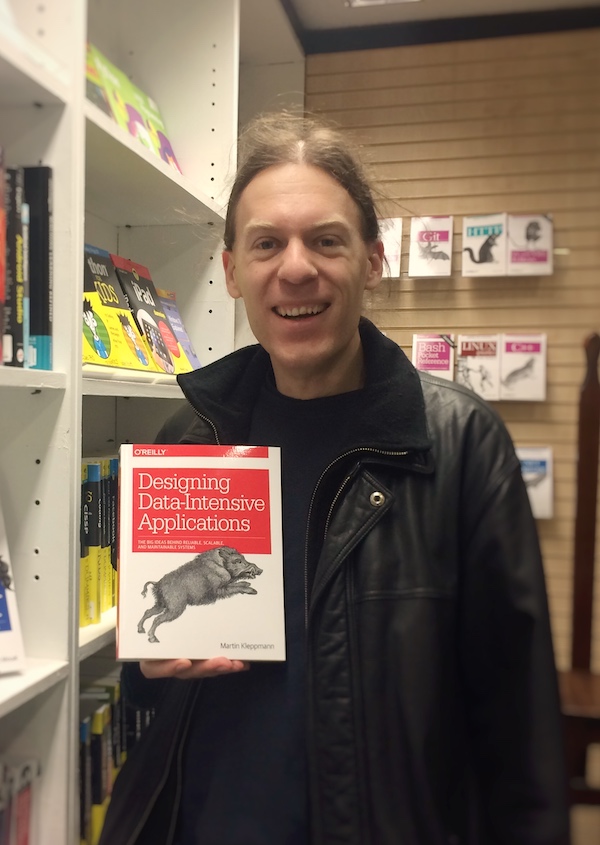
Dr. Martin Kleppmann is an Associate Professor at the University of Cambridge, specializing in local-first software and security protocols . He leads research in distributed systems, focusing on decentralized architectures, collaborative editing tools, and cryptographic methods. As a key contributor to the Automerge open-source project, he bridges academic innovation with real-world applications. Formerly a research fellow at TU Munich (2022–2023) and Cambridge (2015–2022), he has also worked as a software engineer and startup founder, including LinkedIn (acquired 2012). Research Interests span Distributed Systems Security , Conflict-Free Replicated Data Types (CRDTs) , Collaborative Software , and Cryptography . His work addresses challenges in decentralized social networks, privacy-preserving protocols, and efficient data synchronization. Recent projects include Kintsugi (end-to-end encrypted key recovery) and Pudding (private user discovery for anonymity networks). Publications emphasize Collaborative text editing (2025: Eg-walker, 2023: The Art of the Fugue) CRDTs for JSON and trees (2021, 2017) Privacy in decentralized systems (2024: Pudding, 2025: Emission Impossible) Scientific Awards include Gilles Muller Best Artifact Award (EuroSys 2025) Distinguished Paper & Artifact Awards (OOPSLA 2017) Best Presentation Awards (Security Protocols Workshop 2018, PaPoC 2025)
Dr. Thomas Lancaster is a Principal Teaching Fellow in the Department of Computing at Imperial College London, part of the Faculty of Engineering. He specializes in academic integrity, generative AI's impact on education, and combating contract cheating. His roles include Associate Dean at Staffordshire University and leadership positions at Coventry University and Birmingham City University. His research spans ethical AI use, plagiarism detection, and educational policy. He has authored numerous articles on cheating prevention and technology's role in academic integrity. His Orcid identifier is 0000-0002-1534-7547, and he can be reached at t.lancaster@imperial.ac.uk. Research Interests: Lancaster focuses on the intersection of technology and academic ethics, including generative AI's implications for student work, digital watermarking, and social media's role in enabling cheating. He advocates for staff-student partnerships to strengthen integrity frameworks and has pioneered methodologies for detecting source code plagiarism from online repositories. Publications: His recent work highlights global comparisons of cheating industries, the evolution of AI-driven cheating threats, and policy development to address historical misconduct. He emphasizes practical solutions for institutions, such as leveraging AI tools ethically and enhancing detection systems. Professional Contributions: As a leader in computing education, Lancaster has improved placement-year support for students and developed strategies to address transnational education challenges. His work on the SEEPAI project in Southeast Europe underscores his global impact.
Maozhen Li is a Professor in the Department of Electronic and Electrical Engineering at Brunel University of London , within the College of Engineering, Design and Physical Sciences . He serves as the Vice-Dean of the NCUT Transnational Education (TNE) programme, overseeing a joint school with North China University of Technology. He has been at Brunel since 2002, progressing from Lecturer to Professor in 2013. Education: PhD, Institute of Software, Chinese Academy of Sciences (1997) Postdoctoral Research, School of Computer Science and Informatics, Cardiff University (1999–2002) His primary research interests lie in high performance computing, big data analytics, and artificial intelligence, with applications in smart grids, smart manufacturing, and cybersecurity. He focuses on developing interpretable, robust, and lightweight AI models, including work in causal AI, parallel machine learning, and edge computing. His research integrates advanced techniques such as deep learning, reinforcement learning, and blockchain for real-world system optimization. An analysis of his recent publications reveals a strong and consistent research trajectory in AI-driven solutions for environmental monitoring (e.g., PM2.5 prediction), industrial defect detection, IoT security, and intelligent transportation. His work frequently combines deep learning with graph-based modeling and federated or reinforcement learning, emphasizing scalability, efficiency, and robustness in distributed and edge environments. Scientific Awards and Recognition: Fellow of the Institution of Engineering and Technology (IET) Fellow of the British Computer Society (BCS) Shortlisted for the Computing UK BIG DATA EXCELLENCE AWARDS 2018 in the category of Most Innovative Big Data Solution Maozhen Li has successfully supervised 25 PhD students and examined over 30 PhD theses externally. He has secured significant research funding from EPSRC, the European Union (Horizon 2020), Innovate UK, and the Royal Society , with projects including Z-BRE4K, IoRL, and TDX-ASSIST. He serves as an Associate Editor for journals such as the Journal of Cloud Computing and the International Journal of Grid and High Performance Computing . Research Groups and Teams: He is affiliated with the Intelligent Engineering Frameworks (IEF) research group at Brunel, contributing to collaborative efforts in AI, IoT, and smart systems. His leadership in transnational education also fosters international research collaboration between Brunel and Chinese institutions.
Dr Michael Boemo is an Assistant Professor at the University of Cambridge, holding dual appointments in the Department of Pathology and Department of Genetics. He leads research at the intersection of computational biology, DNA replication, and cancer genomics, developing machine learning tools to analyze replication stress and genomic instability. Academic Background: BA in Mathematics (Rutgers University), PhD in Physics (University of Oxford) Research Focus: Genomic instability in cancer, DNA replication/repair defects, computational modeling using machine learning and high-performance simulations Teaching: Lectures in Natural Sciences Tripos (mathematical biology, genetics, systems biology), module organizer for cancer biology and biological modeling His research group leverages nanopore sequencing and AI to map replication fork dynamics, revealing how stalled forks generate mutations in cancer cells and pathogens. Recent work examines extrachromosomal DNA replication vulnerabilities and transcription-replication conflicts. Dr Boemo collaborates across computational biology and cancer research domains, with publications spanning journals like Nature Methods, Cell, and PLoS Computational Biology. His lab develops tools such as DNAscent for replication fork analysis and explores therapeutic targeting of replication stress.
Professor Mark Howells is a Principal Research Fellow at the Centre for Environmental Policy within Imperial College London's Faculty of Natural Sciences. His work focuses on energy systems modelling and policy analysis for sustainable development in low and middle-income countries, with a particular emphasis on open-source frameworks and context-specific transition pathways. His research spans energy transition modelling, environmental policy, and sustainable development, utilizing tools like OSeMOSYS and CLEWs to address energy trilemma challenges across Africa, Asia, and South America. Key interests include integrating qualitative factors into quantitative models, green hydrogen planning, power sector reliability, and resource nexus management, with significant contributions to country-specific energy planning in Ghana, Nigeria, Kenya, Egypt, and Indonesia. Analysis of his 2023-2025 publications reveals a strong focus on open-source energy modelling applications for decarbonization, with recurring themes of data kit development, grid flexibility solutions, and water-energy-land nexus assessments. His work consistently bridges technical modelling with policy implementation needs, particularly in contexts of infrastructure constraints and climate vulnerability. No scientific awards were mentioned in the source materials. Professor Howells operates within Imperial College London's Centre for Environmental Policy, an interdisciplinary hub conducting research on global environmental challenges through integrated systems approaches that connect technical, economic, and policy dimensions of sustainability transitions.
Dr. Gunel Jahangirova is a Lecturer in Computer Science within the Department of Informatics, Faculty of Natural, Mathematical & Engineering Sciences at King's College London. Her research focuses on software testing, software engineering for AI, and search-based software engineering. She earned her PhD through a joint program at Fondazione Bruno Kessler (Italy) and University College London (UK), followed by postdoctoral work on the ERC-funded 'Precrime' project at Università della Svizzera italiana (Switzerland). Software Testing AI Engineering Search-Based Optimization Deep Learning Verification Her recent publications explore fault localization in neural networks, ethical testing of autonomous systems, and environmental impacts of AI code development. Current projects include ITEA GENIUS and ITEA GreenCode , focusing on AI testing and sustainable software practices.
Professor Rachel Harrison is a Professor in Computer Science at the School of Engineering, Computing and Mathematics, Oxford Brookes University. Her research focuses on software metrics, machine learning, and requirements engineering with emphasis on empirical and automated software engineering solutions. She has over 160 publications and extensive industry collaborations with organizations like IBM and Philips Research Labs. Her work has been recognized through roles as Editor-in-Chief of the Software Quality Journal and leadership in conferences such as ICSE and ESEM. She leads the Dependable System Engineering Centre (DSERC) and is part of the Artificial Intelligence, Data Analysis and Systems (AIDAS) Institute and the Applied Software Engineering and Data Analytics (ASEDA) Group. Her research projects include AI applications for big data analysis (AIMi), automated review classification (ReClass), and software quality improvement (SEQUIN). Professor Harrison has served on over 50 international program committees and initiated workshops like RAISE and AIRE. Her teaching includes advanced computer science modules and leadership in courses like Essential Maths for University Study and Advanced Software Development . Her work bridges academic research and practical applications, particularly in healthcare technology (e.g., diabetes management systems) and mobile application usability. She advocates for rigorous software quality practices and has contributed to frameworks for requirements validation and risk assessment in software projects.