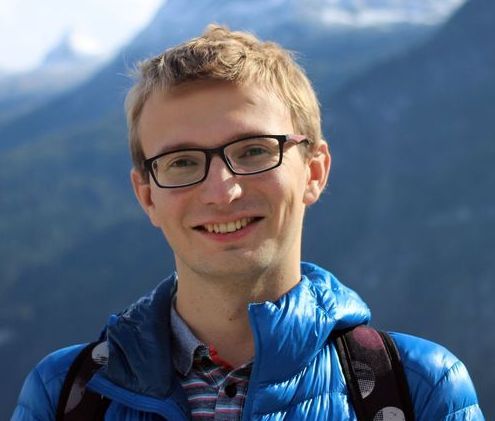
Josep Casanovas is a Full Professor at the Statistics and Operations Research Department of the Technical University of Catalonia (UPC), affiliated with the Barcelona School of Informatics. He previously served as head of inLab FIB (2012-2020) and as dean (1998-2004) and vice-rector (2006-2011) of UPC, leading strategic initiatives in university governance and ICT policies. His research focuses on Modelling and Simulation , Internet and Information Systems , and Urban Mobility . He has led projects for the European Union, including C-ROADS Spain, REMEDiAL, and ECHORD++, addressing intelligent transport, software automation, and robotic innovation. Recent publications highlight his work on agent-based simulation for urban health, deep learning applications in traffic and energy savings, and wildfire management tools . He co-directs LogiSim and coordinates the Severo Ochoa Research Excellence Program at the Barcelona Supercomputing Center (BSC-CNS).
Daniel Jimenez Gonzalez is a faculty member at the Universitat Politècnica de Catalunya (UPC), affiliated with the Department of Computer Architecture within the School of Informatics (FIB). He is an active researcher in programming models and high-performance computing, contributing extensively to the field through publications, projects, and academic supervision. Research Interests: His work focuses on Computer Architecture , Programming Models , and Parallel Computing . He investigates task-based programming, runtime systems, compiler optimizations, and performance modeling for multi-core and heterogeneous architectures. His research addresses challenges in scalability, energy efficiency, and resilience in modern computing environments. His recent publications show a consistent trend in task-based programming models , runtime scheduling , and performance optimization across diverse architectures, including NUMA and GPU-accelerated systems. The work spans from theoretical modeling to practical implementation, often targeting real-world HPC applications. Scientific Awards: No awards explicitly mentioned in the provided text. Advising and Grants: While specific students are not listed, his involvement in doctoral theses and R&D projects suggests an active role in mentoring graduate students. He has participated in both competitive and non-competitive R&D+i projects, indicating grant acquisition and project leadership experience in areas related to programming models and computer architecture. Labs and Teams: He is a member of the UPC PM - Programming Models research group, which focuses on the design, analysis, and optimization of modern programming paradigms for high-performance systems.
Pedro Soto Acosta is a Full Professor at the University of Murcia , holding the Department of Business Organization and Finance . He earned a European Doctorate in Business Administration, a Master’s in Technology Management, and dual bachelor’s degrees in Business Administration and Accounting & Finance from the University of Murcia and Manchester Metropolitan University. He has also completed postgraduate courses at Harvard University and participated in the Leonardo da Vinci program in Bradford. His research focuses on Digital Transformation Information Systems Management Knowledge Management Green Innovation Entrepreneurship E-business and has published extensively in Q1 journals like Journal of Knowledge Management and Technological Forecasting and Social Change . His work on AI, sustainability, and organizational change has earned awards such as the Premio ABG and Stanford University's Top 2% Influential Researchers . He serves as Editor-in-Chief of Benchmarking: An International Journal and holds editorial roles in 10+ journals. Pedro has held leadership positions including Chief Budget and European Funds Officer for the Region of Murcia and Vice-Chancellor Coordinator at the University of Murcia. With an h-index of 59 , his recent articles explore AI-driven innovation, pandemic digital acceleration, and social media's role in entrepreneurship, reflecting trends in digital resilience and sustainable ecosystems.
María Alonso-Peña is an Assistant Professor at the University of Santiago de Compostela , affiliated with the Faculty of Biology and the Department of Statistics, Mathematical Analysis, and Optimization . Her research focuses on nonparametric statistical methods, particularly in circular regression models and their applications in neuroscience and animal behavior analysis. She holds a PhD in Statistics from the University of Santiago de Compostela (2022), with a thesis titled New approaches to nonparametric circular regression models . Education: PhD in Statistics (2022), University of Santiago de Compostela Research Interests: Nonparametric statistics, circular regression, optimization, and statistical modeling in neuroscience and ecology Her work bridges theoretical statistics with applied problems, such as analyzing neuronal spike counts and animal escape behavior using advanced circular regression techniques. She has collaborated with institutions like KU Leuven and Universidad de Granada. Recent research includes a grant from the Xunta de Galicia (ED481A-2019/139) for neuroscientific applications. Key contributions include frameworks for circular local likelihood regression and parametrically guided kernel density estimators for spherical data. These methods address challenges in modeling directional and multimodal datasets, with implications for fields like neuroscience and environmental science.
Jose Maria Cuenca Lopez serves as a Professor in the Department of Integrated Didactics at the Faculty of Education, Psychology and Sports Sciences, University of Huelva, Spain. His academic work centers on heritage education within social sciences didactics, with emphasis on controversial heritage, citizenship development, and teacher training methodologies. He earned his doctorate from the University of Huelva in 2002 with the thesis "El patrimonio en la didáctica de las ciencias sociales análisis de concepciones, dificultades y obstáculos para su integración en la enseñanza obligatoria," supervised by Dr. Jesús Estepa Giménez and Dr. Consuelo Domínguez Domínguez. His educational background established the foundation for his specialized focus on integrating heritage concepts into compulsory education. Cuenca Lopez's research investigates how controversial heritage can foster eco-citizenship and critical thinking in educational settings. His work explores emotional connections to territory through heritage, particularly in early childhood and primary education. He emphasizes inclusive approaches that address diverse learner needs while connecting heritage education to socio-environmental challenges and sustainable development goals. His research often examines the intersection of technology (especially video games) with heritage pedagogy and analyzes school-museum collaborations as vital educational spaces. Recent publications (2023-2025) reveal a pronounced focus on controversial heritage in teacher training contexts, with significant attention to preschool and primary education applications. His work increasingly incorporates comparative international perspectives (notably Spain-Brazil collaborations), geotourism integration, and emotional dimensions of heritage learning. The EPITEC project (Patrimonio, territorio y emociones) represents a cornerstone of his current research, examining how heritage education can cultivate territorial and emotional intelligence for citizenship development. He actively collaborates with the HUM168 research group (Formación Inicial y Desarrollo Profesional de Profesores) and the Research Center for Contemporary Thought and Innovation for Social Development at the University of Huelva. His work demonstrates consistent engagement with practical educational applications, developing frameworks for heritage integration across various educational levels and contexts while addressing contemporary challenges in social sciences education.
Marc Alier Forment is an Associate Professor at the Universitat Politècnica de Catalunya (UPC), affiliated with the Department of Services and Information Systems Engineering within the Faculty of Informatics of Barcelona (FIB). He is also associated with the Institut de Ciències de l'Educació and serves as Coordinator of the Doctoral Program in Engineering, Science, and Technology Education. His research is conducted through the UPC EduSTEAM - STEAM University Learning Research Group. His research interests span Educational Technology , Artificial Intelligence in Education , Learning Management Systems , Open Source in Education , Ethics in Computing , Sustainability in Education , Mobile Learning , Learning Analytics , and Privacy in EdTech . He emphasizes ethical, secure, and sustainable applications of technology in higher education, particularly in engineering contexts. The recent scholarly output highlights a strong focus on the integration of AI in education (especially through the LAMB framework), ethical implications of generative AI, privacy in learning analytics using edge and fog computing, and innovative pedagogical methods in computer science education. His work increasingly bridges technical computing with humanistic concerns such as ethics, privacy, and social responsibility. Best Paper Award TEEM'22 Premis de Programari lliure 2005 de l'AGAUR VI Premi Davyd Luque a la innovació en les TIC Best interoperability innovation: Moodle simple learning tools for interoperability consumer – Spain Marc Alier Forment has led and participated in numerous educational innovation and R&D+i projects, particularly focused on Moodle/LMS integration, mobile learning, open-source educational tools, and the development of ethical and privacy-preserving technologies. He has mentored and collaborated extensively with colleagues on curriculum development, particularly in embedding sustainability and ethics into computing education. His work is central to UPC’s digital education strategy, especially through the Atenea platform. He leads and contributes to the UPC EduSTEAM research group and has been instrumental in developing STEAM-based lecturer training programs. His projects often involve interdisciplinary collaboration across computing, education, and social sciences, aiming to create holistic, responsible technological solutions for learning.
Elena Bautista Perez serves as a Lecturer in the Department of Philology and Translation at the Faculty of Humanities, Pablo de Olavide University. Her teaching responsibilities span multiple undergraduate programs in Translation and Interpreting. She is formally affiliated with the following academic programs: Degree in Translation and Interpreting (English, French, and German language streams) Double Degree in Translation and Interpreting: French and International Relations Double Degree in Translation and Interpreting: German and International Relations Her research expertise centers on technology-integrated translation practices, with documented focus areas: Computational Linguistics applications in translation Specialized terminology management systems Software and digital content localization methodologies As part of her academic duties, she supervises Final Degree Projects across all Translation and Interpreting programs, providing comprehensive guidance on research design and practical implementation of translation technologies for undergraduate capstone projects.
Juan Andrade Cetto is a Researcher at the Institute of Robotics and Industrial Informatics (IRI), part of the Spanish National Research Council (CSIC). He previously served as Director of IRI from 2014 to 2020. His expertise spans mobile robotics, computer vision, and neuromorphic systems. He holds a BSEE from CETYS University (1993), an MSEE from Purdue University (1995), and a PhD in Robotics from the Universitat Politècnica de Catalunya (UPC, 2003), recognized with the EURON Georges Giralt Best PhD Award in 2005. Research Interests: - Mobile Robotics and Autonomous Systems - Event-based Vision and Neuromorphic Sensors - Real-time Sensor Fusion and SLAM - Control Systems for Energy Conversion (e.g., PEM Fuel Cells) - Probabilistic Methods for Robotics and Computer Vision Recent Research Trends: His work emphasizes neuromorphic computing and event-based systems for robotics applications, including optical flow estimation, ego-motion tracking, and real-time SLAM. Collaborations include EU projects like ALLIES (AI for Sustainable Development Goals) and RAMON LLULL (AIRA Postdoctoral Programme). He leads the BOMBUS project (Perception and Navigation for Agile Robotics, 2024–present). Scientific Awards: EURON Georges Giralt Best PhD Award 2005 Grants & Leadership: Principal Investigator in multiple national/EU projects including BOMBUS (CSIC) and ALLIES (European). Advising: - Current Students: José Agustín Aguilar Plazaola (Fuel Cell Control), Raquel De Frutos Arranz (Event Camera-based Collision Avoidance) - Past Students: Not explicitly listed in provided text. Labs & Teams: Active in IRI’s Robotics and Industrial Informatics research groups, focusing on applied robotics and sensor systems.
Gleb Pogudin is an Assistant Professor at École Polytechnique, Institute Polytechnique de Paris, where he is a member of the MAX team within the Laboratoire d'informatique. His research focuses on the intersection of symbolic computation, differential equations, and algebraic methods with applications across multiple scientific domains. Dr. Pogudin's primary research interests span several interconnected areas: Symbolic computation and computer algebra algorithms Theory and applications of differential and difference equations Nonlinear algebra and polynomial systems Structural identifiability of dynamical models Model reduction techniques for complex systems His recent publications (2024-2025) demonstrate a strong focus on developing theoretical foundations for differential elimination, structural identifiability analysis, and model reduction. These works span applications in systems biology, epidemiology, pharmacology, and optics. Notably, his research bridges pure mathematical theory with practical computational implementations, creating tools that address real-world scientific challenges. Dr. Pogudin has developed several significant software tools that implement his theoretical advances: StructuralIdentifiability.jl: A Julia package for assessing structural identifiability CLUE: Software for exact model reduction of ODE models via constrained lumping SIAN: Software for structural identifiability analysis of ODE models His GitHub repositories contain numerous implementations of algorithms from his papers on differential elimination and related topics, demonstrating his commitment to making theoretical advances practically accessible to researchers across disciplines.
Marco Galici is a postdoctoral Researcher at the Technological Research Institute (IIT) of the School of Engineering (ICAI) at Comillas Pontifical University. He joined the institute on 26 April 2025, specializing in Distributed Resources, Networks, and Flexibility. He earned his Ph.D. in Industrial Engineering (Doctor Europaeus) from the University of Cagliari (Italy) in February 2024 with honors, following his 2020 degree from the same institution. His research focuses on electricity markets for integrating renewable energy, decentralized technologies like Distributed Ledger, and decarbonizing electrical systems . His work examines uncertainty management, transactive energy systems, and blockchain applications in smart cities. The 15 most recent publications highlight his expertise in peer-to-peer energy trading, robust optimization, and decentralized control mechanisms. Marco's technical skills include reinforcement learning , blockchain development (Hyperledger, Solidity), and tools like MATLAB/Python. While he hasn't received specific scientific awards yet, his contributions span conferences in Greece, UK, USA, Italy, Portugal, and China, demonstrating international collaboration.
Juan Luis Aragón is a Full Professor of Computer Architecture at the University of Murcia. His research focuses on heterogeneous parallel systems, GPU architectures, and energy-efficient designs. He has been a visiting researcher at Princeton University multiple times and has advised 7 PhD theses. Research areas include GPU memory hierarchy optimization, warp scheduling techniques, and hardware-software co-design for efficient computing. Recent work explores tile rendering optimization and OS-level memory management improvements.
Carlos Molina Clemente is an Associate Professor of Computer Architecture at Rovira i Virgili University in Tarragona, Spain. He holds a M.Sc. in Computer Engineering (Universitat Politècnica de Catalunya, 1996) and a Ph.D. in Computer Science (UPC, 2005). His research focuses on Computer Architecture, Mobile/Sensor Networks, and Cloud Computing. He leads the Cloudlab research group and coordinates initiatives like GTDAWIN and BIOGEI. Key research areas include multicore scheduling, LoRaWAN protocols, LIDAR data analysis, and serverless computing. He has published over 50 articles in top-tier conferences/journals and supervised three doctoral theses. His work spans projects on cache architectures, real-time systems, and educational multicomputing solutions. Affiliations include the Department of Computer Engineering and Mathematics (DEIM) at URV, with offices at Campus Sescelades (Avinguda Països Catalans 26, Tarragona). Research highlights include contributions to non-uniform cache policies, predictive mobile network algorithms, and energy-efficient sensor networks.
Antonio de la Oliva is a Professor at the University Carlos III de Madrid, affiliated with the School of Engineering. His primary research focuses on advanced networking technologies, including 5G/6G, Software-Defined Networking (SDN), Network Functions Virtualization (NFV), and mobile edge computing. He leads and contributes to major EU-funded projects such as 5G-CORAL, 5G-Transformer, and 5G-Crosshaul, which aim to integrate and optimize transport networks for industry verticals. He has supervised PhD students like Maria Isabel Sanchez Bueno (awarded UC3M's Special PhD Award) and Sergio Gonzalez Diaz. His work spans experimental evaluations of SDN-based service provisioning, network slicing, and deterministic communications for Industry 4.0. He actively engages in standardization efforts (e.g., IEEE 802.21, IETF) and collaborates with industry partners like Ericsson, Nokia, and Telecom Italia. His research also explores edge robotics, digital twins, and AI integration in networked systems. Key projects include developing the 5G-Crosshaul architecture for integrated fronthaul/backhaul networks and the SLICES-Madrid multi-domain TSN framework. He emphasizes practical applications in healthcare, emergency response, and industrial automation, leveraging edge-fog-cloud architectures.
Salvador Garrigues Mateo is a Professor at the University of Valencia in the Faculty of Chemistry and Department of Analytical Chemistry . He leads the research group SOLINQUIANA (Solutions & Innovation in Analytical Chemistry) , focusing on green analytical chemistry and innovative spectroscopic methods. Education: PhD in Analytical Chemistry from the University of Valencia (1993) with a thesis on Quantitative analysis by Fourier Transform Infrared Spectrometry . Research Interests: Green Analytical Chemistry, Fourier Transform Infrared Spectroscopy (FTIR), Ion Mobility Spectrometry (IMS), environmental and biomedical analysis, sample preparation techniques, and forensic chemistry. His recent publications highlight trends in environmental analysis (wastewater drug monitoring, bioaerosol assessment), forensic chemistry (illicit drug detection, synthetic cannabinoids), and green sample preparation (natural sorbents, microextraction techniques). He also contributes to food analysis (oil degradation, essential oil authentication) and biomedical applications (urinalysis for drug exposure, serum diagnostics). His work emphasizes green chemistry principles , focusing on reducing solvent consumption, developing non-invasive testing protocols, and applying chemometrics for improved analytical accuracy. He has published extensively on spectroscopic methods for both environmental and clinical applications, often combining FTIR with ion mobility spectrometry for enhanced detection capabilities. Contact: salvador.garrigues@uv.es
Gloria María Caravantes López de Lerma is a faculty member at the Universitat de València, affiliated with the Faculty of Social Sciences and the Department of Social Work and Social Services. She is a member of the GESinn (Social Studies Group: Intervention and Innovation) research group and holds the academic rank of Lecturer. She earned her PhD in 2023 with a thesis on urban vulnerability in the Valencian Community. Position: Lecturer Institution: Universitat de València School: Faculty of Social Sciences Department: Department of Social Work and Social Services Research Group: GESinn - Social Studies Group: Intervention and Innovation Email: gloria.caravantes@uv.es Her research interests lie at the intersection of social work, urban studies, and gender studies, with a strong focus on social vulnerability, exclusion, and public policy. Her work critically examines issues such as gender-based violence, the right to the city from a gender perspective, public housing, and the impact of the COVID-19 pandemic on social welfare and women. She employs qualitative methodologies, including narrative analysis and case studies, often using tools like MAXQDA for data analysis. Her research is deeply engaged with participatory models of governance and the coproduction of social policies. The 15 most recent articles in her publication record, spanning from 2018 to 2022, reveal a consistent thematic focus on urban and social vulnerability, feminist theory, and social policy in Spain. Her work frequently analyzes the social consequences of major events like the pandemic and critiques the media's portrayal of social issues. The articles demonstrate a strong commitment to interdisciplinary research, combining insights from social work, urban geography, sociology, and political science to address pressing social challenges. She has not received any publicly listed scientific awards. Gloria María Caravantes has not published information about advising students or managing research grants. She is actively involved in her research group, GESinn, which focuses on social intervention and innovation, suggesting her work is collaborative and oriented towards practical social change.