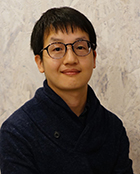
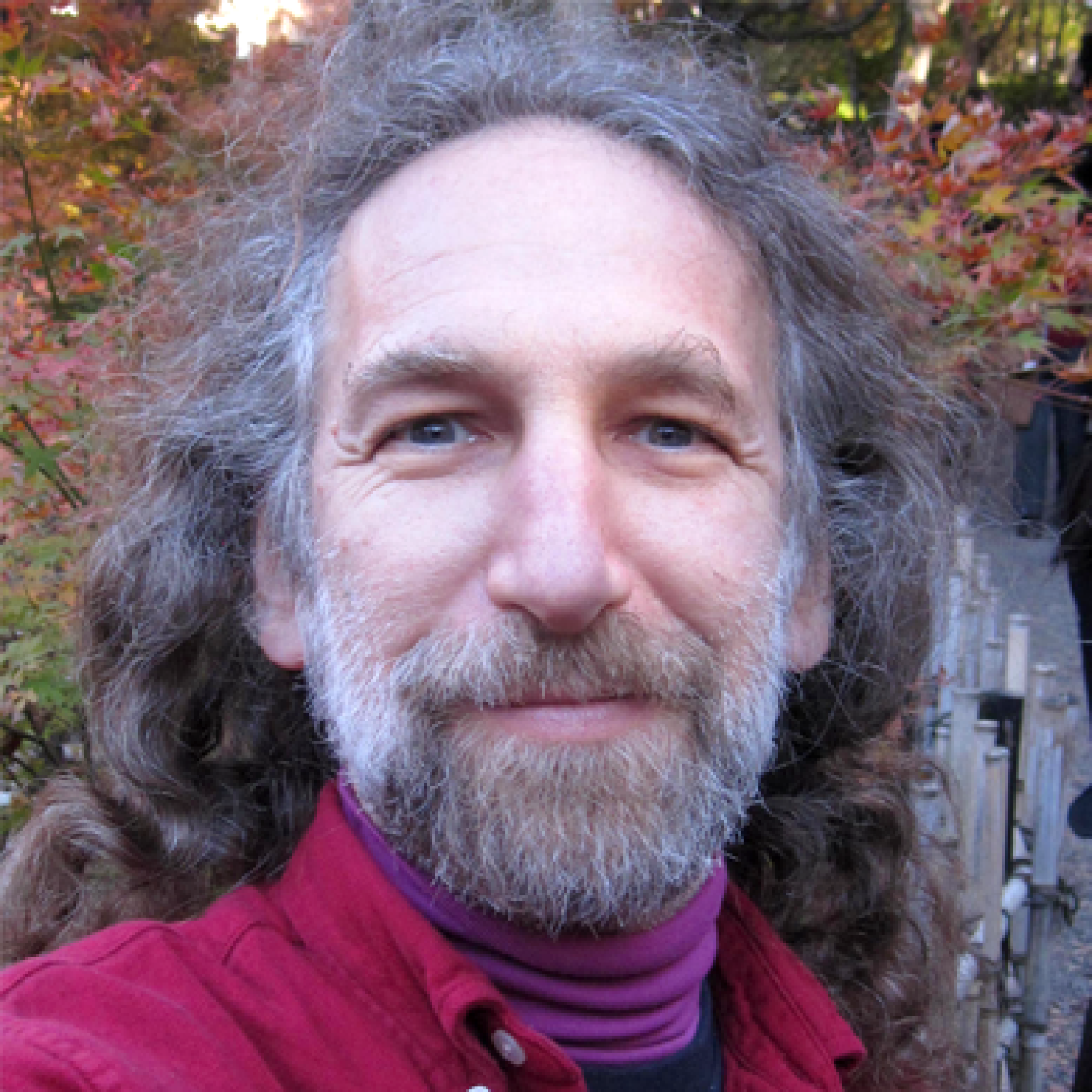
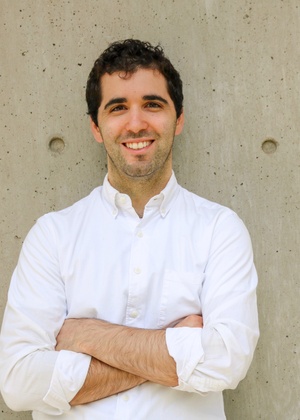
Dr. Farhad Merchant is an Assistant Professor of Innovative Computer Architecture at the Bernoulli Institute, University of Groningen, since July 2024. Previously, he served as a Lecturer (Assistant Professor) at Newcastle University (2022–2024) and held research roles at Bosch Research, NTU, and RWTH Aachen University. His research focuses on emerging technology-based computing and hardware-oriented security, including neuromorphic architectures, in-memory computing, and secure hardware design. Education: PhD in Electronics Engineering from the Indian Institute of Science, Bangalore, with a DAAD-funded visit to RWTH Aachen University. He also holds industry experience from Bosch Research. Research Interests : - Hardware Security - Neuromorphic Computing - Algorithm-Architecture Co-design - Reconfigurable Computing - Computer Arithmetic Projects : - Coordinator for the REACT project (2025–2029): Focuses on self-aware neuromorphic architectures. - Principal Investigator for Privacy-Preserving Computer Architectures (CogniGron, 2025–2029). - Completed BioNanoLock project (DFG-funded, focusing on bio-nanoelectronic security). Awards : - Best Paper Awards at ISQED 2022, NEWCAS 2023, and VLSI-DAT 2024. - Minerva Fellowship (Technion, Israel), HiPEAC Technology Transfer Award (2019). He co-founded the SeHAS workshop (since 2019) and serves on editorial and program committees for major conferences like DAC, ISLPED, and VLSI-SoC.
Professor Richard Bolden is a Professor of Leadership and Management at the Bristol Business School, University of the West of England (UWE), where he also directs the Bristol Leadership and Change Centre. His career includes over a decade at the University of Exeter Business School and experience as a consultant, research psychologist, and software developer. He holds a PhD, MA, and BSc. His research focuses on distributed leadership, leadership development in complex systems, and cross-sector partnerships. Key areas include leadership in higher education, healthcare, and public services, with emphasis on paradoxes, complexity, and inclusion. He has published extensively, including a 2023 second edition of Exploring Leadership (Oxford University Press) and serves as Associate Editor of the Leadership journal. Prof. Bolden leads leadership modules for UWE's EMBA and clinical practitioner programs. His funded projects involve organizations like the NHS Leadership Academy and Singapore Civil Service College. Awards include Fellowship with the International Leadership Association. His work bridges academic theory and practical application, addressing systemic challenges through collaborative, inclusive leadership frameworks. Current interests include post-pandemic academic leadership and the 'great resignation' impact.
Mendel Rosenblum is the Cheriton Family Professor and holds dual appointments as Professor in the Departments of Computer Science and Electrical Engineering at Stanford University. He is a co-founder of VMware Inc. and served as its Chief Scientist for its first decade, playing a pivotal role in designing foundational virtualization technologies. Rosenblum's research focuses on system software, distributed systems, and computer architecture, with notable contributions to virtualization, data center networks, and operating systems. He leads the Platform Lab at Stanford, exploring next-generation data center technologies and high-performance computing systems. Administrative Role: Faculty Director of Stanford Computer Forum (2012–present) Education: PhD (UC Berkeley, 1992), MS (UC Berkeley, 1989), BA (University of Virginia, 1984) His research interests span disk storage management, computer simulation, scalable operating systems, and security. Recent work emphasizes deployable consensus algorithms, programmable smartNICs, and self-programming networks. Rosenblum has authored over 80 publications and holds multiple patents in virtualization and system software. Awards & Recognition: ACM System Software Award (2009) IEEE Computer Entrepreneur Award (2011) ACM Thacker Breakthrough in Computing Award (2018) Member, National Academy of Engineering (2013) He advises PhD and Master's students, including current advisees Sina Jandaghi Semnani and Zixi Liu. Rosenblum teaches advanced courses on web applications, distributed systems, and independent research projects.
Dr. Oscar Meruvia-Pastor is a faculty member in the Department of Computer Science at Memorial University of Newfoundland, within the Faculty of Science. He holds a B.Sc. from ITESM-Monterrey, Mexico, an M.Sc. from the University of Alberta, and a Ph.D. from Otto-von-Guericke Universität Magdeburg, Germany. His research focuses on interactive 3D graphics, non-photorealistic rendering, and biomedical visualization, with applications in telepresence systems, augmented reality (AR), and virtual reality (VR). He has developed tools like OMARC for respiratory condition training and GeNET for gene co-expression network analysis. Dr. Meruvia-Pastor has supervised numerous graduate students and contributed to over 50 publications. His work includes evaluating stereo correspondence methods in AR, robot arm manipulation via depth sensors, and smartphone integration in immersive VR. He has been recognized with awards such as the Best HCI Poster at Graphics Interface 2014 and a semi-finalist poster at SIGGRAPH 2015. He teaches courses in computer science, including computer graphics, multimedia development, and introductory science modules. His research lab focuses on 3D telepresence, medical visualization, and human-centered VR/AR solutions. His academic contributions span software tools for medical imaging analysis, interactive visualization systems, and educational technologies. He actively collaborates with health professionals to advance telemedicine and remote procedural training through AR platforms. His work bridges computer graphics with real-world applications in healthcare, education, and environmental advocacy.
Tengfei Ma is an Assistant Professor in the Department of Biomedical Informatics at Stony Brook University, with affiliations to Computer Science and Applied Mathematics & Statistics. He holds a Ph.D. from The University of Tokyo, M.S. from Peking University, and B.E. from Tsinghua University. Previously, he was a Research Scientist at IBM T.J. Watson Research Center. His research focuses on machine learning, natural language processing (NLP), and biomedical informatics, particularly deep graph learning, scalable graph methods, and healthcare applications. He has contributed to frameworks like EvolveGCN for dynamic graphs and IGB datasets for graph benchmarks. Key awards include ISWC 2021 Best Paper (Research Track) and IBM Outstanding Research Accomplishments (2019, 2022). His work bridges theory and practice, addressing challenges like over-dilution in GNNs and interpretable time series analysis. Collaborations span interdisciplinary areas, such as AI for wound monitoring and code summarization. He teaches BMI530: Software Development for Biomedical Informatics and is open to graduate students from CS, BMI, and AMS departments. Research highlights include: Deep Graph Learning: Scalability (FastGCN, IGB), dynamic graphs (EvolveGCN), and topology-enhanced GNNs. Healthcare: Models for EHR analysis, medication recommendation (GAMENet), and wearable wound monitoring. NLP: Document summarization, code summarization (CP-BCS), and commonsense generation via knowledge graph compression. Recent projects include AI tools like Influencer for promotional content creation and neural-symbolic models for interpretable time series analysis. His lab explores foundational AI for healthcare, code analysis, and graph systems.
Dr. Vivek Nallur is an Assistant Professor in the School of Computer Science at University College Dublin. His research focuses on Machine Ethics, Multi-Agent Systems, emergence in socio-technical systems, and decentralized adaptation mechanisms. He holds a PhD from the University of Birmingham and advanced certifications in university teaching from UCD. Education: BBS, Delhi University Post-Graduate Diploma in Advanced Software Technology, National Centre for Software Technology MS, Carnegie Mellon University PhD, University of Birmingham Prof Cert University Teaching & Learning, University College Dublin Research Interests: Machine Ethics explores ethical decision-making in autonomous systems, while Multi-Agent Systems (MAS) are his primary tool for studying self-adaptation and emergence. He serves on key committees like IEEE P7008 (Ethically Driven Nudging) and the AAAI 2021 Spring Symposium on AI Ethics. His work bridges computer science with philosophy, law, and social sciences. Advising & Grants: Supervises three PhD students focusing on ethical AI, elder-care robotics, and AI governance. Leads the Machine Ethics Research Group and participates in the ML-Labs SFI grant (2019–2027). Professional Roles: Senior Member of IEEE, organizer for AAAI ethics symposia, and contributor to OpenAAL's ELSI panel. Teaches modules on Machine Learning, Operating Systems, and Web Development.
Professor Mia Woodruff is a leading academic at Queensland University of Technology (QUT), holding the position of Professor in the School of Mechanical, Medical and Process Engineering within the Faculty of Engineering. She is the Group Leader of the Biofabrication and Tissue Morphology Group and Acting Director of the Herston Biofabrication Institute. Her research focuses on biofabrication, tissue engineering, and 3D printing applications in medicine, particularly in bone regeneration, vascular surgery, and personalized prosthetics. Woodruff holds a PhD in Materials Engineering from the University of Nottingham, UK. She has led over $40 million in external grants, including ARC and Advance Queensland funding. Her work emphasizes translating biofabrication technologies into clinical practice, such as developing patient-specific implants and surgical tools. She has published over 120 peer-reviewed articles and co-founded initiatives like the Herston Biofabrication Institute to bridge clinical, research, and industry collaboration. Key research areas include composite biomaterials, 3D scanning/modelling, electrospinning, and large-animal models for bone regeneration. She has been awarded the QUT Vice Chancellor’s Research Fellowship and ARC Fellowship. Her outreach efforts include promoting STEM through media appearances and school programs, such as the 3D Printing in All High Schools initiative. Grants & Awards $40M Innovation Manufacturing CRC (Co-Investigator) $3.72M ARC Industrial Transformation Training Center (Additive Biomanufacturing) Advance Queensland Fellowships ($1.2M Cluster Grant for Biofabrication) Media & Engagement Featured in SCOPE TV, SBS The Feed , and ABC News Keynote speaker at global conferences (e.g., TERMIS, ORS) Research Infrastructure Herston Biofabrication Institute: Integrates 3D printing, clinical trials, and patient collaboration World-first Biofabrication Master’s program launched in 2014
Mark D. Gross is a Professor of Computer Science and Director of the ATLAS Institute at the University of Colorado Boulder, where he leads an interdisciplinary hub for creativity and invention. His academic journey began at MIT with BS and PhD degrees, followed by faculty roles at Carnegie Mellon University (2004-2013), University of Washington Seattle (1999-2004), and CU-Boulder (1990-1999, 2014-present). As co-founder of Modular Robotics Incorporated and Blank Slate Systems LLC, he bridges academia and entrepreneurship. Education: BS and PhD in Computer Science from MIT Gross’ research spans design methods, modular robotics, computational design tools, and tangible interaction. He pioneered sketch recognition software like 'The Electronic Cocktail Napkin' and explores physical computing through projects such as shape-changing interfaces, interactive construction kits, and augmented reality systems. His work integrates IoT, digital fabrication, and educational technology. Recent publications highlight innovations in AR/VR collaboration, shape-changing robotics, and interactive fabrication. Key themes include climate communication through data physicalization, AI-driven creative systems, and soft robotics for dynamic interfaces. Despite no explicit awards listed, his career demonstrates sustained impact through ACM conference leadership (Creativity and Cognition 2009, TEI 2011) and industry partnerships. Gross’ prior industry experience includes positions at Atari Cambridge Research and Logo Computer Systems. His lab at ATLAS fosters radical creativity through projects like PaperMech, DynaBlock, and WearAir, emphasizing hands-on learning and cross-disciplinary experimentation.
Neelakantan R. Krishnaswami is a Professor of Computer Science at the University of Cambridge's Computer Laboratory , and a Fellow of Trinity College . His research focuses on the intersection of program verification, programming language design, and foundational topics like type theory and semantics. His work spans areas such as refinement types, parser design, separation logic for systems software, and the semantics of reactive programming. Notable contributions include the Datafun language for higher-order Datalog and the λert type theory for explicit refinement types. He has also developed foundational frameworks for verifying imperative programs using advanced type systems and logical relations. Key publications include 'Explicit Refinement Types' (ICFP 2023), 'flap: A Deterministic Parser with Fused Lexing' (PLDI 2023), and 'CN: Verifying Systems C Code' (POPL 2023). His work frequently addresses challenges in efficiency, correctness, and modularity for both functional and imperative systems. His awards include Distinguished Paper Awards at PLDI 2019 and POPL 2020. His research integrates theoretical rigor with practical tooling, exemplified by contributions to languages like Coq, Lean, and Haskell.
Stephen Hughes is a Full Professor in the Department of Physics, Engineering Physics and Astronomy at Queen’s University, Canada. He holds appointments in the Faculty of Arts and Science and is affiliated with the Centre for Nanophotonics. His research focuses on theoretical and computational nanophotonics, quantum optics, and light-matter interactions. He has co-founded Lumerical Solutions, a leading photonics software company acquired by ANSYS in 2020, and has held postdoctoral positions in Germany, Japan, and the U.S. Education: PhD (Heriot-Watt University, Edinburgh), Postdoctoral work at NTT Basic Research Labs (Japan) and others. Industry Experience: Co-founder of Lumerical and Galian Photonics. Research interests include quantum photonics, nanophotonics, semiconductor optics, photonic crystals, cavity-QED, quantum dots, and topological photonics. His group explores applications in quantum technologies, optomechanics, and metamaterials. Collaborations span global institutions, focusing on both fundamental physics and applied nanophotonics. Labs/Groups: The Hughes Group (Theoretical Quantum and Nanophotonics) operates a state-of-the-art computational lab funded by CFI and MRI Ontario. Current projects involve inverse design techniques, ultrastrong coupling regimes, and quantum trajectory simulations.
Theodora Varvarigou is a Professor in the Department of Electrical and Computer Engineering at the National Technical University of Athens (NTUA). She holds a B.Eng. from NTUA and M.Eng. and Ph.D. degrees from Stanford University. Her career includes research at AT&T Bell Labs and roles at the Technical University of Crete. From 2008-2012, she served as director of NTUA's 'Technoeconomic Systems' postgraduate program. Her research focuses on Cloud Computing, Multimedia Content Processing, Social Networking Technologies, and emerging areas like blockchain, edge computing, and cybersecurity. She has published over 200 papers and led numerous European research projects, emphasizing scalable systems, data management, and smart infrastructure applications. Her work spans technical innovations such as intrusion detection systems, edge resource optimization, and blockchain-based solutions for IoT, healthcare, and smart cities. Recent publications highlight advancements in AI-driven resource allocation, privacy-preserving blockchain designs, and predictive analytics for edge computing environments. Professor Varvarigou has contributed to interdisciplinary initiatives, including cohort data harmonization in biomedical research and social media analytics for urban planning. Her teaching includes courses on digital systems, network programming, and fault-tolerant systems.
Dr. Ian Bruce is a Professor in the Department of Electrical and Computer Engineering at McMaster University, Hamilton, ON, Canada. He has been with the department since 2002, conducting interdisciplinary research that bridges electrical engineering with auditory neuroscience. His work has significant implications for hearing technologies and auditory rehabilitation. Education: B.E. (electrical and electronic) from The University of Melbourne (1991) Ph.D. from the Department of Otolaryngology, The University of Melbourne Dr. Bruce's research program focuses on auditory modeling, hearing aids, cochlear implants, tinnitus, neural coding of speech, and digital speech processing. His work centers on understanding the physiological mechanisms of auditory processing and applying this knowledge to develop improved hearing technologies. He has pioneered computational models of the auditory periphery that accurately predict speech intelligibility for hearing-impaired listeners, directly informing hearing aid and cochlear implant design. Analysis of Dr. Bruce's recent publications (2019-2025) reveals a consistent focus on cochlear implants and auditory nerve modeling, with increasing integration of machine learning techniques. His work demonstrates a sophisticated balance between physiological accuracy and computational efficiency, with recent papers exploring WaveNet-based approximations of cochlear models and DNN-based auditory processing. A significant portion of his research examines the relationship between neural responses and perceptual outcomes in hearing-impaired individuals, particularly regarding temporal processing and speech understanding. Scientific Awards and Recognitions: Fellow of the Acoustical Society of America Member of the Association for Research in Otolaryngology Registered Professional Engineer in Ontario Associate Editor of the Journal of the Acoustical Society of America Dr. Bruce has mentored numerous graduate students through various capstone design projects across multiple engineering disciplines including biomedical, electrical, mechanical, and software engineering. His teaching portfolio includes specialized courses in biomedical signals and systems, cellular bioelectricity, models of the neuron, and advanced signal processing. He has consistently supervised M.Eng. projects and independent studies, demonstrating commitment to training the next generation of engineers in auditory technology development. Dr. Bruce's research is conducted within McMaster University's interdisciplinary biomedical engineering framework, collaborating with clinicians and researchers in otolaryngology and audiology. His laboratory work focuses on developing and validating computational models that simulate auditory nerve responses to both natural and prosthetic stimulation, with direct applications to improving cochlear implant performance and hearing aid algorithms for real-world listening environments.
Ben Green is an Assistant Professor in the University of Michigan School of Information and a courtesy Assistant Professor in the Gerald R. Ford School of Public Policy. He holds a PhD in Applied Mathematics from Harvard University with a secondary focus on Science, Technology, and Society. His research examines algorithmic ethics, fairness, and governance, aiming to reduce harms and advance social justice. Notable works include The Smart Enough City (2019) and his forthcoming Algorithmic Realism . He is affiliated with the Berkman Klein Center for Internet & Society at Harvard and the Center for Democracy & Technology. Education: PhD in Applied Mathematics, Harvard University (with secondary field in Science, Technology & Society) BS in Mathematics & Physics, Yale University Research Interests: Algorithmic fairness in public policy Human-algorithm interaction dynamics Regulatory frameworks for AI Equity-centered data science practices Urban technology policy His recent publications explore themes like the limitations of human oversight in algorithmic systems, the sociotechnical challenges of implementing ethical AI, and the intersection of legal reasoning with computational systems. His writing emphasizes actionable solutions to systemic biases in algorithmic governance. Ben’s current projects include advancing algorithmic realism – a framework for grounding data science in socially just practices – and analyzing how counterfactual explanations influence judicial decisions. He serves on multiple interdisciplinary advisory boards and frequently collaborates with policymakers to translate research into actionable strategies.
Yonghwi Kwon is a Visiting Assistant Professor in the Department of Computer Science at the University of Virginia. His research focuses on software systems security, cyber forensics, and software engineering. He received the CAREER Award for developing dynamic defenses against cyber threats. His work emphasizes securing software from cyber attacks, recovering forensic evidence, and improving software testing and reverse engineering techniques. Key research areas include memory safety mechanisms, automated vulnerability detection in web applications and mobile systems, and forensic analysis of phishing campaigns. He has pioneered frameworks like CMASan for memory allocator-aware sanitization and Racedb for detecting race conditions in database-backed systems. His contributions span cloud security automation, kernel exploitation analysis, and embedded system fuzzing. Notable achievements include the 2025 CAREER Award supporting his dynamic defense research, and impactful publications in areas like Android information leakage detection (DryJIN), Bluetooth protocol fuzzing (BTFuzzer), and autonomous driving bug discovery (Drivefuzz). His work bridges theoretical computer science with practical cybersecurity solutions.
Inigo Flores Ituarte is a Research Professor at Tampere University's Faculty of Engineering and Natural Sciences, affiliated with the Automation Technology and Mechanical Engineering department. He leads the Digital Design and Manufacturing (D2M) research lab, focusing on sustainable manufacturing and twin-transition strategies integrating digital and green technologies. His work emphasizes optimization-driven design, additive manufacturing innovations, and AI-driven expert systems to enhance energy efficiency and reduce environmental impacts. Key research pillars include: Pillar 1: Twin-transition in Engineering Design and Manufacturing Processes, addressing sustainable manufacturing and intelligent systems Pillar 2: Development of open D2M systems and Process-Structure-Property-Performance (PSPP) linkages in advanced materials His research explores multi-disciplinary optimization combining model-based simulations and data-driven techniques. Notable contributions include generative AI integration in CAD systems, cognitive manufacturing systems, and cost-effective process monitoring using CNN-based methods. Inigo's work emphasizes environmental sustainability, with a focus on reducing manufacturing's energy consumption (54% of global use) and CO2 emissions. He advocates for interconnected material systems, smart manufacturing processes, and AI-assisted decision-making to achieve cognitive intelligence in industrial operations. His D2M lab's overarching goal is to maximize product/process performance while improving cost-effectiveness and minimizing environmental footprints. Recent projects include railway bogie demonstrators via multi-material deposition and sensor systems leveraging IoT and ChatGPT integration.