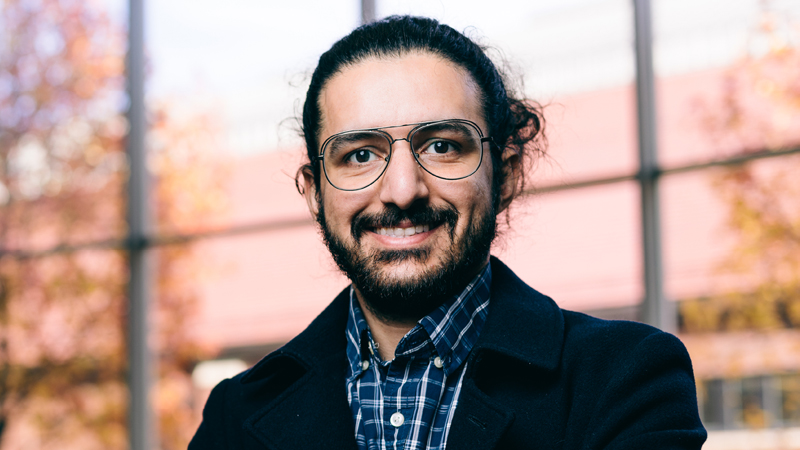
Dogan Altan serves as a Postdoctoral Fellow at Simula Research Laboratory within the Department of Validation Intelligence for Autonomous Software Systems. His research focuses on developing artificial intelligence solutions for maritime safety and operational efficiency, leveraging advanced machine learning techniques to address complex vessel navigation and performance challenges. His primary research interests include maritime anomaly detection, vessel traffic prediction, and physics-informed neural modeling for shaft power optimization. Altan specializes in integrating sensor data, passage plans, and environmental features into deep learning frameworks to enhance predictive accuracy in maritime contexts. Key methodologies involve transfer learning, trajectory segmentation, and multi-stream anomaly identification systems applicable to both vessel operations and robotic manipulation. Analysis of his publication trends reveals a consistent focus on transforming maritime domain knowledge into robust AI frameworks. Recent work demonstrates innovation in temporal graph analysis for port classification, transformer-based waypoint detection, and physics-guided hybrid models that bridge engineering principles with neural network architectures. His contributions span theoretical algorithm development and practical implementations validated through real-world maritime datasets.
Dr. Deepa Agarwal is a Senior Research Fellow at La Trobe University's Department of Animal, Plant and Soil Sciences within the La Trobe Institute for Sustainable Agriculture and Food. She joined as a Senior Research Fellow on May 5, 2025, having previously served as a Research Fellow in Food Material Science from May 2024 to May 2025. Her academic credentials include: PhD in Food Science from University of Nottingham (2012-2016) MSc in Applied Biomolecular Technology from University of Nottingham (2009-2010) BSc (Hons) Biotechnology from Amity University, Noida, India (2006-2010) Dr. Agarwal is an experienced researcher with expertise in hydrocolloids and biopolymer applications in foods, with specialized skills in physical characterization using rheology, thermal analysis, NMR, and sensory evaluation. Her research focuses on innovative food processing technologies including food 3D printing, extrusion, and high-pressure processing. She has a strong interest in developing new food products and solving scale-up challenges in food manufacturing. Her work bridges academic research with industrial applications, particularly in plant-based ingredients and sustainable food systems. An analysis of Dr. Agarwal's recent publications reveals a strong focus on sustainable food systems, plant-based proteins, and advanced food processing technologies. Her research spans the characterization of food structure, development of novel food ingredients, and optimization of food manufacturing processes. Key trends include the application of 3D printing to food production, investigation of plant protein functionality, and development of sustainable ingredients with reduced environmental impact. Her work consistently addresses the technical challenges of creating high-quality plant-based alternatives to traditional animal products. Dr. Agarwal has held significant research positions across multiple institutions and companies, demonstrating her ability to translate scientific findings into practical applications. Her career includes roles as Food Material Scientist at All G Foods (biotech startup developing next-generation dairy and meat products), Scientist at New Zealand Institute of Plant and Food Research, KTP Researcher at Pipers Crisps, and Researcher at Borregaard AS in Norway. This diverse industrial experience complements her academic research, providing valuable insights into real-world food production challenges. Her laboratory work focuses on food material science, with particular emphasis on food structure design, texture analysis, and the physical properties of food ingredients. She employs advanced analytical techniques including rheology, thermal analysis, and NMR to understand food behavior at the molecular level. Her research group investigates the relationship between ingredient composition, processing conditions, and final product quality, with applications in developing sustainable food solutions that address global challenges including food security and environmental sustainability.
Mohammadkazem Taram is an Assistant Professor in the Department of Computer Science at Purdue University, joining in Fall 2022. He holds a PhD from the University of California San Diego (UCSD), completed in 2022. His research focuses on computer architecture and computer security, particularly microarchitectural attacks, performance mitigations, and security-enhanced hardware design. He has been awarded the ACM SIGMICRO Dissertation Award for his doctoral work and has received several best paper awards for his publications in top-tier conferences like ASPLOS and ISCA. His research interests include hardware security vulnerabilities, secure execution environments, and optimizing performance-security trade-offs. Notable contributions include work on Extended User Interrupts (xUI) , Pathfinder control-flow attacks, and Hardware-Assisted Fault Isolation (HFI) . He actively collaborates with industry and academia, evidenced by his roles in developing novel mitigation techniques against speculative execution and side-channel attacks. Teaching: CS-426 (Computer Security), CS-593 (Microarchitecture Security), and CS-593 (Principles in Computer Architecture) at Purdue. Students: Advises Milad Esrafilian Najafabadi, Berk Aydogmus, and others, with co-advisory roles on Qi Ling and Gustavo Franco Camilo. Labs/Teams: Leads a research group focusing on hardware security and architecture, with a focus on practical and scalable defenses. Publications span top venues like ASPLOS, ISCA, and USENIX Security, with artifacts and open-source contributions. His work emphasizes bridging the gap between theoretical security concepts and real-world hardware implementations.
Caleb Brooks is an Associate Professor at the University of Illinois Urbana-Champaign's Department of Nuclear, Plasma, and Radiological Engineering, and a Donald Biggar Willett Faculty Scholar. He holds a parallel appointment as WPI Associate Professor at Kyushu University's International Institute for Carbon-Neutral Energy Research. Brooks earned his B.S. and Ph.D. in Nuclear Engineering from Purdue University (2008, 2014). His research focuses on advanced reactor designs, reactor thermal-hydraulics, interfacial area transport, and transient accident analysis. Key areas include molten salt reactors, microreactor integration, and thermal-hydraulic modeling. He leads the Multiphase Thermo-fluid Dynamics Laboratory and the Illinois Microreactor RD&D Center, advancing innovations in nuclear energy systems and decarbonization strategies. Brooks teaches courses on nuclear system engineering, heat transfer, and computational multiphase flow. His work spans 150+ publications, emphasizing reactor safety, xenon dynamics, and energy system integration. He has secured grants, including a $2M DOE award for fuel storage solutions, and collaborates globally on projects like the KRONOS microreactor and nuclear-hybrid microgrids. Brooks is a sought-after reviewer for journals like Nuclear Science and Engineering and serves on the editorial board of Experimental and Computational Multiphase Flow . His professional memberships include the American Nuclear Society and American Society of Thermal and Fluids Engineers.
Dr. Amir Atapour-Abarghouei is an Assistant Professor in the Department of Computer Science at Durham University, UK, and a Fellow of the Wolfson Research Institute for Health and Wellbeing. He leads the VIViD (Vision, Imaging and Visualisation in Durham) research group. Previously, he held roles at Newcastle University and Shahid Bahonar University of Kerman (Iran). His research focuses on machine learning, deep learning, computer vision, 3D scene understanding, and natural language processing. Notable contributions include the GANomaly anomaly detection framework, now part of Intel's AI products. Education : Ph.D., Computer Science, Durham University (UK) M.Sc., Computer Science, Universiti Teknologi Malaysia (Malaysia) B.Sc., Computer Engineering, Shahid Bahonar University of Kerman (Iran) Research Interests : His work spans machine learning, deep learning, image processing, 3D scene analysis, and robotics. Key areas include depth estimation, domain adaptation, semantic segmentation, and causal-based models for action quality assessment. Recent projects involve datasets like DurTOMD and Dur360BEV for autonomous systems and image inpainting techniques (e.g., HINT, SEM-Net). Advising & Grants : He supervises over 15 postgraduate students and has contributed to grants focused on AI-driven systems in healthcare, robotics, and computer vision. His team's work on GANomaly and neural architecture search (NAS) has been widely cited and applied in industry. Labs/Teams : Leads the VIViD Research Group and collaborates on interdisciplinary projects involving healthcare imaging, autonomous vehicles, and ethical AI. Active in organizing workshops at CVPR, IEEE BigData, and the BMVA Summer School.
Daniele Bonetta is an Assistant Professor in the Department of Computer Science at Vrije Universiteit Amsterdam and holds an ancillary role as a Medewerker (Employee) at Eindhoven University of Technology since June 2020. His primary affiliation is with the Faculty of Science, where he contributes to the Network Institute as well. His research focuses on optimizing virtual machines, parallel programming models, and dynamic compilation techniques, with a particular emphasis on multicore systems and distributed computing environments. Bonetta has also been involved in teaching advanced courses such as Advanced Network Programming and contributes to the Accelerator-Centric Computing Ecosystems program. His research interests are centered around improving the performance of managed runtimes, including virtual machine optimization, dynamic taint analysis, and efficient data processing in polyglot environments. He has explored topics such as speculative optimizations for JSON data access, columnar array storage transformations, and scalable solutions for virtual memory oversubscription. His work frequently addresses challenges in distributed systems, cloud computing, and cross-language program analysis. Bonetta’s recent publications (2023-2025) highlight advancements in transparent scale-out mechanisms for virtual memory, automated supernode generation in interpreters, and dynamic query engines embedded in polyglot runtimes. His contributions to the field include both theoretical frameworks and practical implementations, often leveraging the GraalVM and Truffle frameworks for polyglot execution. While no formal awards are listed, his extensive publication record (47+ outputs) demonstrates significant scholarly impact. His teaching portfolio includes courses on network programming and systems architecture, reflecting his dual focus on both theoretical research and applied computer science education.
Dr. TJ McIntyre is an Associate Professor at University College Dublin's Sutherland School of Law, specializing in information technology law, cybercrime, and civil liberties. He serves as Head of Teaching and Learning and chairs the civil liberties organization Digital Rights Ireland. His research examines internet regulation, data protection frameworks, surveillance laws, and the intersection of technology with fundamental rights. Key themes include privacy rights in data retention systems, content blocking governance, and jurisdictional challenges in digital evidence access. His publications critically analyze proportionality in surveillance regimes, implementation of EU directives, and Ireland's role in transnational data flows. Recent work focuses on law enforcement access to digital evidence and regulatory challenges in platform governance. Awards include: Runner-up, UCD Research Impact Case Study Competition (2018) Antonia O'Callaghan Prize for Advocacy He consults on data protection law through FP Logue Solicitors and serves as adjudicator for .ie dispute resolution. As Irish national expert for the EU Fundamental Rights Agency (2010-2022), he contributed to comparative human rights research.
Mert D. Pesé is an Assistant Professor of Computer Science and Founding Director of the TigerSec Laboratory at Clemson University's School of Computing. His research focuses on autonomous vehicle security, adversarial machine learning, generative AI applications in security, and automotive data privacy. He holds a PhD in Computer Science and Engineering from the University of Michigan (2022), an MSc in Electrical Engineering from Technische Universität München (2016), and dual BSc degrees in Electrical Engineering and Computer Science (2015). His work involves collaboration with automotive companies like BMW, General Motors, Ford, Audi, DENSO, and Harman, supported by grants from the US Army GVSC and NSA. Recent projects include DENSO-funded research with Purdue University and leadership in the TigerSec Lab, which has onboarded PhD students Alkim Domeke and David Fernandez and Master’s student Jan de Voor. Key research trends in his publications emphasize securing automotive networks (e.g., CAN Bus vulnerabilities), adversarial attacks on AI-driven systems, and privacy-preserving techniques for vehicular data. His frameworks like FuzzSense and AutoWatch showcase innovations in automotive software testing and driver behavior analysis. Grants and collaborations highlight applied security solutions for modern vehicles, while his TigerSec Lab serves as a hub for exploring cutting-edge automotive cybersecurity challenges.
Dean Sullivan is an Assistant Professor in the Department of Electrical and Computer Engineering at the University of New Hampshire's College of Engineering and Physical Sciences. His research focuses on computer architecture, cybersecurity, and embedded systems security. He holds a Ph.D. from the University of Florida and M.S./B.S. degrees from the University of Central Florida. His education includes: Ph.D., University of Florida M.S., University of Central Florida B.S., University of Central Florida Research interests span hardware-software co-design security, embedded system vulnerabilities, and formal verification of security properties. His work addresses topics like fault injection, electromagnetic attacks, and lightweight hardware attestation mechanisms. Recent publications emphasize hardware security innovations such as fault injection frameworks, causality-based verification models, and novel fuzzing techniques for trusted applications. He teaches courses in computer architecture, VLSI, and embedded design. No scientific awards or grants are explicitly listed in the provided information.
Hamed Rezaei is an Adjunct Professor in the Department of Computer Science at the University of Wisconsin-Milwaukee, affiliated with the College of Engineering & Mathematical Sciences. He works as a full-time researcher at Rockwell Automation, focusing on computer networks, particularly congestion control and low-latency applications. Education: PhD in Computer Science, University of Illinois at Chicago MS in Computer Science, University of Illinois at Chicago BS in Computer Science, Razi University, Iran His research interests include: Congestion Control Software Defined Networking (SDN) Network Function Virtualization (NFV) Programmable Data Planes Publications highlight expertise in datacenter networking, congestion control, and low-latency systems. Key areas include network protocols, SDN-based traffic management, and security frameworks for large-scale networks. His work spans both theoretical and applied domains, including contributions to datacenter topologies (Superways), flow scheduling (ResQueue), and DDoS detection mechanisms. Contact: rezaeih@uwm.edu
Matt Germonprez serves as Professor and Mutual of Omaha Distinguished Chair of Information Science & Technology at the University of Nebraska Omaha. He holds appointments in the College of Information Science & Technology and the Department of Information Systems and Quantitative Analysis. His academic credentials include: BS in Biology from Iowa State University MS in Information Systems from Colorado State University PhD in Information Systems from University of Colorado - Boulder Germonprez's research examines organizational engagement with open communities through qualitative field studies. His work investigates open source project health analytics, collaborative work dynamics, and sociotechnical systems in distributed environments. His research has secured funding from prominent organizations including the Alfred P. Sloan Foundation, Ford Foundation, and National Science Foundation. Analysis of publication trends reveals three primary research trajectories: (1) community health metrics and analytics, (2) open source supply chain complexity, and (3) sociotechnical systems design. Recent work increasingly focuses on operationalizing theoretical frameworks into practical tools for community management. His contributions have been recognized through: Mutual of Omaha Distinguished Chair appointment Multiple NSF and Sloan Foundation grants Germonprez co-founded the Linux Foundation's CHAOSS project focused on community health analytics. He maintains active roles in university governance while contributing to international open source initiatives.
Stefan Wagner is a Professor at the Institute of Software Engineering (ISTE) and leads the Empirical Software Engineering Group at University of Stuttgart , Germany. His research focuses on software and systems engineering with emphasis on empirical studies , software quality , human aspects in software engineering , automotive software , and software engineering for AI-based systems . Research Trends : Recent publications highlight his work in automotive software architecture centralization (2023) mutation testing in industrial contexts (2022) GitHub communication channel analysis (2022) microservices/DevOps adoption in cyber-physical systems (2022) code security feedback systems (2022) empirical studies of agile team leadership (2021) automated security requirements in CPS (2021) Methodological Contributions : He has developed scenario-based evolvability analysis methods, empirical frameworks for citation drivers in SE, and systematic mapping approaches for AI-based system engineering challenges and automotive security countermeasures.
Fahad Dogar is an Associate Professor in the Department of Computer Science at Tufts University's School of Engineering, with a secondary appointment at the Jonathan Tisch College of Civic Life. He leads the NAT (Networking At Tufts) research group and serves as Director of the Master Software Systems Program since 2022. His academic journey includes a Ph.D. from Carnegie Mellon University (2012), undergraduate studies at Lahore University of Management Sciences (LUMS) in Pakistan (2005), and postdoctoral research at Microsoft Research UK. Dogar's research focuses on designing technologies for social impact across multiple computer science domains. His primary interests include networking and distributed systems, with recent emphasis on data center networking, future Internet architectures, and the application of large language models for accessibility. Notably, his work spans cloud-based systems, mobile and wireless technologies, and developing practical solutions for resource-constrained environments in developing regions. Networking and distributed systems architecture Cloud computing infrastructure and optimization Human-Computer Interaction for accessibility Generative AI applications for social impact Technologies for developing regions Augmented reality networking requirements His publication record shows consistent output with 36 publications including two significant papers in 2024 focusing on LLM-powered applications for autistic users and machine learning job scheduling. His research has appeared in top-tier venues including ACM SIGCOMM, Usenix NSDI, and ACM MobiCom. Gold medal from the president of Pakistan for top computer science student LUMS Vice Chancellor Alumni Achievement Award (2021) VMWare Early Career Faculty Fellowship (2019) Facebook/Oculus Faculty Fellowship (2017) Tisch Faculty Fellowship (2017-2018) Dogar has secured substantial research funding including an NSF Core Medium award ($850K) as sole PI for 'Slack-Aware Networking' (2021-2025), Meta/Facebook funding ($150K) for networking support for telepresence applications (2020-2022), and multiple NSF awards totaling over $1 million. His teaching portfolio includes courses on Networks, Computing for Developing Regions, and special topics in Generative AI for Social Impact. During his 2023 sabbatical, he served as Senior Fellow with the Burnes Center for Social Change at Northeastern University, demonstrating his commitment to civic technology applications.
Dr. Chung Hwan Kim is an Assistant Professor in the Department of Computer Science at UT Dallas' Erik Jonsson School of Engineering. His research focuses on system security, including embedded systems protection, trusted execution environments, and automated bug detection. He directs the Software & Systems Security Laboratory and holds affiliated appointments in Electrical Engineering. Key research areas include developing compartmentalization techniques for embedded devices (TZ-DATASHIELD), securing GPU computations via CPU enclaves, and fuzzing methods for autonomous driving systems. His publications demonstrate consistent innovation in hardware-assisted security and vulnerability detection. Dr. Kim received the UT Dallas New Faculty Research Award (2021) and was a CSAW Best Paper Finalist (2018). His industry experience includes prior work at NEC Labs developing security solutions for enterprise systems.
Dr. Alvine Boaye Belle is an Assistant Professor in the Department of Electrical Engineering & Computer Science at Lassonde School of Engineering, York University. She leads the DARE! research group and serves on multiple international committees, including ICSE and RE conferences. Her work bridges software engineering with equity, diversity, and inclusion (EDI) initiatives. PhD in Software Engineering (École de Technologie Supérieure, University of Quebec) 2-year Industrial Postdoctoral (University of Ottawa) Graduate Diploma in Public Administration & Governance (McGill University) Dr. Belle's research focuses on system assurance for autonomous systems, generative AI applications in software engineering, and EDI in computing . She applies machine learning to safety case automation and vulnerability detection, as shown in her publications with high-impact journals. Her recent work explores deep learning and SVM models for Android malware detection with 99% accuracy. She mentors a diverse group of students across Bachelor's, Master's, and PhD levels, emphasizing accessibility and social impact in technology. Keynote speaker at Black History Month events Moderator of EDI-focused panels at ICSE conferences Editorial board member for journals like IEEE Software and Information and Software Technology