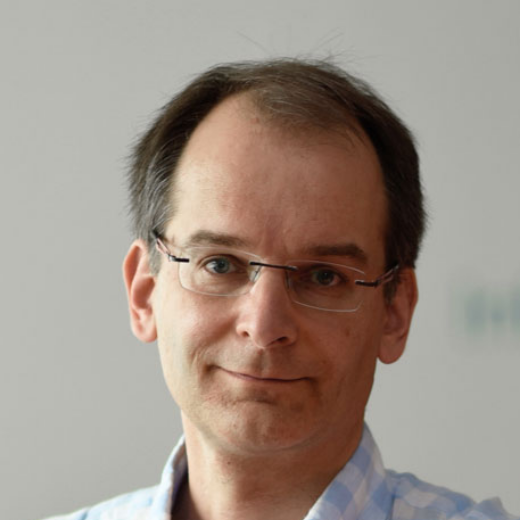
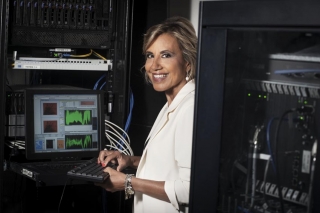
Markus Zanker is a full professor at the Faculty of Computer Science , Free University of Bozen-Bolzano (Italy), where he previously served as vice dean for studies and director for study programmes. He held associate professorship at Alpen-Adria-Universitaet Klagenfurt, Austria (2011-2016). Research Focus : Knowledge-based decision support systems, personalized information filtering/retrieval, product recommendation, conversational sales advisor systems, and product configurators Current Projects : Causal discovery in recommender systems, medical recommendation systems (insulin dosing, drug combinations), explainable AI for tourism and news recommendation The 15 most recent publications (2016-2025) cover topics including: Deep reinforcement learning for medical applications Causal modeling in tourism and online decision-making Explainable recommendation frameworks Session-based news and video recommendations Evaluation of open-source recommendation libraries His work also explores user interaction patterns through studies on bimodal rating statistics, collaborative explanations, and proactive recommendation engagement.
Fabio Ciambella is a Researcher at the Department of European, American, and Intercultural Studies of Sapienza University of Rome . His academic work focuses on Corpus Linguistics , Shakespeare Studies , Translation Studies , and Early Modern English pragmatics. Teaches Second Language Acquisition (first semester) and English Language 3 (second semester) Specializes in dance lexicon analysis, historical translation reception, and CLIL methodology His publications demonstrate interdisciplinary connections between: Shakespearean language and modern media (ads, news, memes) Italian Renaissance dance manuals and English theatrical practices AI-assisted translation of historical varieties Eco-discourse pragmatics in food columns Office hours available via individual scheduling through fabio.ciambella@uniroma1.it
Paolo Zatelli is an Associate Professor at the University of Trento , Department of Civil, Environmental and Mechanical Engineering. His academic career spans over two decades, with research expertise in geomatics, photogrammetry, and open-source GIS applications. Department of Civil, Environmental and Mechanical Engineering (since 2001) Researcher in ICAR06 (Topography and Cartography) International collaborations in geospatial projects Education includes a degree in Environmental and Territory Engineering (1993, 110/110 with honors) and a PhD in Topographic and Geodetic Sciences (1998). He has taught courses in GIS, Digital Cartography, and GPS surveying. Research Interests focus on geospatial technologies and their applications. Key areas include digital photogrammetry , wavelet applications in geodesy , GPS survey planning , and open-source GIS development . His work extends to environmental monitoring, historical cartography analysis, and sustainable forest management systems. Publication Trends show sustained contributions to FOSS4G (Free and Open Source GIS) applications, with recent work covering topics like landscape metrics , EV charging infrastructure , beta diversity analysis , and historical map digitization using GRASS GIS and QGIS. Scientific Contributions include: Member, IAG Special Study Group 4.187 on Wavelets in Geodesy Organizing committee, IV Hotine-Marussi Symposium Key developer of GRASS GIS applications Contributor to GOCE satellite geodesy projects Teaching and Mentorship highlights his role in both academic and professional GIS training, with over 20 theses supervised. His Technical Contributions involve developing open-source tools for spatial database management, statistical analysis, and georeferencing workflows.
Tiziana Catarci is a Full Professor ( Professore Ordinario ) at the Department of Computer, Automation and Management Engineering Antonio Ruberti (DIAG) within the Faculty of Computer Engineering, Computer Science and Statistics at Sapienza Università di Roma since November 2000. She has had a distinguished academic career marked by numerous leadership roles at Sapienza, including serving as Pro-Rector for Infrastructure and Technologies (2010-2014) and directing the DIAG department (2018-2024). Her research focuses on Human-Computer Interaction , Data Quality , and Database Systems . In recent years, she has expanded her interests to include Ethics of Artificial Intelligence and Gender Issues in STEM , co-founding the Italian Society for AI Ethics (SIpEIA) in 2020 and serving as its president since 2024. She has published over 200 articles in prestigious journals and conferences, and has edited or authored more than 20 books. She has been actively involved in numerous national and international research projects including KIM, VENUS, FADIVA, LAURIN, SEWASIE, DELOS, Interop, WORKPAD, SM4All, PROMISE, and SmartVortex. Her recent publications cover topics ranging from visual analytics solutions to data management architectures, and from ethical considerations in AI to declarative process modeling. Dr. Catarci has received several honors throughout her career, including: Stanford University's World's Top 2% Scientists (2020) Premio Le Tecnovisionarie (2021) Fellow of the European Alliance for Innovation (2018) Nominated among 100 Donne per la Scienza by Fondazione Bracco (2016) Commendatore della Repubblica Italiana (2015) IBM Eclipse Innovation Award for the SEAWER project (2003) She is also a pioneer in promoting women in STEM fields, with activities that have been recognized by the Levi Montalcini Association in 2017, and has been included in InspiringFifty, a list of 50 women who serve as role models in the technology world.
Gilbert Babin is a Professor of Information Technologies at HEC Montréal, where he is affiliated with GRESI, ERPsim Lab, and Tech3Lab. He has been cited 1331 times according to Google Scholar, indicating significant scholarly impact in his field of research. His research interests span several key areas in information systems and business technology: Enterprise Resource Planning (ERP) systems Business simulation and serious games Cognitive aspects of information systems use Business intelligence and analytics Operations management education Professor Babin's work demonstrates a strong focus on the intersection of information technology and business processes, particularly through simulation-based approaches. His publication history shows an evolution from technical optimization problems (1996-2007) to applied business contexts (2010-2012), with his most recent work exploring the integration of neuroscientific approaches with enterprise systems. His research on ERP simulation games has been particularly influential, with his 2011 paper receiving 132 citations. His current research trajectory includes innovative cross-disciplinary work combining information systems with cognitive neuroscience, examining how brain-computer interfaces can enhance sustained attention in business contexts. This represents a cutting-edge direction that bridges traditional information systems research with emerging neurotechnologies.
Stefano Ceri is Professor of Database Systems at the Department of Electronics, Information and Bioengineering (DEIB) of Politecnico di Milano, Italy, with prior visiting professorship at Stanford University's Computer Science Department (1983-1990). His four-decade research trajectory (1976-2016) pioneered extensions to database technologies including distribution, object-orientation, rules, and streaming data. Post-Web evolution saw his focus shift to Web-based application engineering and search systems, with recent work in crowd searching, social media analytics, and genomic computing. Major recognition includes: ACM-SIGMOD Edward T. Codd Innovation Award (2013) ACM Fellow designation Two ERC Advanced Grants: Search Computing (SeCo) for multi-domain query integration (2008-2013) and Data-Centered Genomic Computing (GeCo) for genomic dataset abstractions (2016-2021) Membership in Academia Europaea His research leadership spans foundational database innovations to contemporary genomic data challenges, driving significant European-funded projects while maintaining active academic engagement through keynote addresses at DATA 2017 and ICSOFT 2017.
Stefano Gialanella is an Associate Professor at the Department of Industrial Engineering, University of Trento. He serves as the Rector's delegate for Student Welfare and the Student Community and presides over the Joint Committee for the Right to Study. Expertise: Archaeometry, Metallurgy, Composite Materials, Electron Microscopy Teaching: Archeometria (Humanities Department), Metallurgy, Materials Selection for Engineering Design His research bridges industrial engineering and cultural heritage conservation, focusing on advanced material characterization techniques and sustainable engineering solutions. Recent work examines brake material emissions, shape memory alloys, and nanocrystalline material analysis. Teaching activities emphasize material science fundamentals, manufacturing technologies, and non-destructive testing methods.
Andrea Molinari is a Contract Professor at the University of Trento since 1990 and at the Free University of Bozen since 2002. He also serves as a Visiting Professor at Lappeenranta University of Technology (2021-2025) and holds a Docent position in Decision Making at the same institution (2024-2029). Previously, he was an Adjunct Professor at Turku University/Abo Akademi in Finland (2007-2019). Education: 2022: Doctoral Degree - Doctor of Science (Technology), Engineering Science, Software Engineering research field from LUT - Lappeenranta University of Technology. Dissertation: "Integration Between eLearning platforms and Information Systems: a New Generation of Tools for Virtual Communities" 1988: Master Degree in Economics from Università degli Studi di Trento with grade 110/110. Thesis: "P.I.R.S. Personal Information Retrieval Systems" Professor Molinari's research focuses on the intersection of education technology and information systems. His primary areas include e-learning/m-learning systems, virtual communities and social media, semantic technologies and ontologies, data management with AI applications, and Enterprise Project Management. His work bridges theoretical computer science with practical applications in educational and organizational contexts, particularly examining how technology can enhance learning experiences and organizational efficiency. His recent publications reveal a strong emphasis on the evolution of Learning Management Systems in the AI era, integration of semantic technologies with educational platforms, and applications of serious games for professional training. There's a clear trajectory toward more sophisticated, AI-enhanced educational technologies that incorporate data analytics, personalized learning, and advanced user modeling. Scientific Awards: Winner of the "S. Ciancio" scholarship (1980, 1982, 1983) Outstanding Paper Award at the Ed-Media World Conference on Educational Technology (1995) Since 1994, Professor Molinari has supervised approximately 10 thesis projects annually across multiple institutions including the University of Trento (Economics, Engineering), University of Bolzano (Computer Science, Education), and Abo Akademy in Finland. His teaching spans numerous courses related to information systems, project management, and technology applications across various academic disciplines. He has coordinated numerous research projects, particularly in the areas of e-learning platforms, virtual communities, and semantic technologies for educational applications. Professor Molinari is actively involved with several research communities and has served on program committees for numerous international conferences including IEEE-STAR, SMARTGREENS, and the International Conference on Web-based Education. His work often involves interdisciplinary collaboration between computer scientists, educators, and domain specialists to develop innovative technology-enhanced learning solutions.
Dario Di Nucci is an Associate Professor at the Department of Computer Science, University of Salerno. His academic journey includes a PhD from UniSalerno and faculty positions at Tilburg University and Vrije Universiteit Brussel. He specializes in empirical software engineering with applications in software maintenance, testing, and sustainability. Research Focus: Di Nucci investigates software evolution patterns, testing methodologies, and energy-efficient computing through machine learning and repository mining. His work bridges theoretical algorithms with practical software engineering challenges. Professional Recognition: Distinguished Reviewer Award Outstanding Reviewer Award Affiliations Timeline: Associate Professor, UniSalerno (2022-Present) Assistant Professor, UniSalerno (2022-2024) Assistant Professor, Tilburg University (2020-2021) Post-doc Researcher, Vrije Universiteit Brussel (2018-2019)